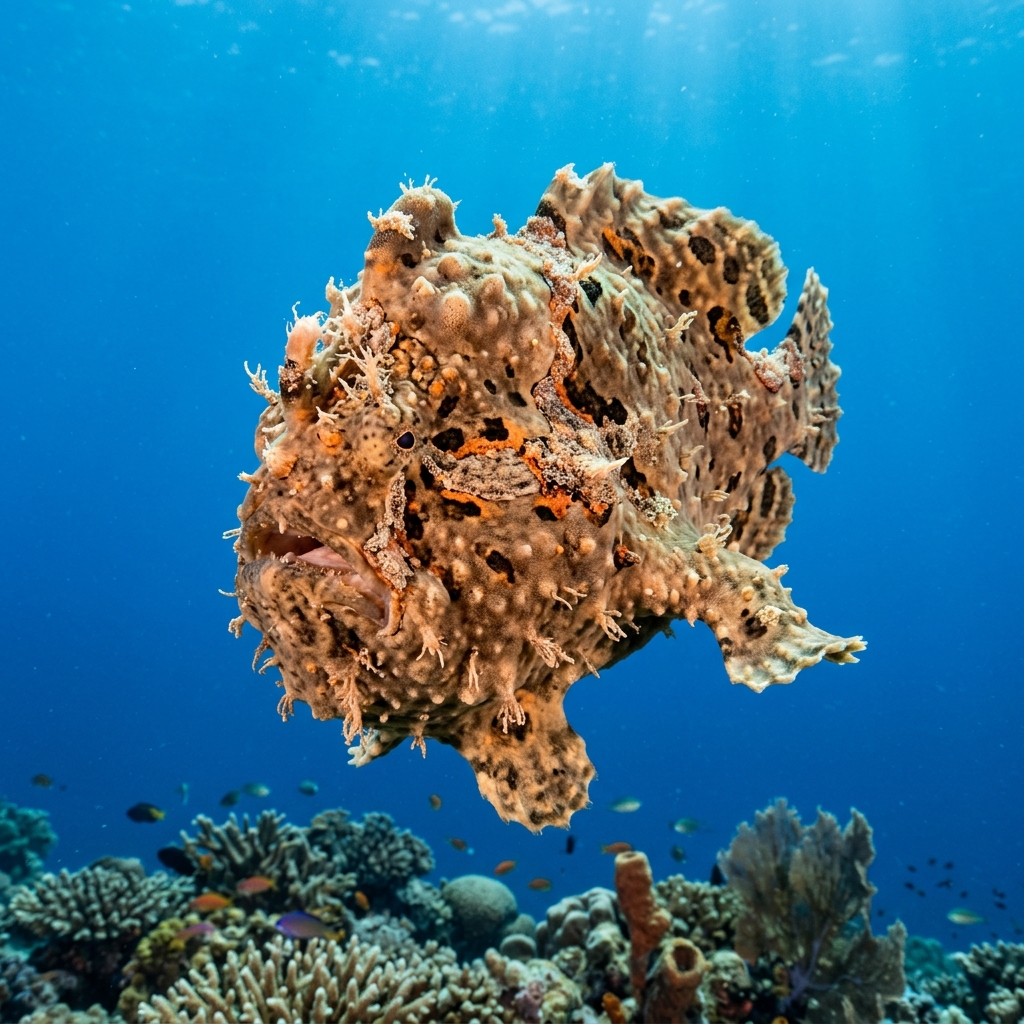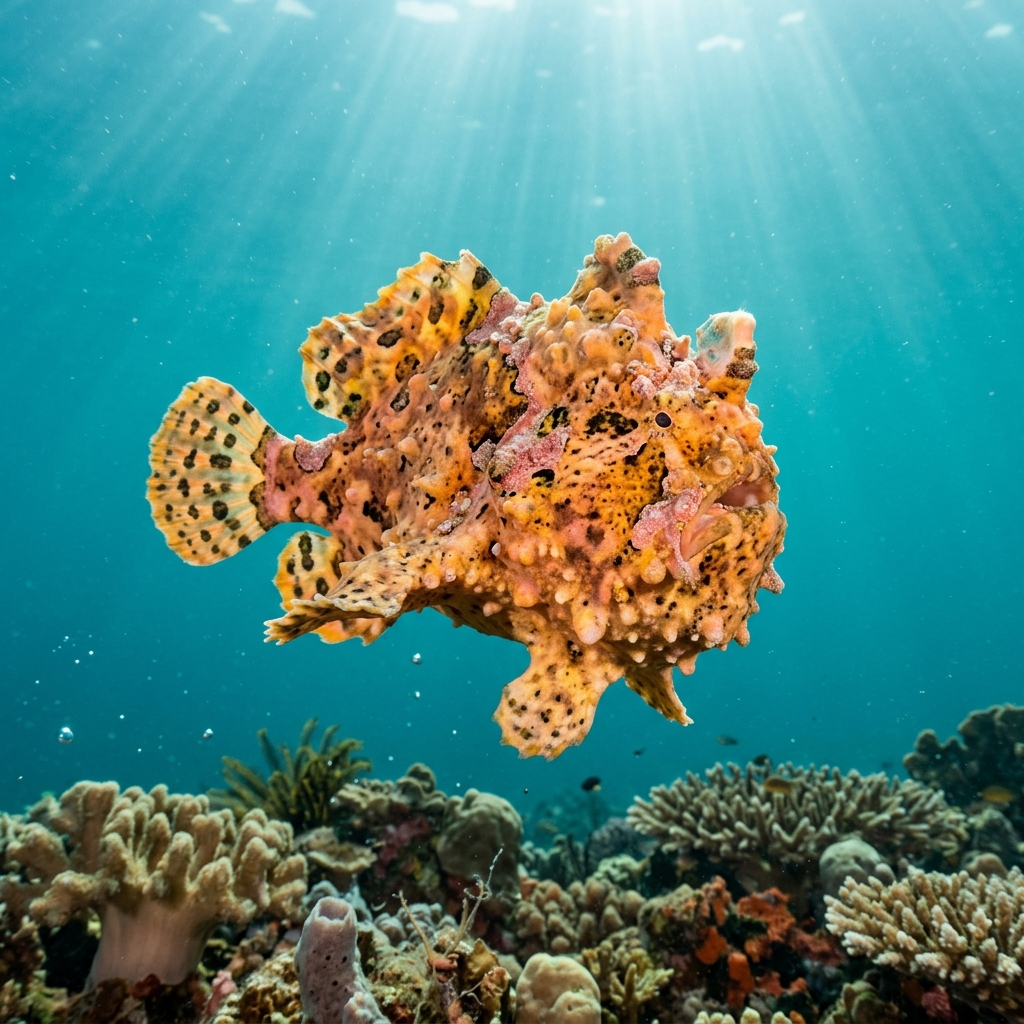
Antennarius maculatus
Spot Warty Anglerfish across the Visayas and Sulawesi in warm 25-29 °C water. Tips on ID, best seasons, and where divers log them most.
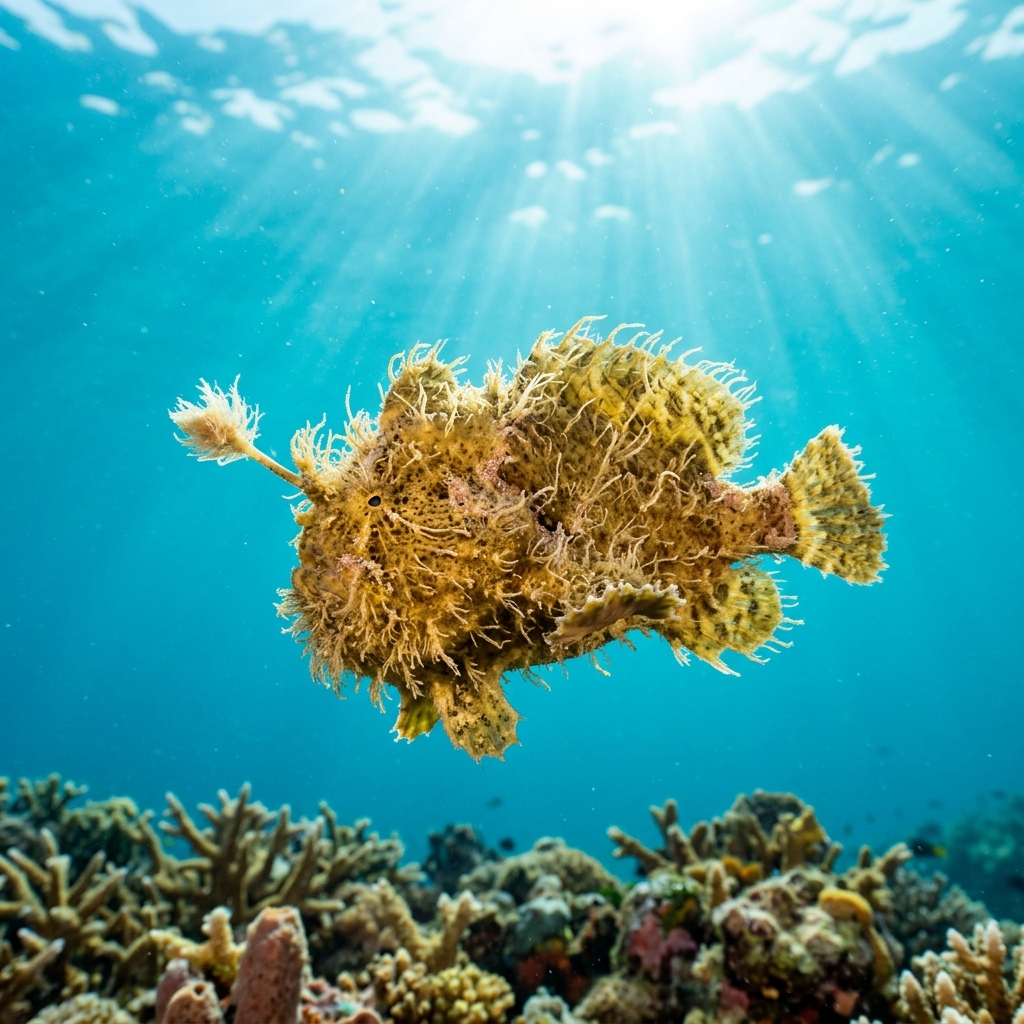
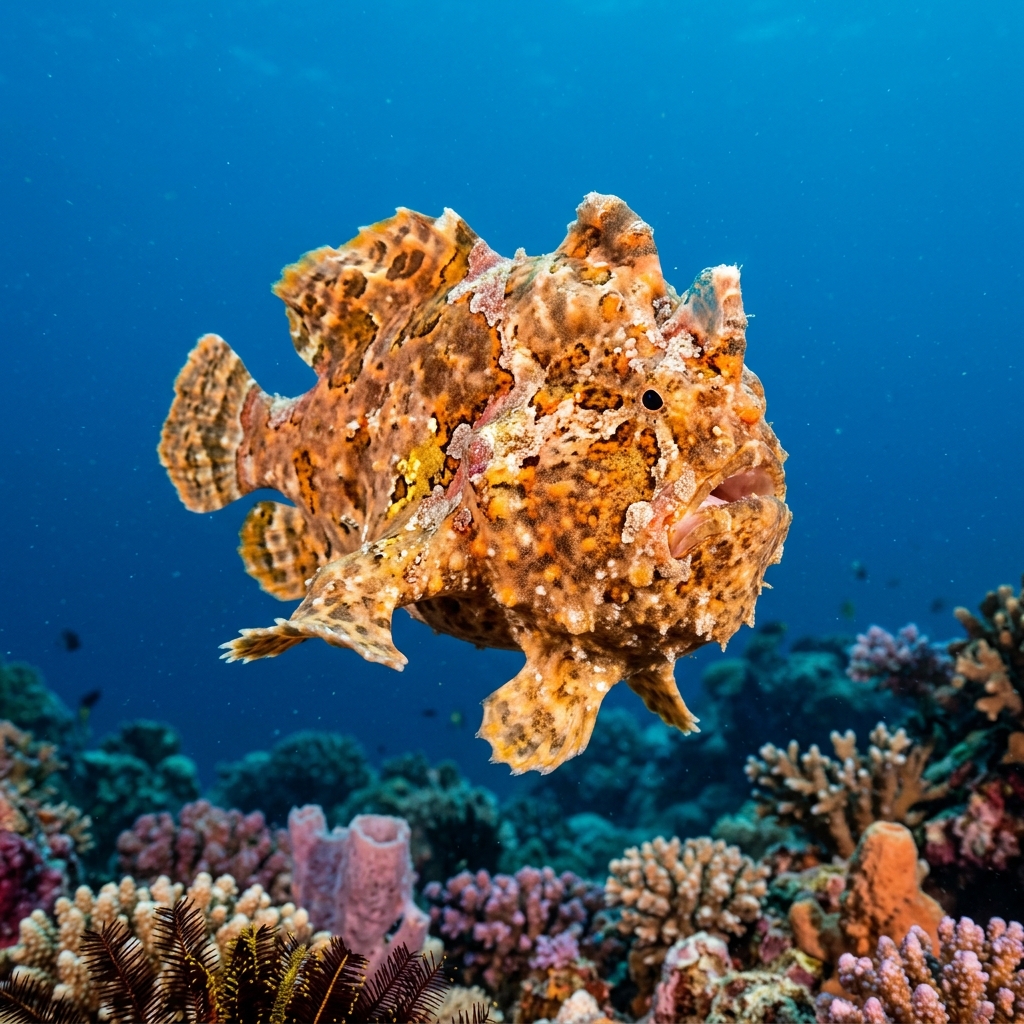
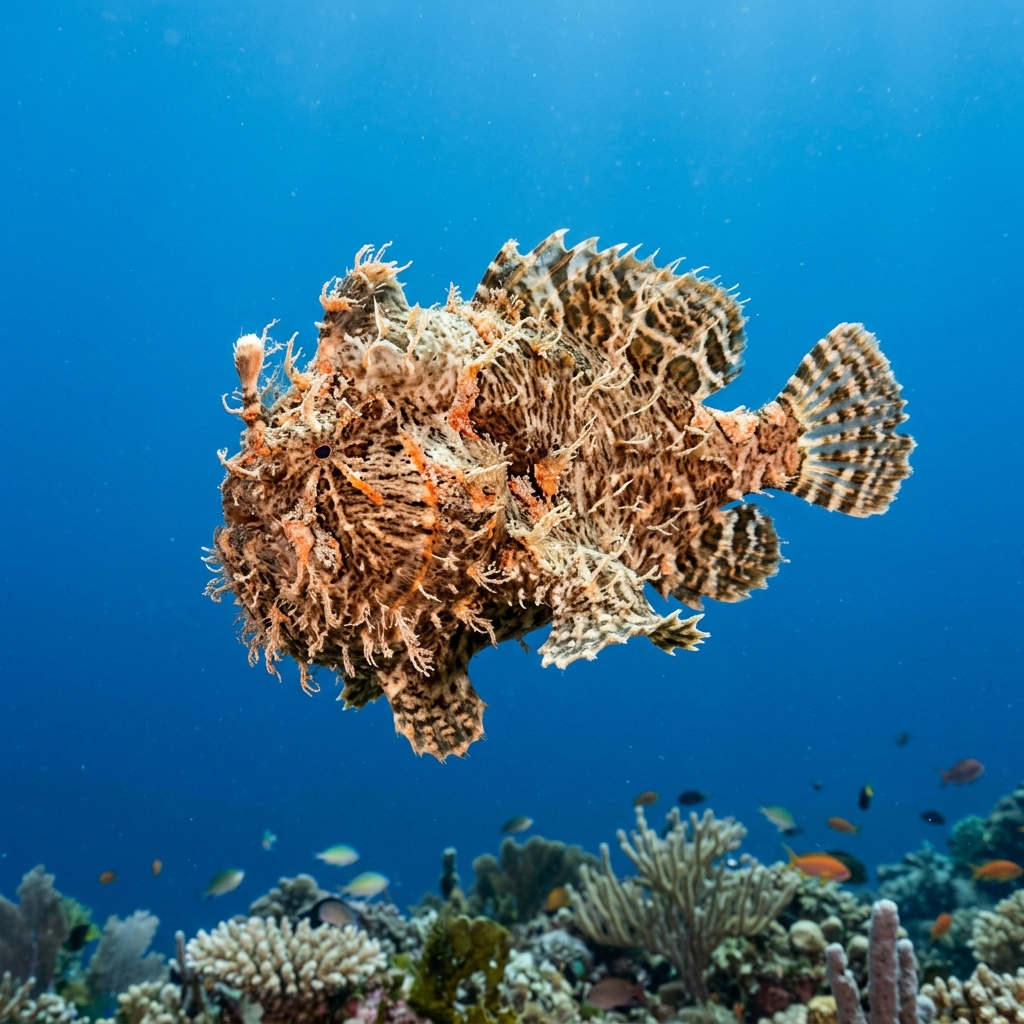
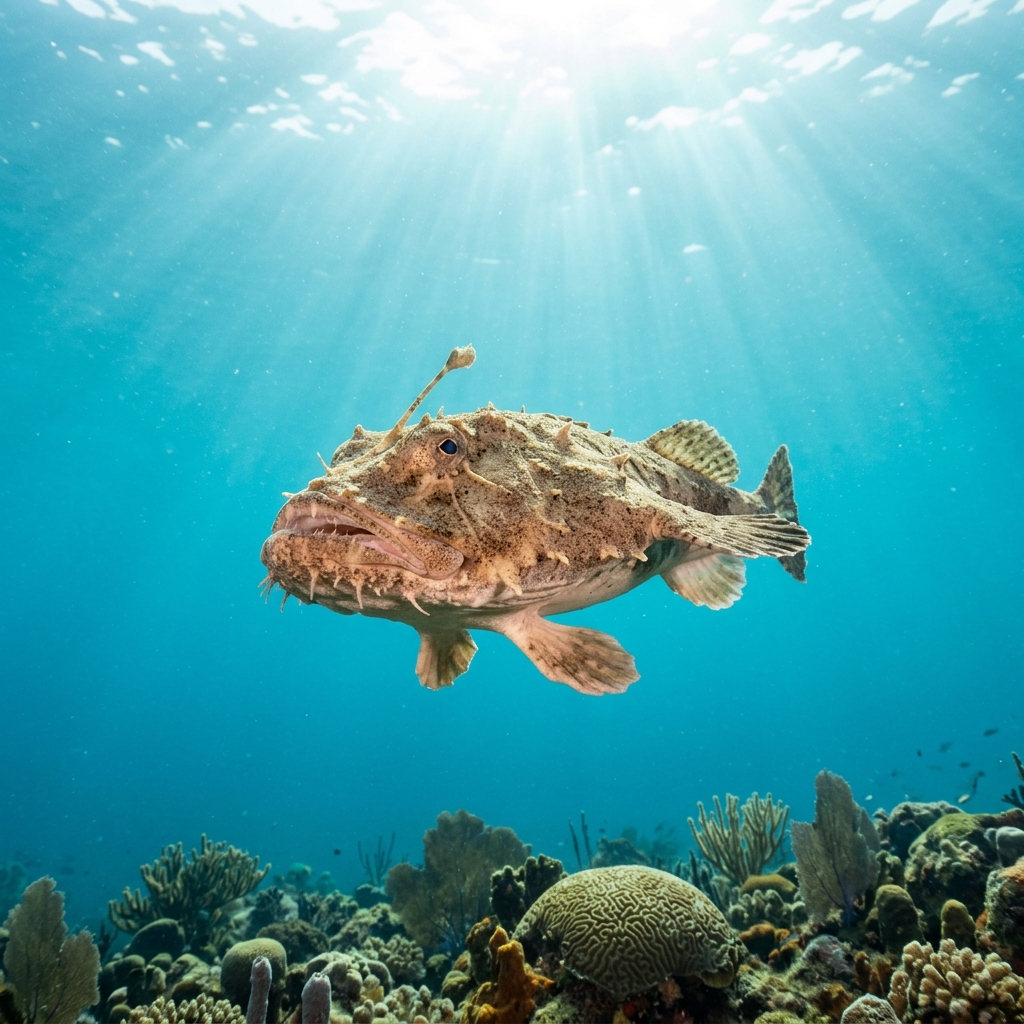
About 10 cm long and almost spherical, this fish sits completely still on the reef, relying on heavily textured, wart-covered skin to blend into encrusting sponges and coral rubble. Colouration is wildly variable, white, orange, yellow, red, or blotchy combinations, but the dense covering of fleshy skin tags (dermal appendages) and the prominent fishing-rod lure (the illicium and esca) projecting from its forehead are the key field marks. The large, upward-facing mouth and tiny, arm-like pectoral fins that it uses to "walk" across the reef also separate it quickly from other reef fish.
Warty anglerfish are the reef's great do-nothings: they park on a sponge or rubble patch and stay there, sometimes for days, relying entirely on camouflage rather than flight. They rarely react to approaching divers, so slow, non-disruptive observation pays off, watch the tip of that forehead lure for subtle wiggling, which is how they coax small fish or shrimp into range before lunging with a strike fast enough to be nearly invisible to the naked eye. Active at any time of day, they are solitary and tend to occupy the same small patch of reef across multiple dives.
Their strike is one of the fastest in the animal kingdom, and they can engulf prey nearly as large as themselves by rapidly expanding an elastic stomach, a fish the same size as the anglerfish is a realistic meal.
In Northern Hemisphere destinations like the Philippines and Indonesia, sightings concentrate from September through May, broadly tracking the cooler-dry season when visibility tends to improve and dive traffic peaks. The species sits comfortably in 25-29 °C water, so suitable temperatures persist for much of the year across its tropical range.
Reef neighbours a diver could mistake it for. Use the identification notes above to tell them apart.
The Philippines accounts for the vast majority of logged sightings, with the Central Visayas and East & North Visayas standing out as the most productive regions, followed by Luzon and Palawan. Indonesia is a strong second choice, particularly around Sulawesi, Bali, and the Maluku islands, with Sipadan and East Sabah in Malaysia also worth targeting.
Mapping where Warty Anglerfish is logged…
The Philippines, especially the Central Visayas, East and North Visayas, and Palawan, is by far the most reliable destination. Indonesia's Sulawesi, Bali, and Maluku regions are excellent alternatives, and Sipadan in East Sabah, Malaysia is also well represented in diver records.
In the Philippines and Indonesia, sightings concentrate between September and May. The species favours water between 25 and 29 °C, which is available across much of its range for large parts of the year, so outside that core season encounters are still possible.
Look for a compact, round-bodied fish about 10 cm long completely covered in fleshy warts and skin tags, sitting motionless on reef rubble or sponge. The fishing-rod lure projecting from its forehead and its tiny walking pectoral fins are the clearest give-aways. Colour varies enormously, white, orange, red, or blotched, so focus on texture and body shape rather than colour.
Adults typically reach around 10 cm, making them a small but stocky fish. Despite their modest size they can swallow prey approaching their own body length, thanks to a highly expandable mouth and stomach.
It uses a modified first dorsal spine, the illicium, tipped with a fleshy lure called the esca, which it wiggles to mimic a small worm or crustacean. When prey approaches to investigate, the anglerfish strikes in milliseconds, one of the fastest predatory strikes recorded in any vertebrate. It can swallow fish nearly as large as itself.
Site and sighting data is aggregated from diver logs, iNaturalist and GBIF. For taxonomy and conservation status:
Giant Frogfish
1,292 sites