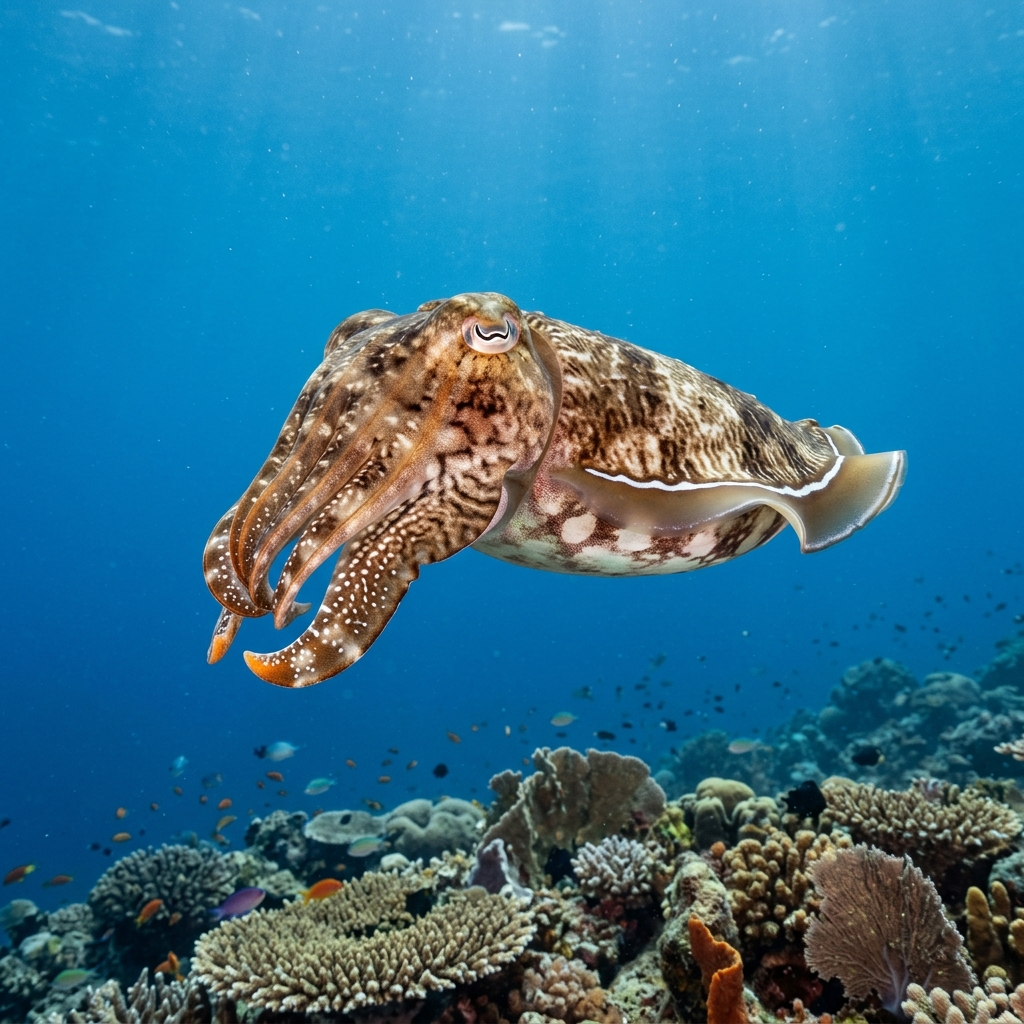
Ascarosepion latimanus
Spot broadclub cuttlefish on Indo-Pacific reefs from the Philippines to Sulawesi. Active by day in warm water, with rippling colour displays worth watching.
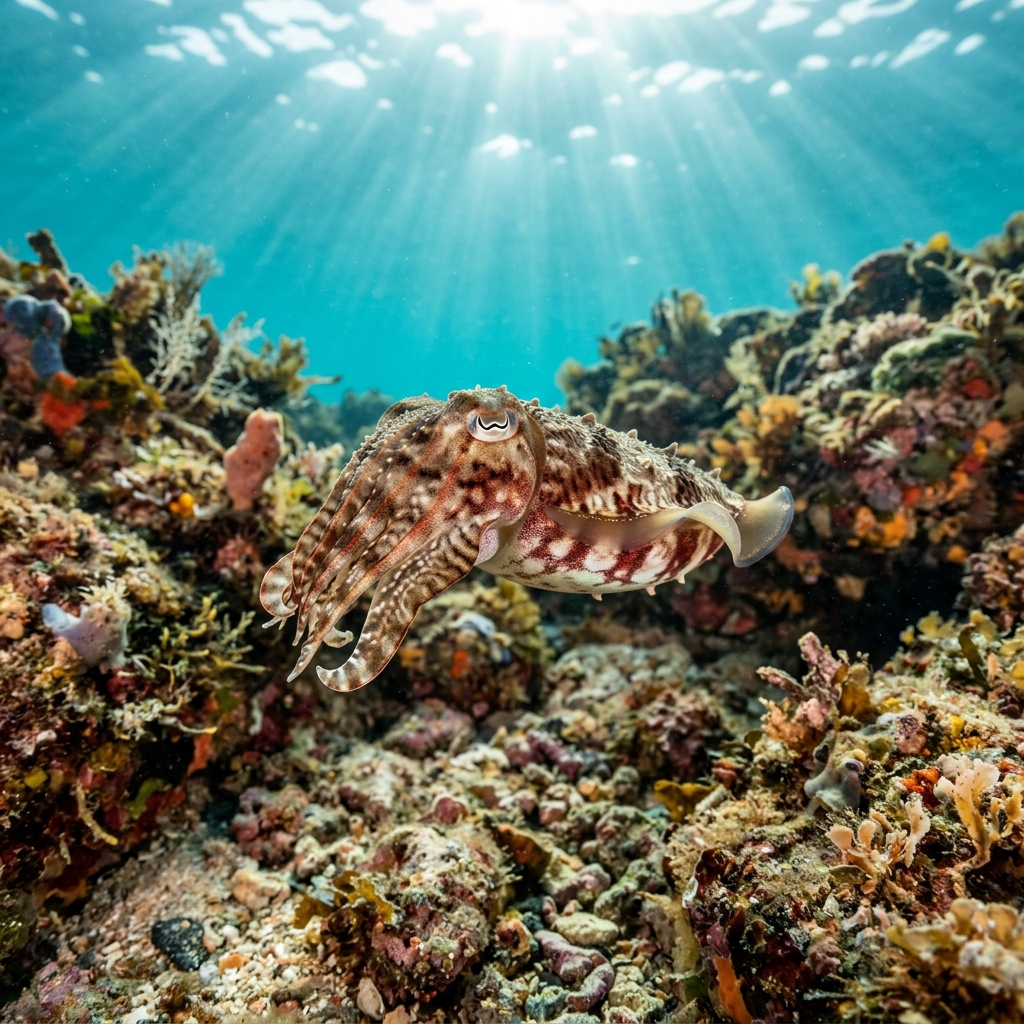
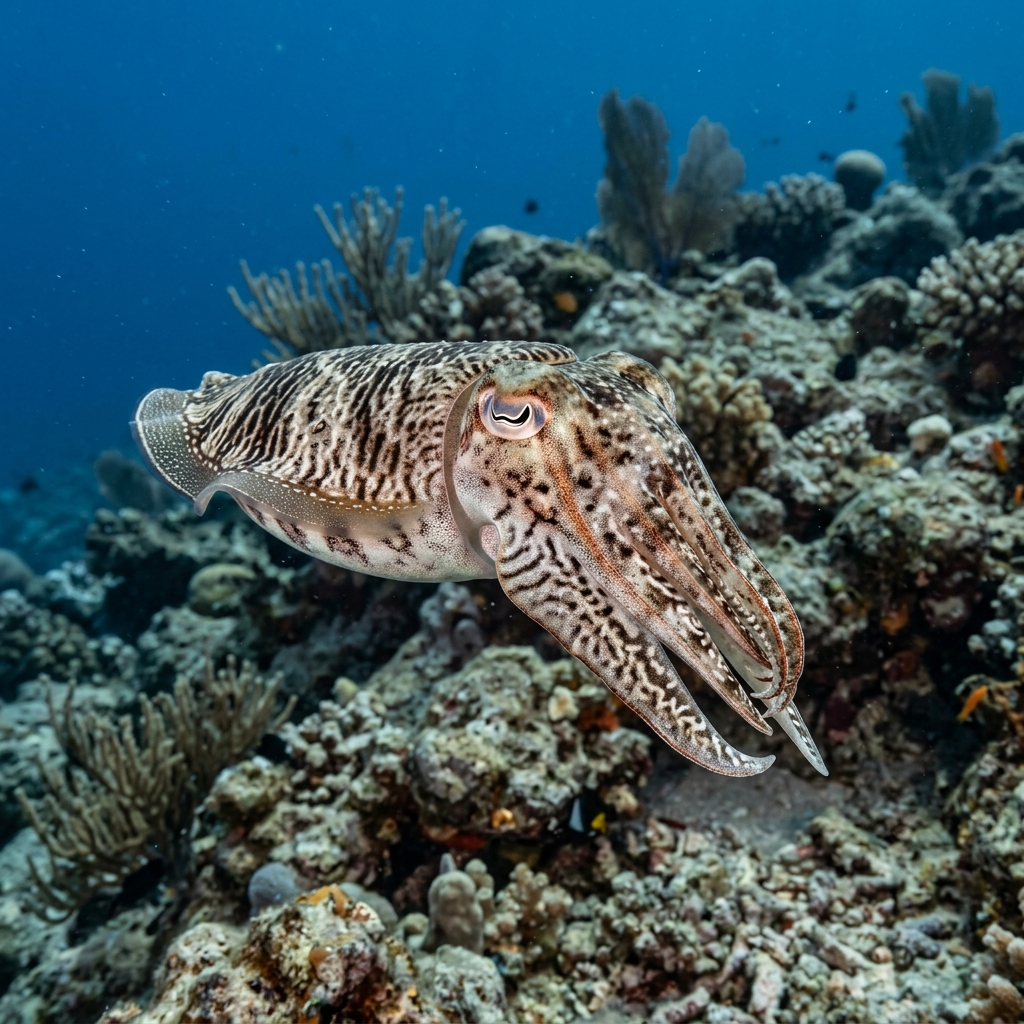
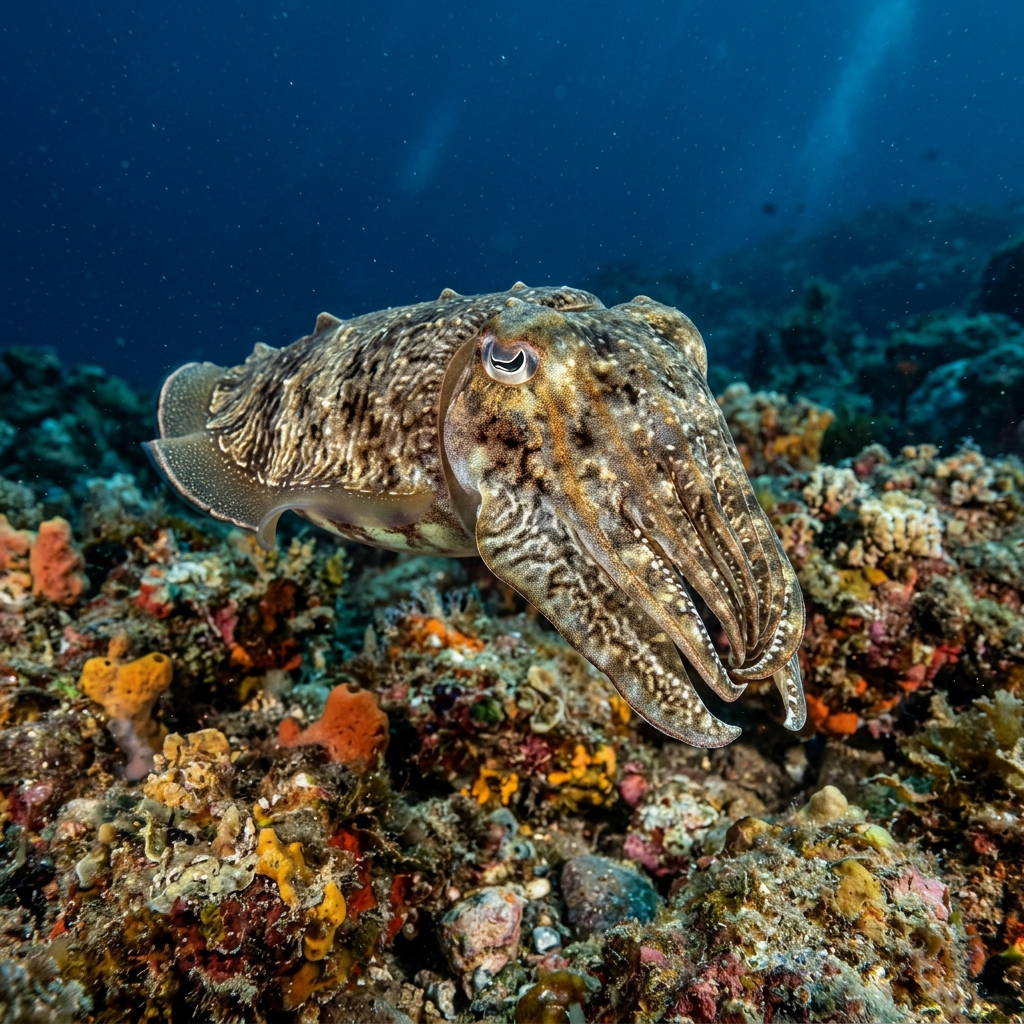
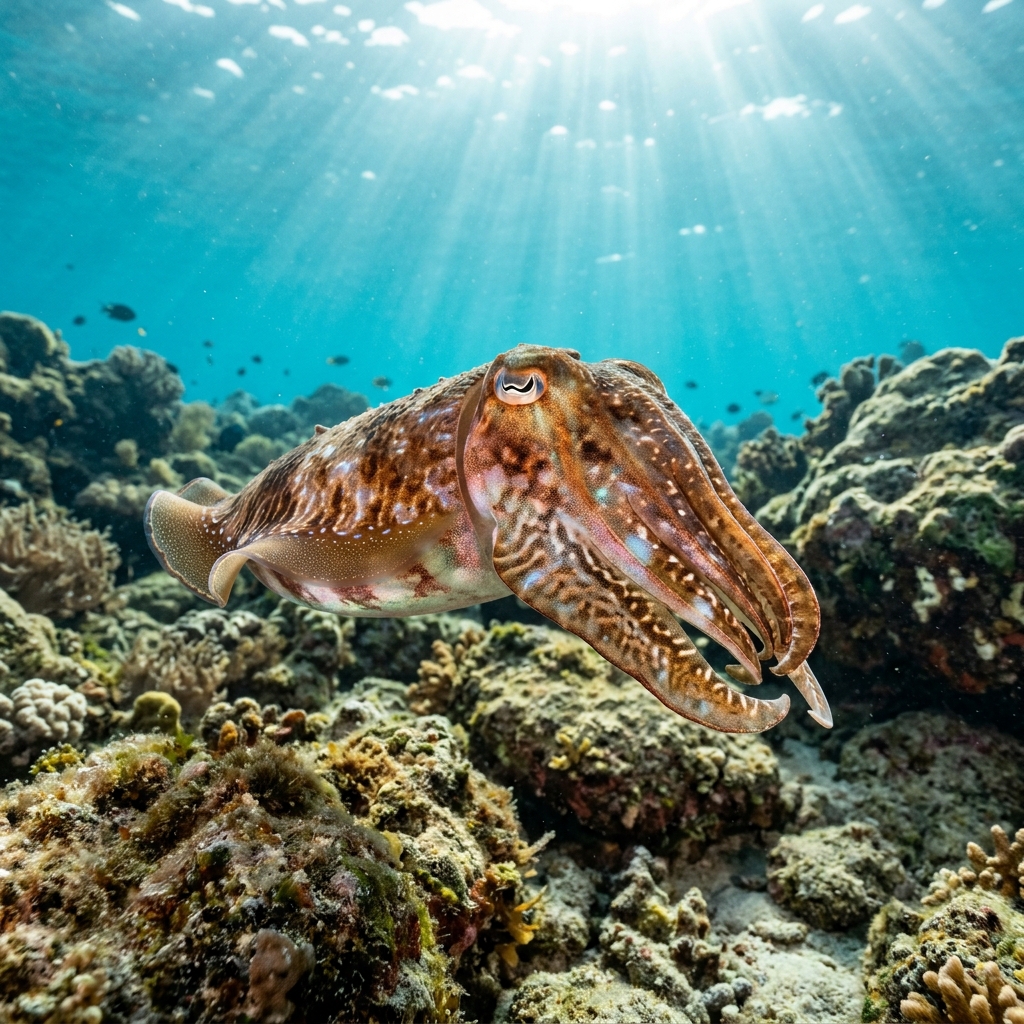
At up to 35 cm, broadclub cuttlefish are noticeably large and broad-bodied, with a distinctively wide, club-shaped mantle that sets them apart from slimmer species. Skin texture shifts constantly between smooth and warty as they cycle through camouflage patterns, running from pale cream and tan to dark chocolate brown with irregular white patches. The undulating fin (the continuous fringe running the full length of the mantle) ripples in a hypnotic wave that is one of the easiest field marks in the water. During mating, males pulse vivid zebra-stripe displays of white and deep brown across their bodies.
Broadclub cuttlefish are curious and will often hover a short distance away, watching a diver with one large eye before slowly closing the gap. Move slowly and avoid sudden gestures; a startled animal will jet backwards and may ink before resettling. They hunt actively during daylight, creeping low over rubble or coral heads and firing their two feeding tentacles with remarkable speed, so if one seems fixated on a small fish or shrimp nearby, stay still and watch.
Males competing for a female will simultaneously show rival colours on each half of their body, displaying the mating pattern toward the female on one side while flashing a camouflage pattern toward a competing male on the other.
In the Northern Hemisphere, sightings are recorded from December through October, making most of the year productive across the Philippines, Indonesia, Malaysia, and Japan. Southern Hemisphere sites such as Queensland are most active from October through March.
Reef neighbours a diver could mistake it for. Use the identification notes above to tell them apart.
Most commonly logged across the Philippines and Indonesia, with the strongest concentrations in the Visayas, Sulawesi, and the Bali-Lombok-Java corridor. Malaysia is also a reliable destination, particularly around Pulau Tioman and Sipadan in East Sabah. Australia's Queensland coast rounds out the top sites, along with Japan and Thailand for divers in those waters.
Mapping where Broadclub Cuttlefish is logged…
The Philippines and Indonesia together account for the bulk of logged sightings, with the Visayas, Sulawesi, and Bali among the top regions. Malaysia's Pulau Tioman and Sipadan are also strong options, and divers in Australia can encounter them along the Queensland coast. The species is spread widely across the Indo-Pacific, including Japan, Thailand, Vietnam, and Fiji.
Across the Northern Hemisphere range, sightings are recorded from December through October, so most of the year works well. In Southern Hemisphere locations like Queensland, Australia, the season concentrates between October and March. Their preference for warm water between roughly 23 and 29 °C keeps them on tropical reefs for much of the year.
Look for the unusually wide, club-shaped mantle and the full-length undulating fin fringe. They are large for a cuttlefish, reaching about 35 cm, and shift constantly between mottled brown-and-cream camouflage and bold striped displays. The combination of size and that distinctive broad body shape is usually enough to separate them from other Indo-Pacific cuttlefish.
Broadclub cuttlefish typically reach around 35 cm in mantle length, making them one of the larger cuttlefish species divers commonly encounter on Indo-Pacific reefs. Their broad, flattened build makes them look even more substantial in the water than the measurement alone suggests.
Yes. A male competing for a female can display the courtship pattern on the side facing her while simultaneously showing a camouflage or neutral pattern on the side facing a rival male. This split-body signalling is controlled by each side of their nervous system independently and is one of the more remarkable behaviours a diver can witness on the reef.
Site and sighting data is aggregated from diver logs, iNaturalist and GBIF. For taxonomy and conservation status:
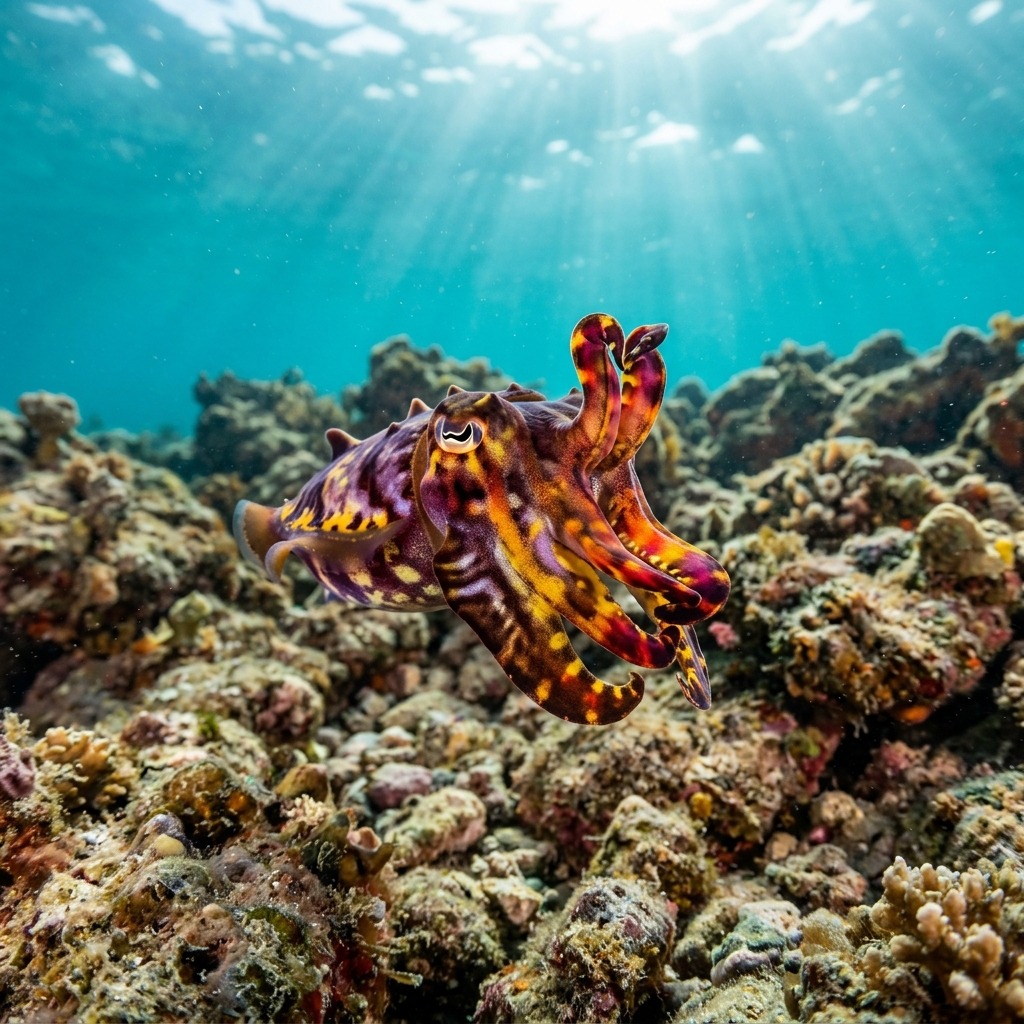
Flamboyant Cuttlefish
377 sites