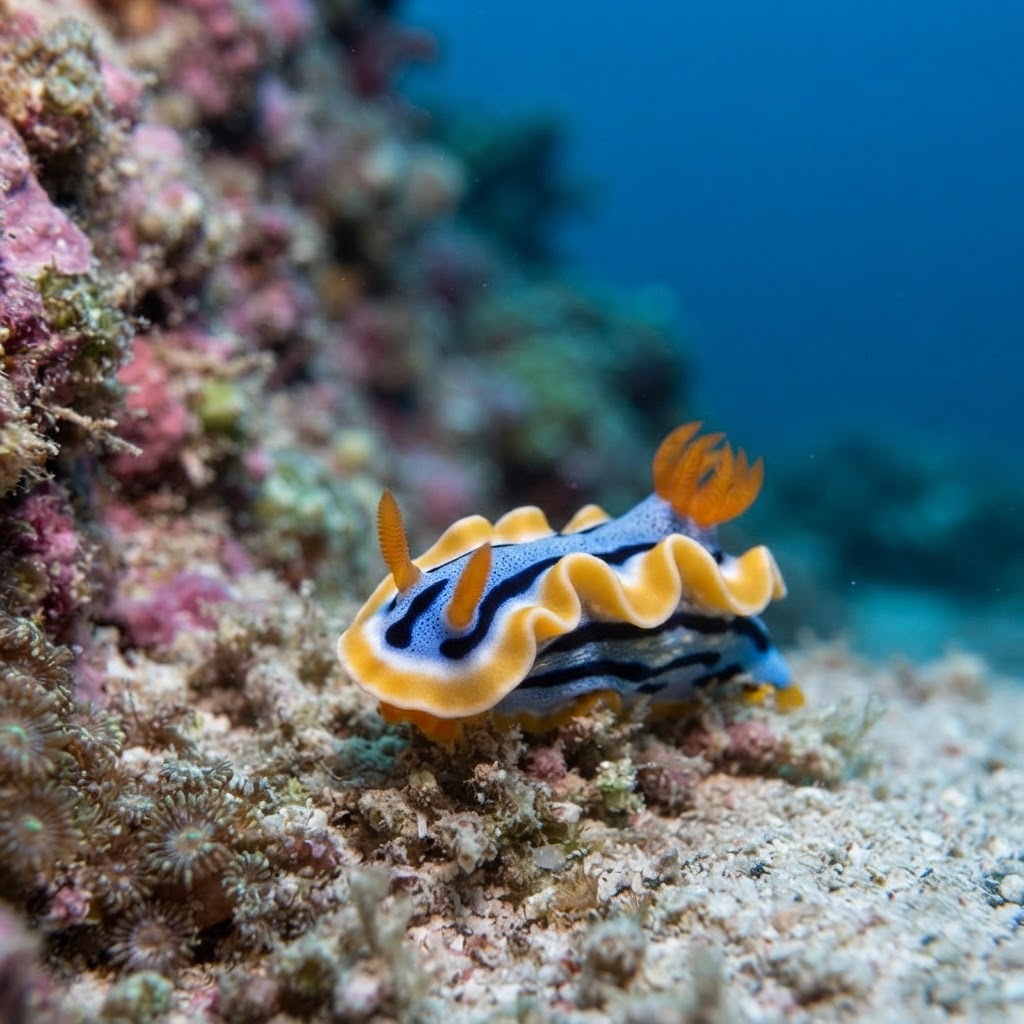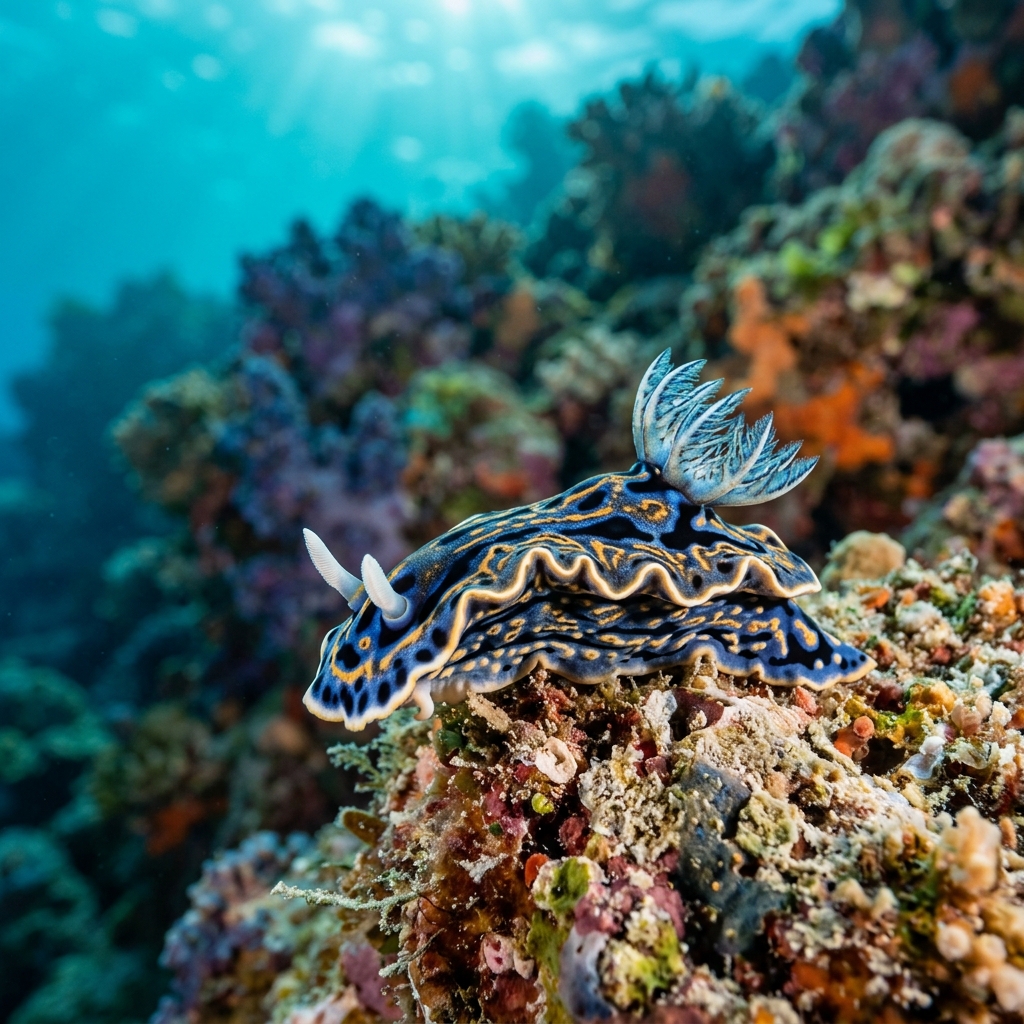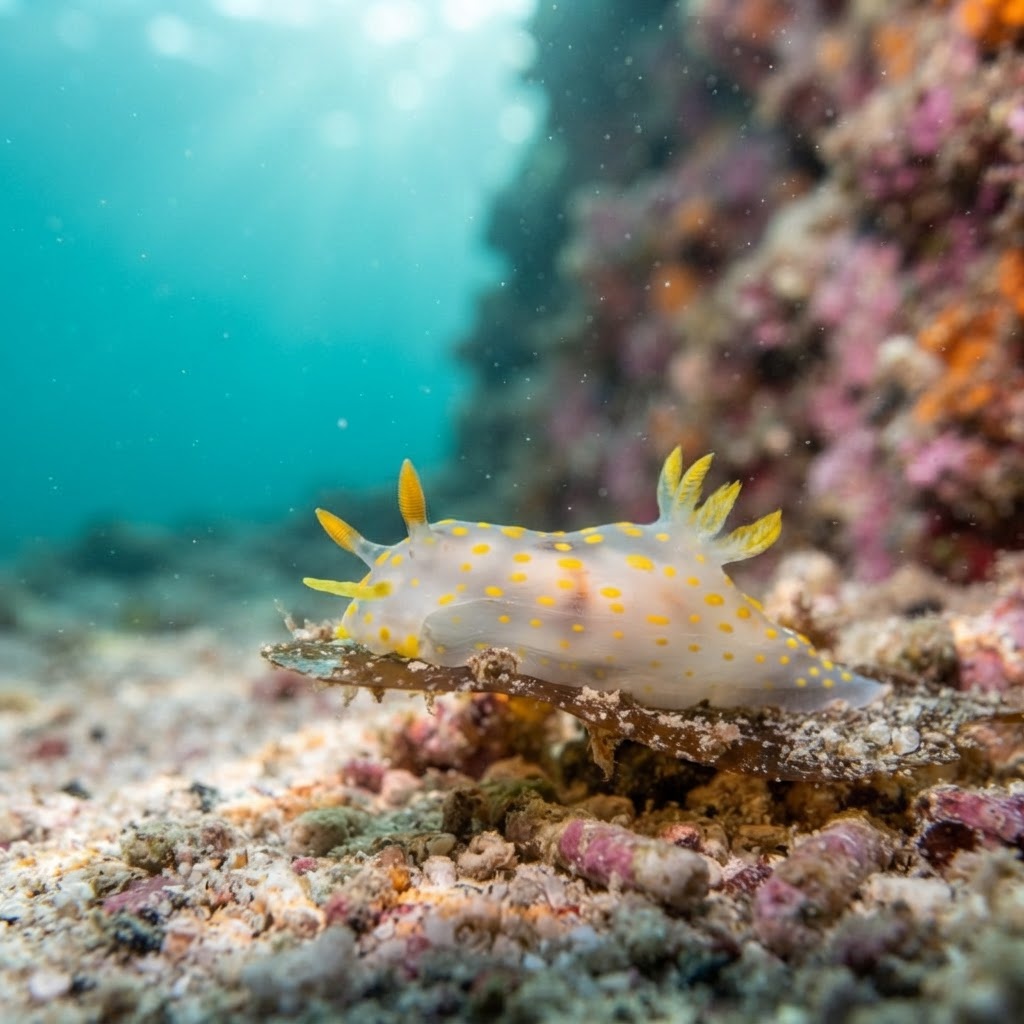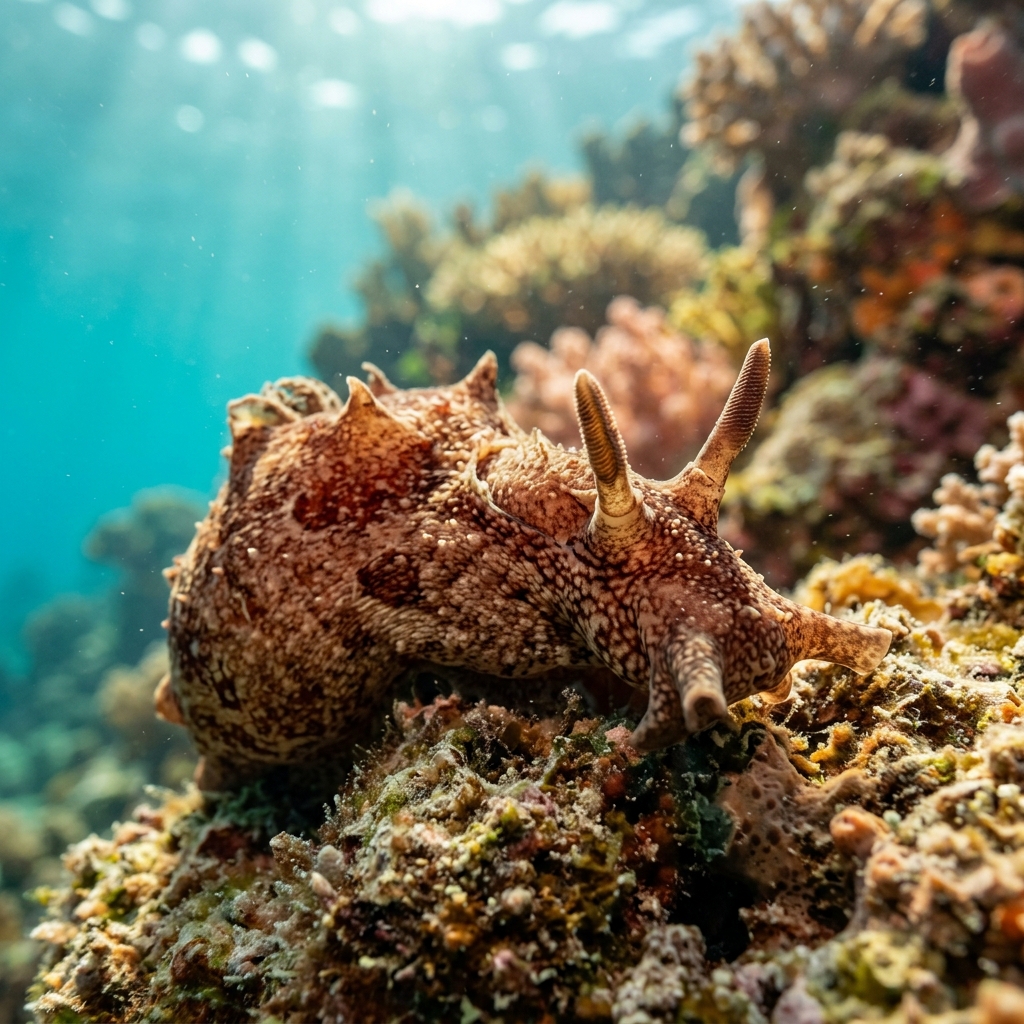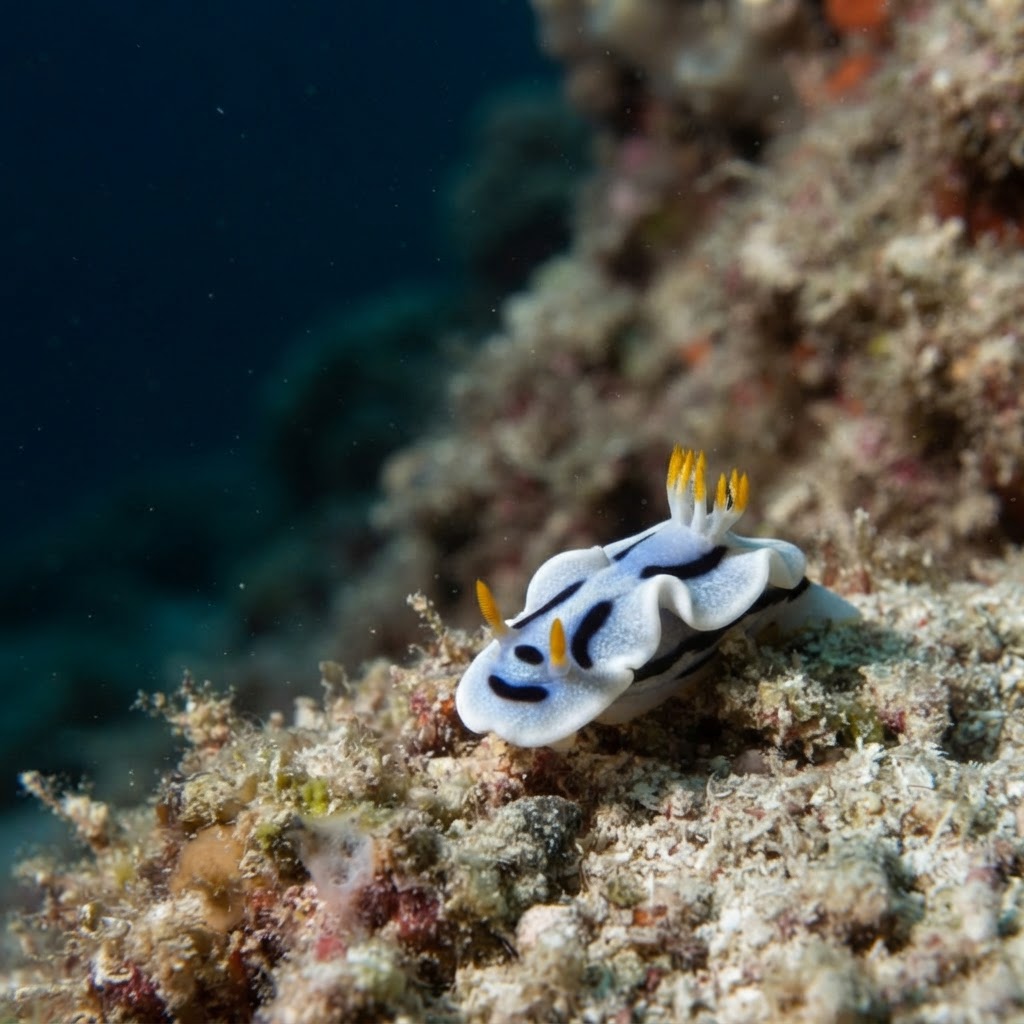
Chromodoris alcalai
Spot this nudibranch on reefs in Sabah, Sulawesi and the Visayas year-round in warm 26-31C water. Uncommon but worth the search.
A small, elongate sea slug (nudibranch) with a pale body and a dark-edged mantle margin, the kind of contrast pattern divers scan reef rubble for. Look closely at the mantle border and the colour of the rhinophores (the paired sensory horns) and gill cluster, since chromodorid nudibranchs in this genus are told apart mostly by these fine details rather than overall shape. Its size in the water is modest, easy to swim past unless you are already in slow-search mode over sponge and algae-covered substrate.
Divers find it parked on the substrate, moving slowly across sponge-covered rock, rubble or reef debris rather than swimming or hiding. It shows no reaction to divers beyond its usual unhurried crawl, so a slow approach and a macro lens are all you need. Most sightings come from the same depth band as general muck and reef macro diving, from shallow reef flats down well past recreational limits.
Like other Chromodoris species it likely feeds on sponges and stores or modifies their chemical compounds as a form of defence, which is part of why so many chromodorids display bold contrasting patterns rather than camouflage.
No clear seasonal pattern shows up in the data, and with a comfortable range of 25.6 to 31.6C this is a year-round find on tropical Southeast Asian reefs rather than a seasonal target.
Reef neighbours a diver could mistake it for. Use the identification notes above to tell them apart.
This one turns up most reliably around Sabah in Malaysia, with strong logs also coming from Sulawesi in Indonesia and the Visayas region of the Philippines. Luzon and Bali have produced fewer confirmed sightings but are part of the same broader Coral Triangle range, so it pays to check reef and rubble patches on any dive across these areas.
Mapping where Alcala's Chromodoris is logged…
It is most often logged in Sabah, Malaysia, with good numbers also reported from Sulawesi in Indonesia and the Visayas region of the Philippines. Smaller numbers come from Luzon and Bali, placing it firmly within the Coral Triangle.
There is no detected season, it is logged across the year, matching its tolerance for warm water between roughly 25.6 and 31.6C found on tropical reefs year-round.
Look for a small, pale-bodied nudibranch with a dark-margined mantle edge moving slowly over rubble or sponge-covered substrate. Confirming the ID usually requires a close look at the rhinophore and gill colouring, since several similar chromodorid species share the same general look.
Exact size data is not documented for this species, but like most Chromodoris nudibranchs it is a small reef animal, typically only a few centimetres long when fully grown.
No, it poses no danger to divers. It has no means of harming a diver and simply crawls across the reef substrate regardless of who is watching.
As with other members of its genus, it most likely feeds on sponges and can incorporate their chemical defences into its own tissue, a trick many brightly patterned nudibranchs use instead of camouflage.
Site and sighting data is aggregated from diver logs, iNaturalist and GBIF. For taxonomy and conservation status:
Light-spotted Aegires
3,168 sites