Chromodoris willani
A 1cm reef nudibranch logged from Luzon to Sabah, most reliably spotted on Indo-Pacific reefs at 25 to 31C year-round.
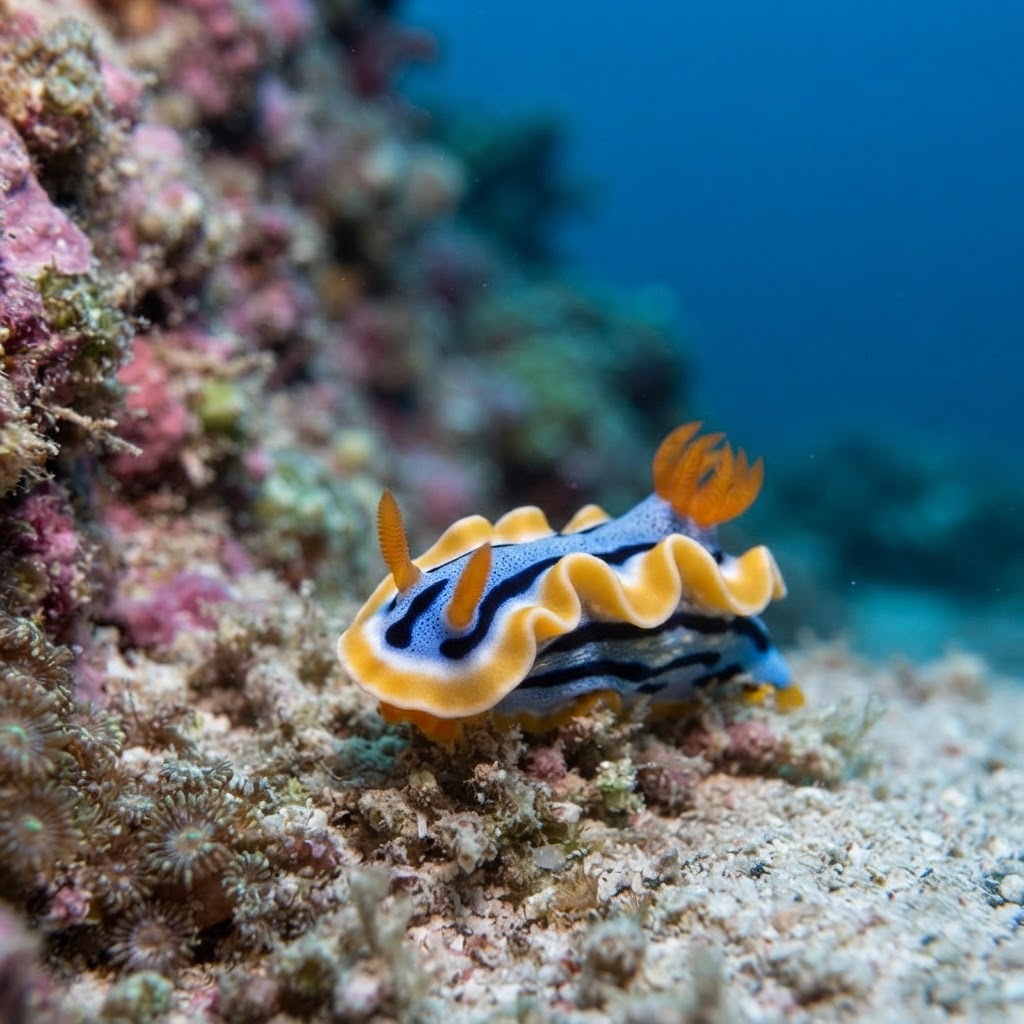
A tiny nudibranch, rarely more than a centimetre long, with a white to pale mantle bordered by an orange band and a fine purple or violet outer margin. The gills and rhinophores (the small paired sensory horns on the head) are typically orange-tipped, standing out against the pale body. Size alone rules out most reef fish confusion; the trick underwater is spotting it at all against sponge and algae-covered substrate.
Look for it grazing slowly across sponge-encrusted rock and rubble, usually low on the reef where light is dim and cover is dense. It pays no attention to divers and will not flee or hide when approached, so a slow, careful eye and a macro lens are the only tools needed. Most sightings come from divers deliberately scanning for small subjects rather than stumbling on it mid-swim.
Like other chromodorid nudibranchs, it feeds on specific sponges and stores or modifies chemical compounds from that diet as a defence against predators, meaning its bright colouring likely signals unpalatability rather than serving as camouflage.
No clear season shows up in the sighting data, and its comfortable range of 25.1 to 31.1C matches warm tropical and subtropical reefs year-round, so any month is fair game at these sites.
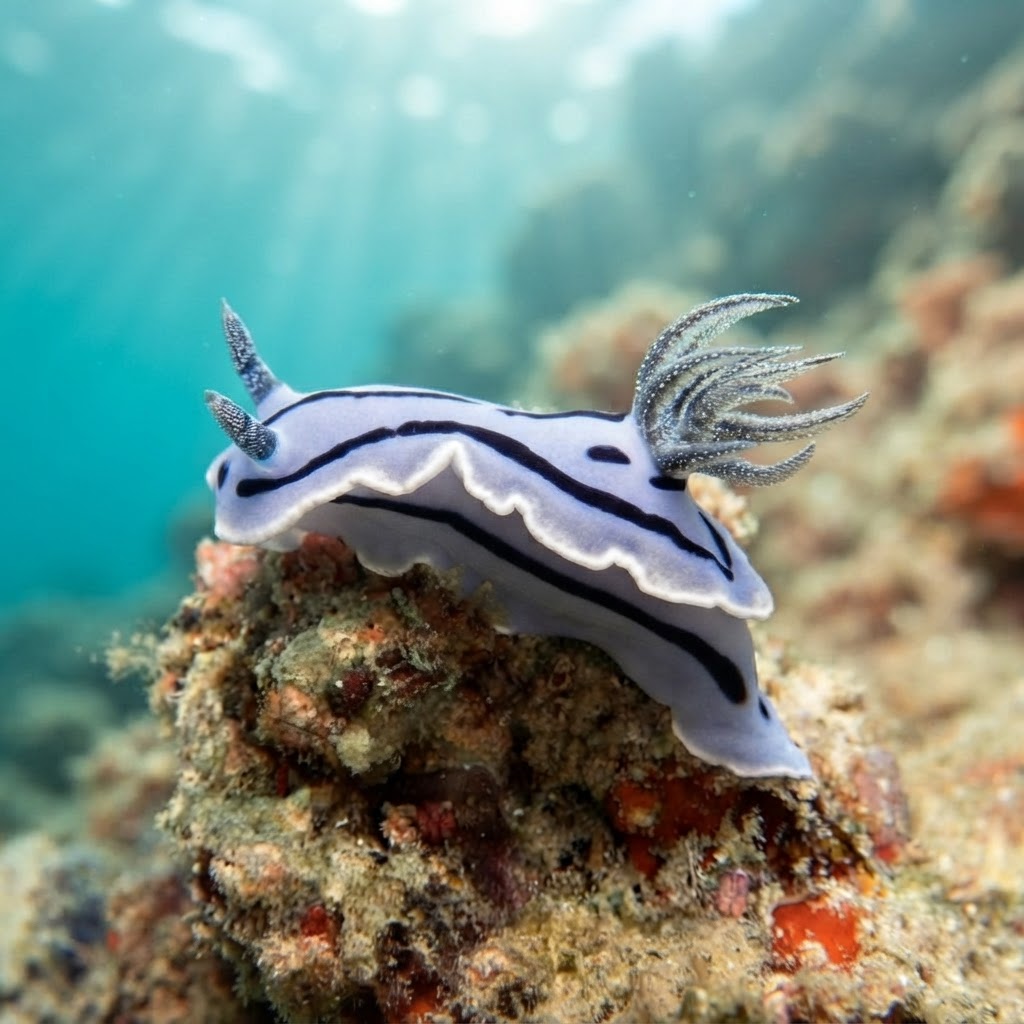
Reef neighbours a diver could mistake it for. Use the identification notes above to tell them apart.
Most reliably logged in the Philippines, particularly Luzon and the Visayas, and in Sabah, Malaysia, with strong numbers also coming out of Sulawesi in Indonesia. Okinawa and the Ryukyu Islands in Japan add a northern outpost, and it turns up less frequently in Green Island and Orchid Island in Taiwan and around Efate in Vanuatu.
Mapping where Willan's Chromodoris is logged…
It is most commonly logged in the Philippines, especially Luzon and the Visayas, and in Sabah, Malaysia. Sulawesi in Indonesia and Okinawa in Japan are also reliable spots, with smaller populations recorded in Taiwan and Vanuatu.
There is no strong seasonal pattern in the sighting data, and its warm-water niche of roughly 25 to 31C is met year-round across its Indo-Pacific range, so it can be found on any month's dive.
Look for a tiny, centimetre-long nudibranch with a pale white to cream mantle, an orange border, and a thin purple outer edge. Orange tips on the gills and rhinophores are the detail most divers key on once they spot it against the reef.
Around 1cm, making it one of the smaller nudibranchs divers photograph, so a macro lens and a patient scan of sponge-covered rubble are usually needed to find one.
No. It has no known risk to divers and will not react defensively if approached; the only care needed is avoiding contact with the reef surface it sits on.
Its bright colouring is thought to advertise chemical defences absorbed from the specific sponges it feeds on, warning predators off rather than helping it hide.
Site and sighting data is aggregated from diver logs, iNaturalist and GBIF. For taxonomy and conservation status:
Light-spotted Aegires
3,168 sites