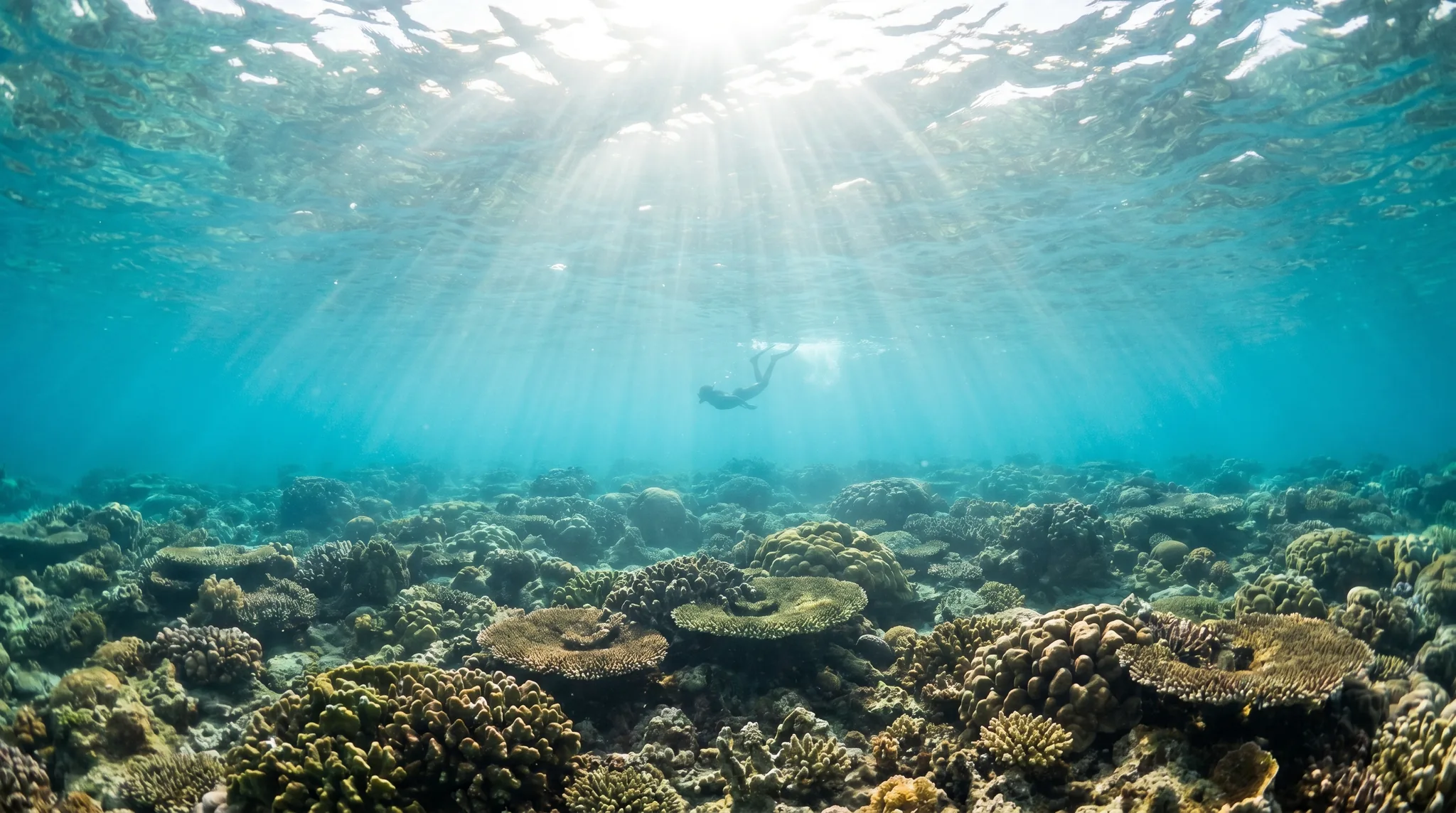
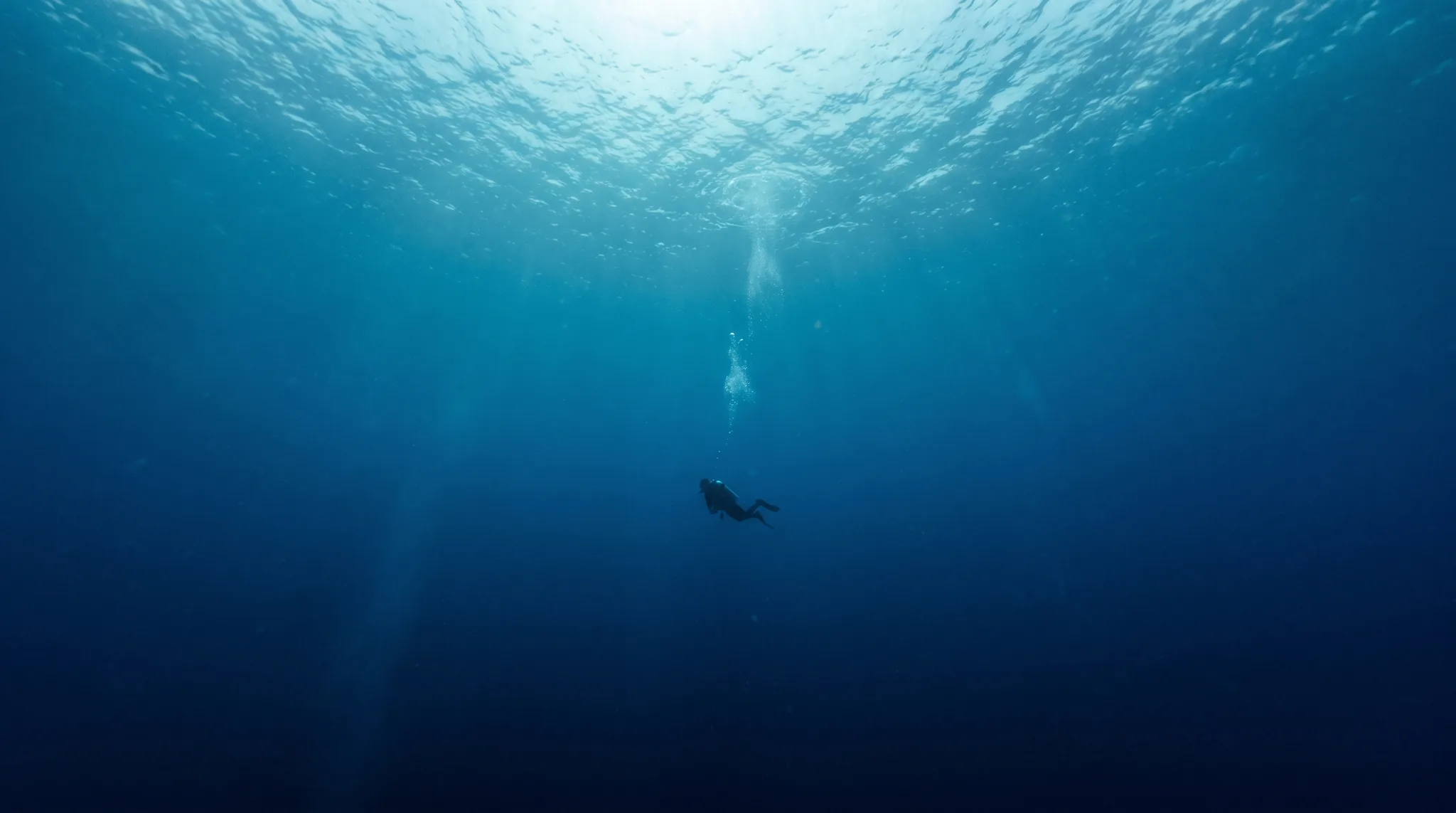
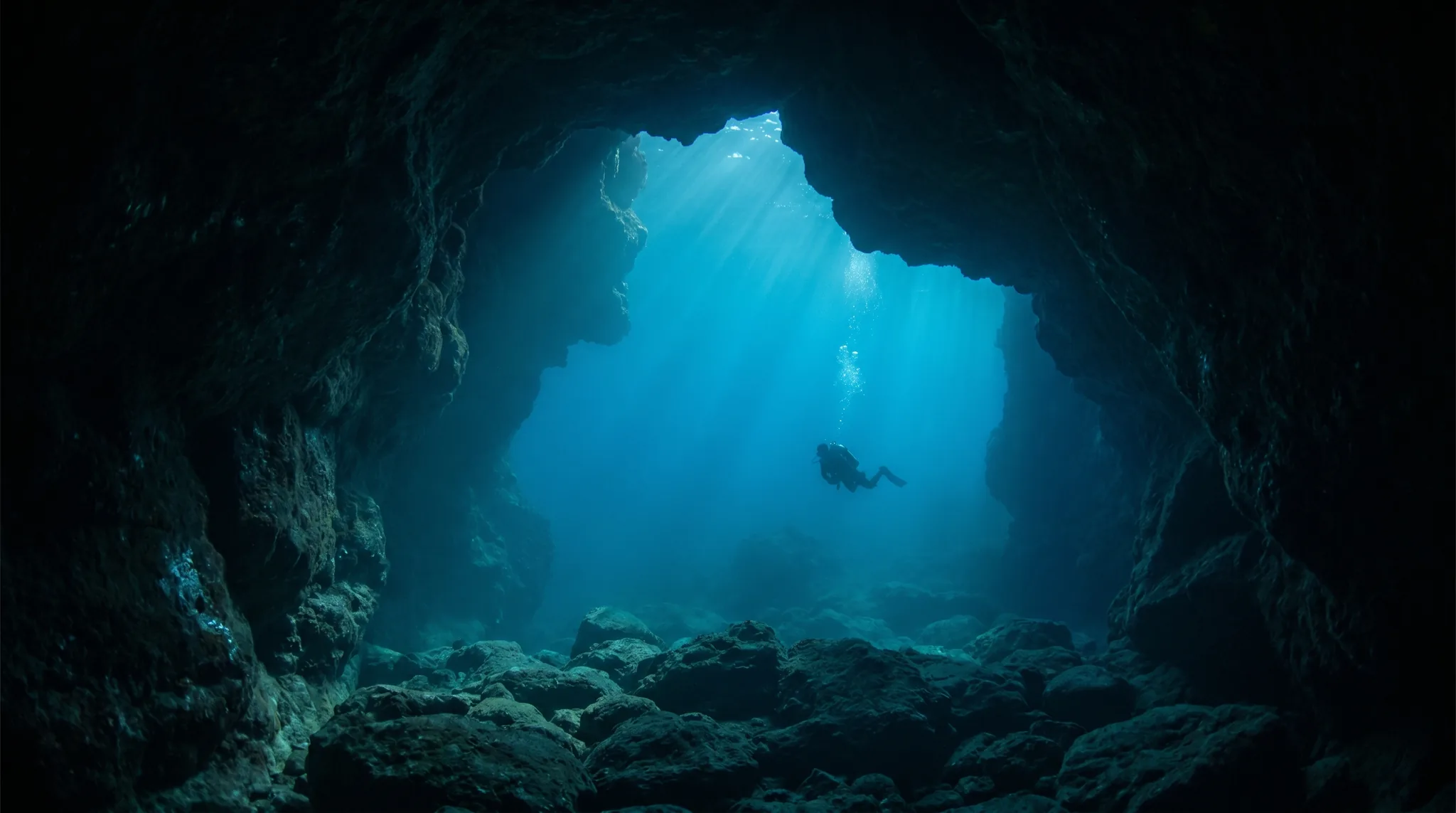
Kabira sits on Ishigaki Island, with its dive sites spread across reefs, walls, and drift formations in warm, clear water. Water temperatures stay warm throughout the year, dipping only slightly in winter and reaching their peak in mid-summer, so a thin wetsuit or rashguard is usually sufficient. The area is best known for Manta Scramble, a cleaning station where manta rays are regularly encountered, but the broader site list includes the deep drift of Emperor's Chair, the arches of Sakieda, and shallower reef dives suitable for beginners. Visibility at the reef sites is frequently in the range of twenty to thirty metres. North winds and swells in winter can limit access to certain boat sites.
Monthly water temperature across Kabira's sites, from satellite sea-surface data corrected for depth. The band shows the site-to-site spread.
Temperatures are consistently warm, making year-round diving comfortable without a heavy suit. The period from late spring through autumn sees the most settled conditions, with the best access to exposed sites. Winter brings cooler water and north winds that can close some boat departures.
7 operators
Japan
Japan
Japan
Japan
Water temperature around Kabira ranges from about 23°C in February to 30°C in July, based on satellite sea-temperature data for its dive sites.
In the warm season (about 30°C) a rash guard or 3mm shorty is comfortable in Kabira; in the coldest months (about 23°C) step up to a 3mm full suit.
Fin maps 9 sites in Kabira (8 scuba diving sites and 2 snorkelling spots, with some suited to both).
Across Kabira's dive sites, August, September, October and November are most often reported as the best months to visit.
4 more sites to explore