Tridacna maxima
Spot the elongate clam across the Maldives, Egyptian Red Sea, and Indo-Pacific reefs year-round. Tips on ID and what sets it apart from the giant clam.
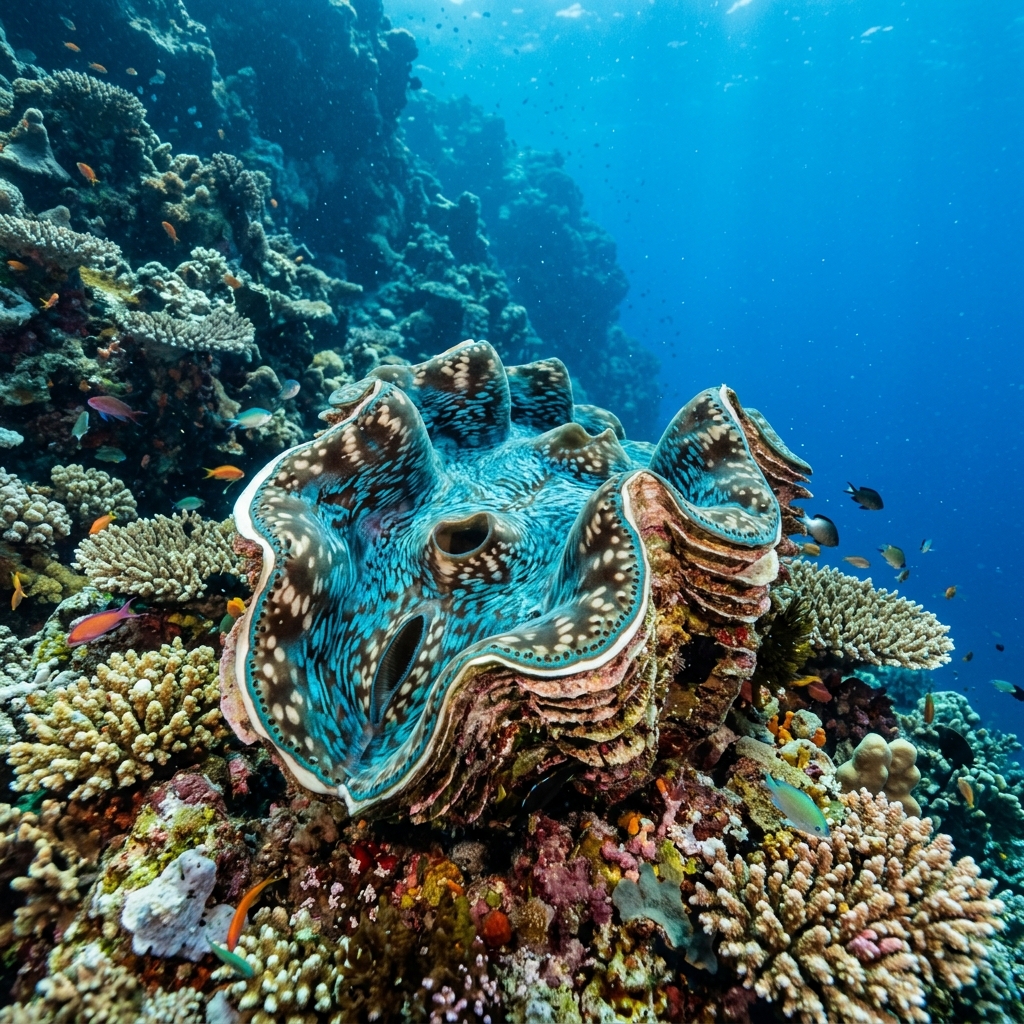
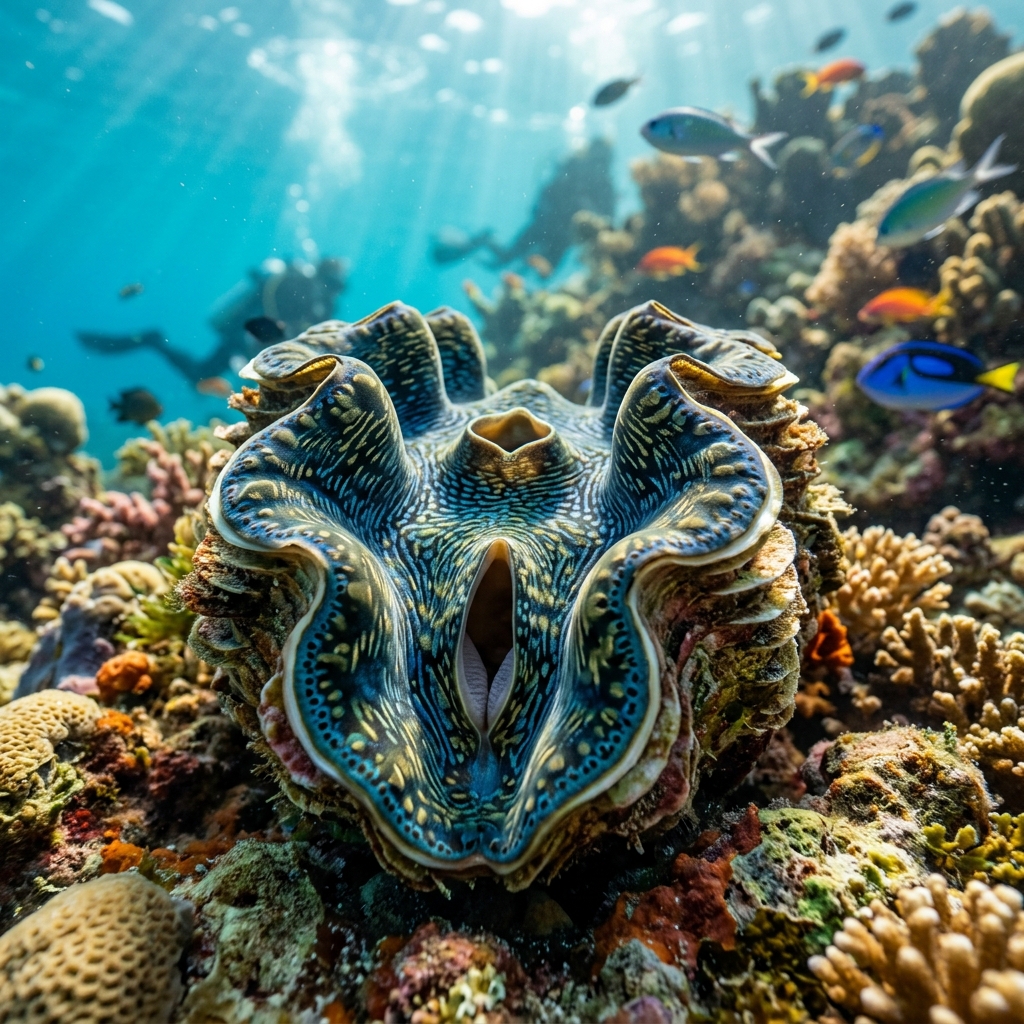
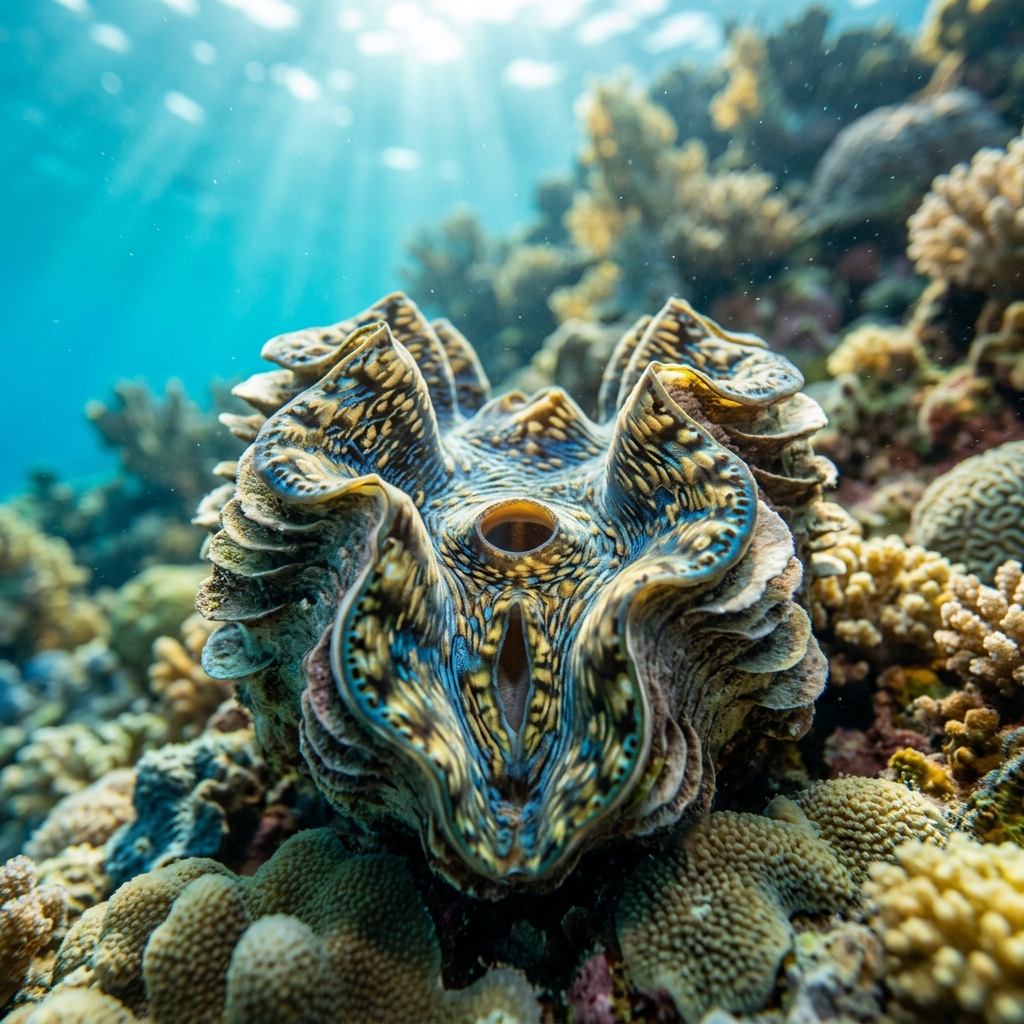
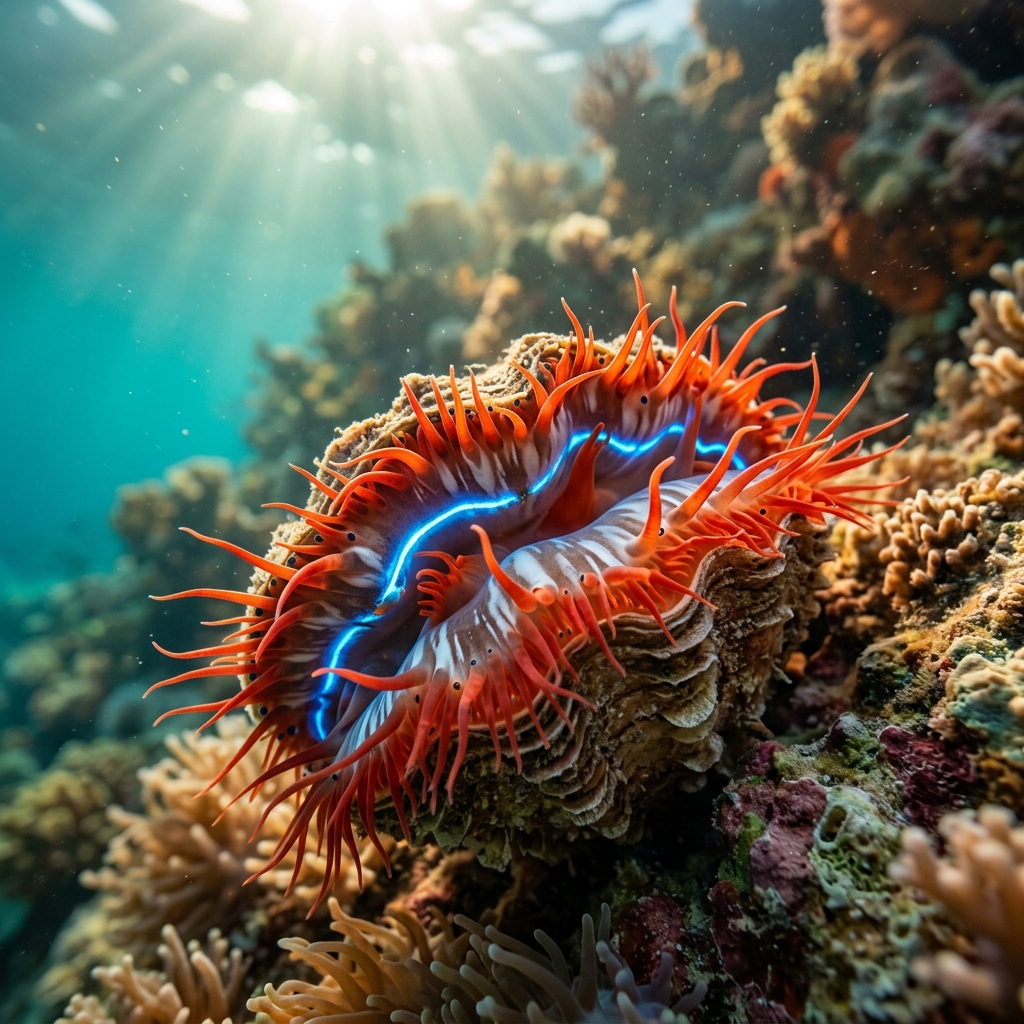
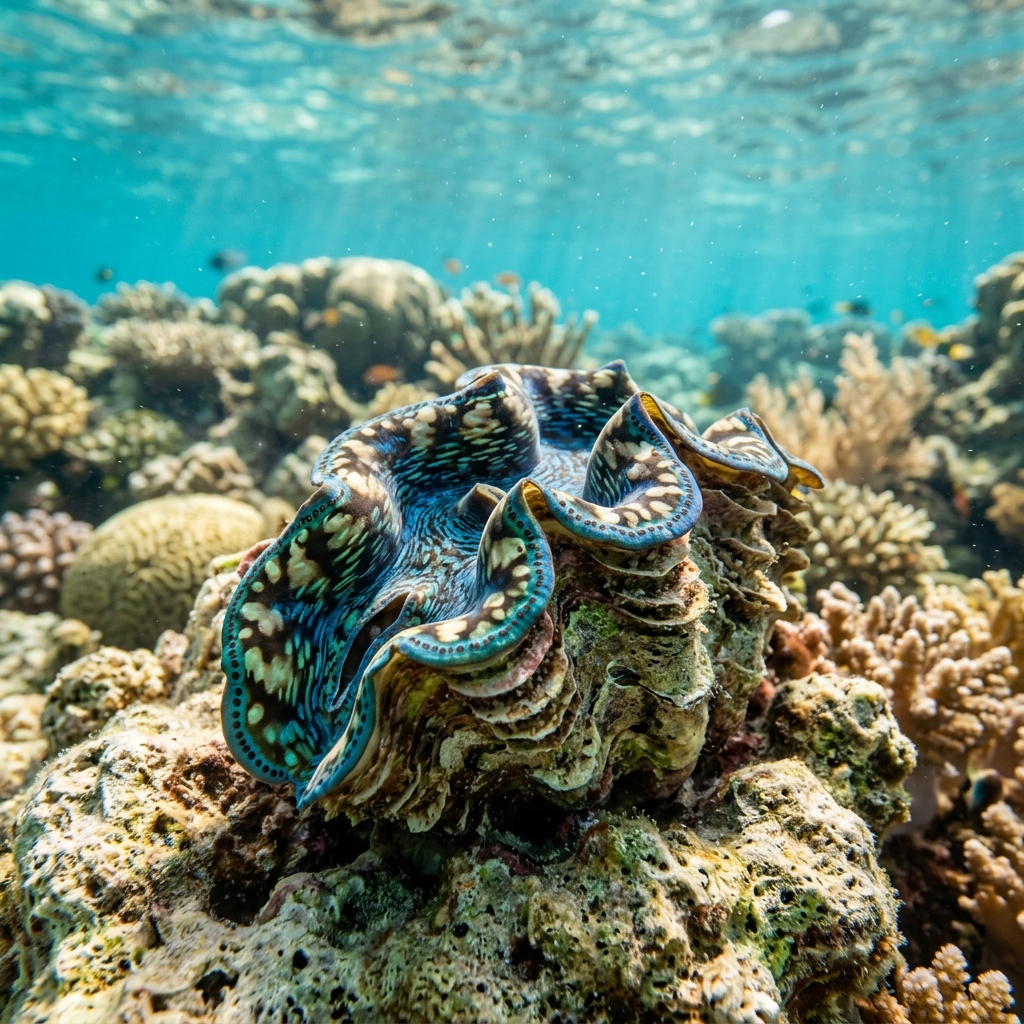
Look for an elongated oval shell, noticeably longer relative to its width compared with other tridacnid (giant clam family) species, sitting embedded in coral or rock. The mantle that fringes the shell opening comes in vivid blues, greens, and browns patterned with spots or whorls, and it contracts when a shadow passes overhead. The shell itself has four to six radiating ridges running from hinge to edge, giving the surface a corrugated look that helps distinguish it from the smoother Smooth Giant Clam.
You will typically find them firmly anchored in shallow reef flats and coral rubble, often partly buried or wedged into crevices, opening their colourful mantles to the light to let symbiotic algae (zooxanthellae) photosynthesise. Approach slowly and they will remain open; move fast or cast a shadow and the mantle snaps shut with a visible jet of water. They are most active, meaning most photosynthetically open, on bright days in shallow water.
The vivid mantle colour is not just decoration. It contains photosynthetic algae that live inside the tissue and supply the clam with a large share of its energy, making it as much farmer as filter-feeder.
Present year-round in both hemispheres with no concentrated season, which fits its temperature niche of roughly 23 to 29 °C across tropical reef systems.
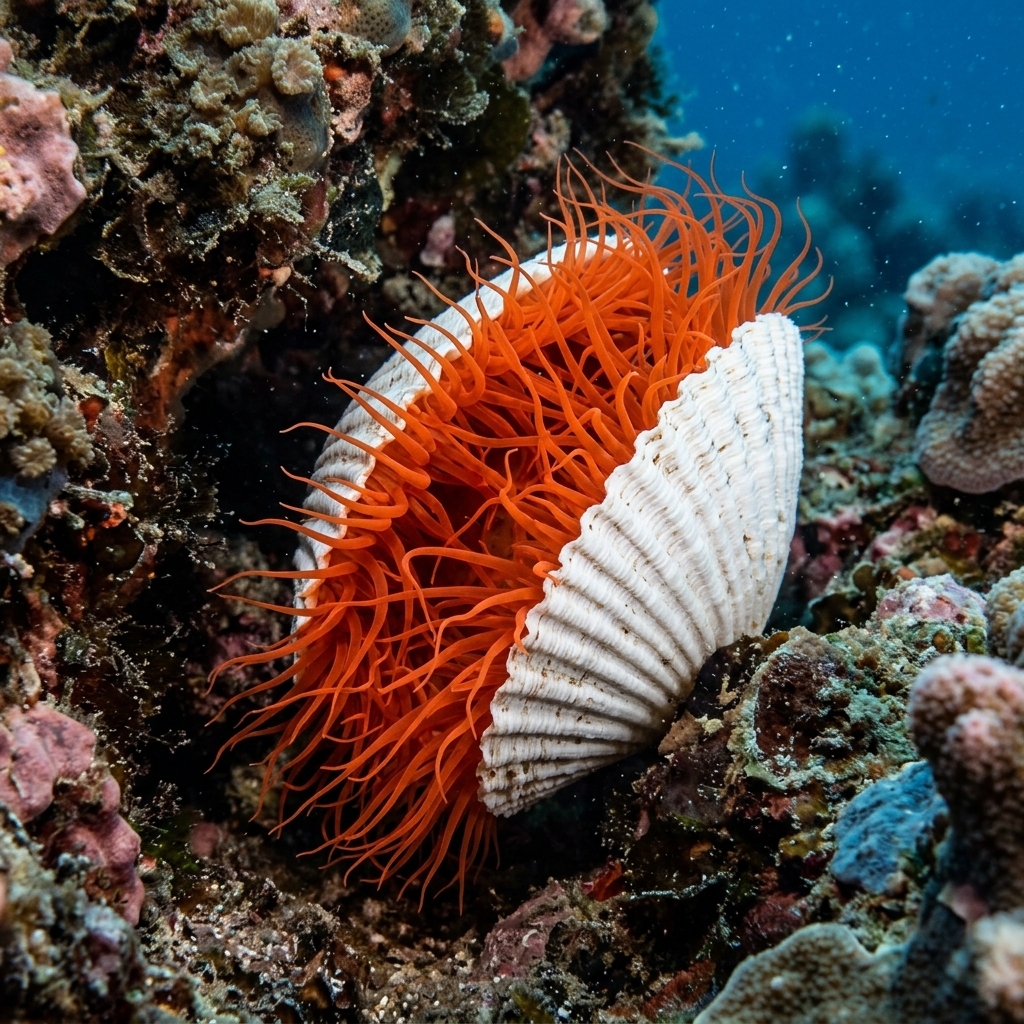
Reef neighbours a diver could mistake it for. Use the identification notes above to tell them apart.
Most commonly logged across the Egyptian Red Sea, particularly around Sharm el Sheikh and Marsa Alam, and in the Maldives around the Male and Ari Atolls. Strong sightings also run through Malaysia, Indonesia, the Philippines, French Polynesia, Japan's Okinawa Islands, and Queensland, Australia, making this one of the most widely encountered tridacnid clams across the Indo-Pacific and Red Sea.
Mapping where Elongate Clam is logged…
They are found across a wide sweep of Indo-Pacific and Red Sea reef systems. The strongest concentrations in diver logs are in the Maldives (especially Male and Ari Atolls), the Egyptian Red Sea around Sharm el Sheikh and Marsa Alam, Bali in Indonesia, the Visayas in the Philippines, and Okinawa, Japan. French Polynesia and Queensland, Australia also have reliable sightings.
Any time of year. Diver records in both the northern and southern hemispheres show no concentrated season, and the species is comfortable across the 23 to 29 °C water temperatures typical of tropical reefs throughout the year.
Key on the elongated shell shape, longer and narrower than the classic giant clam, combined with four to six firm radiating ridges running along the outer shell. The exposed mantle flashes blues, greens, or browns with a distinctive spotted or swirling pattern. When a shadow passes, the mantle closes quickly, which is often the first thing that catches a diver's eye.
They typically reach around 20 to 35 centimetres in shell length, making them medium-sized among tridacnid clams. They are considerably smaller than the giant clam but larger than some of the rarer dwarf tridacnid species.
The mantle colour comes from symbiotic algae called zooxanthellae living inside the tissue, along with pigment cells that may help regulate light levels reaching those algae. The clam essentially farms these algae for energy, which is why it always positions itself to catch sunlight in shallow, well-lit water.
Site and sighting data is aggregated from diver logs, iNaturalist and GBIF. For taxonomy and conservation status:
Frilled File Shell
1,375 sites