Lutjanus decussatus
Reef fish with a checkerboard flank pattern, most reliably logged around Sabah, Raja Ampat and Phuket in warm 27-29C water year-round.
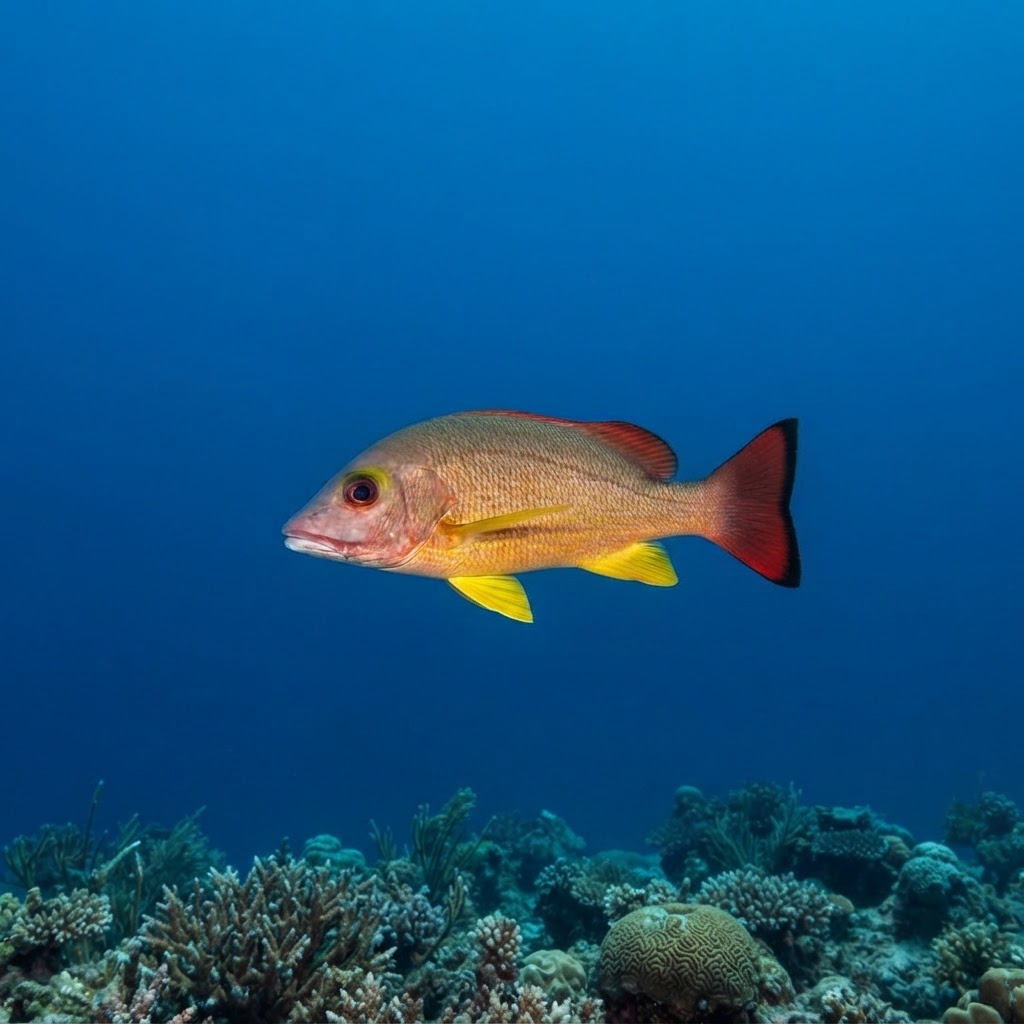
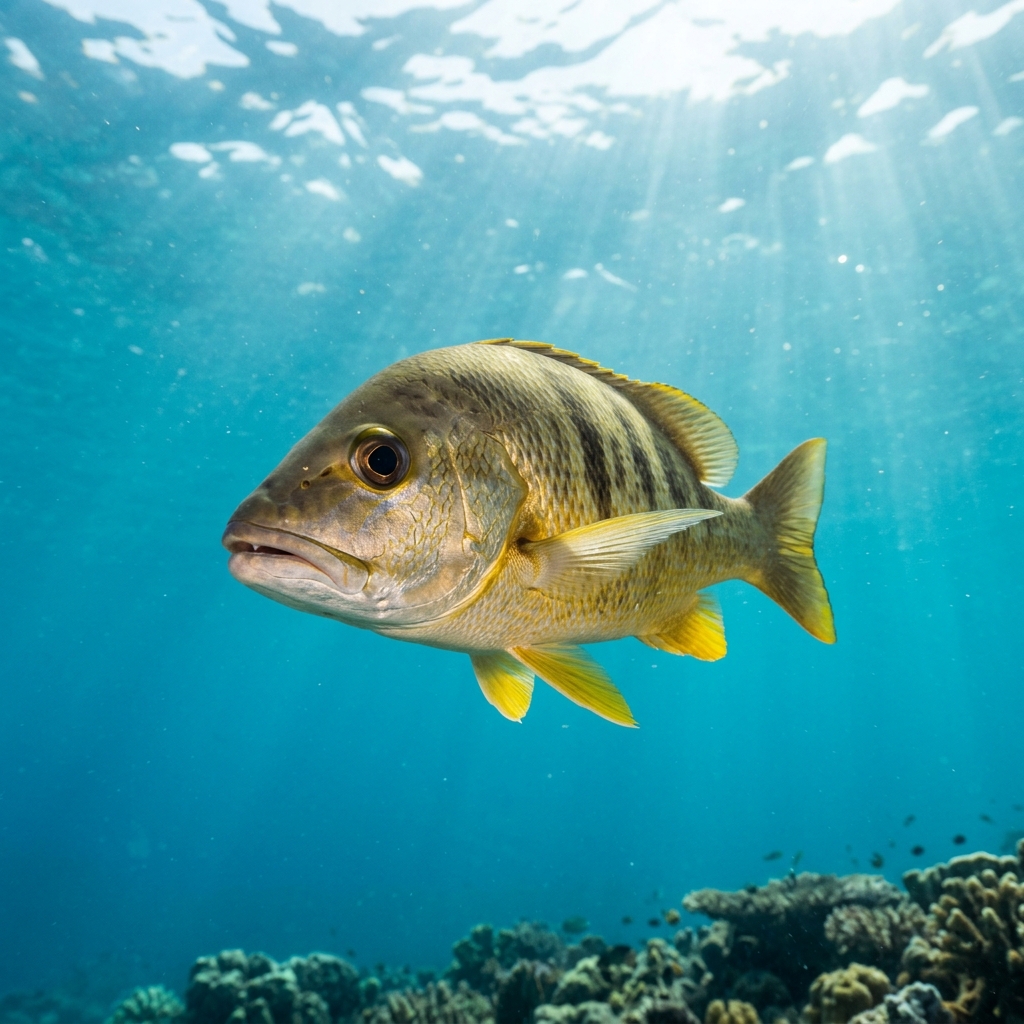
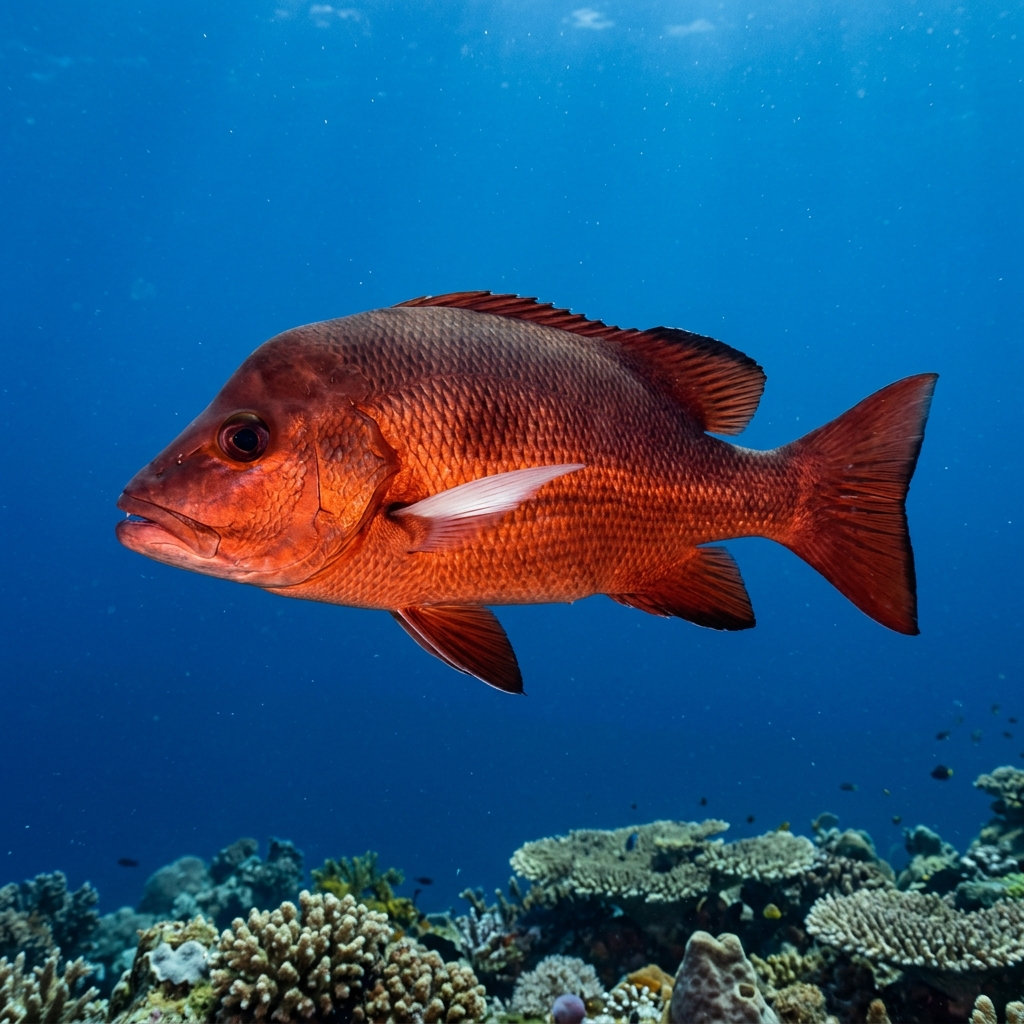
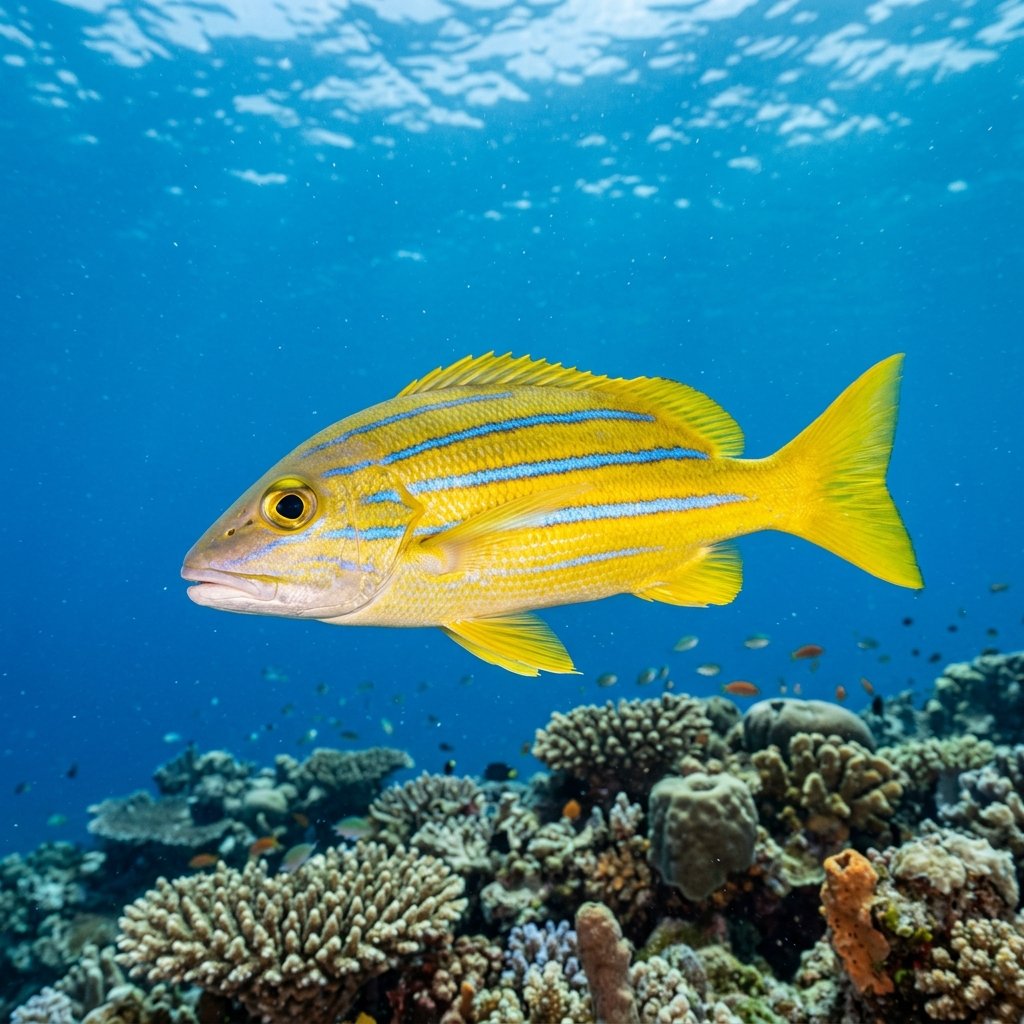
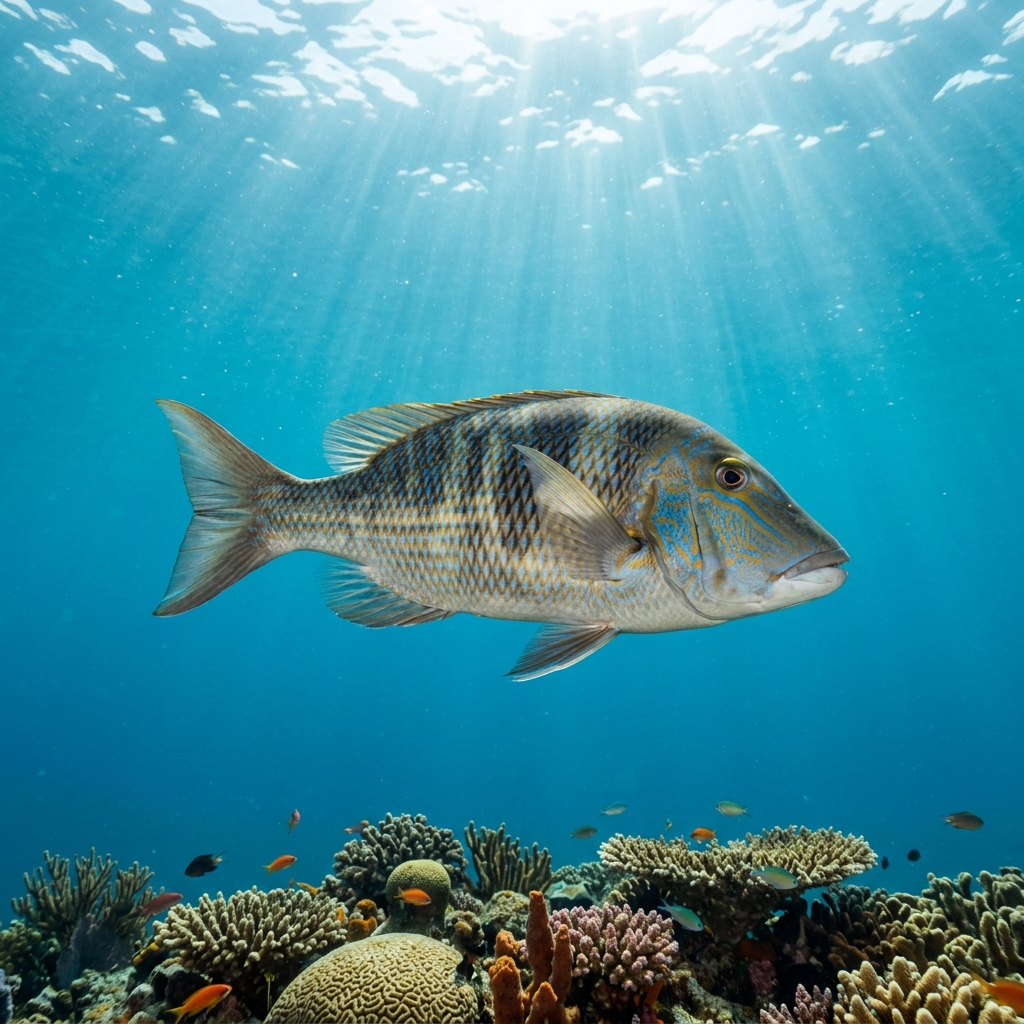
Look for a compact, deep-bodied snapper around 24 cm with a distinctive checkerboard pattern of pale scale rows crossed by dark diagonal bars along the upper flank. A dark blotch usually sits near the base of the tail, and the lower body fades to a cleaner silvery-white. It often hovers close to reef structure rather than out in open water, which combined with the checkered flank pattern makes it easy to pick out once you know the pattern.
Divers typically find it hovering singly or in small loose groups close to coral heads, ledges and reef crevices rather than schooling in open water. It tends to hold its position as divers approach, drifting back into cover rather than bolting, and feeds on small reef invertebrates and fish picked off the structure below. Most logs describe it as an uncommon but steady presence rather than something you have to search hard for on the right reef.
Its checkerboard flank pattern is broken up by the dark tail-base blotch, a combination that likely helps disrupt its outline against dappled reef light and coral texture, making it harder for both predators and prey to fix on.
No clear seasonal pattern shows up in the sighting data, and its comfort range of 27.4 to 29.3C matches tropical reefs year-round, so any month is a fair bet in its core range.
Reef neighbours a diver could mistake it for. Use the identification notes above to tell them apart.
This is a widely logged reef snapper across Southeast Asia, with the strongest showing in Malaysia (both Peninsular Malaysia's east coast and Sabah), Thailand (Phuket, Khao Lak, Koh Phi Phi and Koh Lipe all turn it up regularly), and Indonesia's Raja Ampat. The Philippines' Visayas region and sites in Sri Lanka, Japan, Cambodia and India also produce sightings, though usually as an uncommon rather than dominant reef fish.
Mapping where Checkered Snapper is logged…
It shows up widely across Southeast Asian reefs, with the most consistent sightings in Sabah and Peninsular Malaysia's east coast, Raja Ampat in Indonesia, and Thailand's Phuket, Khao Lak, Koh Phi Phi and Koh Lipe. It also turns up in the Philippines' Visayas region, Sri Lanka, Japan and Cambodia.
There is no strong seasonal pattern in the sighting data, and it favours warm water around 27 to 29C year-round, so it is a fair target on tropical reefs in any month.
Check for a stocky snapper body around 24 cm with a checkerboard pattern of pale scale rows crossed by dark diagonal bars on the upper flank, a dark blotch near the tail base, and a paler silvery lower body. It usually sits close to reef structure rather than schooling in open water.
They typically reach around 24 cm, a modest size that makes them easy to mistake for a juvenile of a larger snapper species if you are not looking closely at the flank pattern.
No, they pose no threat to divers and are simply a reef-associated fish that holds near cover as you pass. No special caution is needed around them.
Site and sighting data is aggregated from diver logs, iNaturalist and GBIF. For taxonomy and conservation status:
Emperor
2,055 sites