Amphiprion ocellaris
Spot ocellaris anemonefish in the Visayas, Bali, and Perhentian Islands. Warm 26-29 °C reefs year-round. Here's where to look and how to tell them apart.
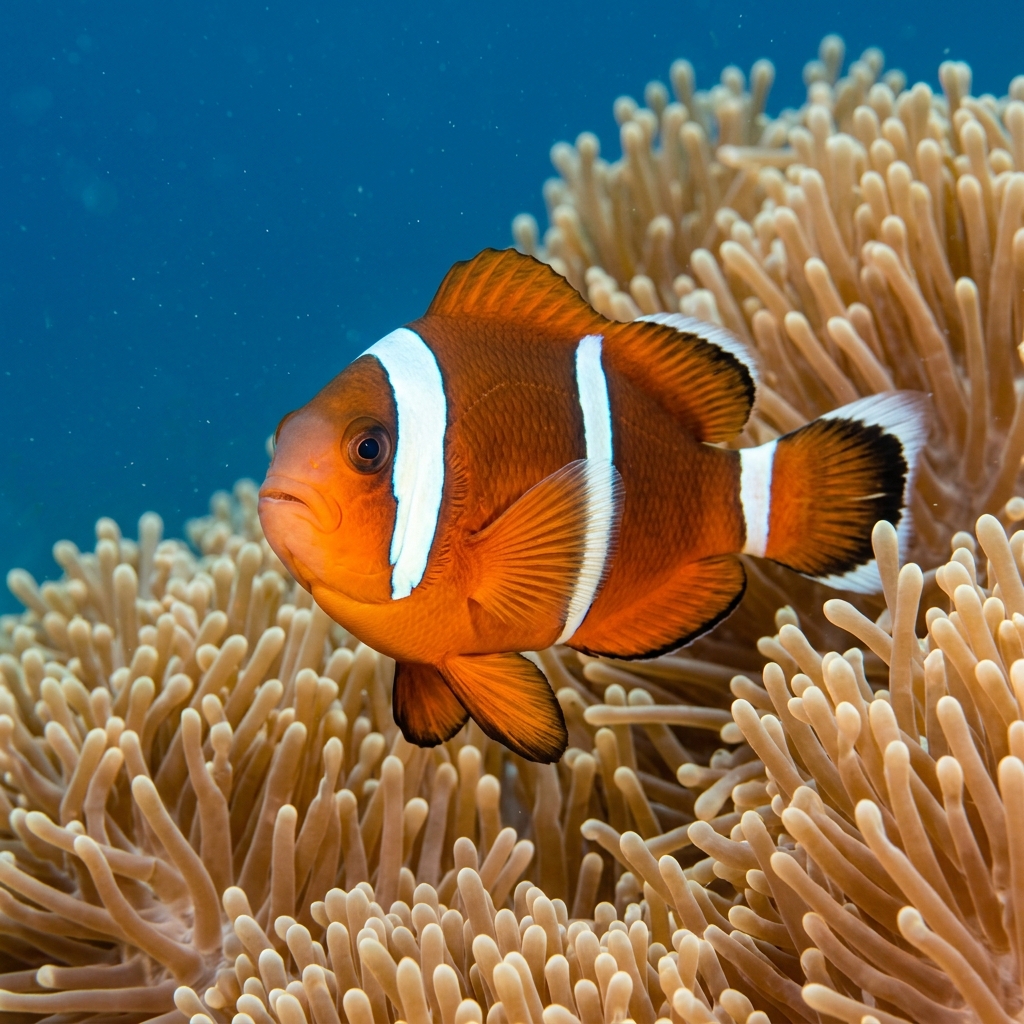
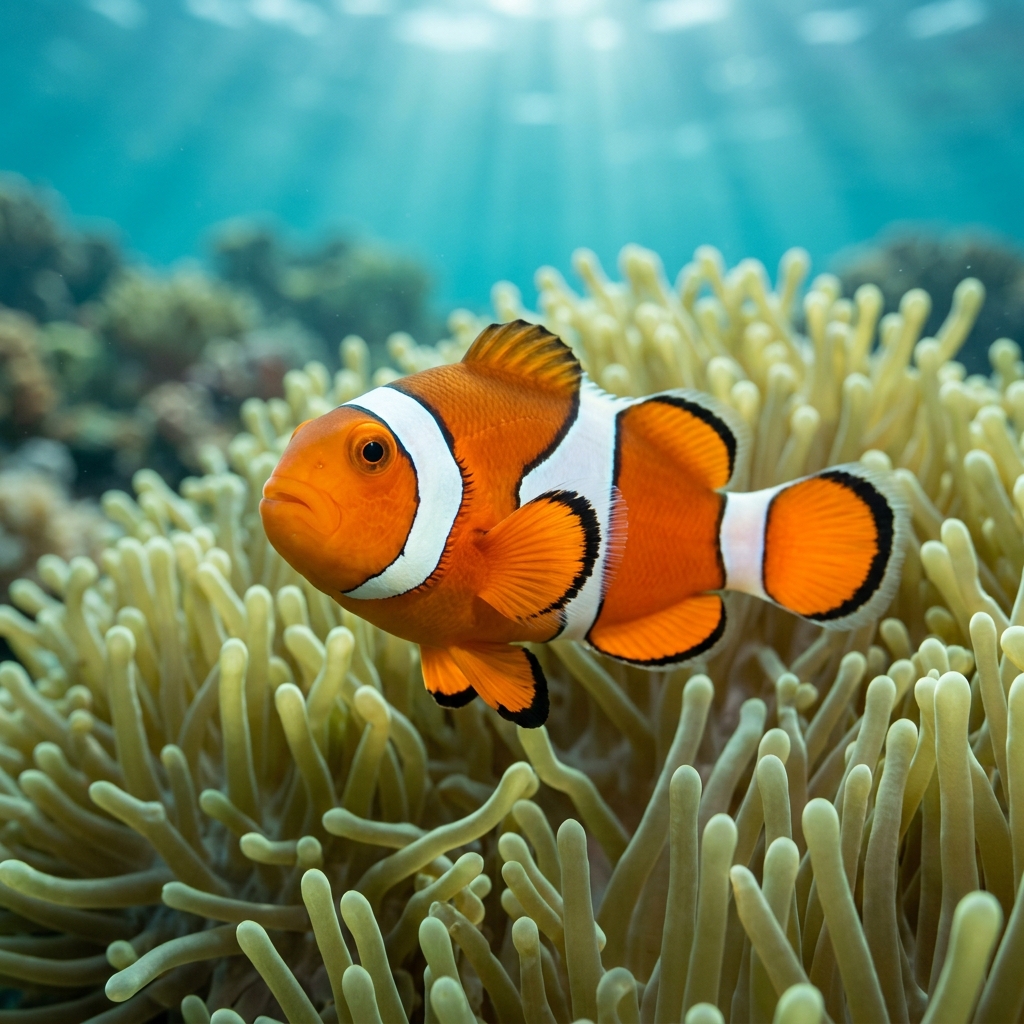
A small fish, rarely more than 7 cm, with a vivid orange body broken by three broad white bars, each rimmed in a thin black outline. That black edging on the white bars is the key field mark separating it from several close relatives. The body is oval and laterally compressed, and individuals almost never stray far from their host anemone, so the anemone itself is half the identification clue.
Spot a bobbing orange shape over an anemone and you have already found one, they are almost always visible, actively tending their host and staying within darting distance of its tentacles. They are boldly territorial and will swim aggressively towards a camera lens or an approaching hand, sometimes making contact; it is display behaviour rather than a serious threat, but it makes them easy to observe at close range. Active throughout the day, they spend most of their time in the anemone's canopy, feeding on passing zooplankton and picking algae from the immediate area.
All ocellaris anemonefish are born male; the dominant individual in any group transitions to female. If the resident female dies, the largest male changes sex and takes her place, keeping the group's hierarchy intact.
In the Northern Hemisphere this species is present year-round, which makes sense given its narrow warm-water comfort zone of roughly 26 to 29 °C on tropical reefs that barely dip below that. In the Southern Hemisphere, sightings concentrate between October and April.
Most commonly logged in the Philippines and Indonesia, with the Visayas (Central, East, and North) and Bali, Lombok and Java accounting for a large share of sightings. Malaysia is also a strong destination, particularly the Perhentian and Redang islands and Sipadan and East Sabah, with Thailand and Australia rounding out the core range.
Mapping where Common Clownfish (Nemo) is logged…
The Philippines and Indonesia account for the strongest populations, with the Visayas region and Bali among the top spots. Malaysia's Perhentian and Redang islands and Sipadan are also reliable, as are many sites across Thailand and northern Australia.
In the Northern Hemisphere they are present year-round on warm tropical reefs. If you are diving in the Southern Hemisphere, northern Australia, for example, sightings concentrate between October and April.
Look for a small orange fish with three white bars each outlined in black, always hovering close to a sea anemone. The black edging on the white bars is the clearest in-water clue; it is bolder and more consistent than on most similar species.
Adults typically reach about 7 cm. Females are the largest individuals in any group; males stay noticeably smaller. Their compact size is part of why they can shelter so effectively inside a host anemone's tentacles.
Yes. Every individual starts life as a functional male. If the group's female dies, the dominant male changes sex and becomes the new breeding female. This means the largest fish at any anemone is always a female.
Site and sighting data is aggregated from diver logs, iNaturalist and GBIF. For taxonomy and conservation status:
Dascyllus
3,697 sites