Siganus unimaculatus
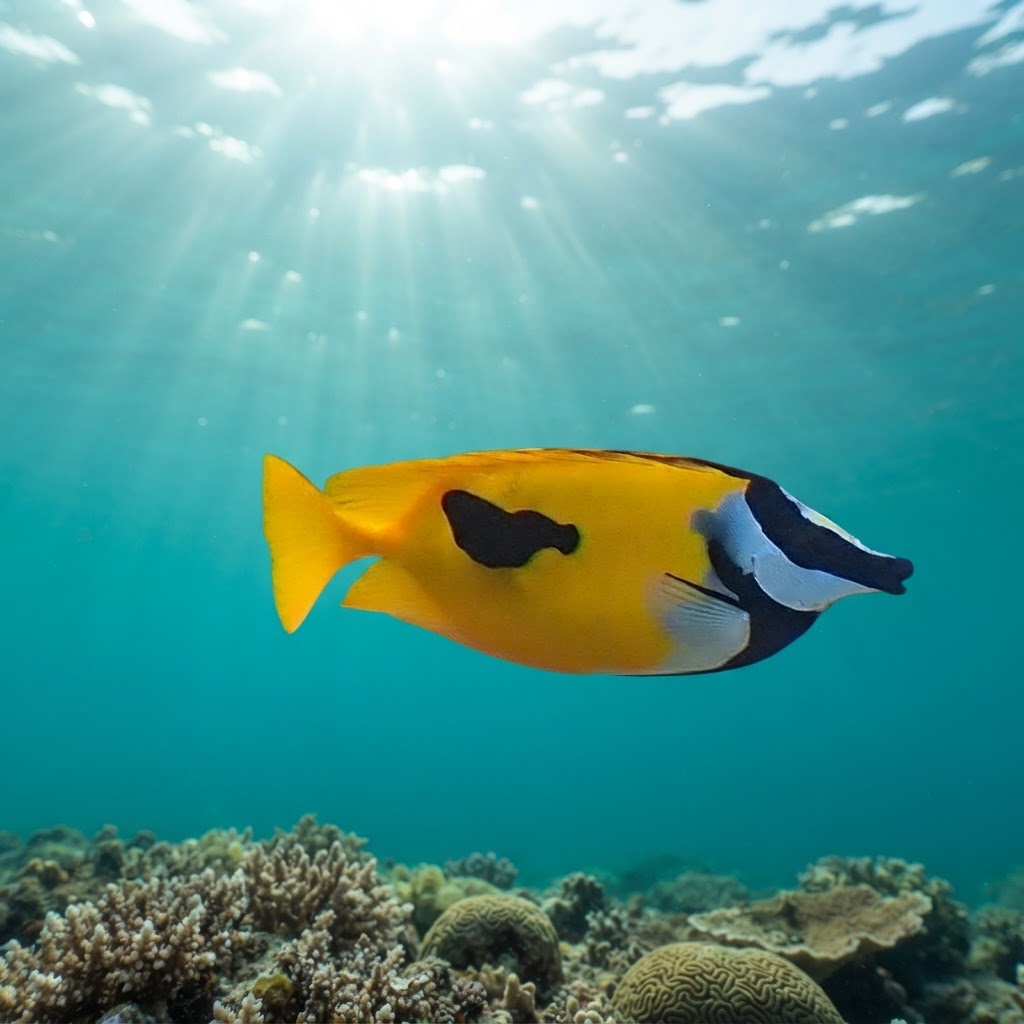
Bright yellow with a black-masked face, found on Okinawa's reefs at 25-29 C, logged year-round across Japan and the Philippines.
Safety warning
The dorsal, anal and pelvic spines carry venom glands and can deliver a painful sting if you grab or corner one, though it poses no threat if simply observed. Keep hands off any foxface you photograph and be mindful of buoyancy near reef nooks where one might be tucked in.
If you're stung
Venomous fin spinesGeneral first-aid guidance, not a substitute for professional medical care. In an emergency, call your local emergency number.
A small, laterally flattened fish around 14 cm, easy to pick out with its bright yellow rear body against a white front half split by a black mask running through the eye. The snout is drawn out into a slight point, a shape typical of foxface rabbitfish, and the dorsal fin carries venomous spines that give it a slightly humped profile when alarmed. There's no strong juvenile or sex-based colour difference to worry about for ID purposes.
Usually seen picking at algae and sponge on the reef flat or slope, often solo or in a loose pair, moving unhurriedly along coral heads rather than out in open water. It tends to hold its ground rather than bolt when a diver approaches, though it will angle its spiny dorsal fin toward you if it feels crowded. Most sightings are on daytime dives on shallower reef structure.
Like other rabbitfish and foxfaces, it can lock its dorsal, anal and pelvic spines rigid when threatened, turning a soft-bodied little fish into an awkward mouthful for a predator to swallow.
No clear seasonal pattern shows up in the sighting data, and with a comfortable range of 25.4 to 29.1 C it's likely present on Okinawan and Visayan reefs across the year rather than tied to a particular season.
Most reliably found around Okinawa and the Ryukyu Islands in Japan, which accounts for the large majority of logged sightings, with a smaller but consistent presence in the Visayas region of the Philippines. Divers in these two countries have the best odds, though it turns up as an uncommon rather than everyday sighting even on the reefs where it's known.
Mapping where Blotched Foxface is logged…
Okinawa and the Ryukyu Islands in Japan are the strongest area for sightings, with the Visayas region of the Philippines as a secondary spot. Outside these two countries it isn't well documented by divers.
There's no detected seasonal pattern, and its comfortable temperature range of roughly 25 to 29 C suggests it's around year-round on Okinawan and Visayan reefs rather than showing up only in certain months.
They carry venomous spines in the dorsal, anal and pelvic fins that can sting if handled or cornered, but they aren't aggressive towards divers. Simply avoid touching one and there's no real risk.
Look for a small, flat-bodied fish around 14 cm with a bright yellow rear half, a white front half, and a black mask crossing through the eye. The pointed snout is a classic foxface giveaway.
They're a small reef fish, typically reaching around 14 cm in length, so they're easy to overlook against busier coral structure.
It can lock its spiny fins rigid when threatened, turning its slim body into a much harder mouthful for a predator, a defence shared with other rabbitfish and foxfaces.
Site and sighting data is aggregated from diver logs, iNaturalist and GBIF. For taxonomy and conservation status:
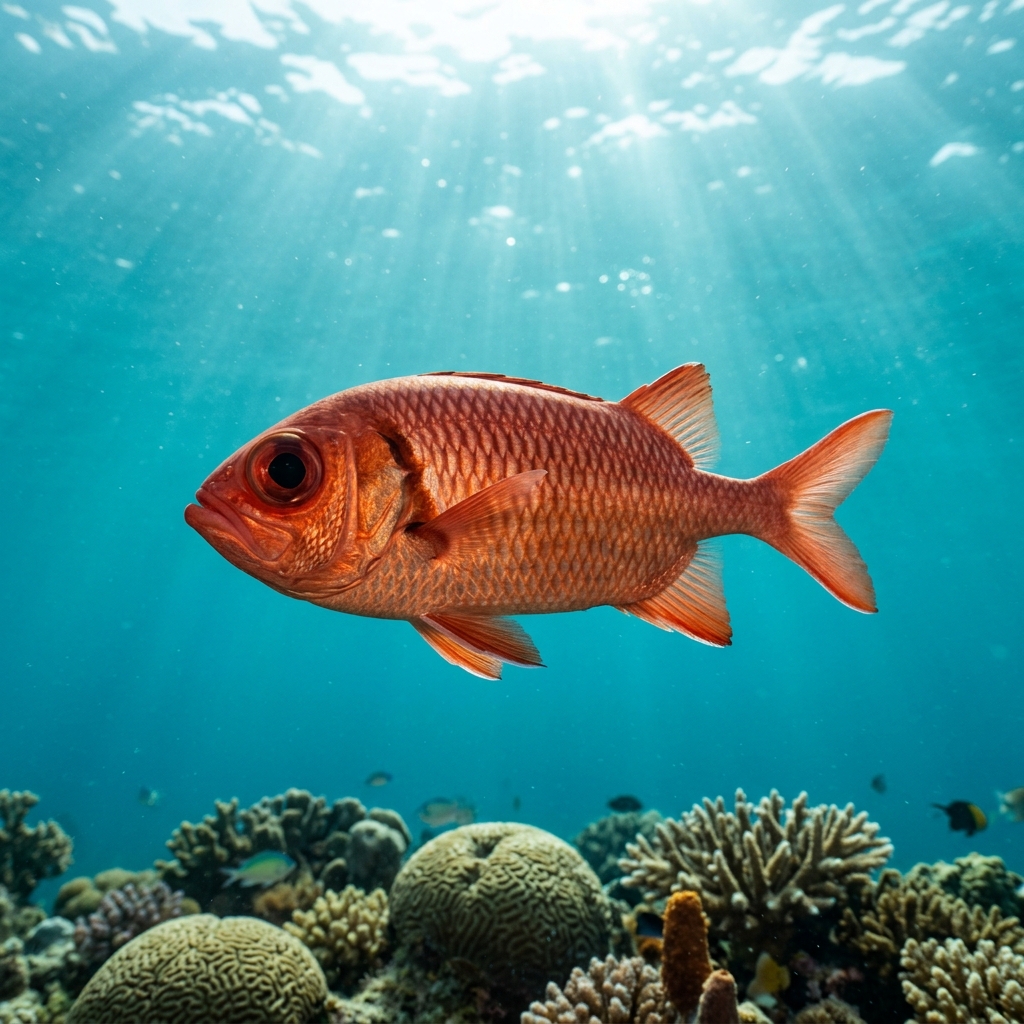
Soldierfish
3,612 sites