Zebrasoma scopas
An oval, brown-to-olive tang seen on reefs from Bali to the Society Islands, comfortable year-round in 25-29C water.
Safety warning
The tail spine can slice skin if you corner or grab one, so admire it from a distance and avoid chasing it into crevices. Injuries are uncommon and mainly happen when divers try to touch or handle the fish.
If you're cut
Tail scalpelGeneral first-aid guidance, not a substitute for professional medical care. In an emergency, call your local emergency number.
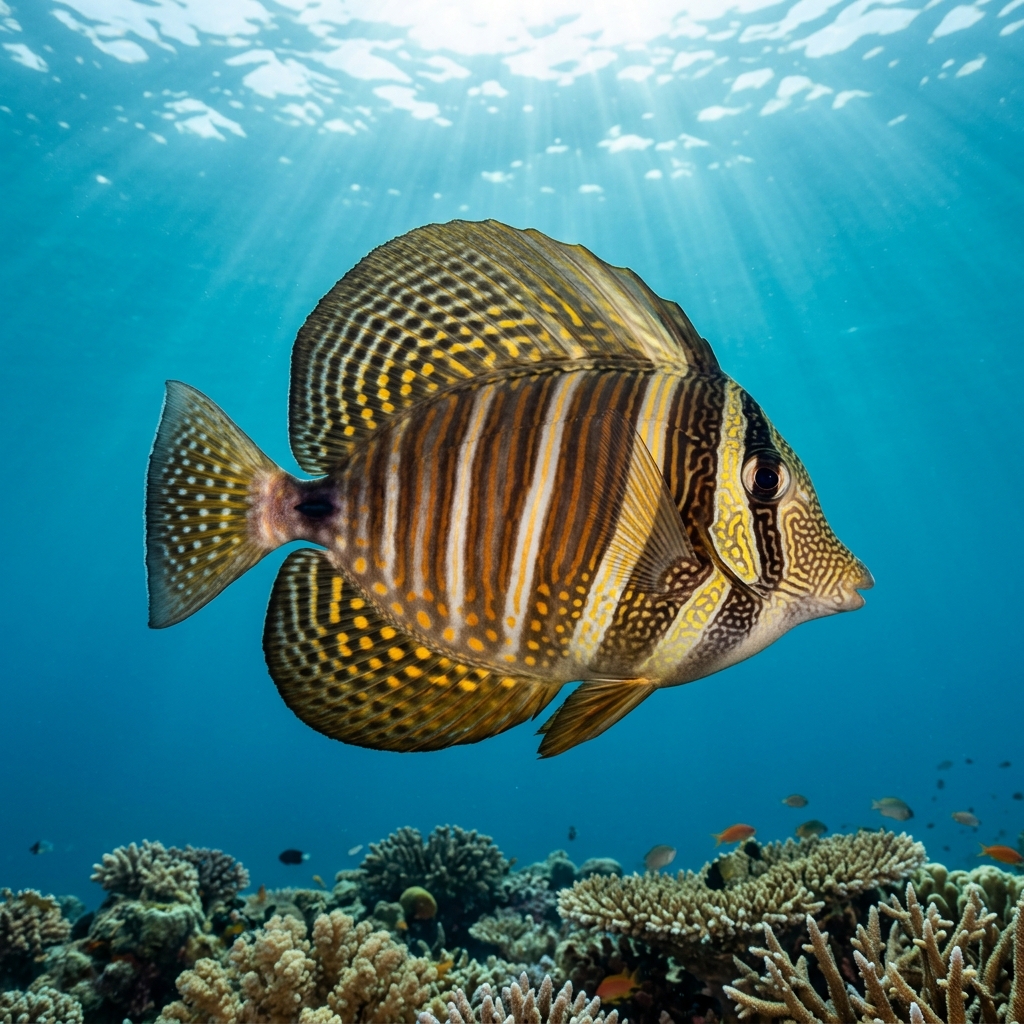
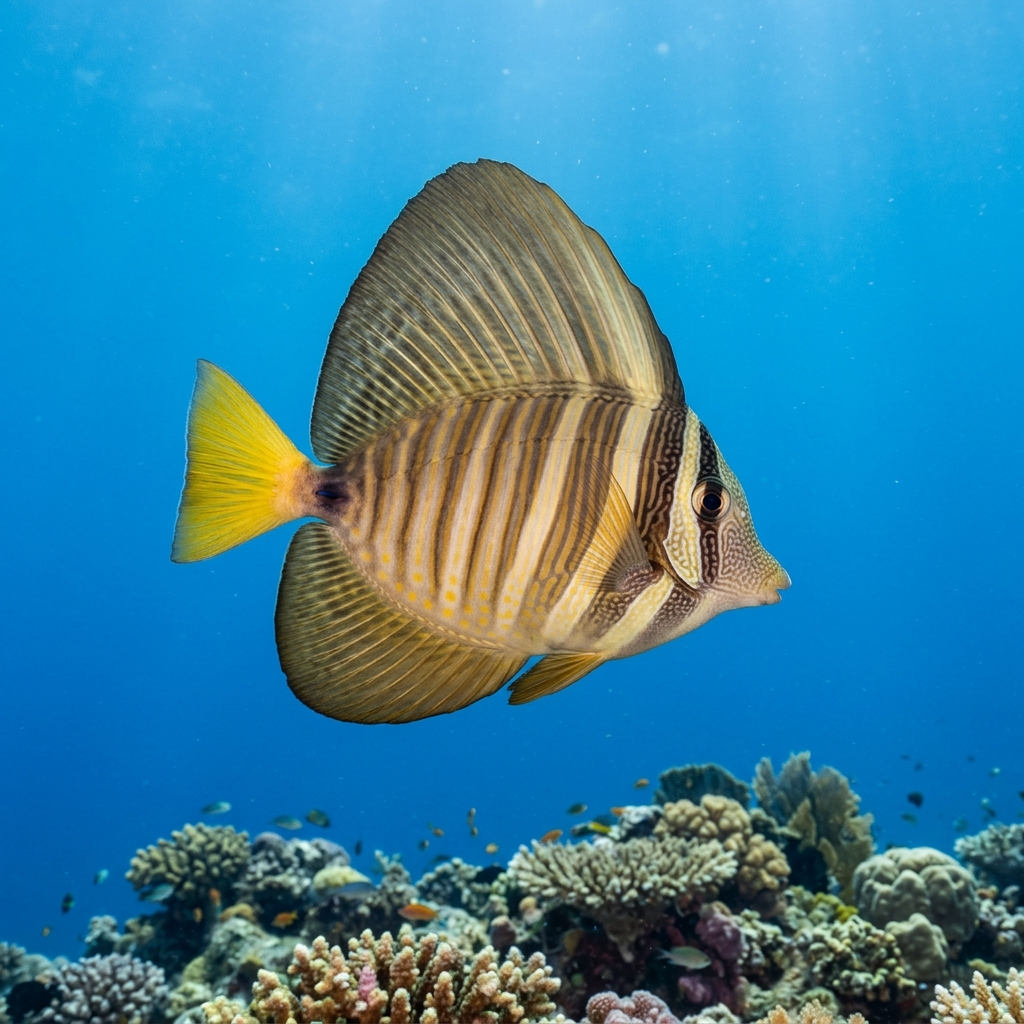
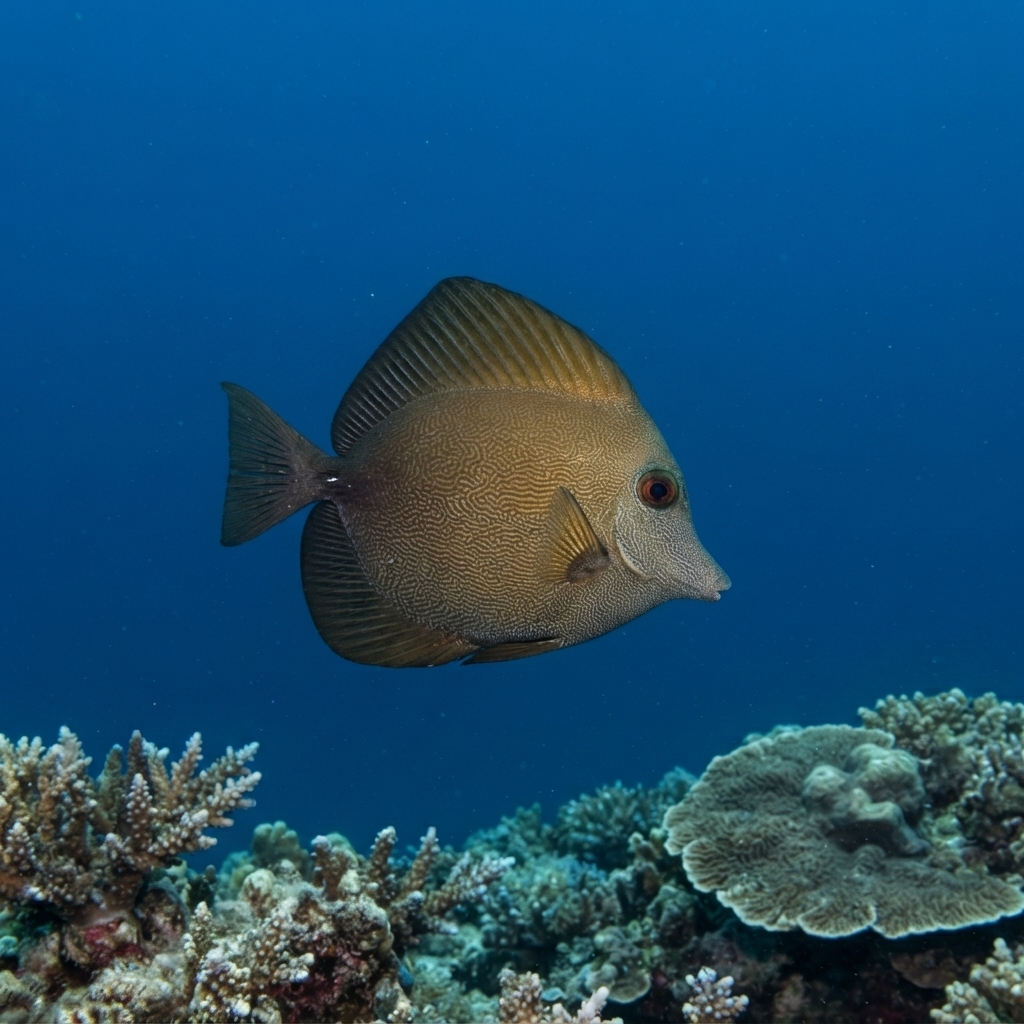
An oval, deep-bodied tang around 28cm, coloured olive-brown to dark grey-brown with a fine mesh of darker speckling over the body. Look for the white ring at the base of the tail and the sharp spine there that gives surgeonfish their name. The snout is slightly drawn out for picking algae from rock and coral, and the whole body has a slightly rough, textured look rather than the flatter, brighter patterning of related sailfin tangs.
Usually seen picking over algae-covered rock, rubble and dead coral on the reef flat or upper slope, often alone or in loose pairs rather than big schools. It tends to keep a cautious distance from divers, drifting off into cover rather than approaching, and is most active during daylight when grazing.
Like other surgeonfish, it carries a sharp, blade-like spine folded into a groove near the base of the tail, which it can flick out as a defensive weapon rather than for feeding.
No clear seasonal pattern shows up in sightings, and with a comfortable range of roughly 25 to 29C it stays on tropical reefs year-round, so any month works across its Indo-Pacific range.
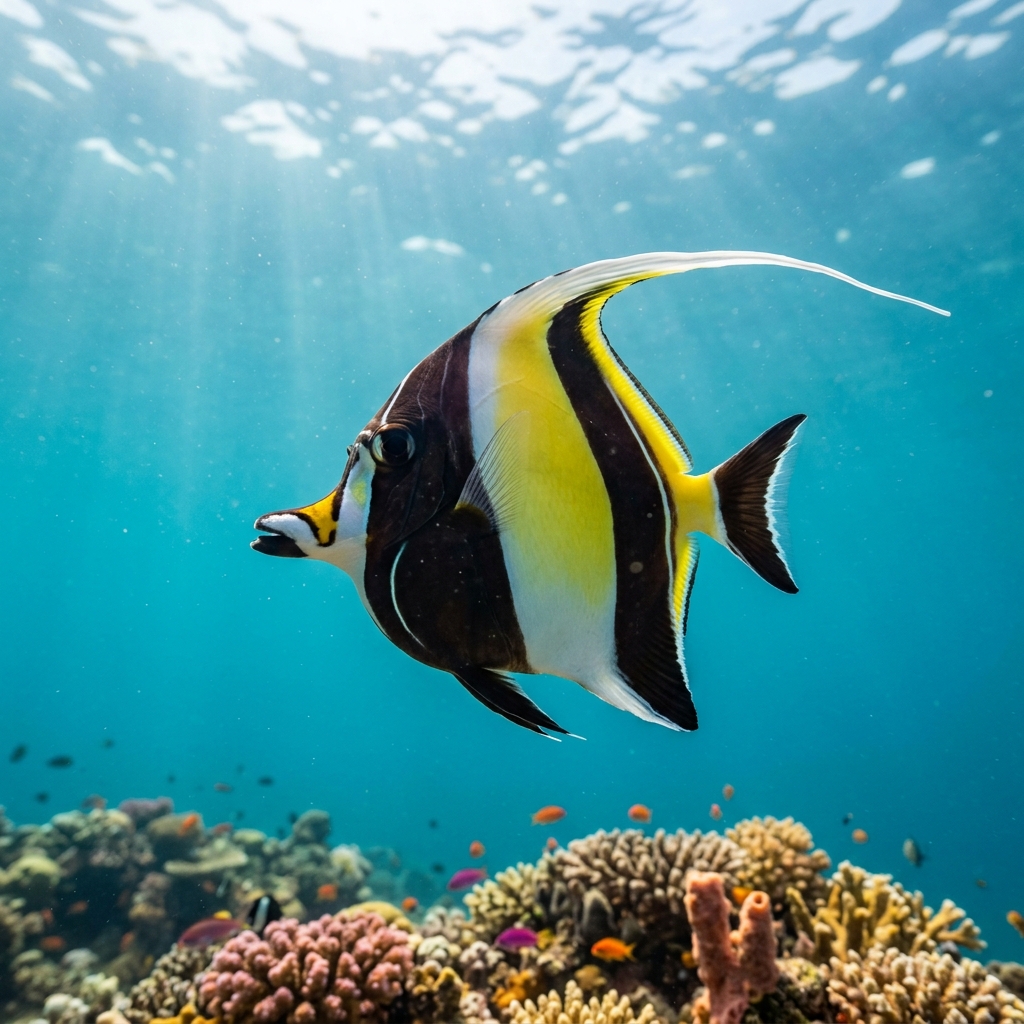
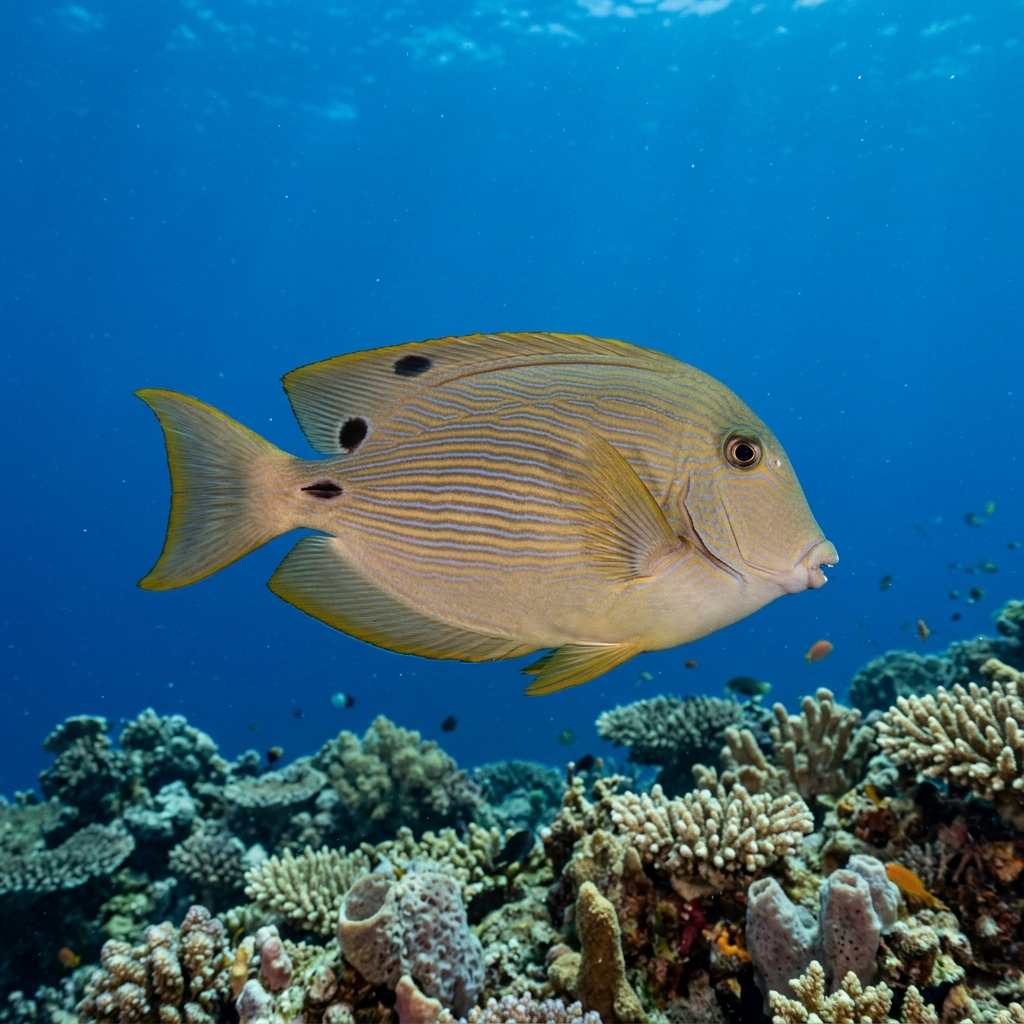
Reef neighbours a diver could mistake it for. Use the identification notes above to tell them apart.
Most commonly logged across Indonesia, especially Bali, Nusa Tenggara and Sulawesi, and a strong presence throughout the Philippines and French Polynesia's Society Islands. Also a reliable sighting in the Maldives' Central Atolls, on Queensland's reefs, and around Okinawa and the wider Ryukyu Islands in Japan.
Mapping where Brushtail Tang is logged…
Indonesia is the strongest region, particularly Bali, Nusa Tenggara and Sulawesi, alongside the Philippines' Visayas and French Polynesia's Society Islands. It also turns up reliably in the Maldives, Queensland and Okinawa.
There is no strong season in the sightings data, and its comfortable temperature range of roughly 25 to 29C keeps it on reefs all year, so any month is fine for a sighting.
They carry a sharp tail spine used for defence, which can cause a cut if the fish is handled or cornered. Left alone, they simply swim away and pose little risk.
Look for an oval, brown-to-olive body with fine dark speckling, a slightly pointed snout, and a pale ring at the base of the tail marking the spine. It grows to about 28cm and is usually seen alone or in pairs over rubble and rock.
They typically reach around 28cm in length, a mid-sized surgeonfish comfortably spotted from a few metres away on the reef.
Site and sighting data is aggregated from diver logs, iNaturalist and GBIF. For taxonomy and conservation status:
Striped Surgeonfish
3,289 sites