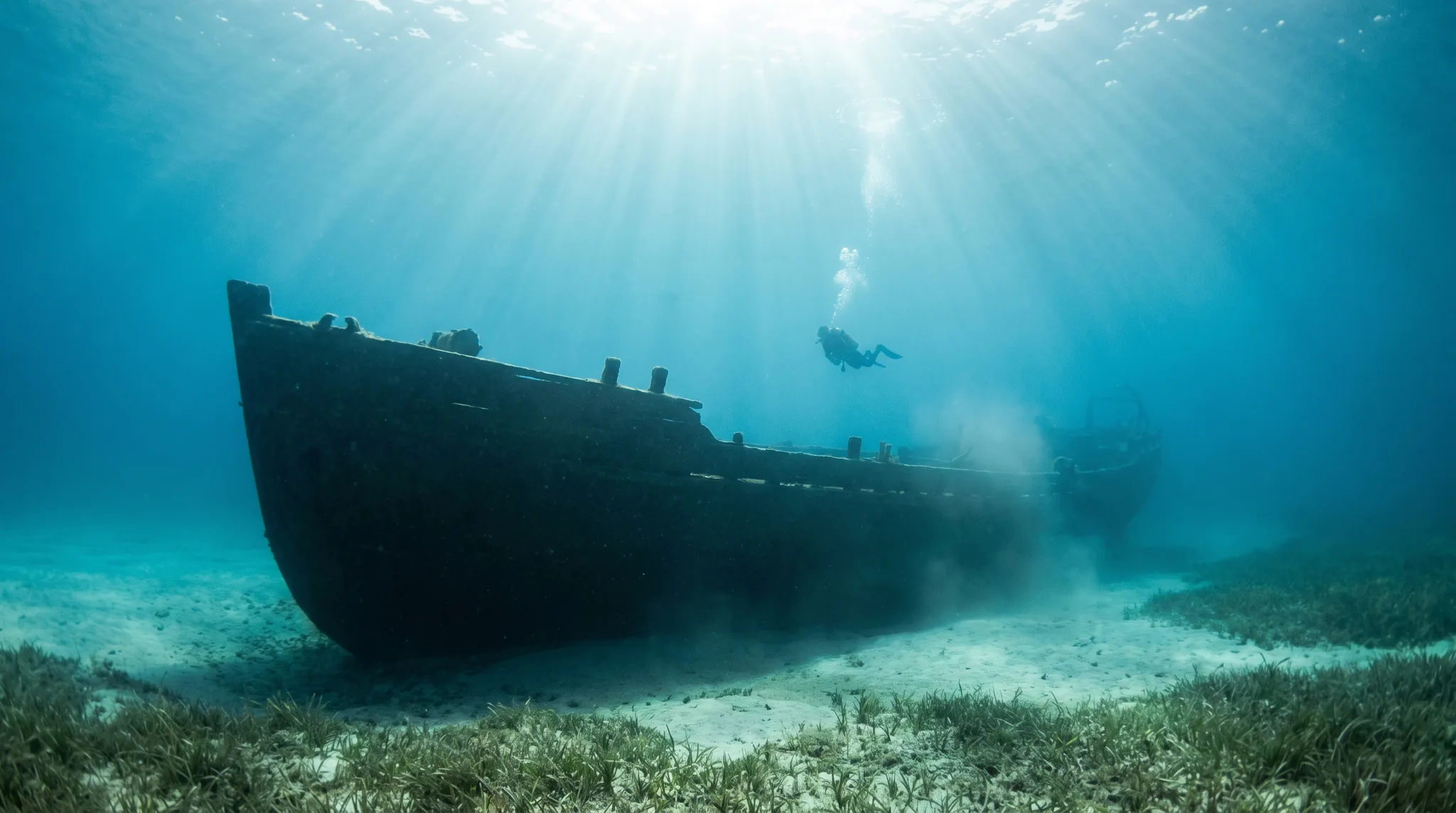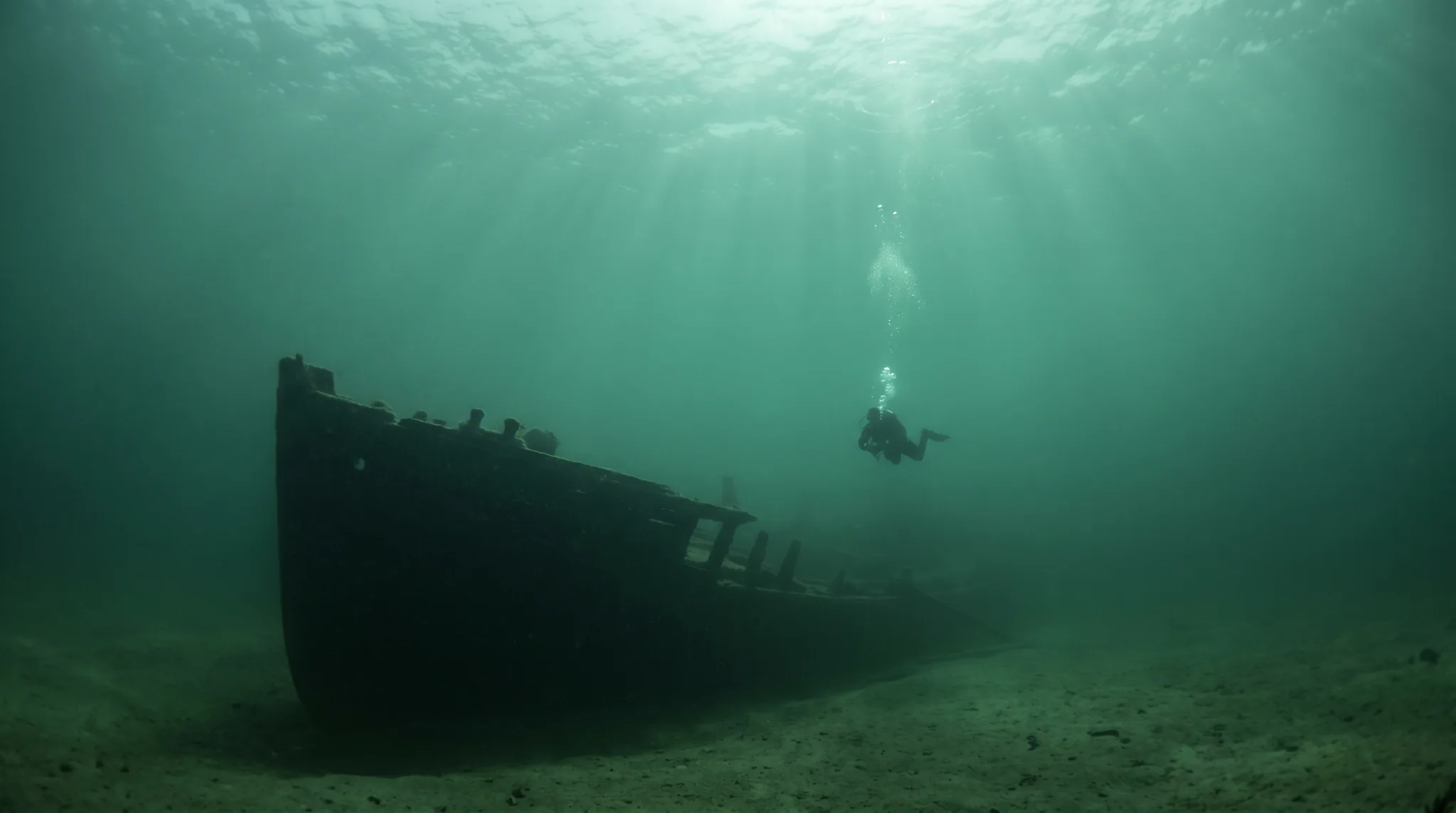
Best for intermediate divers, 5-37m, boat entry, strong current.
The Rigoletto Wreck is a boat-accessible dive site located off Taormina, Italy. The wreck lies at depths ranging from 5 to 37 metres, with an average depth of 25 metres. Divers should be prepared for strong currents, which necessitate careful planning and timing with slack water. Visibility at the site typically ranges between 15 and 30 metres, allowing for clear views of the structure. Due to the depth and current conditions, this site is suitable for intermediate divers. Divers must monitor their depth gauges closely and use a surface marker buoy for ascents, as boat traffic and currents can make surfacing unpredictable.
38.18628, 15.56767
The wreck is located in the Strait of Messina and requires the presence of expert guides due to strong currents.
Reached by a short voyage with a rubber dinghy leaving from the coast of Calabria.
Recorded at this site
Depth
5-37m
Visibility
15-30m
Skill Level
Intermediate
Entry
Boat
Boat required
Water Temp
15-20°C
Current
Strong
Best Time
May, Jun, Jul, Aug, Sep, Oct
The wreck lies in depths ranging from 5 to 37 metres, with an average depth of 25 metres.
No, this site is intended for intermediate divers due to the depth and strong currents.
Access to the site is by boat only.
The primary hazards are the deep maximum depth of 37 metres and strong currents.
Diving at Rigoletto Wreck in Messina requires the following certifications: Open Water. Always dive within your training limits.
A 7mm wetsuit or semi-dry is recommended for diving at Rigoletto Wreck in Messina. Water temperatures range from 15°C to 20°C.
The best months to visit Rigoletto Wreck in Messina are May, June, July, August, September, and October. Conditions outside these months can still be good but are less predictable.
Rigoletto Wreck in Messina can have strong currents. Advanced experience with drift diving and current navigation is recommended.
Visibility at Rigoletto Wreck in Messina typically ranges from 15 metres to 30 metres. Conditions vary with weather, tides, and seasons.