Mobula mobular
Spot the Spinetail Devil Ray in the Mediterranean's cooler waters, Greece, Croatia and Italy lead sightings. Here's where, when and how to recognise it.
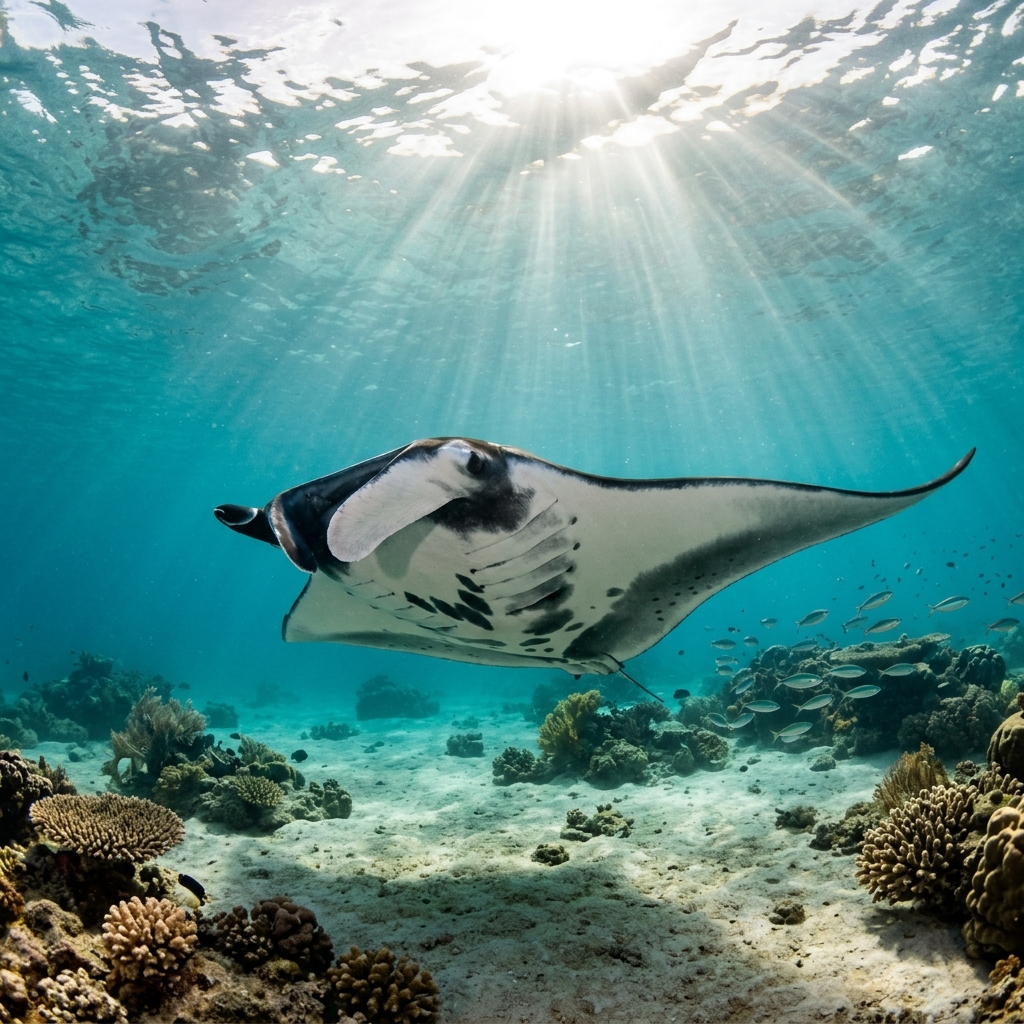
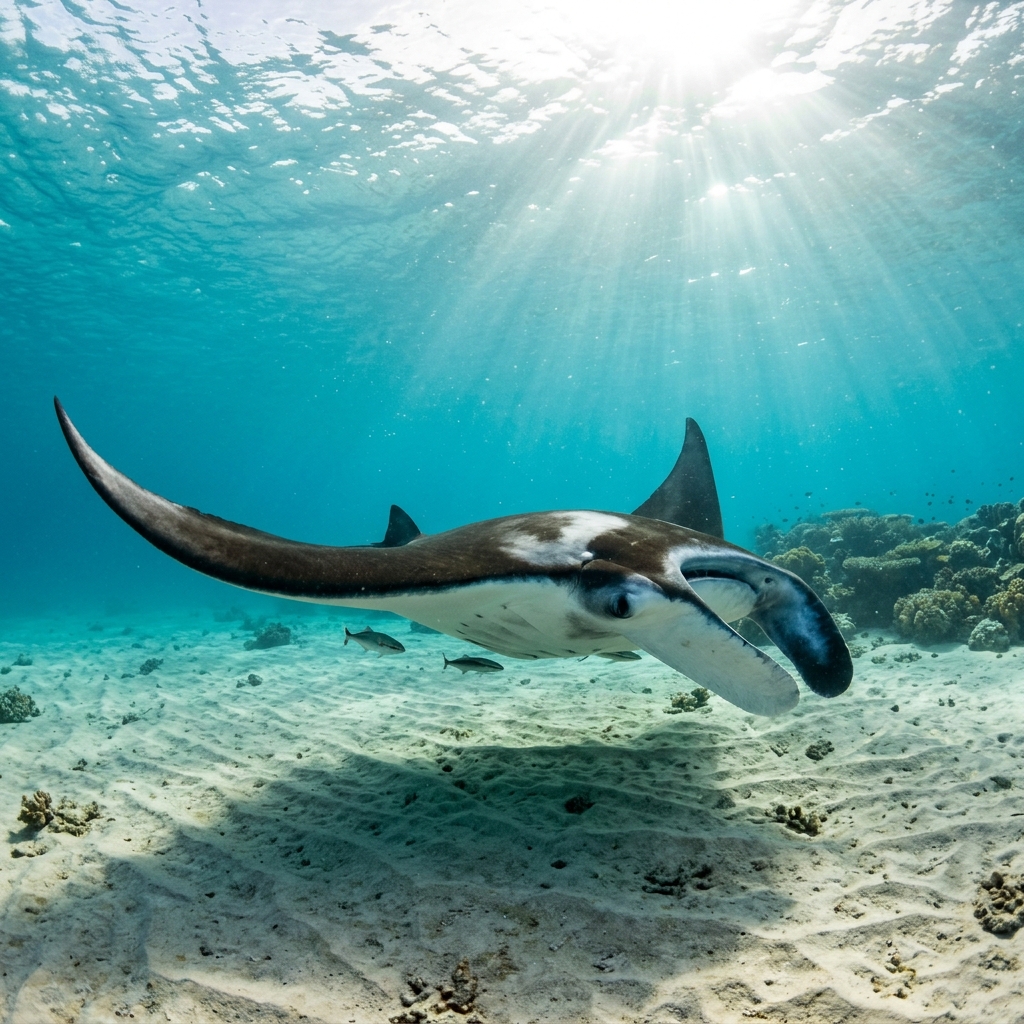
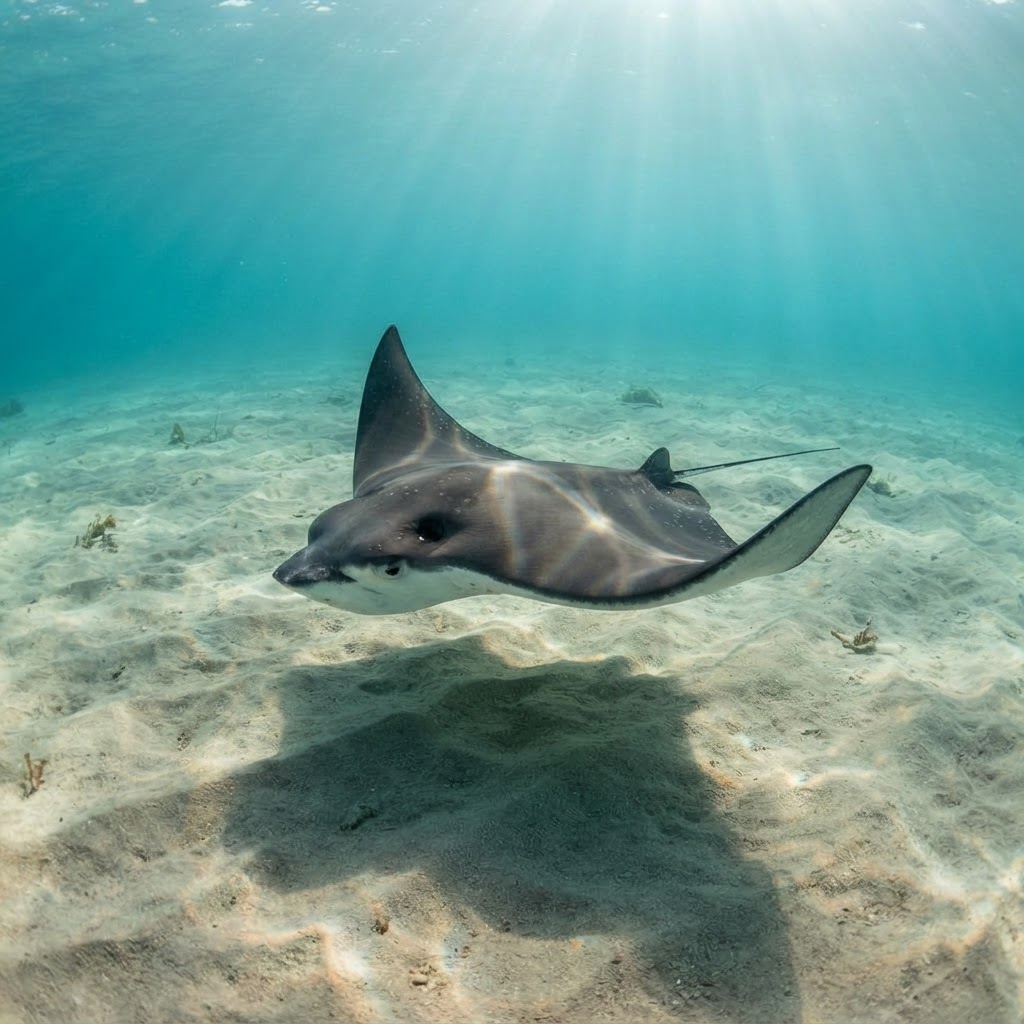
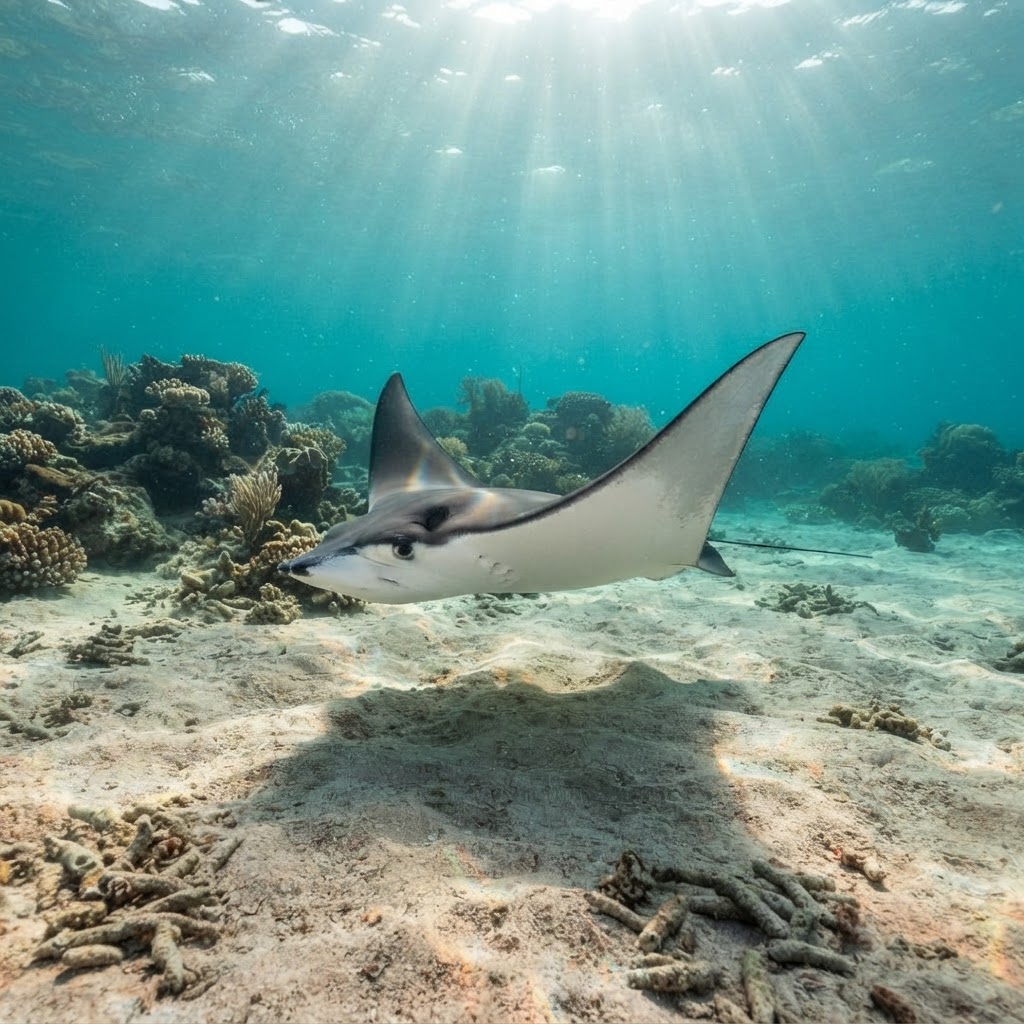
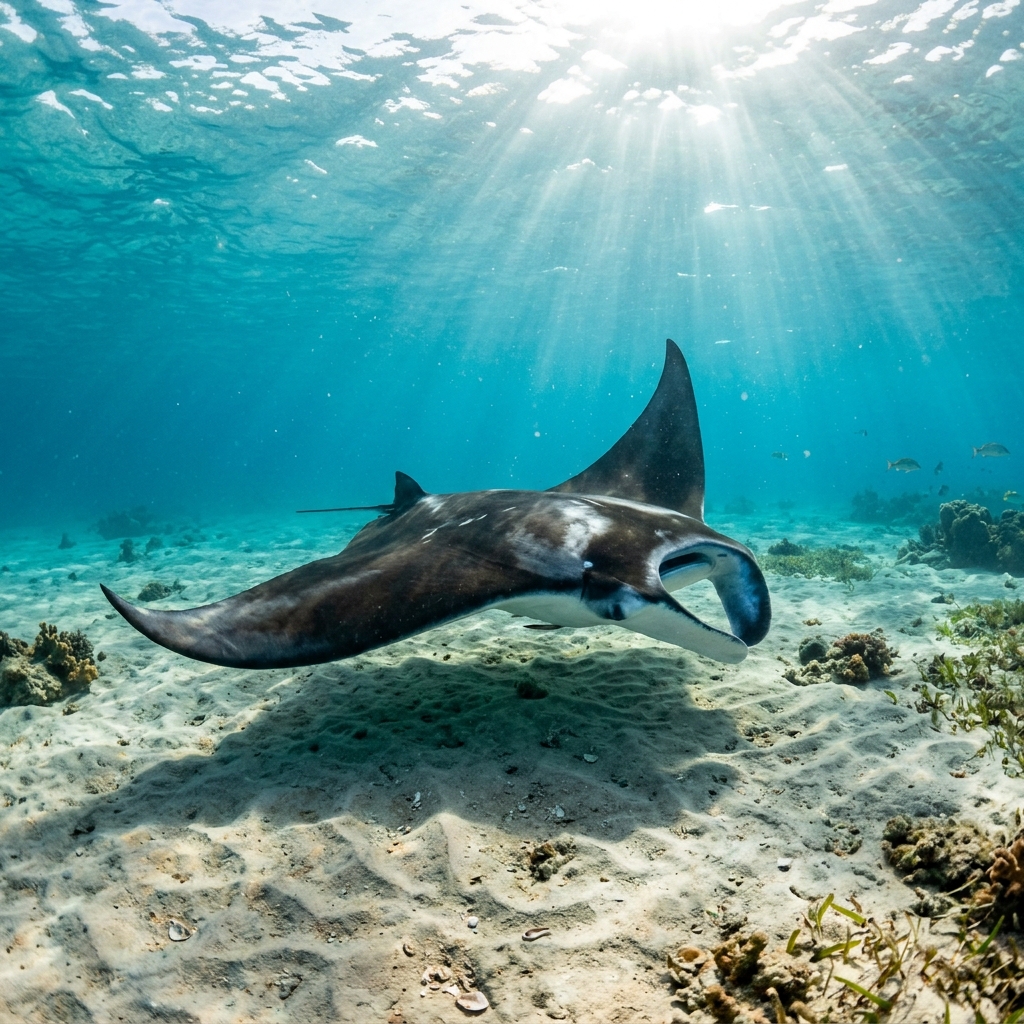
Broad, diamond-shaped pectoral fins give this ray a wingspan that dwarfs most other rays you'll encounter in Mediterranean waters. The back is dark grey to blackish, while the underside is pale white, making it striking when viewed from below. The most useful field mark is the spine at the base of the tail, though at distance the combination of a relatively slender tail, cephalic fins (the two horn-like projections either side of the mouth), and large size is usually enough to confirm the ID.
Spinetail devil rays are most often encountered in open water rather than on the reef itself, frequently moving at mid-water depths or near the surface. They are generally unperturbed by divers, but like most large rays they do not linger; approaching calmly and avoiding sudden movement gives the best chance of a prolonged look. Aggregations have been documented in the Mediterranean, so where one appears, others may follow.
This is one of the largest members of the devil ray family, with a wingspan that can reach around three metres, making any encounter in the blue an impressively scaled experience.
There is not enough logged monthly data to point to a peak season, so treat encounters as possible year-round wherever the species occurs. Its observed water-temperature niche of roughly 13 to 23 °C ties it closely to temperate seas, meaning Mediterranean spring through autumn is likely the most productive window, though this is not confirmed by the current data.
Sightings cluster overwhelmingly around the Mediterranean and nearby Atlantic coasts, with Greece, Italy, and Croatia leading by number of dive sites, followed closely by Turkey and Spain. Within those countries, the Aegean, including the Attica region and Turkey's Aegean Coast, and the Adriatic strongholds of Central Dalmatia and the Kvarner Gulf are the standout areas. Florida and the southeast United States also feature strongly for encounters outside European waters.
Mapping where Spinetail Devil Ray is logged…
The Mediterranean is the core range for this species. Greece, Italy, Croatia, Turkey, and Spain all have strong site coverage, with the Aegean Coast, Central Dalmatia, the Kvarner Gulf, and the waters around Sardinia and Sicily among the top areas. Florida and the southeast United States also feature as an Atlantic option.
No confirmed seasonal peak exists in the current sighting data, so encounters should be treated as possible year-round. The species favours cooler temperate waters between about 13 and 23 °C, which suggests Mediterranean spring through autumn may offer the best conditions, but this has not been confirmed by logged dive data.
Look for a large, diamond-shaped ray with a very dark back and pale underside, cephalic fins flanking the mouth, and a slender tail bearing a spine at its base. In the Mediterranean, its large size and open-water behaviour distinguish it from benthic rays. The spine on the tail is the definitive feature but may be hard to see at distance.
Spinetail devil rays can reach a disc width of around three metres, making them one of the largest devil rays in the Mediterranean. Despite their size, they are not considered dangerous to divers.
No, spinetail devil rays pose no recognised threat to divers. They are large animals and should be approached with calm and respect, but they are not aggressive and will typically move away if disturbed.
Yes, they are listed as Critically Endangered by the IUCN. The species has declined sharply due to bycatch in Mediterranean fisheries and slow reproduction. Every diver sighting that is logged with location and date helps researchers track remaining populations.
The Spinetail Devil Ray is listed as critically endangered by the IUCN. Observe from a distance, avoid touching or feeding it, and report sightings to local marine research organisations.
Listed as Critically Endangered on the IUCN Red List, the spinetail devil ray faces serious pressure from bycatch and historic targeted fishing across its Mediterranean range. Divers who log sightings with location data contribute meaningfully to population monitoring, please record and share every encounter through your dive platform or a citizen science database.
Site and sighting data is aggregated from diver logs, iNaturalist and GBIF. For taxonomy and conservation status:
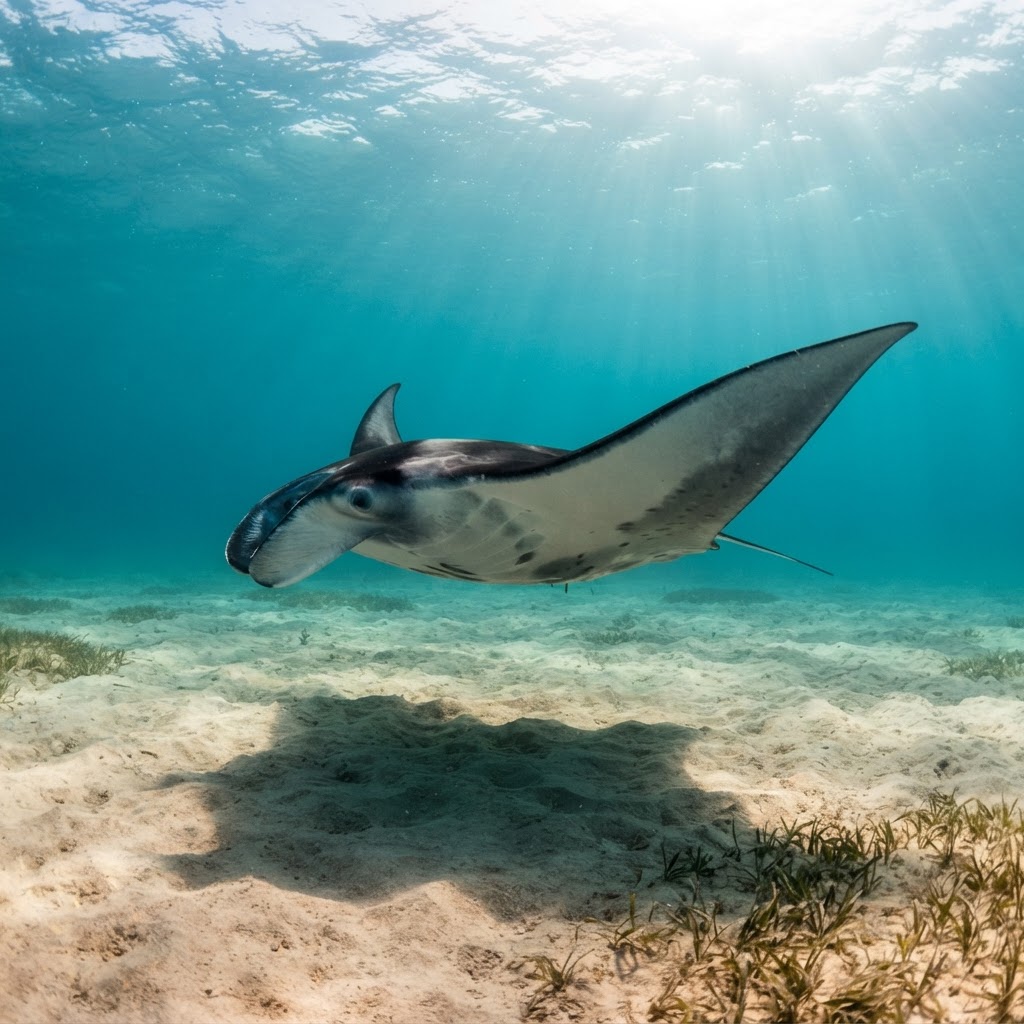
Atlantic Manta Ray
4 sites