Anthias anthias
Spot Marine Goldfish on the French Riviera, Costa Brava, and beyond. Active Mar, Oct in 13-22 °C Mediterranean waters. Here's where and how to find them.
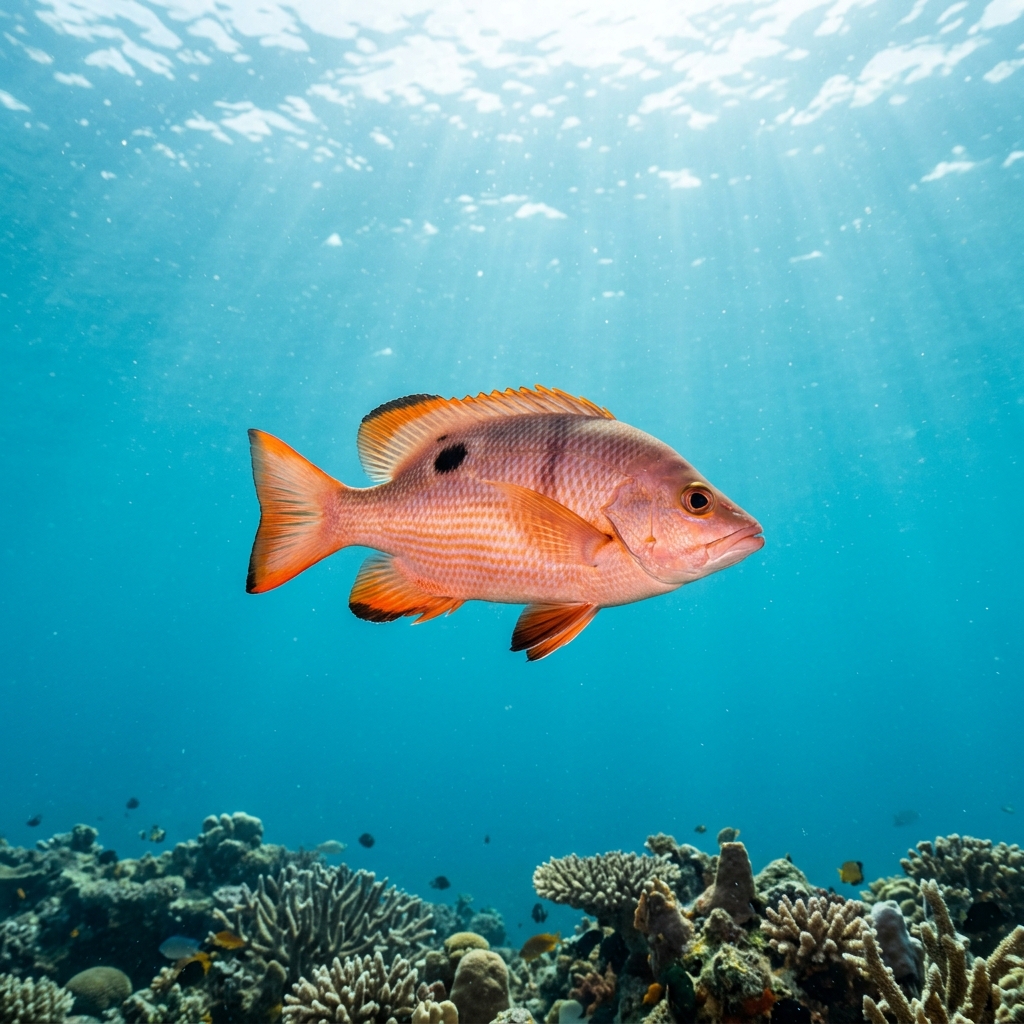
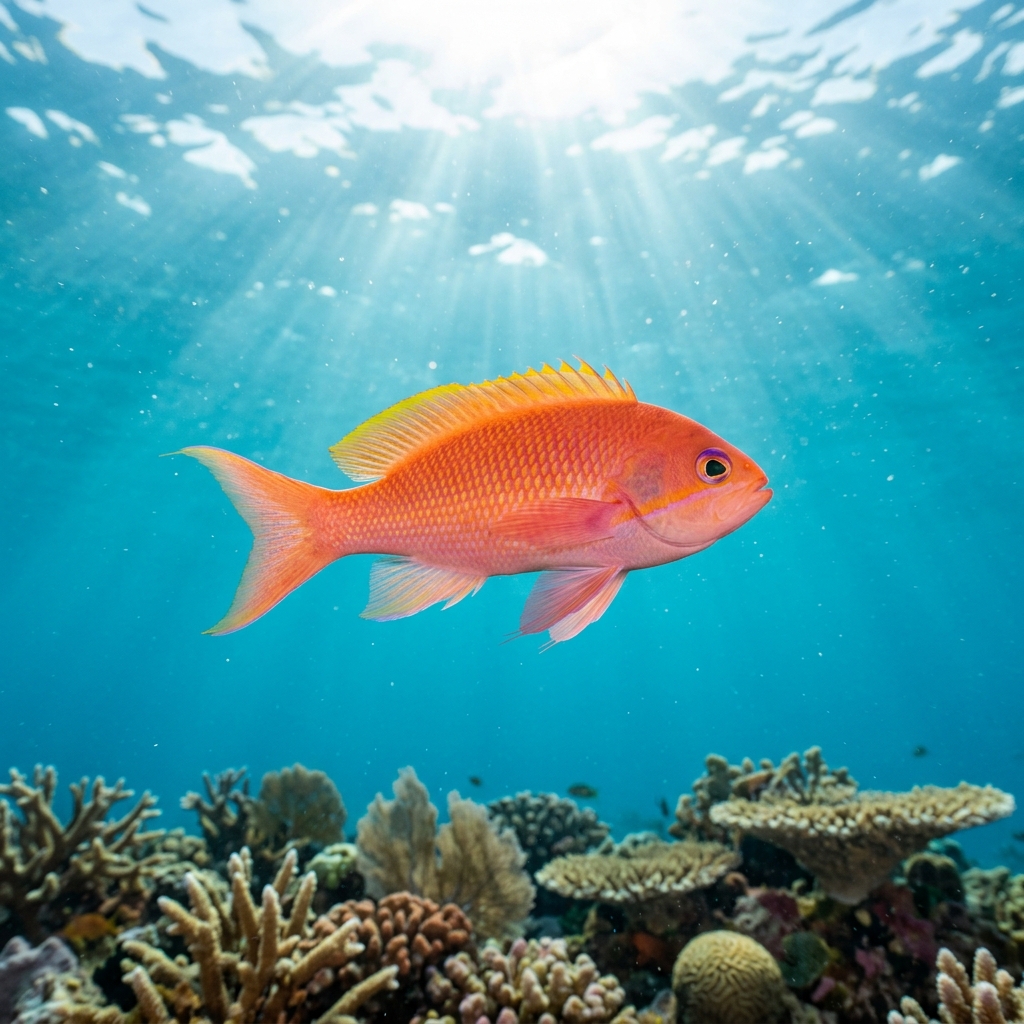
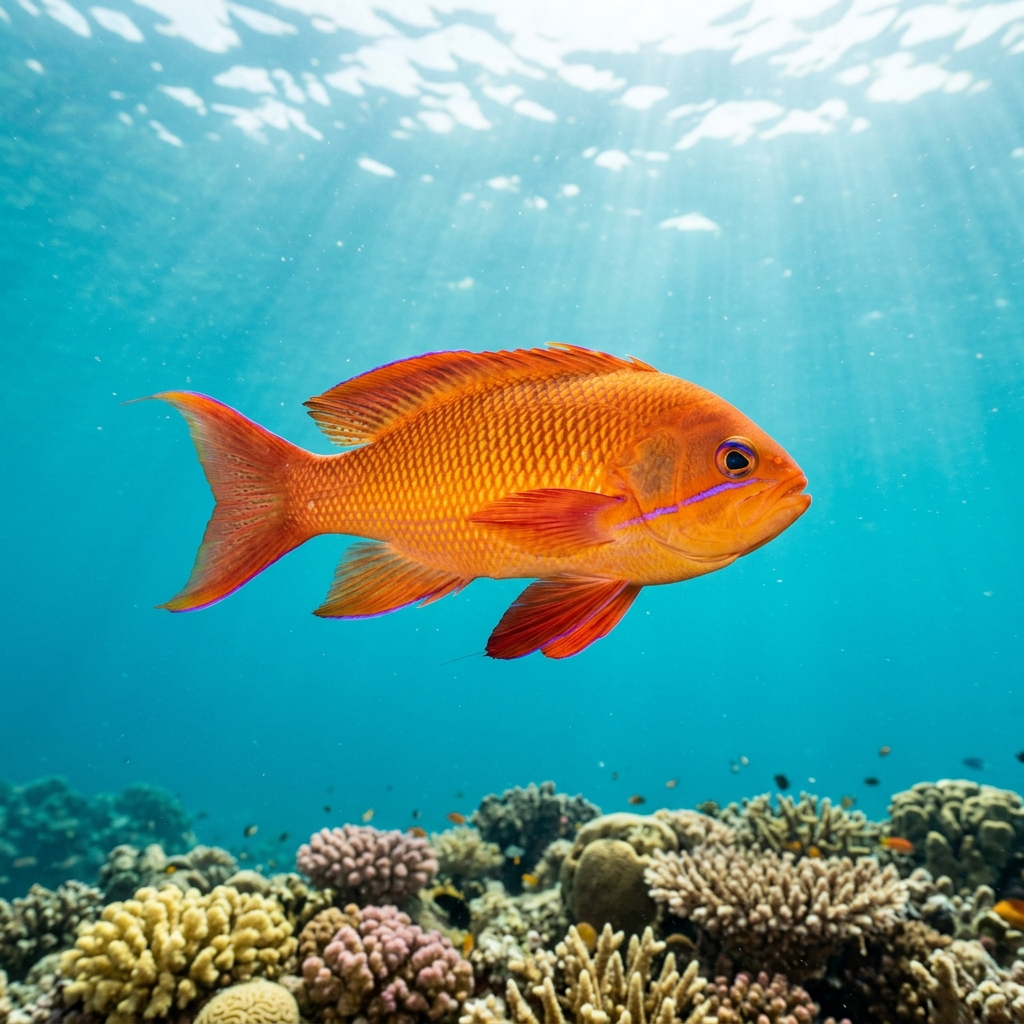
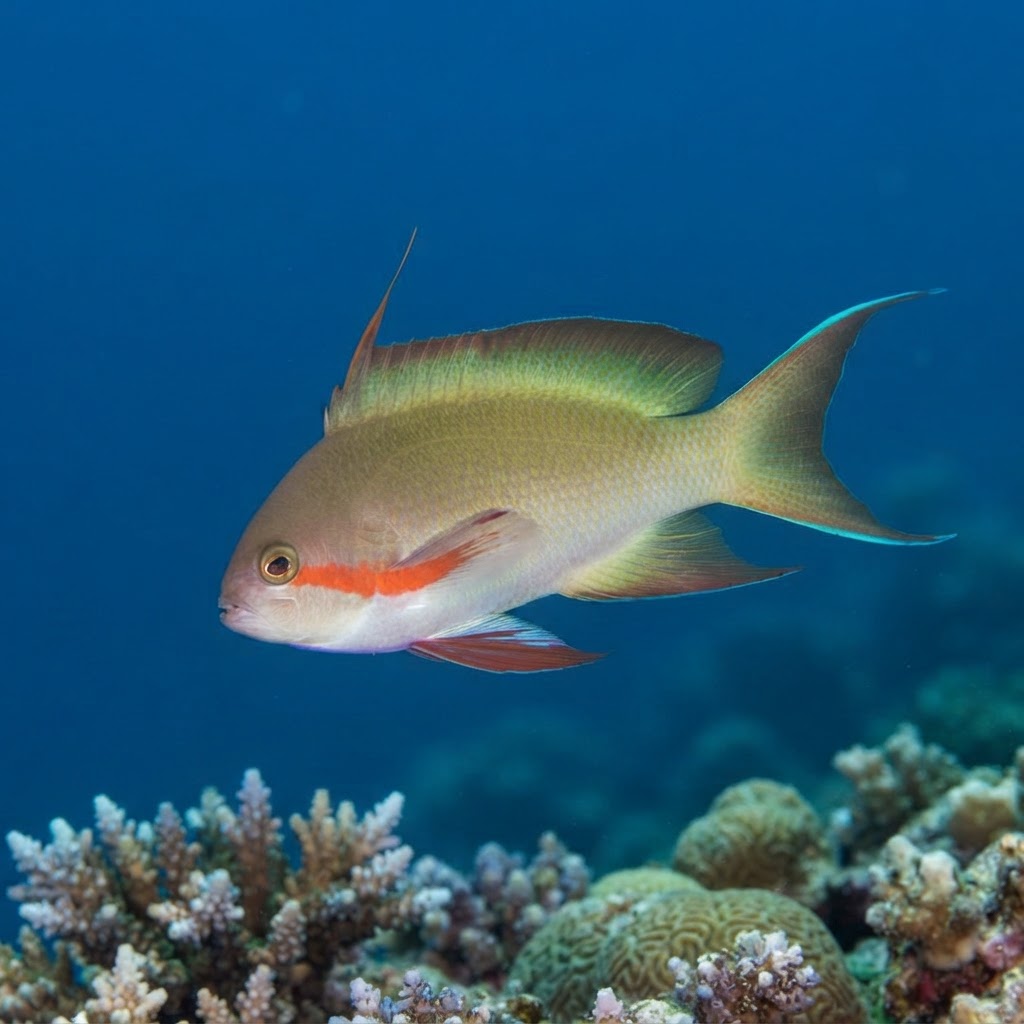
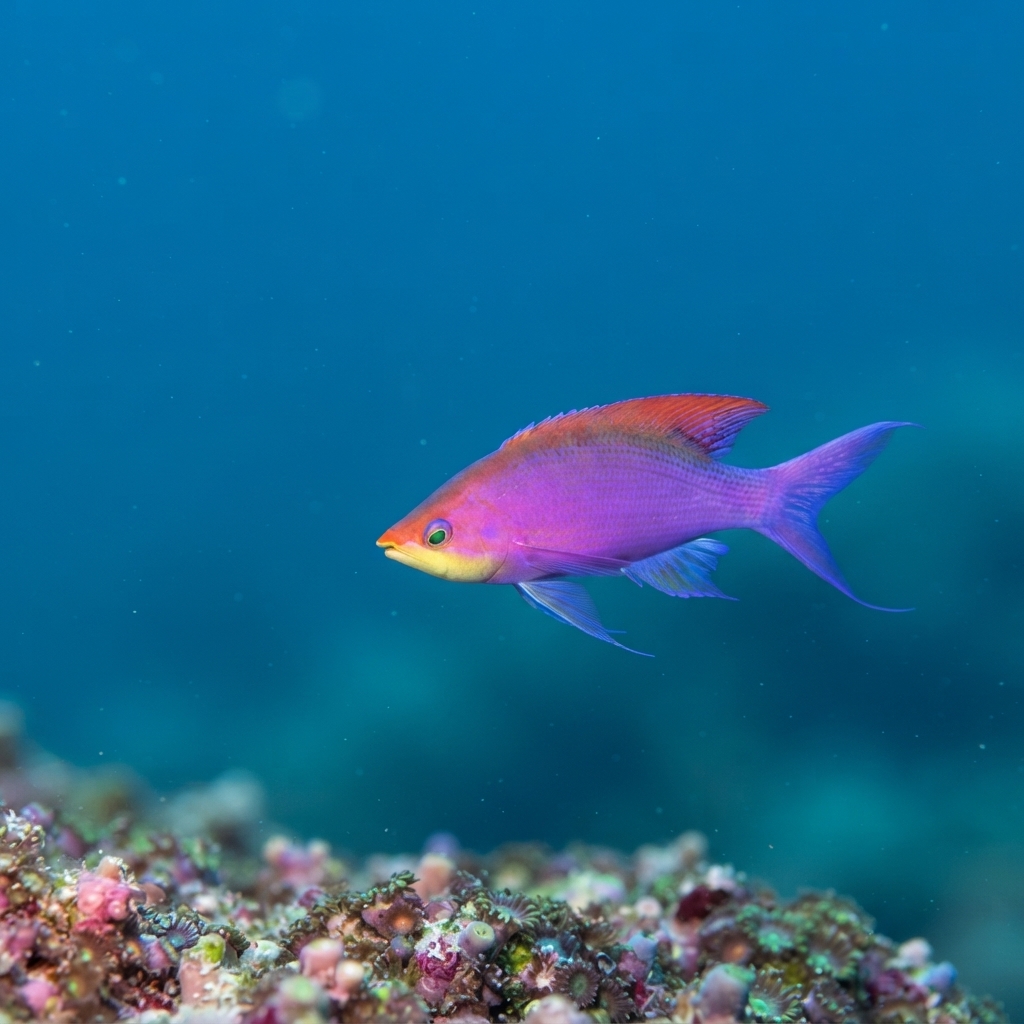
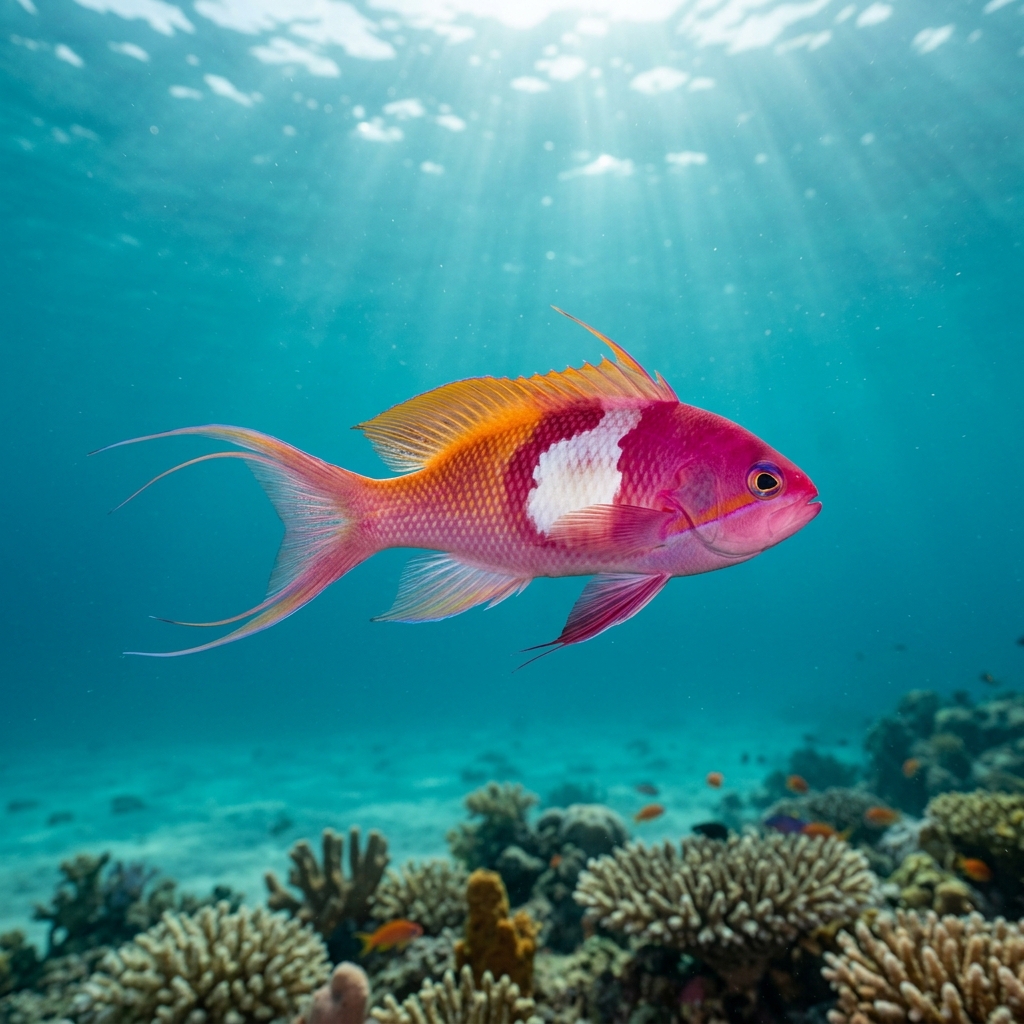
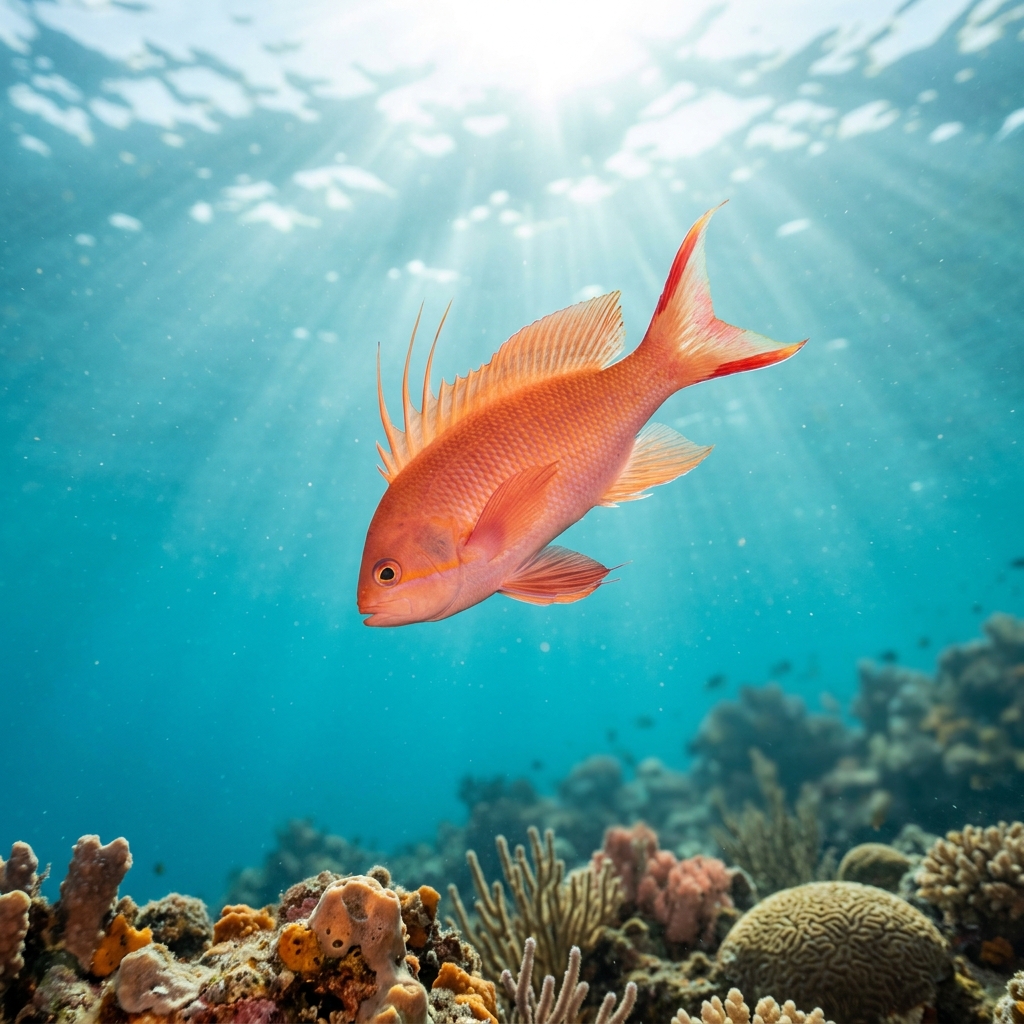
A small, deep-bodied perch-like fish that glows orange-red to reddish-gold against dark rocky reefs, with violet or lilac tones along the face and flanks that catch the light at close range. Males tend to be more intensely coloured and slightly larger than females, which can appear paler or more orange-pink. Look for the characteristic anthias body plan: large eyes, a forked tail, and a habit of hovering just off the reef face rather than resting on it.
Marine Goldfish form loose aggregations (shoals) above and around rocky reef walls, picking zooplankton from the current rather than foraging on the substrate. They tend to keep a comfortable distance from divers but won't bolt unless approached aggressively, so slow, horizontal approaches at eye level give the best views. Look for them hovering mid-water just off rocky drop-offs and cave entrances, often alongside other reef fish.
Like many anthias species, Marine Goldfish are protogynous hermaphrodites: females can transition to males if the dominant male in a group disappears. This means the largest, most colourful individual you see in a group is almost certainly a male.
Sightings concentrate from March through October across the Mediterranean and Canary Islands. Outside those months, encounters drop off noticeably, likely reflecting cooler winter temperatures at the lower end of this species' observed range.
Reef neighbours a diver could mistake it for. Use the identification notes above to tell them apart.
Most sightings come from the French Riviera and Provence, which dominates the records by a wide margin, followed by the Costa Brava in Spain and the Andalusian coast. Italy's northwest coast, Sicily and Lampedusa, and Lanzarote in the Canary Islands also have solid, consistent records.
Mapping where Marine Goldfish is logged…
The strongest populations on record are along the French Riviera and Provence coast, making that the go-to destination. The Costa Brava, Andalusia, northwest Italy, and Lanzarote are also reliable spots. This is essentially a Mediterranean and eastern Atlantic species.
March through October covers the main sighting season across all logged regions. Winter months see a clear drop in encounters, so a spring or summer dive trip to the French Riviera or Costa Brava gives you the best odds.
Look for a small, orange-red fish with a forked tail and large eyes hovering off rocky reef walls in mid-water. The violet or lilac tones on the face and flanks are the key distinguishing detail. It doesn't rest on the reef; it hovers, which helps separate it from wrasses and other reef fish at a glance.
Yes. Marine Goldfish are protogynous hermaphrodites, meaning individuals start life as females and the dominant fish in a group can transition to male. The boldly coloured, larger individual you see leading a shoal is almost always a male that started life as a female.
Not at all. They pose no threat to divers whatsoever. The main thing to watch is your own buoyancy near the rocky reefs where they live.
Site and sighting data is aggregated from diver logs, iNaturalist and GBIF. For taxonomy and conservation status:
Purple Queenfish
254 sites