Balistes capriscus
Spot grey triggerfish across Florida, the Mediterranean and the UK coast. Learn the key ID marks and when sightings peak in these temperate waters.
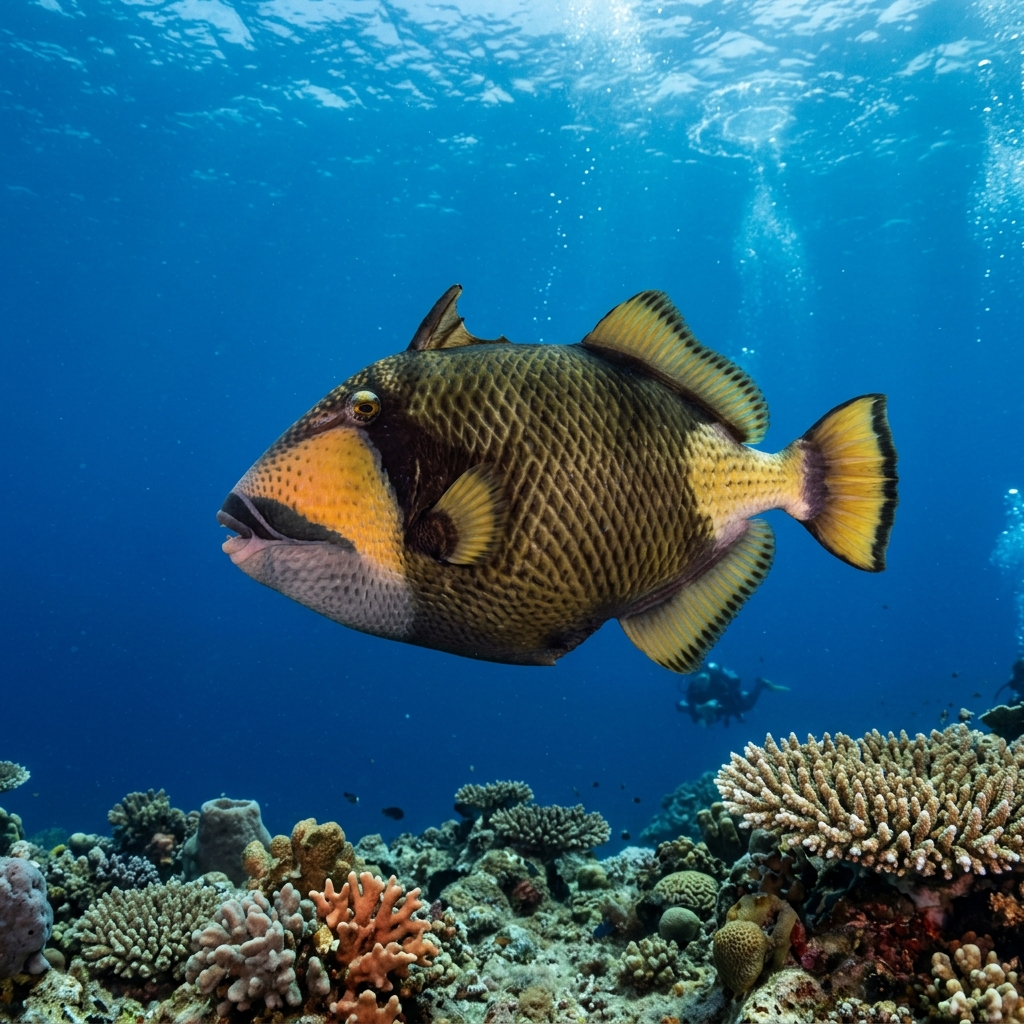
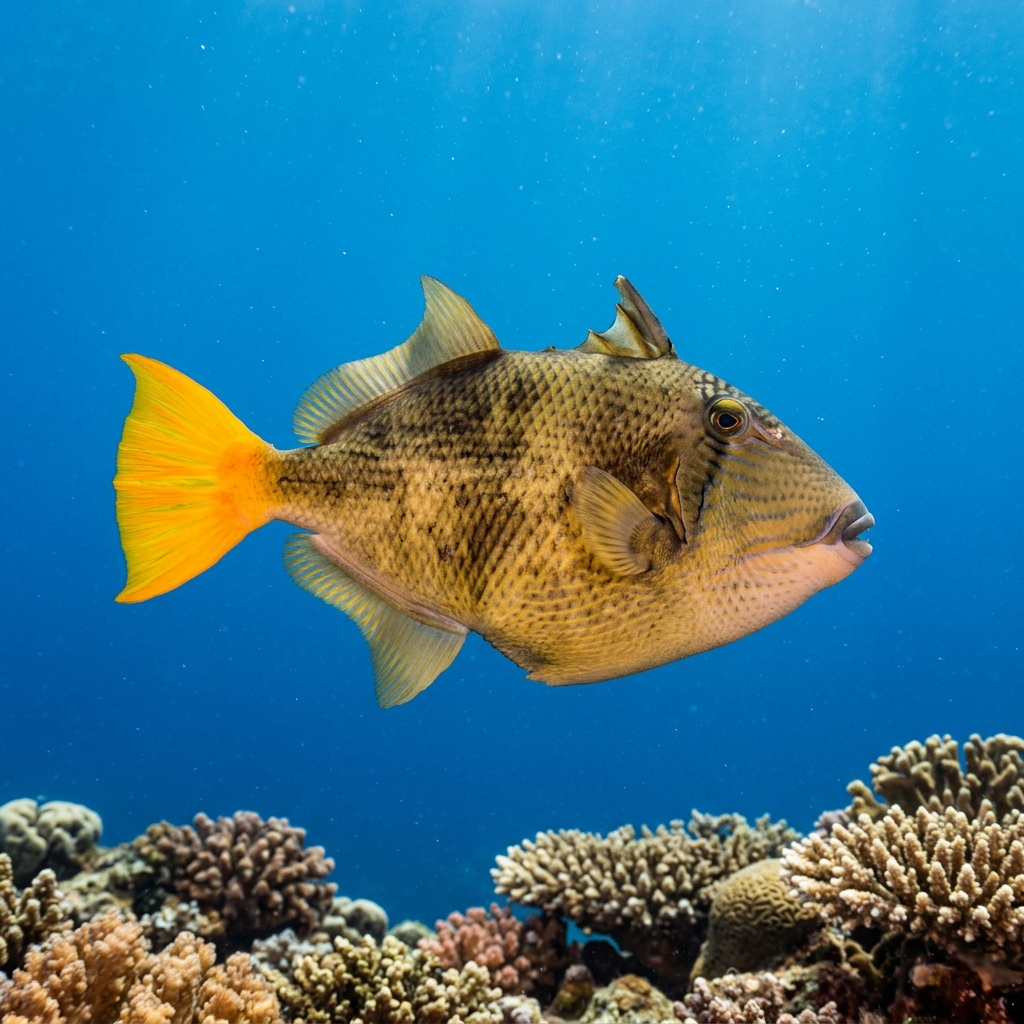
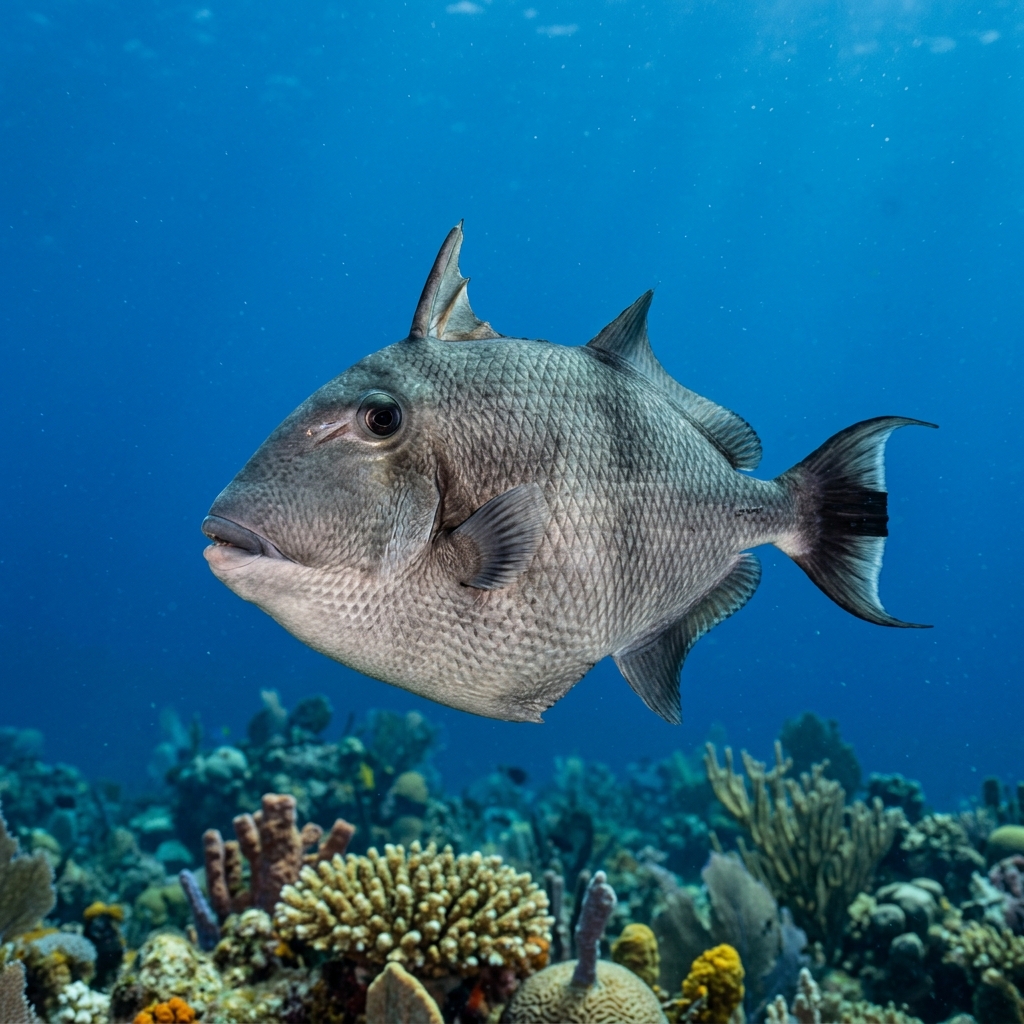
A fairly large, laterally compressed fish with an oval body and a small but powerful mouth set in a blunt snout. The body is grey to grey-blue, often with faint blue lines and spots near the head and dorsal fin, and a pale whitish belly. At around 46 cm it is notably chunky compared to most reef fish, and the trademark first dorsal spine, the trigger mechanism that locks it into crevices, is usually visible when erect. The tail fin edges are elongated in adults, giving the tail a slightly forked appearance.
Most encounters involve a fish that is casually aware of you rather than spooked; it will often pause and eye a diver before resuming its foraging. During the day you can watch it working hard surfaces with those strong jaws, crushing shells and urchins, and it sometimes blows jets of water into sandy patches to flush out buried prey. During breeding season territorial behaviour around nest sites can intensify, so give extra space to any individual that starts swimming stiffly or angling its body towards you.
It builds and actively guards a nest scraped into sandy seabed, with the guarding parent fanning eggs with its fins to keep them oxygenated, behaviour that is the trigger for the one moment this otherwise relaxed fish will push back at intruders.
In the Northern Hemisphere, sightings concentrate from June through November as well as January to April, suggesting it is active across much of the year except for a quieter window in May and late autumn. Its broad temperature tolerance, observed from 9 °C to 26 °C, allows it to remain present on temperate reefs longer than most triggerfish species.
Most commonly logged in Florida and the broader US Southeast, which accounts for the largest share of sightings by a clear margin. Strong populations are also recorded across the Mediterranean, particularly around Sardinia, Greece, and the Italian and French coasts, as well as in British and Irish waters where it pushes into surprisingly cool temperatures. If you want the best odds, Florida and the Mediterranean are where to focus your planning.
Mapping where Grey Triggerfish is logged…
The most reliable sightings come from Florida and the US Southeast coast. Across the Atlantic, the Mediterranean is a strong bet, with Greece, Sardinia, southern Italy, and France all producing regular records. It also turns up along the south coast of England and the west coast of Ireland, making it one of the few triggerfish species accessible to UK and Irish divers.
In the Northern Hemisphere, sightings are most concentrated from June to November, with a secondary peak from January to April. May seems to be the quietest month based on logged sightings. Its wide temperature tolerance means it lingers in temperate waters well beyond summer.
Look for a chunky, oval-bodied fish around 46 cm long in grey to grey-blue tones with faint blue spots near the head. The lockable first dorsal spine and the slightly forked tail with elongated lobes in adults are the most reliable field marks. Unlike most triggerfish in its range, it lacks any bold contrasting pattern.
They are not considered dangerous. Outside of nesting season most individuals are indifferent or mildly curious around divers. During breeding they may become territorial and swim assertively toward intruders near a nest, so back away calmly if you notice that behaviour rather than holding your ground.
Adults typically reach around 46 cm in length. In the water they feel substantial, with a deep, compressed body that makes them look almost as tall as they are long when viewed from the side.
Yes, they are currently listed as Vulnerable on the IUCN Red List. This status reflects population declines linked to fishing pressure across their range. Reporting diver observations through citizen-science platforms helps researchers track their distribution and abundance.
The Grey Triggerfish is listed as vulnerable by the IUCN. Observe from a distance, avoid touching or feeding it, and report sightings to local marine research organisations.
Grey triggerfish are currently assessed as Vulnerable on the IUCN Red List, driven largely by fishing pressure. Divers can support local conservation by reporting sightings through platforms like iNaturalist and respecting any marine protected areas where the species occurs.
Site and sighting data is aggregated from diver logs, iNaturalist and GBIF. For taxonomy and conservation status:
Flagtail Triggerfish
2,287 sites