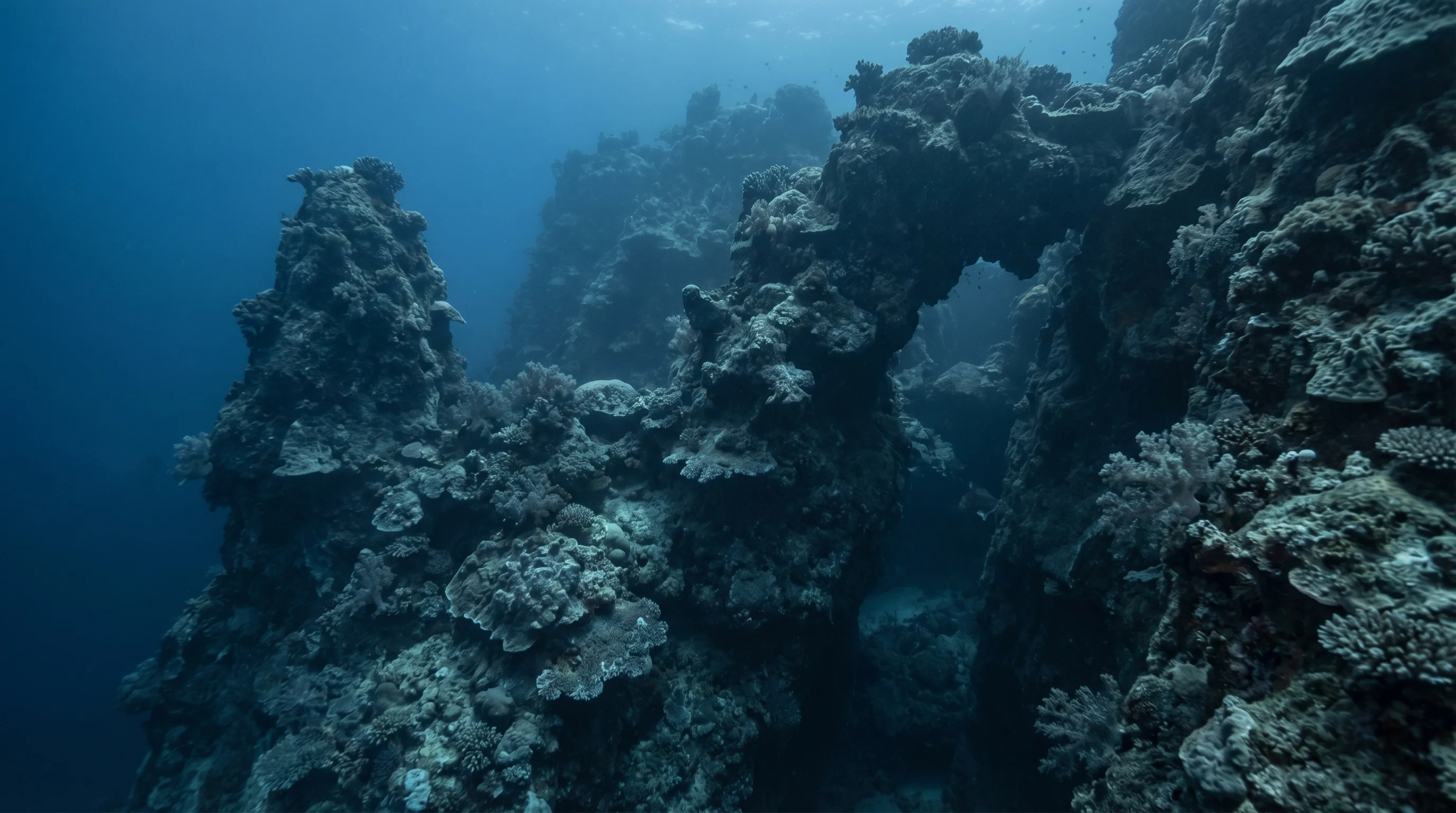
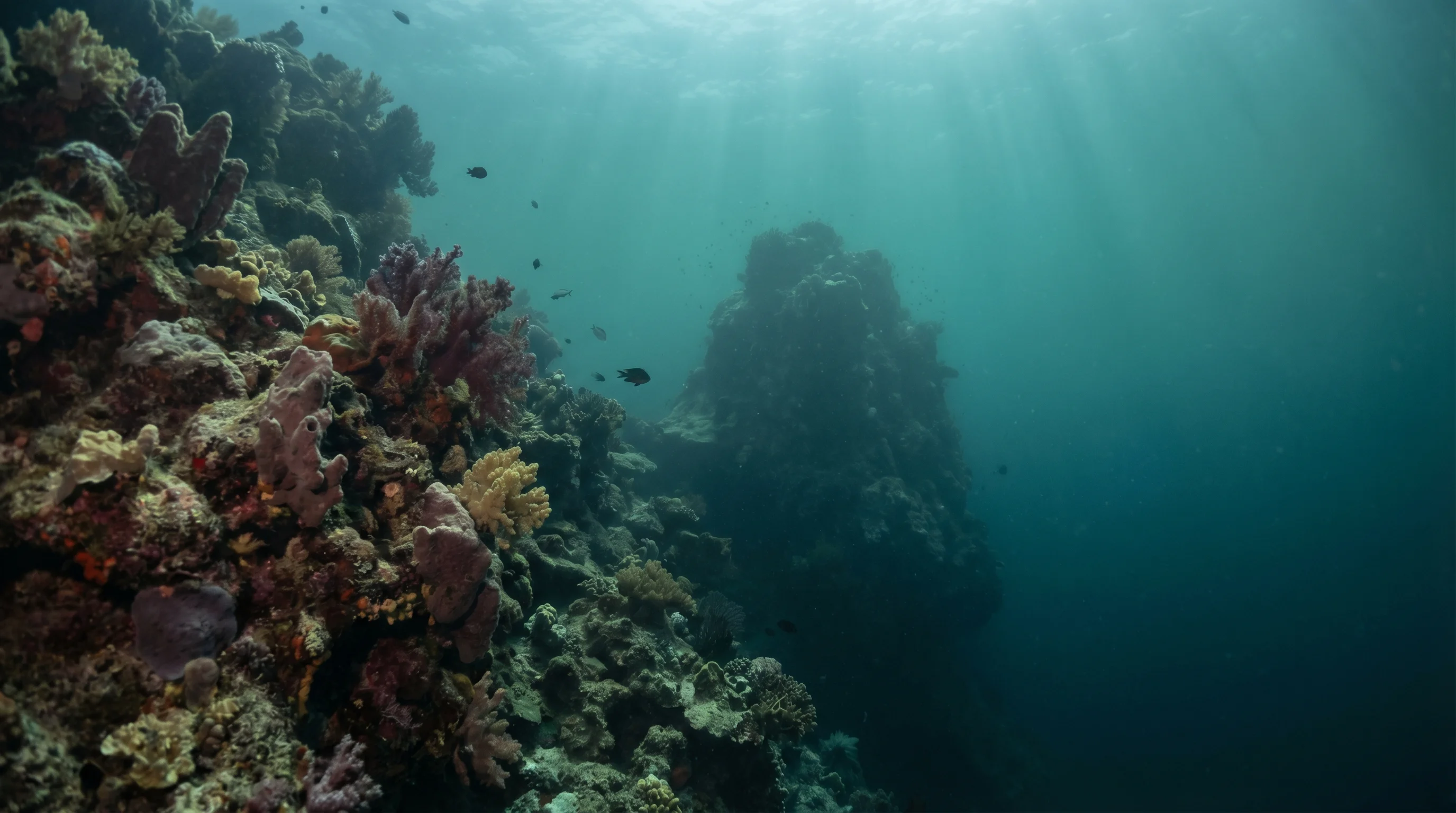
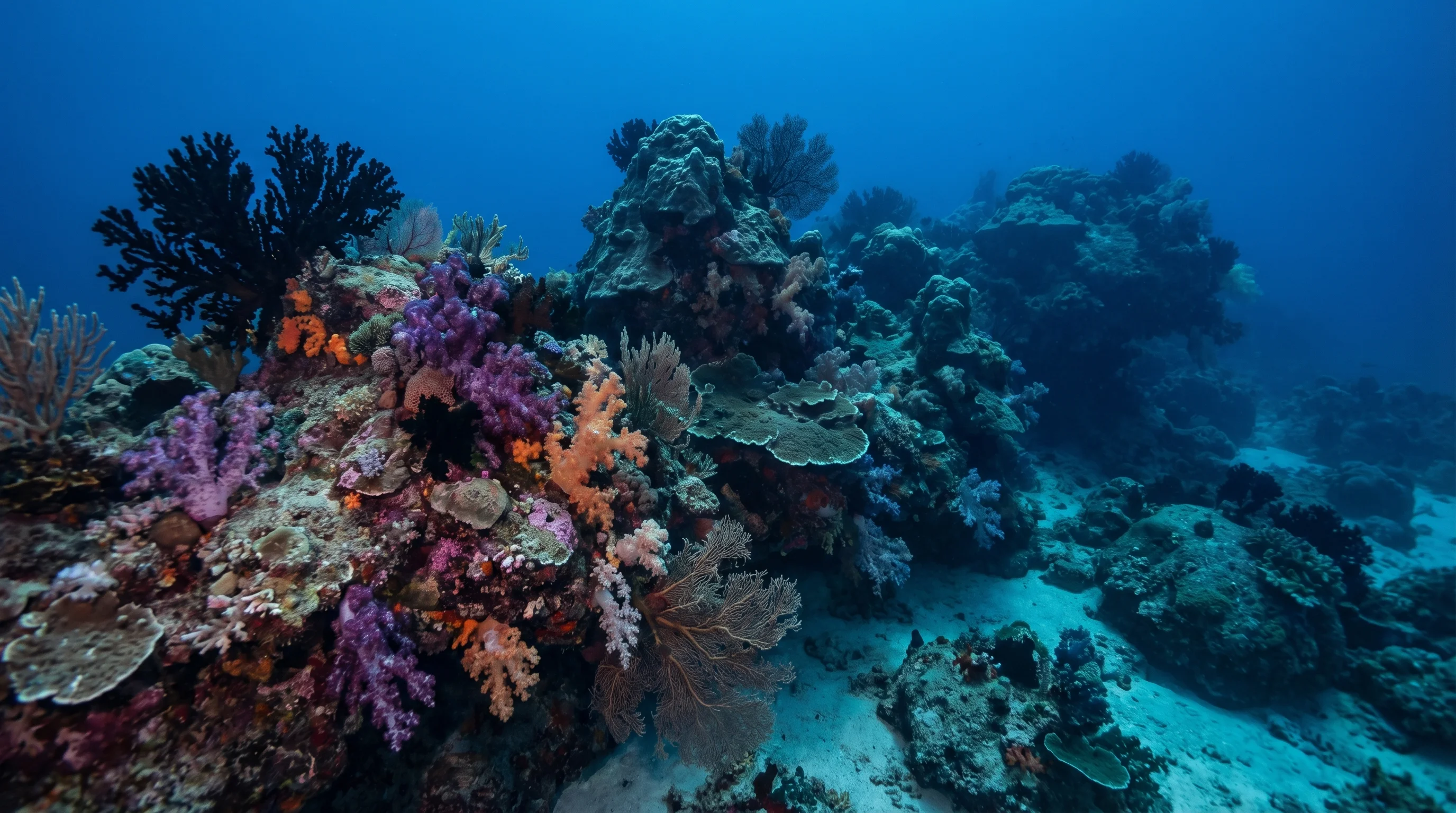
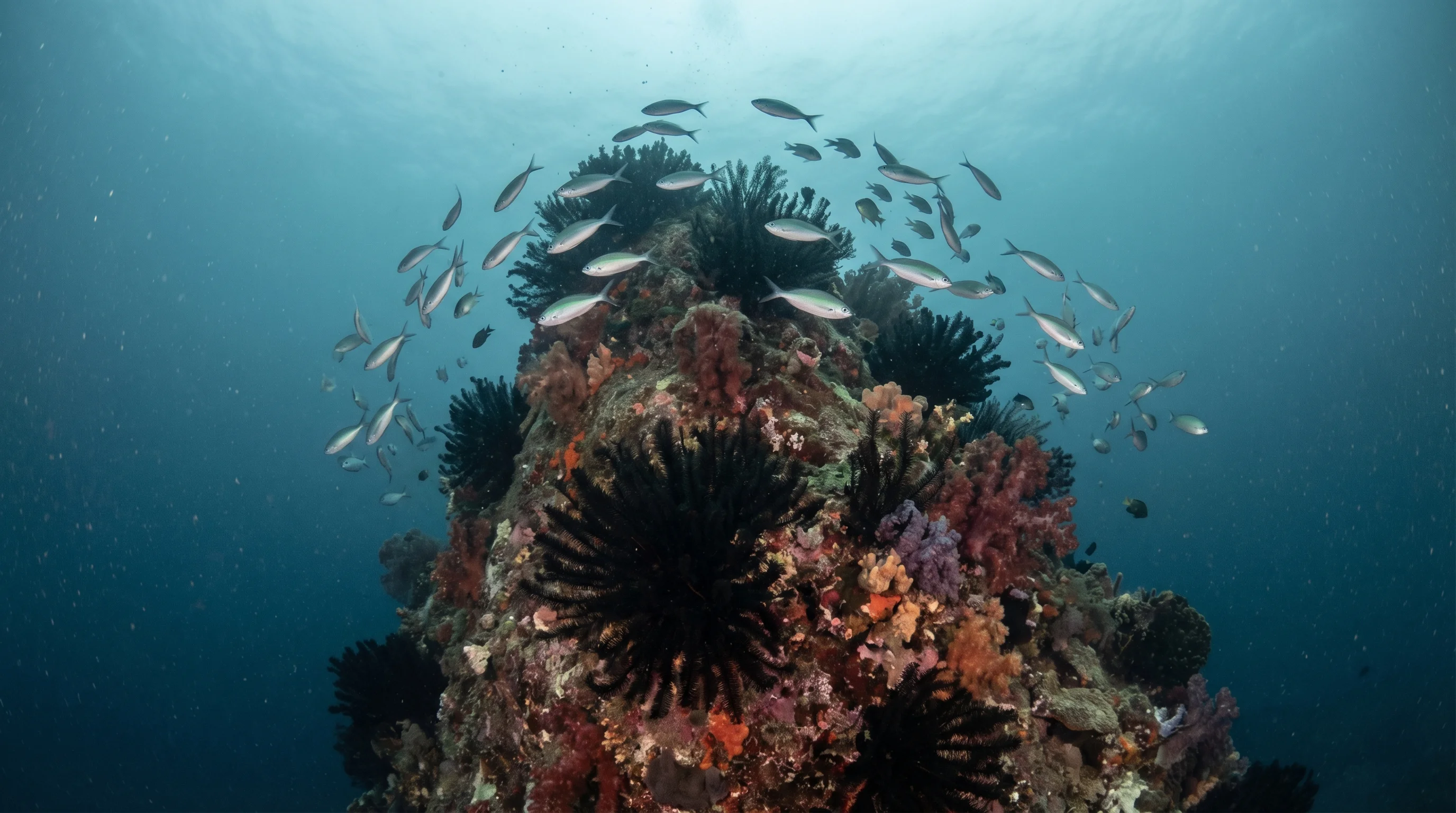
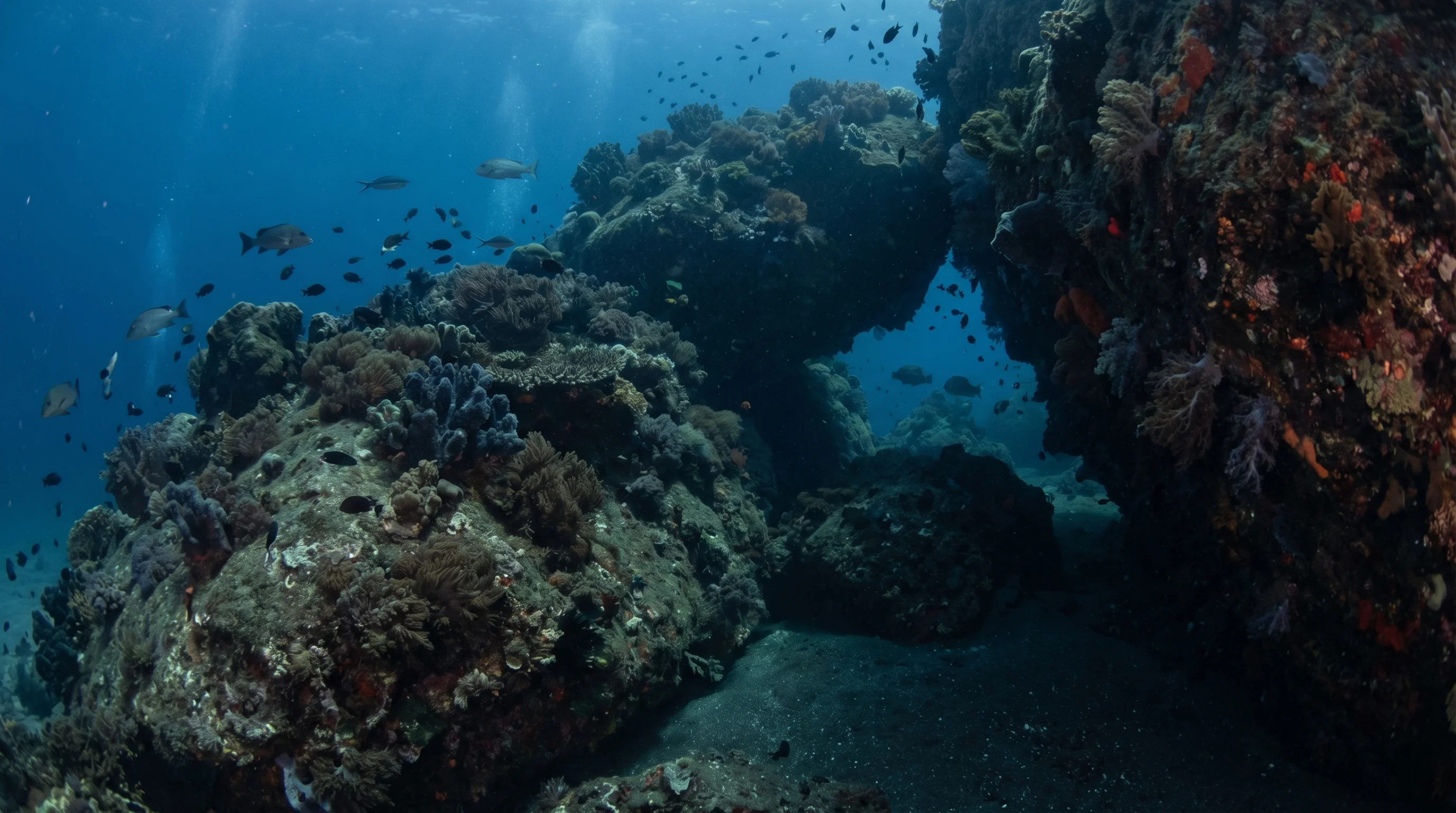
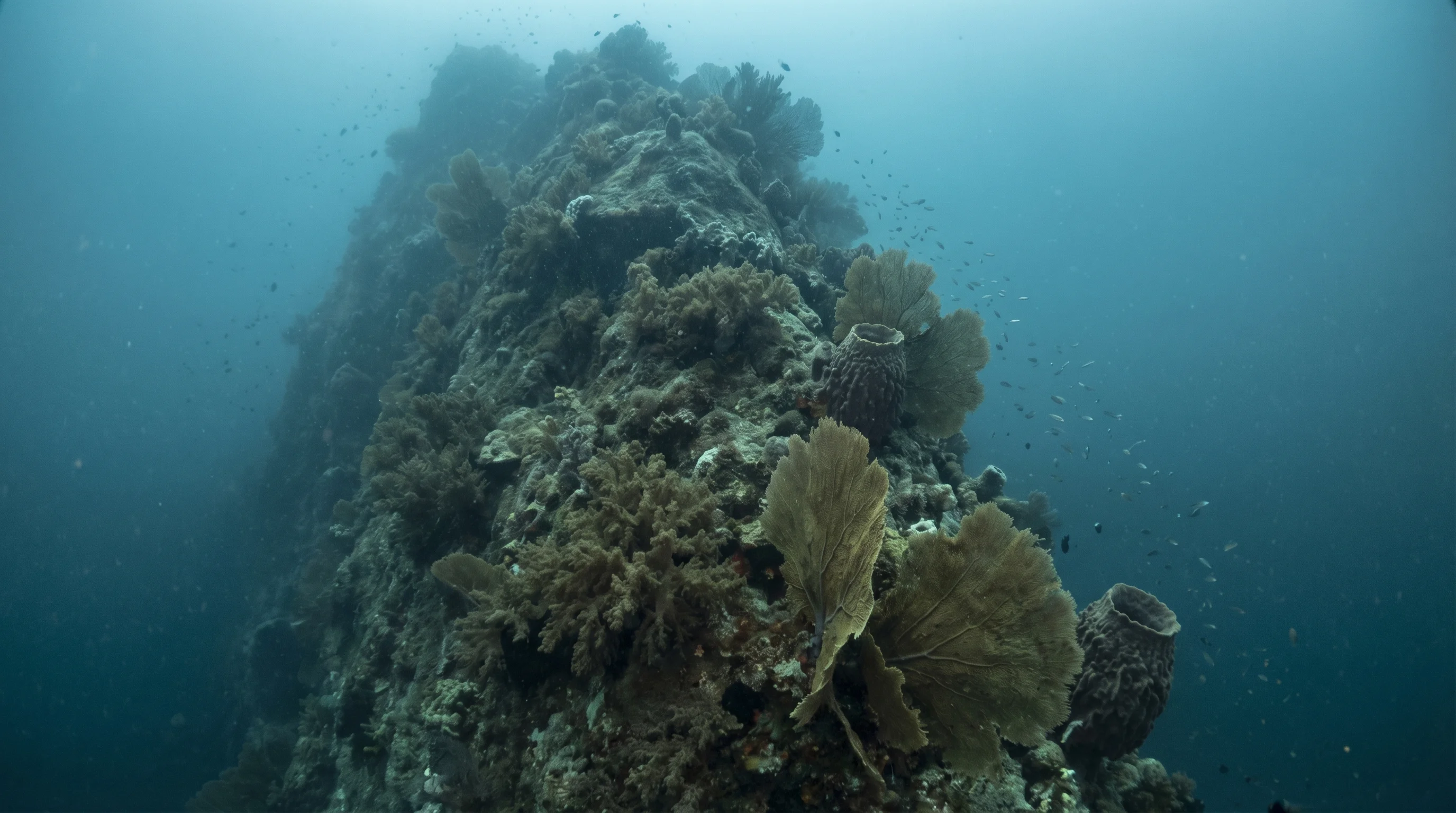
Triton Bay is a diving destination in West Papua, Indonesia, defined by reef complexity and an exceptional density of cryptic species. Drift dives dominate, with current-swept pinnacles and walls alongside calmer reef systems suited to all levels. The bay rewards patient, observant divers: ghost pipefish in multiple forms, the Painted Frogfish, and the Seahorse are among the signature finds. Sites range from exposed pinnacles near the Iris Strait to shallower beginner-friendly reefs and artificial structures.

Monthly water temperature across Triton Bay's sites, from satellite sea-surface data corrected for depth. The band shows the site-to-site spread.
Water stays warm throughout the year, cooling slightly toward the mid-year months before rising again in the final quarter. The stronger currents associated with cooler, transitional conditions make mid-year diving more demanding, and the peak months cluster around the start and end of the calendar year. Visibility varies considerably across sites, with drift conditions at exposed pinnacles like Dramai and Pintu Arus delivering the widest range.
6 operators

Indonesia
Indonesia
Indonesia
12 more sites to explore
Water temperature around Triton Bay ranges from about 25°C in August to 30°C in February, based on satellite sea-temperature data for its dive sites.
In the warm season (about 30°C) a rash guard or 3mm shorty is comfortable in Triton Bay; in the coldest months (about 25°C) step up to a 3mm full suit.
Fin maps 24 sites in Triton Bay (24 scuba diving sites and 2 snorkelling spots, with some suited to both).
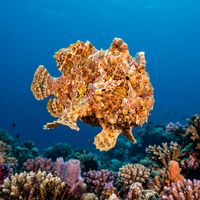
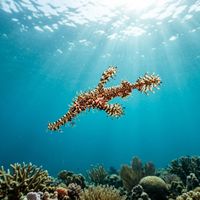
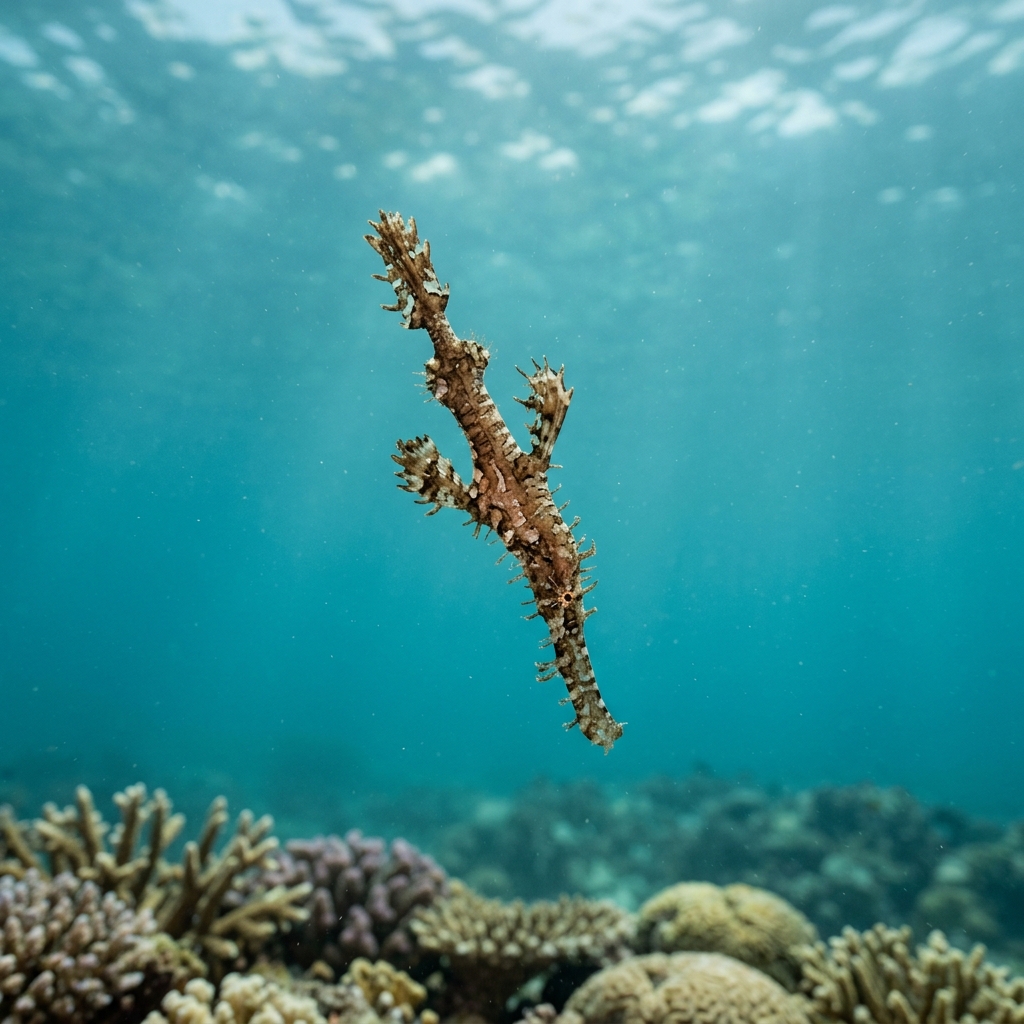
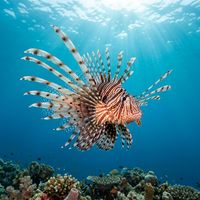
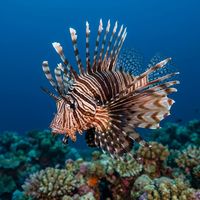
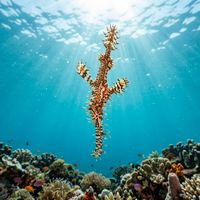
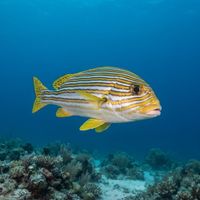
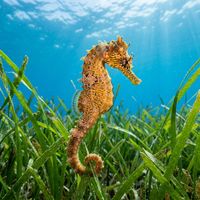
Triton Bay is particularly known for ghost pipefish, with the Ornate Ghostpipefish, Robust Ghost Pipefish, and Ghost Pipefish all observed regularly across multiple sites. The Painted Frogfish is another signature find, alongside the Seahorse and a broad mix of reef species including the Nembrotha Nudibranch, Spotfin Lionfish, and Zebra Lionfish. Patient searching along coral bommies and soft coral structures tends to yield the best results.
Most sites in Triton Bay are rated for intermediate divers, reflecting the currents and depths common throughout the bay. However, a handful of sites are accessible to beginners, including Disney Land, a shallow reef dive, and Conservation House Reef, which can be entered directly from shore. Beginners are well-placed to start on these sites before progressing to more current-exposed locations.
The vast majority of sites in Triton Bay require boat access, which is the standard mode of operation here. Conservation House Reef is the notable exception, offering a shore entry suitable for beginner divers. Triton Bay Divers is the operator listed in the area and handles boat-based access to the wider site roster.
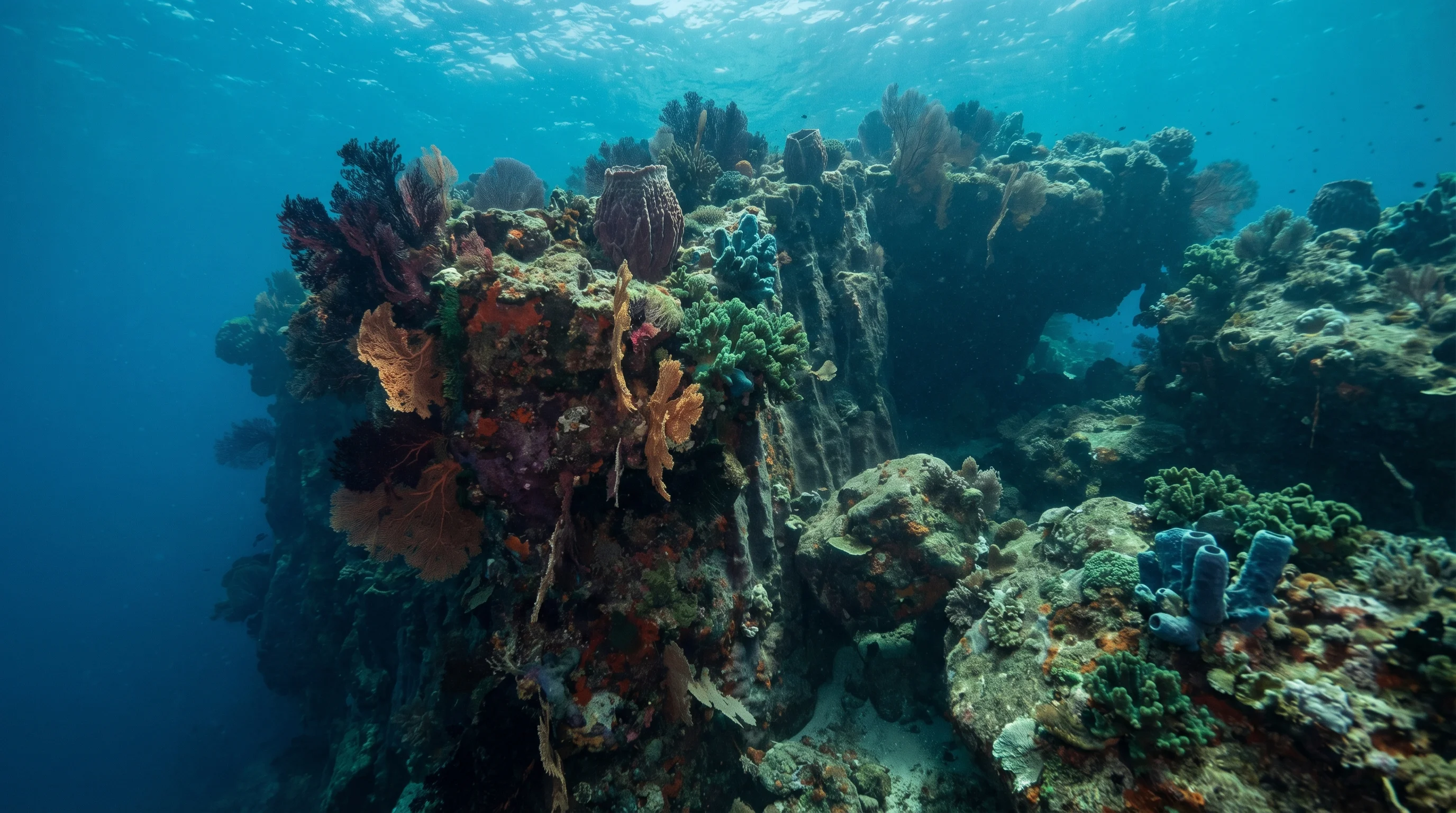
Triton Bay features a varied mix of reef, pinnacle, wall, drift, drop-off, and artificial reef sites. Drift diving is particularly prominent, with sites like Pintu Arus, Aquarium, and Dramai all designed around current-driven movement along reef structures. Sites such as Andie Reef and Little Komodo combine natural reef with artificial elements, while Larry's Dive Heaven offers coral bommies across a sandy substrate for a more relaxed, wide-angle experience.