Arothron hispidus
Spot the white-spotted puffer on reefs from Sharm el Sheikh to the Philippines. Year-round in warm tropical waters, here's where and how to find one.
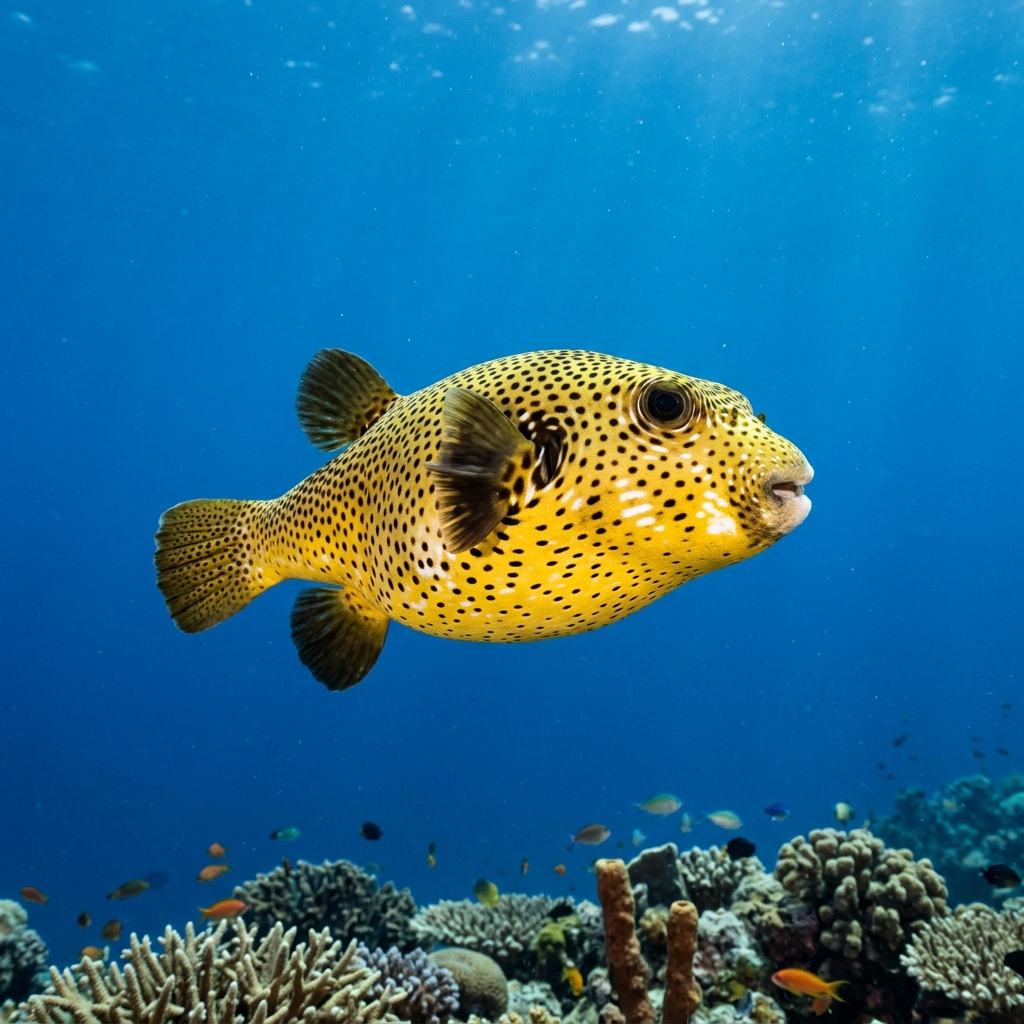
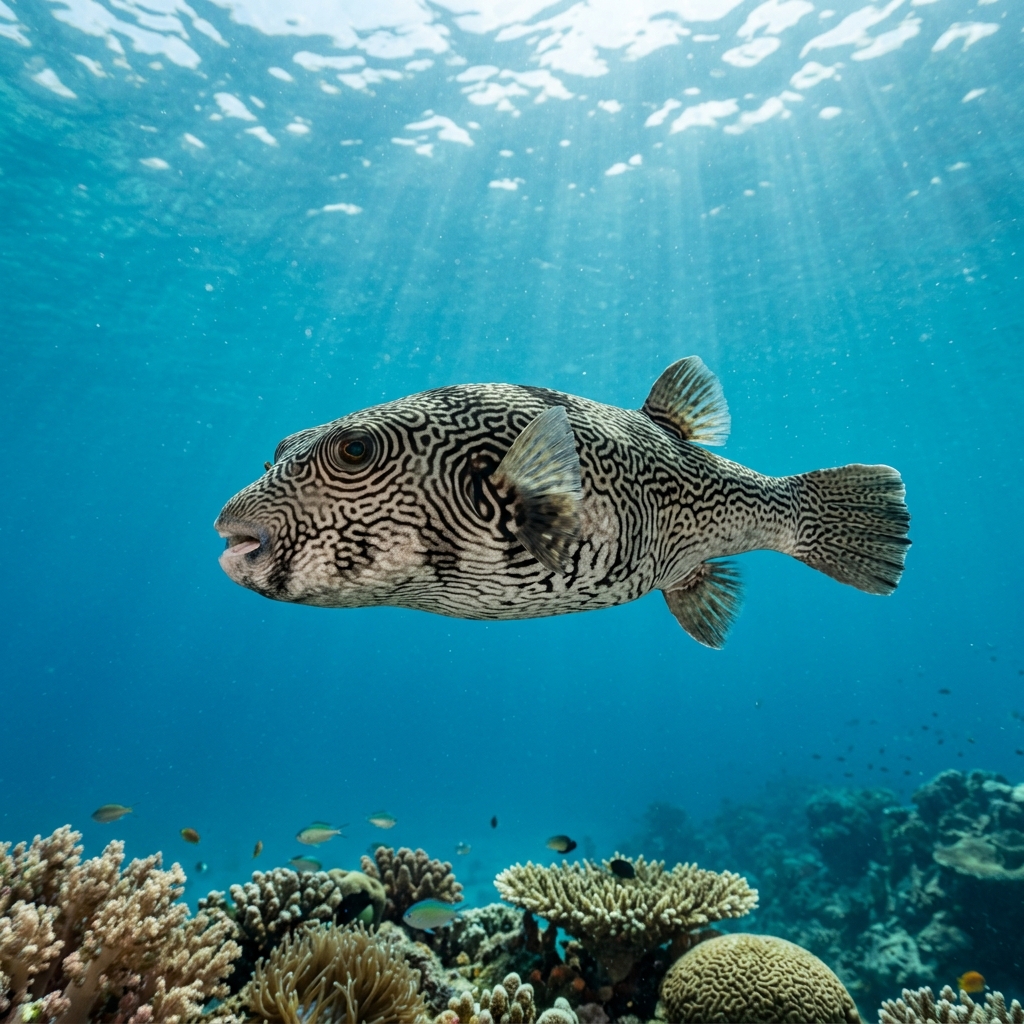
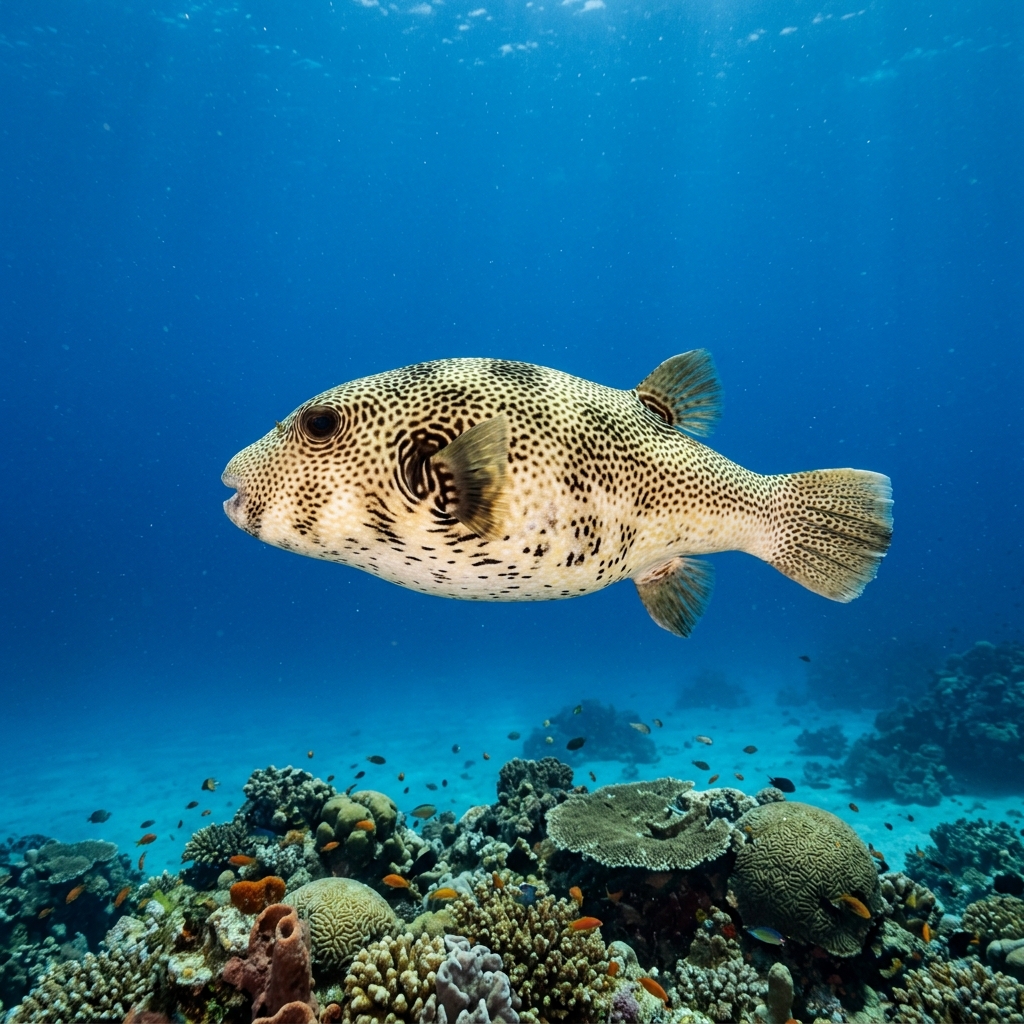
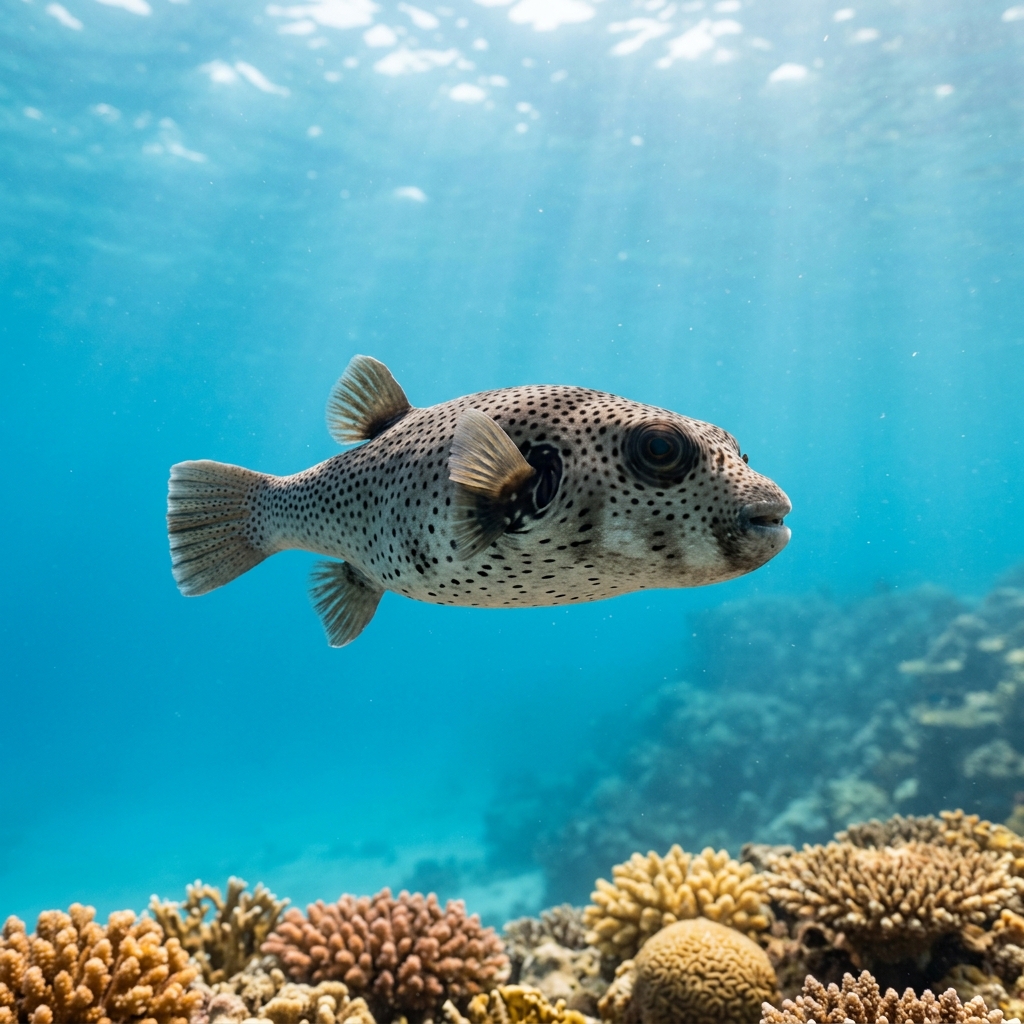
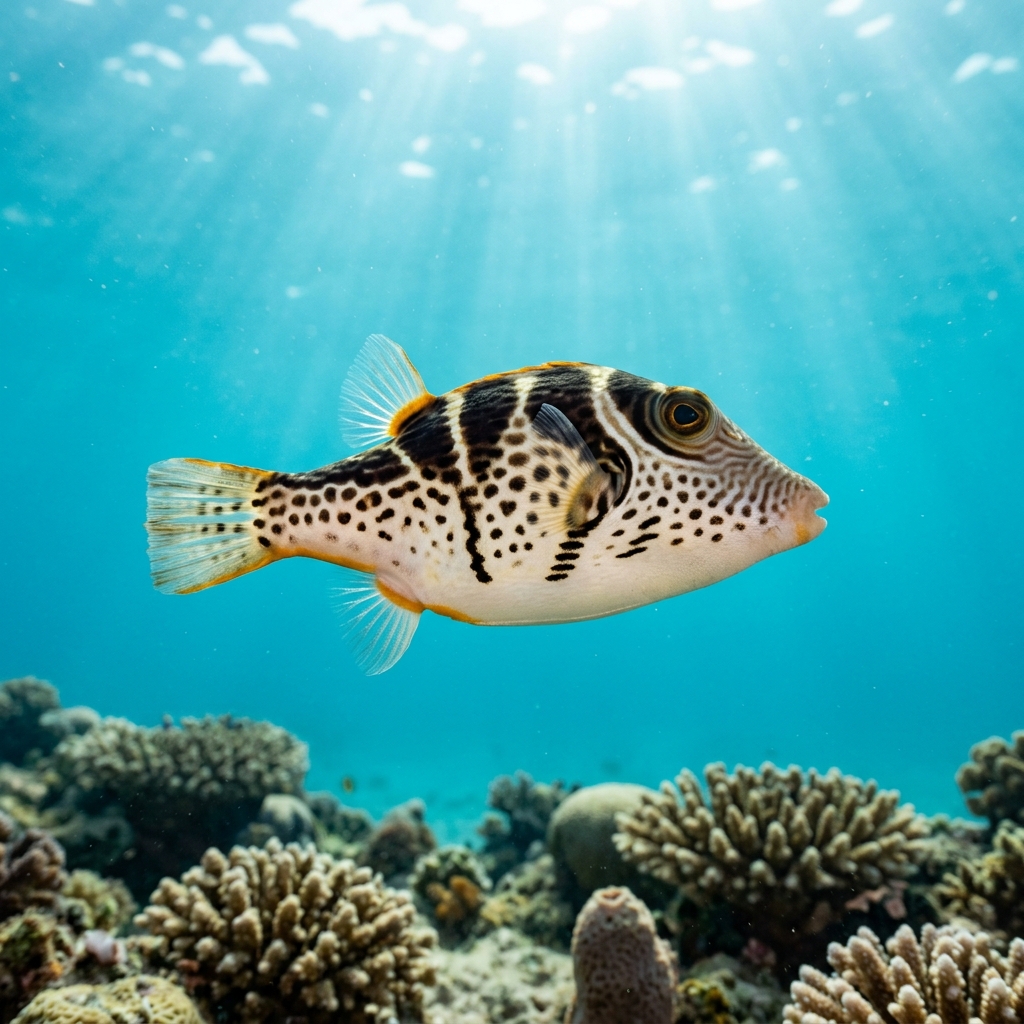
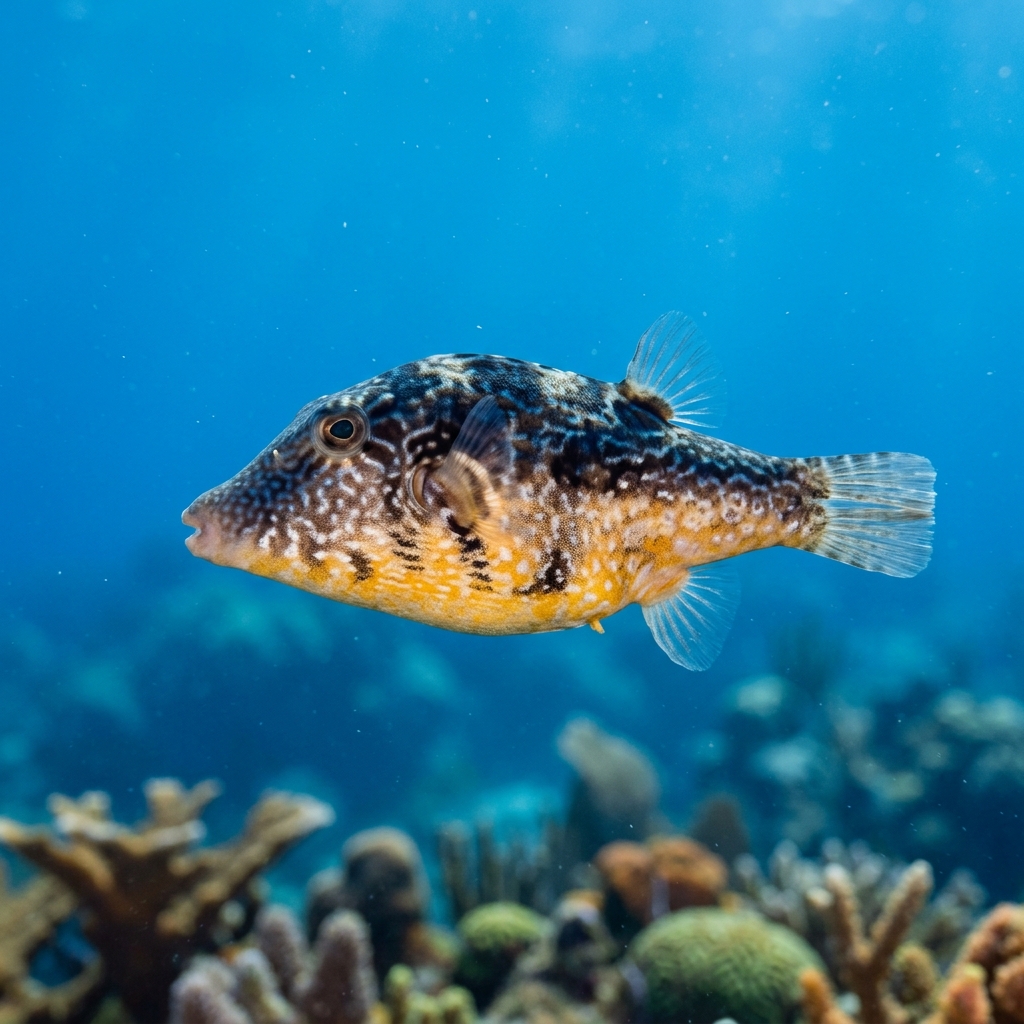
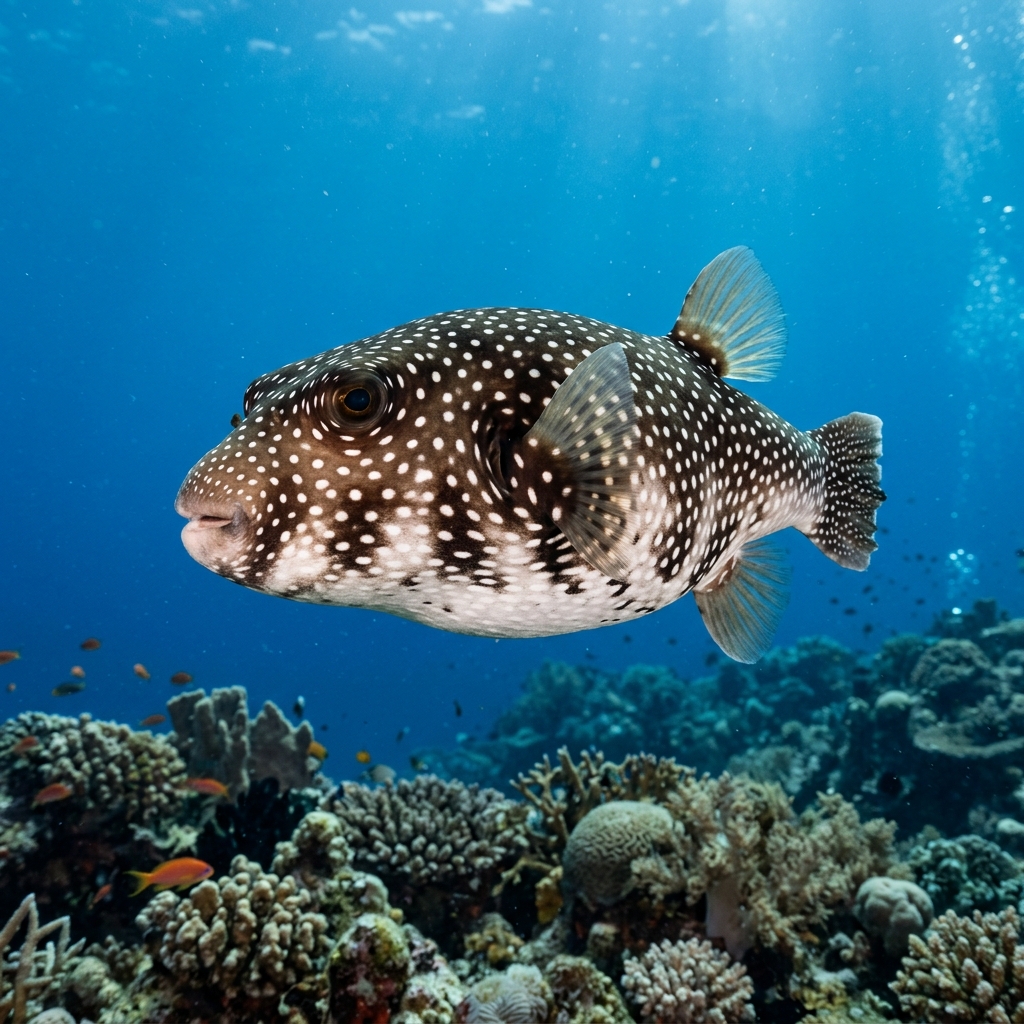
A robust, rounded fish around 35 cm long with a dark grey-brown to olive body covered in small white spots, transitioning to a pale white underside peppered with spots near the belly margin. The skin has a rough, bristly texture that catches the light and helps distinguish it from smoother puffers at close range. Look for the distinctive white-ringed black spot at the base of each pectoral fin, a reliable field mark that separates it from most look-alikes. Juveniles tend to show a yellower base colour with more contrasting spots than adults.
Most encounters happen during the day, when white-spotted puffers are actively patrolling the reef for food, picking at corals, sponges, and invertebrates with their strong beak-like teeth. They are generally unbothered by divers and will sometimes turn and approach out of curiosity rather than fleeing. They tend to cruise solo, propelling themselves with unhurried beats of their pectoral fins, though pairs are occasionally seen together near the same patch of reef.
Like all pufferfish, the white-spotted puffer can inflate its body with water when threatened, dramatically increasing its apparent size to deter predators. Its skin and organs also concentrate tetrodotoxin, one of the most potent natural toxins known, which is produced by bacteria in the food chain rather than by the fish itself.
In Northern Hemisphere destinations such as Egypt, the Philippines, and the Maldives, sightings occur year-round, which lines up with its warm-water niche of roughly 24 to 29°C across tropical reefs. For Southern Hemisphere sites like Queensland, Australia, sightings concentrate between May and January.
Reef neighbours a diver could mistake it for. Use the identification notes above to tell them apart.
Most commonly logged in the Philippines, Egypt, Indonesia, Australia, and the Maldives, with particularly strong records from Sharm el Sheikh and Marsa Alam in the Egyptian Red Sea, and across the Visayas in the Philippines. Bali and the broader Indonesian archipelago are another reliable stretch, and Queensland, Australia sees solid sightings too. Costa Rica and Thailand round out a wide Indo-Pacific distribution, with a smaller but notable presence in the US.
Mapping where White-spotted Puffer is logged…
The best-represented destinations are the Philippines, Egypt, Indonesia, Australia, and the Maldives. Top regional hotspots include Sharm el Sheikh and Marsa Alam in the Red Sea, the Visayas in the Philippines, Bali, and Queensland. It is a wide-ranging Indo-Pacific species, so strong tropical reef destinations across the region are worth checking.
In Northern Hemisphere tropical destinations like Egypt, the Philippines, and the Maldives, there is no single peak season and sightings are reported throughout the year. At Southern Hemisphere sites such as Queensland, Australia, the most concentrated window runs from May through January.
Look for a football-shaped fish around 35 cm long with a rough, bristly skin, a dark olive-grey body dusted in small white spots, and a pale underside. The most reliable field mark is a white-edged black spot at the base of each pectoral fin. Its unhurried, pectoral-fin-driven swimming style is also distinctive among reef fish.
They typically reach around 35 cm in length, making them a medium-to-large pufferfish. Their inflated, rounded body shape can make them look even bulkier when encountered head-on on the reef.
They pose no direct threat to divers. They are generally calm and curious around people. Their flesh and organs contain tetrodotoxin, a potent toxin, but this is only a risk if the fish is consumed and has no bearing on a safe underwater encounter.
Site and sighting data is aggregated from diver logs, iNaturalist and GBIF. For taxonomy and conservation status:
Caribbean Sharpnose Puffer
2,190 sites