Plectorhinchus polytaenia
Reef fish with fine stripes and a pouty face, most reliably logged around Raja Ampat's reefs in 27-29 C water, year-round.
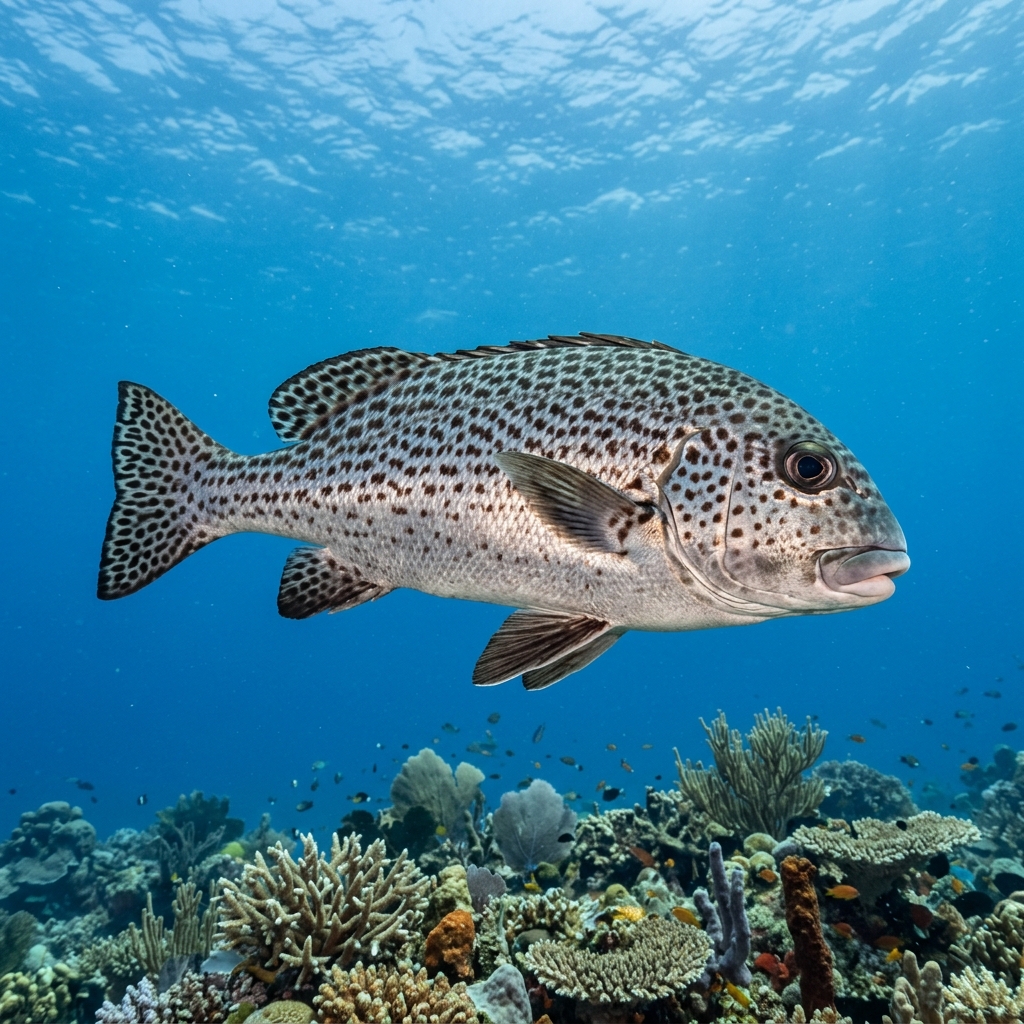
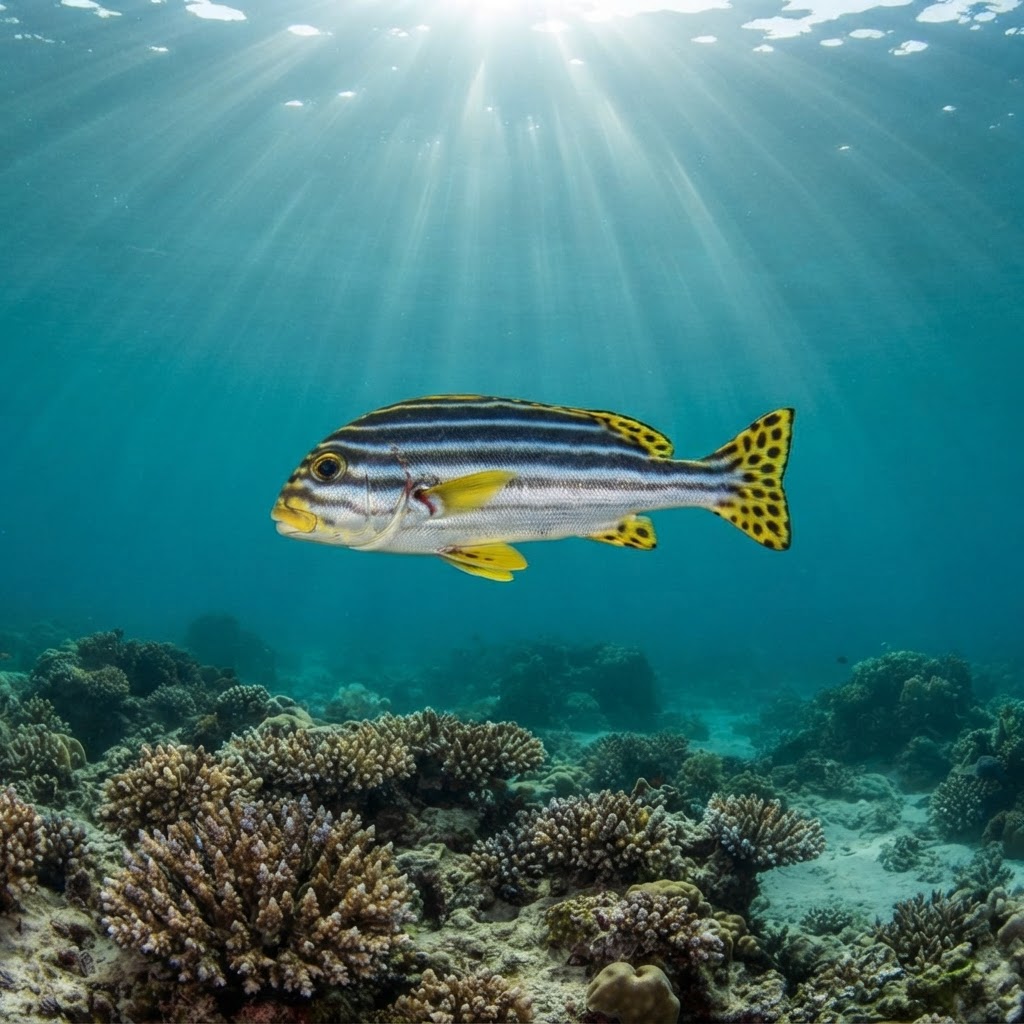
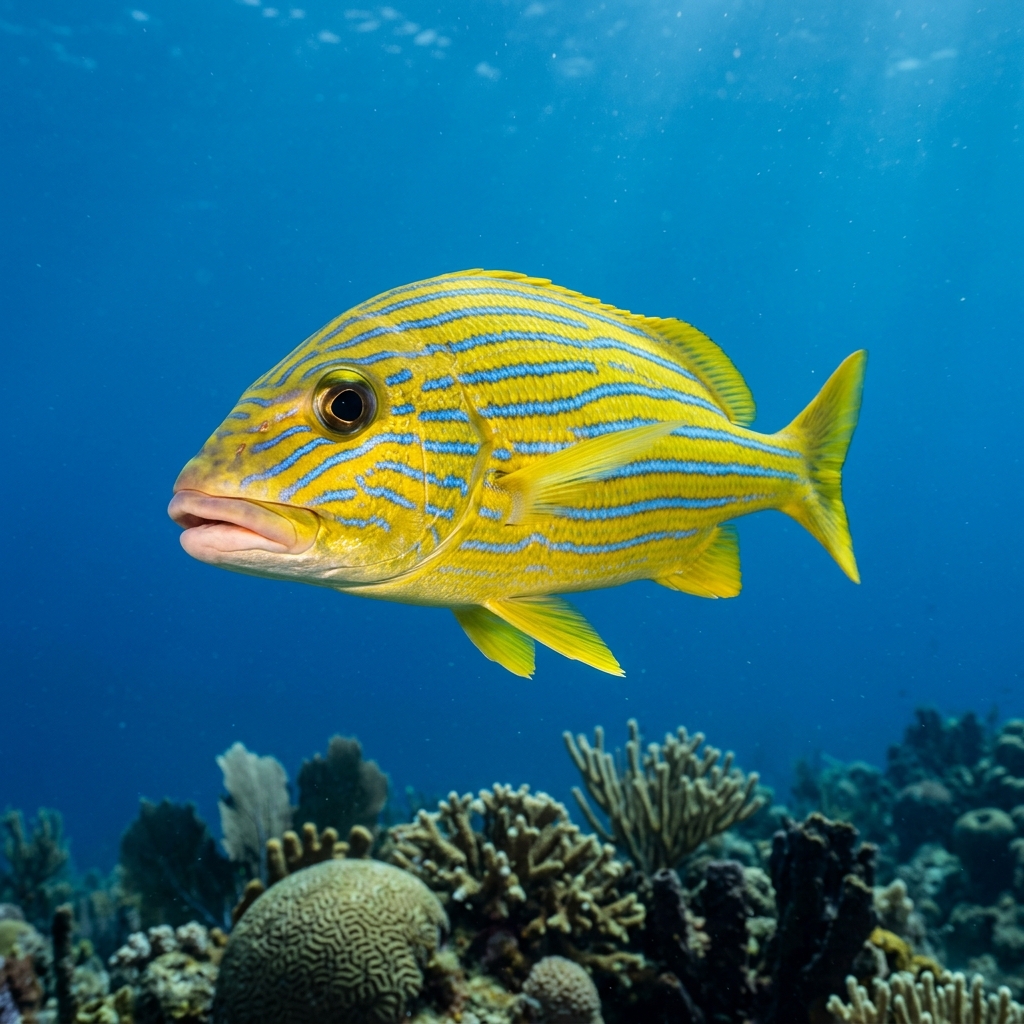
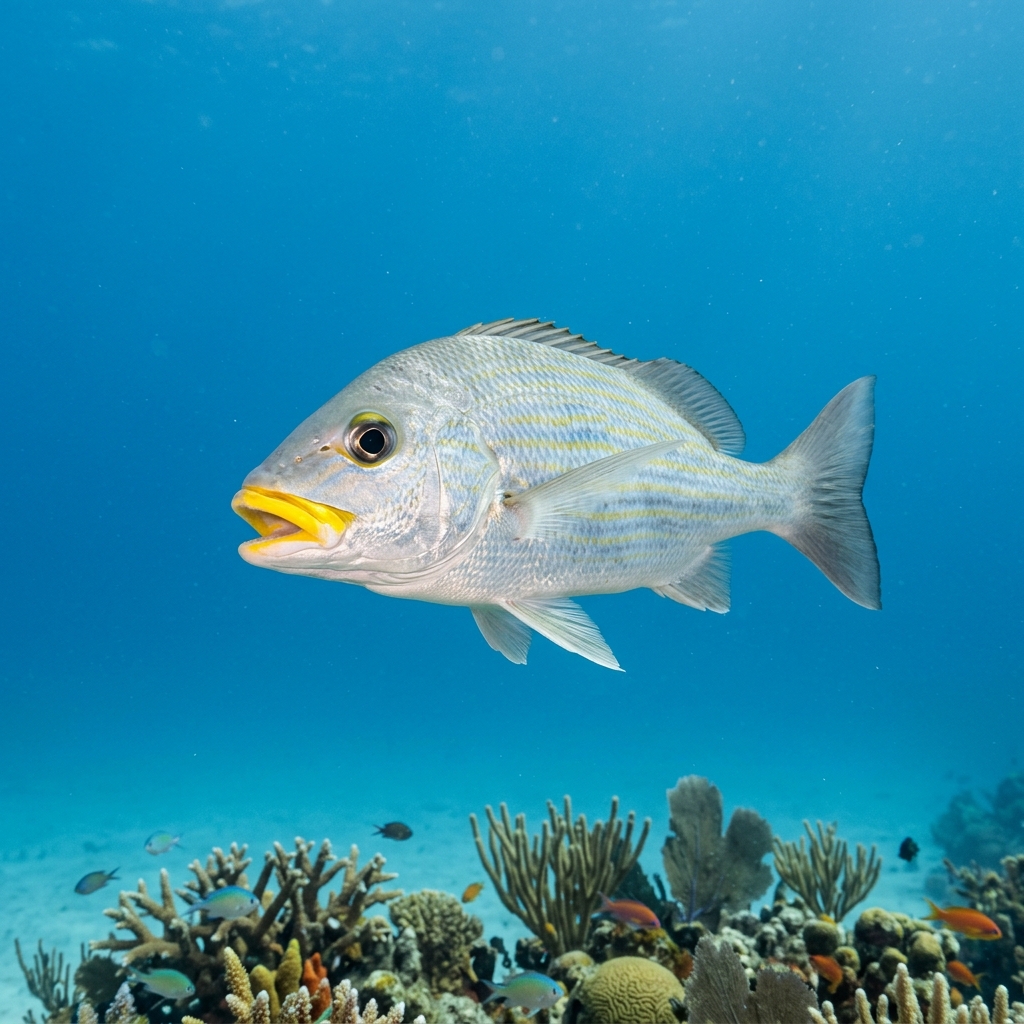
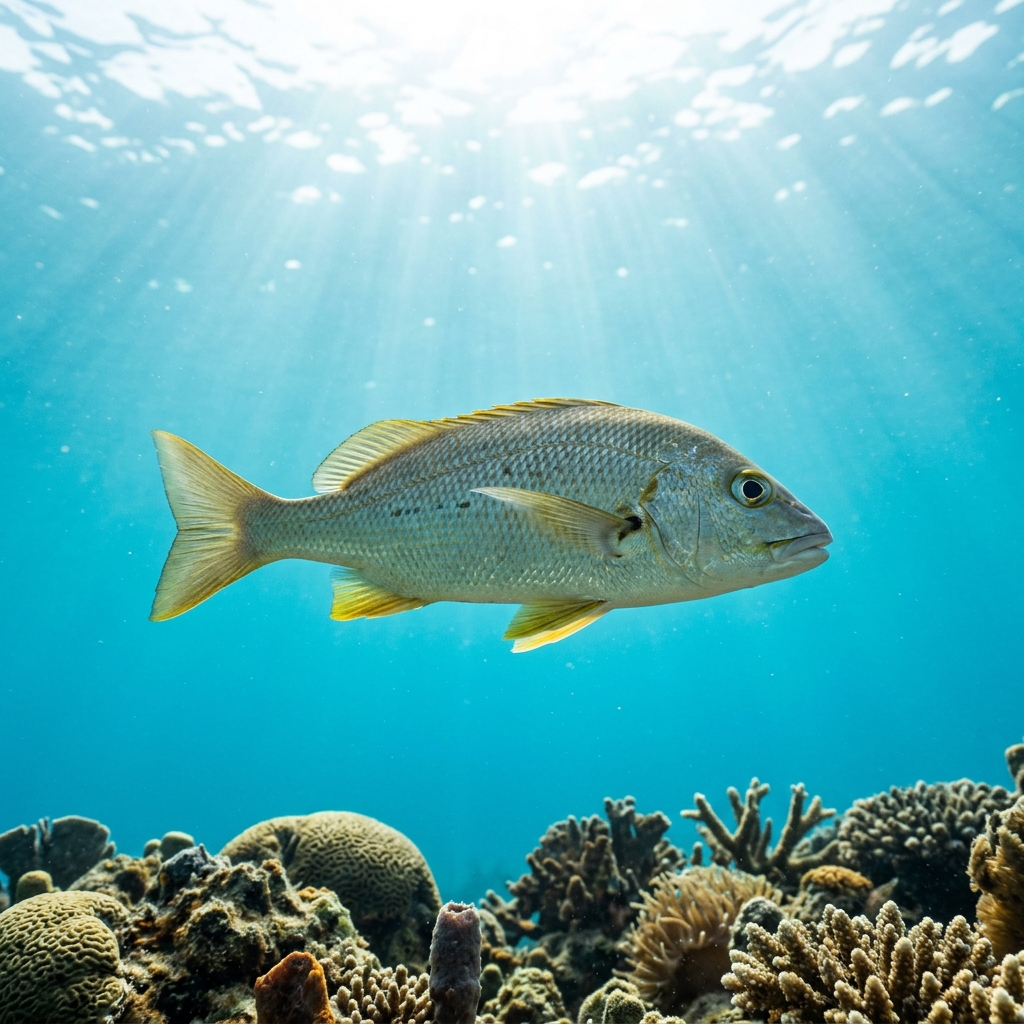
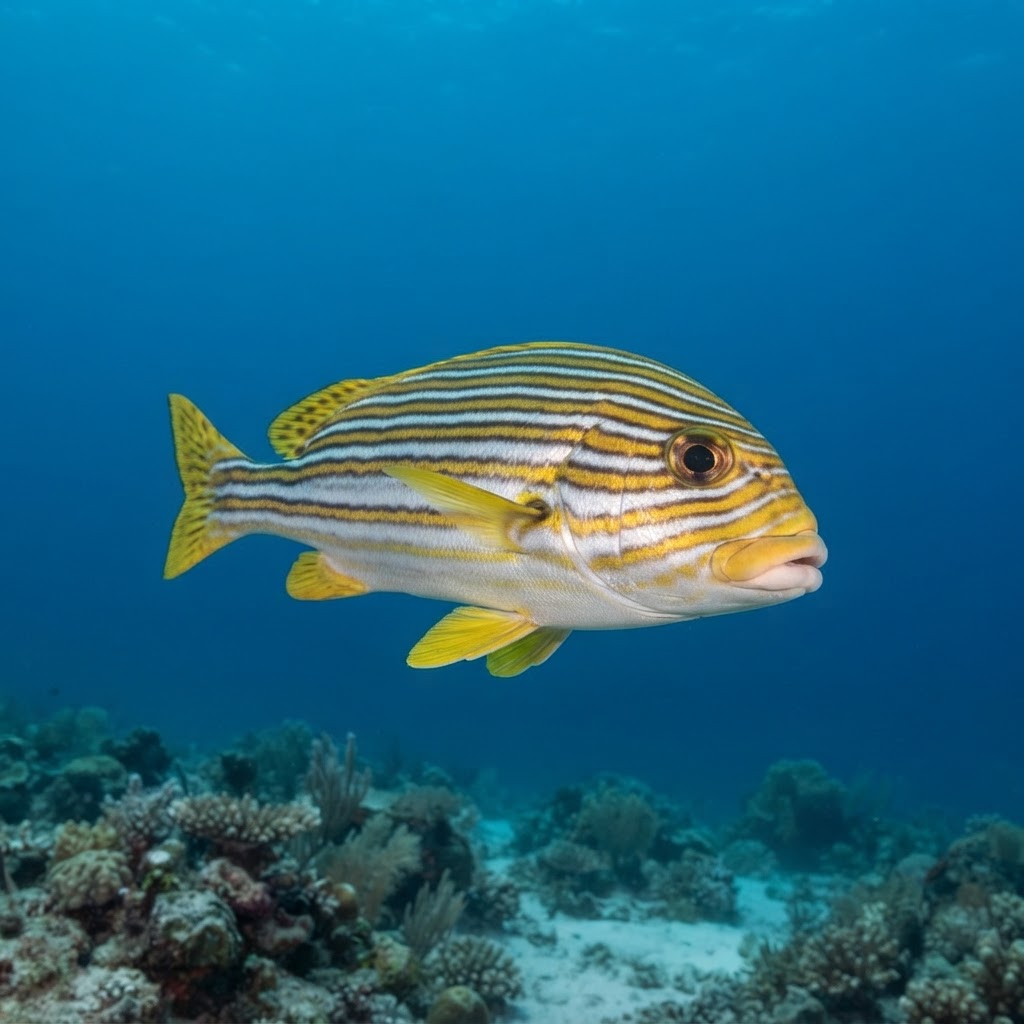
Grows to around 35 cm, with an elongated, deep-bodied shape and a set of thick, fleshy lips that give the whole family its name. Look for fine dark stripes running the length of a pale to yellowish body, with the stripes staying crisp rather than breaking into spots. It often hangs at a slight head-down angle under ledges, which is as useful for ID as the pattern itself.
Usually spotted sheltering under coral ledges, overhangs or in the shade of table corals during the day, often solo or in loose pairs rather than big groups. It tends to hold its position and let divers approach slowly rather than bolting, though it will slide deeper under cover if crowded. Most sightings are logged as uncommon rather than common, so a calm, unhurried look under reef structure is usually what turns one up.
Sweetlips species are known for the thick, sensitive lips they use to probe crevices and sand for hidden invertebrates and small fish, feeding mostly after dark when they leave their daytime shelters to hunt.
No clear seasonal pattern in the sightings data, and the 27 to 29.3 C temperature niche it favours holds steady on these reefs year-round, so any month is a reasonable bet. Plan the trip around the region's general dive season rather than around this fish specifically.
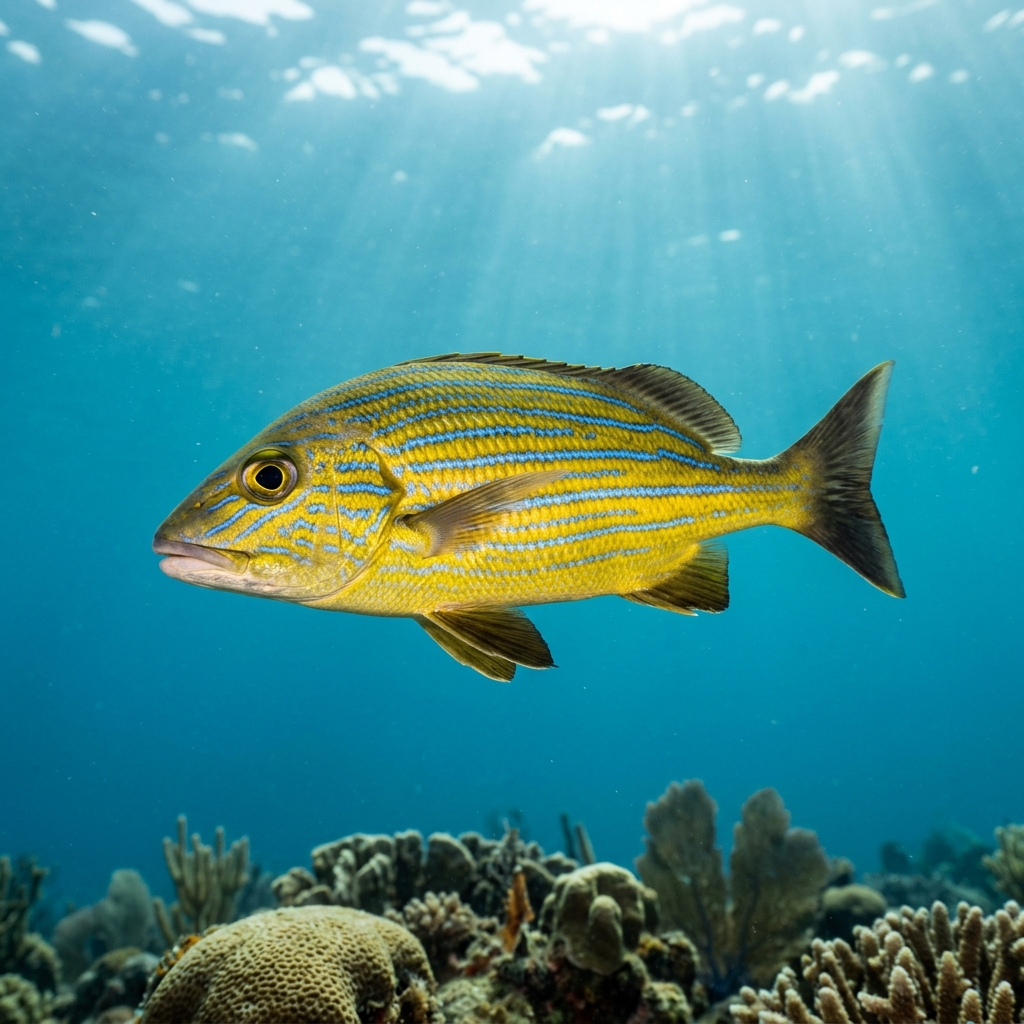
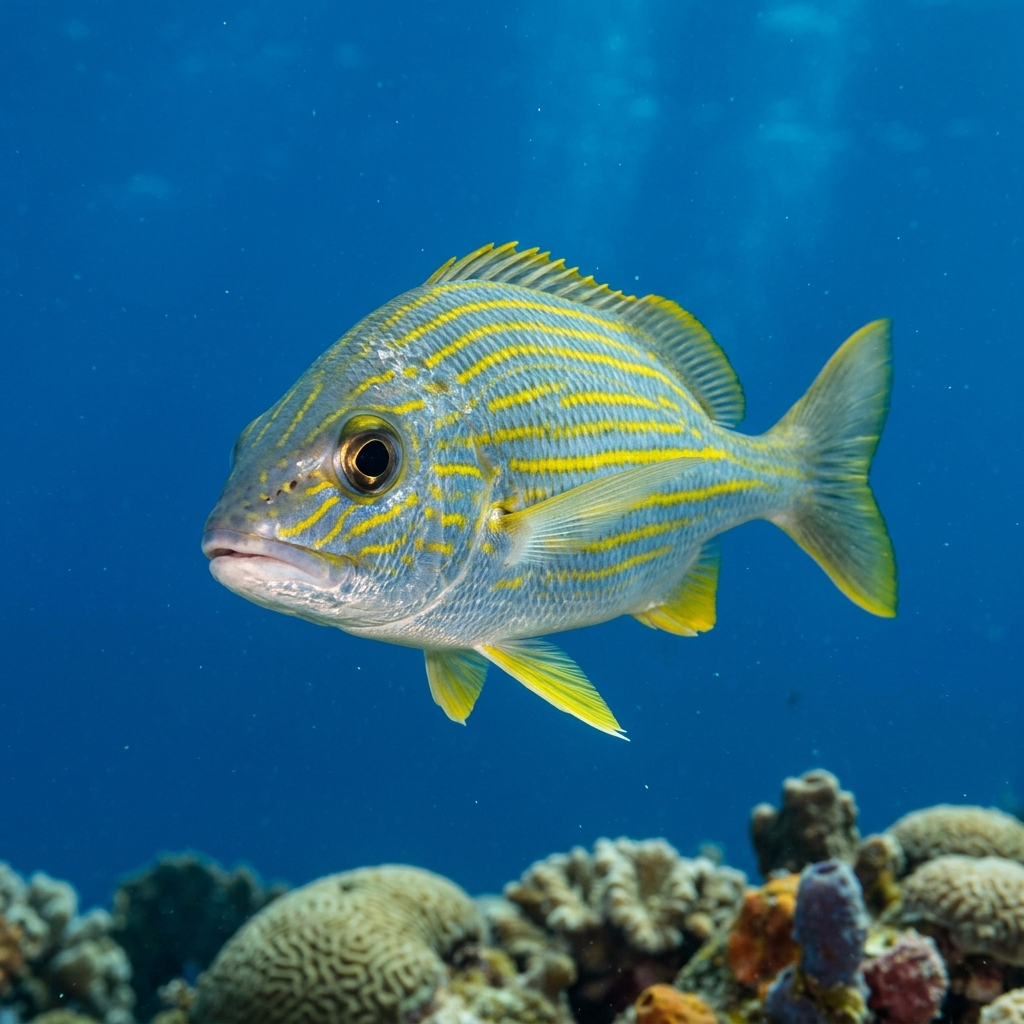
Reef neighbours a diver could mistake it for. Use the identification notes above to tell them apart.
Most reliably found in Indonesia, with Raja Ampat standing out well above anywhere else, followed by Bali, West Papua, Nusa Tenggara and Sulawesi. Outside Indonesia it turns up in the Philippines, particularly around the Visayas, and in smaller numbers off Dili in Timor-Leste.
Mapping where Ribboned Sweetlips is logged…
Raja Ampat is by far the strongest region for this fish, with further sightings across Bali, West Papua, Nusa Tenggara and Sulawesi in Indonesia. It also shows up in the Philippine Visayas and around Dili in Timor-Leste.
There is no strong seasonal signal in the sightings, and it stays within a warm 27 to 29.3 C band year-round, so it is worth looking for on any trip to its core Indonesian sites.
Check for fine, continuous dark stripes along a pale body, thick lips and a habit of resting head-down under ledges. It grows to around 35 cm, noticeably smaller than some of its more heavily spotted relatives.
They typically reach around 35 cm in length, a mid-sized reef fish that is easy to overlook against a busy coral backdrop.
Like other sweetlips, they use their thick lips to probe crevices and sand for hidden prey, and they do most of their active hunting at night after sheltering under ledges through the day.
Site and sighting data is aggregated from diver logs, iNaturalist and GBIF. For taxonomy and conservation status:
Bluestriped Grunt
1,907 sites