Dendrochirus zebra
Spot zebra lionfish across the Visayas, Bali, and the Maldives in 24-29 °C water. Learn how to ID this reclusive reef ambusher and when to find it active.
Safety warning
The dorsal, pelvic, and anal spines all carry venom delivered through grooves in the spine tips. A sting causes immediate, intense localised pain that can last several hours, occasionally with swelling and nausea. The fish does not attack; stings happen when divers handle it, brush past it in a crevice, or corner it. Keep a respectful distance, watch where you rest your hands on the reef, and if stung, immerse the affected area in water as hot as you can comfortably tolerate and seek medical assessment.
If you're stung
Venomous spinesGeneral first-aid guidance, not a substitute for professional medical care. In an emergency, call your local emergency number.
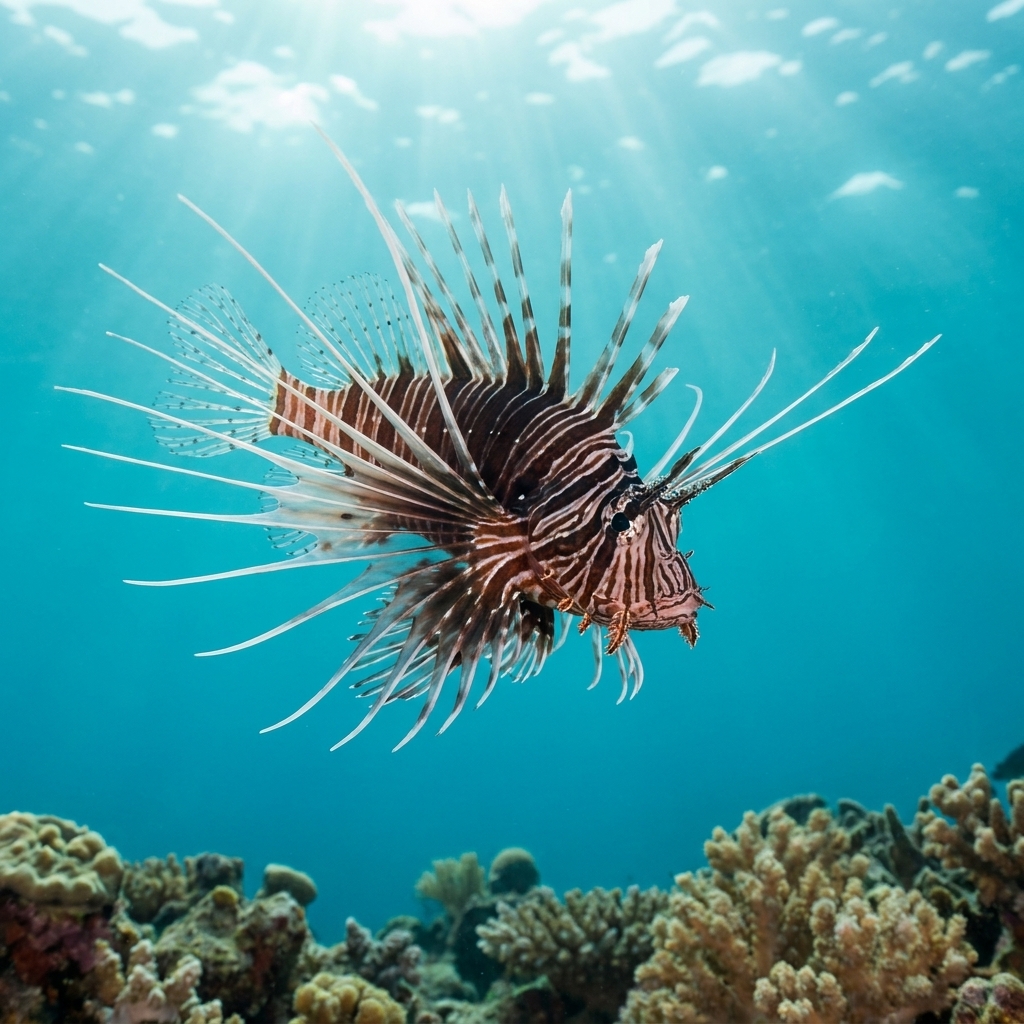
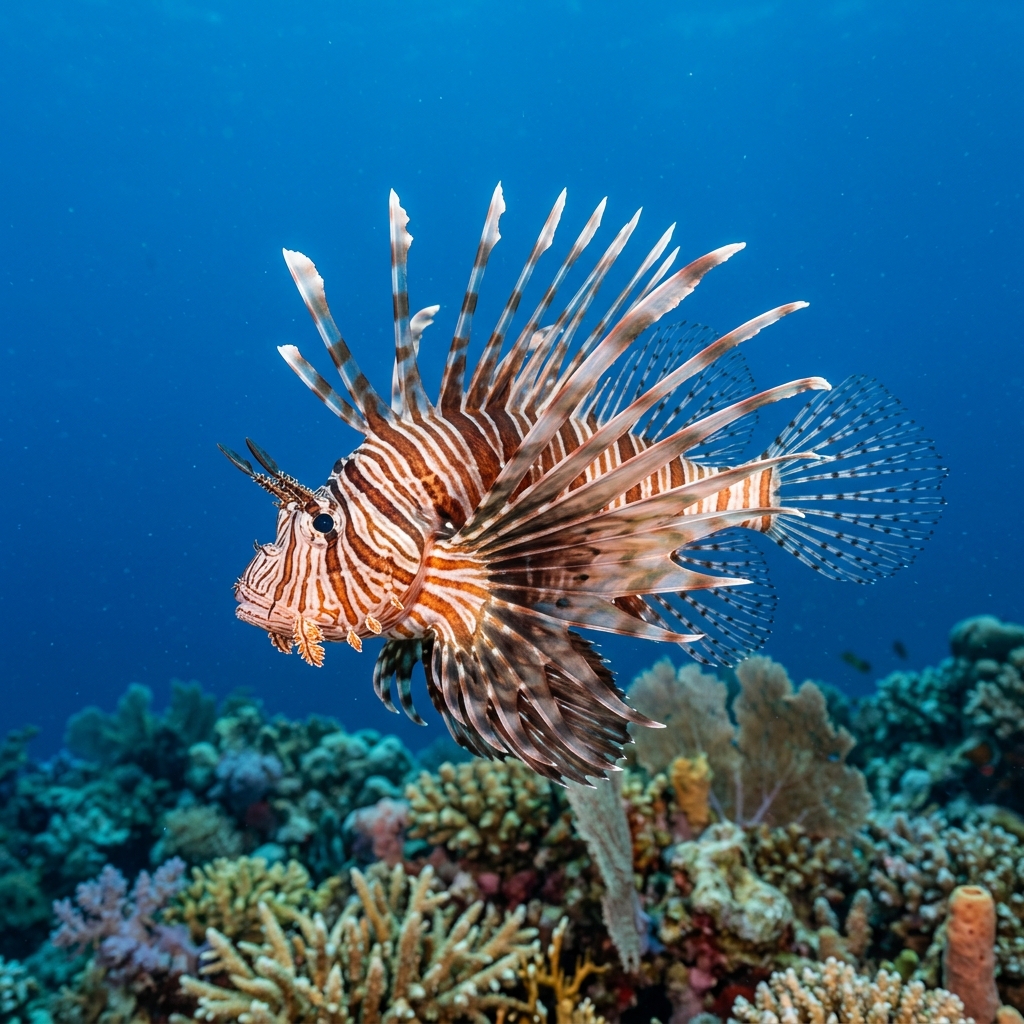
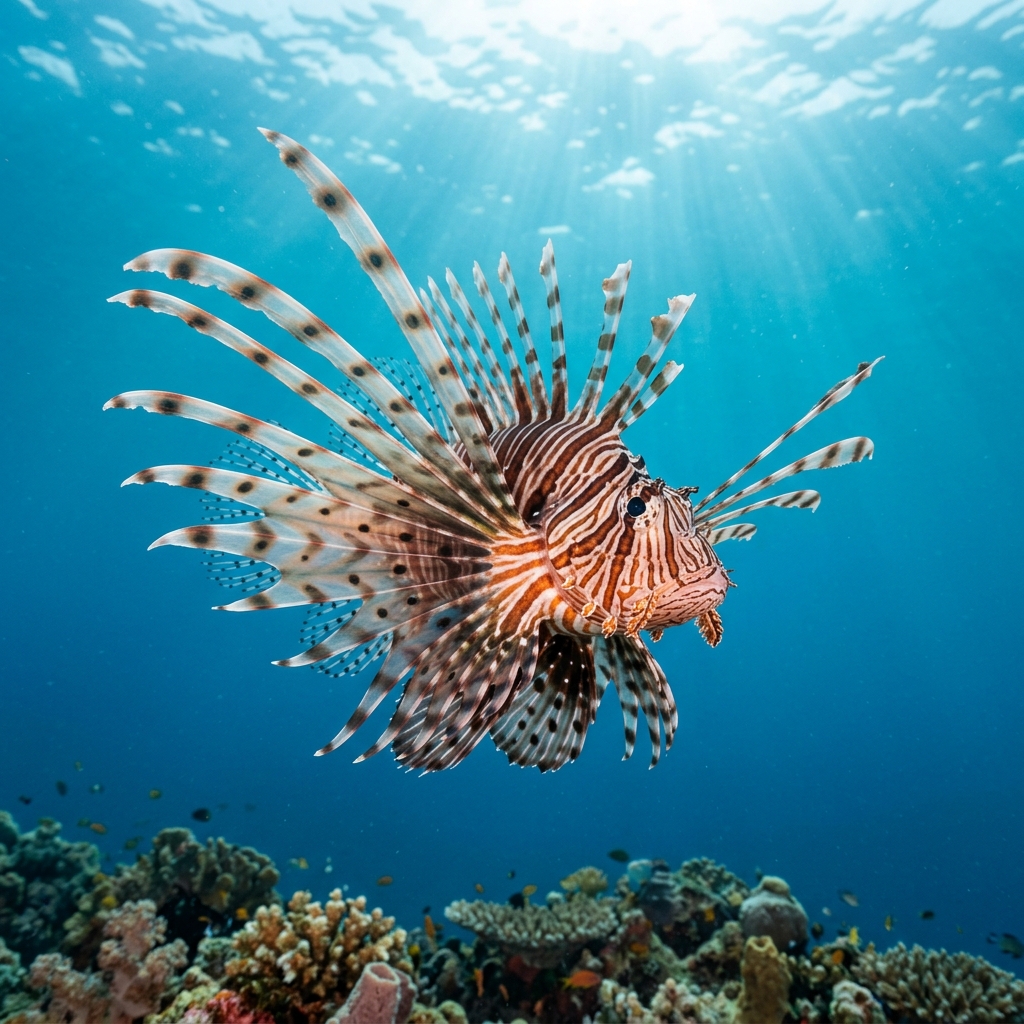
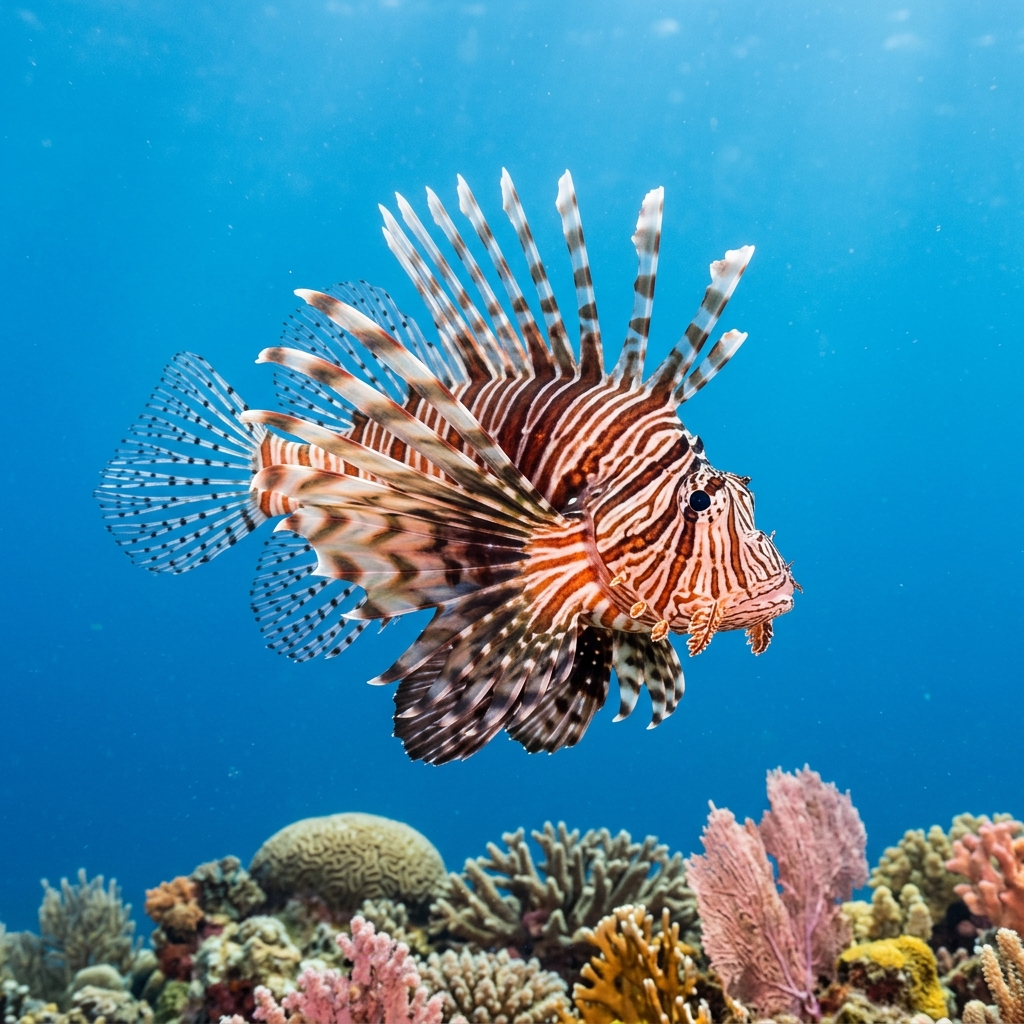
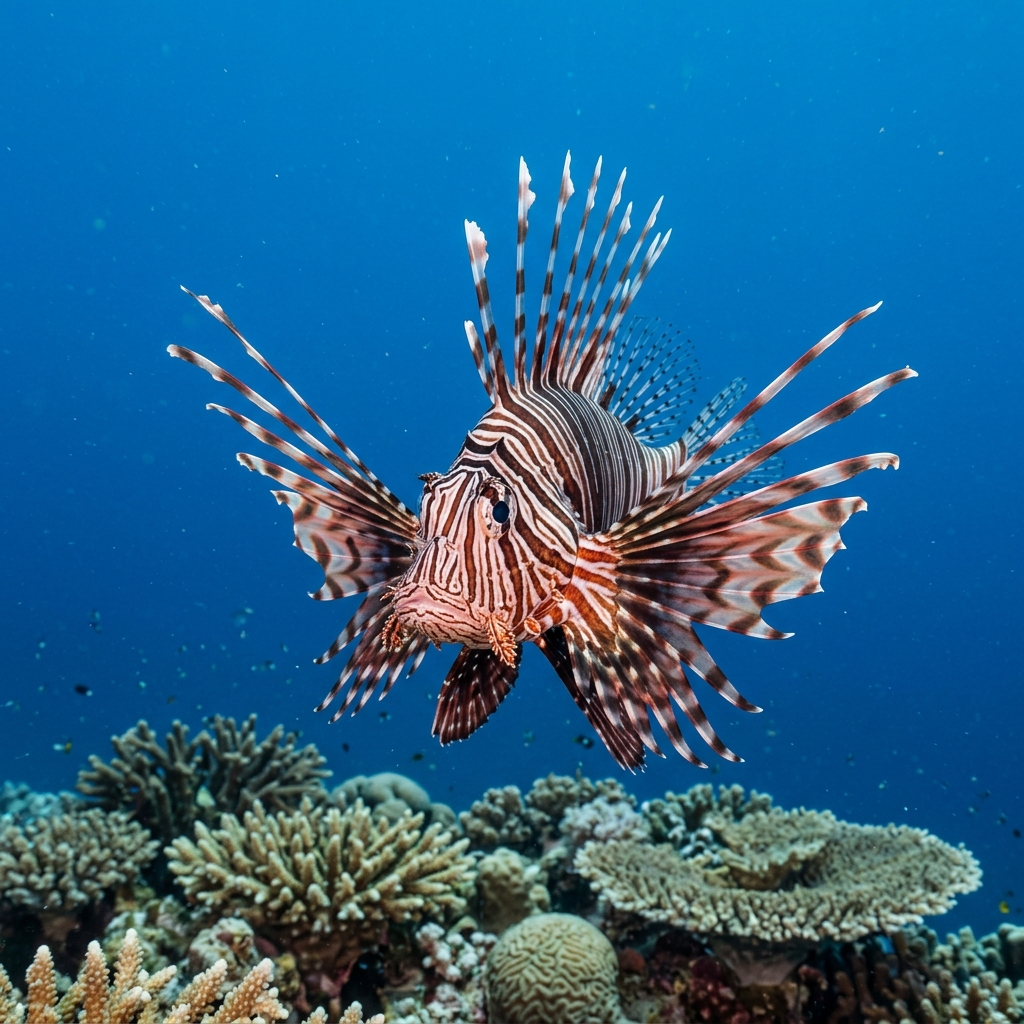
Bold, alternating dark brown and white vertical bars wrap the body from snout to tail, giving the animal its name and making it one of the easier lionfish to pick out at a glance. At around 17 cm, it is noticeably smaller and more compact than the common red lionfish, with oversized fan-like pectoral (side) fins that flare wide when the fish feels threatened or is herding prey. The dorsal spines are shorter and stouter than those of its larger relatives. It typically sits motionless against rubble, coral overhangs, or inside reef crevices, relying on camouflage as much as its striking pattern.
On most dives you will find one resting in a crevice or tucked under a ledge, perfectly still, watching you with more suspicion than curiosity, if you push closer, it will ease further back into cover. Activity picks up at dusk and dawn, when it hunts by spreading its wide pectoral fins to funnel small fish and crustaceans into a corner before striking. Avoid sudden movements or cornering one against the reef; a threatened animal will face its venomous dorsal spines towards the perceived threat rather than flee.
Unlike most fish, which simply release eggs and sperm into open water, zebra lionfish pair up and the male nudges the female upward in a courtship ascent before she releases a gelatinous mucus ball containing thousands of eggs, an unusual spawning strategy shared by other scorpaenids that keeps the clutch together near the surface.
In Northern Hemisphere destinations such as the Philippines, Indonesia, and the Maldives, sightings concentrate between February and November. For Southern Hemisphere sites including Queensland, the productive window runs June through April, effectively most of the year, consistent with the species' preference for warm tropical water in the 24 to 29 °C range.
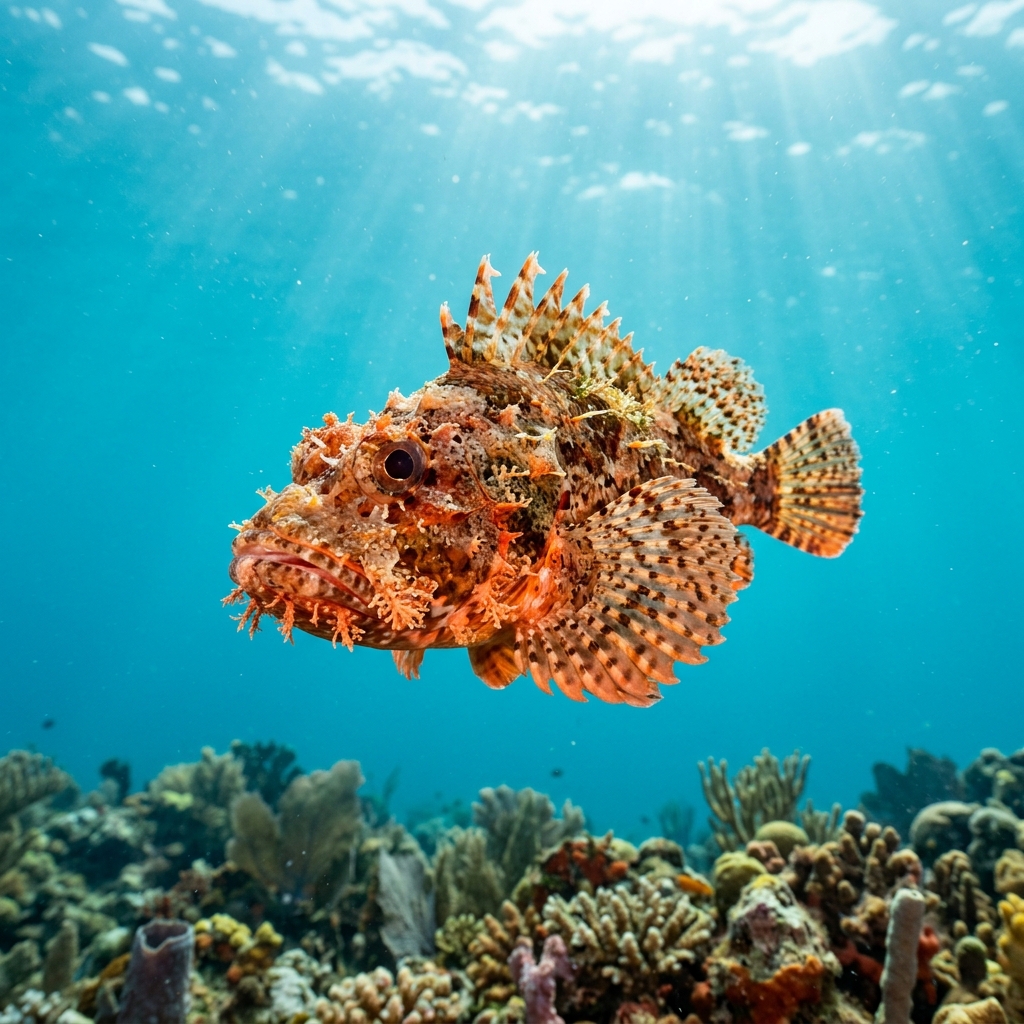
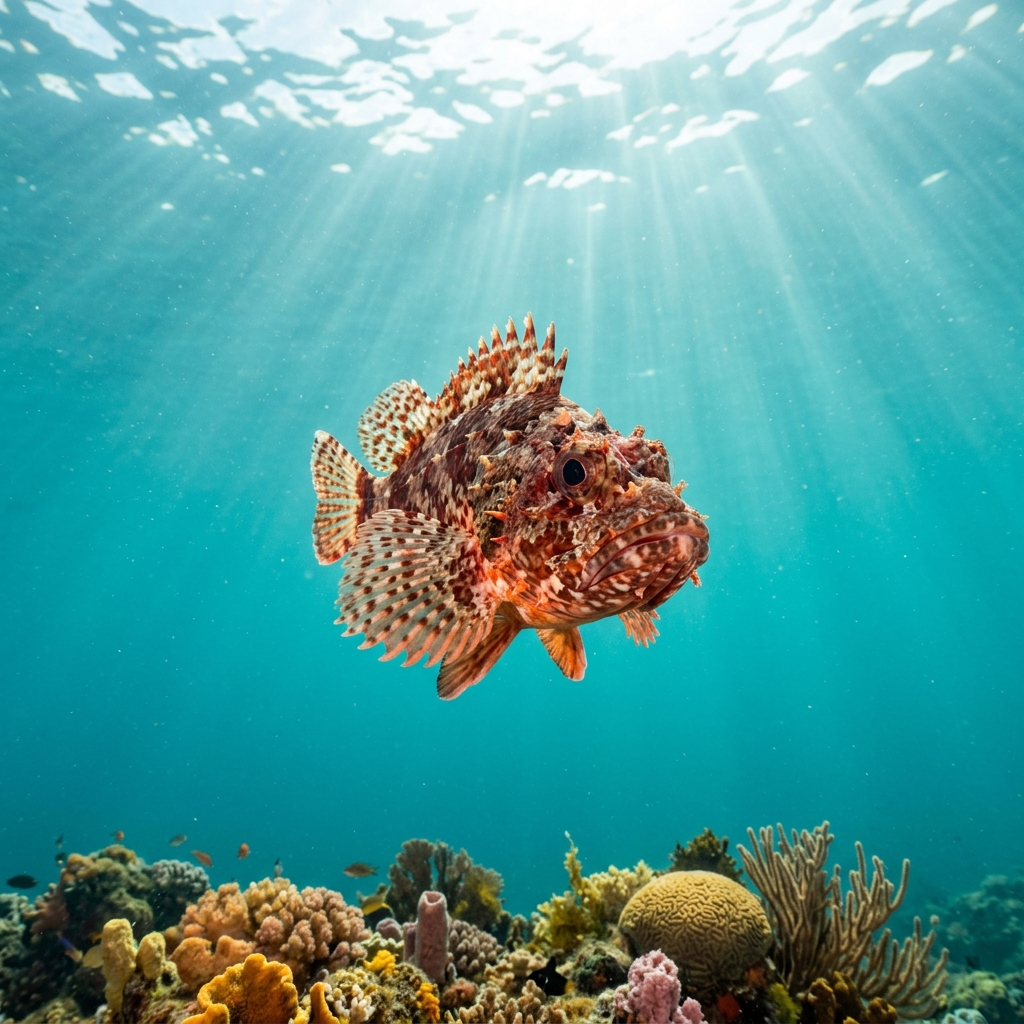
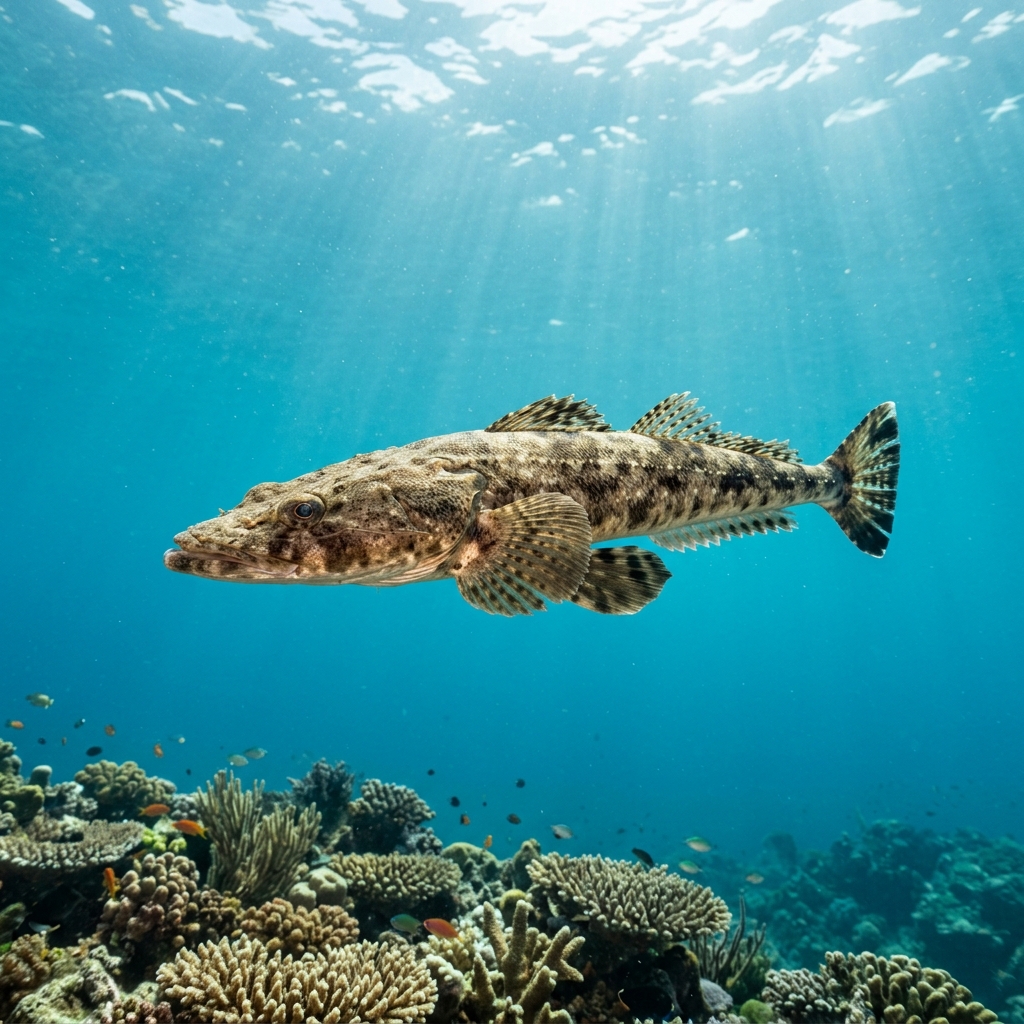
Reef neighbours a diver could mistake it for. Use the identification notes above to tell them apart.
The zebra lionfish is most consistently logged across the Indo-Pacific, with the Philippines leading the way, the Visayas and Palawan are particularly strong, followed by Bali and Lombok in Indonesia and the North and Central Atolls of the Maldives. Malaysia's West Sabah and Pulau Tioman, as well as Queensland in Australia, round out the best-documented regions for encountering this species.
Mapping where Zebra Lionfish is logged…
The best places are the Visayas and Palawan in the Philippines, Bali and Lombok in Indonesia, the North and Central Atolls of the Maldives, West Sabah in Malaysia, and Queensland in Australia. The species is widely distributed across the Indo-Pacific on tropical reefs.
In the Philippines, Indonesia, and the Maldives, sightings peak from February through November. In Australia and other Southern Hemisphere sites the productive season runs June through April. Being a warm-water species comfortable between 24 and 29 °C, it is present on healthy tropical reefs for most of the year.
Yes. Their dorsal, pelvic, and anal spines are venomous. A sting is acutely painful but rarely life-threatening for a healthy adult. The fish will not chase you; danger arises from accidental contact in crevices or from cornering the animal. Keep distance, mind your hands, and treat any sting with hot-water immersion while seeking medical advice.
Look for the bold alternating dark brown and white vertical stripes and the large, fan-like pectoral fins spread wide at the sides. At around 17 cm it is more compact than most lionfish you will encounter. It usually sits motionless against a crevice or overhang rather than swimming openly.
Adults typically reach around 17 cm in length, making them one of the smaller lionfish species on Indo-Pacific reefs. Their broad pectoral fins can make them appear larger than they are when fully extended.
It is primarily a dusk and dawn predator. Rather than chasing prey, it spreads its wide pectoral fins to corner or herd small fish and crustaceans, then lunges with a rapid strike. During the day it typically remains motionless in a sheltered spot on the reef.
Site and sighting data is aggregated from diver logs, iNaturalist and GBIF. For taxonomy and conservation status:
Madeira Rockfish
2,773 sites