Solenostomidae spp.
Ghost pipefish are rare but logged year-round in the Philippines and Indonesia. Here's where to find them and how to tell them apart underwater.
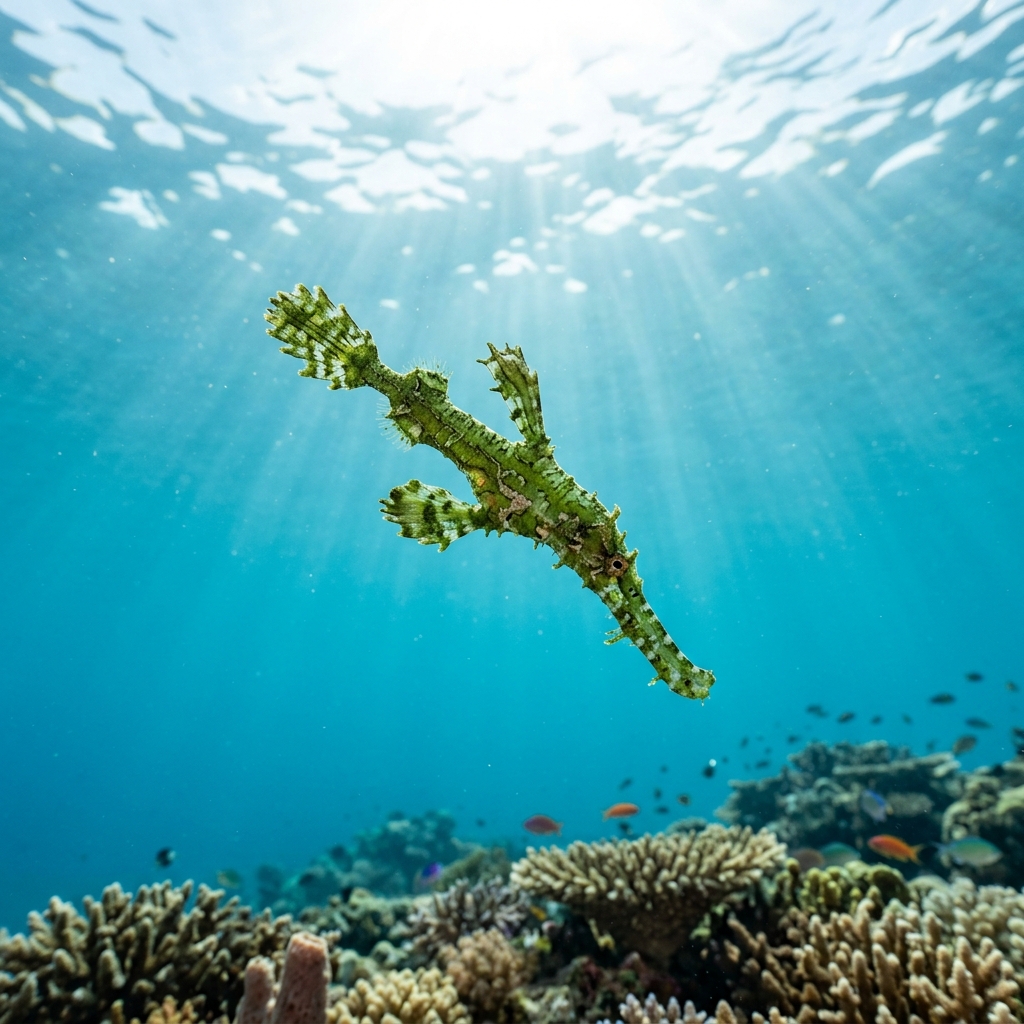
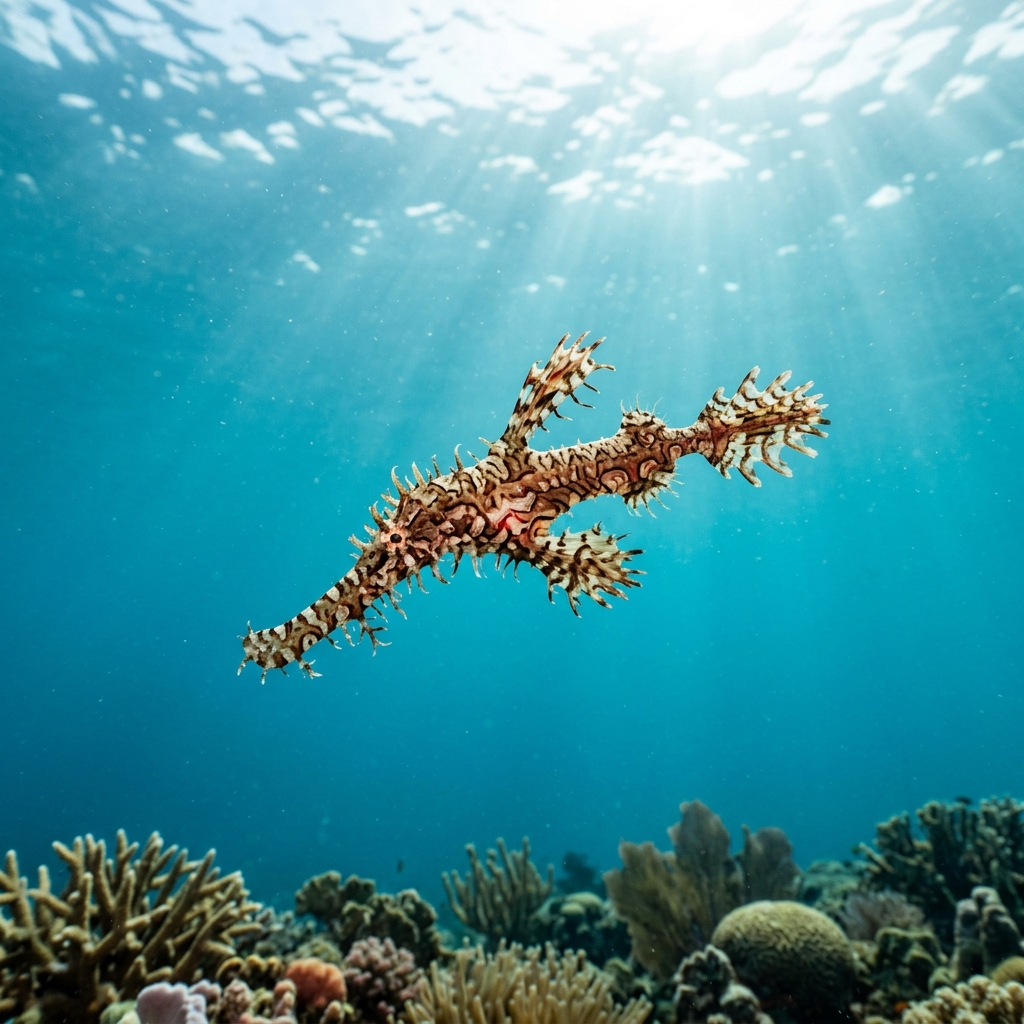
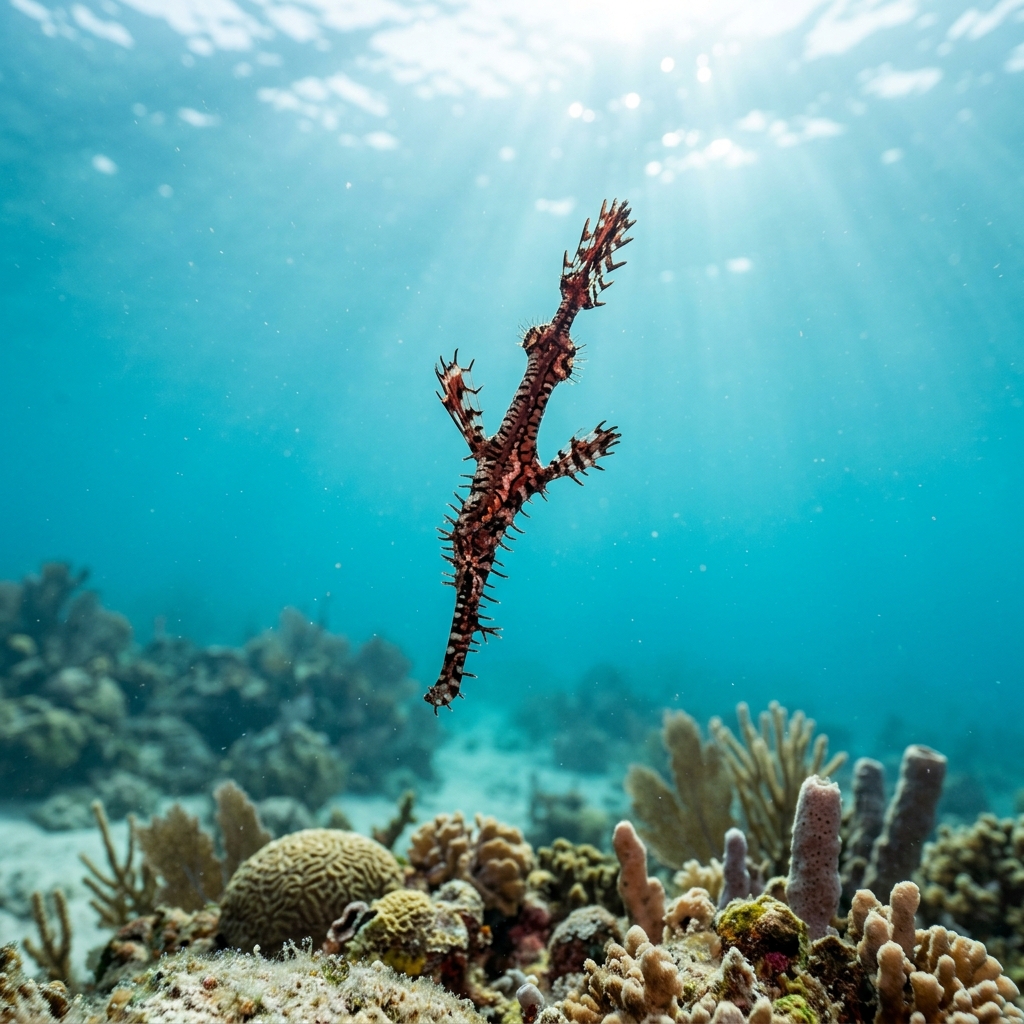
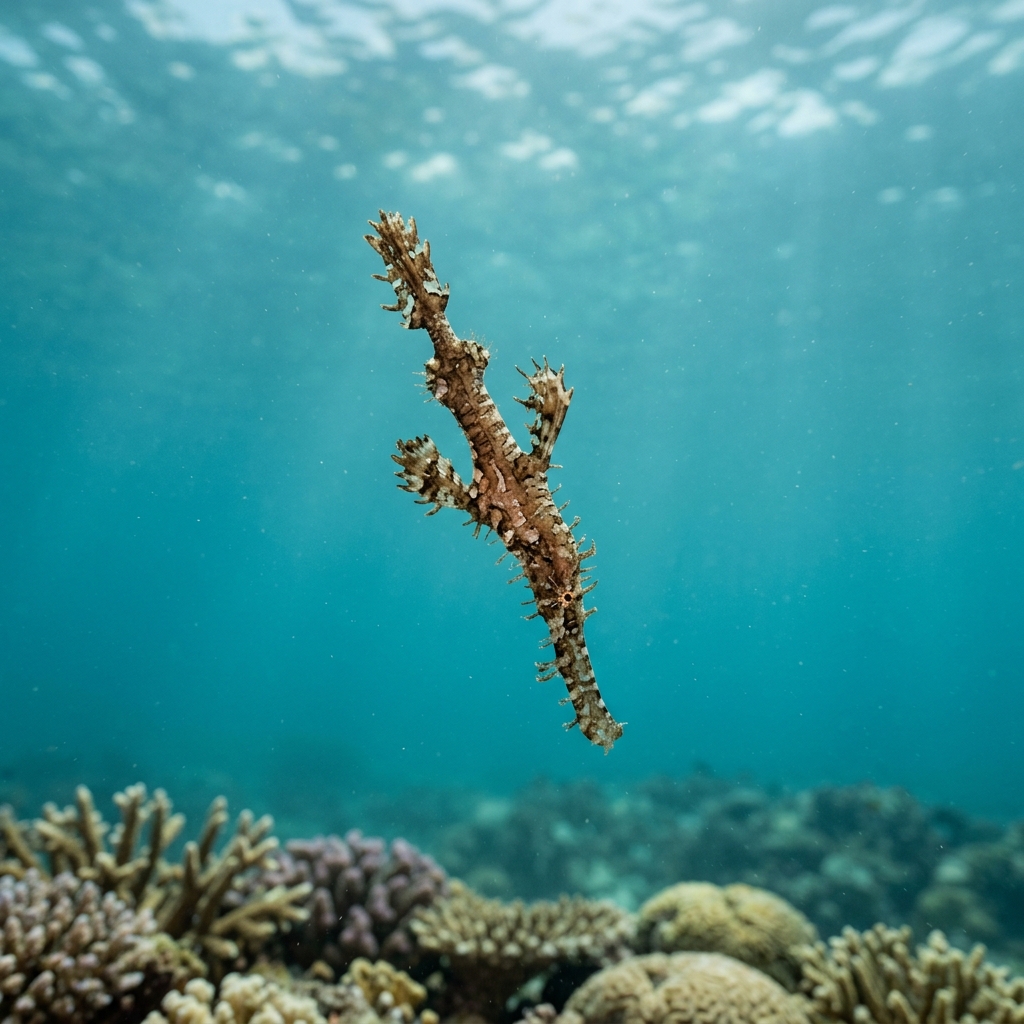
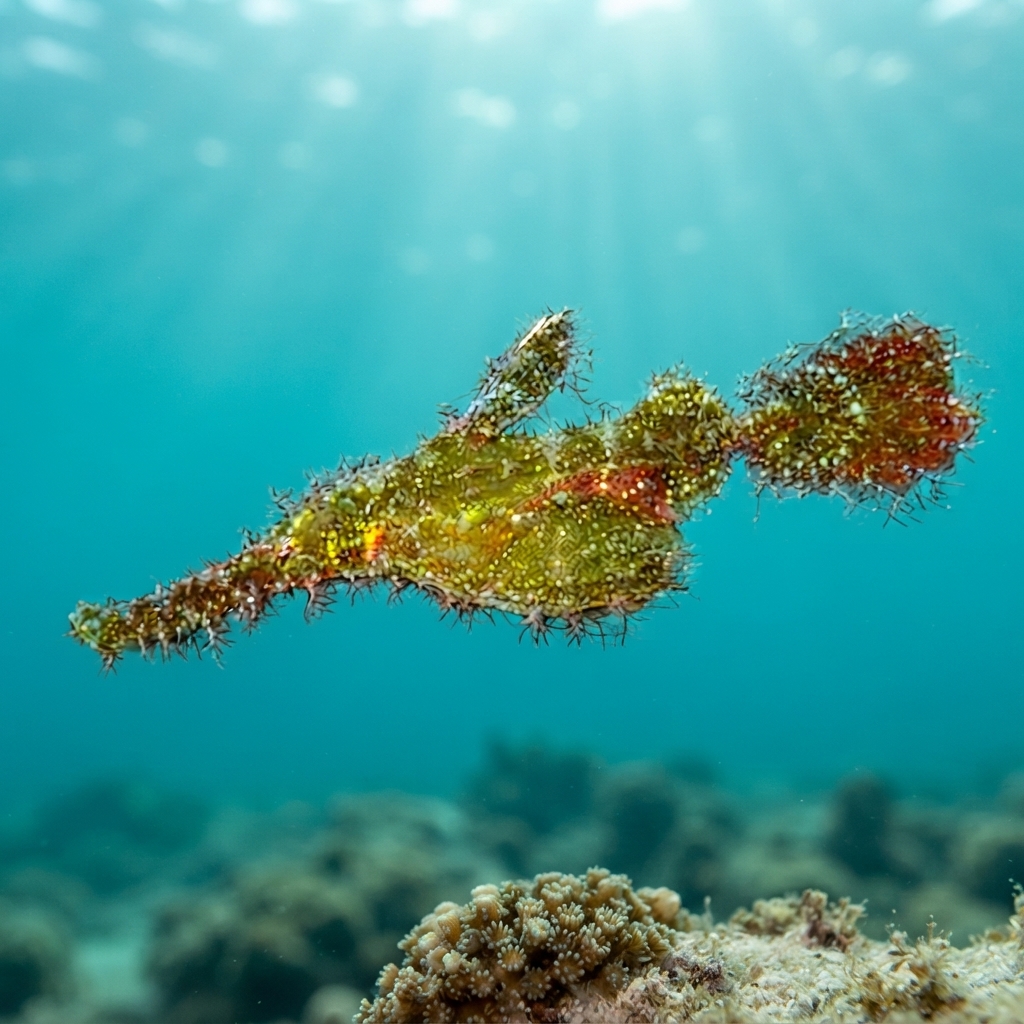
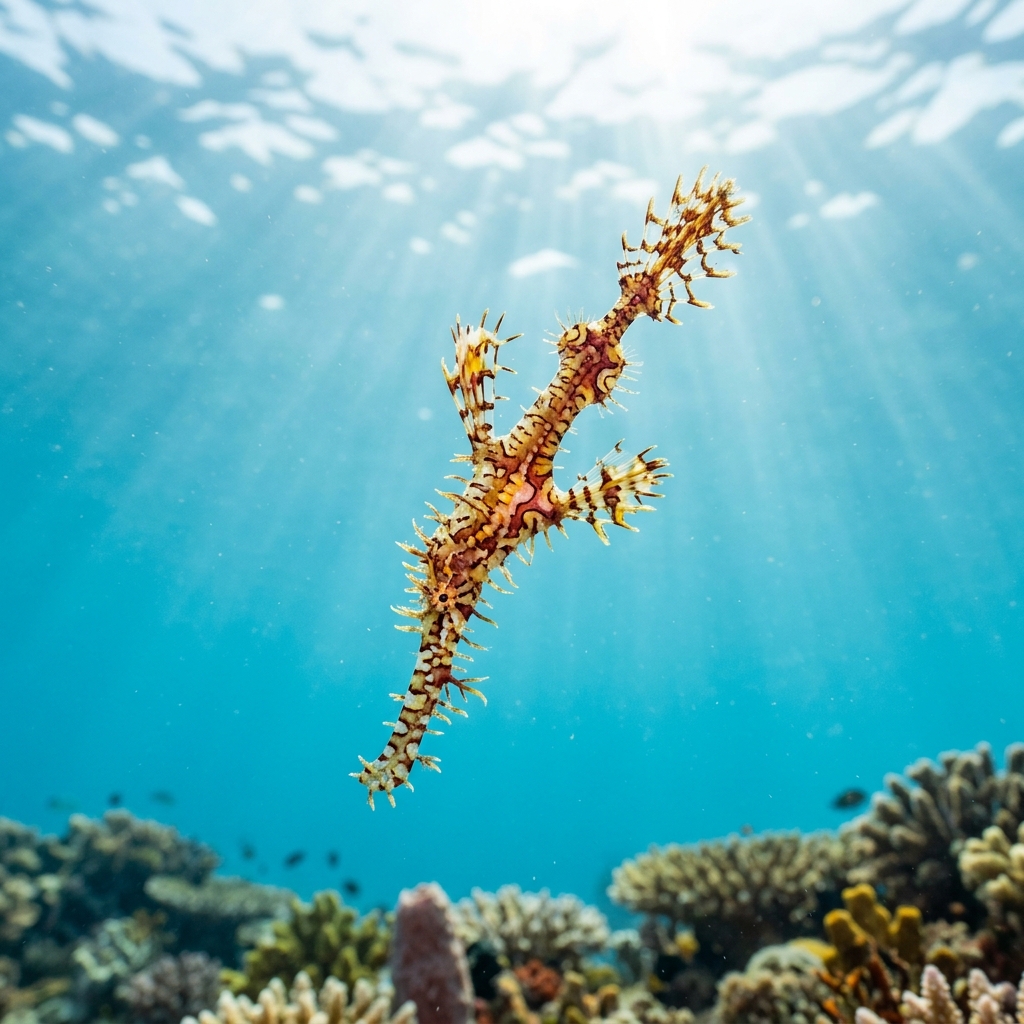
Masters of camouflage, ghost pipefish have a laterally flattened, leaf-like body with a long tubular snout and elaborate skin filaments that help them vanish against feather stars, seagrass, and algae. Sighted in the Philippines and Indonesia at observed water temperatures between about 20 and 29 °C, they tend to hover motionless or drift gently head-down among soft corals or rubble. Females are noticeably larger than males and carry a visible brood pouch formed by their fused, enlarged pelvic fins on the underside of the body.
Ghost pipefish are typically spotted drifting head-down or stationary among crinoids (feather stars), seagrass blades, or algae clumps, relying almost entirely on camouflage rather than flight when a diver approaches. They tend to sway gently with the current to mimic floating debris, so slow, patient searching of likely habitat is far more effective than scanning open water. Most sightings are solitary or in pairs, and the animals rarely move far even when closely observed.
Unusually for fish, it is the female that broods the eggs: she holds them in the pouch formed by her fused pelvic fins until they hatch, reversing the more familiar seahorse arrangement where the male carries young.
There is not enough monthly data to identify a peak season, so ghost pipefish should be treated as a year-round possibility across their tropical Indo-Pacific range. Their comfort within roughly 20 to 29 °C aligns with warm reef conditions in the Philippines and Indonesia throughout the year.
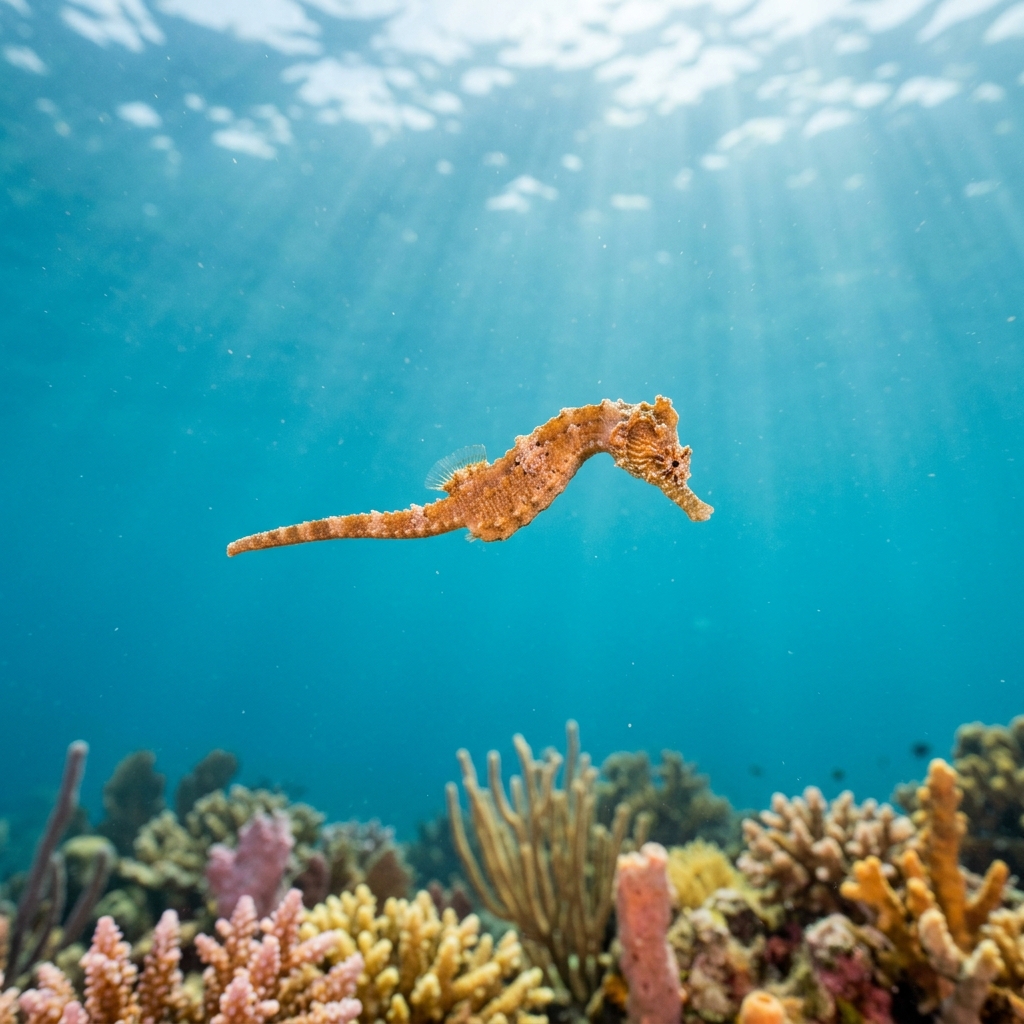
Reef neighbours a diver could mistake it for. Use the identification notes above to tell them apart.
Most sightings come from the Philippines and Indonesia, with the Visayas East and North region of the Philippines accounting for the bulk of logged encounters. Maluku and Papua in eastern Indonesia also show a strong cluster of records, making these two Indo-Pacific hotspots the best starting point for anyone searching for the family.
Mapping where Ghost Pipefish is logged…
The Philippines and Indonesia are the top destinations based on real diver sightings. Within those countries, the Visayas East and North in the Philippines and the Maluku and Papua region of Indonesia have the strongest concentration of logged encounters.
There is no clear seasonal peak in the data, so they can appear year-round in their tropical range. Observed sightings span water temperatures of roughly 20 to 29 °C, which describes warm Indo-Pacific reefs throughout the year.
Look for a slender, leaf-like fish hovering head-down near crinoids, seagrass, or algae, often with skin filaments that match its background almost perfectly. The long tubular snout and flattened body distinguish the family from true seahorses, and females show a visible pouch along the belly.
Quite rare. Across all sites where they have been recorded in the Philippines and Indonesia, the most typical sighting frequency is rare, with some sites rating them as uncommon. Slow, methodical searching of crinoids and seagrass gives you the best chance.
Site and sighting data is aggregated from diver logs, iNaturalist and GBIF. For taxonomy and conservation status:
Halimeda Ghost Pipefish
541 sites