Epinephelus fasciatus
Spot the Blacktip Grouper across the Maldives, Red Sea and Indo-Pacific in warm 24-29 °C waters. Here's how to ID it and when to dive.
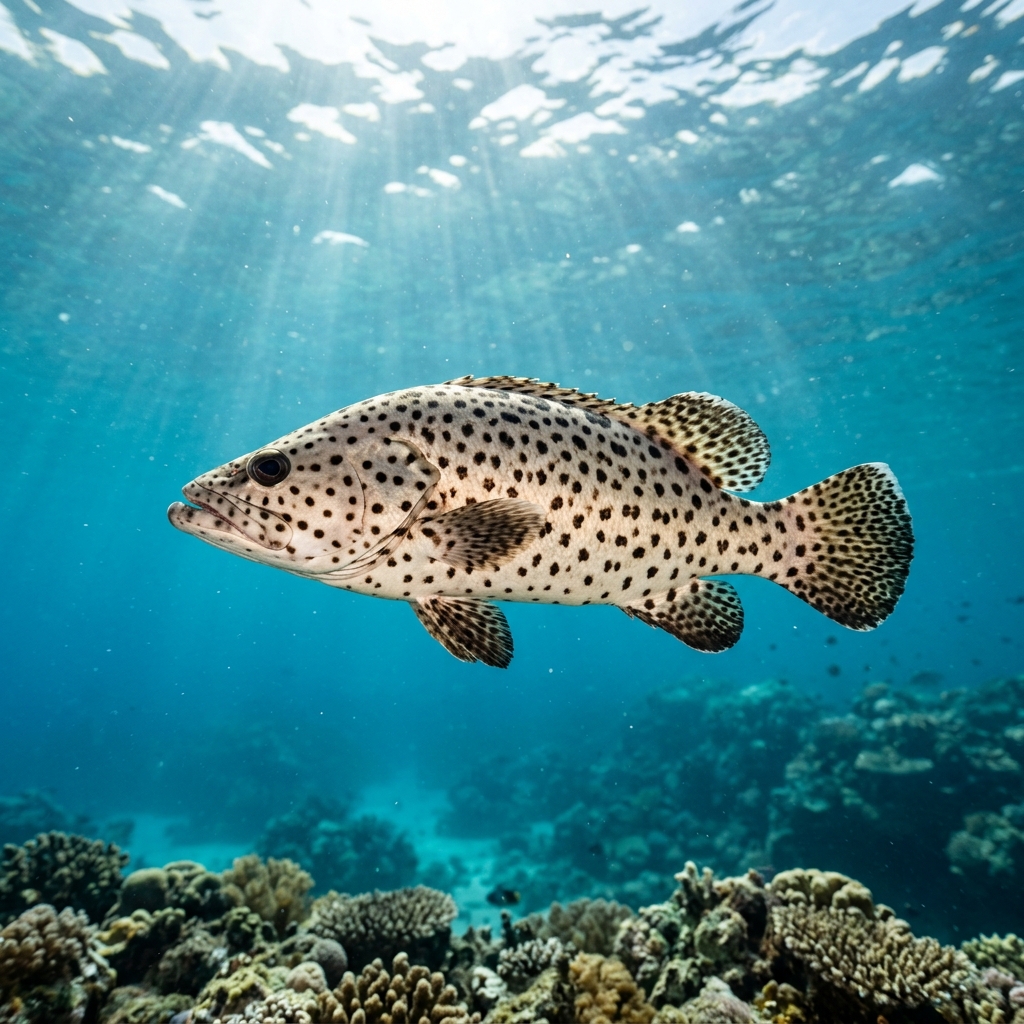
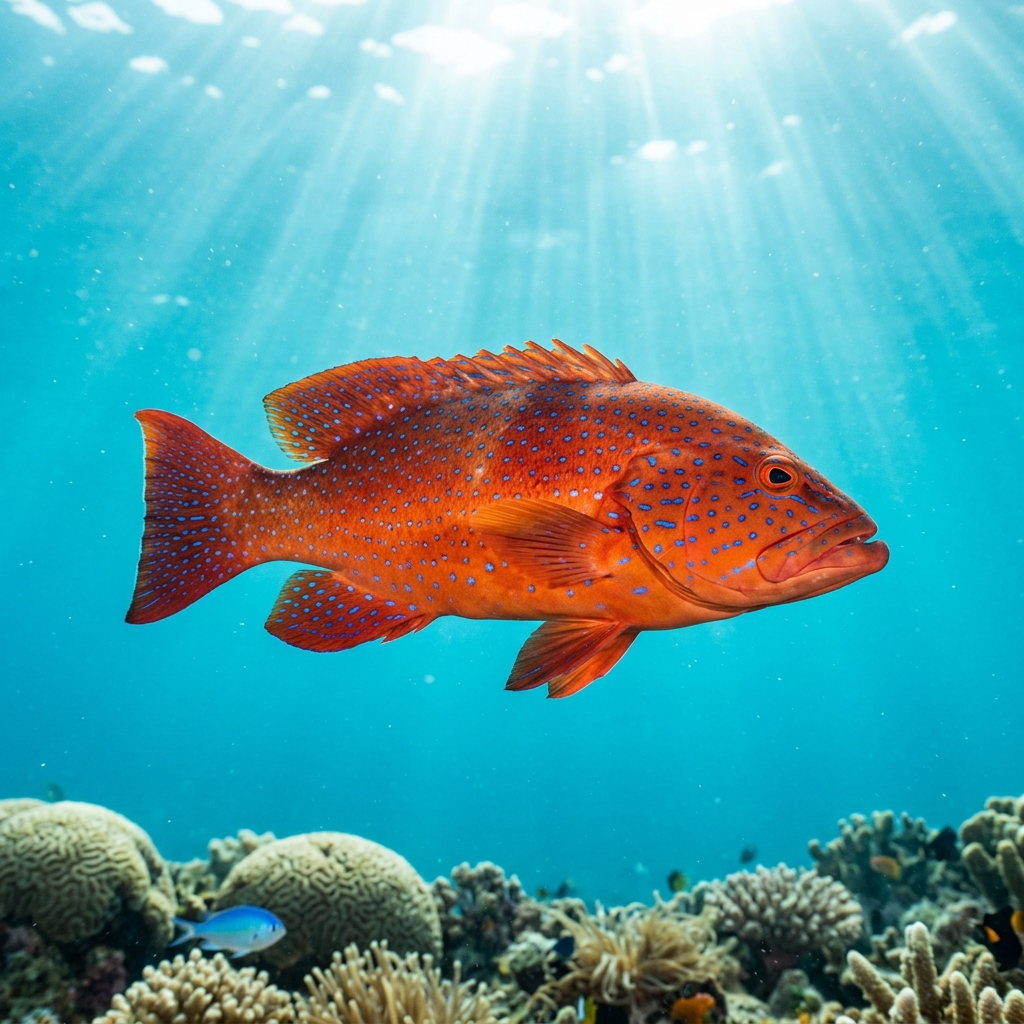
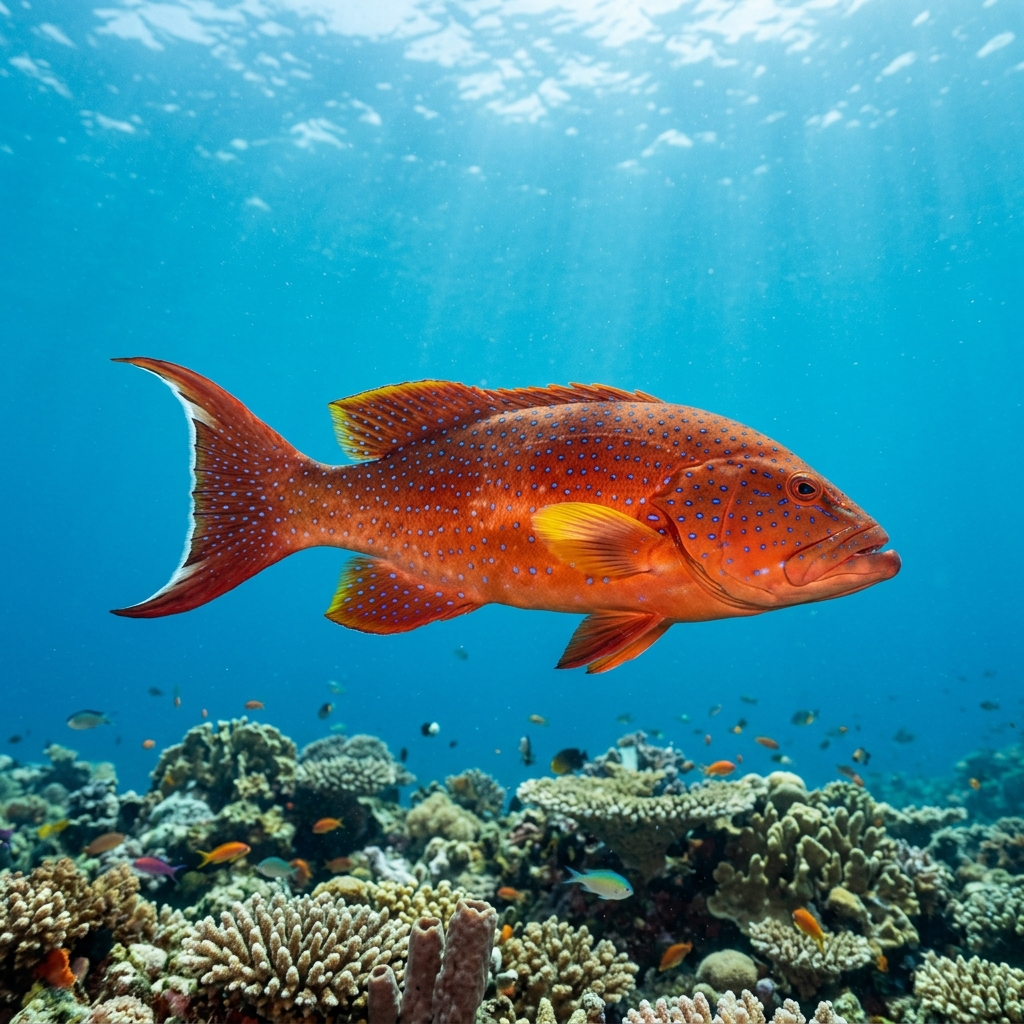
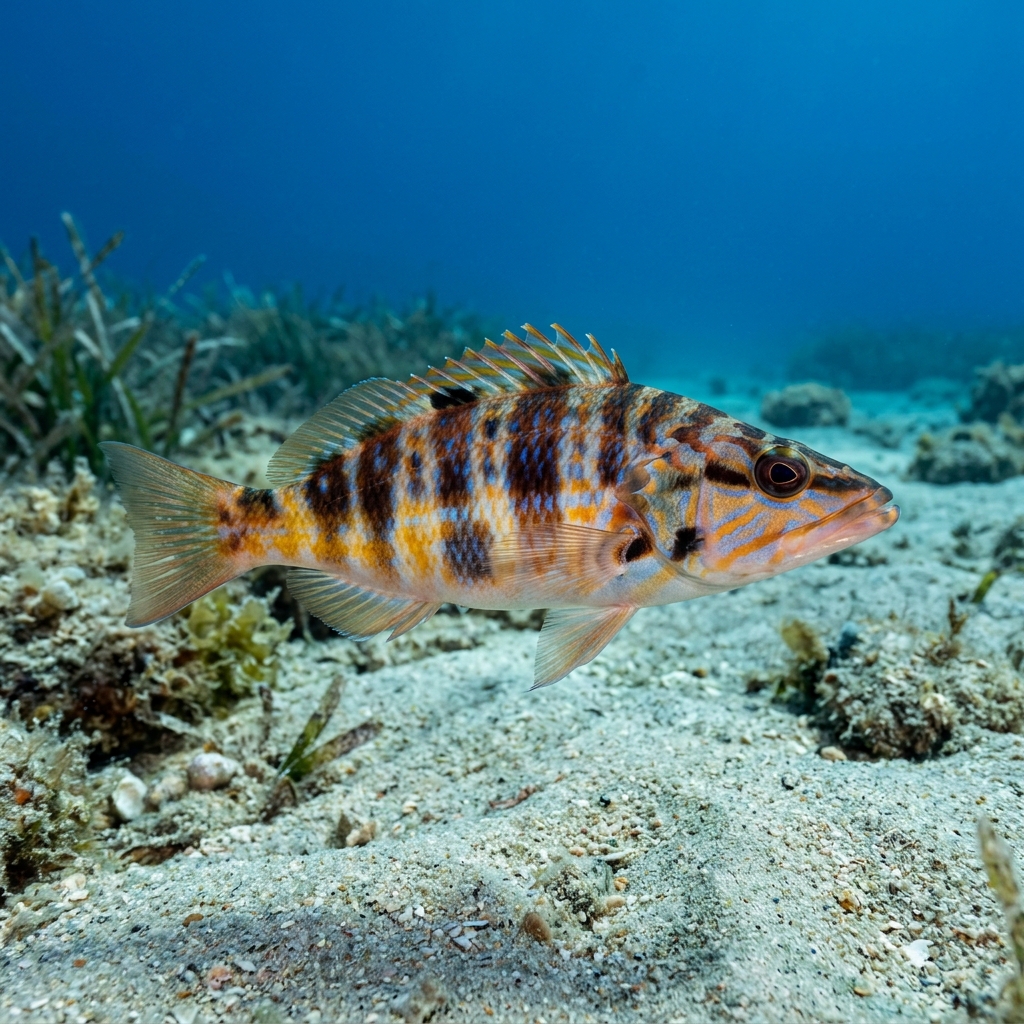
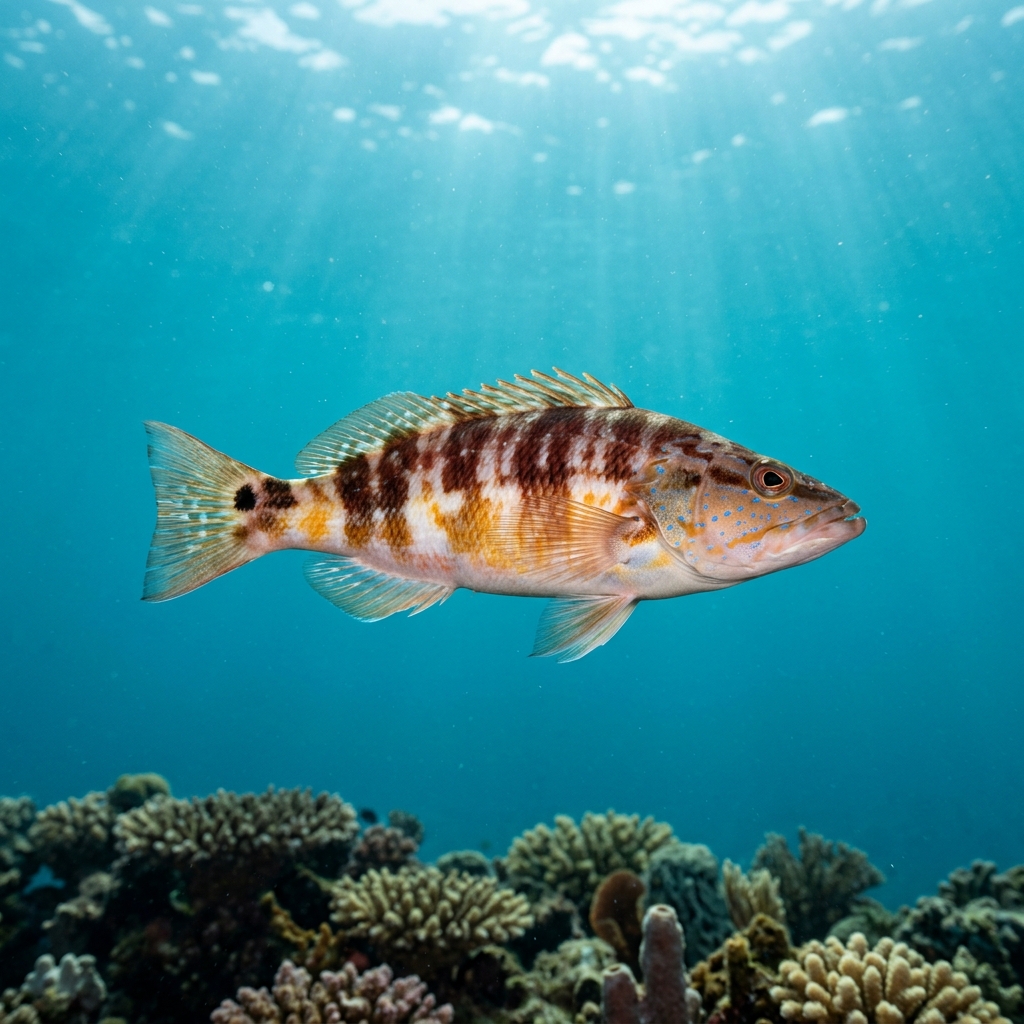
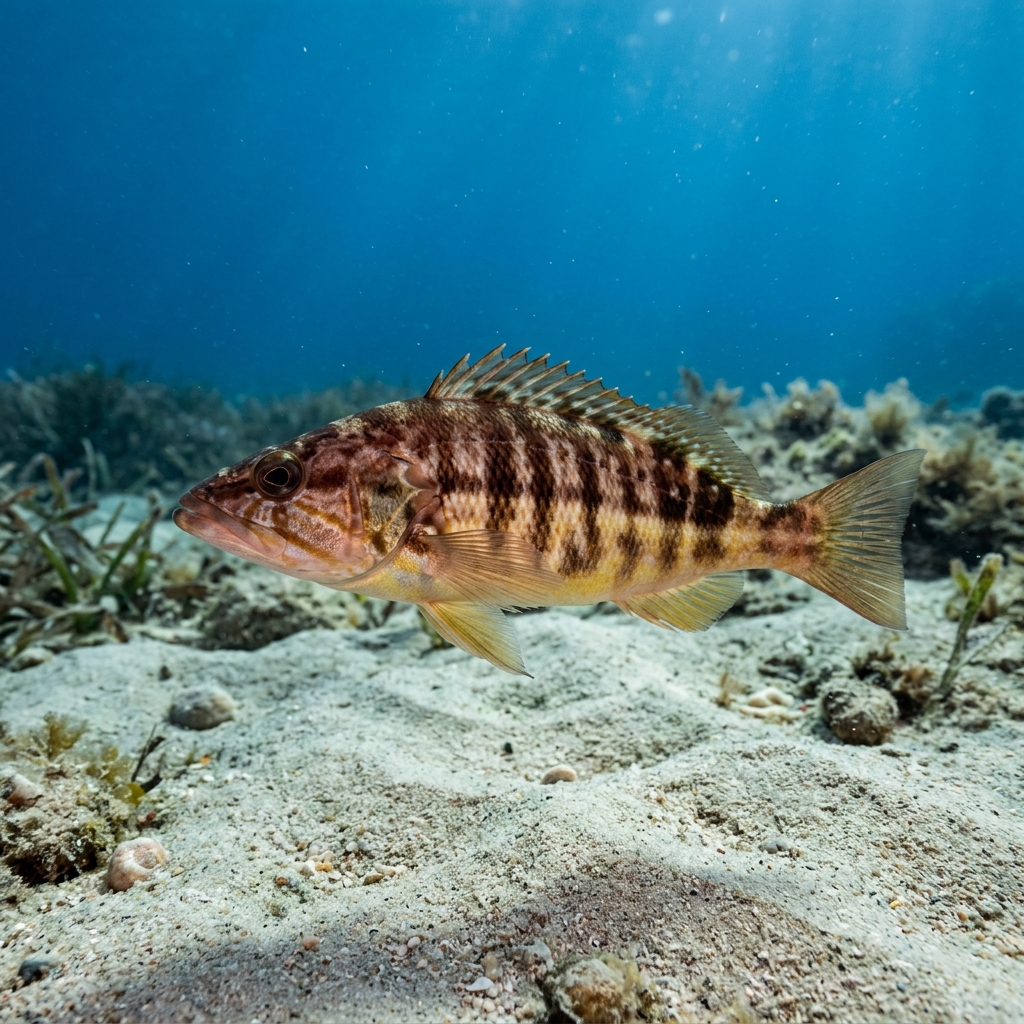
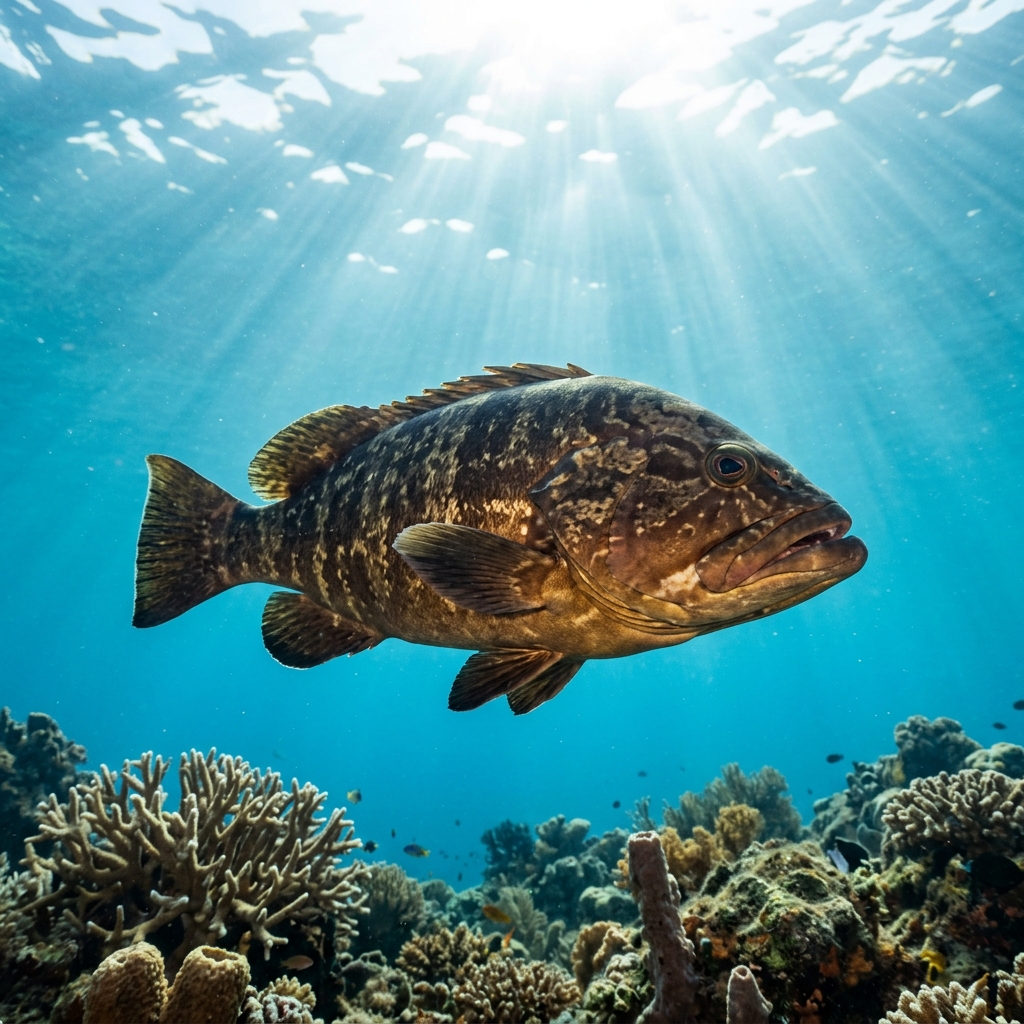
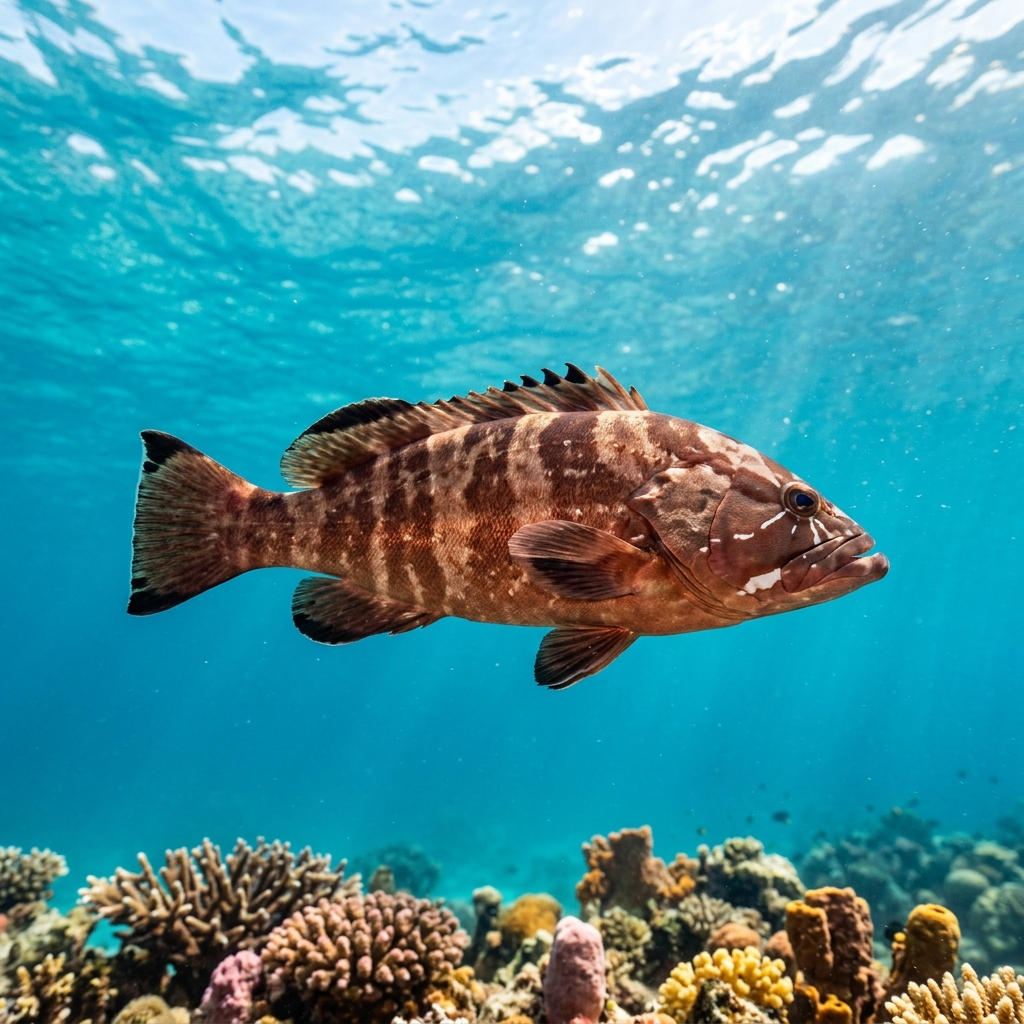
Look for a stocky, medium-sized grouper with a reddish-orange to pinkish-brown body overlaid with five or six pale vertical bars that fade with depth or excitement. The defining clue is the dark, near-black tips on the dorsal, caudal, and other fins, that contrast is visible even in murky water. Up close, small white or pale spots often speckle the lower flanks, and the head is noticeably broad and rounded. Juveniles tend to show bolder, more contrasting barring than adults.
Blacktip Groupers are typically solitary and reef-associated, spending long stretches perched or hovering just above coral heads, ledges, and rubble slopes. They are ambush predators, so expect to find them stationary and facing into the current rather than actively swimming across open reef. Most are wary of divers but will hold position if you approach slowly and avoid casting a shadow directly over them, a slow lateral approach from the side gives the best viewing window.
Like most groupers, blacktip groupers are protogynous hermaphrodites: individuals begin life capable of reproducing as females and can later transition to male, with the largest, oldest fish in a group most likely to make the switch.
In the Northern Hemisphere, sightings concentrate from July through April, with a quieter period around May and June. In the Southern Hemisphere, covering Australian and South-East Asian sites south of the equator, the most active window runs August through April, broadly matching the warmer end of the species' preferred 24 to 29 °C temperature range.
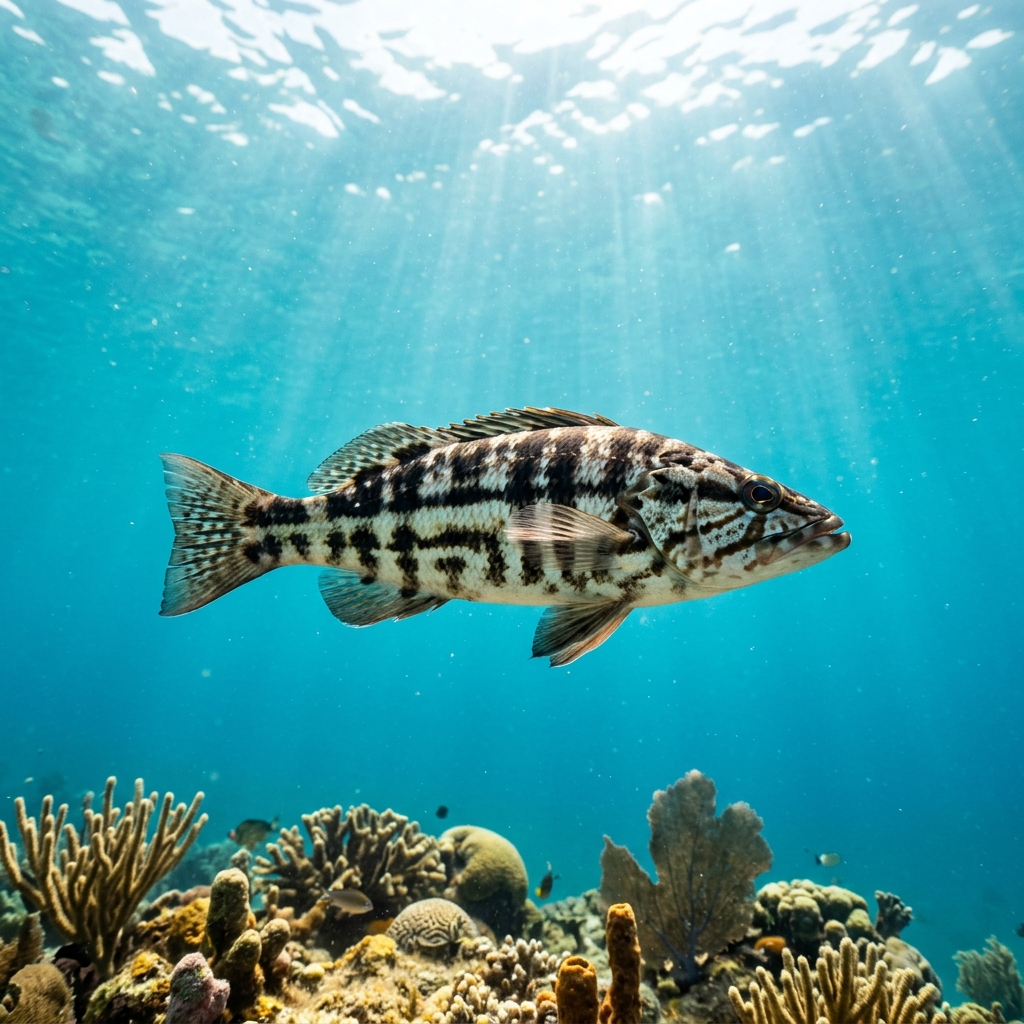
Reef neighbours a diver could mistake it for. Use the identification notes above to tell them apart.
Most commonly logged across the Maldives, Indonesia, the Philippines, Malaysia, and Australia, making it a staple of Indo-Pacific reef diving. The Maldives, particularly the North & Central Atolls and the Male & Ari Atolls, leads sighting records, followed closely by Bali and the wider Indonesian archipelago. The Red Sea is a strong secondary hotspot, with Sharm el Sheikh consistently producing sightings on its sheltered and outer reef systems.
Mapping where Blacktip Grouper is logged…
Blacktip Groupers are most reliably encountered across the Maldives, Indonesia, the Philippines, Malaysia, and Australia. The Maldivian atolls, especially the North & Central Atolls, lead sighting frequency, while Sharm el Sheikh in Egypt makes them accessible to Red Sea divers. The species has a wide Indo-Pacific and Red Sea range, so sightings are possible at reef sites across many tropical destinations.
In the Northern Hemisphere, sightings are most concentrated from July through April. For Southern Hemisphere sites such as Queensland in Australia, August through April is the peak window. The species favours water temperatures of 24 to 29 °C, so the quietest period at most sites aligns with the coolest months of the local year.
The fastest clue is the dark, near-black tips on the fins against a reddish-orange or pinkish body with pale vertical barring. Most other similarly coloured groupers lack that strong dark-fin-tip contrast. At close range, small pale spots on the lower flanks and a broad, rounded head help confirm the ID.
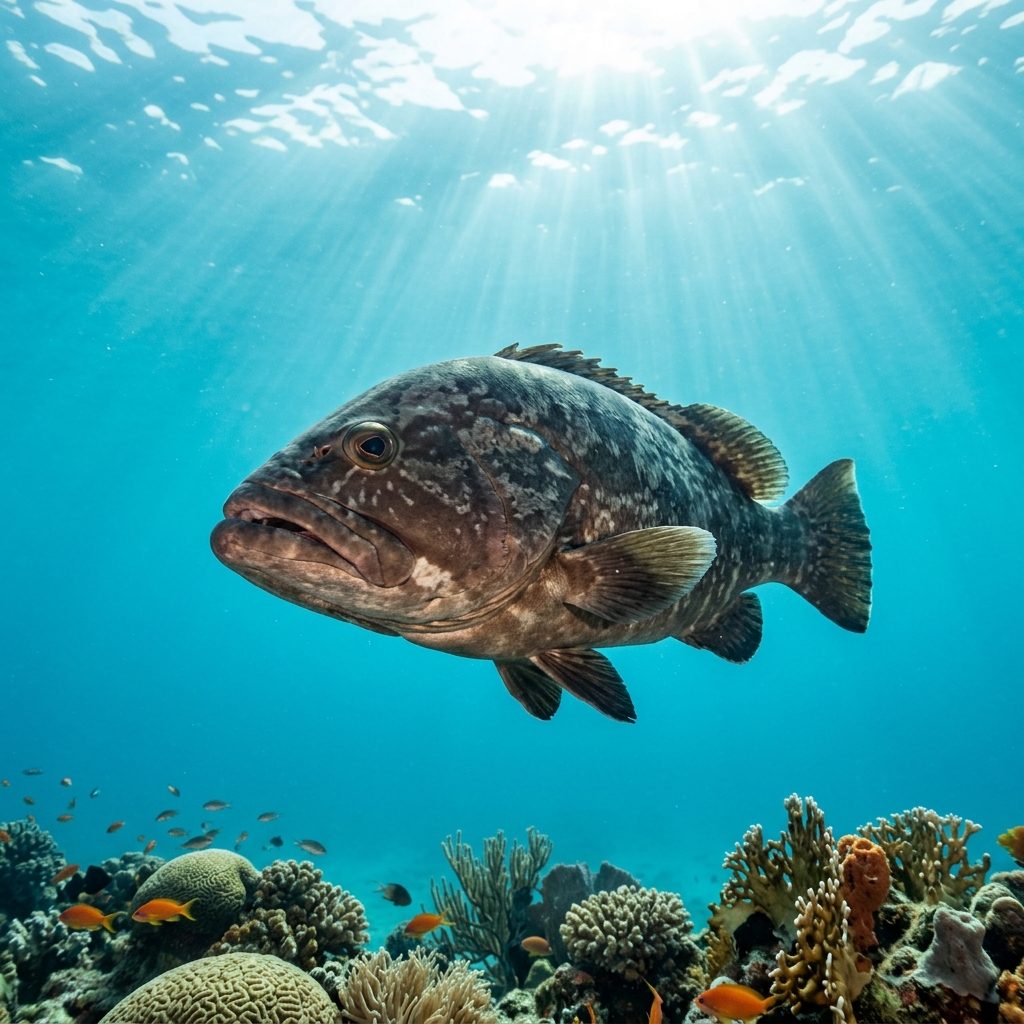
Blacktip Groupers are a medium-sized grouper, typically reaching around 30 to 40 cm in length, though individuals can approach 45 cm. They are noticeably smaller and slimmer than the giant groupers of the same family, which helps narrow down the ID in the field.
Yes, they are protogynous hermaphrodites, meaning they start life functioning as females and the largest, most dominant individuals in a group eventually transition to male. This sex-change strategy is common across the grouper family and plays an important role in how their populations are structured on the reef.
Site and sighting data is aggregated from diver logs, iNaturalist and GBIF. For taxonomy and conservation status:
Groupers
2,234 sites