

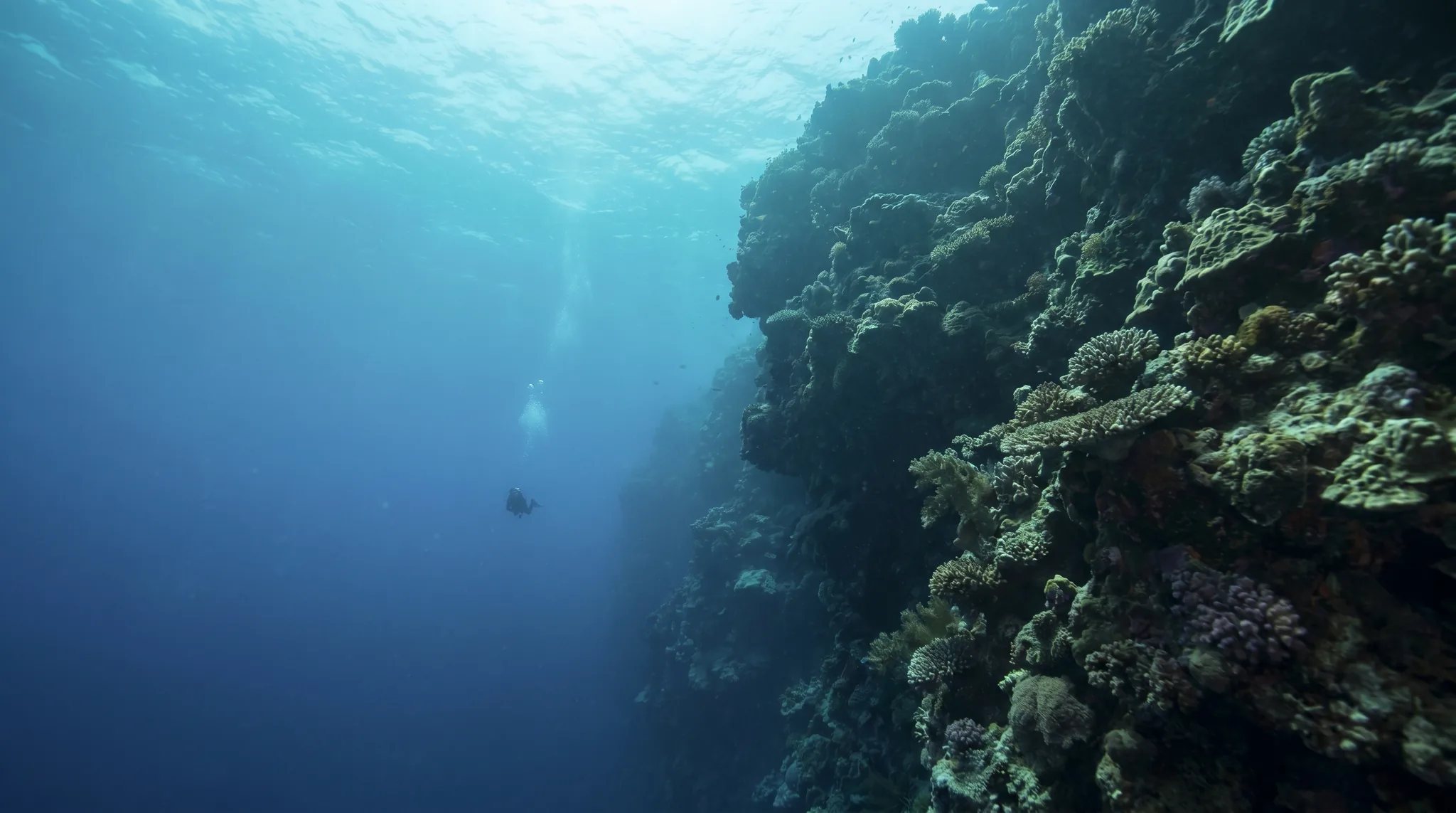
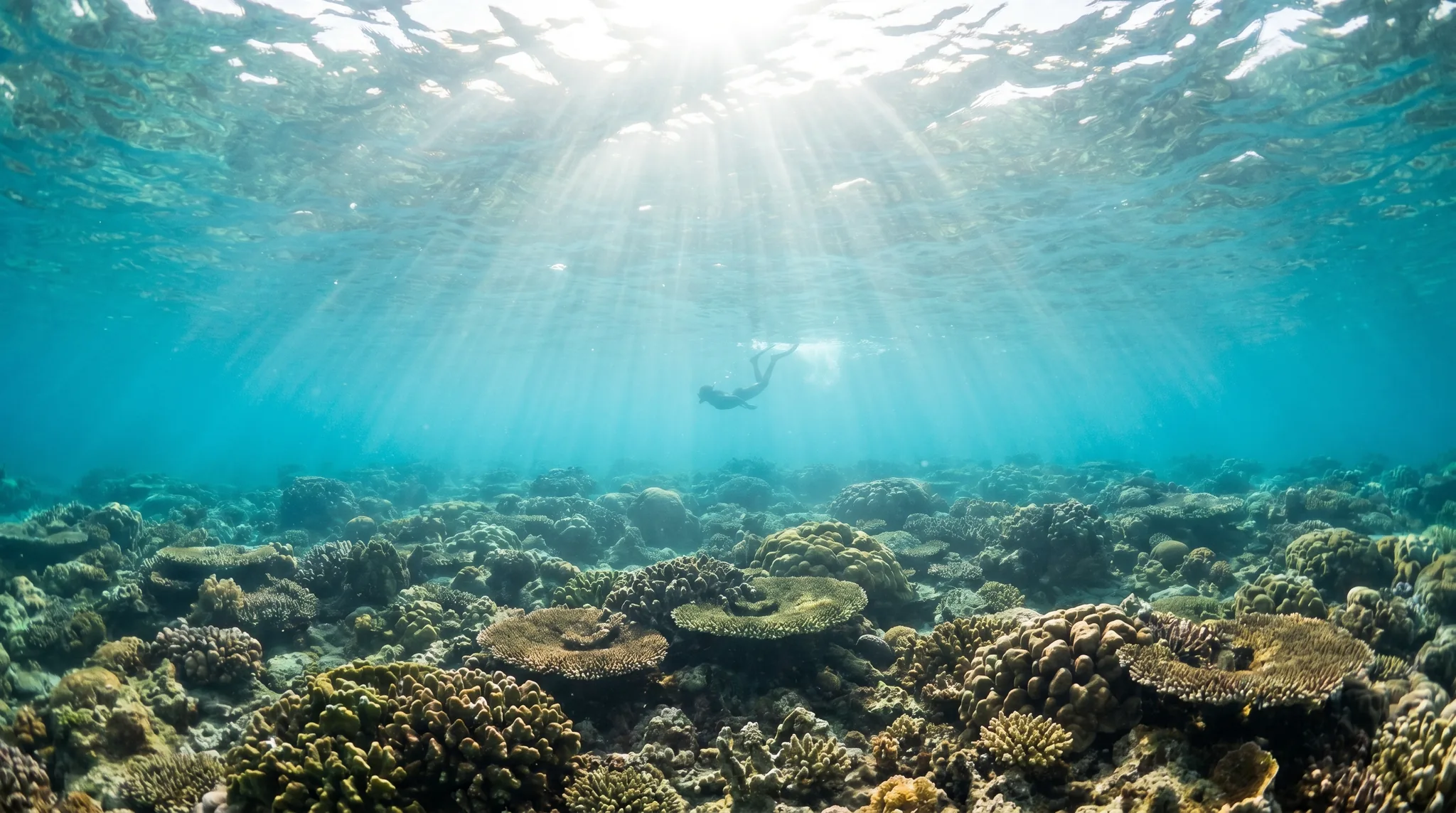
The Soufriere-Scotts Head Marine Reserve is defined by volcanic topography: walls, pinnacles, drop-offs and reef structures that suit a wide range of diver skill levels. Three distinct sub-areas shape the experience. Scotts Head offers the greatest concentration of sites, including dramatic drop-offs and cavern sections at Scott's Head Point. Soufriere adds its own reef and pinnacle diving, while Champagne Reef brings a shore-accessible option with a mix of natural reef and muck diving. The resident marine life leans heavily toward the cryptic and the curious, with Frogfish, Spotted Scorpionfish, Brazilian Reef Octopus and Seahorse among the signature finds.
3 areas
 13
13Volcanic walls, pinnacles and strong-current drifts in the Soufriere-Scotts Head Marine Reserve, with rich reef life from Frogfish to Eagle Ray.
 9
9Volcanic pinnacles, walls, and reef within Dominica's Soufriere, Scotts Head Marine Reserve, suiting beginners to intermediate divers.
3Geothermal bubble vents, shallow reef, and diverse marine life on Dominica's volcanic southwest coast.
Monthly water temperature across Soufriere-Scotts Head Marine Reserve's sites, from satellite sea-surface data corrected for depth. The band shows the site-to-site spread.
Water temperatures stay warm throughout the year, rising to their peak in late summer and early autumn before easing back slightly through winter. The cooler, calmer months from January through April and again in October through December coincide with the best-rated diving conditions. Sites like Mountain Top carry strong currents and suit experienced divers, while many other walls and reefs remain accessible to beginners year-round.
18 operators
Soufriere, Dominica
Pointe Michel, Dominica
Salisbury, Dominica
Water temperature around Soufriere-Scotts Head Marine Reserve ranges from about 27°C in January to 30°C in September, based on satellite sea-temperature data for its dive sites.
With water around 27–30°C, a rash guard or 3mm shorty works in Soufriere-Scotts Head Marine Reserve year-round.
Fin maps 25 sites in Soufriere-Scotts Head Marine Reserve (25 scuba diving sites and 3 snorkelling spots, with some suited to both), organised into 3 areas.
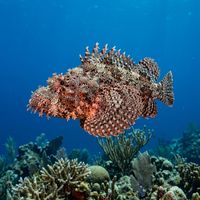
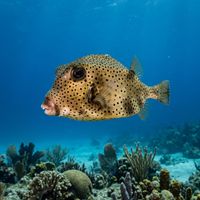
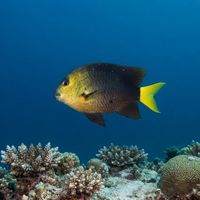
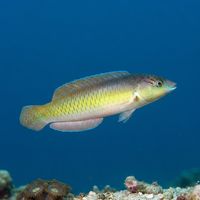
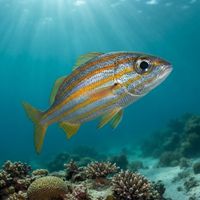
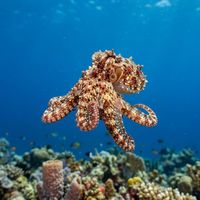
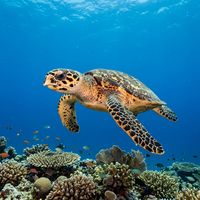
The reserve is particularly well regarded for its cryptic and macro species. Frogfish, Spotted Scorpionfish, Brazilian Reef Octopus and Seahorse are among the signature finds, and sightings are observation-backed across many sites. Goldentail Moray, Spotted Moray, Snake Eel and Yellowhead Jawfish are also frequently recorded, alongside Hawksbill Sea Turtle and Great Barracuda on occasion.
A good number of sites are rated beginner-friendly, including West Bank, Tu Sab, Coral Gardens South and Scott's Head Pinnacle. These offer accessible entry depths and relatively straightforward conditions. More challenging sites such as Mountain Top, which features strong currents, and Craters Edge, which reaches significant depth, are better suited to intermediate or advanced divers.
Scotts Head has the largest concentration of sites and includes some of the most varied topography, from steep drop-offs and cavern sections to walls and pinnacles. Soufriere offers its own set of reef and pinnacle structures, including the Soufriere Pinnacles which can be reached by shore or boat. Champagne Reef is the smallest cluster but stands apart with its shore-accessible Champagne Beach site, which combines natural reef, artificial structures and muck diving.
The majority of sites are accessed by boat, and multiple operators based in Dominica run guided dive trips throughout the reserve, including Dive Dominica, Fort Young Hotel and Dive Resort and Nature Island Dive, among others. Champagne Beach is a notable exception as a shore entry site, and Soufriere Pinnacles offers both shore and boat access, giving divers some flexibility.

