Halichoeres radiatus
Puddingwife wrasse turns up year-round on reefs from Bonaire to the Yucatán, comfortable in warm 24-28C water. Here's how to spot one.
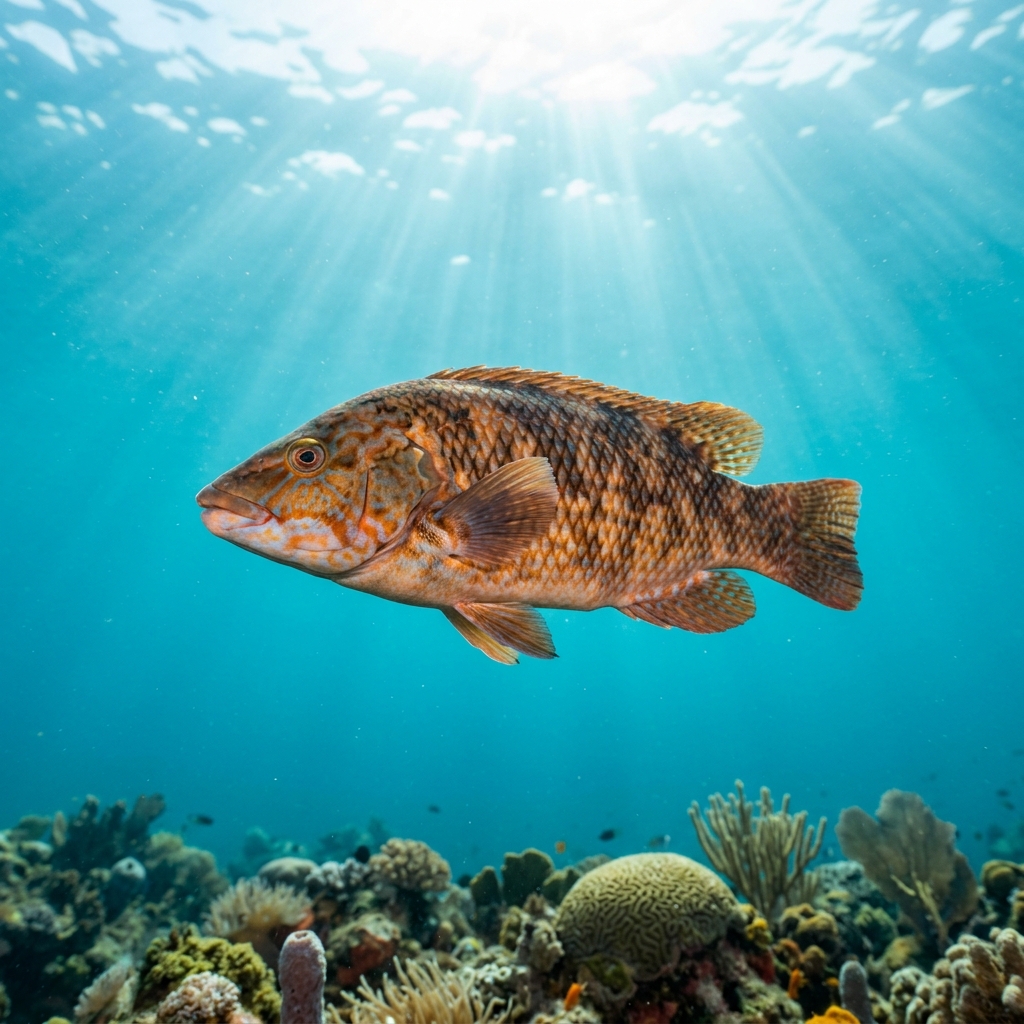
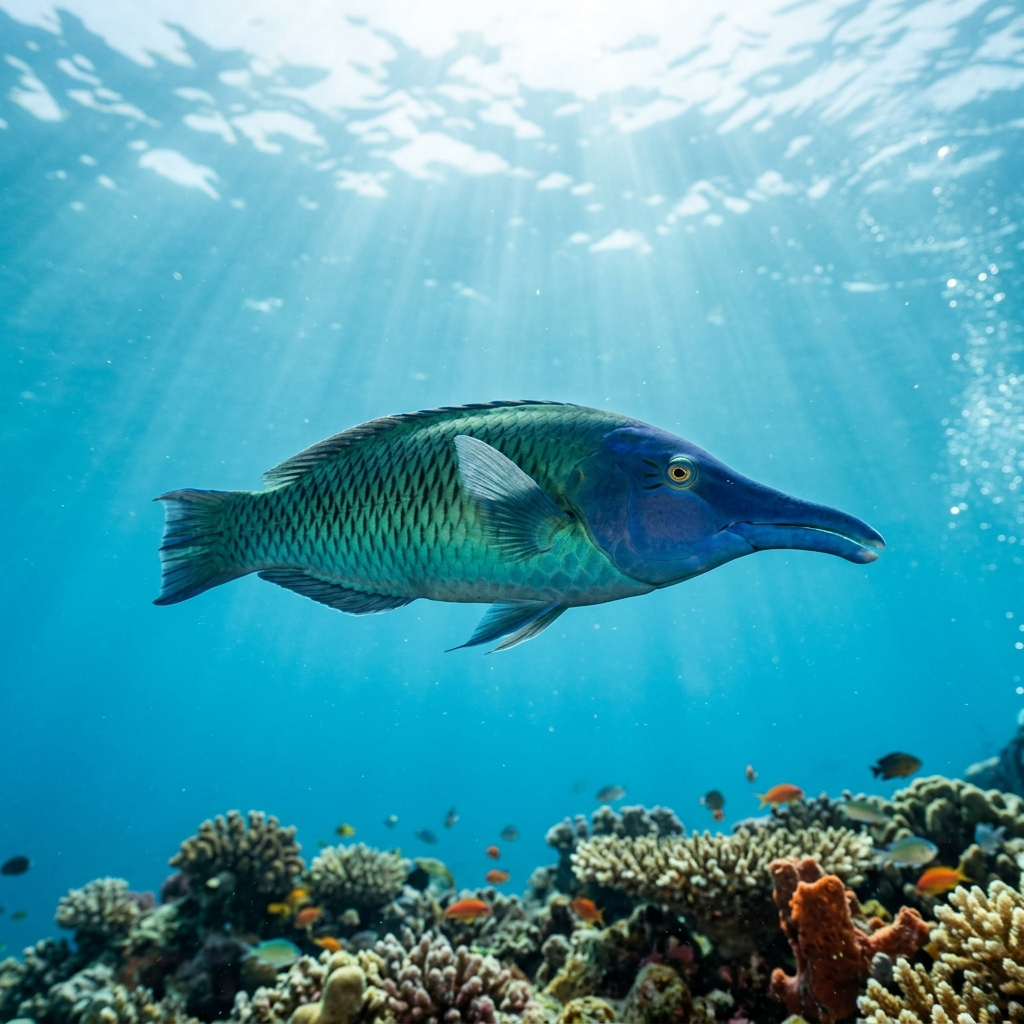
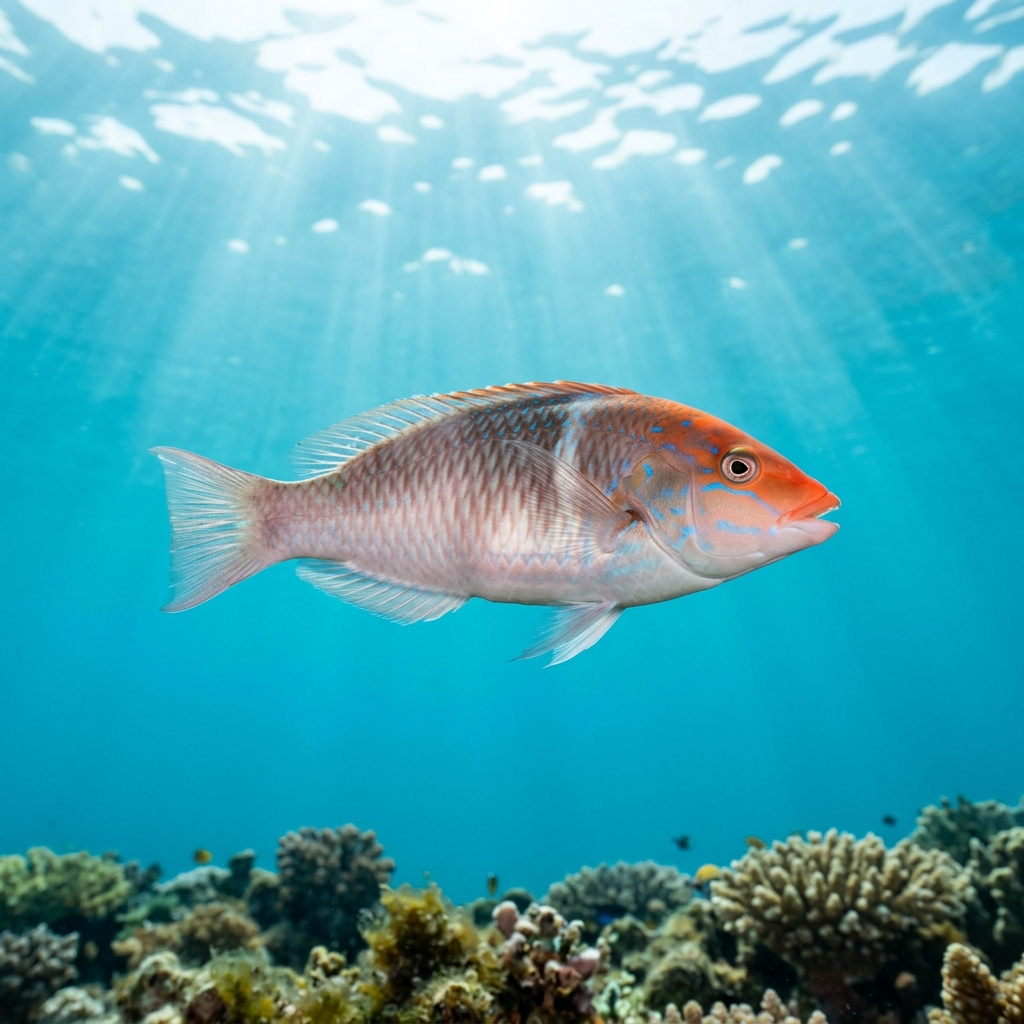
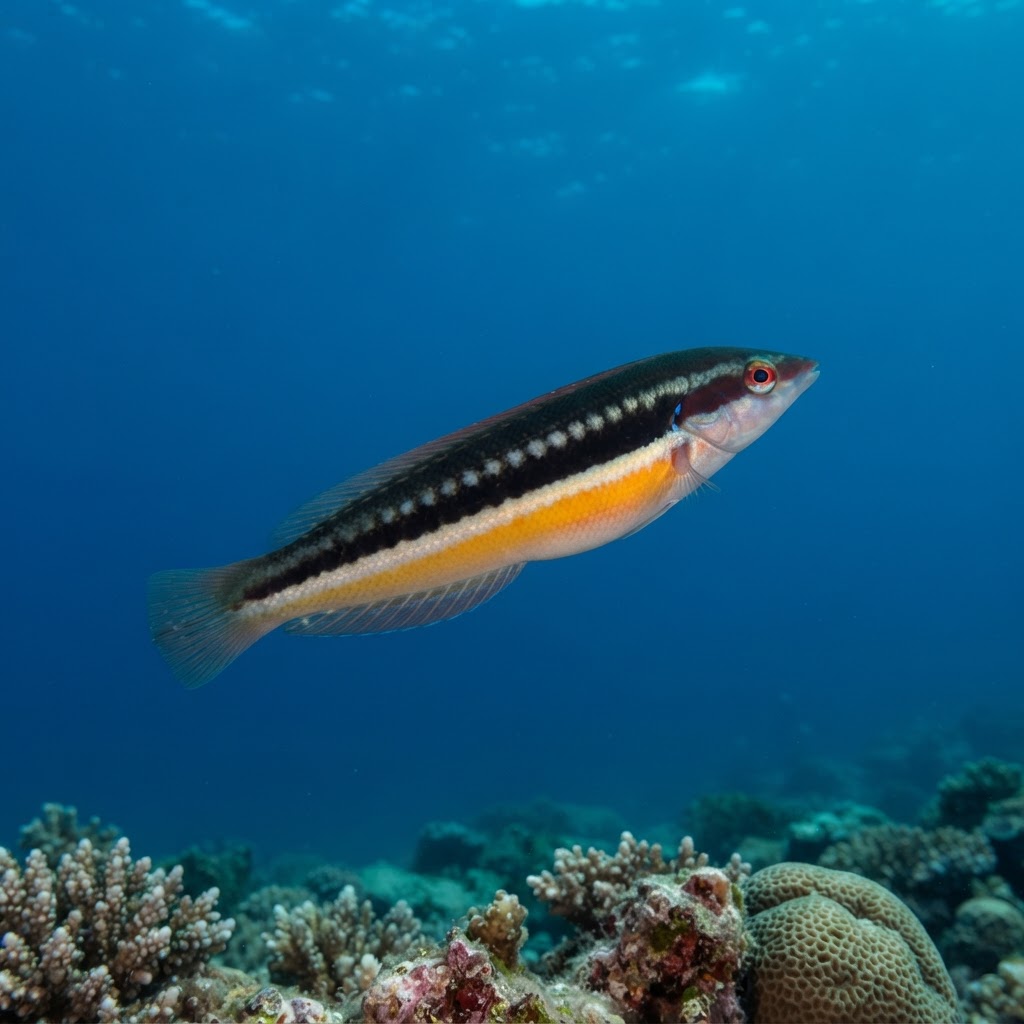
A stocky, torpedo-shaped wrasse that grows to around 35 cm, adults show a blue-green body with irregular orange or rust-coloured blotches and a dark saddle spot near the tail base. The head often has a bluish sheen with faint markings radiating from the eye, which is where the scientific name radiatus comes from. Juveniles look completely different, with a yellow body and two blue longitudinal stripes, so many divers log them as a separate fish before realising it is the same species. It swims with the choppy, wing-like pectoral fin strokes typical of wrasses rather than a smooth tail-driven glide.
Puddingwife wrasses patrol reef flats, rubble zones and seagrass edges close to the bottom, often alone, hunting small invertebrates and fish by picking through sand and coral rubble. They are alert and tend to keep a bit of distance from divers, darting off if approached too directly rather than hovering for a photo. Most sightings happen during the day on shallower reef terrain, from a couple of metres down to recreational depths, though they range as deep as 55 metres.
Like many wrasses, puddingwife go through a dramatic colour change from a striped yellow juvenile to the blotched blue-green adult, and both stages can be mistaken for entirely different species by divers unfamiliar with the transition.
No clear seasonal pattern shows up in the sighting data, and with a comfortable temperature range of 24 to 28C on tropical reefs, it is present year-round wherever it is found. Any month works for diving the Yucatán, Florida, or the Bay Islands for this fish.
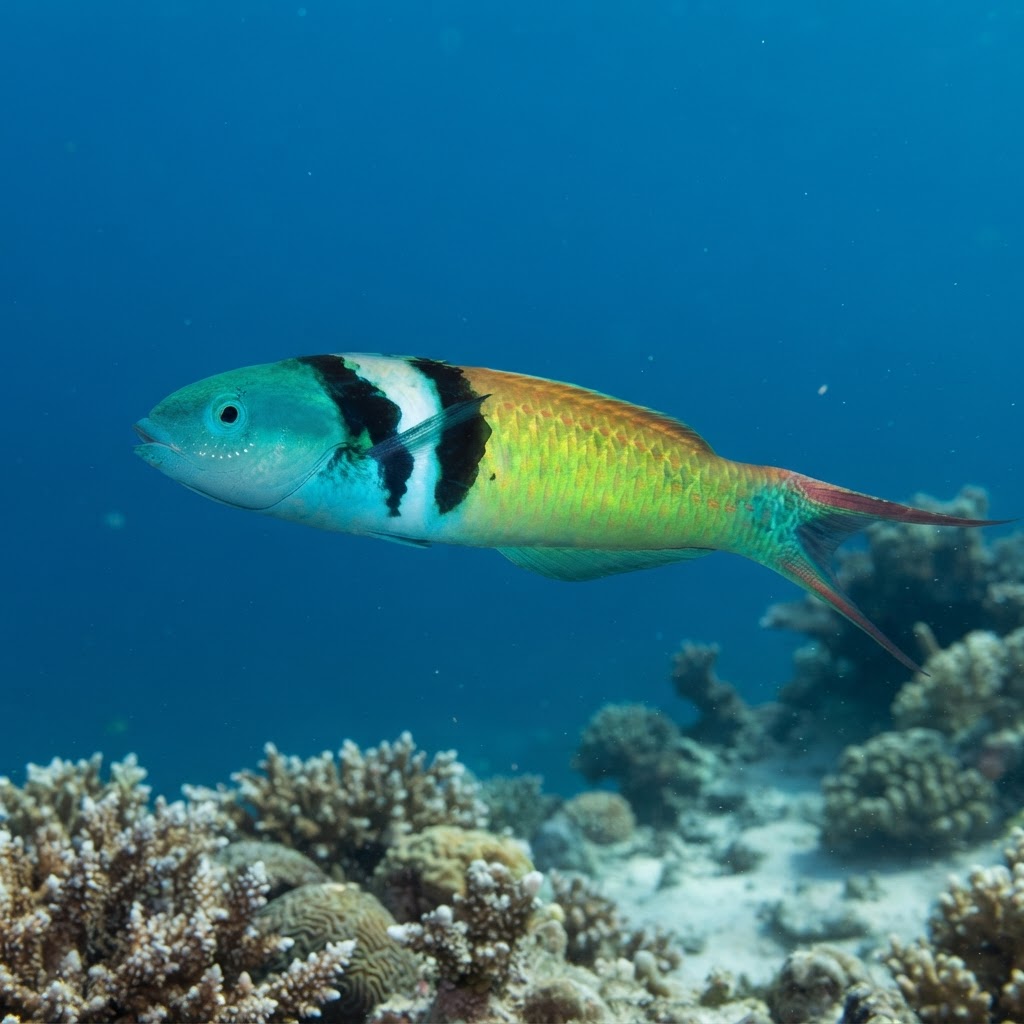
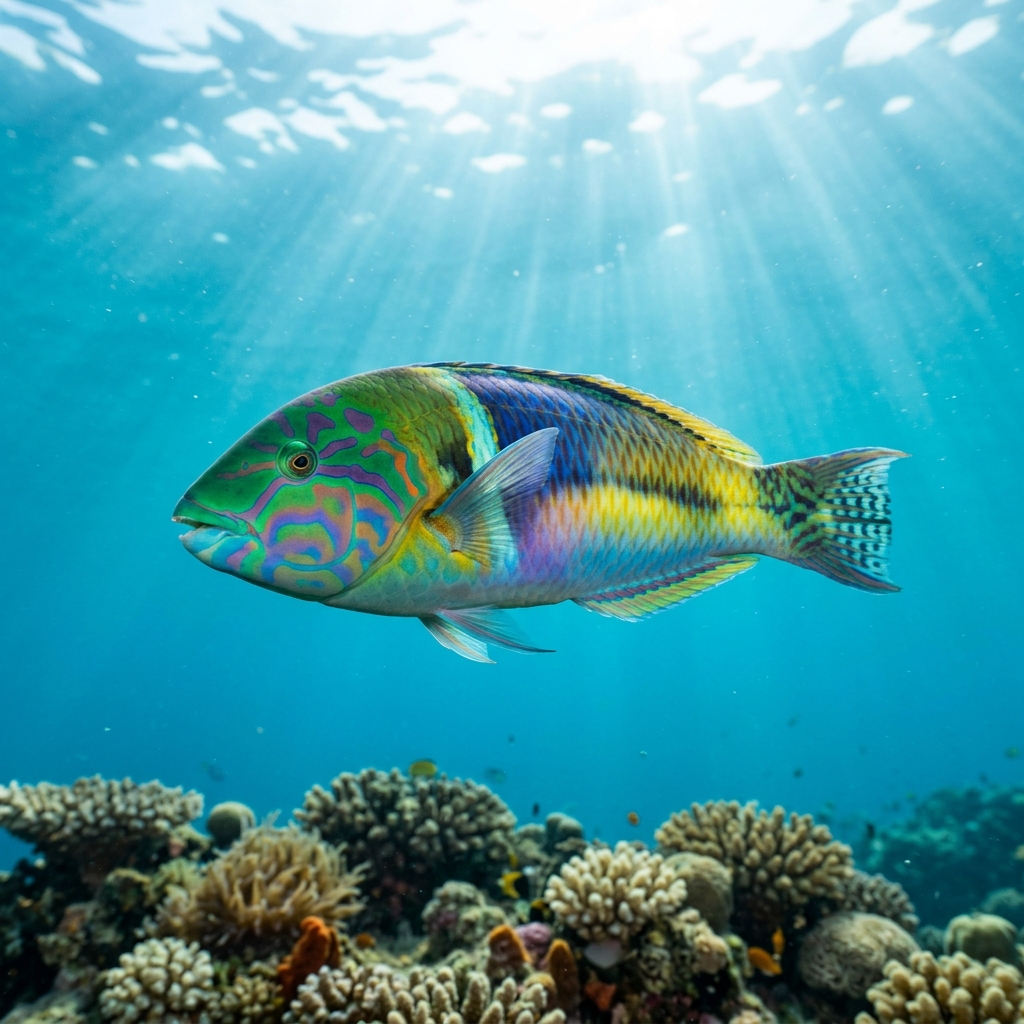
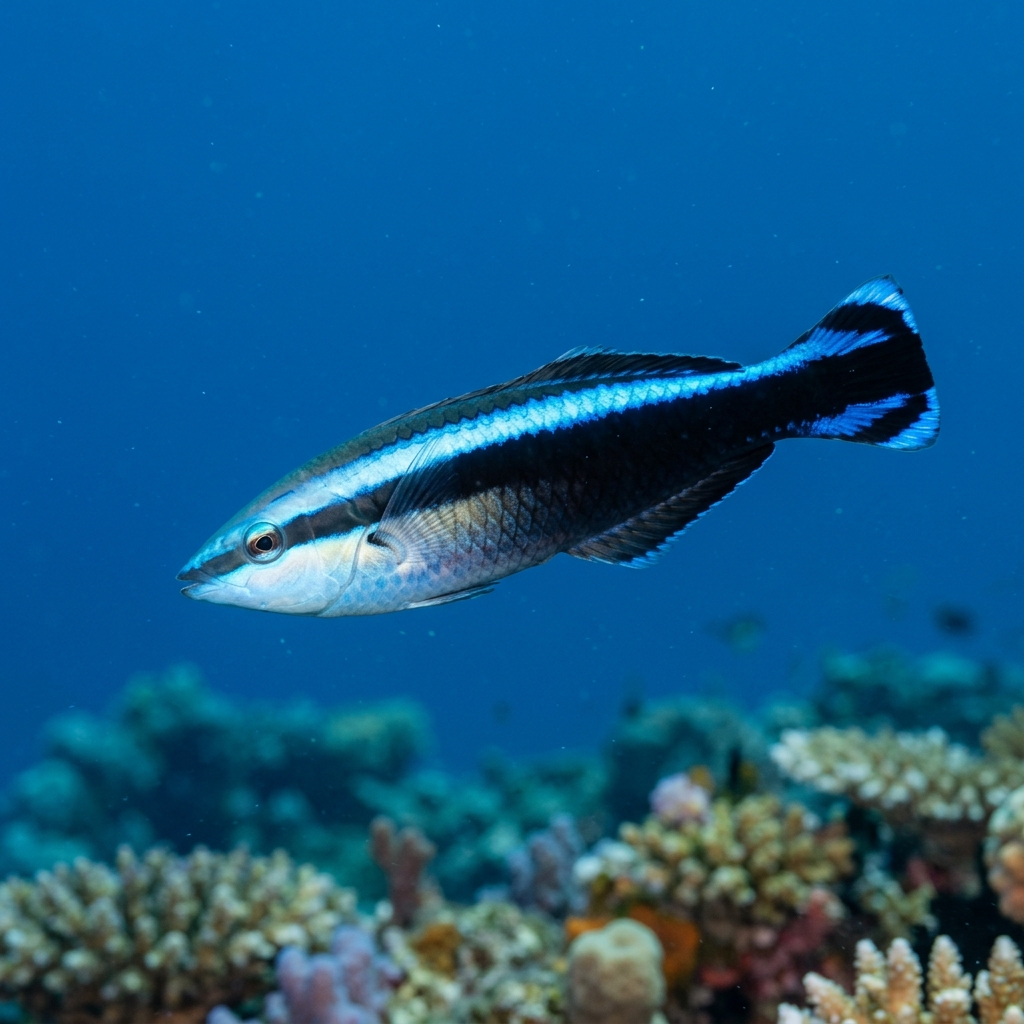
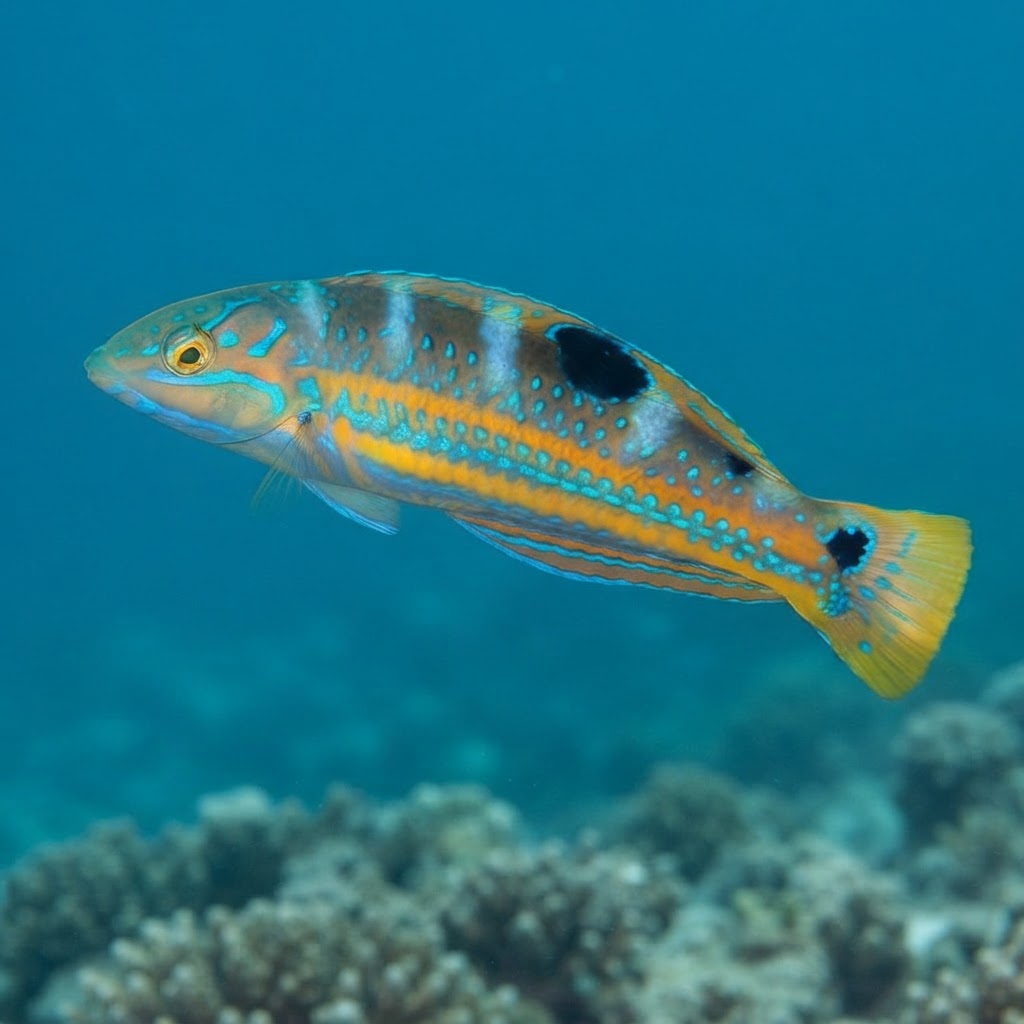
Reef neighbours a diver could mistake it for. Use the identification notes above to tell them apart.
This is a Caribbean and western Atlantic reef fish, and the strongest logs come from Mexico's Yucatán Peninsula, Florida, and the Bay Islands of Honduras. It is also a reliable sighting across the Dutch Caribbean in Curacao and Bonaire, the British and US Virgin Islands, and Guadeloupe, with further records from San Andrés and Providencia in Colombia. Across its range it is most often reported as uncommon rather than a guaranteed sighting, so treat it as a nice bonus fish on a reef dive rather than a target species.
Mapping where Puddingwife is logged…
Strongest sightings come from Mexico's Yucatán Peninsula, Florida, the Bay Islands of Honduras, and the Dutch Caribbean islands of Curacao and Bonaire, plus the British and US Virgin Islands and Guadeloupe.
There is no strong seasonal pattern, and it stays comfortable in 24 to 28C water year-round, so any month is workable on Caribbean and Florida reefs.
Look for a stocky blue-green wrasse around 35 cm with irregular orange blotches, a dark spot near the tail, and faint radiating lines around the eye. Juveniles are yellow with two blue stripes and look like a different fish entirely.
They typically reach about 35 cm in length, making them one of the larger wrasses seen on Caribbean reefs.
Like many wrasse species, they shift from a striped juvenile pattern to a blotched adult colouration as part of a broader life-stage transition seen across the wrasse family.
Site and sighting data is aggregated from diver logs, iNaturalist and GBIF. For taxonomy and conservation status:
Bird Wrasses
3,632 sites