Microspathodon chrysurus
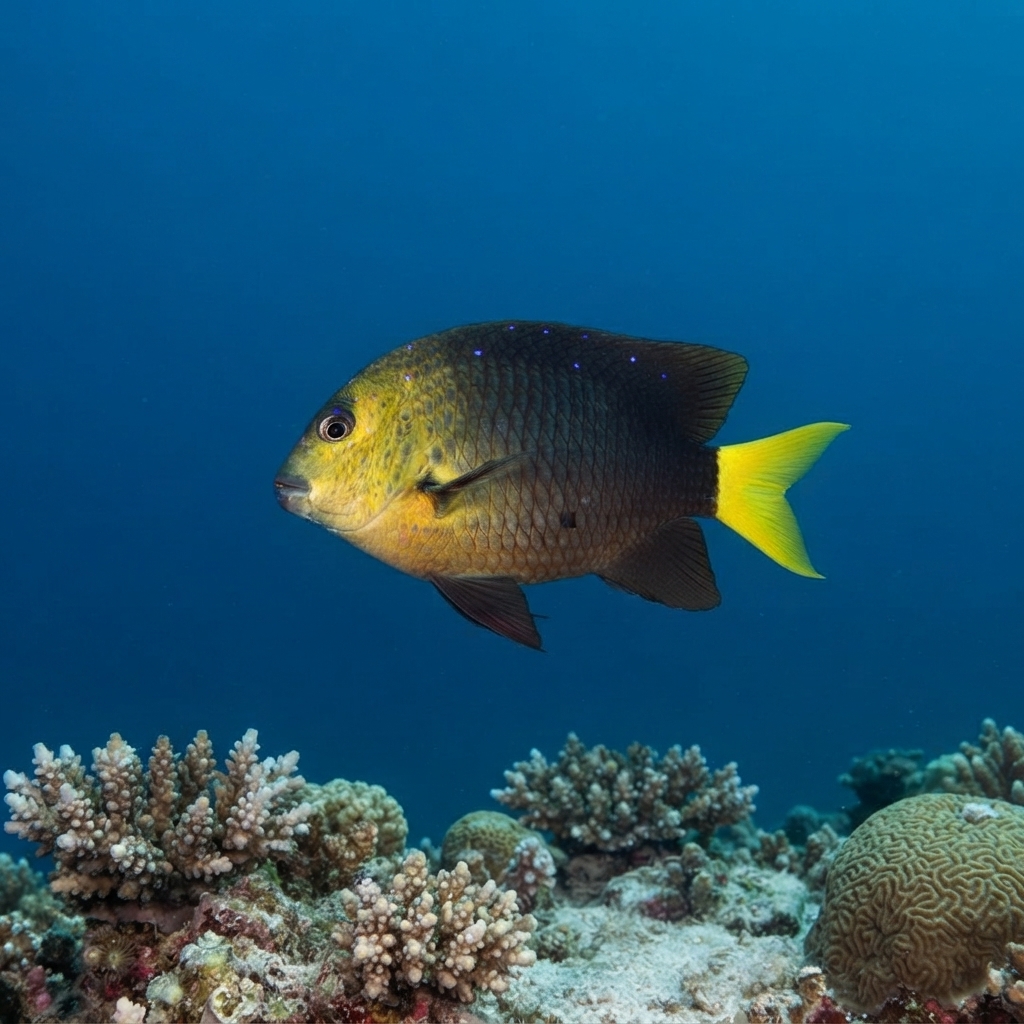
Dark body, electric-blue speckles, yellow tail. Common on Caribbean reefs from Bonaire to the Yucatán Peninsula year-round in 26-28°C water.
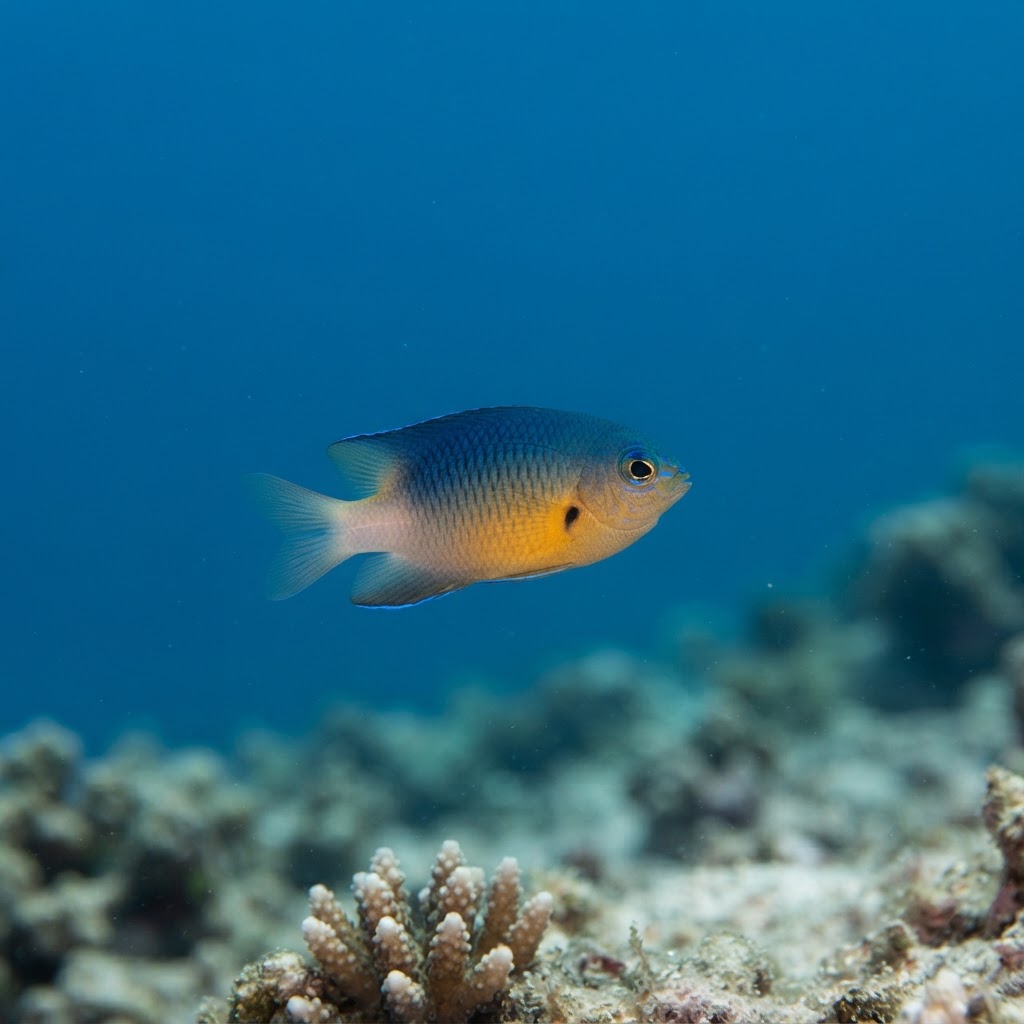
Adults show a dark chocolate-brown to near-black body scattered with small iridescent blue spots, cut off sharply by a bright yellow tail that gives the fish its name. They sit around 14 cm, deep-bodied and oval, with a blunt face typical of damselfish. Juveniles are more strikingly patterned, with the blue spots denser and more electric against a darker body, fading as the fish matures.
Look for it patrolling a patch of algae-covered rock or dead coral that it treats as its own turf, darting out to chase off anything that strays too close, including snorkellers and divers who linger. It rarely strays far from that patch and spends most of the day grazing algae in short, busy bursts rather than roaming the reef. Most sightings are logged as uncommon rather than abundant, so expect one or two territorial individuals per site rather than a shoal.
It farms its own patch of algae, aggressively defending a garden on the reef substrate against intruders many times its size, which is unusual behaviour for a fish this small.
No clear seasonal pattern shows up in the data, and with a comfortable range of 26.1 to 28.2 C it stays active on Caribbean reefs all year round. Plan around good diving conditions in your chosen region rather than a particular month.
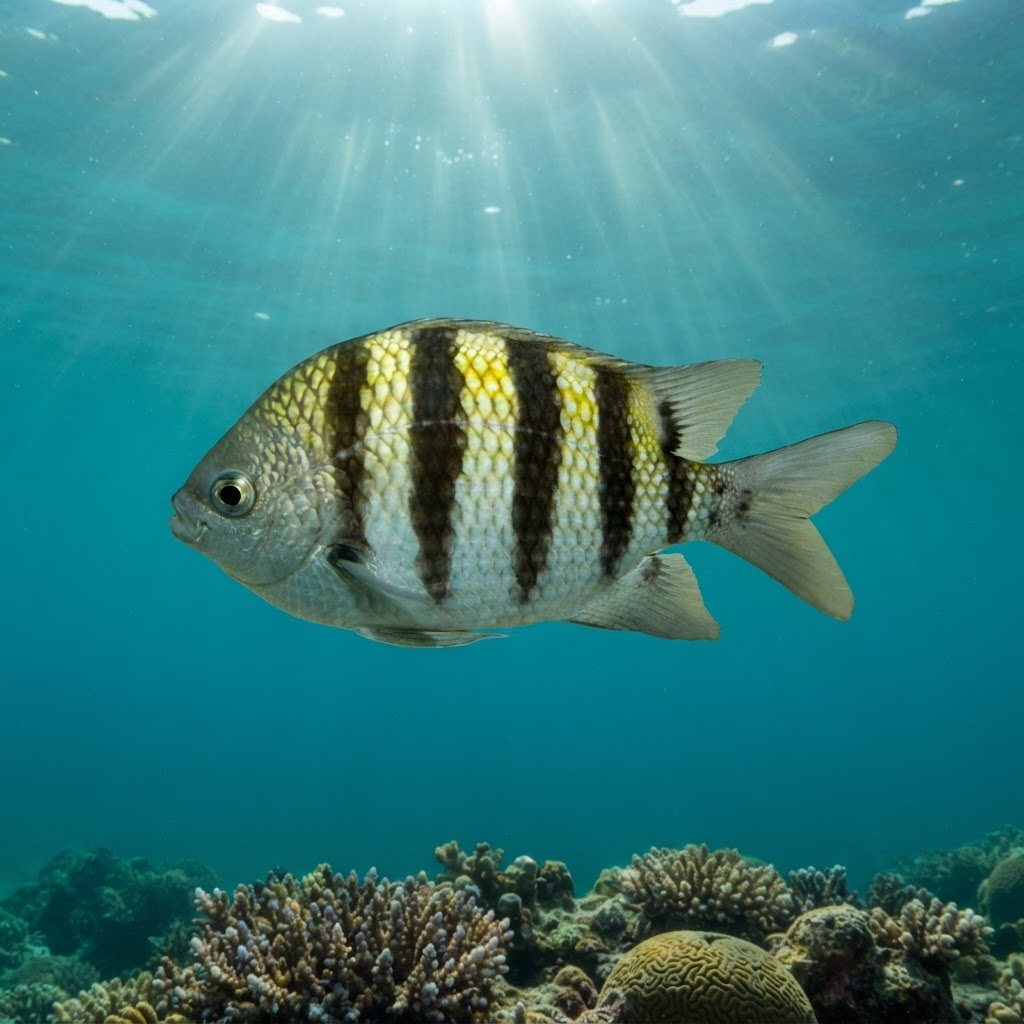
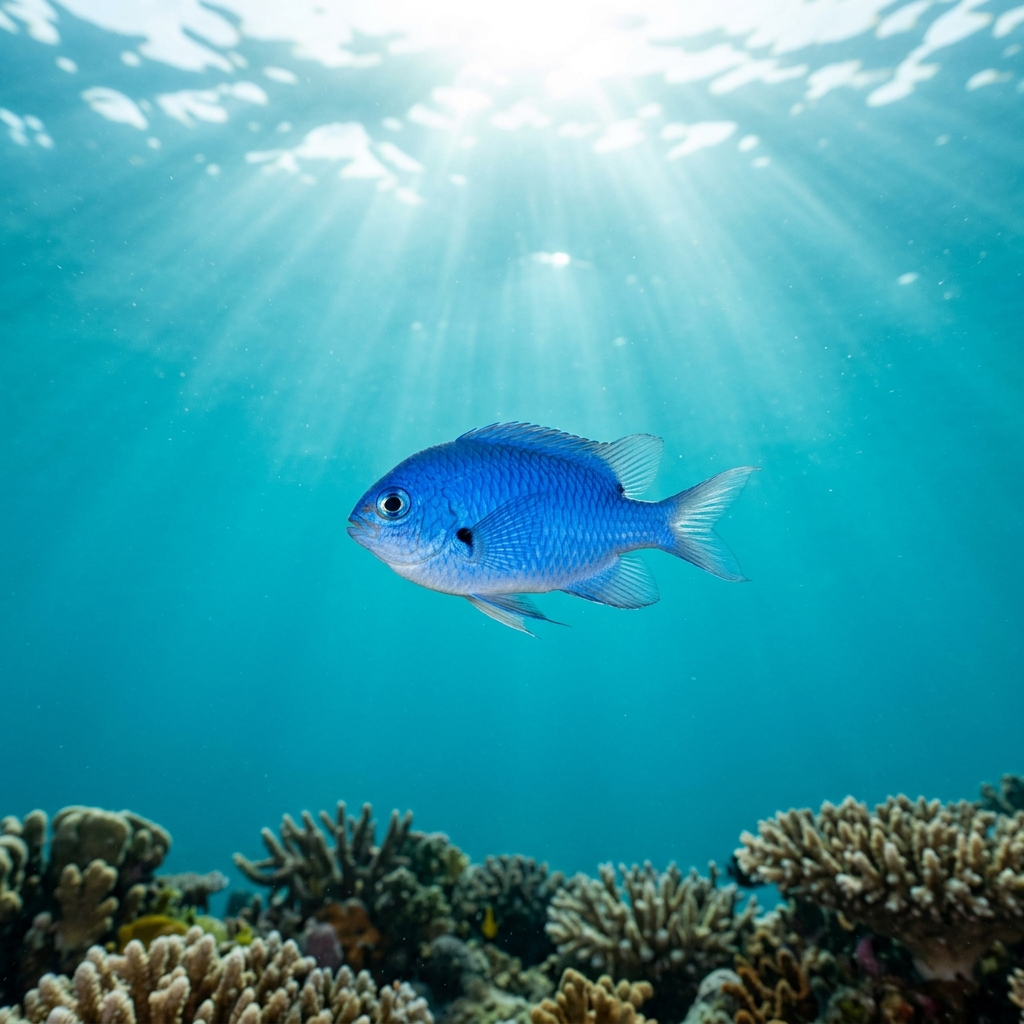
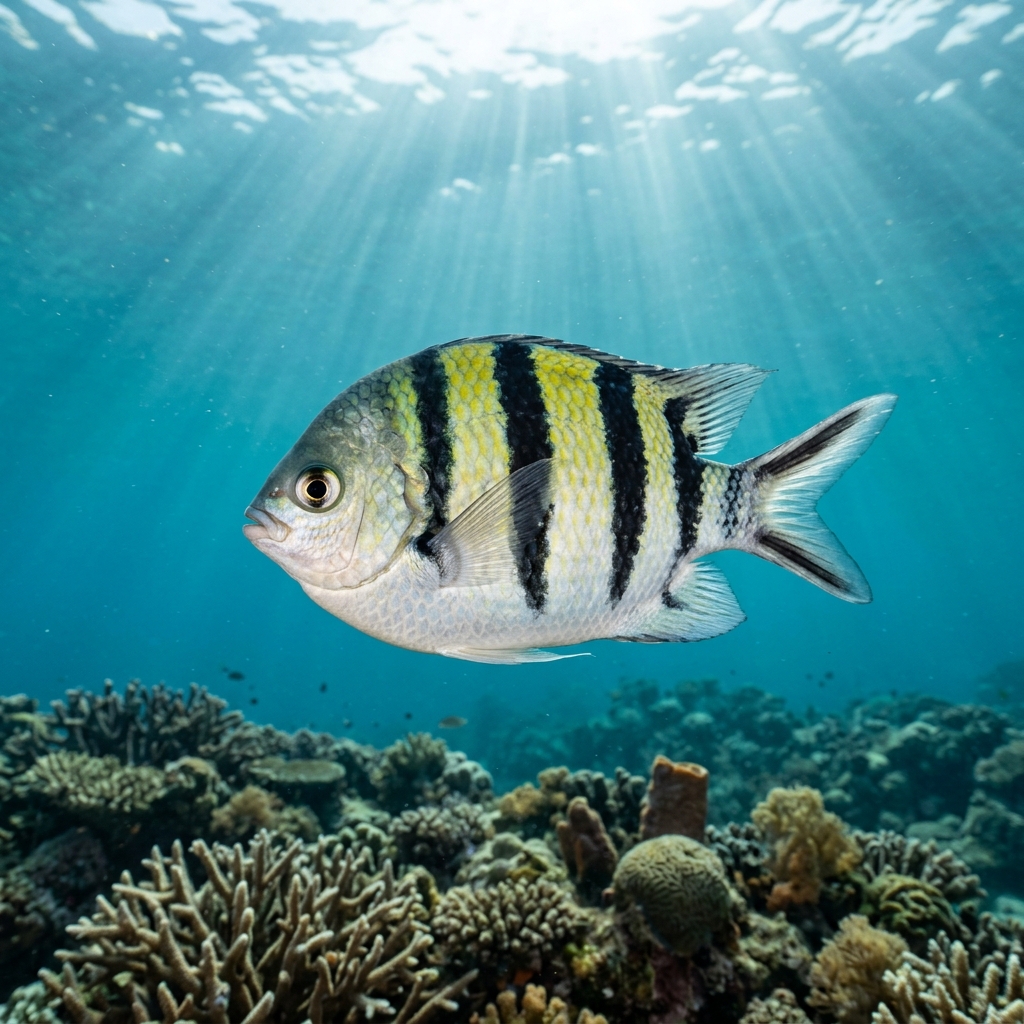
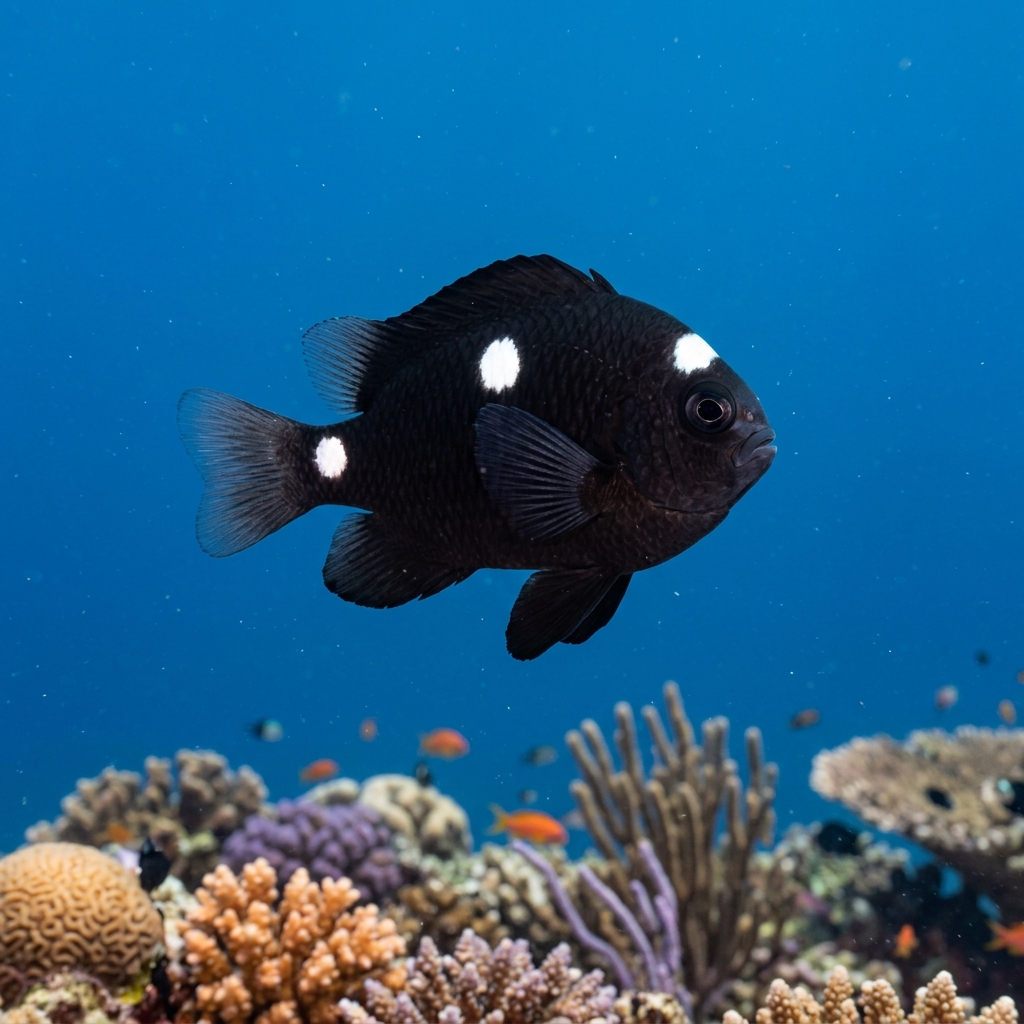
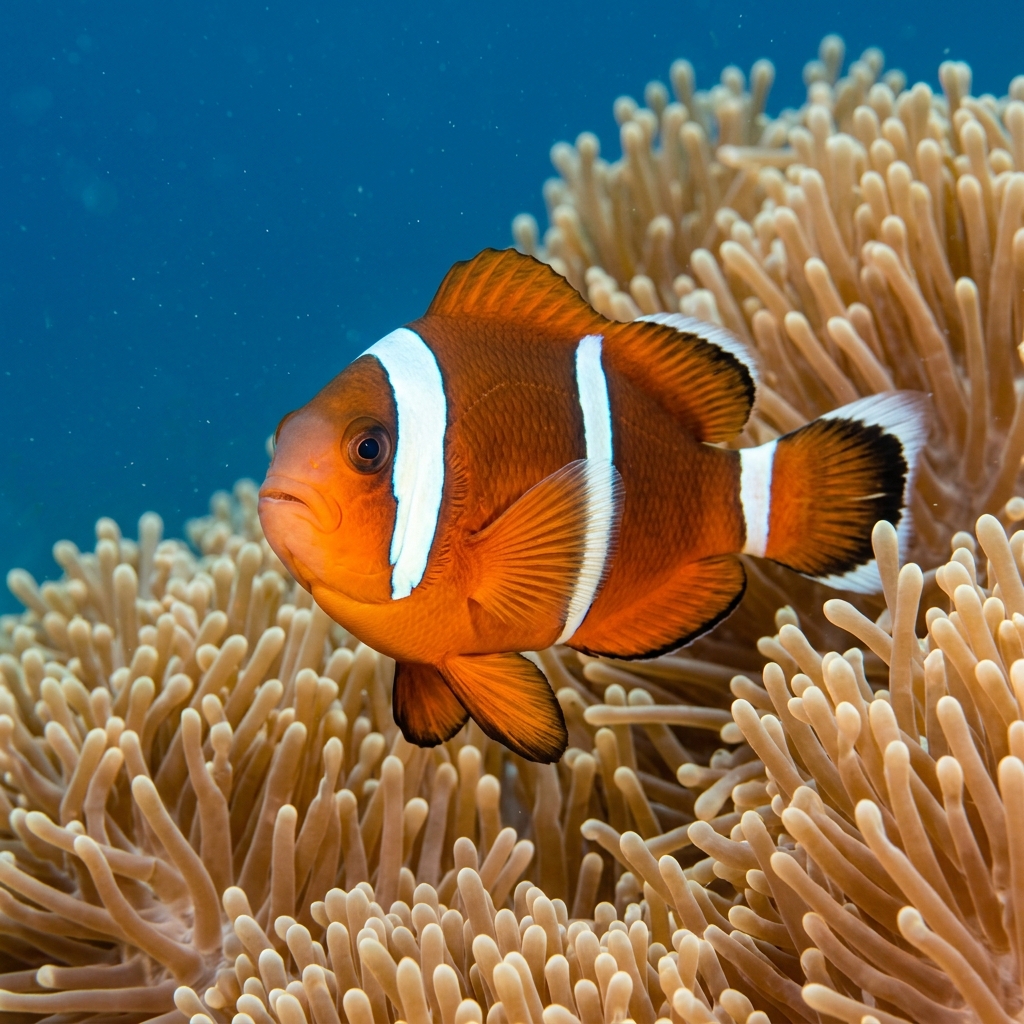
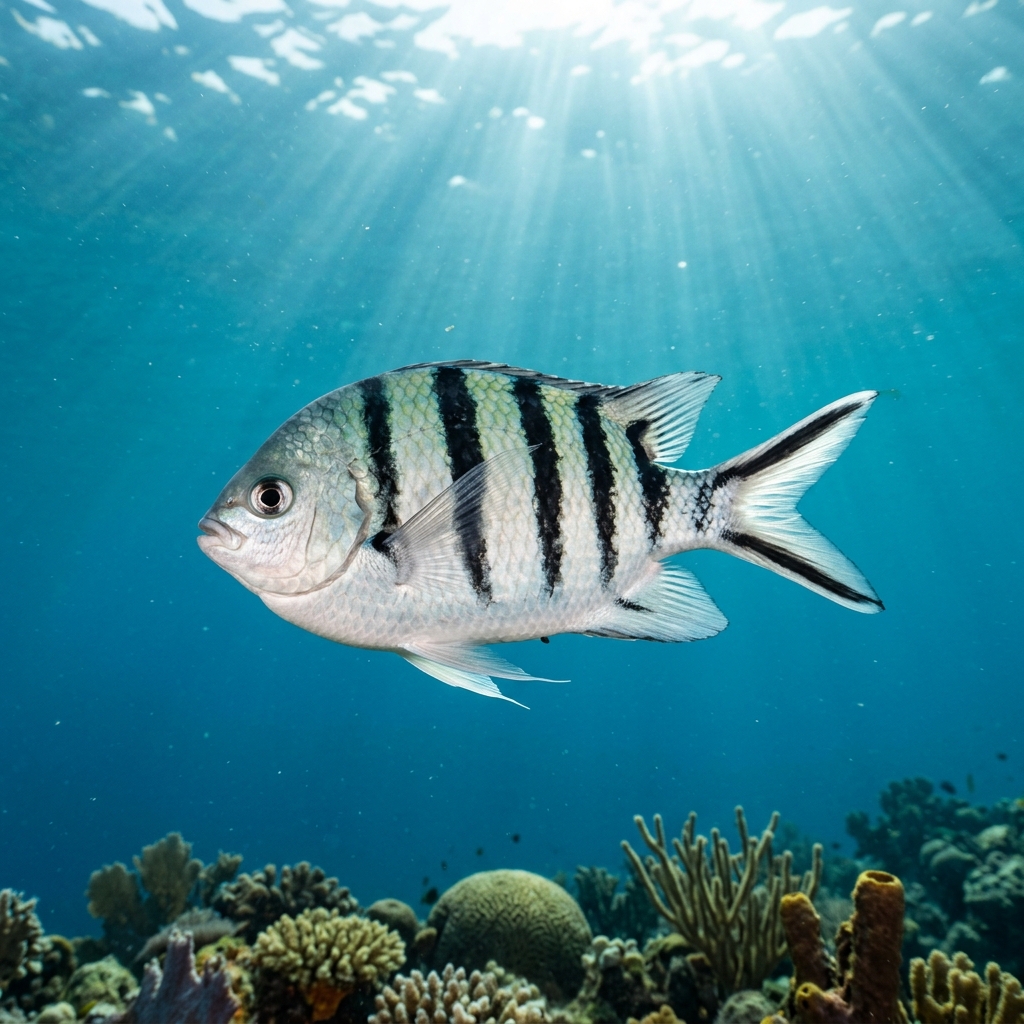
Reef neighbours a diver could mistake it for. Use the identification notes above to tell them apart.
This is a Caribbean-wide reef fish, most consistently logged in Mexico's Yucatán Peninsula, Florida, the Bay Islands of Honduras, and Bonaire's Leeward Coast. It also turns up reliably in Curacao, Grand Cayman, Grenada, the US Virgin Islands, and the British Virgin Islands, making it one of the more dependable damselfish sightings across the wider Caribbean basin.
Mapping where Yellowtail Damselfish is logged…
They are a reliable find across the Caribbean, especially in Mexico's Yucatán Peninsula, Florida, Bonaire, Honduras's Bay Islands, and Curacao. Most dive operators in these regions will have them on nearby reefs.
There's no strong seasonal pattern, they're present year-round on Caribbean reefs thanks to consistently warm water between about 26 and 28 C.
Look for a dark brown to black body dotted with small iridescent blue spots, ending in a sharply contrasting bright yellow tail. It's a small, deep-bodied fish, usually seen alone guarding a patch of reef.
They typically reach around 14 cm in length, making them a small, easy-to-overlook reef fish rather than a showy one.
No, they pose no real danger, though they will boldly chase and nip at divers who get too close to their algae patch. It's a territorial display, not a real threat.
They actively cultivate and defend a patch of algae on the reef as a personal food garden, chasing off fish and divers alike that wander into it.
Site and sighting data is aggregated from diver logs, iNaturalist and GBIF. For taxonomy and conservation status:
Dascyllus
3,697 sites