Brachygenys chrysargyrea
Small silvery grunts hovering over Caribbean reefs in loose schools, most reliably spotted along Bonaire's Leeward Coast and the Yucatán Peninsula.
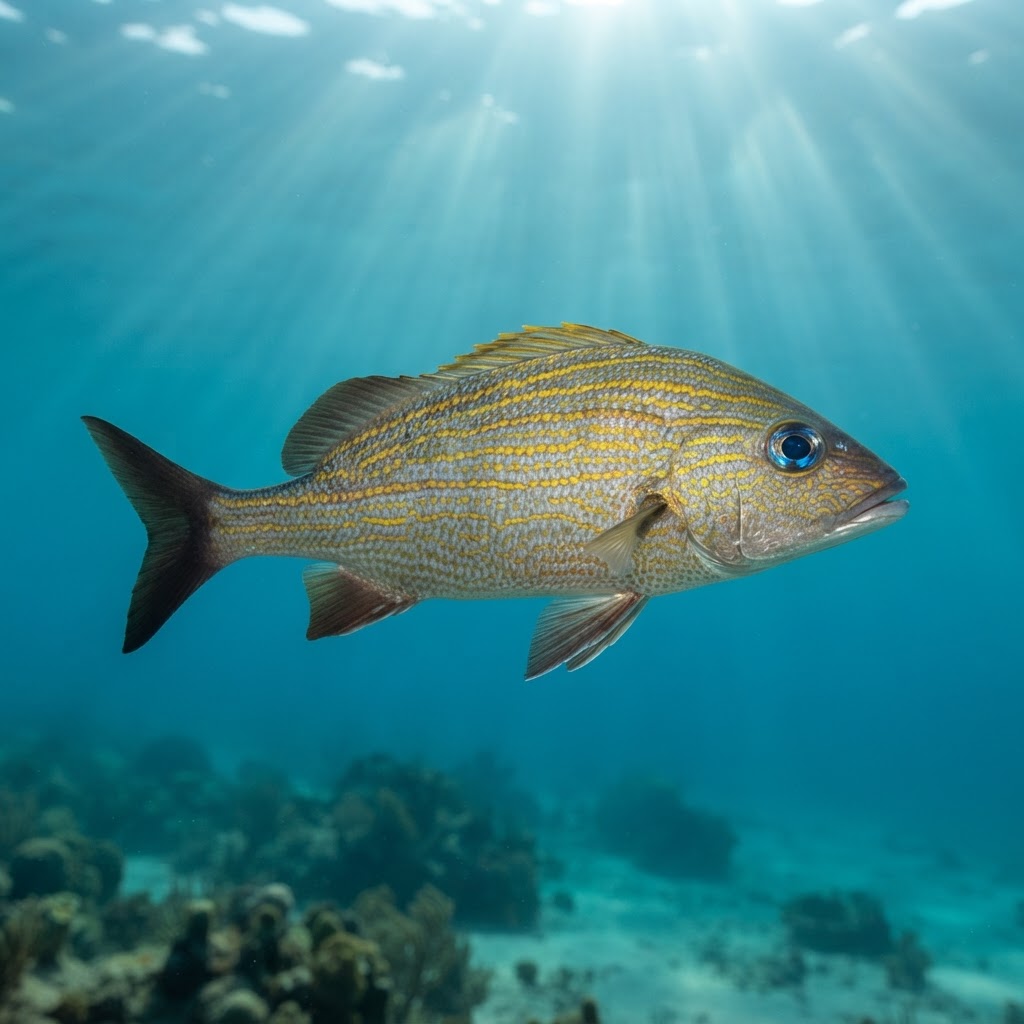
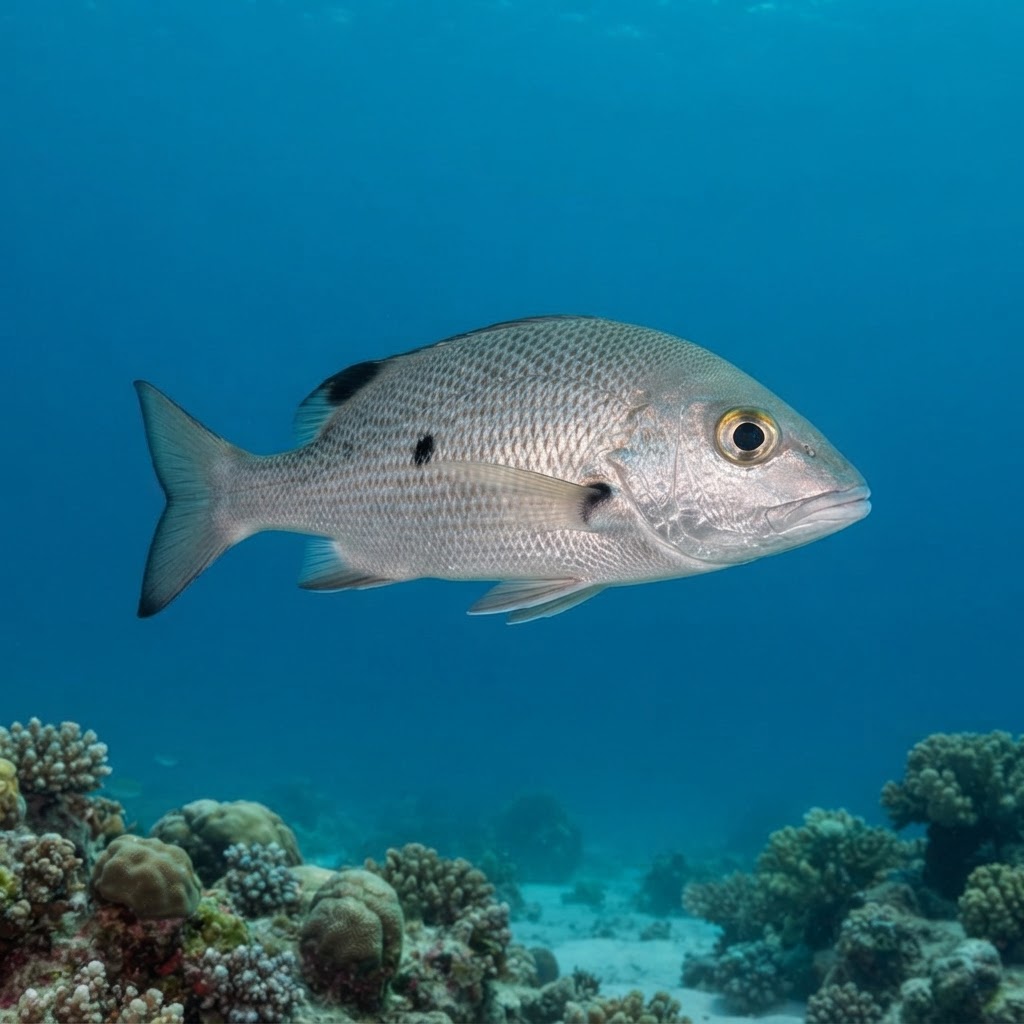
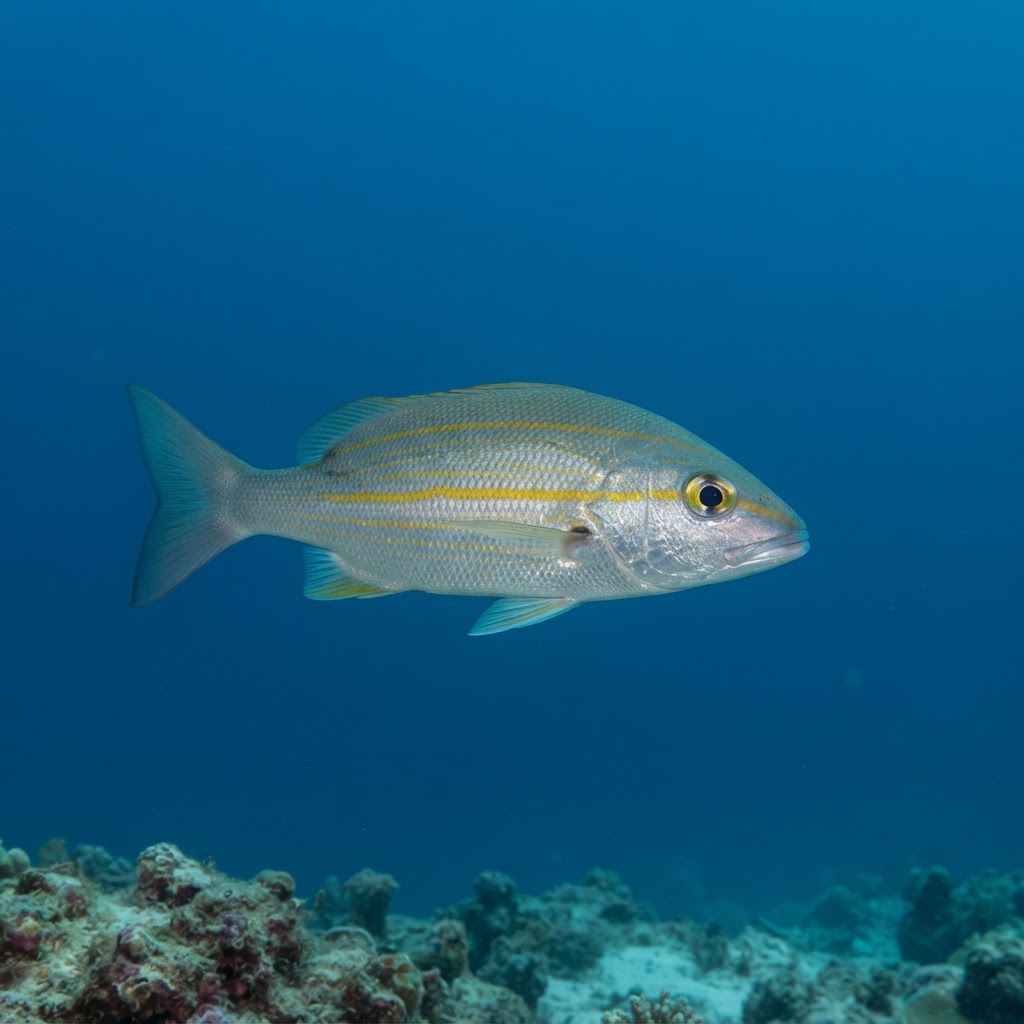
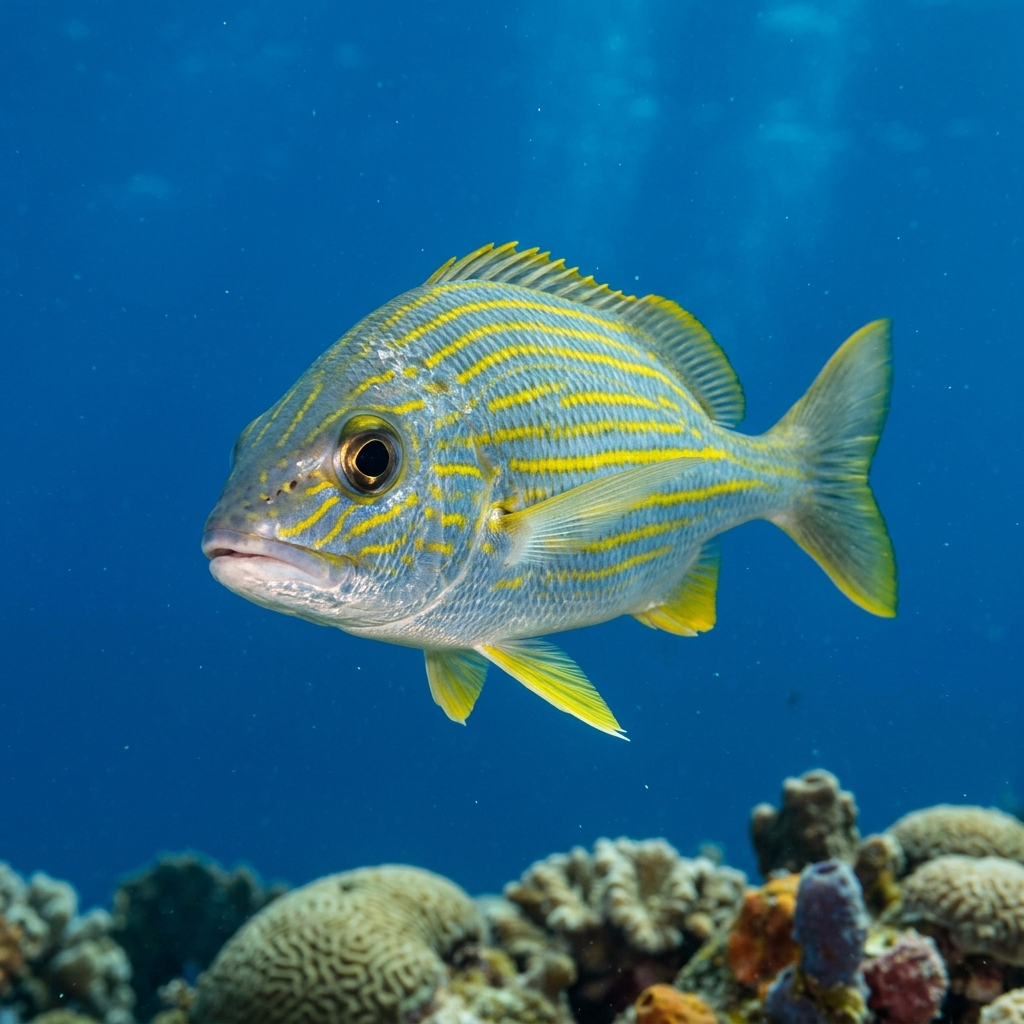
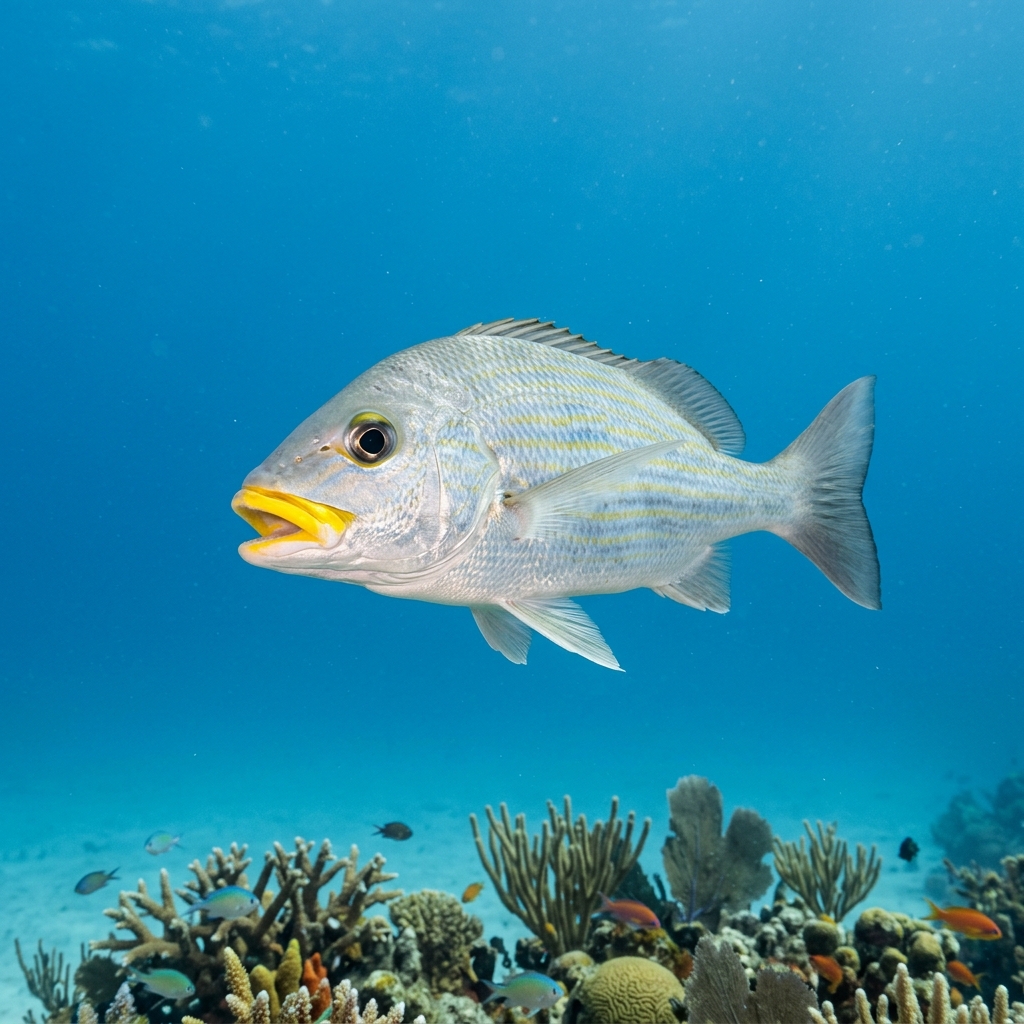
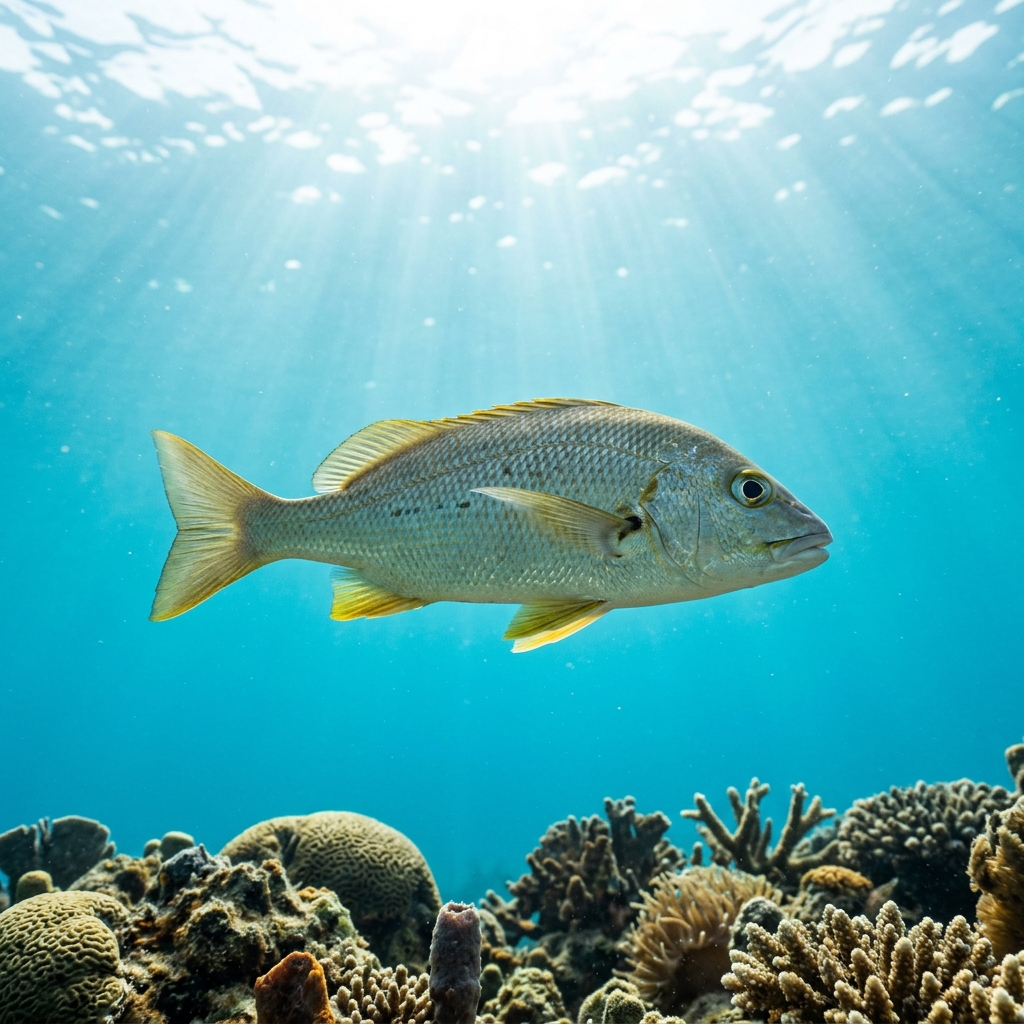
A slim, silvery body about the length of a hand, with a faint yellow-bronze stripe running along the upper side and a small, pointed mouth that gives the species its name. It often shows a dark blotch near the base of the tail, and the fins carry a light yellow wash. Look for it hovering in loose, mixed schools just off the reef rather than sitting tight against coral.
Divers usually find it hanging in loose, drifting schools a metre or two above the reef, often mixed in with other grunts and small snapper, holding position with barely a fin-beat. It shows little concern for divers, parting around a slow approach rather than bolting, and tends to gather over structure like ledges and coral heads by day before dispersing to feed after dark.
Like other grunts, it can produce an audible grunting sound by grinding its pharyngeal teeth, amplified through its swim bladder, which is where the whole family gets its name.
No clear seasonal pattern shows up in the sightings, and with a comfortable water-temperature range of roughly 26 to 28 C on the reefs it lives on, it is present year-round rather than tied to a particular month.
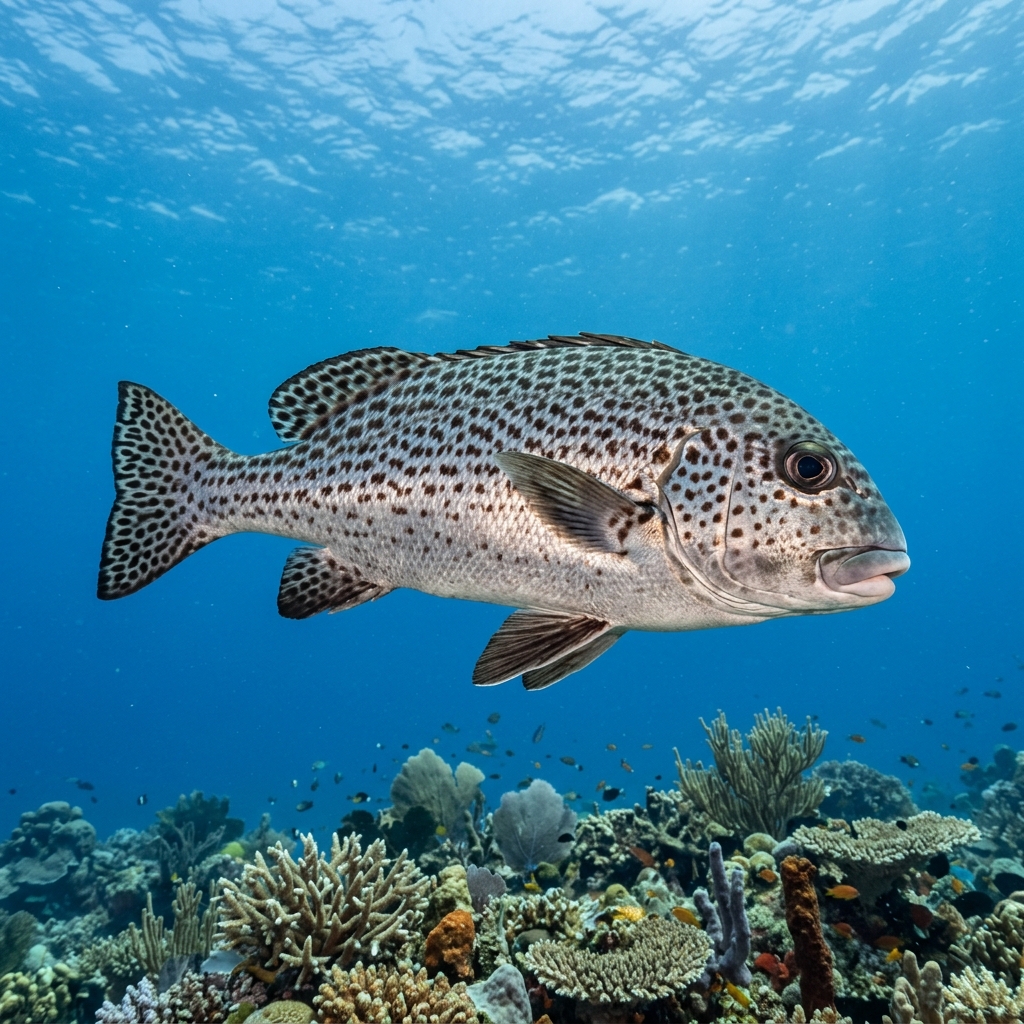
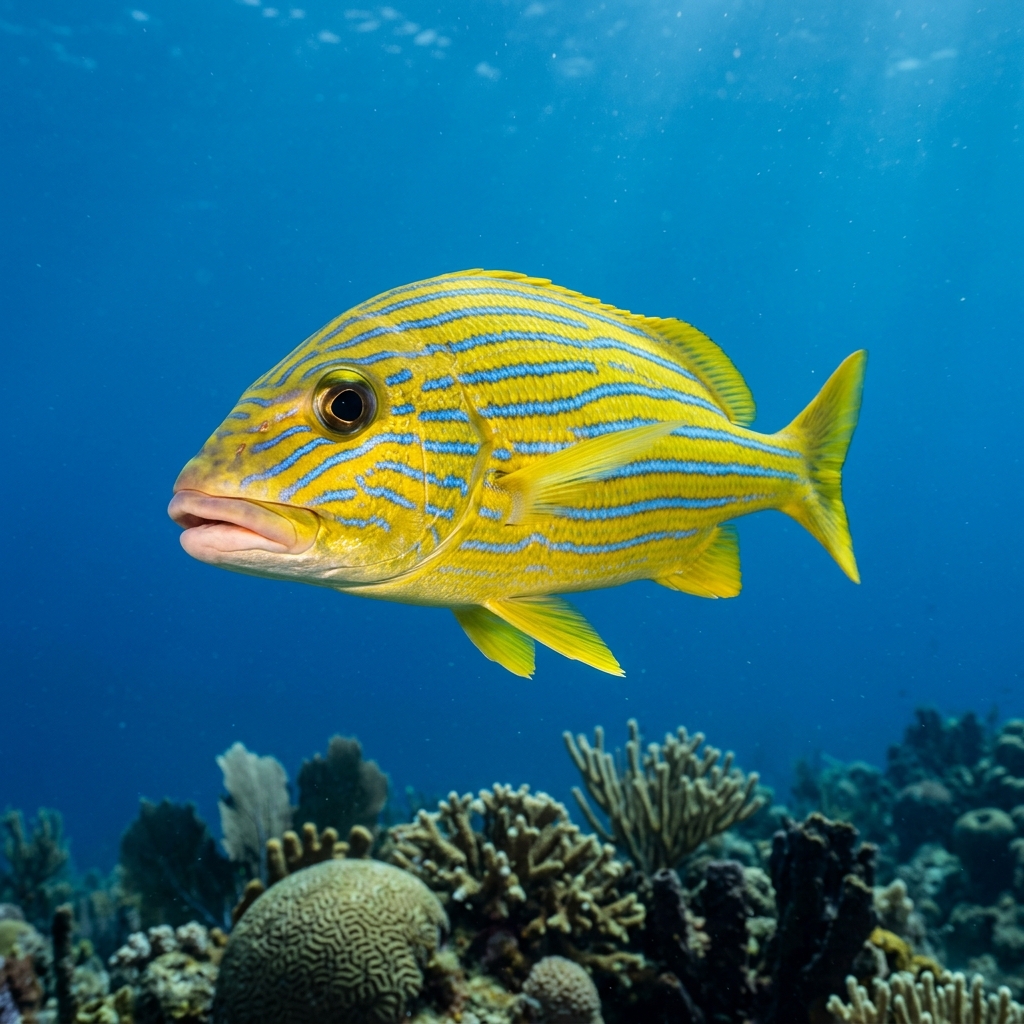
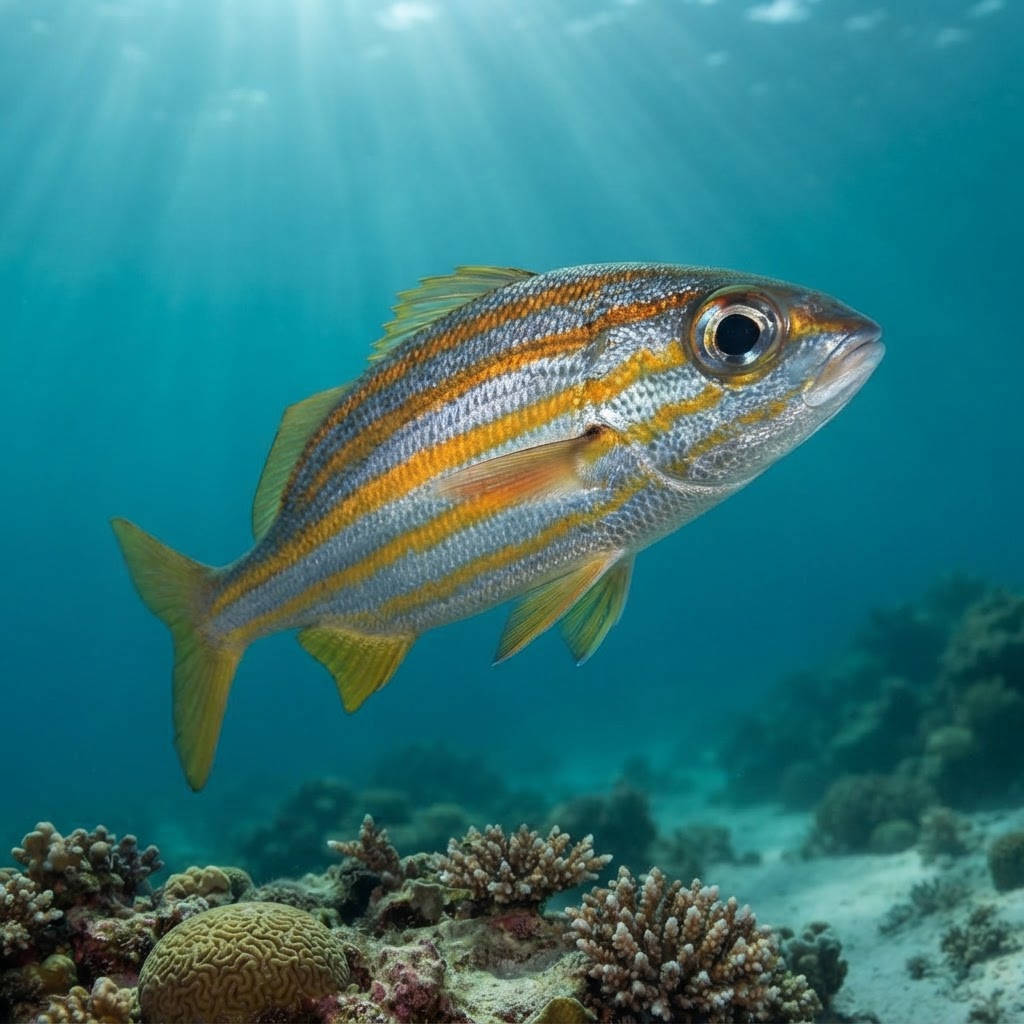
Reef neighbours a diver could mistake it for. Use the identification notes above to tell them apart.
Most reliably logged in the United States, particularly Florida, and across the wider Caribbean including Mexico's Yucatán Peninsula, Bonaire's Leeward Coast, Guadeloupe, Curacao and Grenada Island. It also turns up on Caribbean coast reefs in Colombia and around Martinique and the Dominican Republic, making it one of the more widespread schooling grunts on Caribbean and western Atlantic reef dives.
Mapping where Smallmouth Grunt is logged…
It is most commonly logged in Florida in the United States, Mexico's Yucatán Peninsula, Bonaire's Leeward Coast, and around Guadeloupe, Curacao and Grenada, making it a regular sighting across Caribbean and western Atlantic reef dives.
There is no strong seasonal pattern in sightings, so it is a year-round find on reefs sitting in the mid to high 20s Celsius, with no need to plan a trip around a specific month.
Look for a small silvery fish around 16 cm with a faint yellow-bronze stripe, a small pointed mouth, and a habit of hovering in loose schools just off the reef rather than hugging the substrate.
They typically reach around 16 cm, similar in size to several other small Caribbean grunt species, and are usually seen at that size in mixed schools rather than as solitary larger fish.
No, they pose no threat to divers and typically just drift aside as you approach, showing no defensive or aggressive behaviour.
Site and sighting data is aggregated from diver logs, iNaturalist and GBIF. For taxonomy and conservation status:
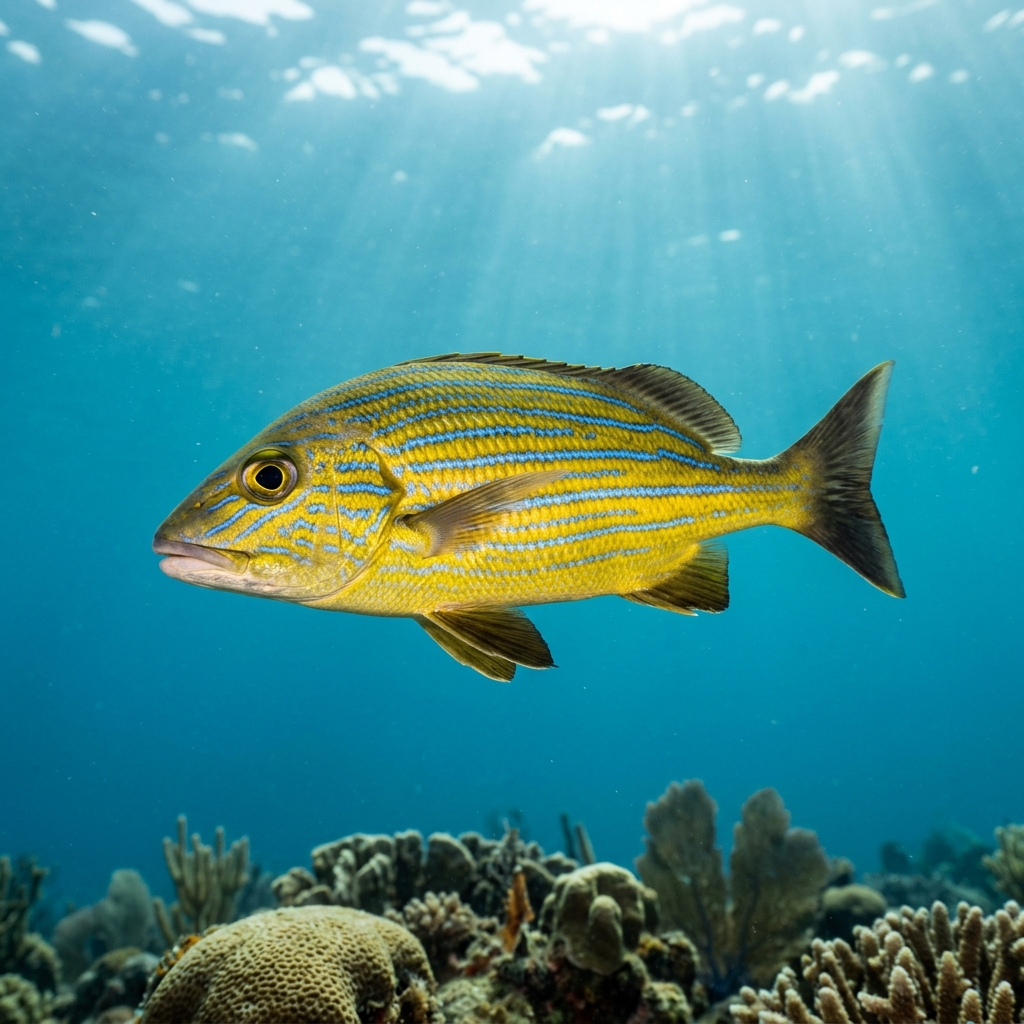
Bluestriped Grunt
1,907 sites