Lactophrys triqueter
Spot Smooth Trunkfish on Caribbean reefs from Florida to Roatán. Learn how to ID this polka-dotted boxfish and when sightings peak (Sep, May).
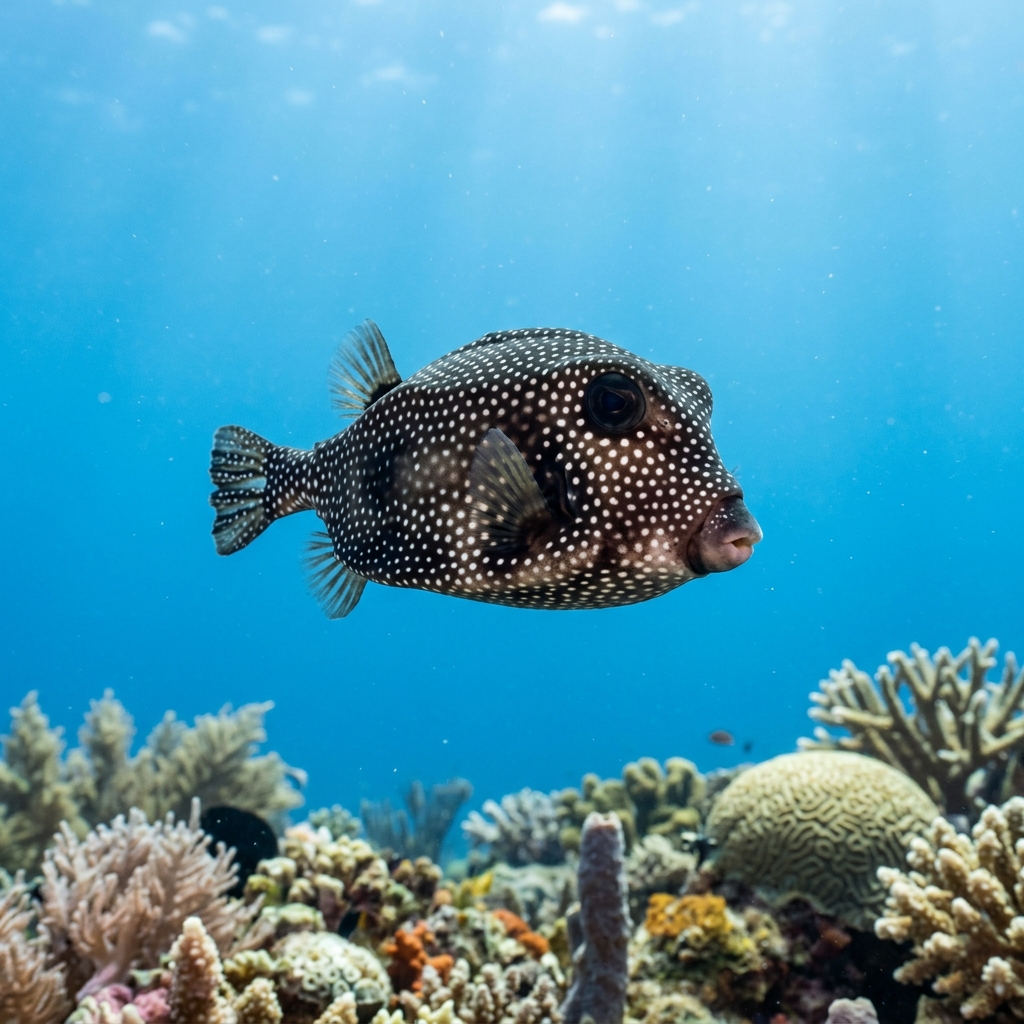
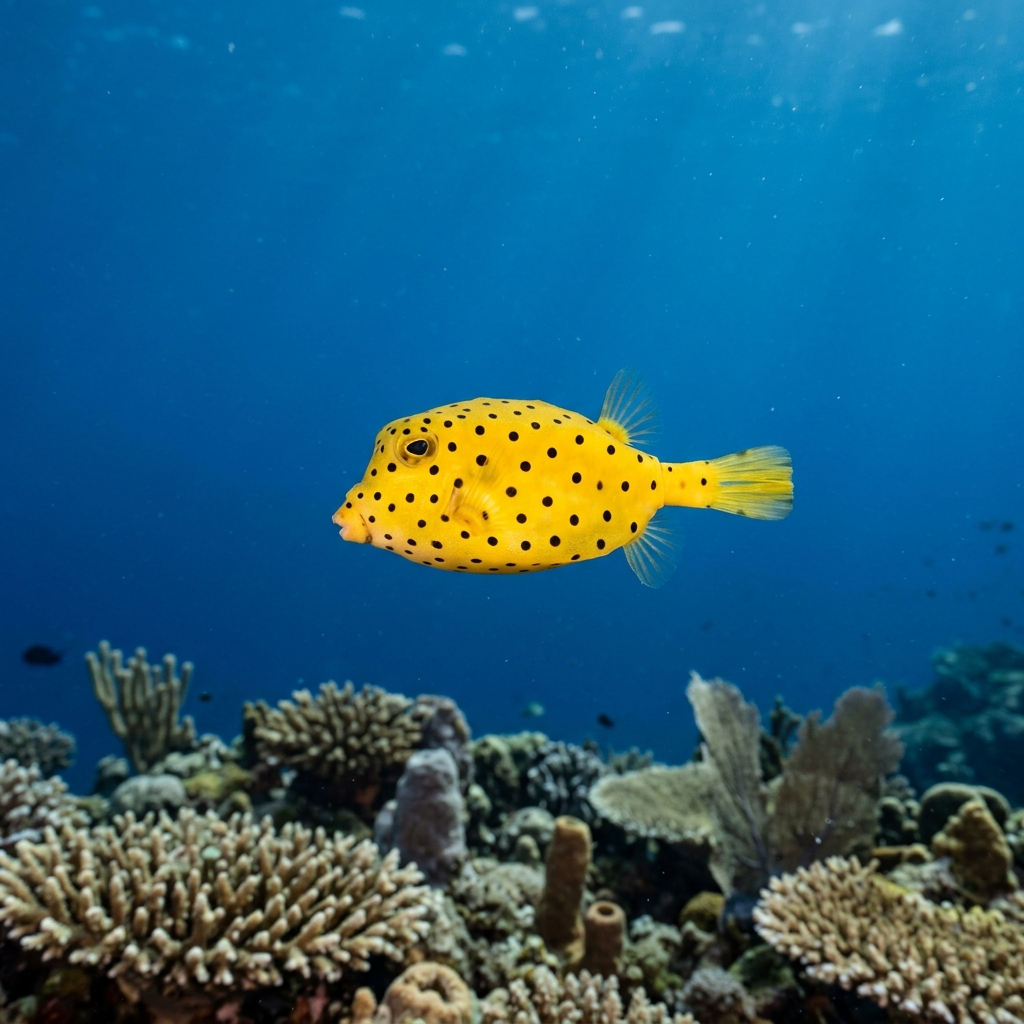
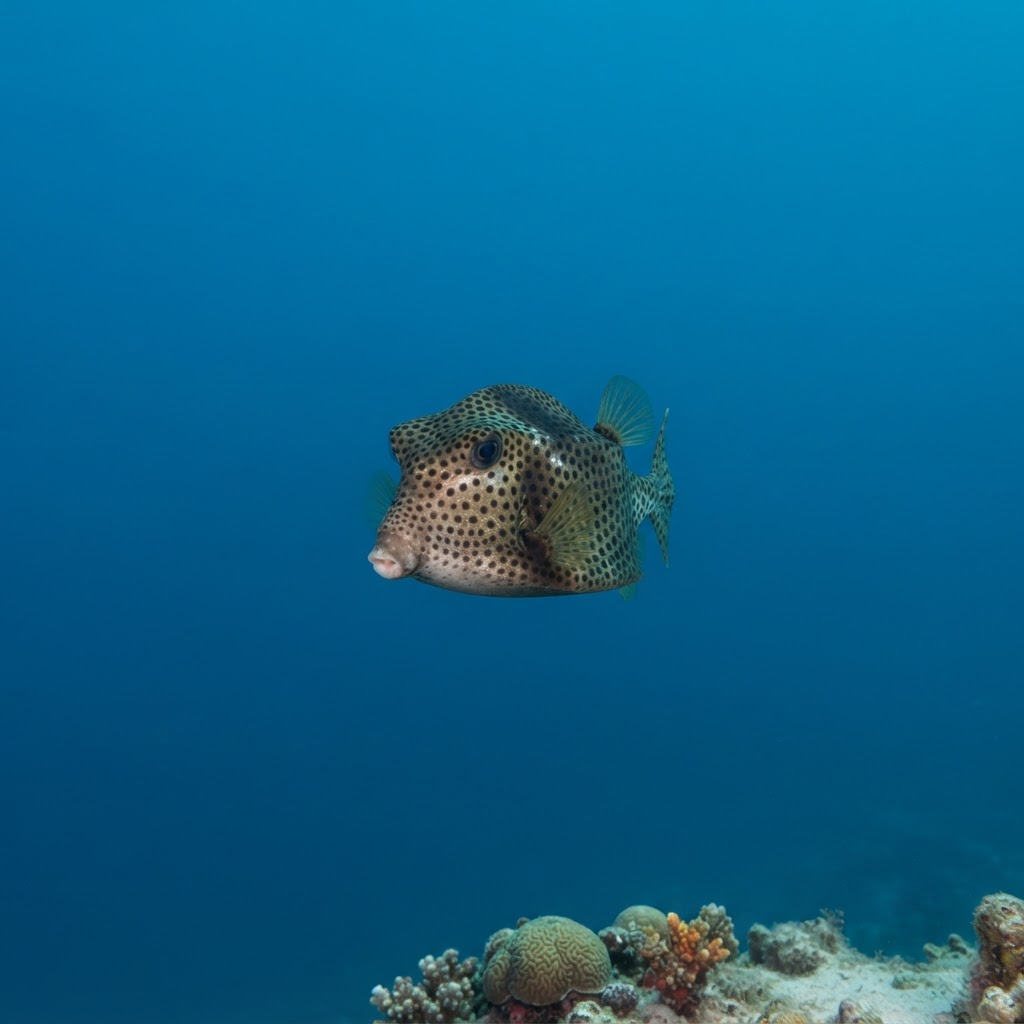
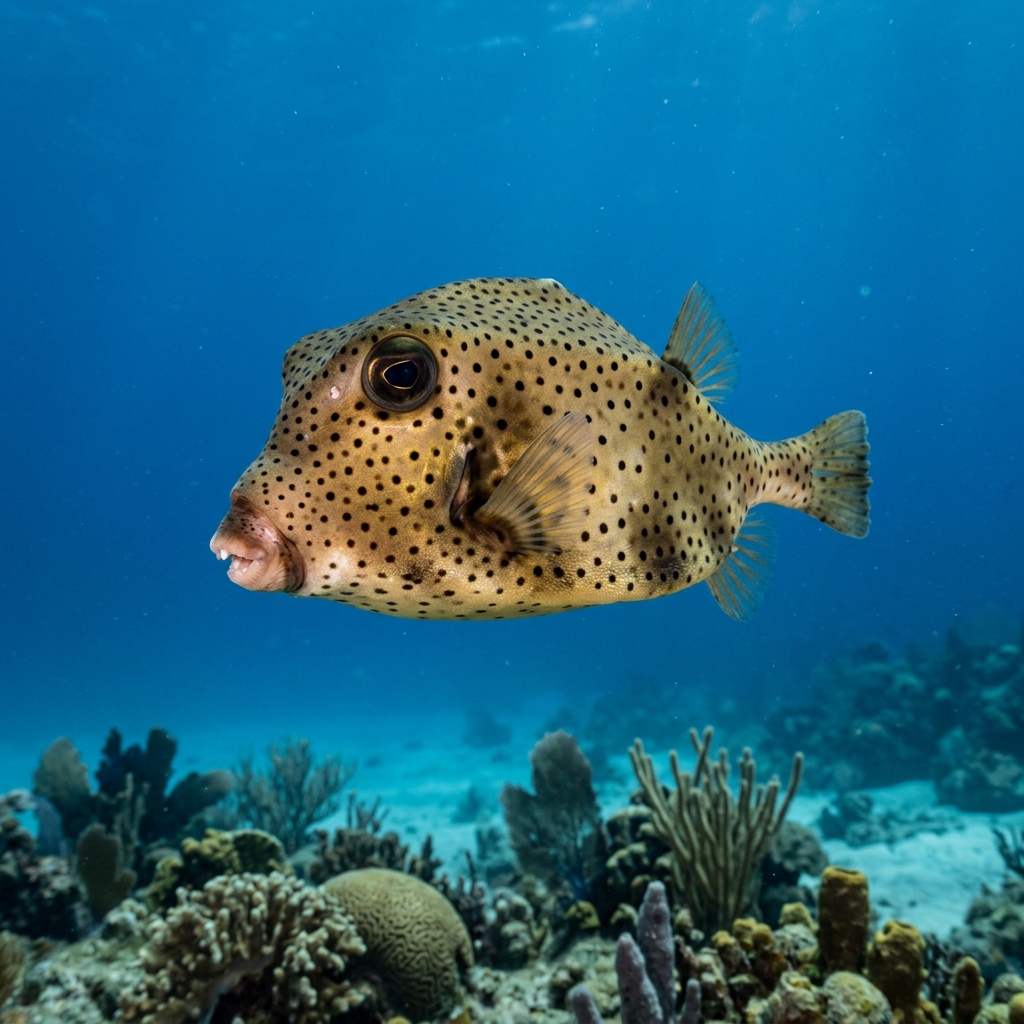
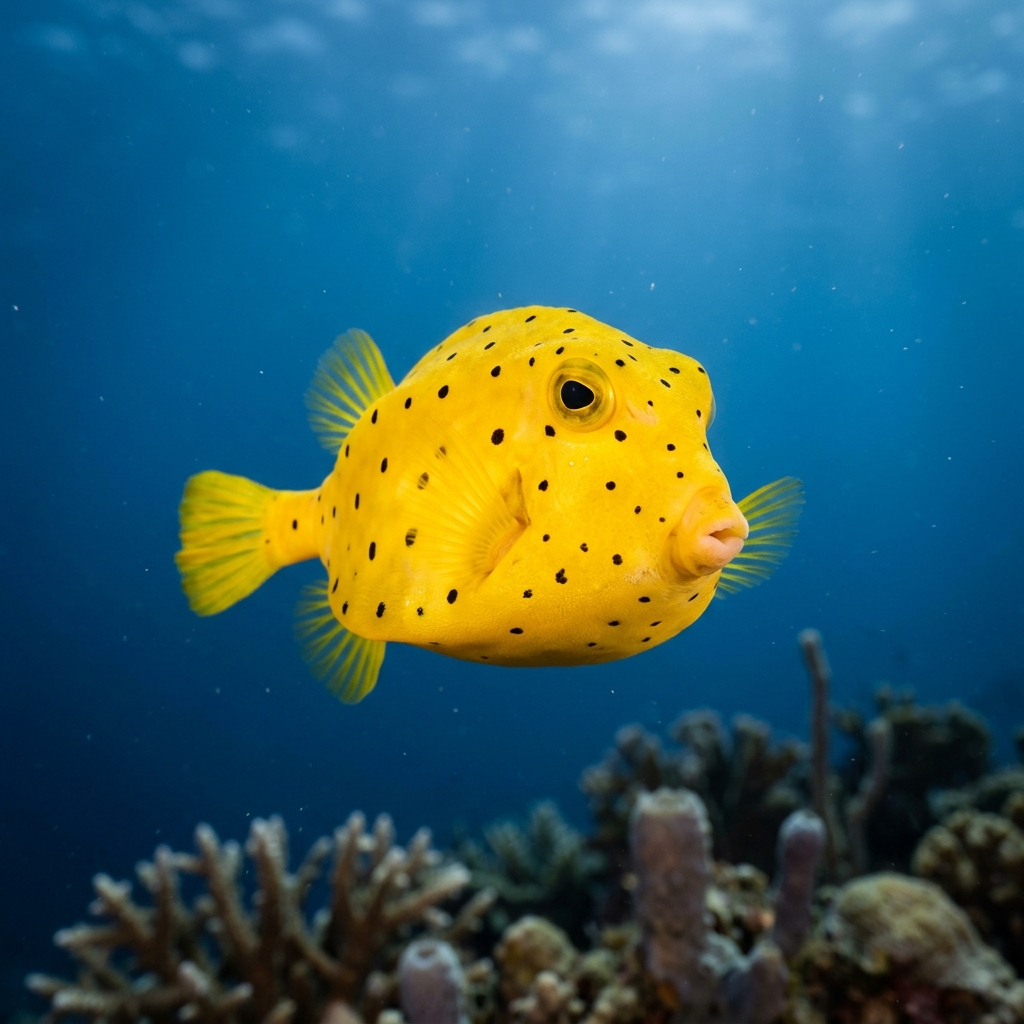
A rigid, box-shaped body covered in a white or pale grey base with a dense scattering of small dark spots makes this species hard to mistake at close range. Adults reach around 30 cm, making them mid-sized for a Caribbean boxfish. The mouth is noticeably puckered and small, almost comically pursed. Juveniles look quite different: they are bright yellow with black spots and a rounder, more globular shape.
Smooth trunkfish are noticeably unbothered by divers and will often hold their ground or even follow you along the reef out of apparent curiosity. They spend most of their active daytime hours foraging close to the substrate, picking over sandy patches and reef crevices. Watch for their signature feeding trick: they purse their small mouths into a tight tube and blow jets of water into the sand to flush out hidden worms and small invertebrates.
The rigid bony shell (called a carapace) that gives boxfish their shape is so effective as armour that smooth trunkfish have almost no need for speed. They manoeuvre using only their pectoral and dorsal fins while the body stays locked and still, a swimming style that makes them easy to film but slow to flee.
Northern Hemisphere sightings concentrate between September and May, which aligns with peak dive seasons across most Caribbean destinations. Outside of that window sightings drop off, though the species' tolerance for water temperatures between roughly 23 and 28 °C means it remains on the reef year-round in the warmest parts of its range.
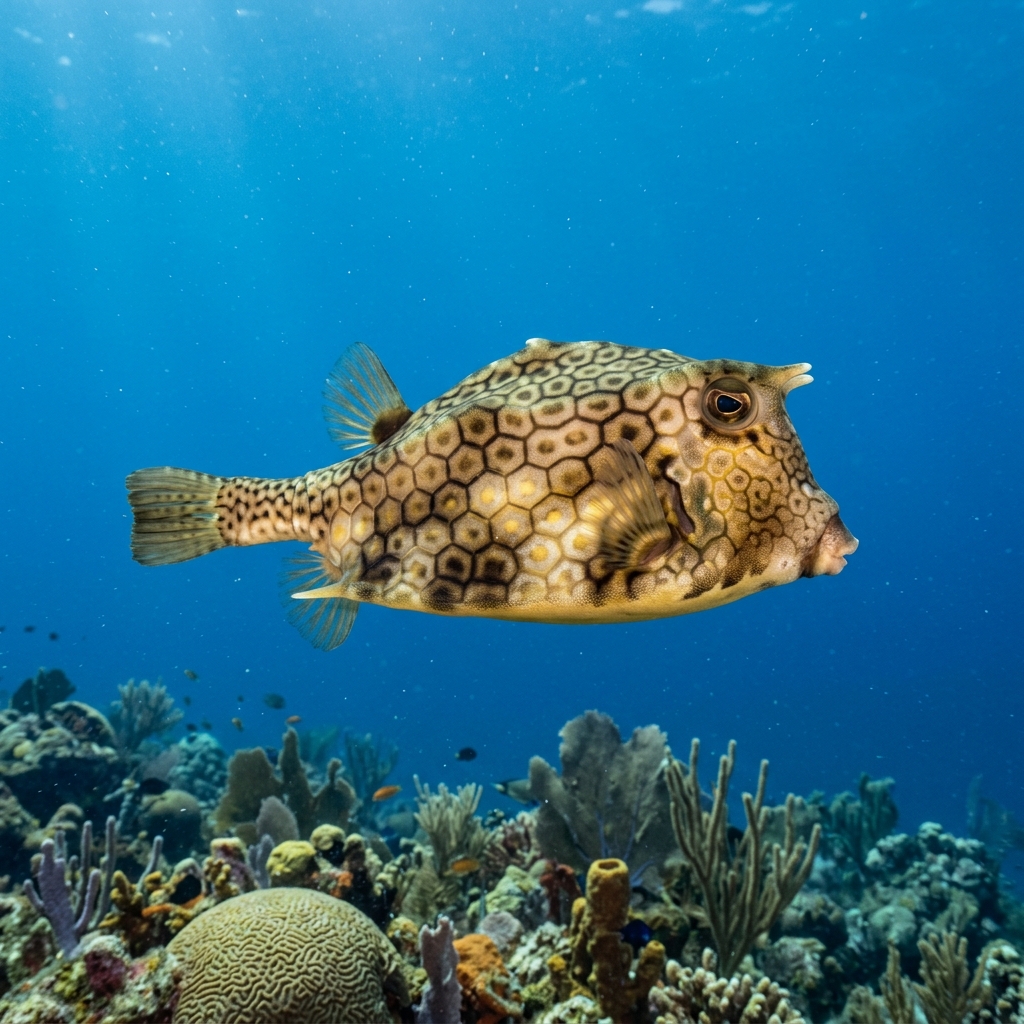
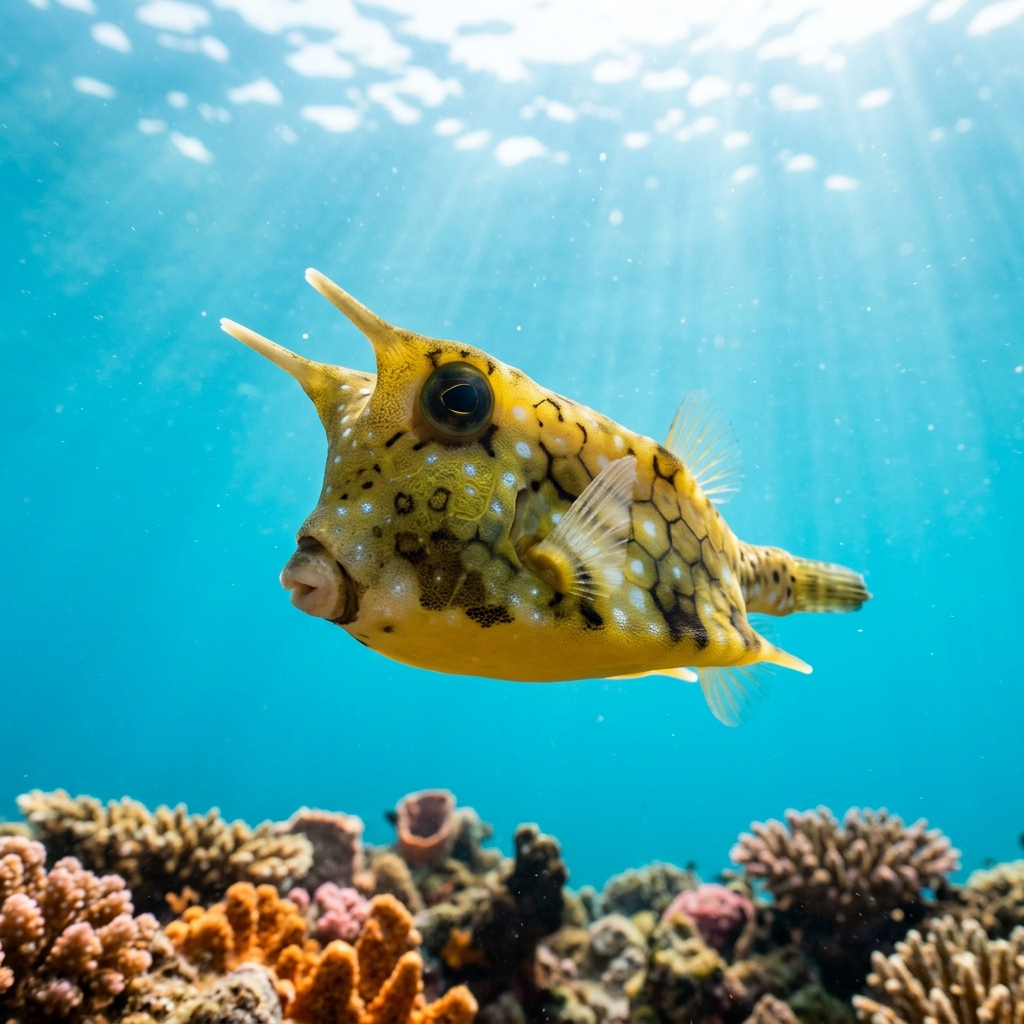
Reef neighbours a diver could mistake it for. Use the identification notes above to tell them apart.
This is a distinctly Caribbean and western Atlantic species, most reliably logged in the Florida and southeast US, the Yucatán Peninsula, and Roatán in Honduras. Strong populations are also recorded across Bonaire, Curaçao, the US Virgin Islands, Colombia, and Grenada, making it one of the more widely encountered boxfish on Caribbean reef dives.
Mapping where Smooth Trunkfish is logged…
Smooth trunkfish are a Caribbean and western Atlantic species. The most reliable places to find them include the Florida Keys, Mexico's Yucatán Peninsula, Roatán in Honduras, Bonaire, Curaçao, and the US Virgin Islands. They also appear regularly in Colombia and Grenada.
Sightings across Caribbean sites peak between September and May. The species is present year-round in the warmest parts of its range, as it is comfortable in water temperatures from around 23 to 28 °C, which matches typical Caribbean reef conditions throughout the year.
Look for a rigid, box-shaped body with a white or pale grey base covered all over in small dark spots. The distinctively puckered, tube-like mouth is a useful close-up marker. Juveniles are bright yellow with black spots and a rounder shape, so they can look like a different fish entirely.
Smooth trunkfish typically reach around 32 cm in length. Underwater they tend to appear compact and stocky because of their boxy, armoured body shape.
They use a feeding technique that is worth pausing to watch. By pursing their lips into a narrow tube, they blow a focused jet of water into sand and rubble, uncovering buried worms and small invertebrates that are then quickly snapped up. This jetting behaviour is one of the clearest signs you are watching a smooth trunkfish at work.
No, smooth trunkfish pose no threat to divers or snorkellers. They are notably calm around people and will often allow a close approach. Simply move slowly and avoid cornering them against the reef.
Site and sighting data is aggregated from diver logs, iNaturalist and GBIF. For taxonomy and conservation status:
Scrawled Cowfish
1,431 sites