Bothus lunatus
Spot the Atlantic Peacock Flounder on reefs across the Yucatán Peninsula, Roatán, and Bonaire. Year-round in warm tropical waters, here's how to find and ID it.
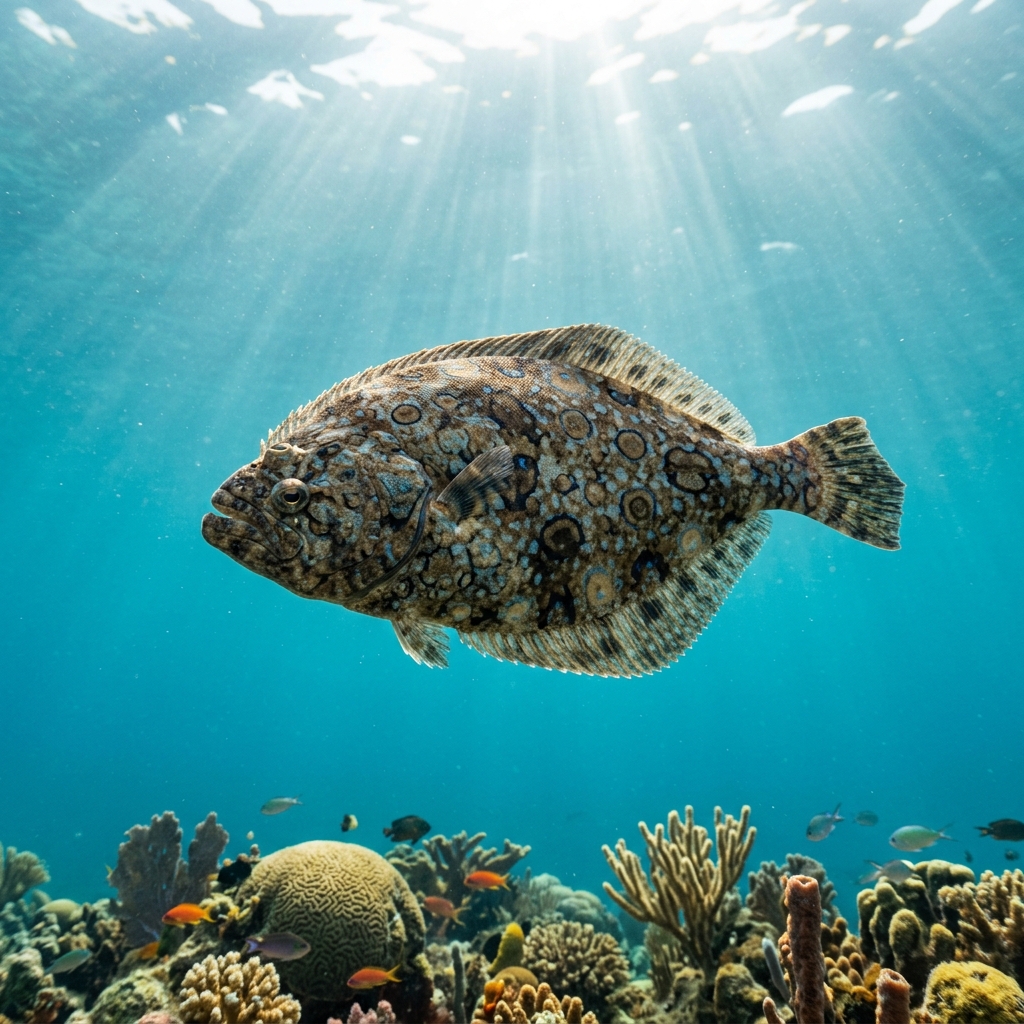
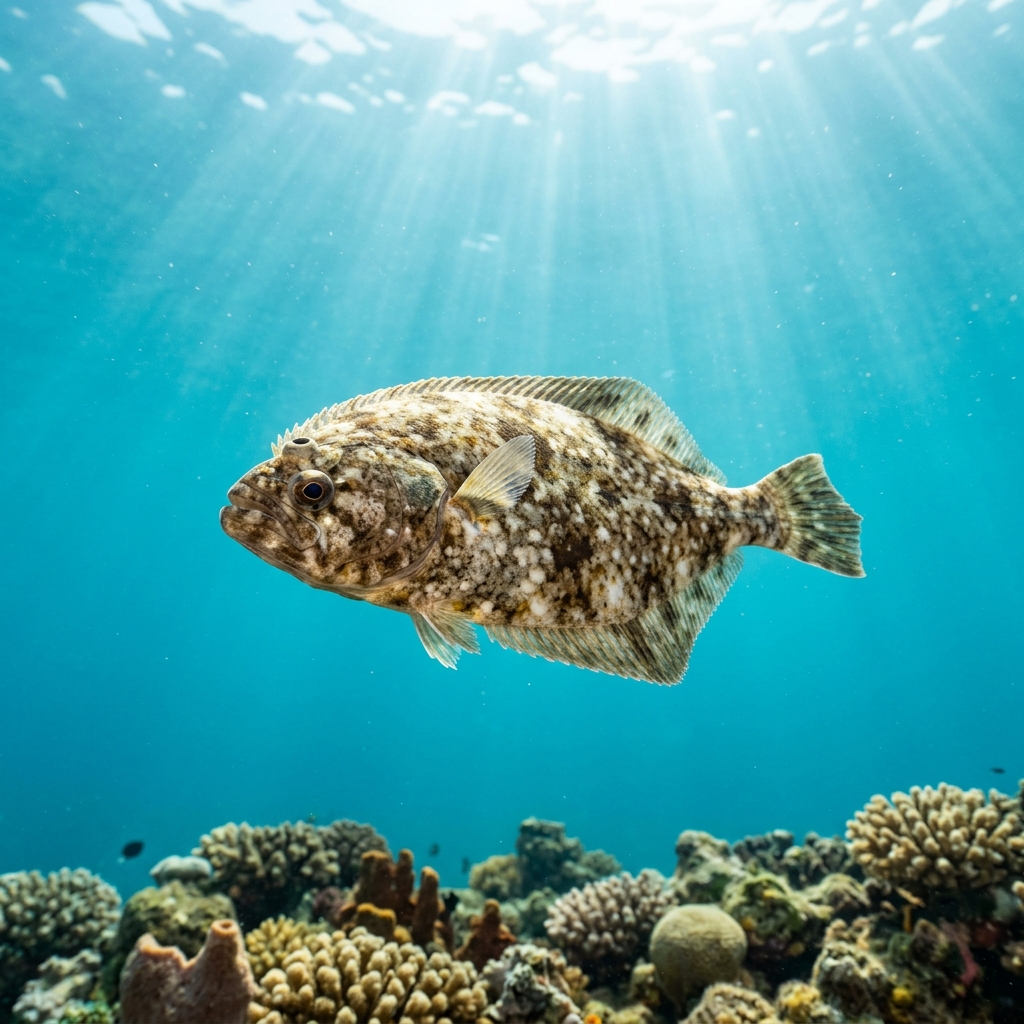
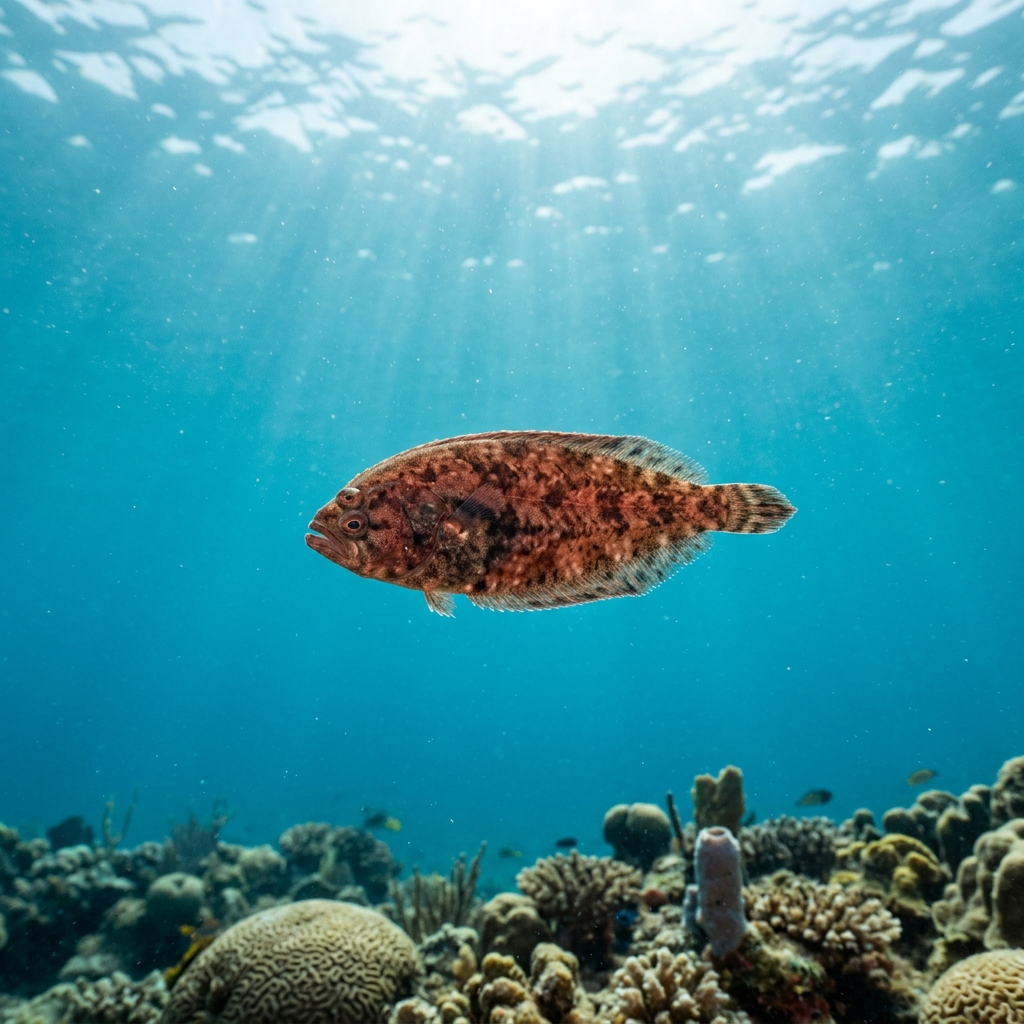
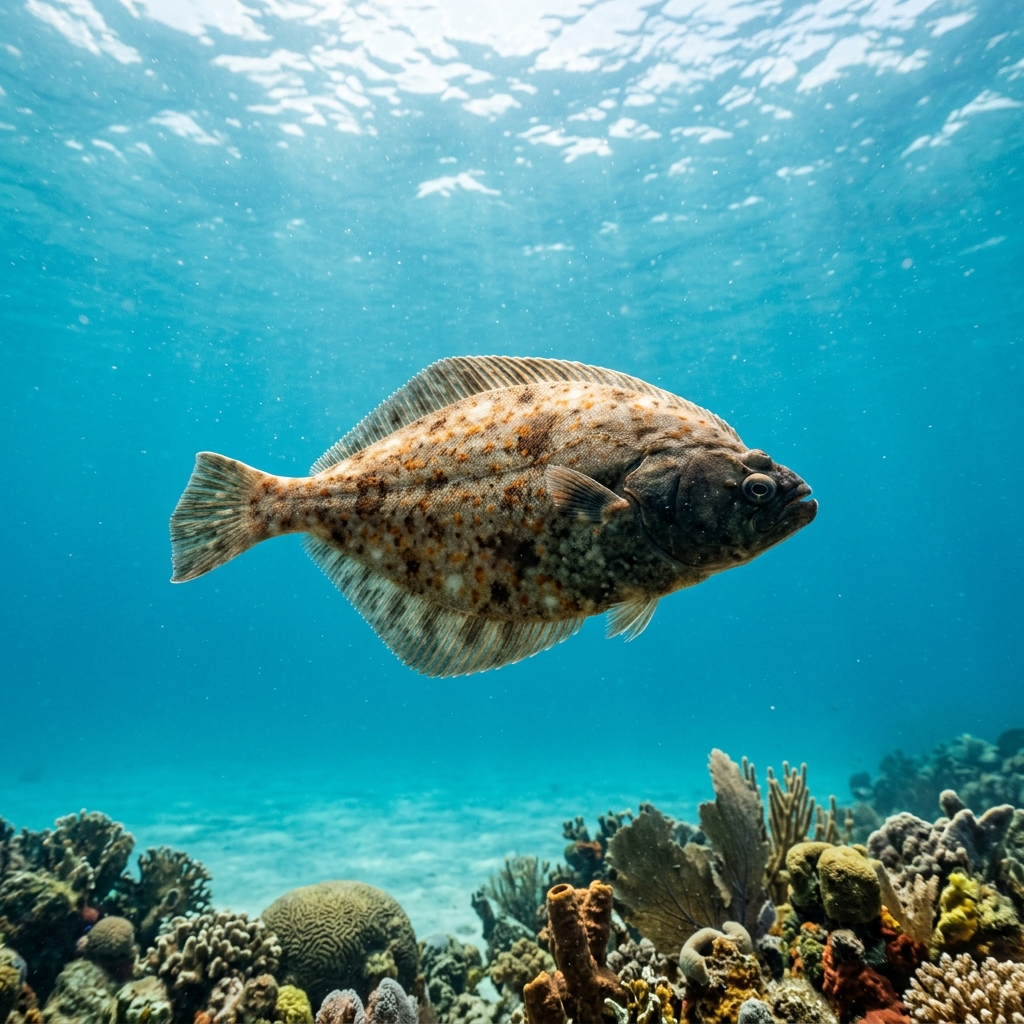
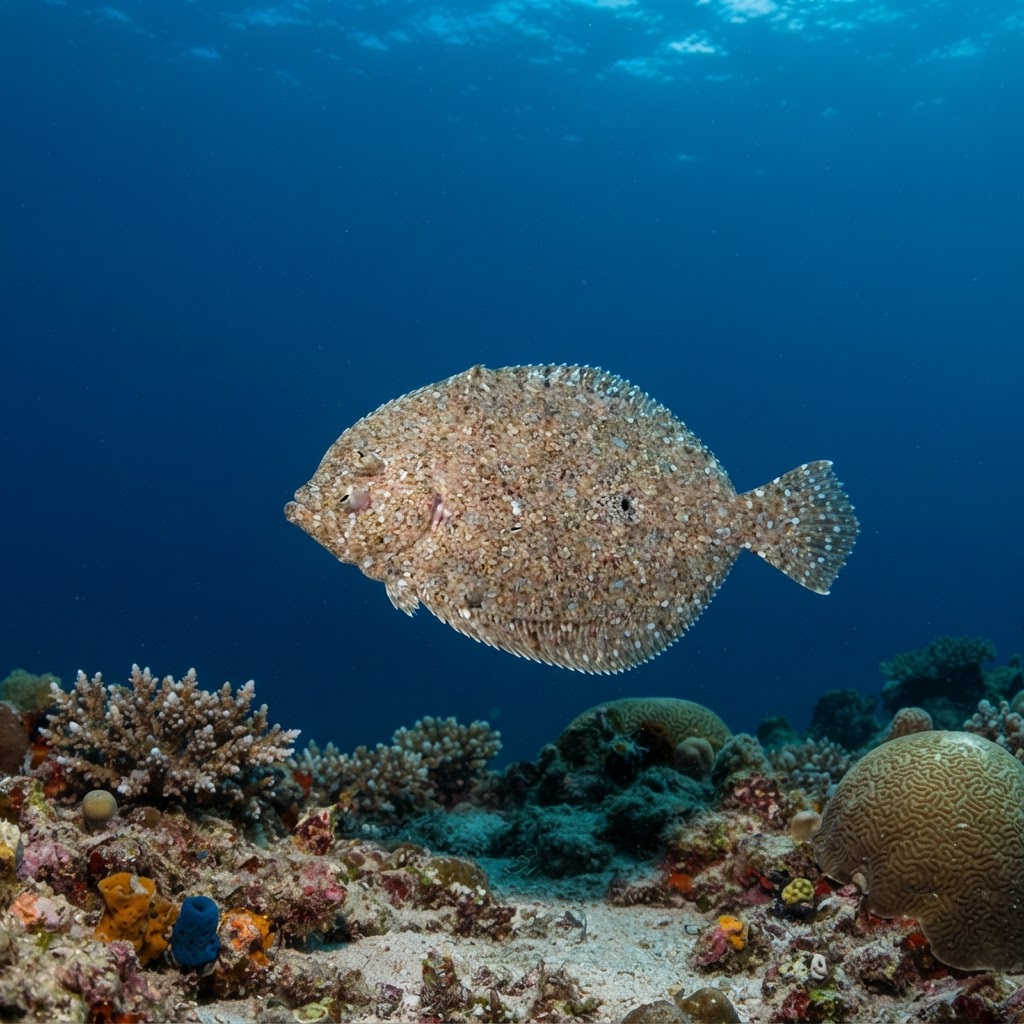
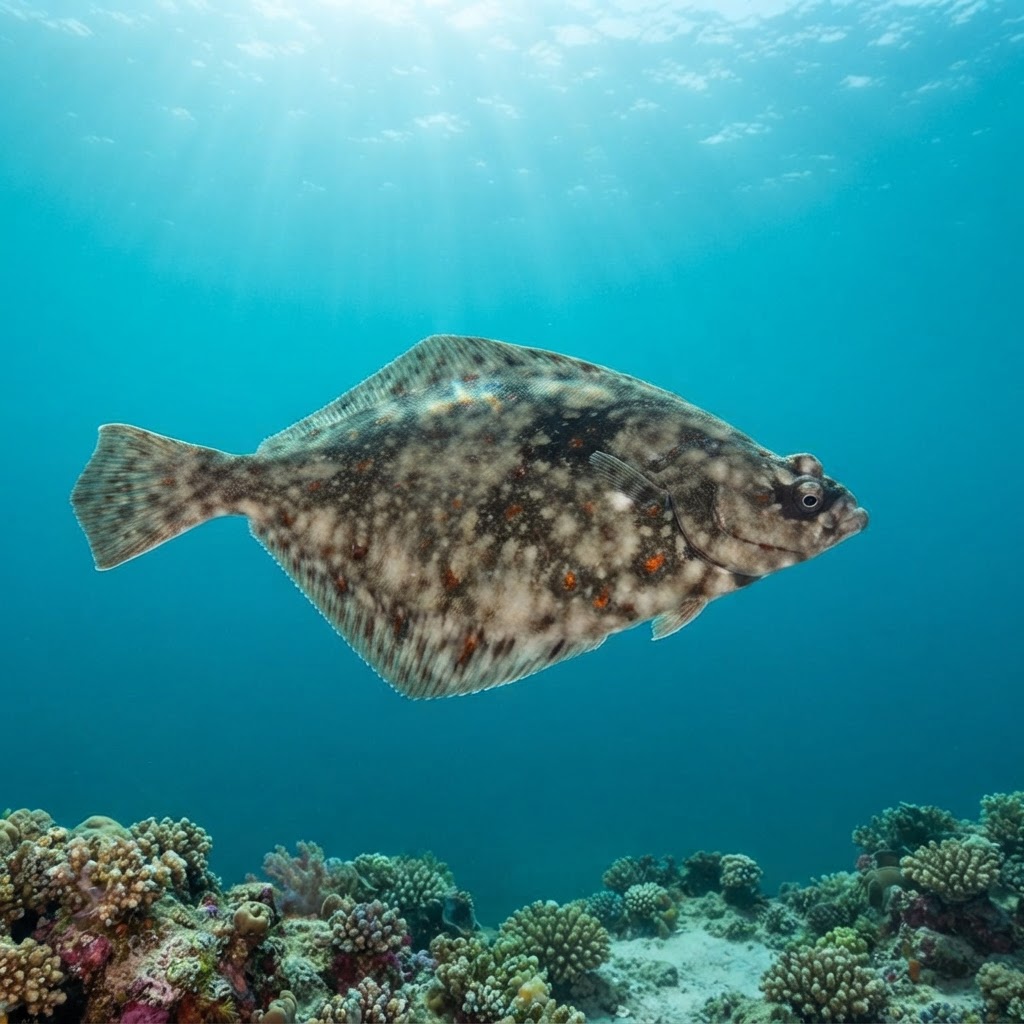
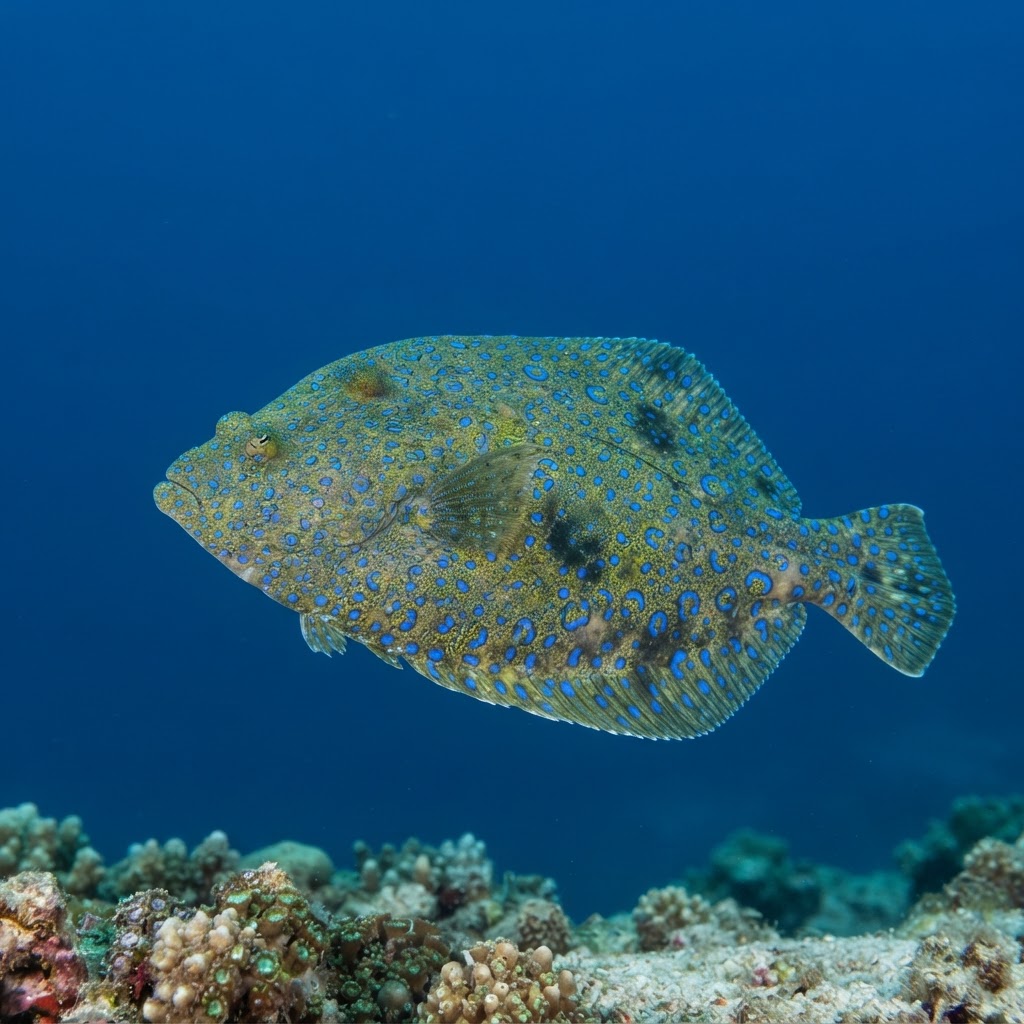
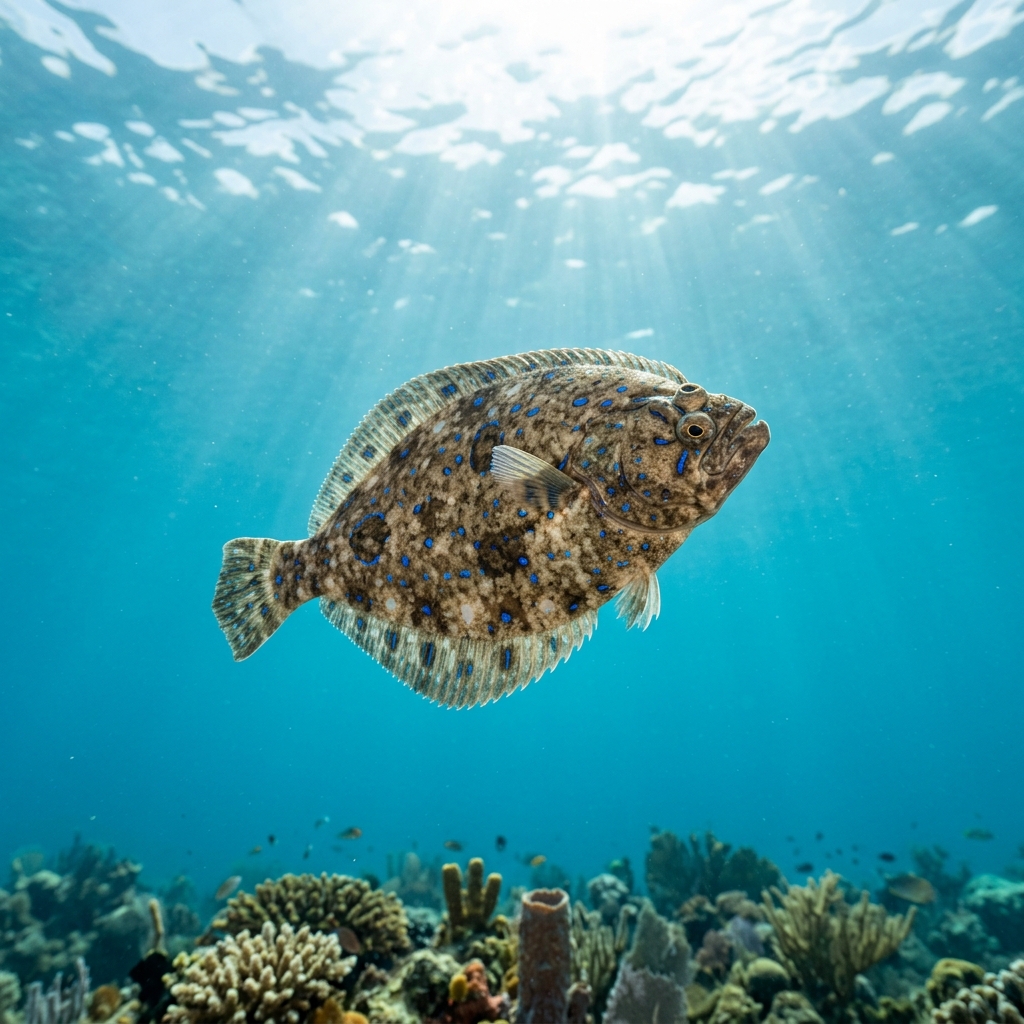
Both eyes sit on the top side of a flat, oval body, a classic flatfish layout, but the peacock flounder's giveaway is its scattering of vivid blue-ringed spots (ocelli) on a brown-to-grey background. Those electric blue rings are visible even when the fish is partially buried in sand or pressed against rubble. It typically lies motionless on open sandy patches or pale reef flats, and can shift its colour and pattern to match the substrate remarkably quickly. Look for the long, separate first rays of the pectoral fin, which project forward like antennae.
Peacock flounders spend most of their time lying flat and motionless on sandy or rubble-strewn substrate, relying almost entirely on camouflage rather than flight when a diver approaches. Slow down and scan the sand near reef edges; they often reveal themselves only by the telltale swivel of those upward-facing eyes or an abrupt colour-pattern shift. When they do move, they swim with an undulating, wave-like motion and quickly resettle a short distance away.
Peacock flounders can adjust their skin colour and pattern in as little as eight seconds, one of the fastest camouflage responses documented in any vertebrate, they can even partially mimic artificial chessboard patterns in laboratory settings.
Present year-round across its tropical range, it's comfortable in the 25 to 28 °C water temperatures common on Caribbean and tropical Atlantic reefs in every season, so there is no concentrated window to aim for.
Reef neighbours a diver could mistake it for. Use the identification notes above to tell them apart.
Most commonly logged across the Caribbean and tropical Atlantic, with the strongest sighting records in the Yucatán Peninsula (Mexico), Roatán (Honduras), Grand Cayman, and Klein Bonaire. Brazil's Northeast Coast, the British Virgin Islands, and San Andrés & Providencia (Colombia) are also reliable areas. Mexico leads all countries by number of recorded sites, followed by Bonaire and Honduras.
Mapping where Atlantic Peacock Flounder is logged…
They are most reliably found across the Caribbean, with strong records from the Yucatán Peninsula, Roatán, Grand Cayman, and Klein Bonaire. Brazil's Northeast Coast and the British Virgin Islands also hold good populations. The species is logged across a wide spread of tropical Atlantic and Caribbean sites.
There is no single best season. Peacock flounders are present year-round on the warm tropical reefs where they live, and sighting data shows no concentrated seasonal peak. If you're diving the Caribbean or tropical Atlantic at any time of year, there's a reasonable chance of an encounter.
Look for a flat, oval fish lying on sand or rubble with both eyes on its upper surface and a pattern of bright blue-ringed spots on a brown or grey body. The blue ocelli (eye-like rings) are the key field mark, no other common Caribbean flatfish shows them. The forward-projecting pectoral fin rays also help separate it from similar species.
Peacock flounders can reach around 45 cm in total length, though most individuals encountered on the reef are somewhat smaller. Their flat, disc-like shape can make them look larger than they are when you first spot them on the sand.
Yes, they are exceptional at it. Peacock flounders can shift their skin pattern in as little as eight seconds to match sand, coral rubble, or other substrates. This is one of the fastest colour-change responses recorded in any vertebrate, and it is the main reason they are so easy to overlook on a dive.
Site and sighting data is aggregated from diver logs, iNaturalist and GBIF. For taxonomy and conservation status:
Leopard Flounder
165 sites