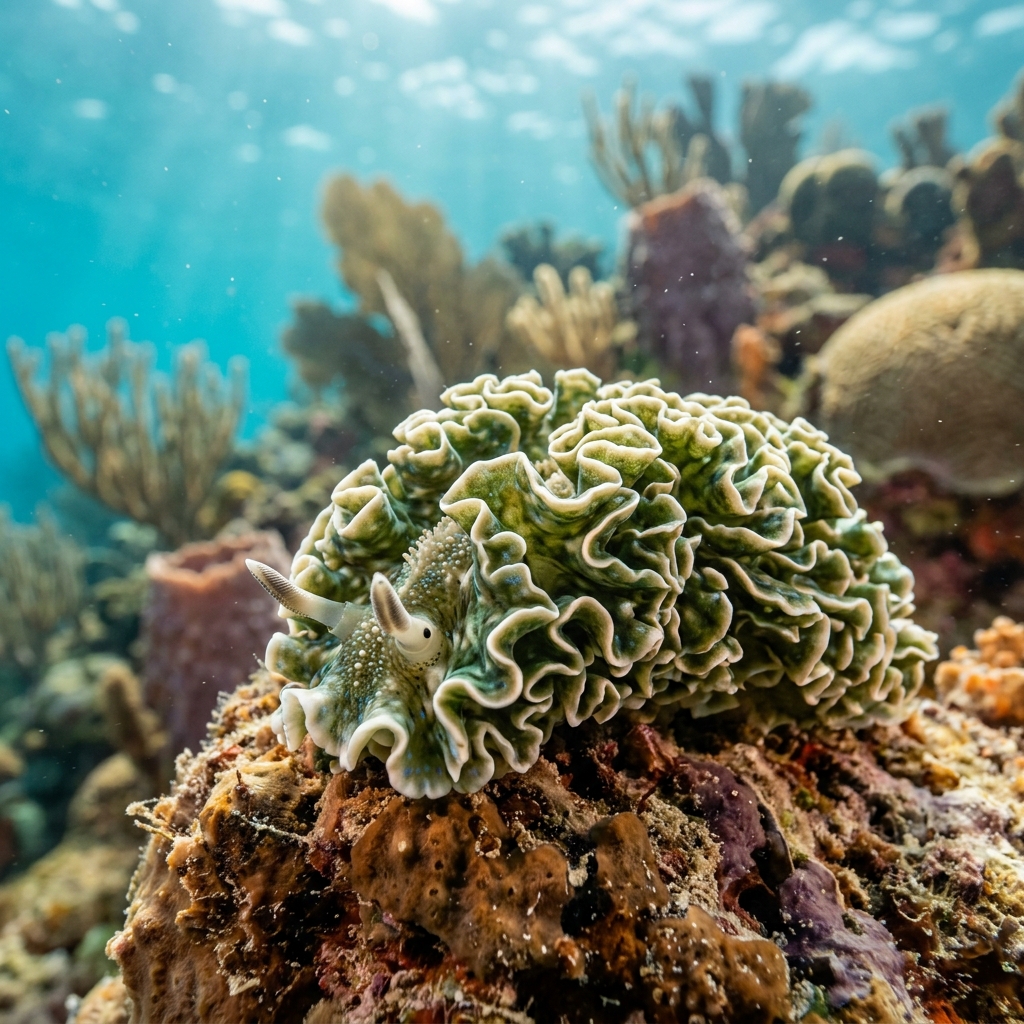
Elysia crispata
Spot the ruffled, neon-green lettuce sea slug on Caribbean reefs year-round. Most reliably logged in Grand Cayman, Bonaire, and Guadeloupe.
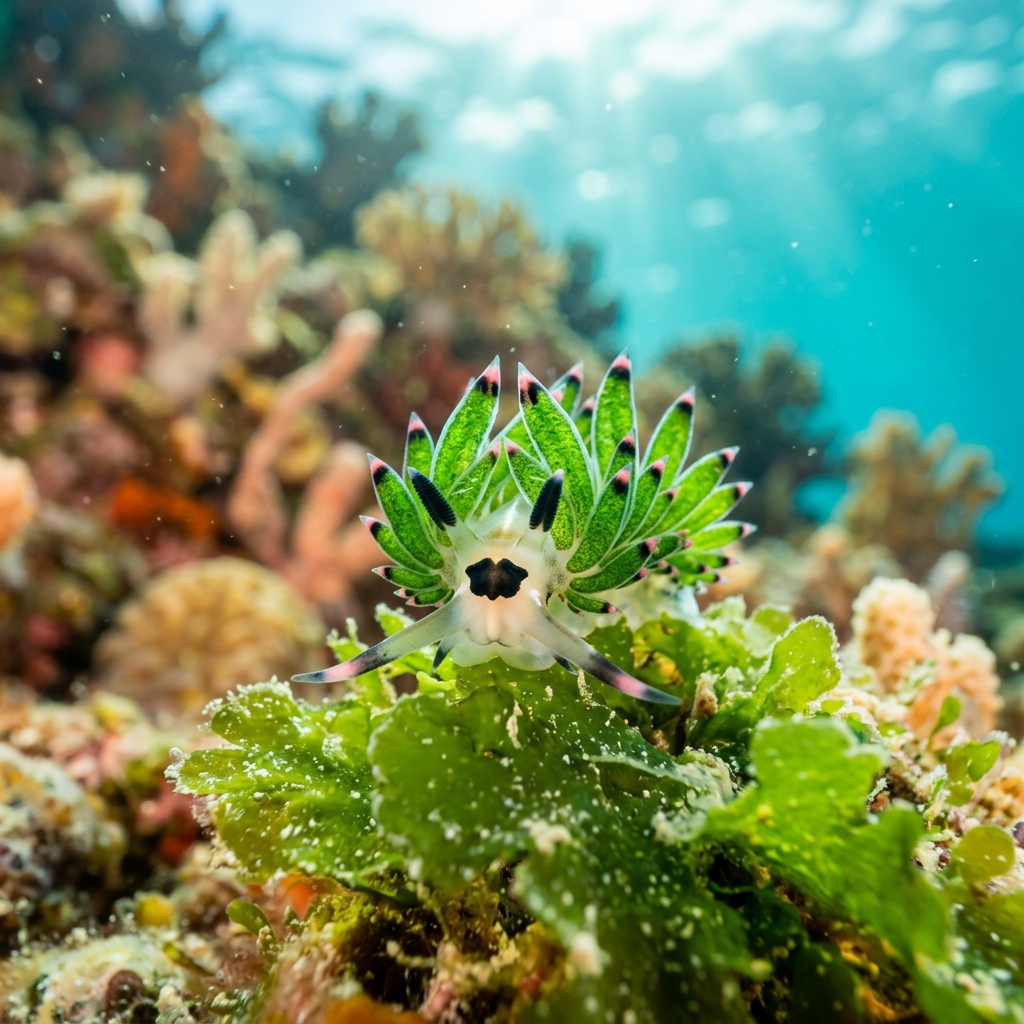
Those wildly ruffled, leaf-like folds along the body's edges, called parapodia, are the giveaway: no other Caribbean slug looks quite so much like a torn piece of emerald lettuce. Colouration ranges from pale green to vivid blue-green, often with white or iridescent highlights along the ruffled margins, and the body can show patches of red, yellow, or blue depending on which algae it has been feeding on. It typically sits flat on the reef or rubble, slow-moving and fully exposed, making it easy to inspect once you spot it.
You will almost always find one sitting motionless on algae, seagrass, or coral rubble in shallow water, grazing slowly with its radula (a ribbon-like rasping tongue) on green algae. It shows little concern for approaching divers and will not retreat unless physically disturbed, making it a cooperative subject for close-up photography. Look low and slow, it blends into algae-covered surfaces far better than its ruffled profile might suggest.
Lettuce sea slugs are kleptoplasts: they steal chloroplasts from the algae they eat and keep them functional inside their own tissues, allowing the slugs to photosynthesise. Those solar-panel organs are partly why individuals exposed to different algae can shift colour over time.
Present year-round across its Caribbean range, which aligns with the warm, consistent water temperatures it favours, observed between roughly 26 and 29 °C, conditions that tropical reefs maintain throughout all seasons.
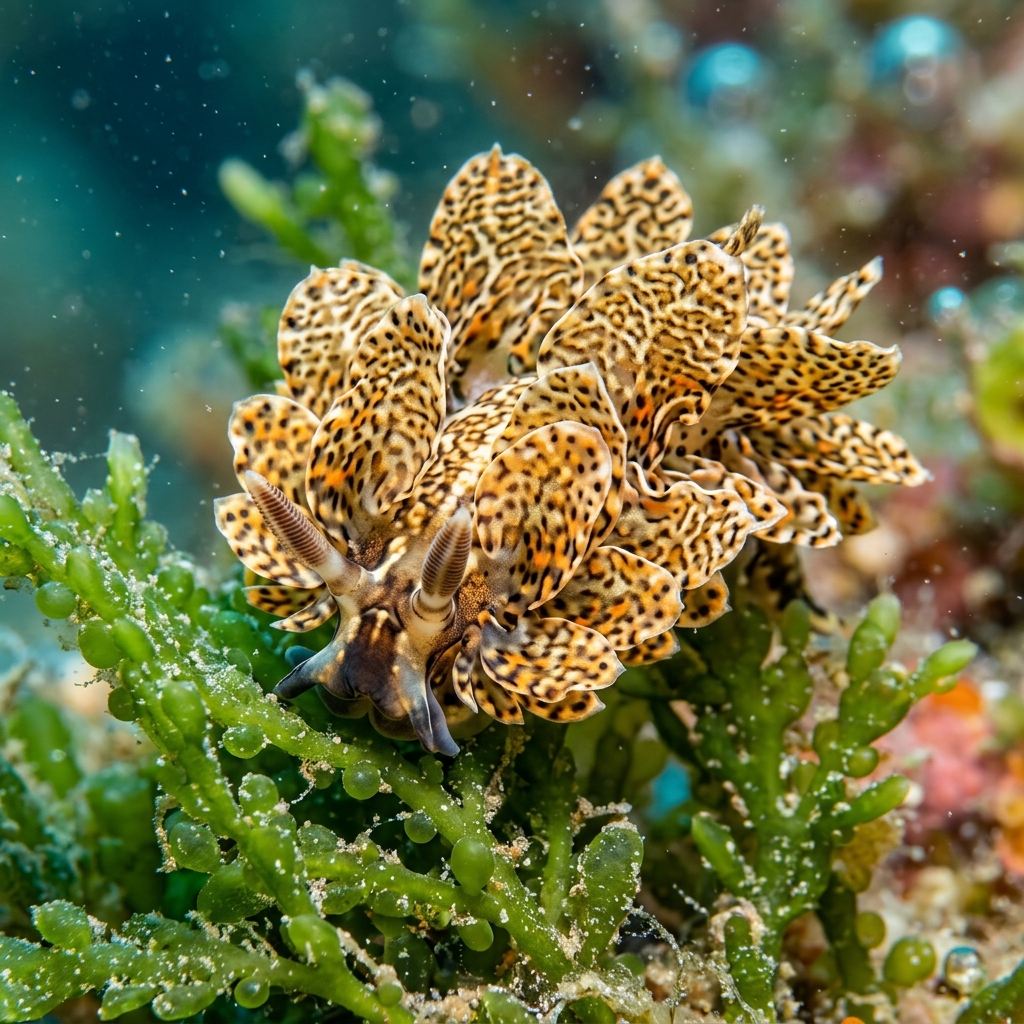
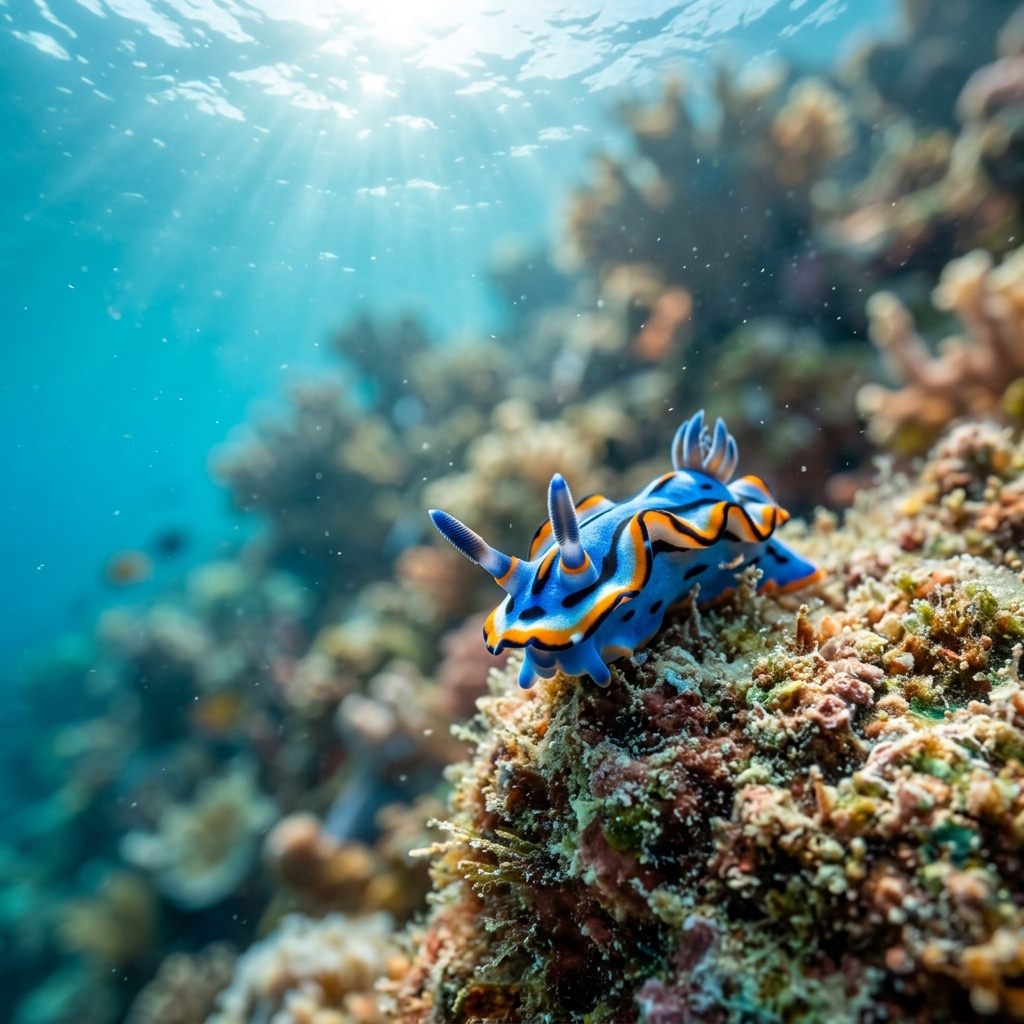
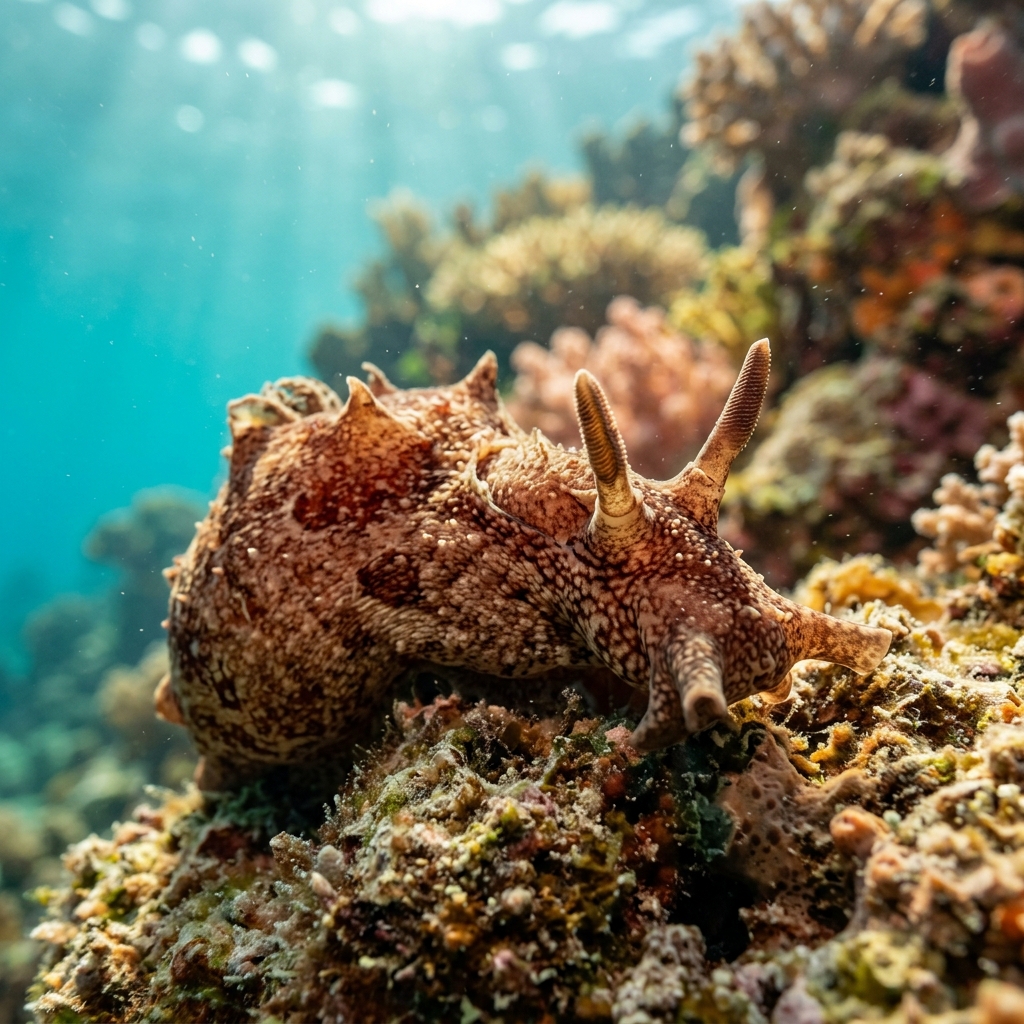
Reef neighbours a diver could mistake it for. Use the identification notes above to tell them apart.
This is overwhelmingly a Caribbean species, most commonly logged in the Cayman Islands, Bonaire, and Guadeloupe, with strong populations also recorded across the Yucatán Peninsula, Grenada, the US and British Virgin Islands, and Roatán in Honduras. Within those areas, shallow reef flats, seagrass beds, and rubble zones tend to produce the most sightings.
Mapping where Lettuce Sea Slug is logged…
They are a Caribbean specialty. The most reliable sightings come from Grand Cayman, Bonaire, Guadeloupe, the Yucatán Peninsula, and Grenada. Roatán in Honduras and the British and US Virgin Islands also have strong records. Shallow reef flats and seagrass edges are the best habitat to search.
Any time of year. They are logged on Caribbean reefs across all seasons, consistent with the warm, stable temperatures, around 26 to 29 °C, those reefs maintain year-round. There is no concentrated season to aim for.
Look for the dramatically ruffled green folds running along both sides of the body, those wavy, lettuce-like parapodia are unlike anything else on a Caribbean reef. Body colour is typically vivid green but can show blue, red, or yellow patches depending on its recent diet. It moves very slowly and stays flat on the substrate.
They are one of the larger sapsucking slugs in the Caribbean, commonly reaching around 5 to 10 cm in length as adults, though size can vary. Underwater they appear more prominent than most nudibranchs thanks to those spread-out ruffled parapodia.
Yes, they steal working chloroplasts from the algae they graze on and retain them in specialised cells, a process called kleptoplasty. Those chloroplasts continue to photosynthesise inside the slug's tissues, supplementing its energy intake. This is why the slug's colour can shift depending on which algae it has recently been eating.
Site and sighting data is aggregated from diver logs, iNaturalist and GBIF. For taxonomy and conservation status:
Light-spotted Aegires
3,168 sites