Octopus insularis
Spot the Brazilian Reef Octopus across Colombia, Grenada and Brazil. Best sightings Dec, May in warm Caribbean waters from 25-29°C. ID and dive tips inside.
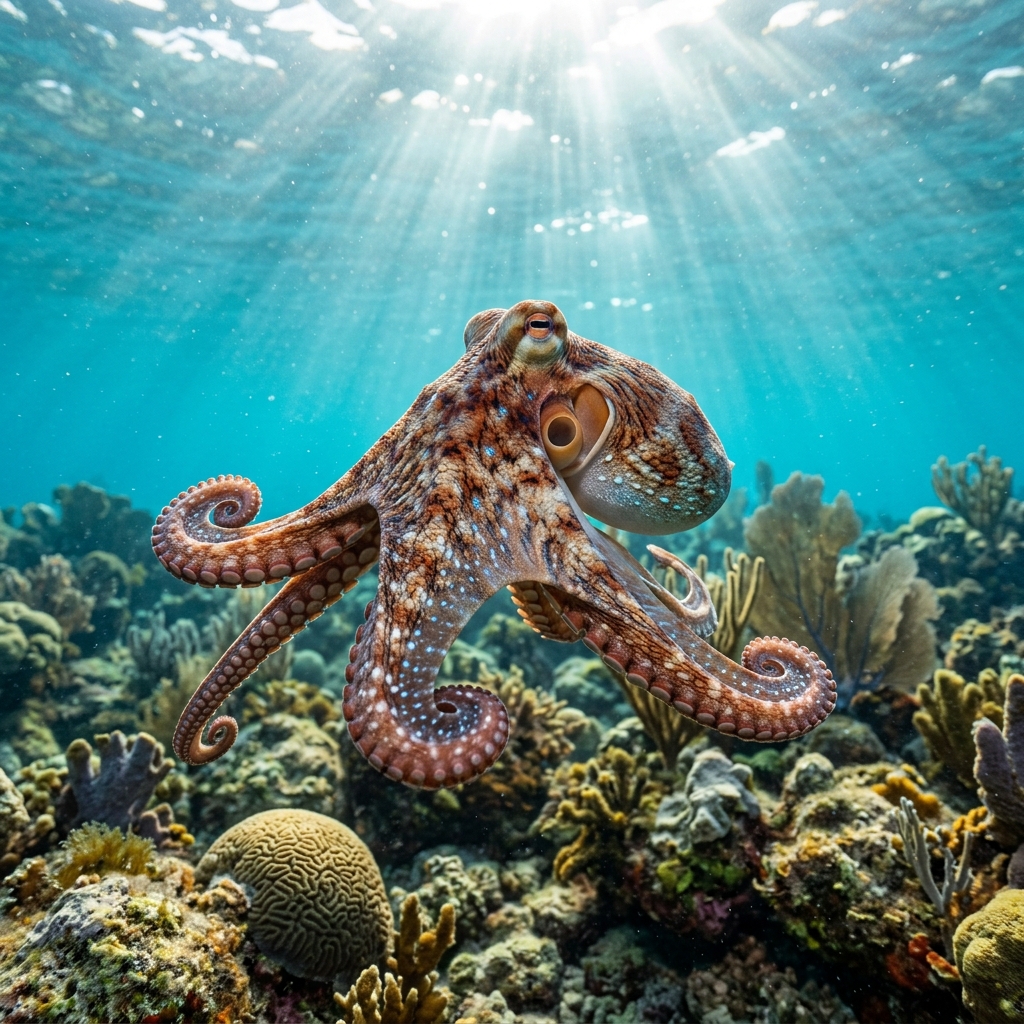
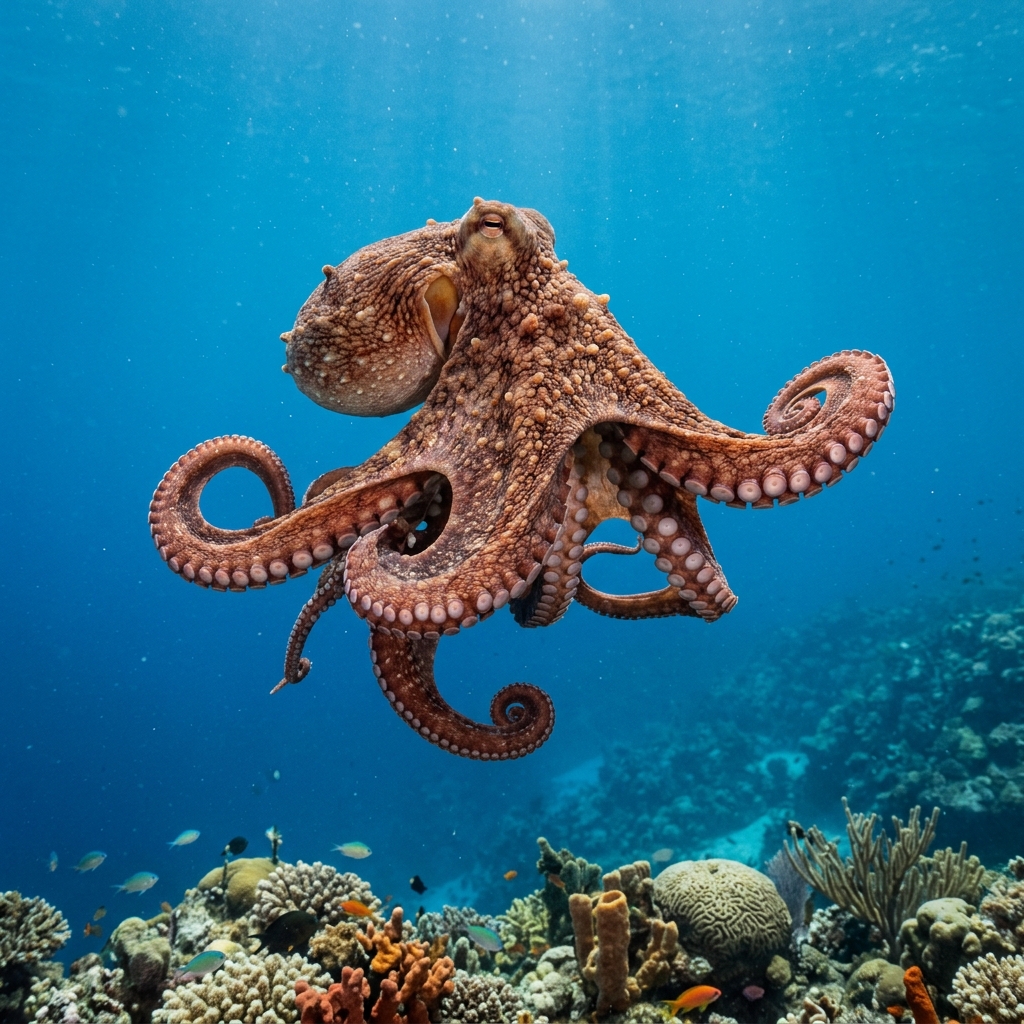
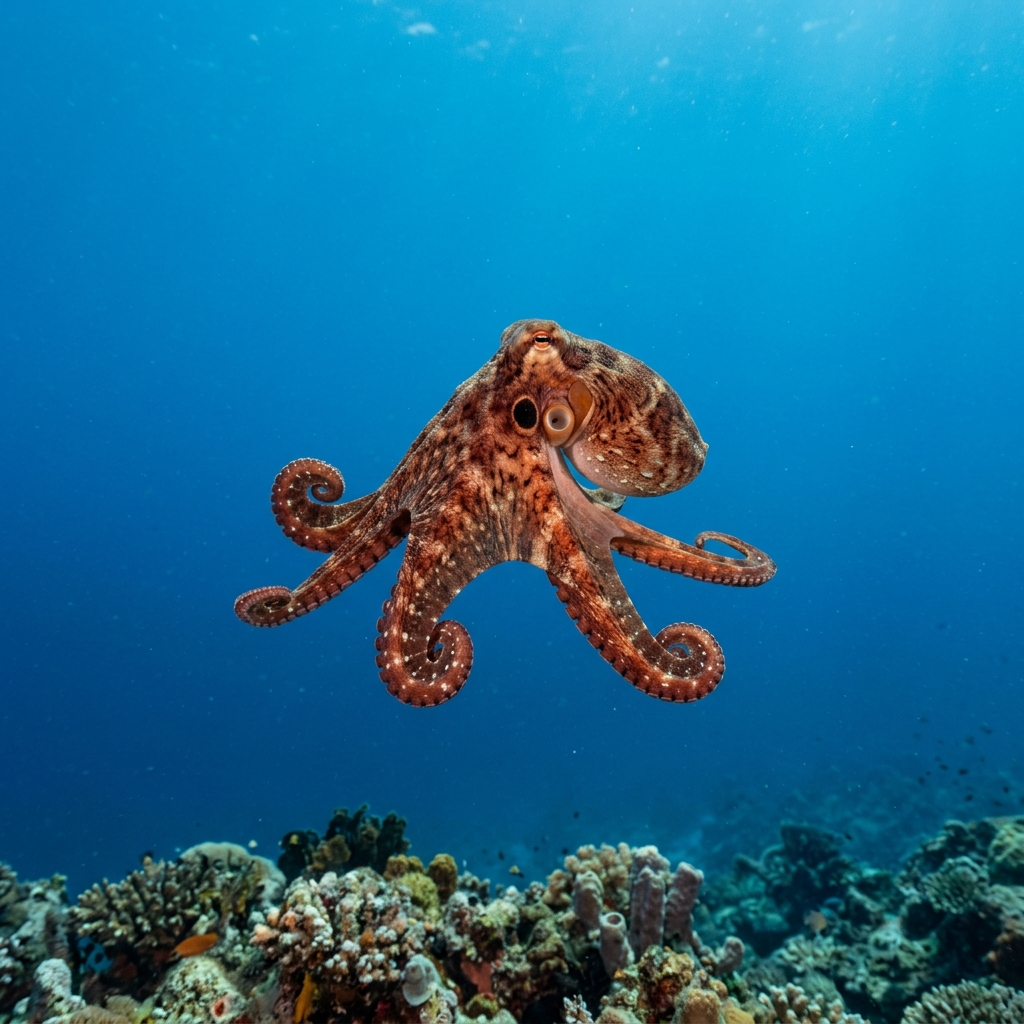
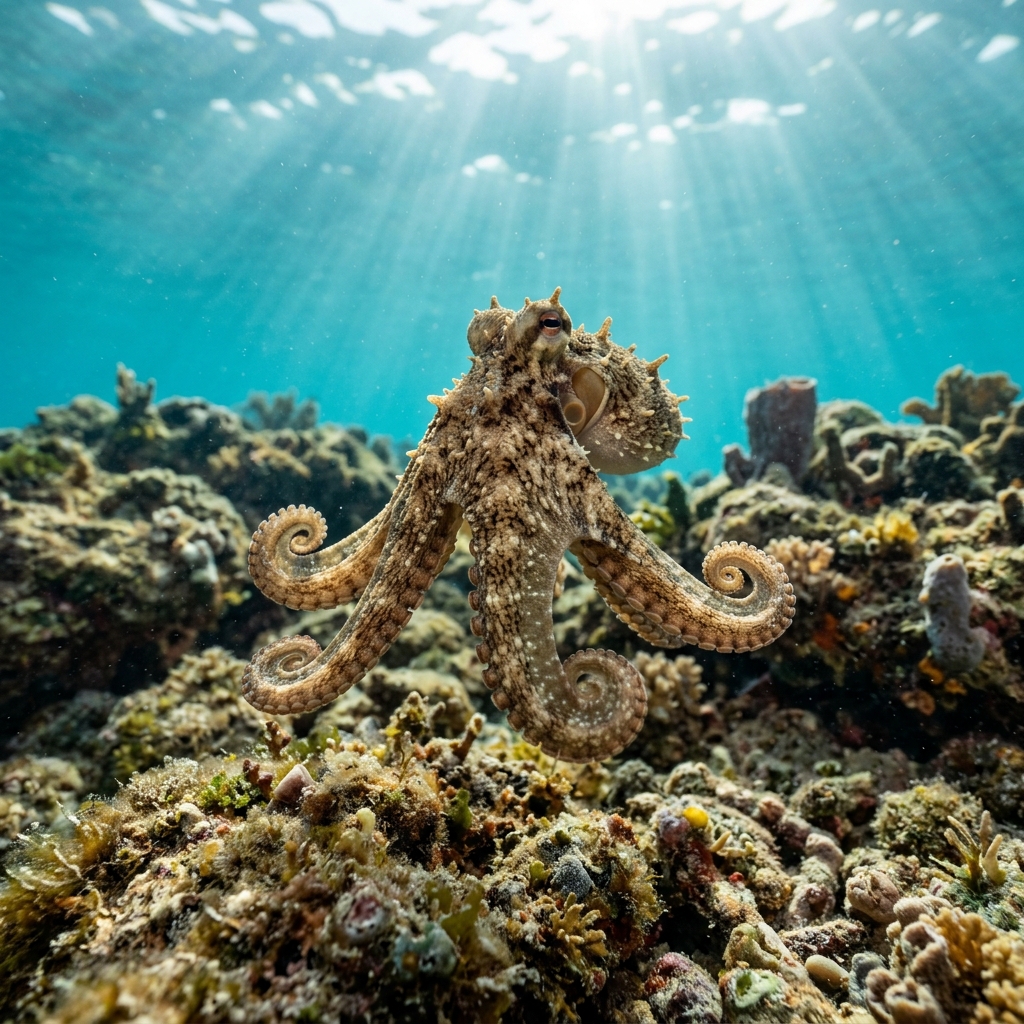
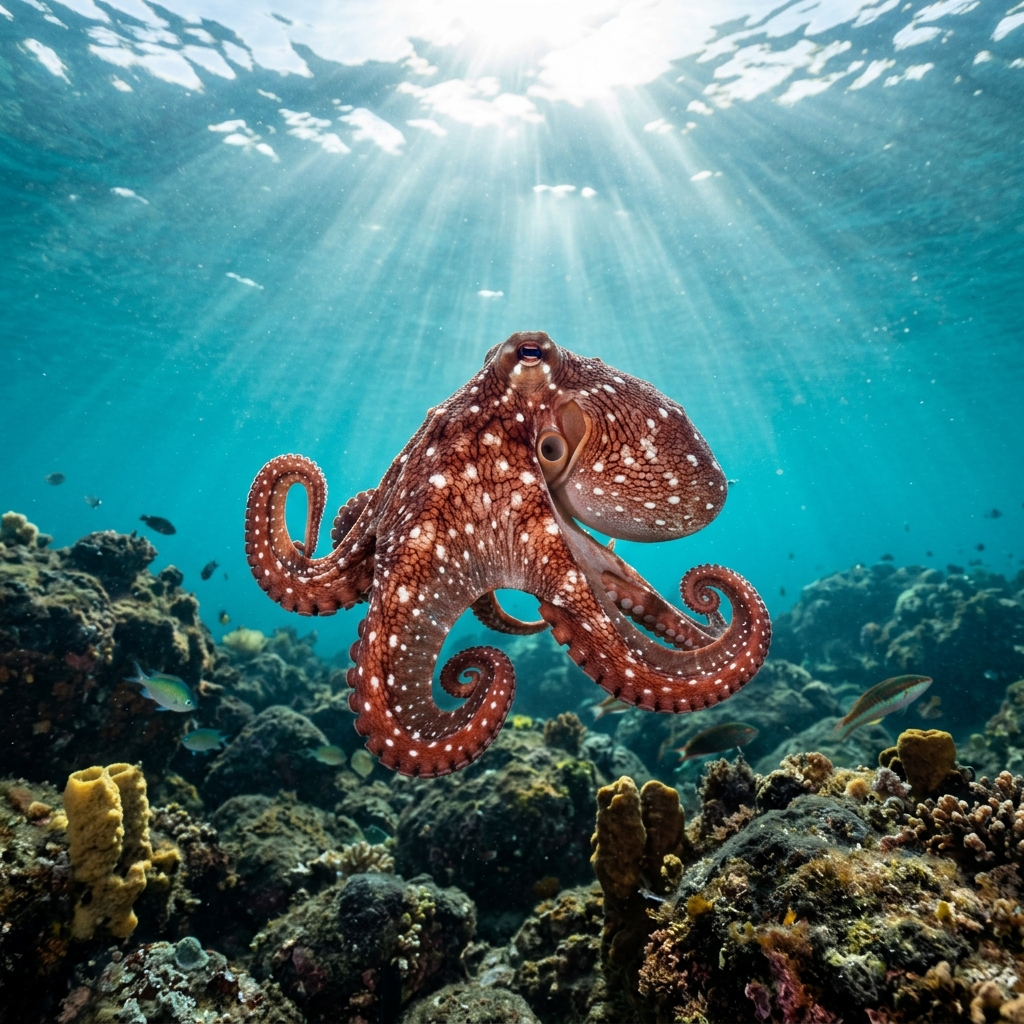
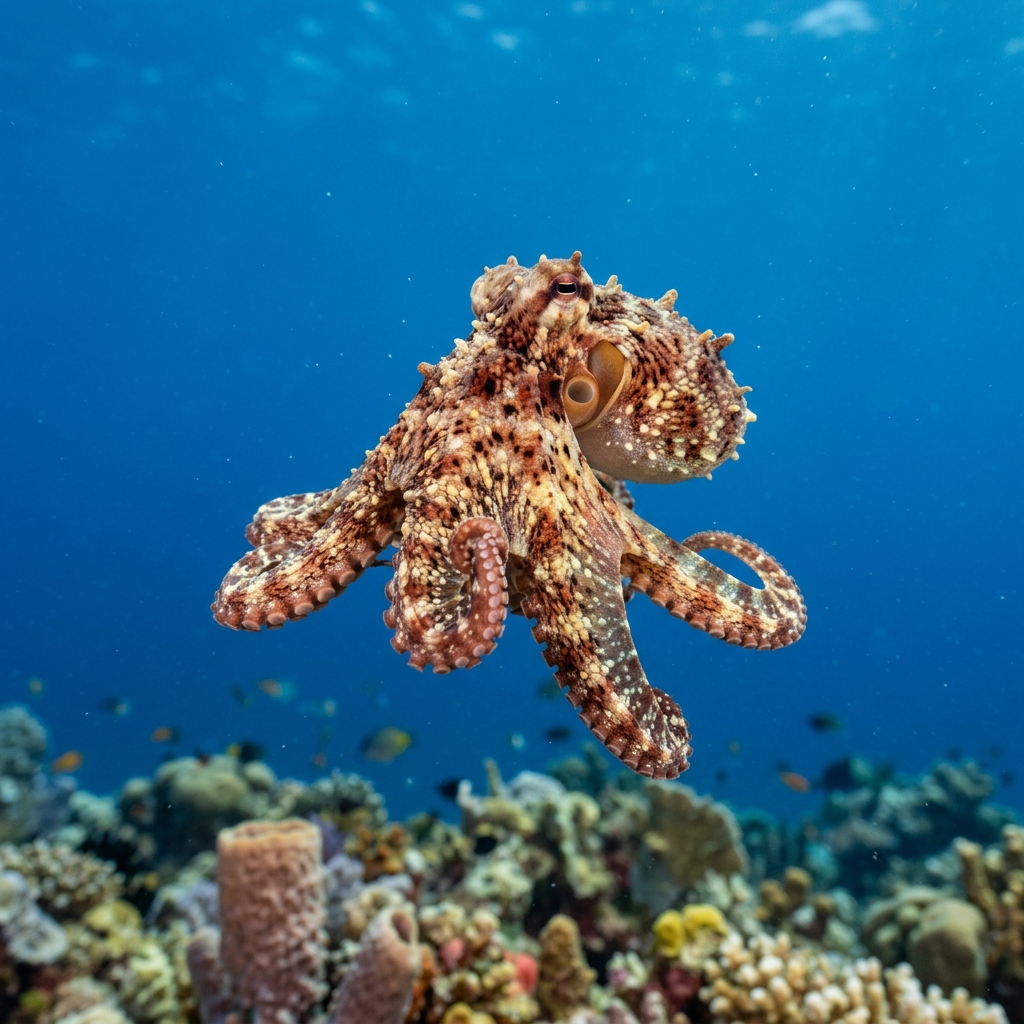
A small octopus, typically around 8 cm across the mantle, with the rapid skin-texture shifts and colour changes common to reef octopuses, moving between sandy browns, rusty reds and pale creams depending on the substrate beneath it. Look for the characteristic web of skin between the arms and a relatively compact, rounded mantle sitting low against the reef. In the water it can be nearly impossible to spot at rest, but movement or a slightly raised mantle tip gives it away. It overlaps in range and appearance with the Caribbean reef octopus, so note the overall smaller size and subtler colouration.
Most encounters happen during daylight hours when it is actively foraging across the reef for small invertebrates and crustaceans. It tends to hug the substrate and will freeze or shift colour to blend with the background the moment it notices a diver. Approach slowly, stay low and avoid sudden movements, given a little patience, you may watch it hunt or cycle through a remarkable sequence of skin textures and hues before it retreats under a ledge.
Octopus insularis was only formally described as its own species in 2008, having been misidentified as the common octopus (Octopus vulgaris) for years, making it one of the more recently recognised reef octopuses in the Atlantic.
In the northern hemisphere part of its range, sightings concentrate between December and May. Its preferred water temperature of 25-29°C means it is present year-round in the warmest parts of the Caribbean and Brazilian coast.
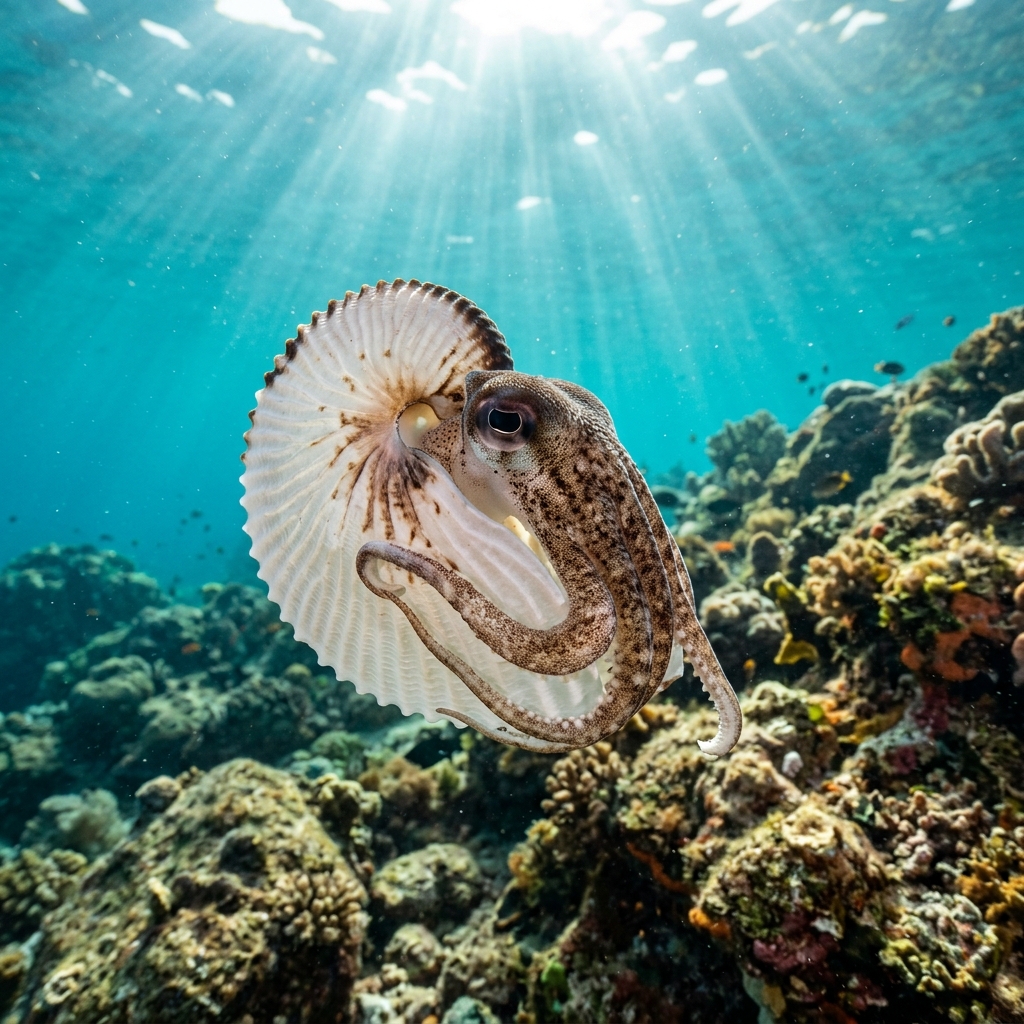
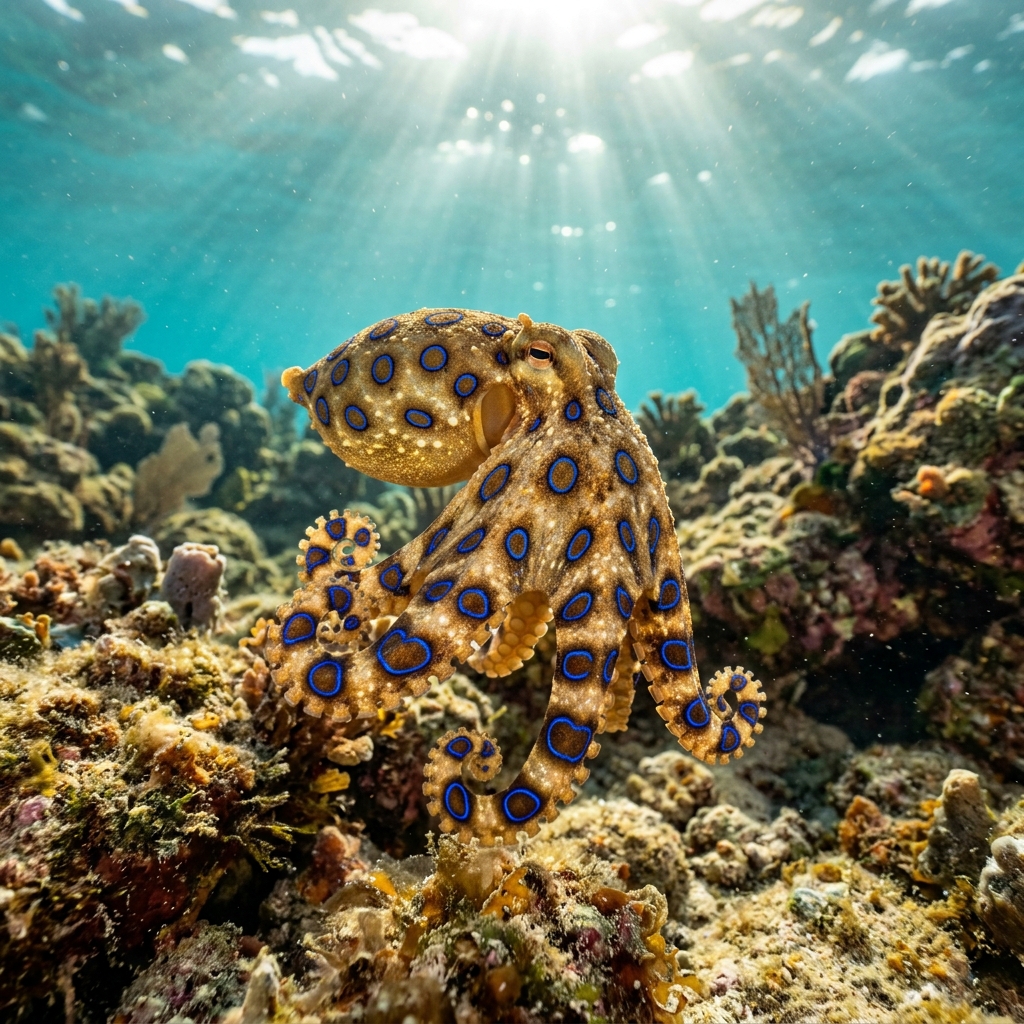
Reef neighbours a diver could mistake it for. Use the identification notes above to tell them apart.
Most commonly logged across the Caribbean, with strong populations in the Colombian Caribbean Coast, Grenada, Cuba, the Bahamas and Bonaire. Brazil's northeast coast is the core of its nominal range and a reliable place to look, particularly around reef systems near Recife and Fernando de Noronha. The US Virgin Islands, British Virgin Islands and Guadeloupe also show solid sighting records.
Mapping where Brazilian Reef Octopus is logged…
The best-documented dive sites are spread across the Caribbean and western Atlantic. Colombia's Caribbean Coast and Grenada lead by number of logged sites, followed by Cuba, the Bahamas and Bonaire. Brazil's northeast coast is the heart of its range, and sightings are also well recorded in the US Virgin Islands and Guadeloupe.
Northern hemisphere sightings peak between December and May. Water temperatures in its 25-29°C comfort zone mean it is resident year-round on many Caribbean reefs, but diver encounters tend to cluster in those cooler dry-season months when visibility is generally better and diving traffic is higher.
It is a small, compact octopus, around 8 cm mantle length, that shifts rapidly between browns, reds and pale creams to match reef rubble and coral. Its small size and Caribbean location help separate it from the larger common octopus, and it lacks the vivid blue-green iridescence sometimes seen on the Caribbean reef octopus. Movement is usually your first clue; at rest it is very well camouflaged.
The mantle (body, not counting arms) is typically around 8 cm. Including the arms, an adult can span considerably more, but this is still a relatively small reef octopus. Its modest size contributes to how easily it is overlooked against the reef.
No. Like other reef octopuses, it poses no threat to divers. It is shy and its default response to a close approach is to retreat or camouflage, not to defend itself. Simply avoid cornering it or reaching into crevices where it is sheltering.
Yes, though it was only recognised as a separate species in 2008. For many years it was grouped with Octopus vulgaris (the common octopus), but genetic and morphological work showed populations across the tropical western Atlantic were a distinct lineage. It is now considered the dominant shallow-reef octopus across much of the Caribbean and Brazilian coast.
Site and sighting data is aggregated from diver logs, iNaturalist and GBIF. For taxonomy and conservation status:
Blue-ringed Octopus
923 sites