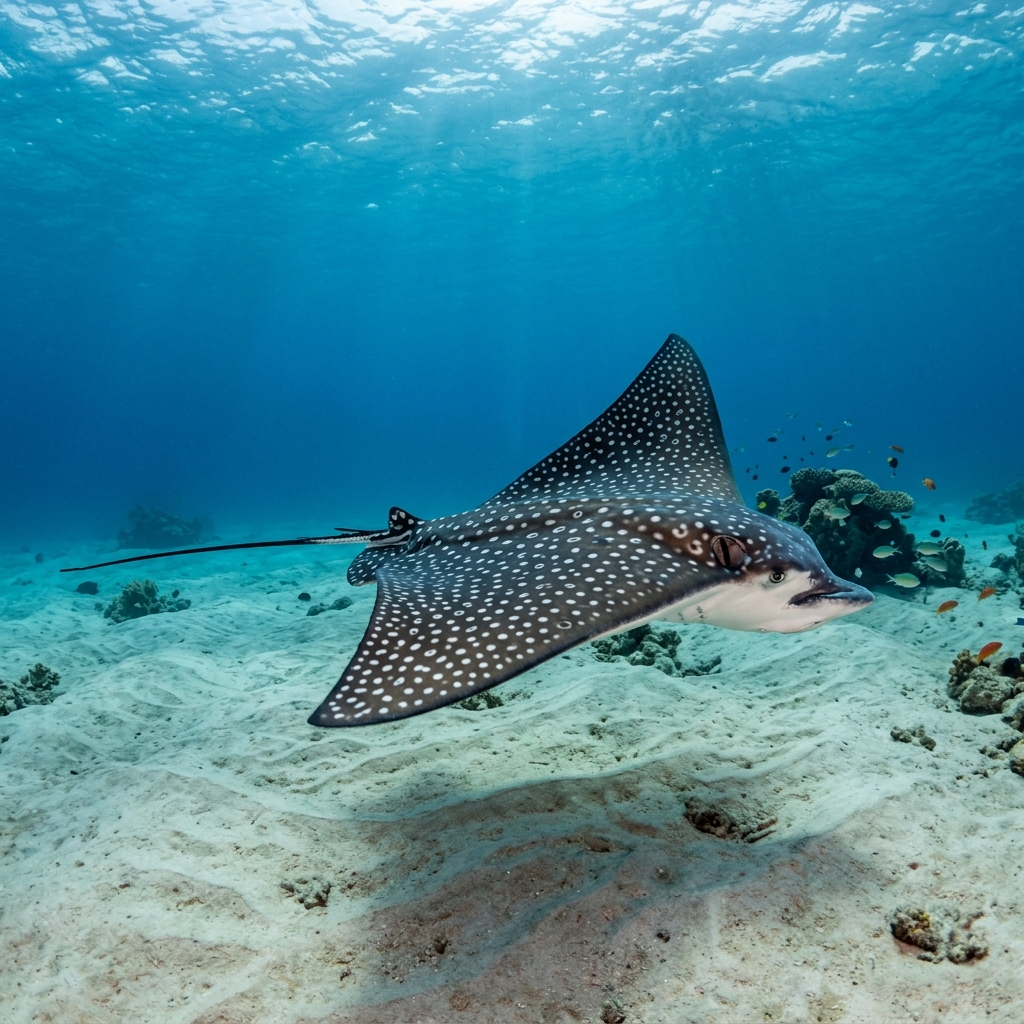
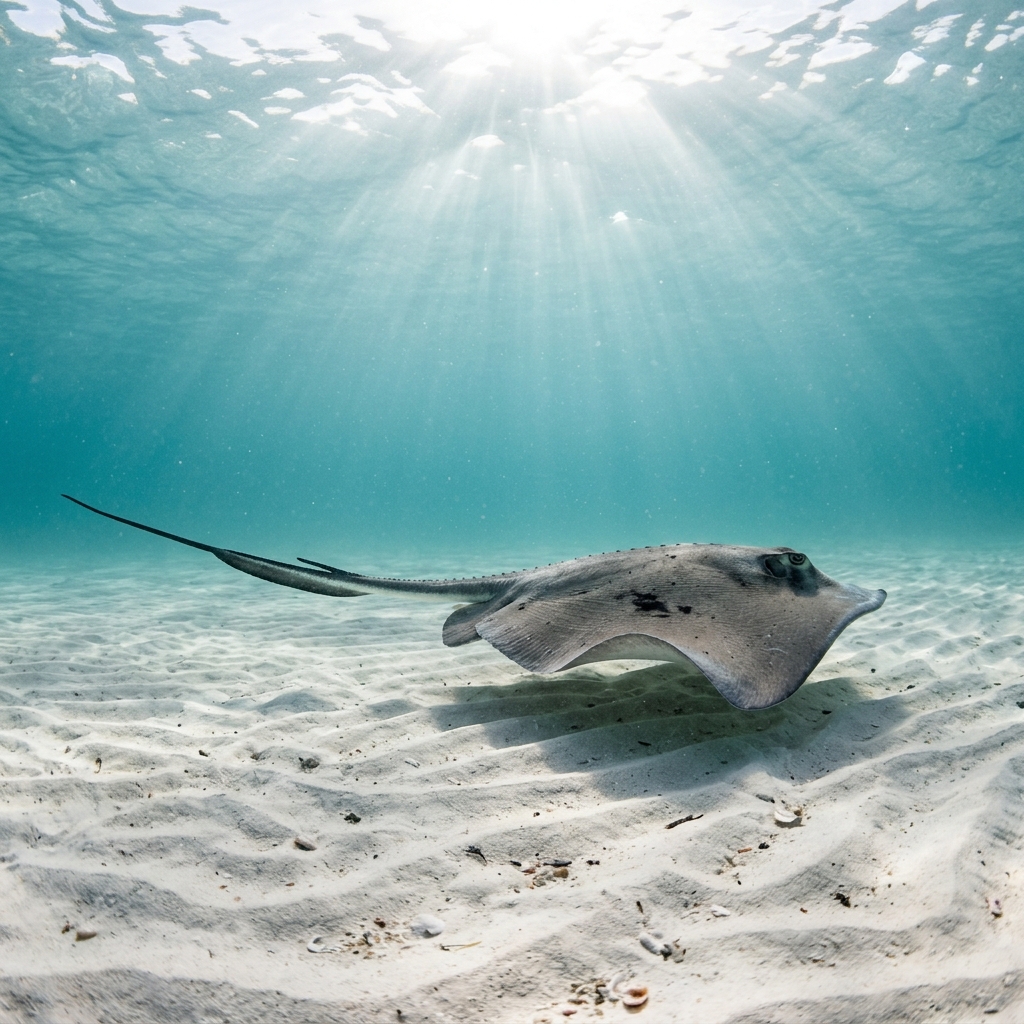
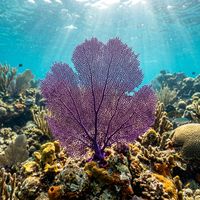
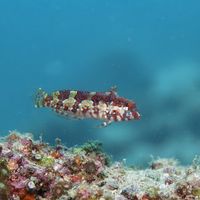
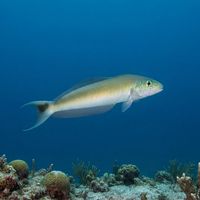
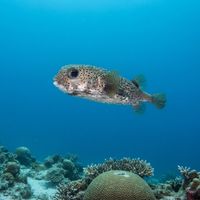
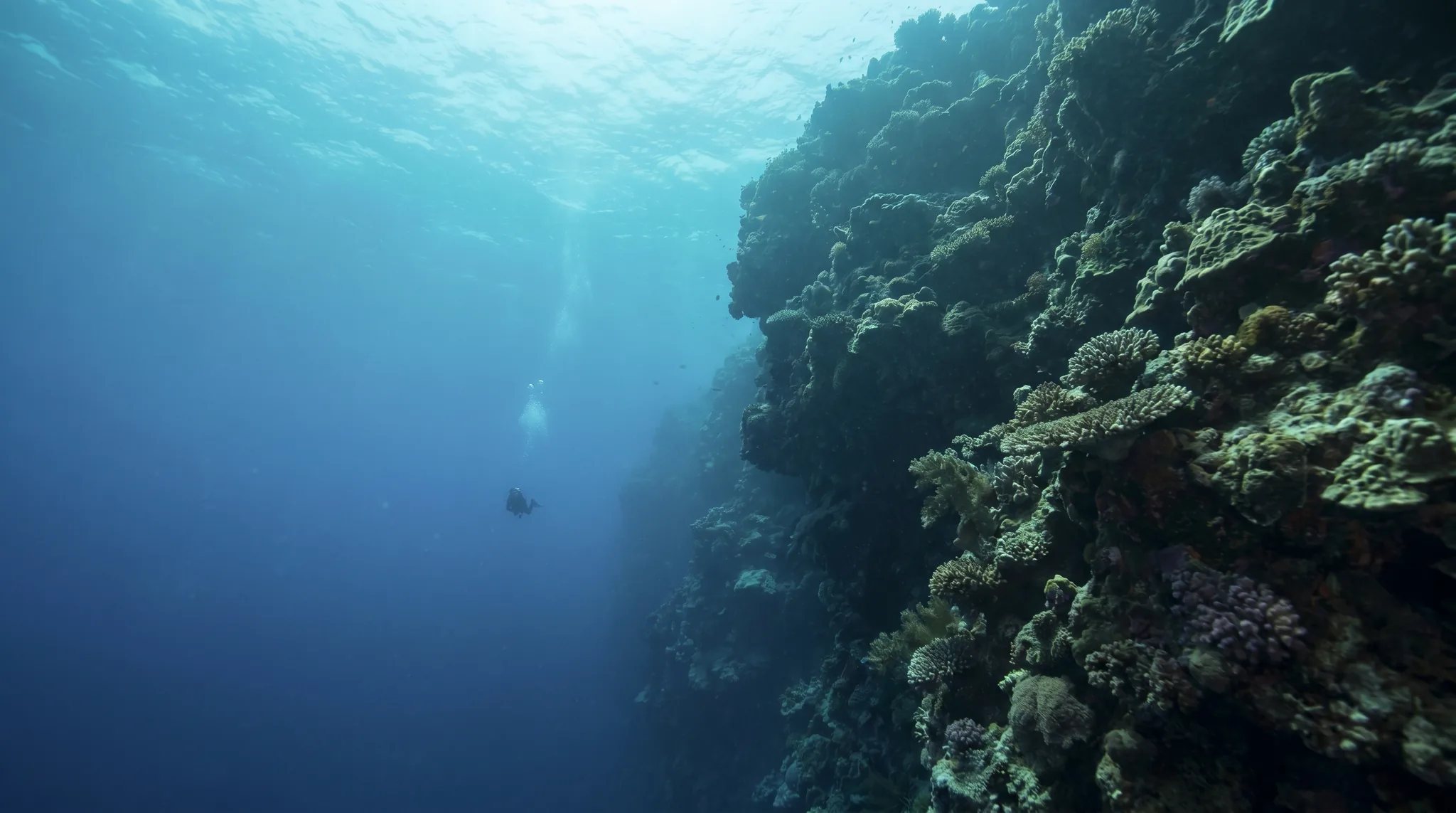
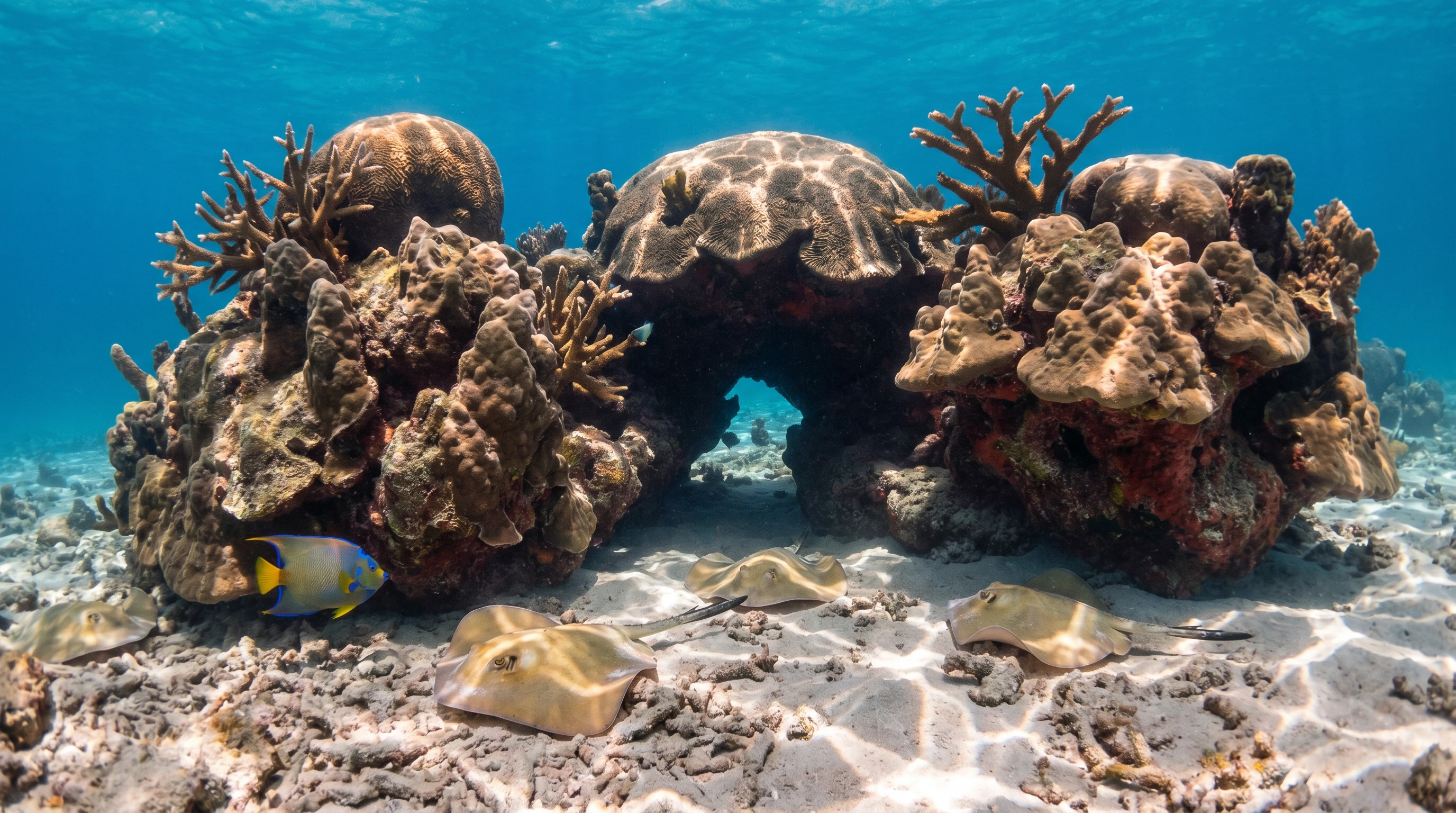
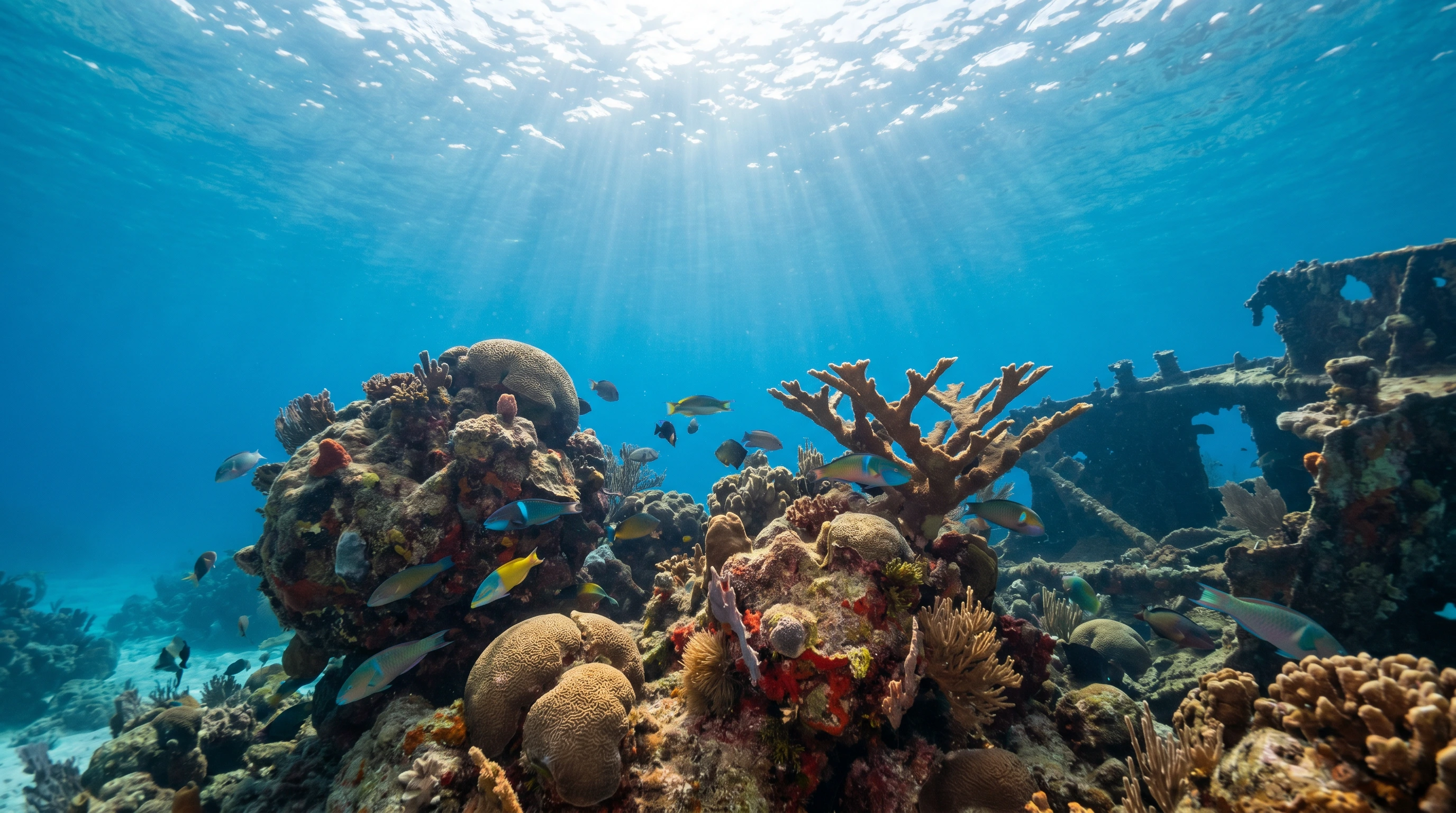
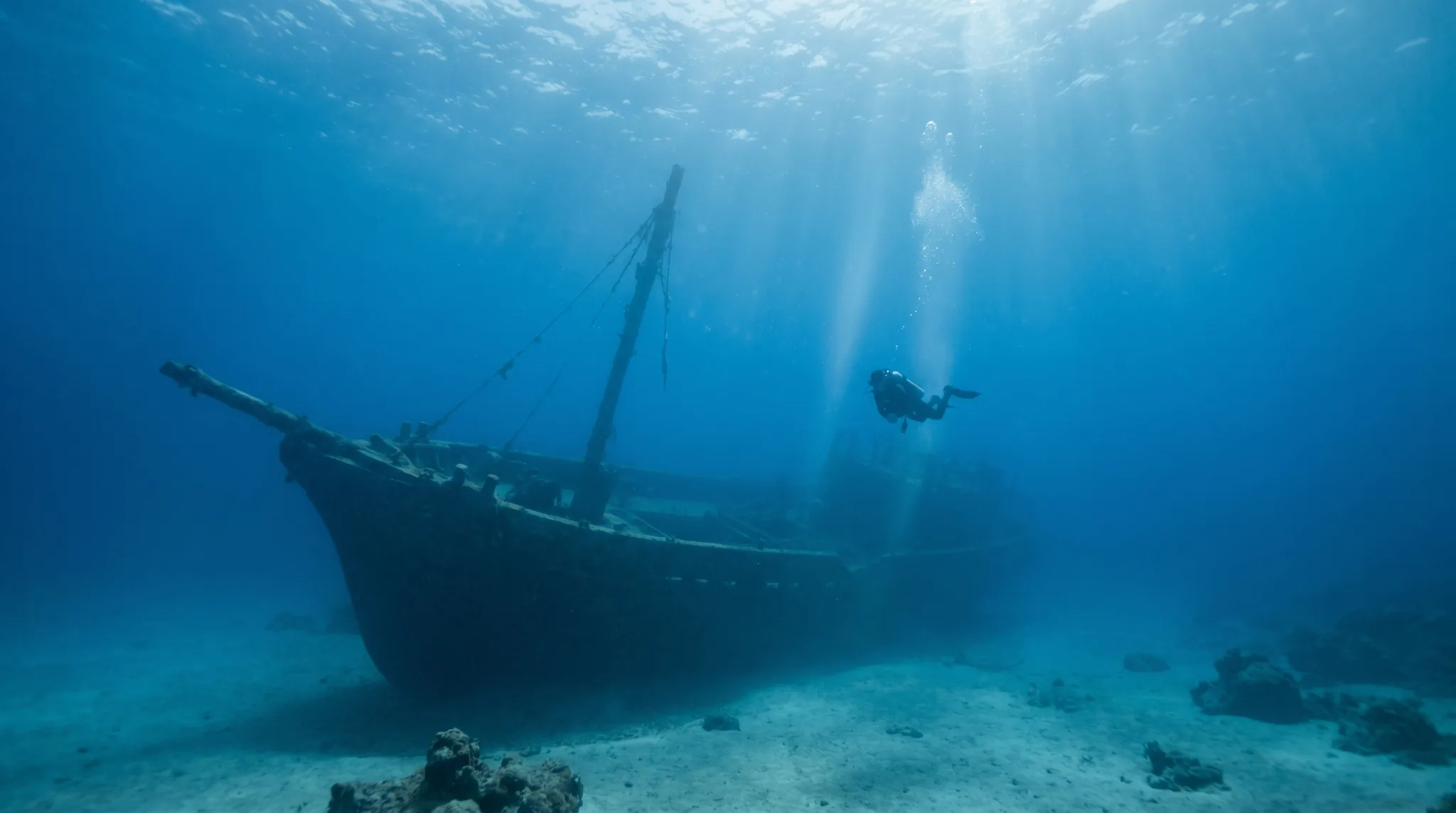
South Hole Sound is defined by a consistent pattern of reef-to-wall diving, with shallow reef platforms giving way to steep drop-offs and, at sites like Black Hole, cave systems. The Soto Trader wreck adds structural variety. Most sites are boat-accessed and suit intermediate divers, though beginners are well served at Windsock and Owen Island. Nurse Shark, Fairy Basslet, and both Brazilian and Caribbean Reef Octopus are regularly observed across the sites.
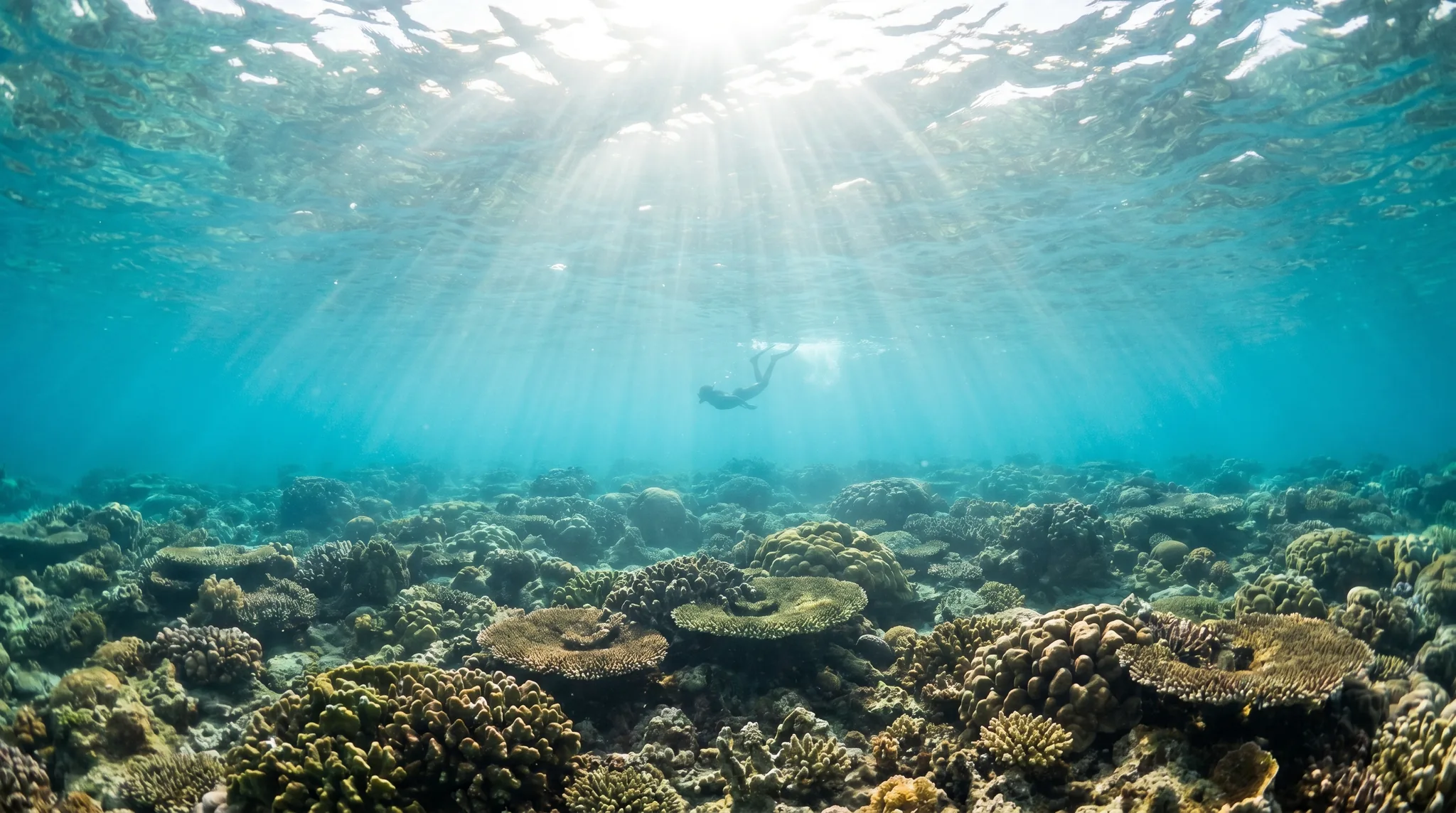
Monthly water temperature across South Hole Sound's sites, from satellite sea-surface data corrected for depth. The band shows the site-to-site spread.
Water temperature stays warm year-round, dipping only slightly in the cooler months of February and March before climbing to its peak from July through October. The best-months data points to late spring as the sweet spot, with May drawing the strongest concentration of favourable conditions. Divers can expect reliable visibility throughout the year, with calmer periods generally suiting the shallower reef tops at beginner sites.
11 operators
Cayman Islands
Cayman Islands
Cayman Islands
6 more sites to explore
Water temperature around South Hole Sound ranges from about 27°C in February to 30°C in July, based on satellite sea-temperature data for its dive sites.
With water around 27–30°C, a rash guard or 3mm shorty works in South Hole Sound year-round.
Fin maps 14 sites in South Hole Sound (14 scuba diving sites and 2 snorkelling spots, with some suited to both).
Across South Hole Sound's dive sites, May are most often reported as the best months to visit.
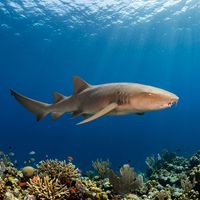
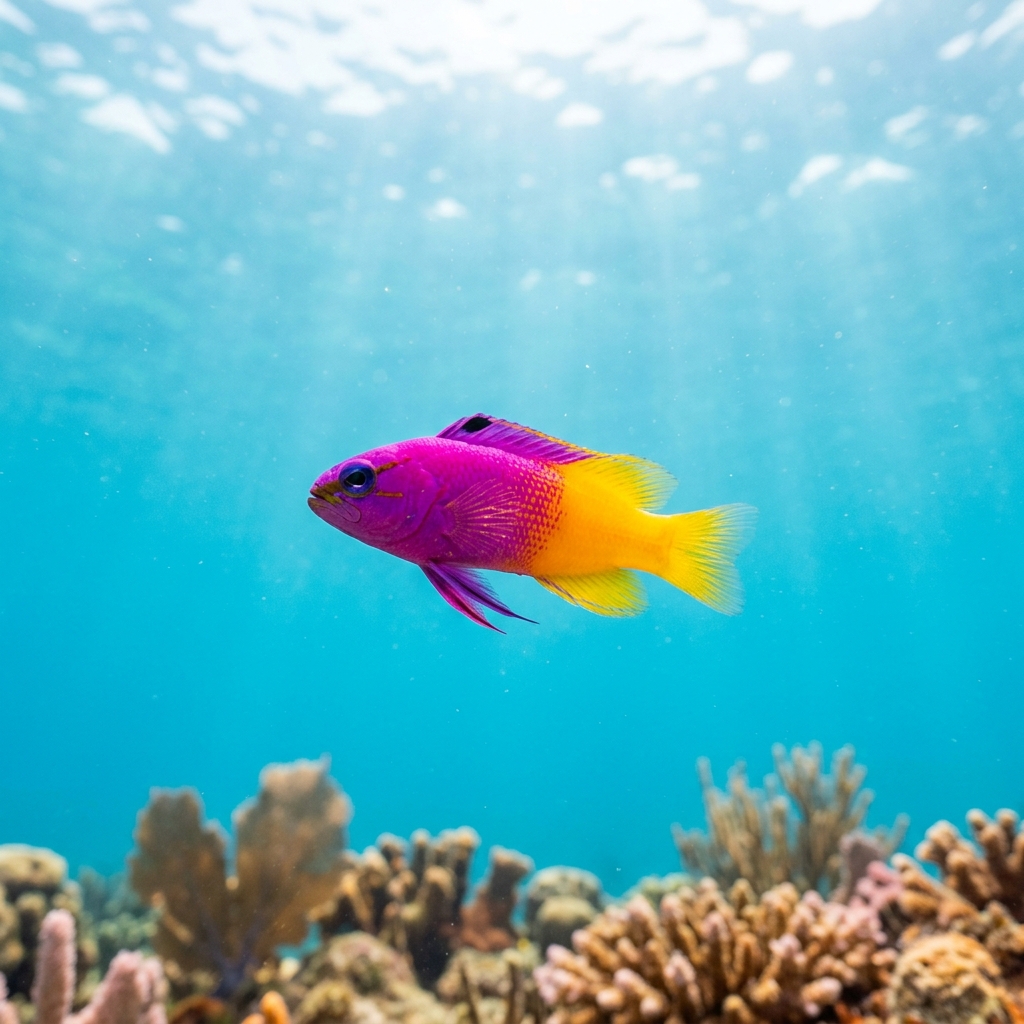
Sightings across the sites are strong and consistent. Nurse Shark, Fairy Basslet, and both Brazilian Reef Octopus and Caribbean Reef Octopus are among the signature species. French Angelfish, Great Barracuda, Green Moray, Spotted Moray, and Porcupinefish are also commonly encountered, alongside invertebrates such as Arrow Crab and Banded Coral Shrimp.
Several sites are well matched to beginner divers. Windsock offers a gentle reef profile starting at a shallow depth, and Owen Island can be accessed from shore with a reef and seagrass environment beginning very shallow. The majority of sites, however, involve wall and drop-off topography that is better suited to intermediate divers comfortable with greater depth.
Almost all sites in South Hole Sound require boat access, as most are located some distance offshore from Little Cayman. Owen Island is the main exception, offering a shore entry option. Black Hole accommodates both boat and shore entry. Divers should plan around boat-based logistics for the majority of the area's sites.
The area covers a broad range of terrain. Reef-to-wall transitions are the dominant feature, seen at sites like Charlies Chimneys, Dynamite Dropoff, and Jig Saw. Black Hole adds cave topography to the mix, and the Soto Trader is a deliberately sunk wreck combining wreck and reef environments. Owen Island rounds out the variety with seagrass beds alongside reef and wall.