Malacanthus plumieri
Long, pale-bodied fish that hovers over rubble burrows on Caribbean reefs, from Grand Cayman to Fernando de Noronha, year-round in warm water.
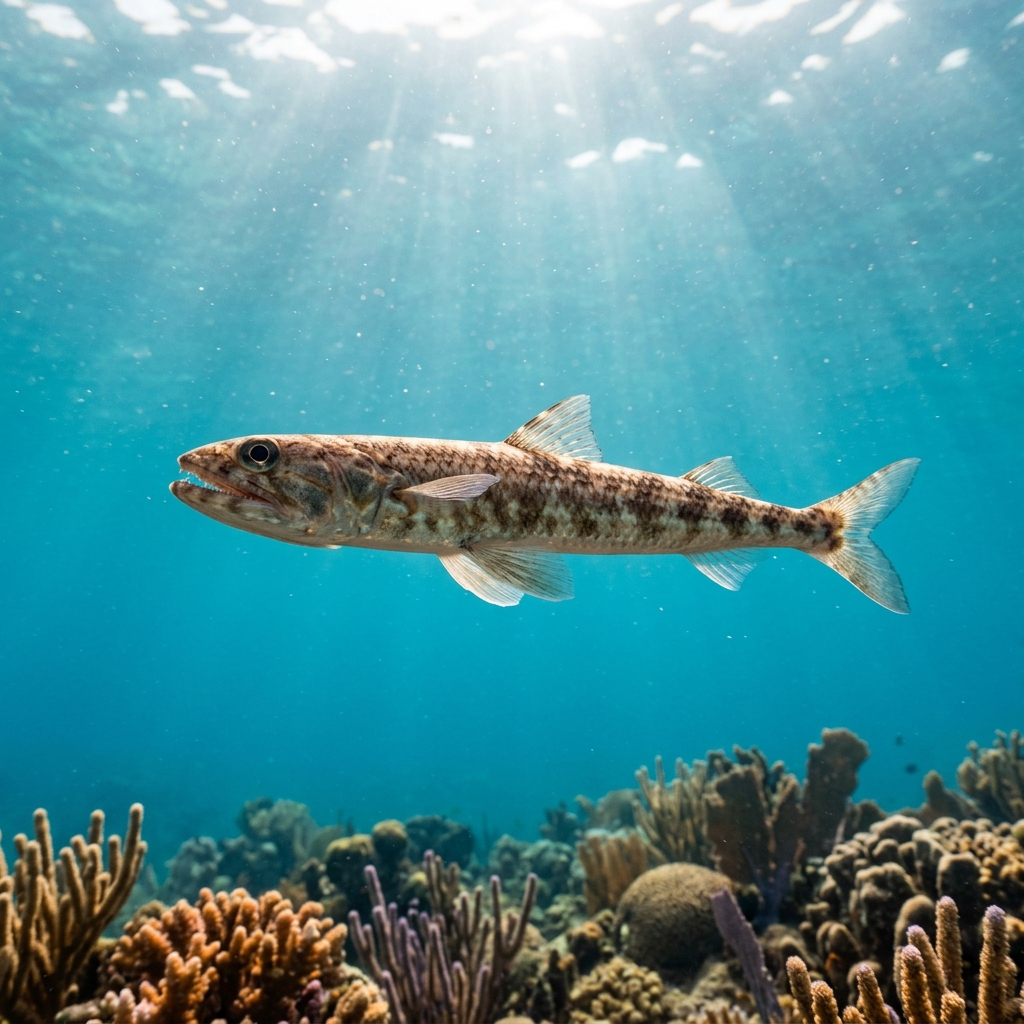
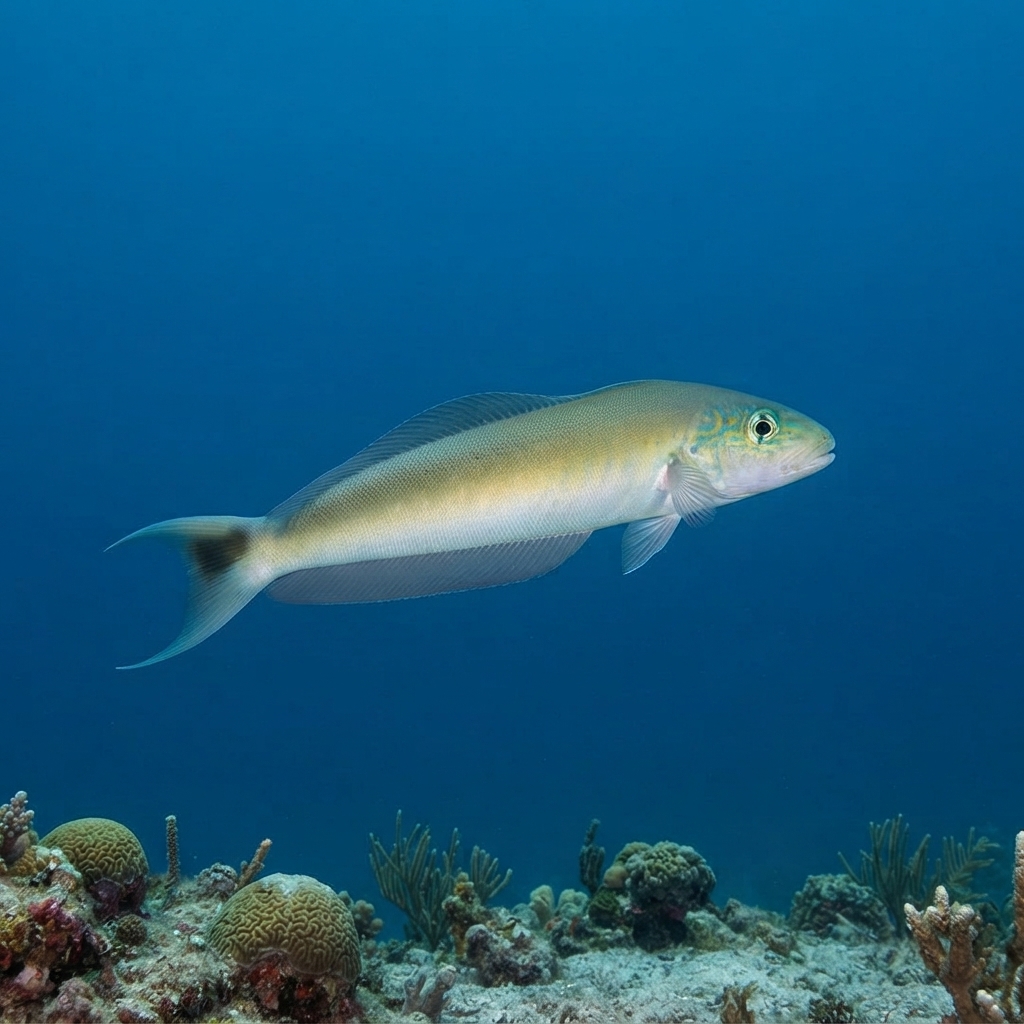
Long, slender body reaching around 49 cm, pale bluish-grey to white with a faint yellow wash along the back and a slightly forked tail. Look for the elongated shape and the way it hovers just above the sand or rubble near its burrow rather than swimming freely over the reef. No strong markings or spots to key on, so the body shape and burrow-hugging posture are the giveaway.
Divers typically find it hovering alone over open sand or rubble patches near reef edges, close to the burrow it digs and retreats into when startled. It tends to hold its ground at a distance rather than bolt, letting a slow approach get a decent look before it ducks underground. Most sightings are on the lower reef slope or sandy flats rather than up in the coral structure itself.
It builds and maintains a burrow by piling rubble and shell fragments around the entrance, and will dive tail-first into it the moment it feels threatened, making the burrow itself almost as good an ID clue as the fish.
No clear seasonal pattern in the sightings, and with a comfort range of roughly 23.6 to 28 C it stays active on Caribbean and Brazilian reefs all year, so any month works.
Most reliably logged in the Cayman Islands, especially around Grand Cayman, and a strong presence across the Eastern Caribbean in Guadeloupe, Saint Vincent and the Grenadines, and the US Virgin Islands. Also a regular find in the Bahamas, St. Martin/Sint Maarten, Sint Eustatius, and further south at Fernando de Noronha in Brazil.
Mapping where Sand Tilefish is logged…
Best chances are in the Cayman Islands, particularly Grand Cayman, along with Guadeloupe, Saint Vincent and the Grenadines, and the US Virgin Islands. It also turns up in the Bahamas, St. Martin/Sint Maarten, Sint Eustatius, and at Fernando de Noronha in Brazil.
There is no strong seasonal pattern, so it can be seen year-round on Caribbean and Brazilian reefs where the water sits between about 23.6 and 28 C.
Look for a long, slender pale grey-blue to white body around 49 cm, hovering just above sand or rubble near a burrow entrance. It lacks bold spots or bars, so its shape and burrow-side hovering posture are the main clues.
They typically reach around 49 cm in length, making them a fairly long, slim fish compared to most reef species sharing the same sandy habitat.
They dig and maintain a rubble burrow on the sand and dive into it tail-first the instant they feel threatened, using piled debris as both camouflage and structure.
No, they pose no threat to divers and simply retreat into their burrow if approached too quickly.
Site and sighting data is aggregated from diver logs, iNaturalist and GBIF. For taxonomy and conservation status:
Soldierfish
3,612 sites