Diodon hystrix
Big-eyed and spine-covered, porcupinefish turn up year-round from the Yucatán Peninsula to Egypt's Marsa Alam in warm 23-29C water.
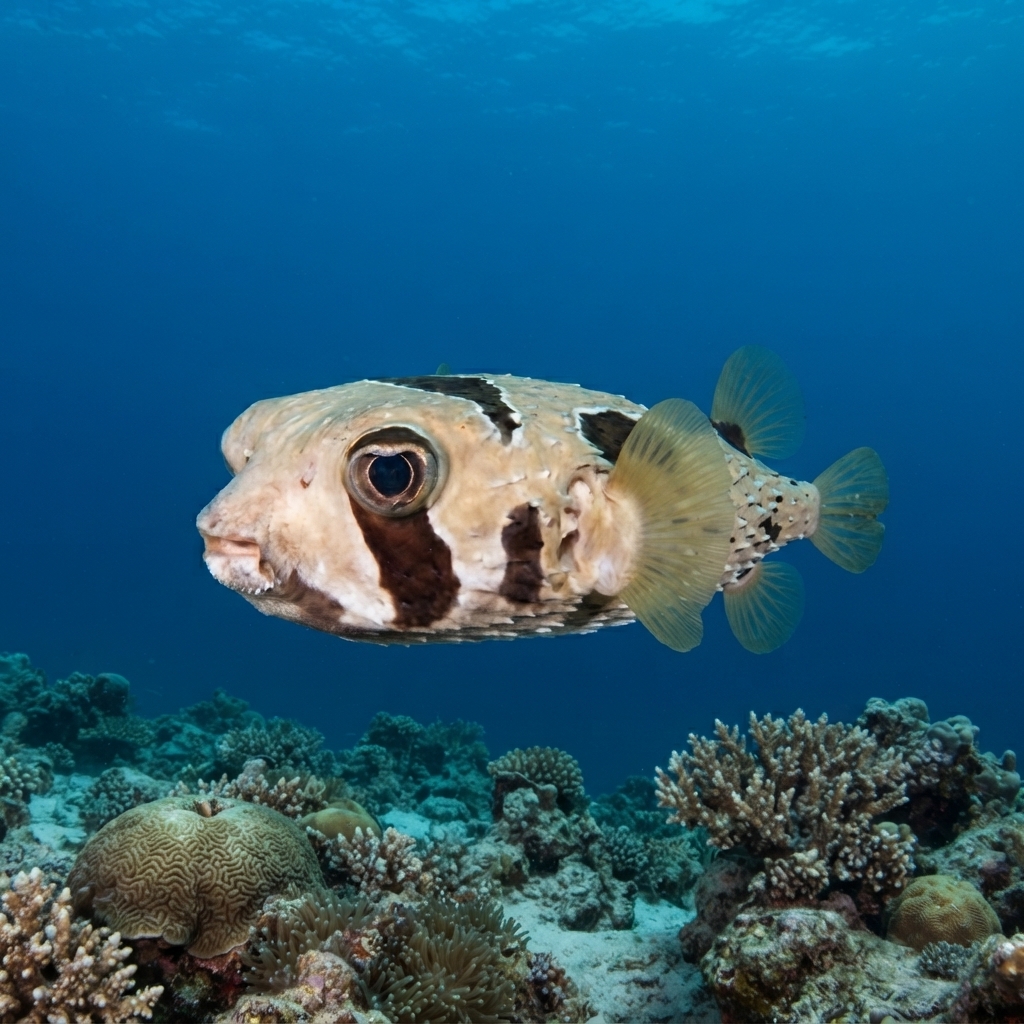
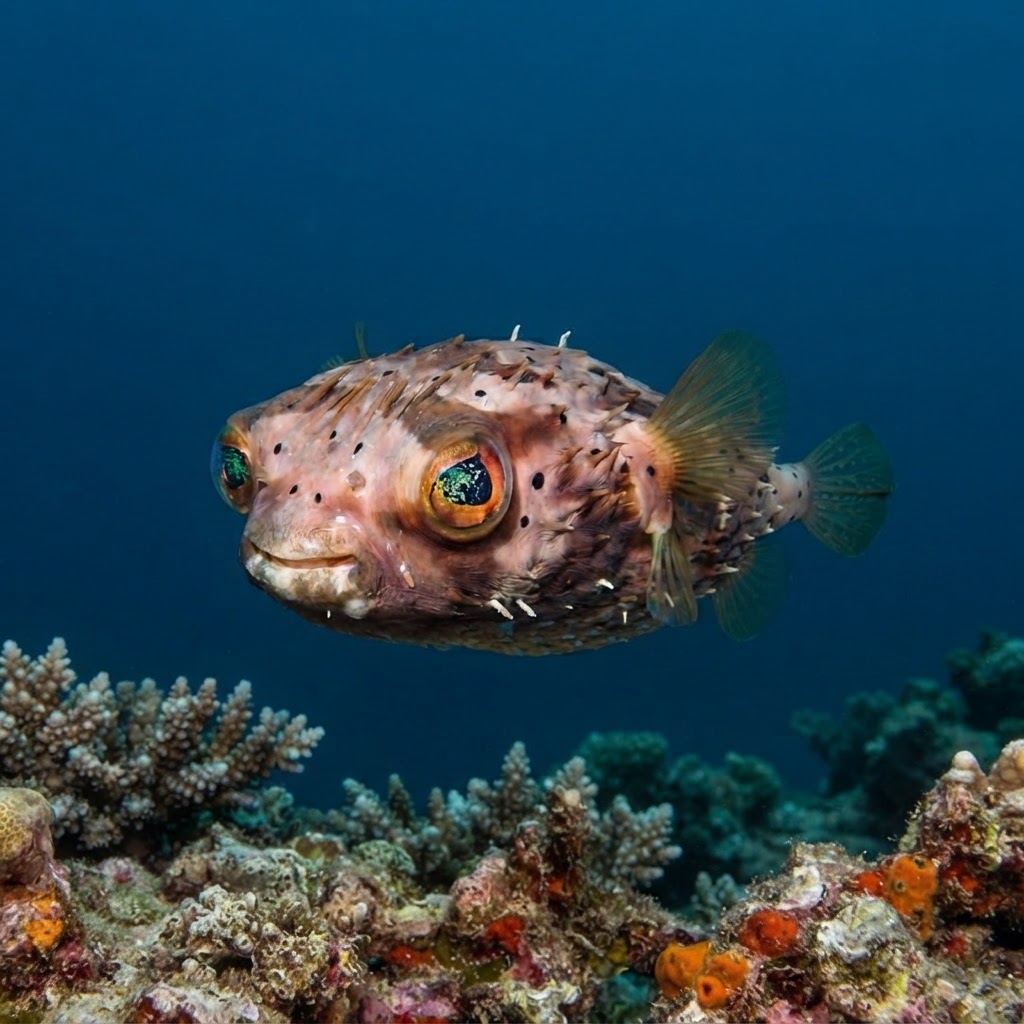
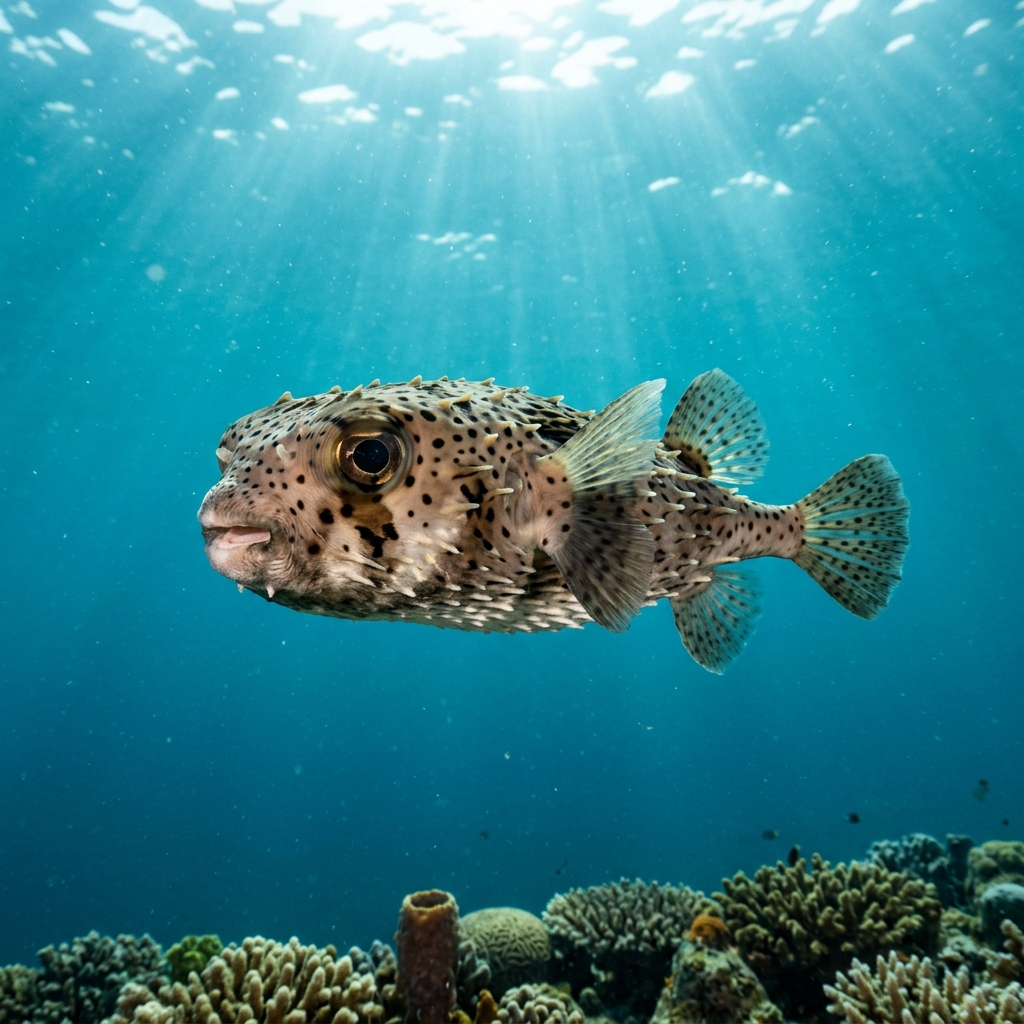
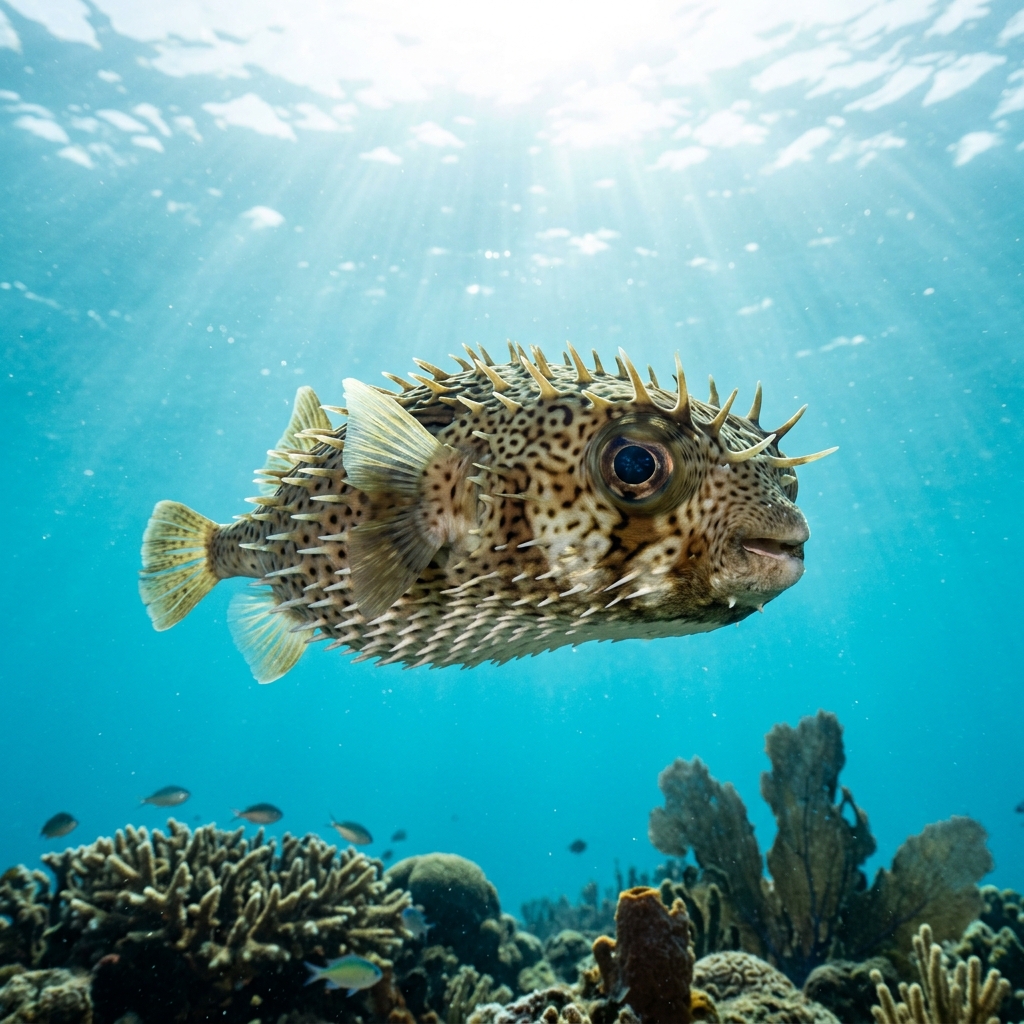
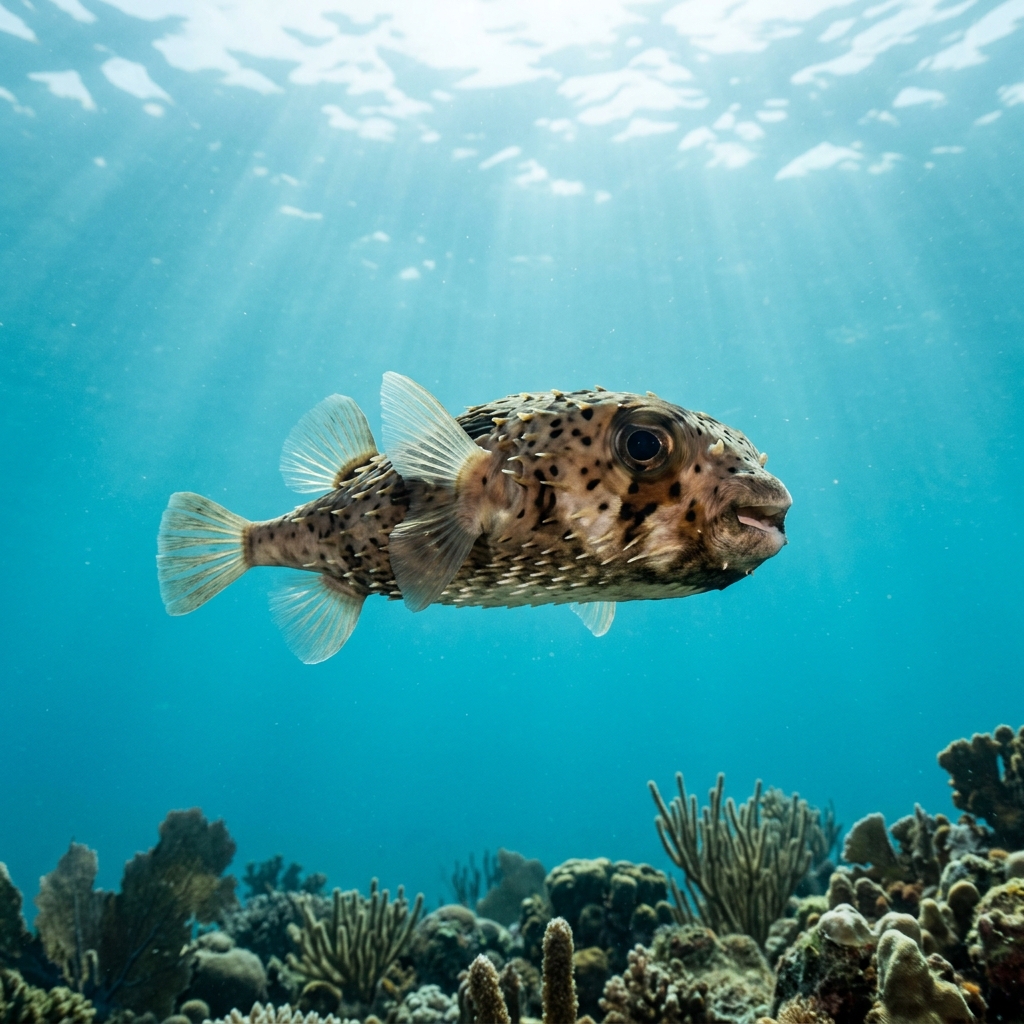
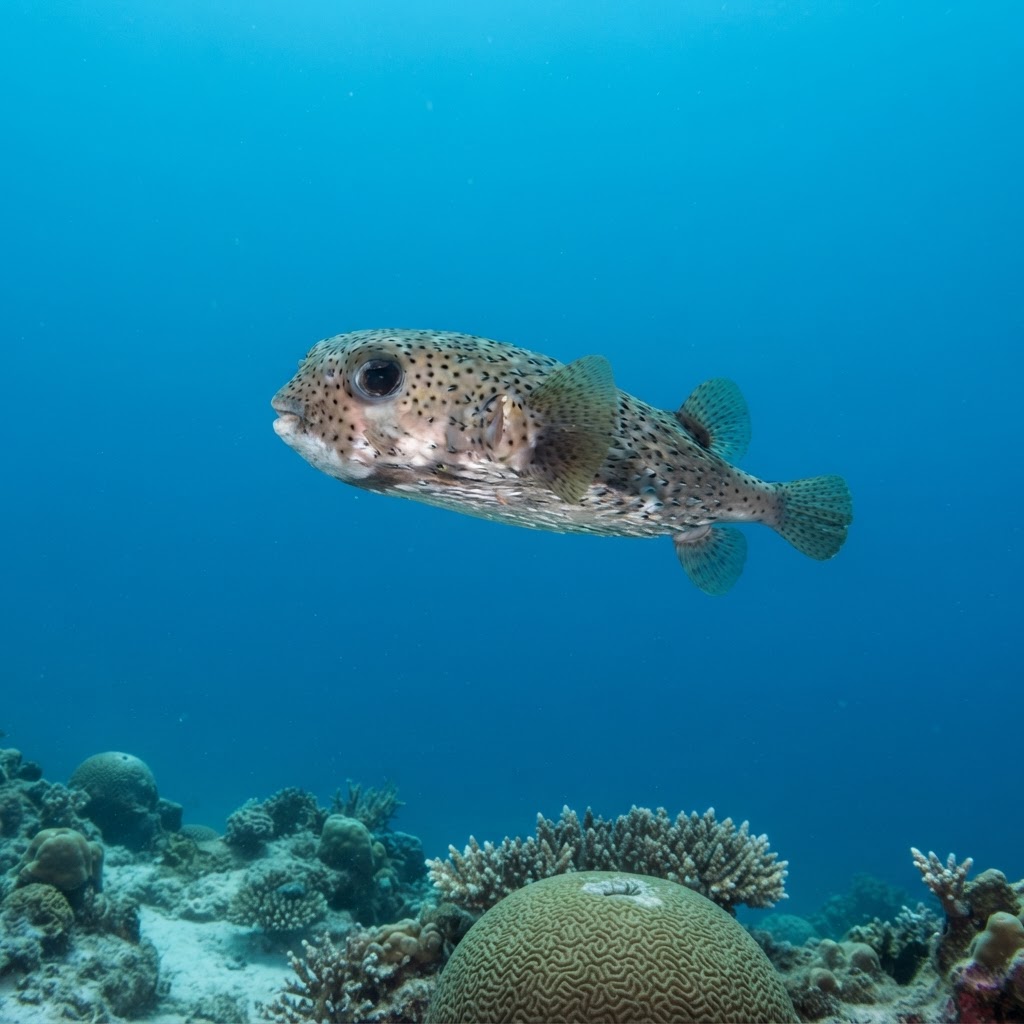
A heavy, rounded body covered in visible spines that lie flat unless the fish is threatened, when it can puff up into a spiny ball. Look for the oversized dark eyes, pale body dotted with small black spots, and a slow, almost hovering way of moving through the water. At up to 63cm it is one of the larger reef fish you will see tucked under a ledge during the day.
Mostly seen resting under ledges, in caves, or tucked against coral heads during the day, often solo and easy to swim right past if it is not moving. At dusk it becomes more active, drifting out to hunt over sand and rubble for crabs, urchins, and hard-shelled prey it crushes with its beak-like teeth. Divers who approach slowly usually get a calm, close look before it eases away, though provoked fish will puff up as a last resort.
Those fused, beak-like teeth are built for crunching through the shells of crabs, molluscs, and sea urchins, letting it feed on prey most reef fish cannot touch.
No clear seasonal pattern shows up in sightings, and with a comfortable range of 23.3 to 29C it stays active on tropical reefs all year. Plan around the destination's general dive season rather than a porcupinefish-specific one.
Reef neighbours a diver could mistake it for. Use the identification notes above to tell them apart.
Most reliably logged in the Yucatán Peninsula in Mexico, the Central Atolls of the Maldives, and Egypt's Marsa Alam and South Sinai regions. Also a steady find in Peninsular Malaysia's east coast, the Bay Islands of Honduras, Grand Cayman, and along Florida's reefs, making it one of the most widely distributed reef fish divers log worldwide.
Mapping where Porcupinefish is logged…
Strong sightings come from Mexico's Yucatán Peninsula, the Maldives' Central Atolls, and Egypt's Marsa Alam and South Sinai. They are also regularly logged in Malaysia, the Cayman Islands, Honduras, and Florida.
There is no strong seasonal pattern, they are sighted year-round on tropical reefs within their 23 to 29C comfort range. Time your trip around the destination's regular dive season rather than the fish itself.
Look for a rounded, spine-covered body, large dark eyes, and a pale coat with scattered black spots, usually resting under a ledge by day. It can inflate into a ball shape with erect spines if it feels threatened.
They typically reach around 63cm in length, making them one of the larger fish found resting on reef ledges rather than swimming in open water.
When threatened, it gulps water to inflate its body into a spiny ball, making itself far too large and prickly for most predators to swallow.
No, they are not considered dangerous. They tend to sit still under ledges or move slowly away from divers, and their spines are a defence against predators, not a threat to people who keep a respectful distance.
Site and sighting data is aggregated from diver logs, iNaturalist and GBIF. For taxonomy and conservation status:
Striped Burrfish
921 sites