Caridea spp.
Shrimp are logged at dive sites across the Philippines, Indonesia, and France. Find where and when to spot them, from the Visayas to the French Riviera.
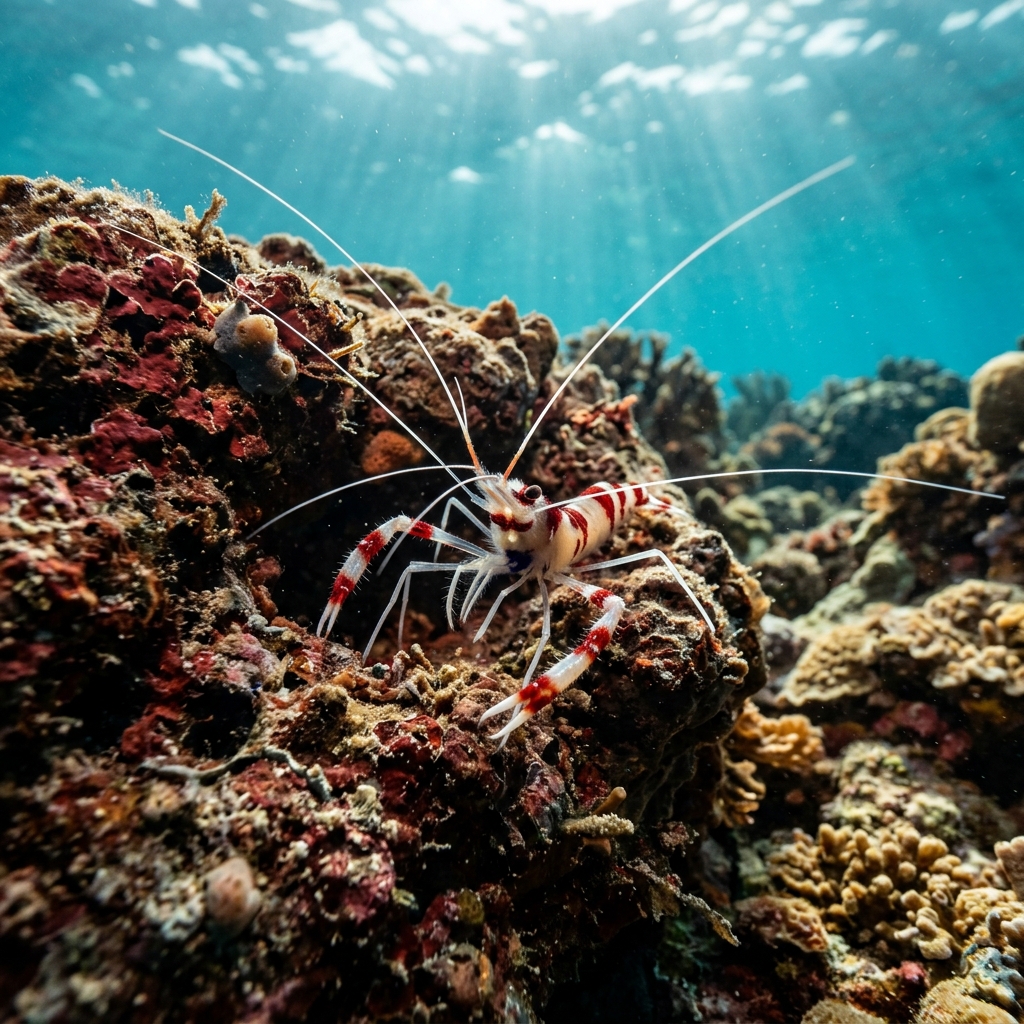
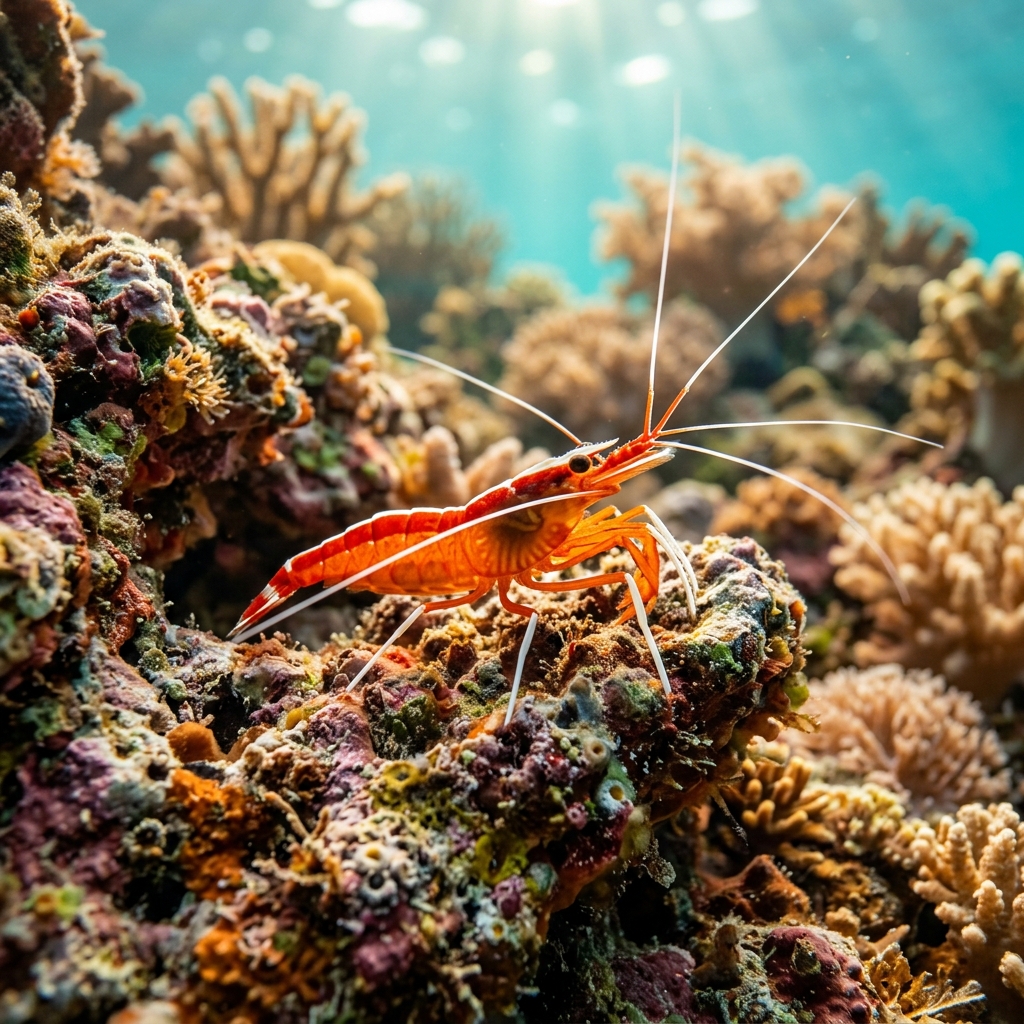
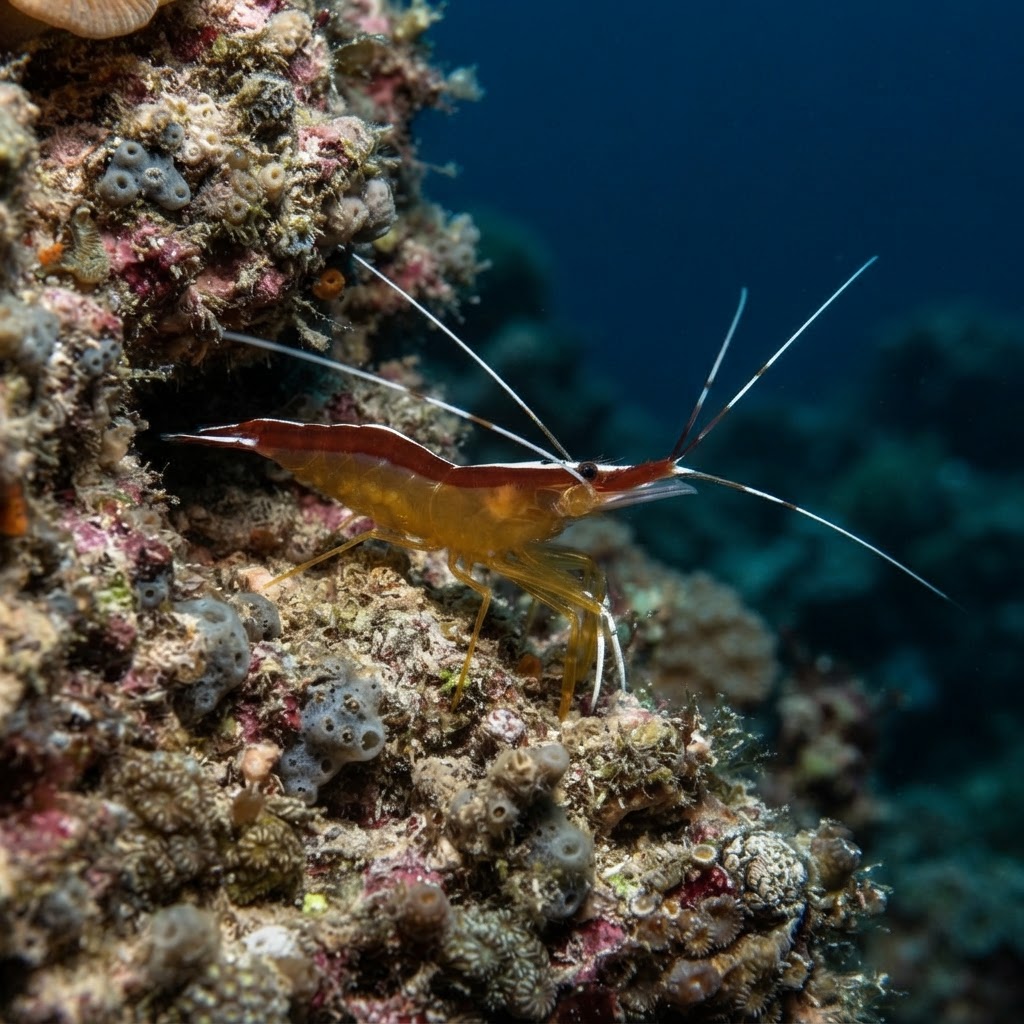
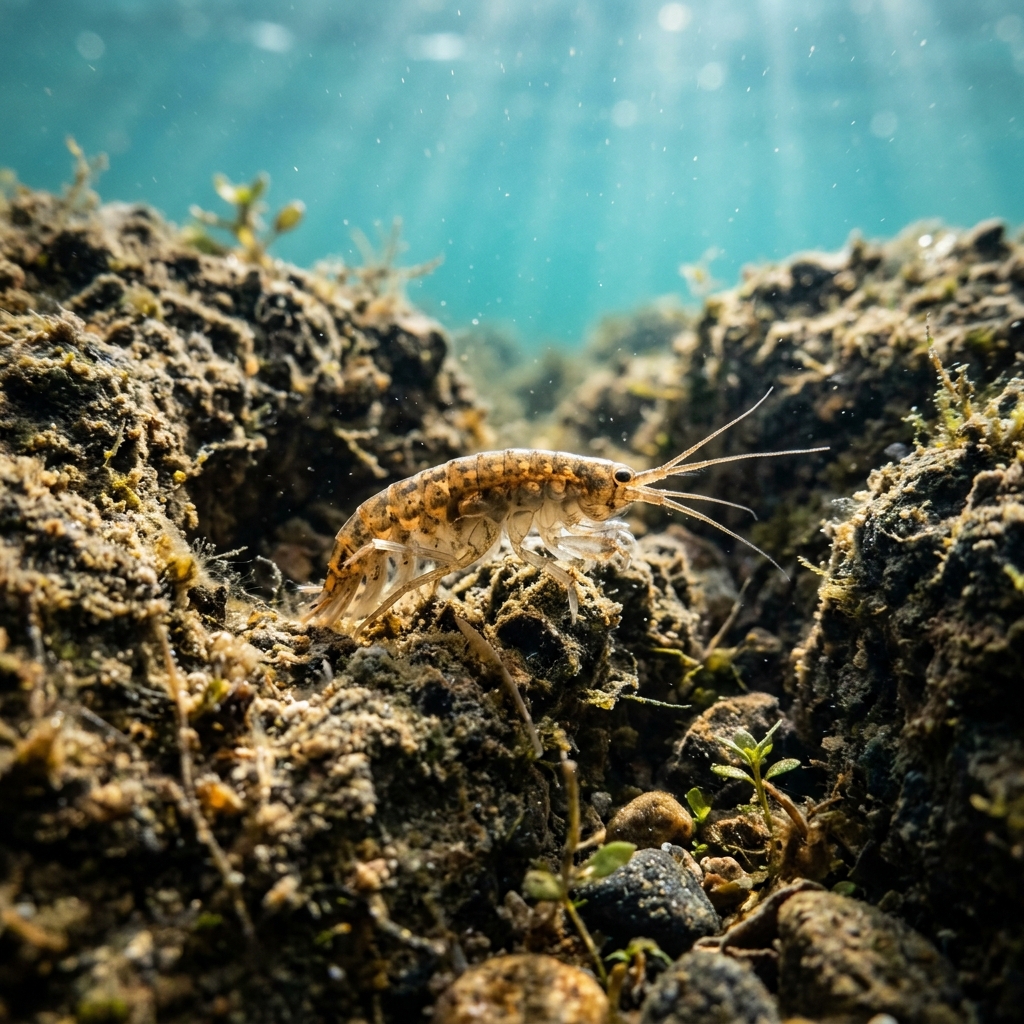
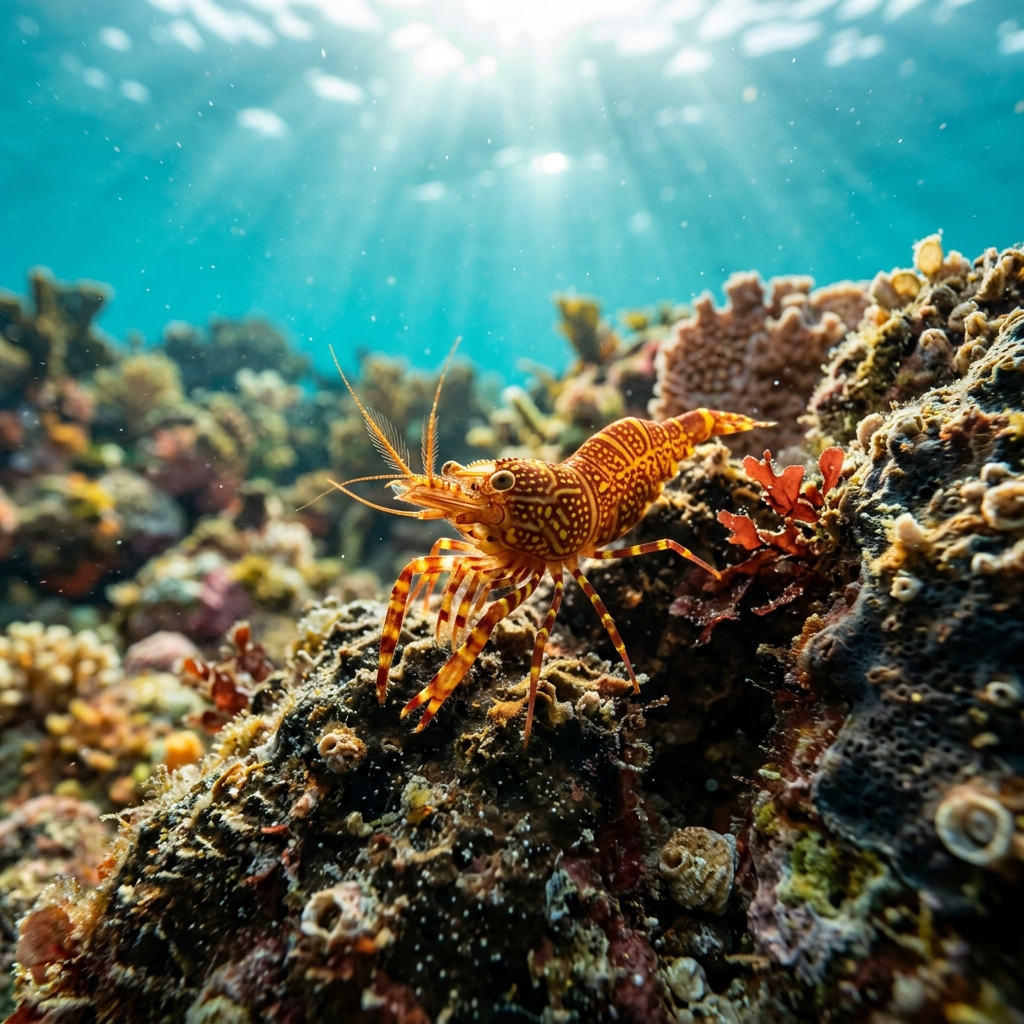
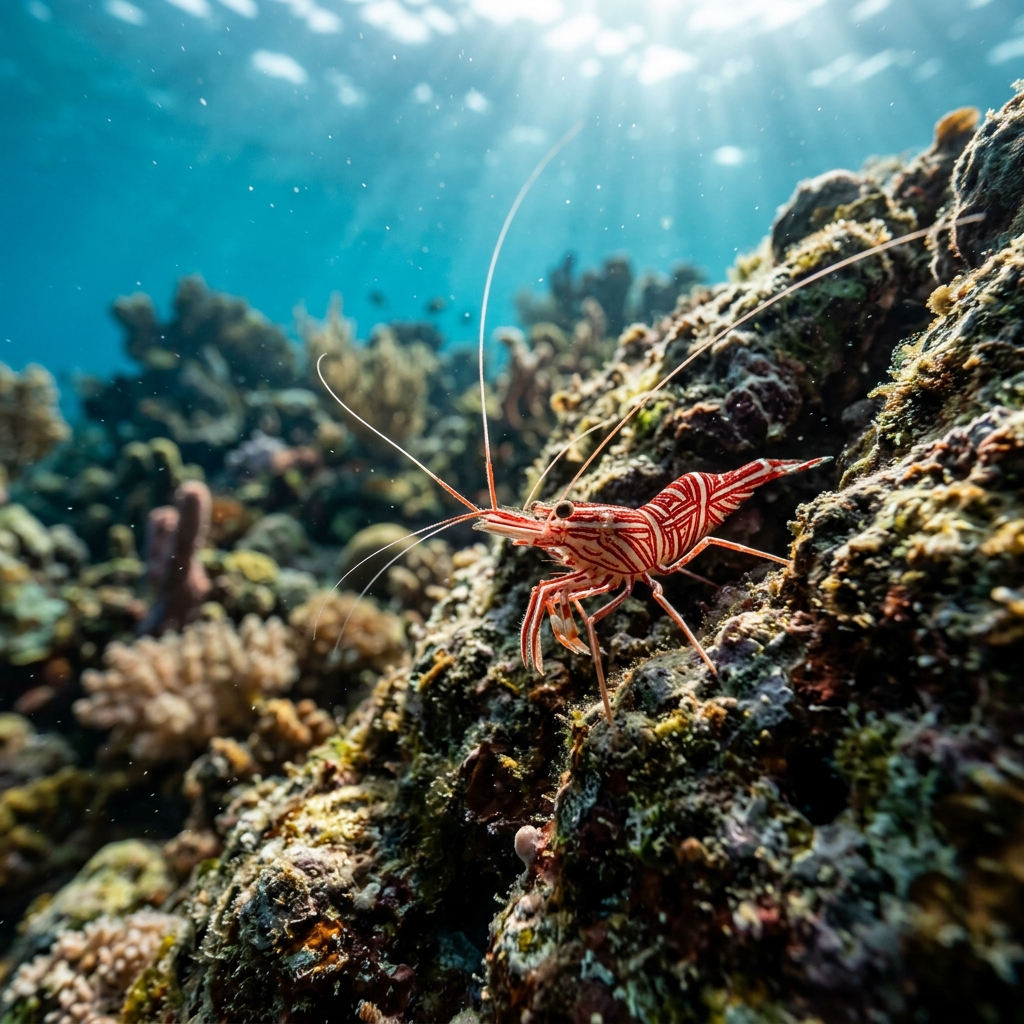
As a group, shrimp share a compressed body, long antennae, and jointed legs that give them an unmistakable silhouette even at a glance. Colouration varies wildly across species: some are nearly transparent, others display bold reds, whites, or spotted patterns. Most are small enough to cup in a hand, so slow down and check crevices, coral branches, anemone tentacles, and sandy substrate to find them. The antennae, usually longer than the body, are often the first thing you notice waving from a hiding spot.
When you find shrimp, they are typically tucked into coral rubble, nestled among anemone tentacles, perched on sea fans, or picking debris from the reef surface. Many species are active cleaners (animals that groom parasites from fish), and you may spot them waving their antennae to advertise their services to passing reef fish. They tend to retreat quickly if a diver moves abruptly, so slow, controlled approaches and a torch angled to the side rather than straight at them will keep them in view longer.
Several shrimp species run cleaning stations where fish queue up and hold still while the shrimp picks parasites, dead tissue, and food scraps from their skin, gills, and even open mouths, a relationship that benefits both parties and is one of the reef's most watchable interactions.
In the Northern Hemisphere, shrimp are recorded year-round with no concentrated season, which fits their wide temperature tolerance of 14 to 29 °C spanning cool temperate and warm tropical reefs alike. In the Southern Hemisphere, sightings are most concentrated between September and July, so planning around those months gives the best odds.
Reef neighbours a diver could mistake it for. Use the identification notes above to tell them apart.
The Philippines leads the way, with the Visayas Central region accounting for the highest concentration of sightings of any single region in the world, followed closely by Luzon and the Eastern Visayas. Indonesia is another stronghold, particularly around Bali, Lombok, Java, and Sulawesi. Beyond the Indo-Pacific, strong records exist along the Pacific Coast of the United States, across Zeeland in the Netherlands, and along the French Riviera and Provence, making this one of the most broadly distributed groups a diver can encounter.
Mapping where Shrimp is logged…
Shrimp are one of the most widely logged groups in diving, recorded across a huge range of countries. The Philippines, especially the Visayas Central, is the top region globally, followed by Indonesia's Bali and Sulawesi areas. They are also well recorded along the US Pacific Coast, in the Netherlands' Zeeland, and across the French Riviera.
In the Northern Hemisphere they are present year-round with no single peak season, so any time works. In the Southern Hemisphere, sightings are most concentrated between September and July. Their broad temperature tolerance, from around 14 °C in temperate waters to nearly 30 °C on tropical reefs, means there is rarely a bad season.
Look for the long antennae, jointed body, and small size. Most species are under 5 cm and found tucked into crevices, on corals, or among anemone tentacles. Colouration varies enormously by species, from near-transparent to vivid reds and whites, so the body shape and antennae are your most reliable cues as a group.
Many shrimp species act as cleaners, setting up stations where fish arrive to have parasites and debris removed. Others are scavengers, picking over the substrate. Some live in close partnerships with specific anemones or corals, rarely straying far from their host animal.
No. Shrimp pose no risk to divers. They are small, shy, and will retreat before a diver gets close. At worst, a large species like the banded coral shrimp may give a defensive pinch if handled, but there is no venom and no real hazard.
Site and sighting data is aggregated from diver logs, iNaturalist and GBIF. For taxonomy and conservation status:
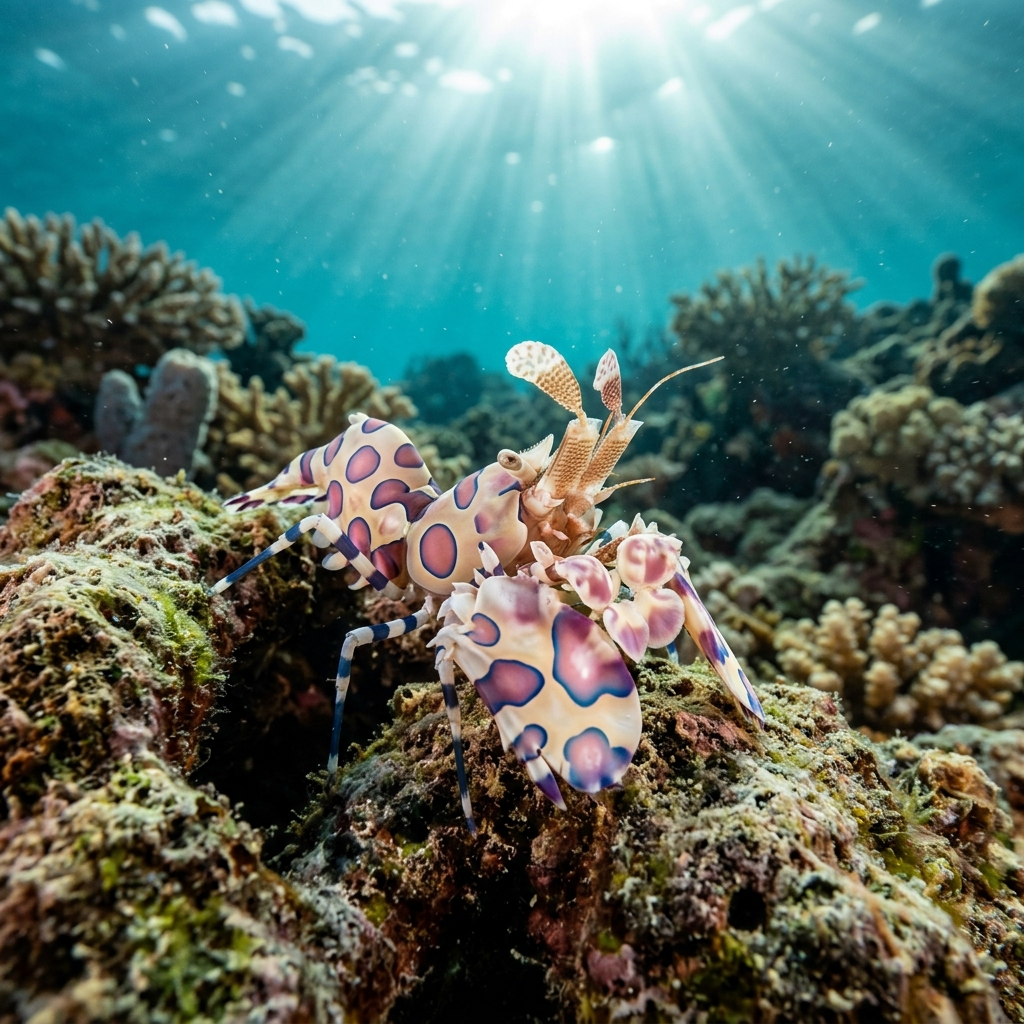
Hymenocera picta
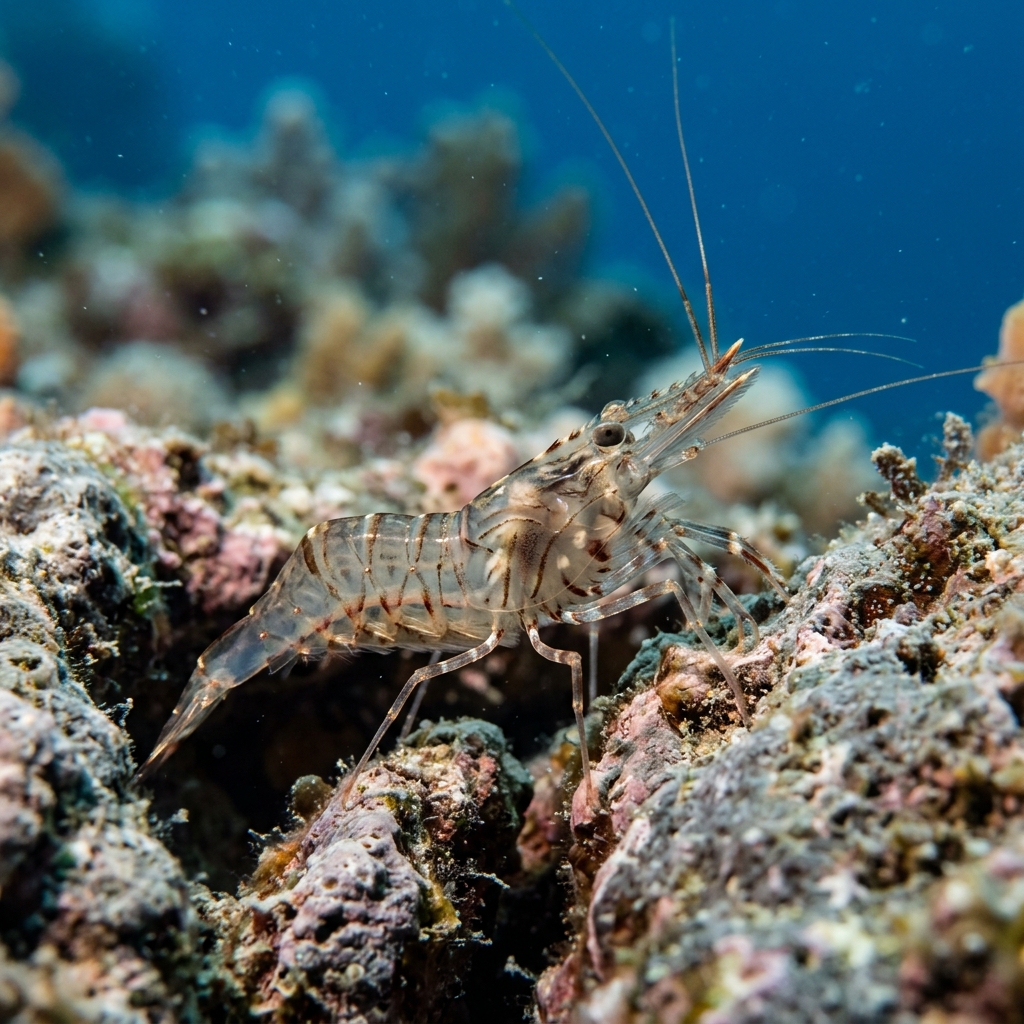
Rockpool Prawn
2,179 sites