Naso spp.
Spot unicornfish on reefs across the Maldives, Red Sea, and Indonesia. Present year-round in 23-29 °C tropical waters. ID tips and top dive sites inside.
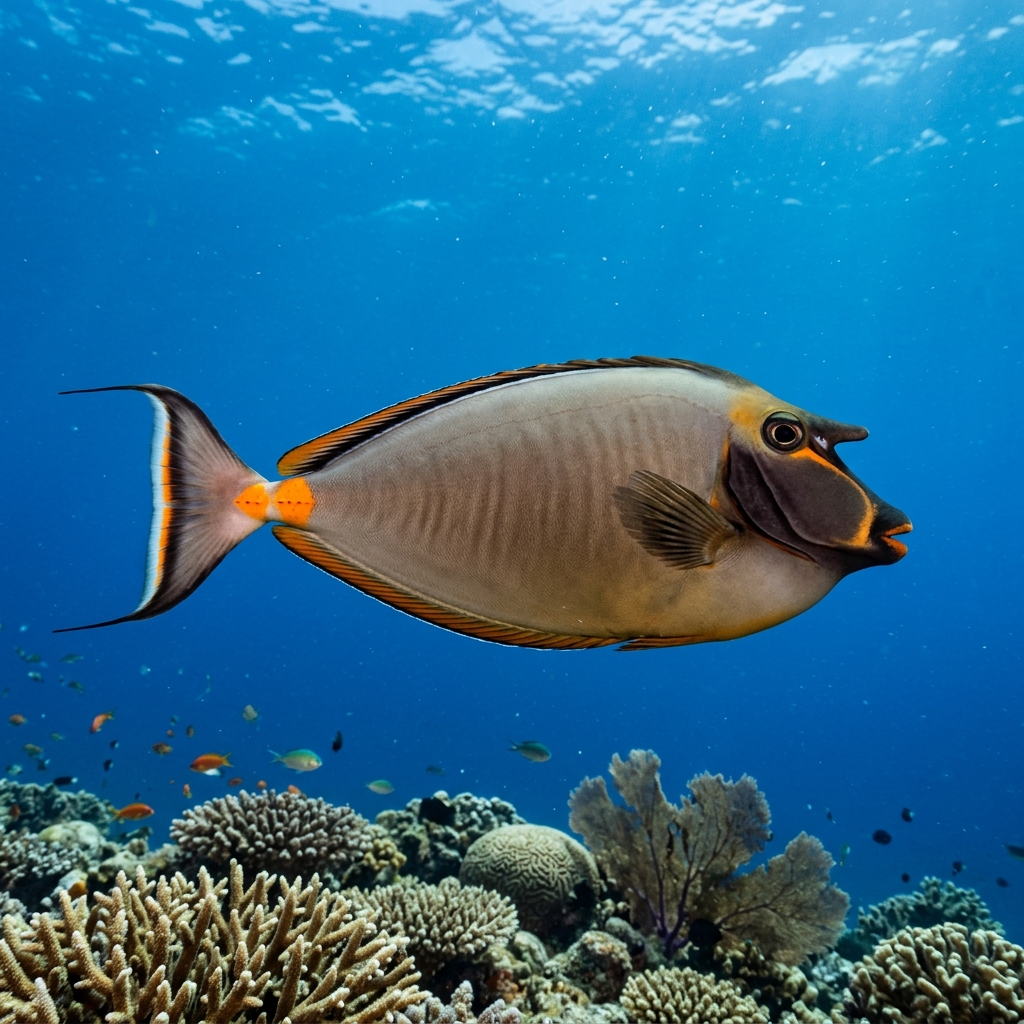
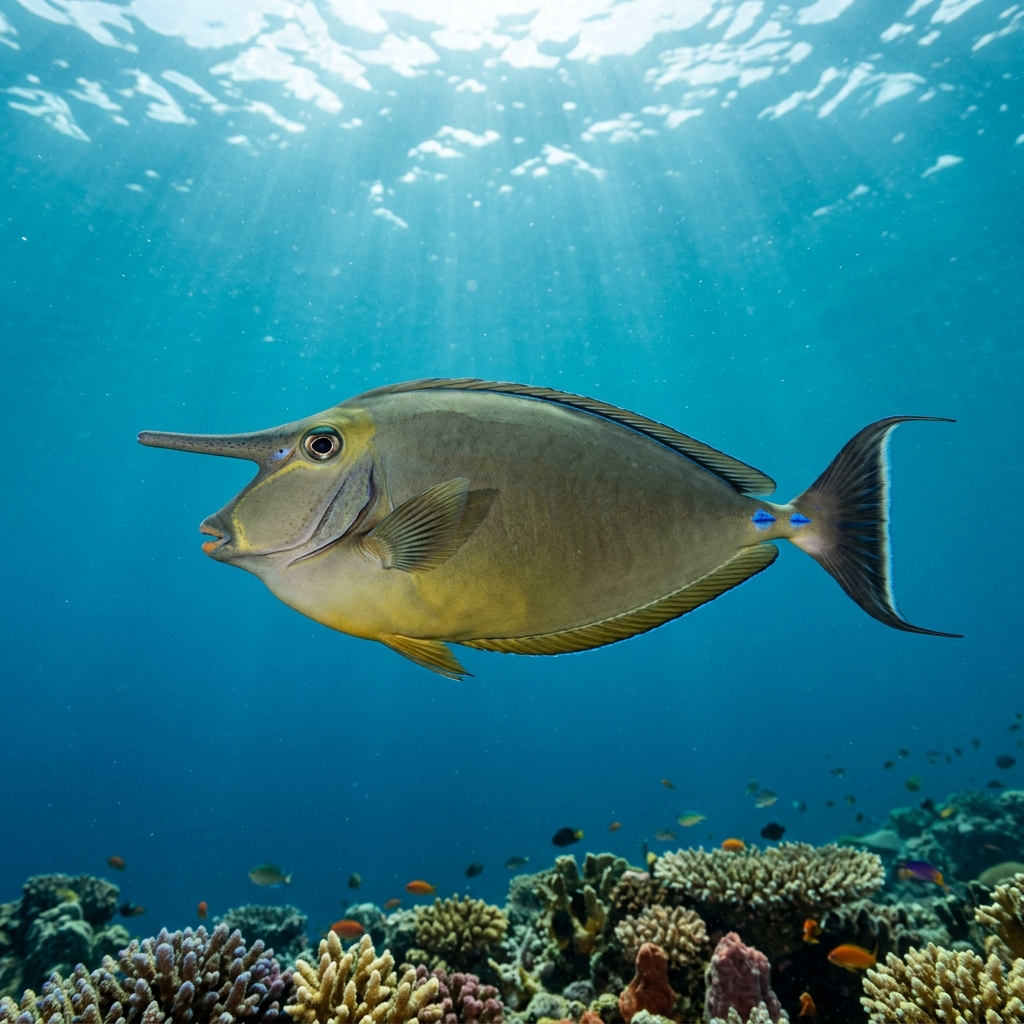
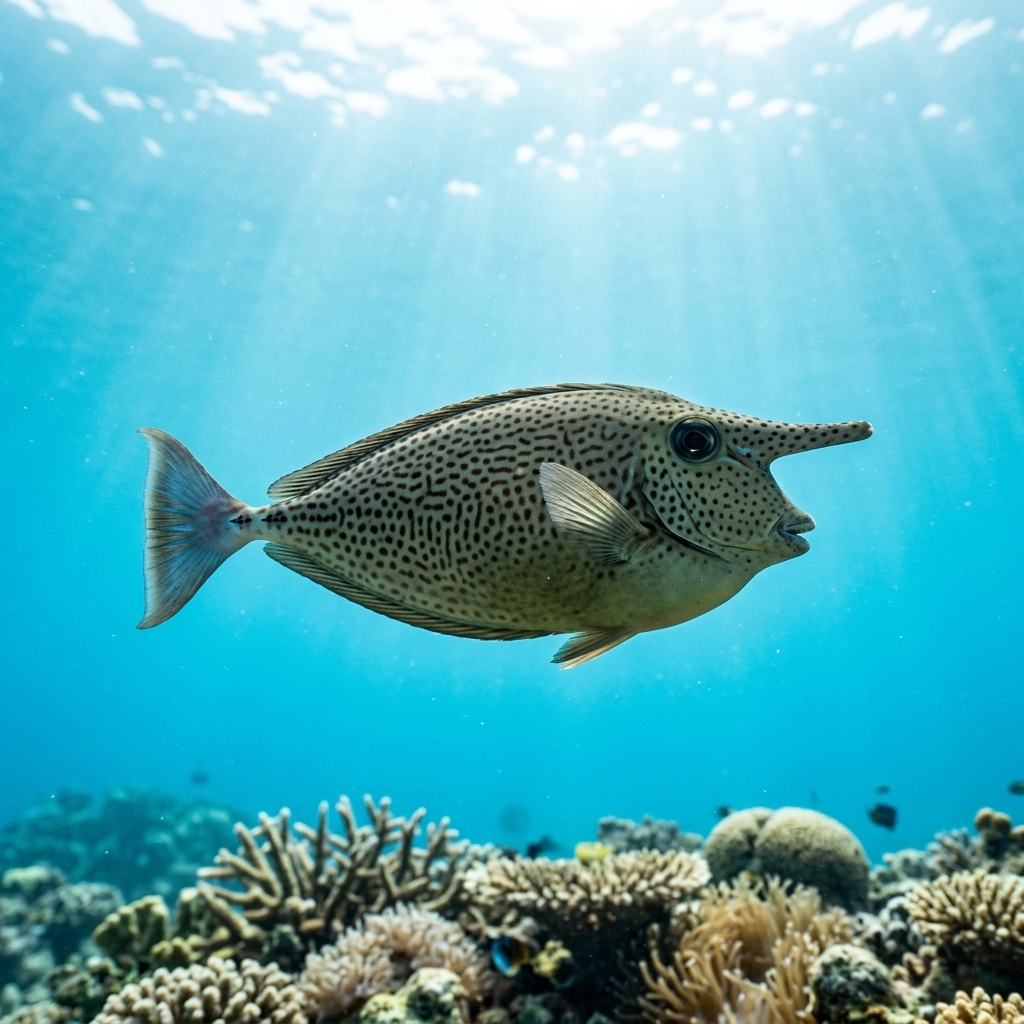
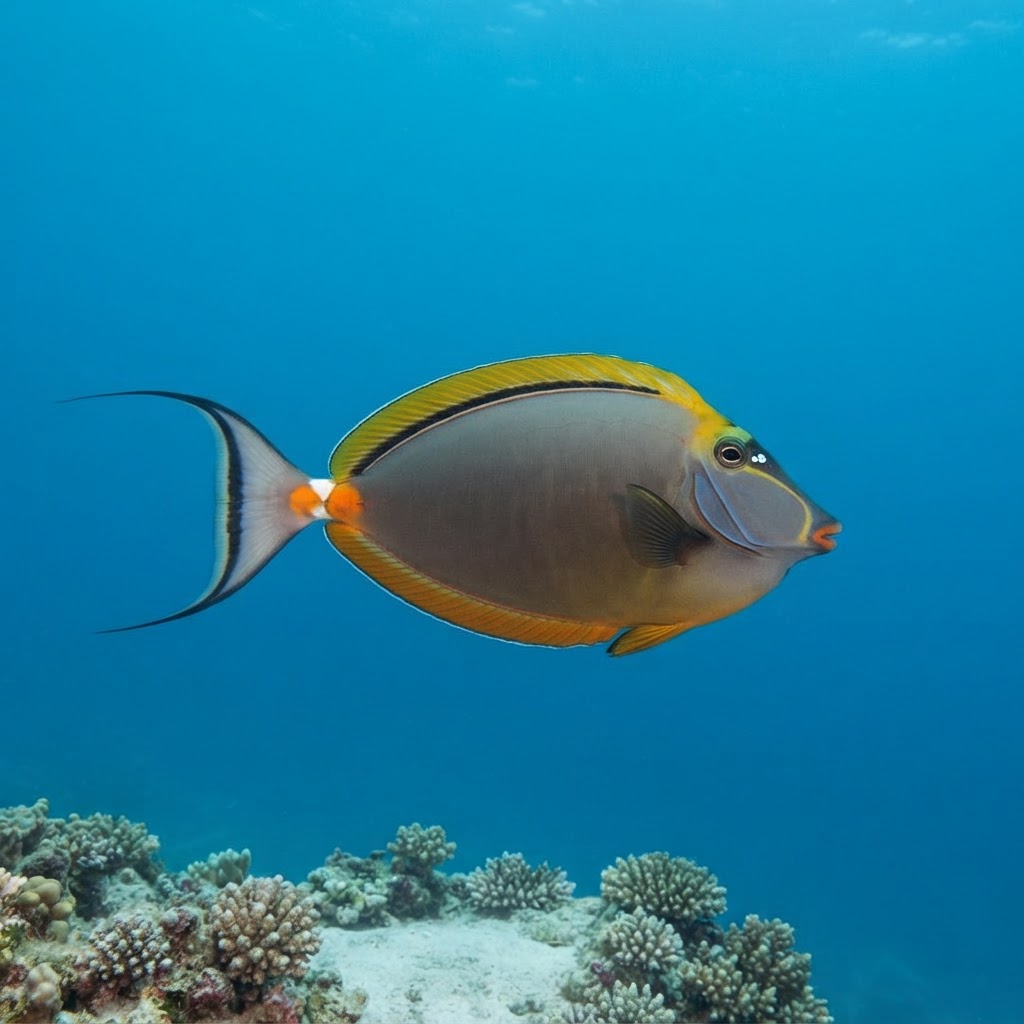
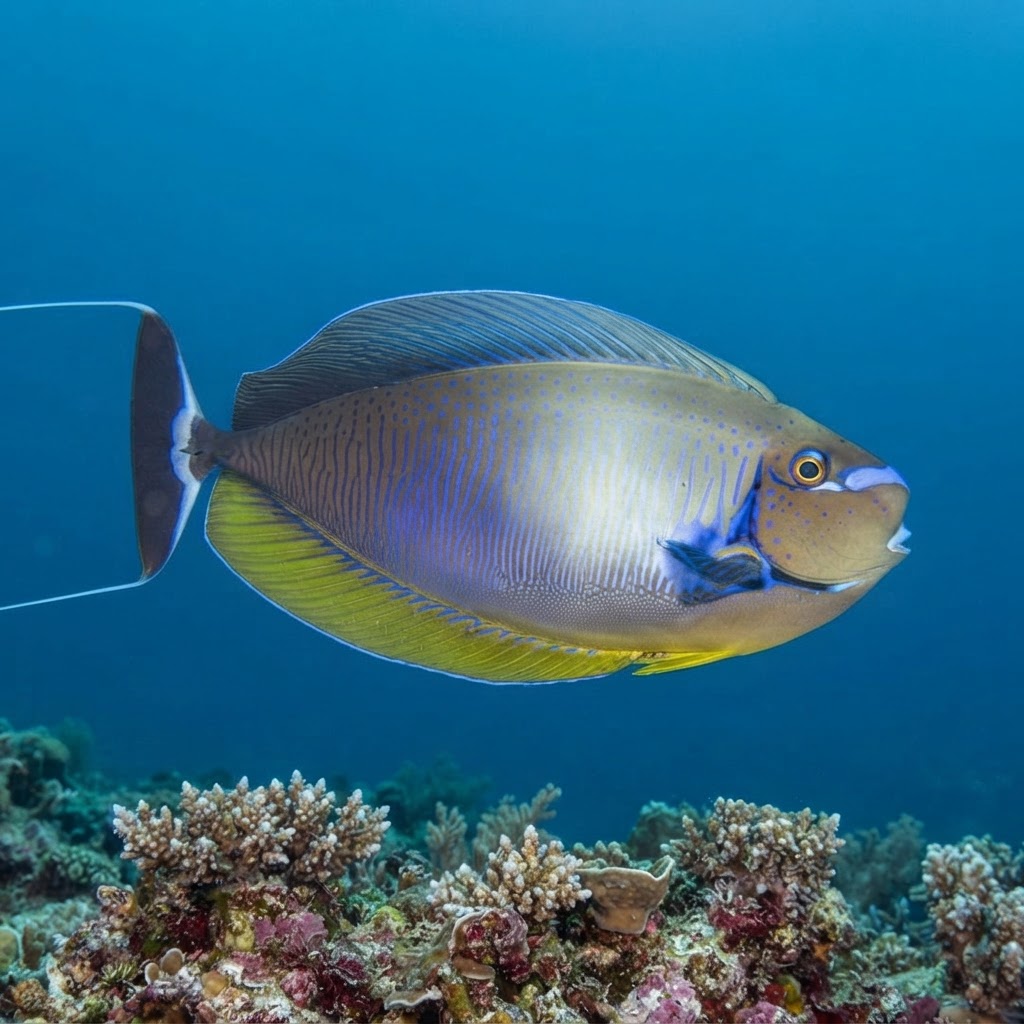
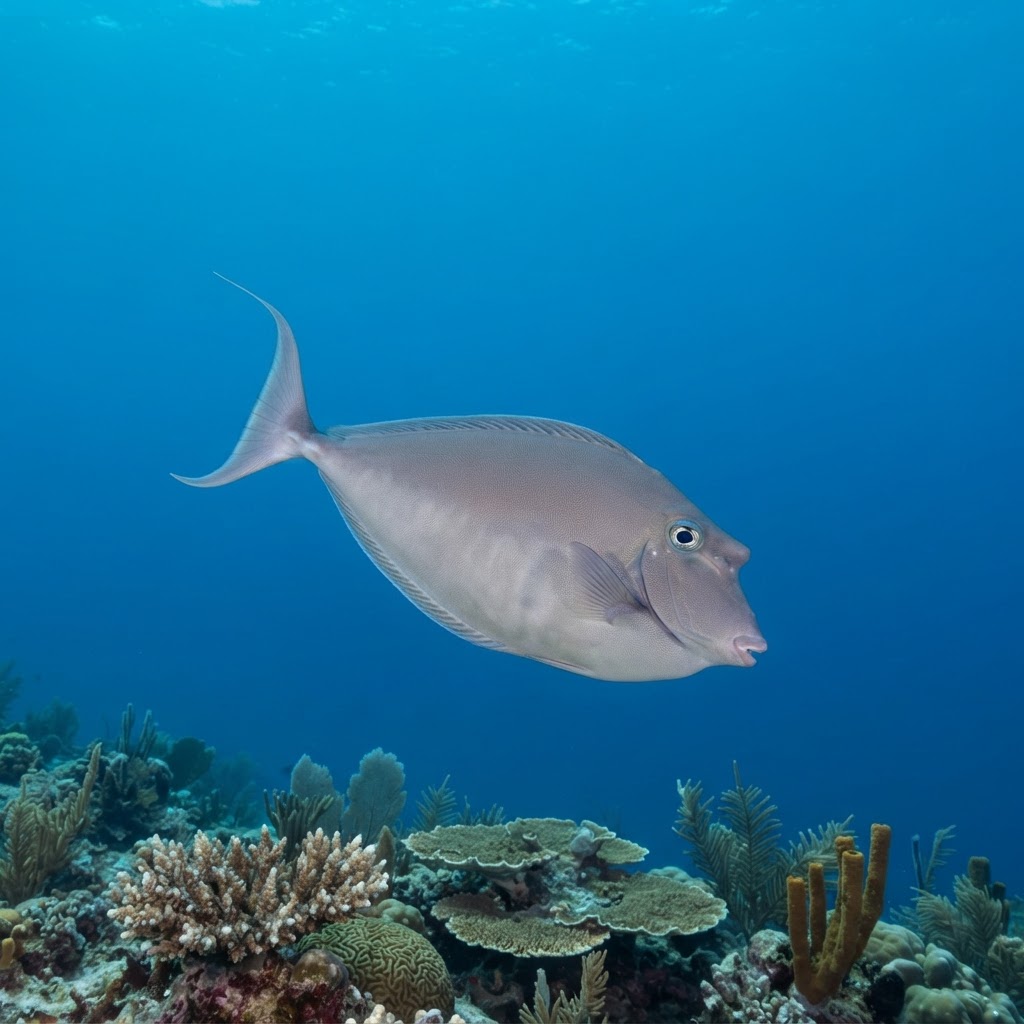
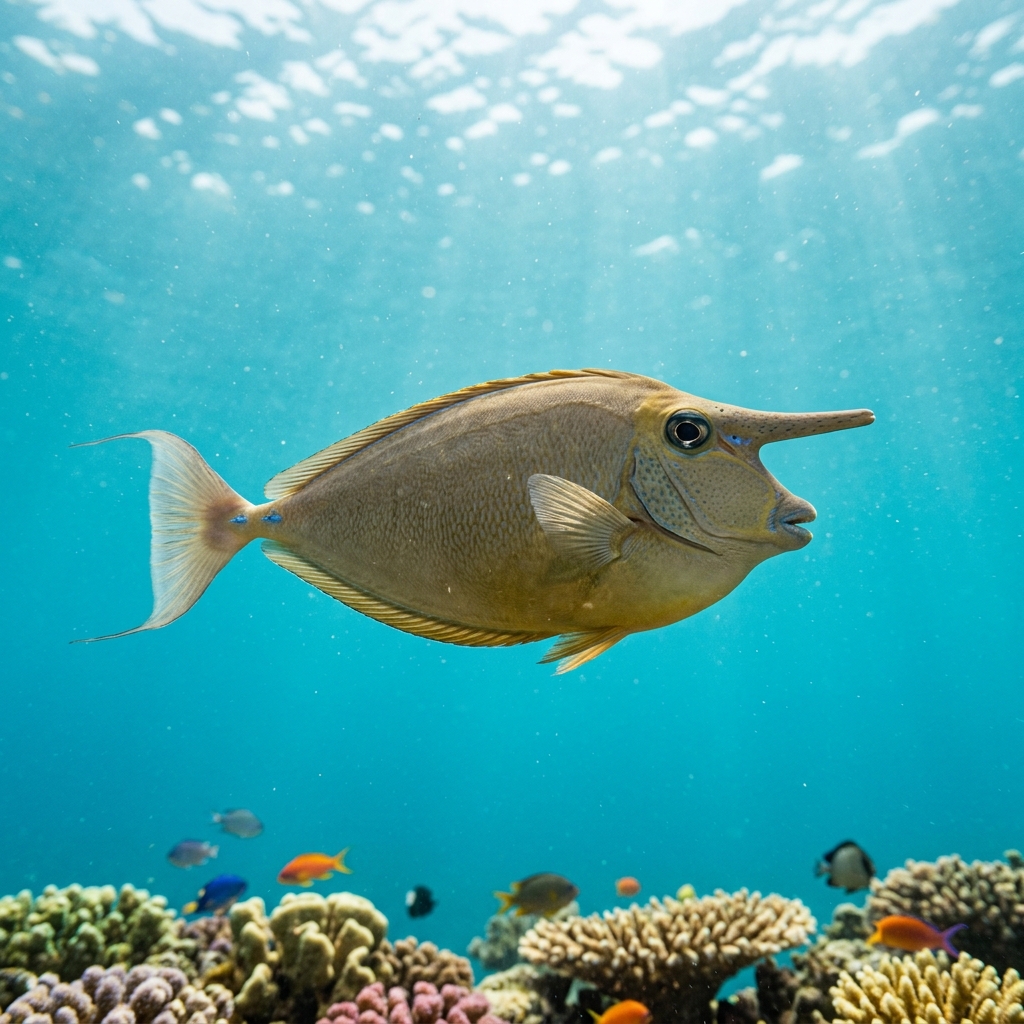
The forehead horn is the unmistakable clue: a bony projection extending forward from the snout that gives the group its name. Body colour varies by species from pale grey to olive-brown to blue-grey, often with a subtle gradient, and adults typically reach 40-70 cm in the water. Look for the paired sharp spines (scalpels) near the tail base, a shared trait with other surgeonfish, and watch for the elongated tail-fin filaments in some species. Adult males of several species develop more vivid blue or turquoise tones around the face.
On the reef they are most often seen cruising open water just above the coral, frequently in loose aggregations or small schools. They tend to ignore divers and continue their steady patrol, making observation straightforward. Feeding activity is most visible during the day when they browse algae and zooplankton mid-water.
The bony horn that defines the group grows gradually with age and serves no feeding function; its exact role is still debated, but it appears linked to species recognition and possibly mate selection.
Present year-round in both hemispheres with no concentrated season, which matches their comfort in the consistently warm 23-29 °C waters of tropical Indo-Pacific reefs. There is no off-season to plan around.
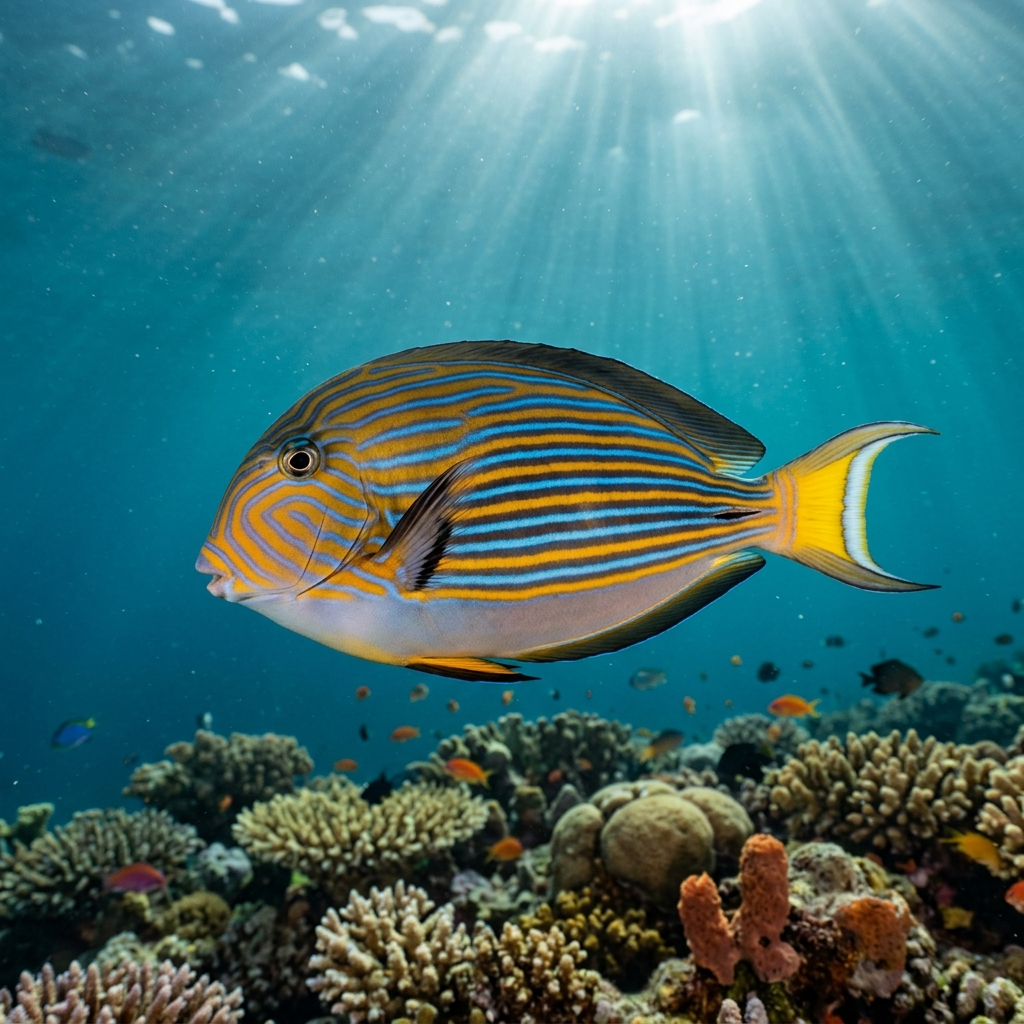
Reef neighbours a diver could mistake it for. Use the identification notes above to tell them apart.
Most commonly logged in the Maldives, the Egyptian Red Sea (particularly around Sharm el Sheikh and Marsa Alam), and across Indonesia from Bali to Sulawesi. The Philippines, Thailand, Seychelles, and Palau also have strong records, making the Indo-Pacific the clear heartland for this group.
Mapping where Unicornfish is logged…
The best-documented diving for unicornfish is across the Maldives, the Egyptian Red Sea around Sharm el Sheikh and Marsa Alam, and Indonesia, particularly Bali, Sulawesi, and Nusa Tenggara. They are also reliably sighted in the Philippines, Thailand, Seychelles, and Palau.
Unicornfish are present year-round at tropical Indo-Pacific sites in both hemispheres. There is no peak season; they are comfortable in the 23-29 °C water temperatures that these reefs maintain throughout the year.
The bony horn projecting forward from the forehead is the key feature, no other common reef fish has it. Body colour is typically grey to blue-grey or olive, and adults show paired tail-base spines. Juveniles lack the horn and can be tricky to separate from other young surgeonfish.
Most species reach roughly 40-70 cm as adults, putting them among the larger members of the surgeonfish family. They appear substantial in the water and are easy to track once spotted.
The horn is a bony rostral (forehead) protrusion that grows with age. It plays no role in feeding and current thinking links it to species and individual recognition, possibly also mate assessment. It is not used as a weapon.
No. Unicornfish are not considered dangerous. Like all surgeonfish they carry sharp caudal spines near the tail base, but these are defensive and pose no meaningful risk to a diver who does not attempt to handle or corner the animal.
Site and sighting data is aggregated from diver logs, iNaturalist and GBIF. For taxonomy and conservation status:
Orangespine Unicornfish
961 sites