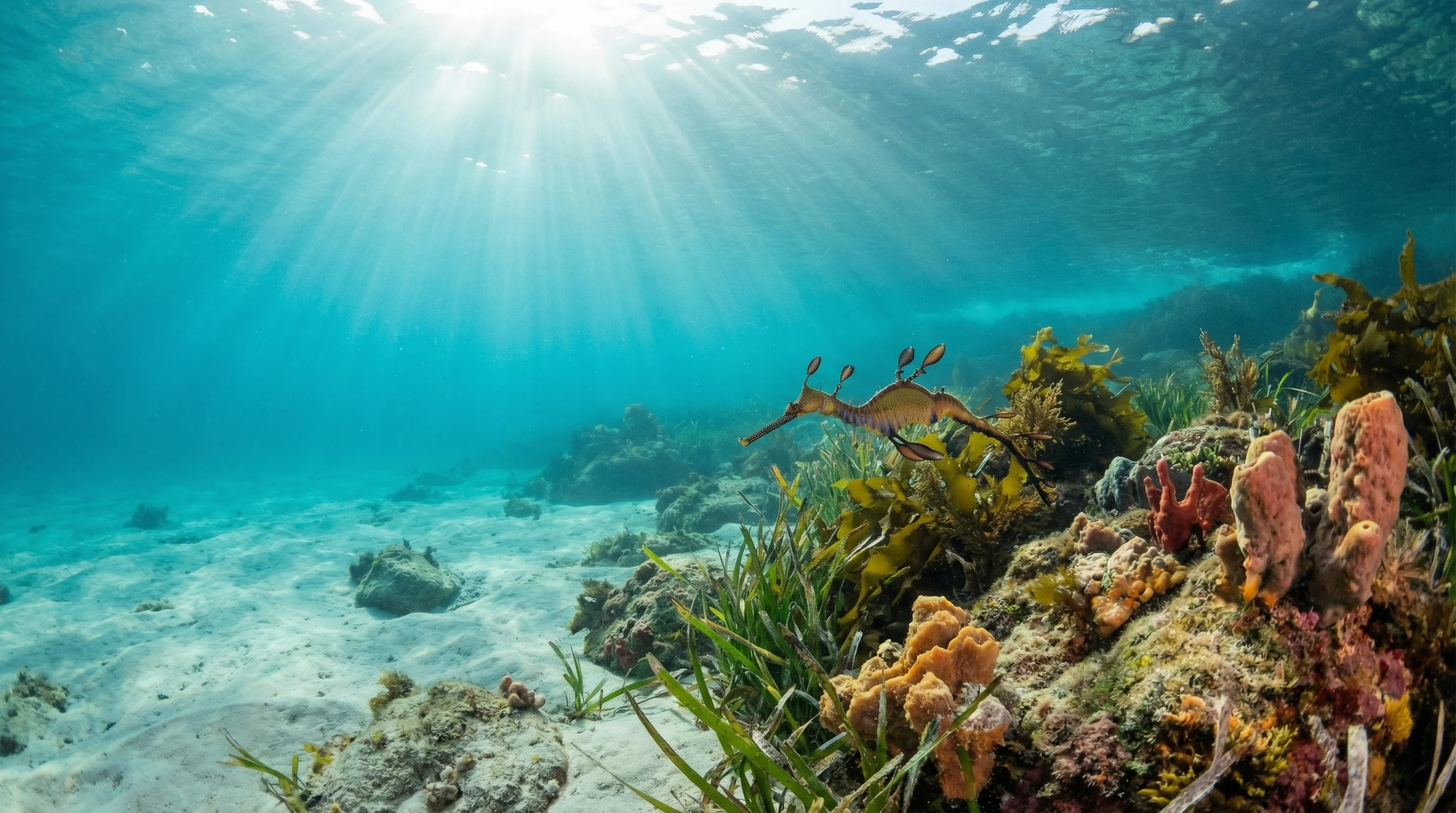
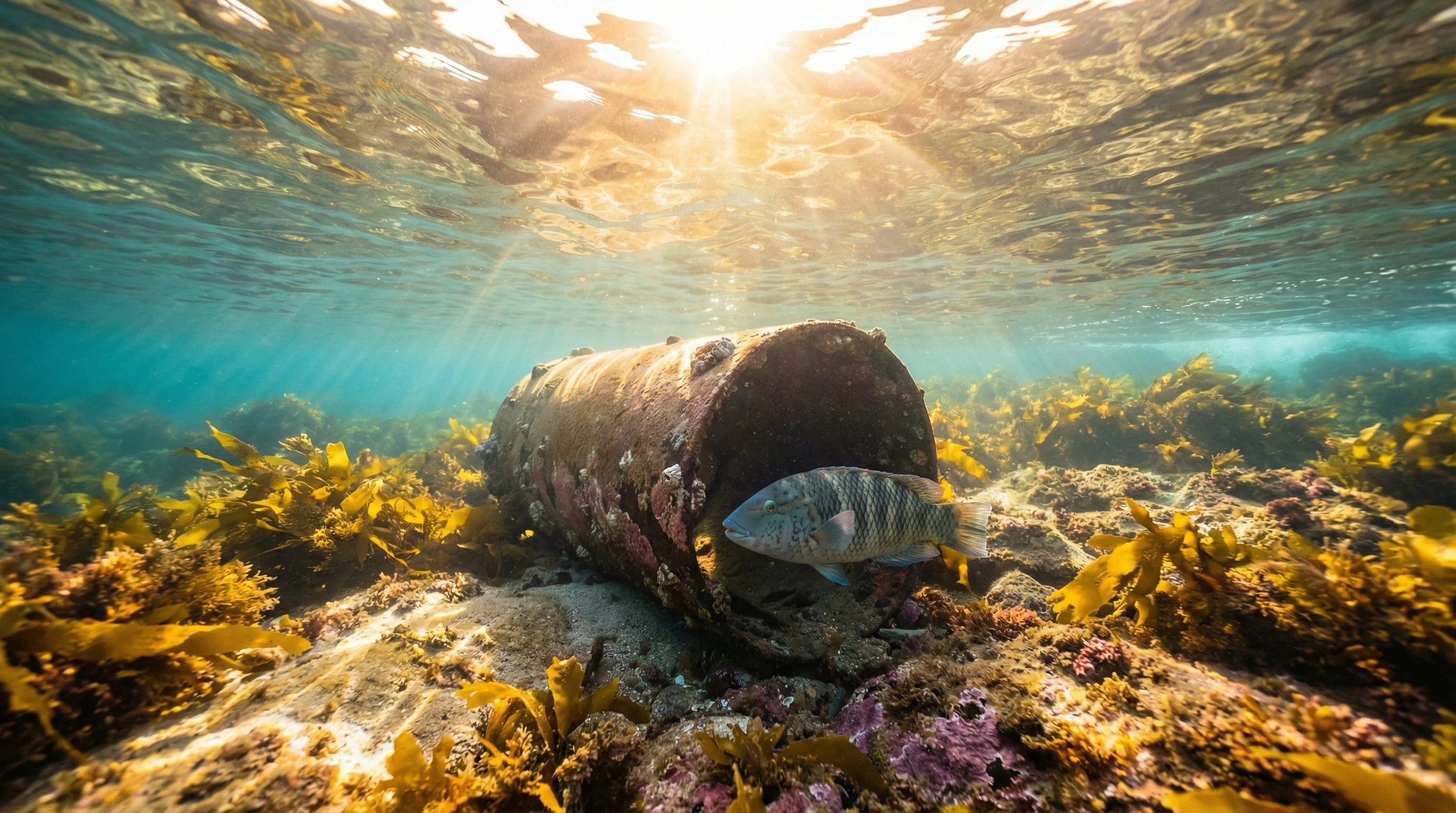
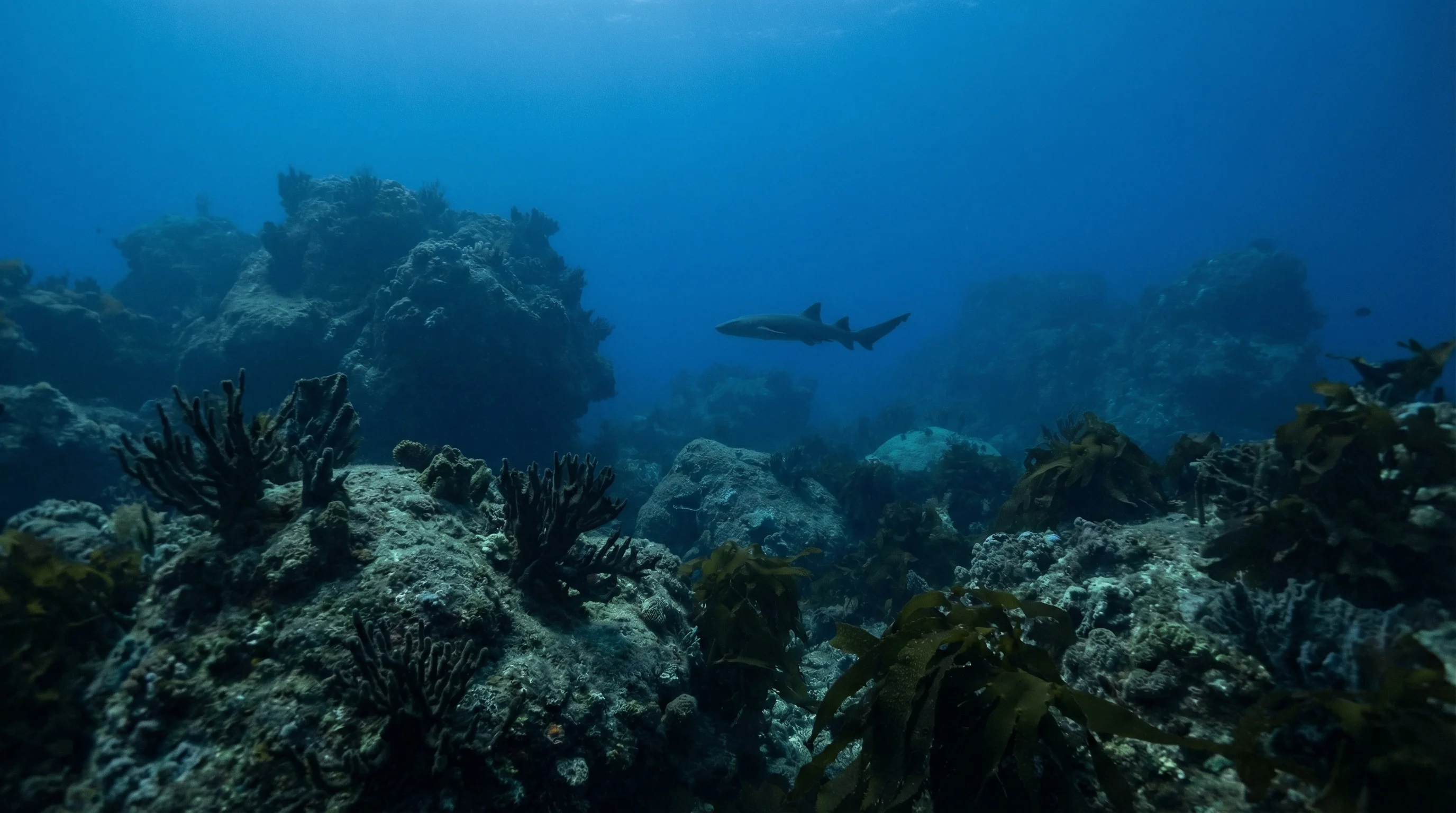
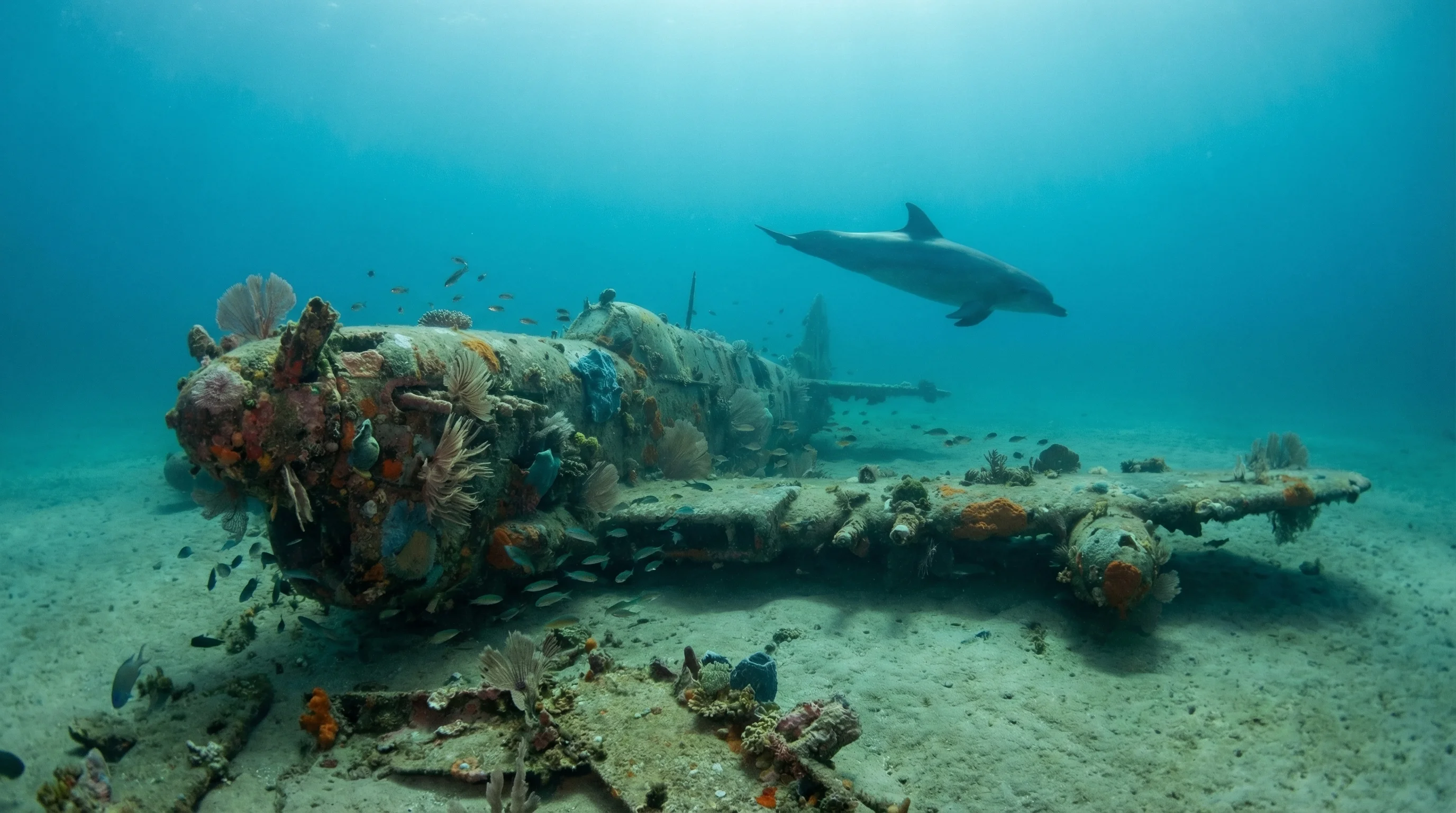
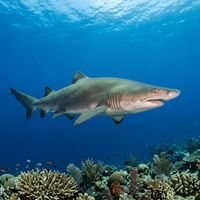
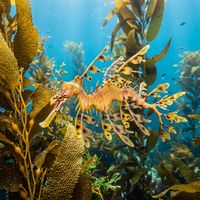
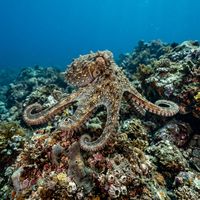
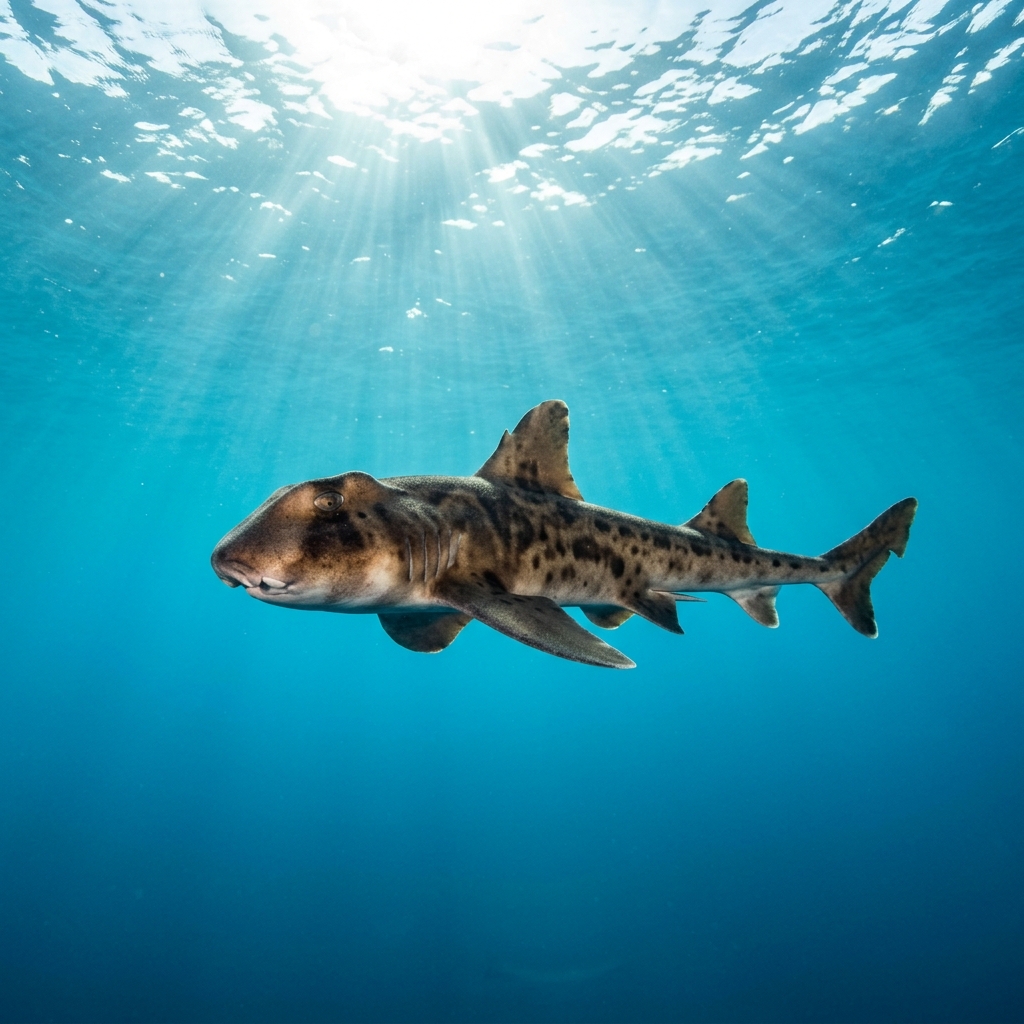
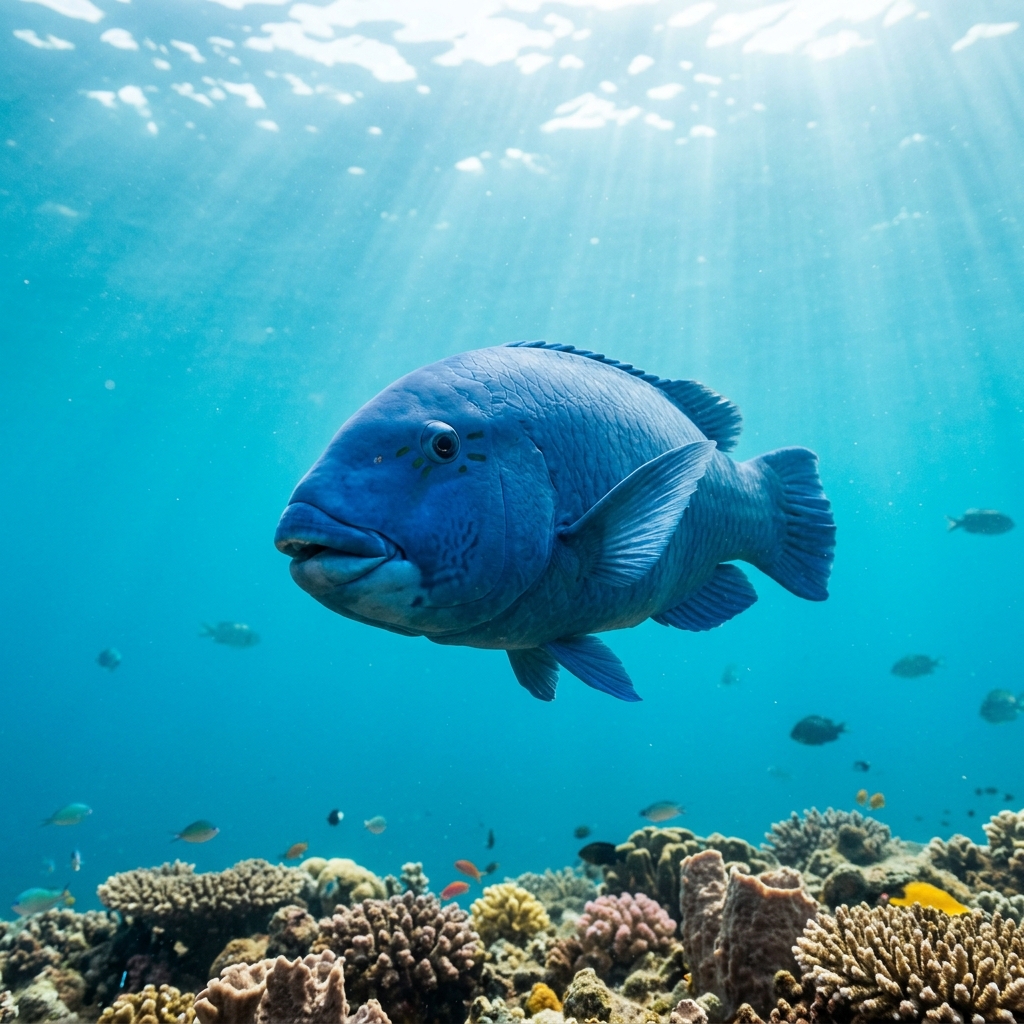
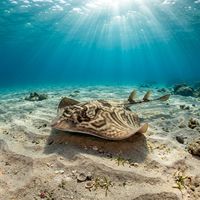
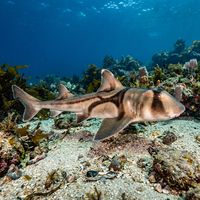
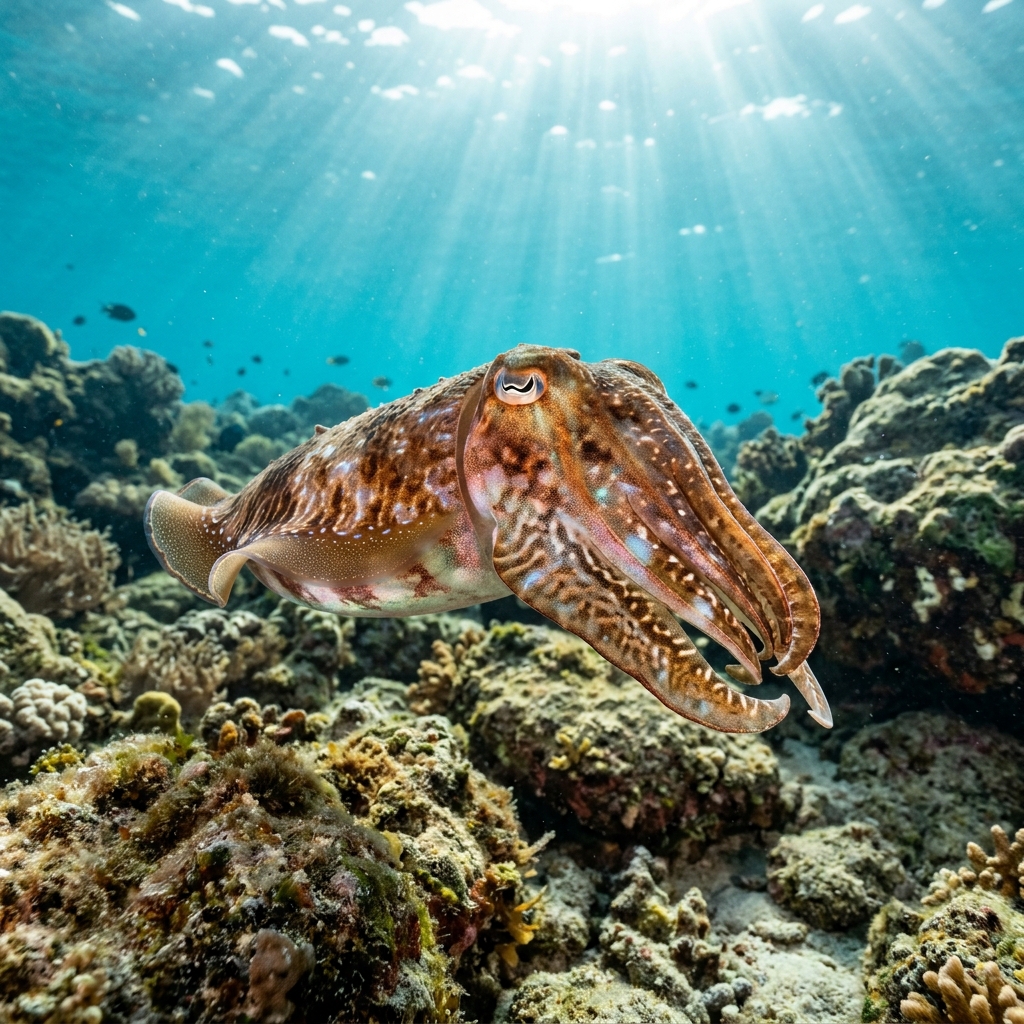
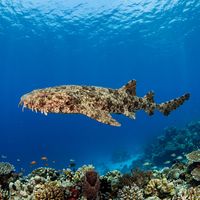
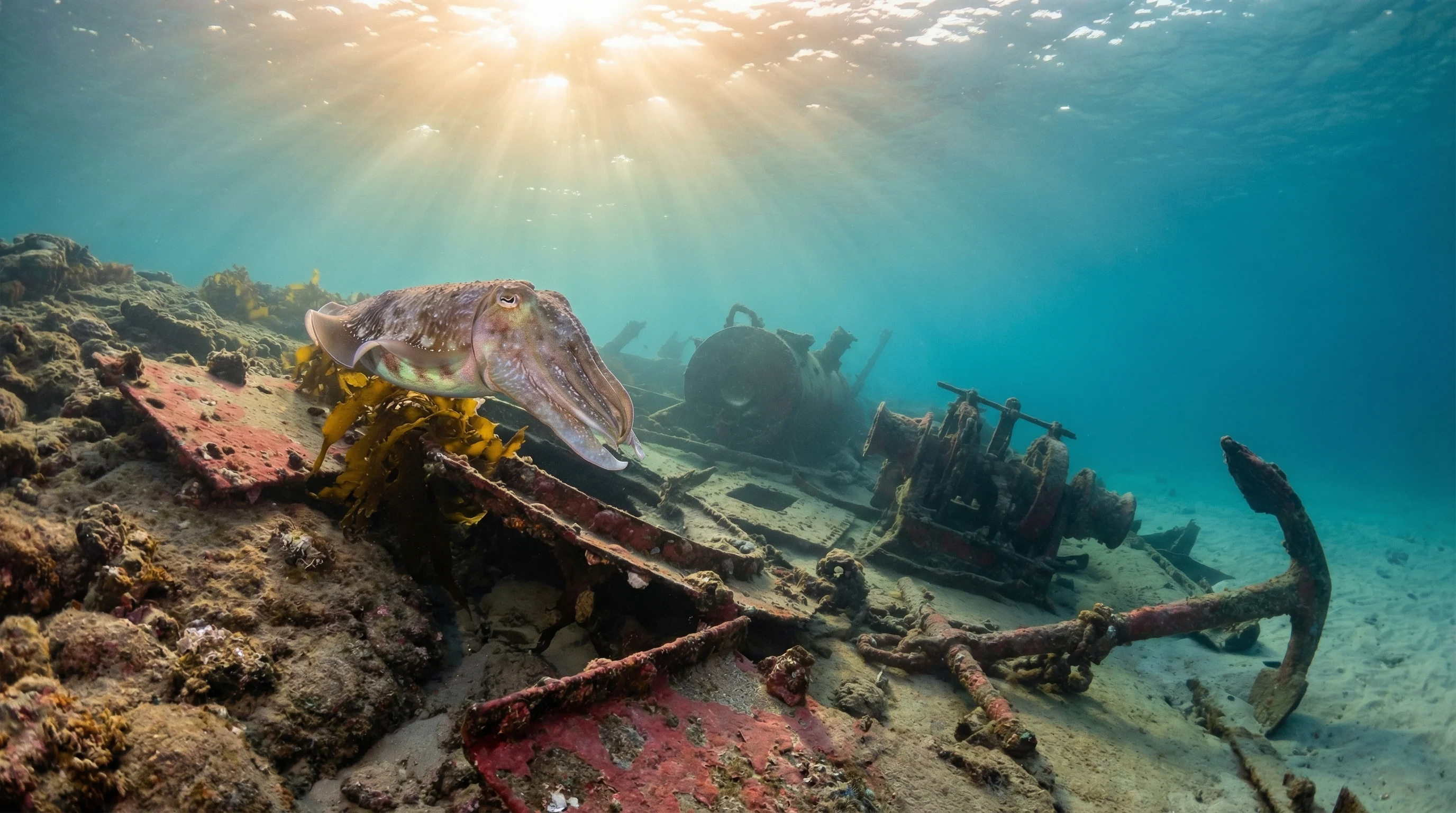
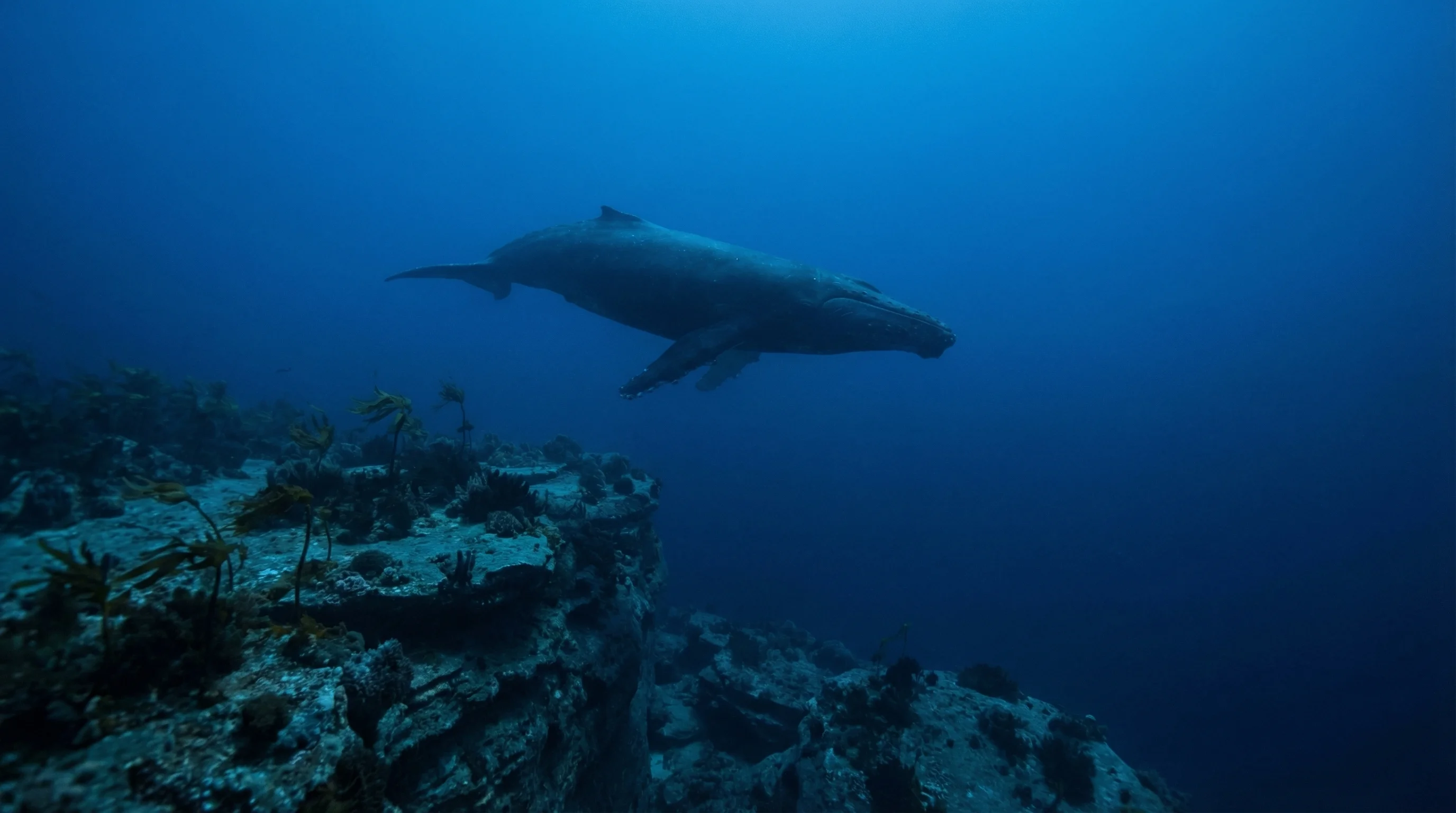
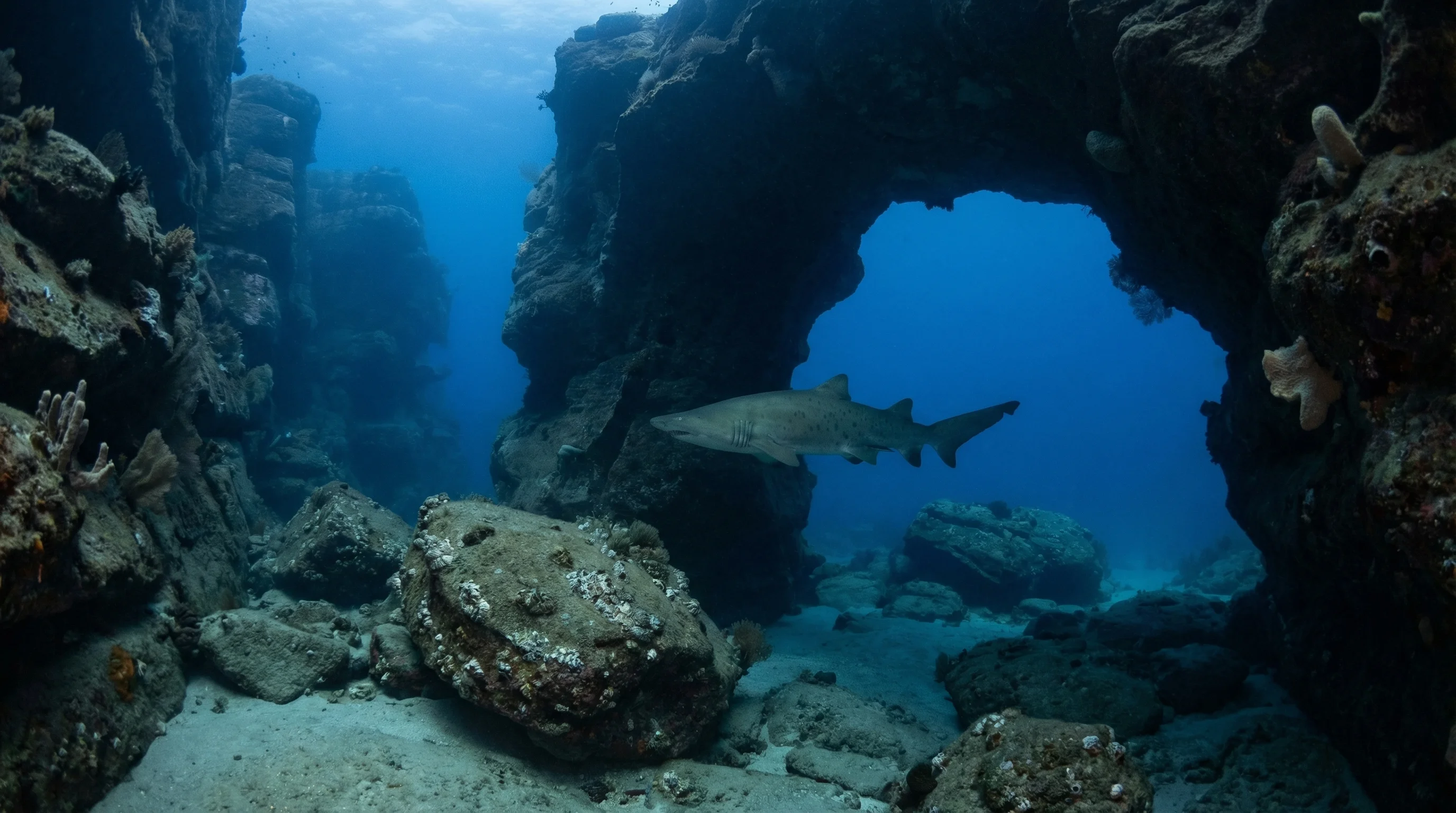
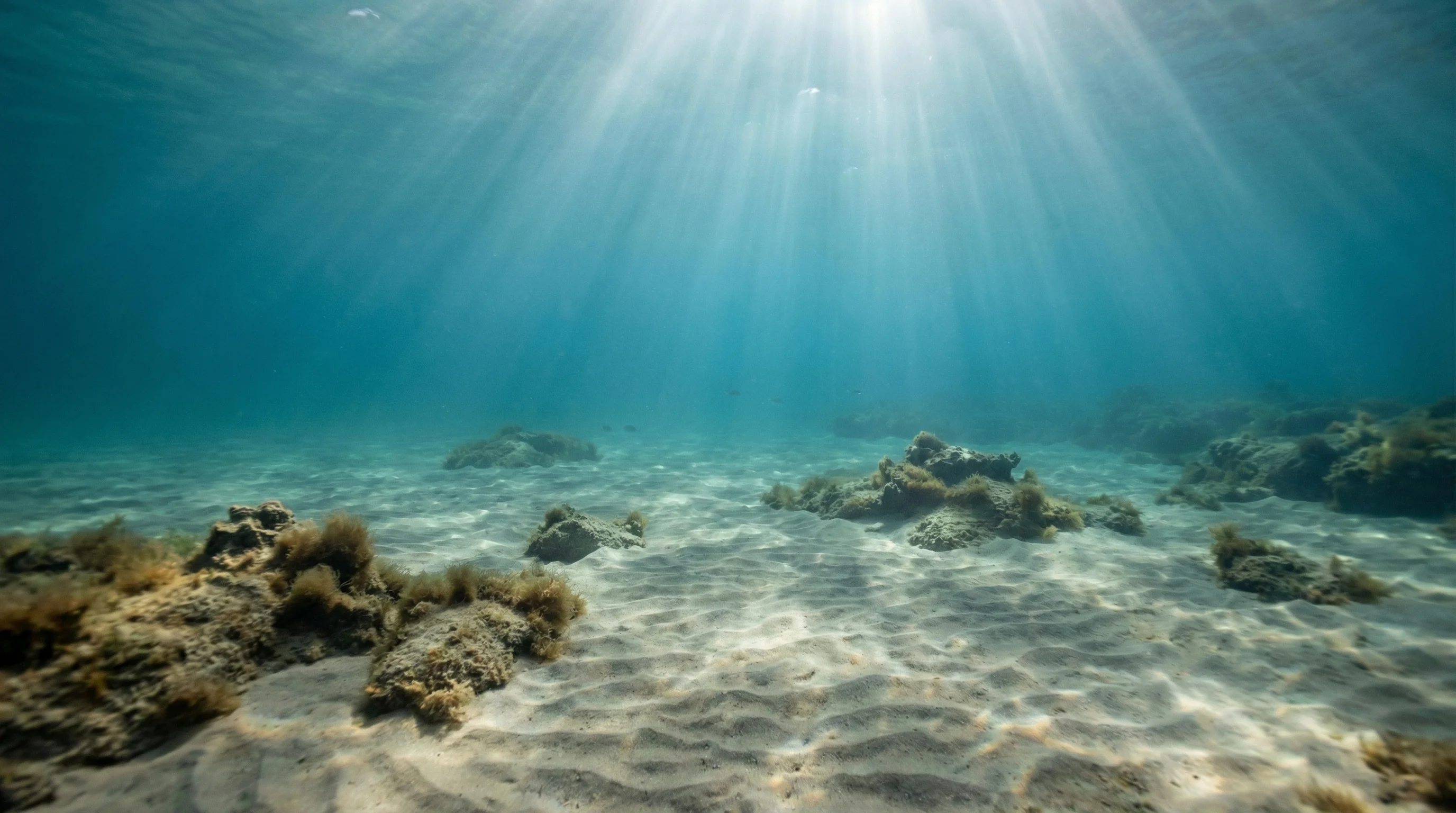
Huskisson sits within Jervis Bay Marine Park on the New South Wales south coast, where Pacific Ocean waters shape a temperate reef environment across four sites: a shallow beach entry, two reef dives, and a pair of wrecks including the aircraft wreck Fairy Firefly VX381 and the very shallow Lady Hampden. Water temperatures warm to the low-to-mid twenties over summer and drop to the high teens through winter. Visibility is variable but can reach thirty metres at the offshore reef site, Outer Tube. Species regularly recorded here include grey nurse sharks, spotted wobbegong, giant cuttlefish, fiddler rays, and a strong nudibranch assemblage, making Huskisson a productive temperate dive area accessible to beginners via both shore and boat.
Monthly water temperature across Huskisson's sites, from satellite sea-surface data corrected for depth. The band shows the site-to-site spread.
Water temperatures sit in the high teens from mid-winter through early spring, making a five-millimetre wetsuit a minimum for most divers during those months. Summer brings temperatures into the low-to-mid twenties, coinciding with the period when grey nurse sharks are most reliably encountered. Visibility is highly site-dependent and can shift quickly, but the offshore sites regularly see conditions well above ten metres.
Water temperature around Huskisson ranges from about 18°C in July to 24°C in February, based on satellite sea-temperature data for its dive sites.
In the warm season (about 24°C) a 3mm full suit is comfortable in Huskisson; in the coldest months (about 18°C) step up to a 5mm suit.
Fin maps 4 sites in Huskisson (4 scuba diving sites and 1 snorkelling spots, with some suited to both).
Across Huskisson's dive sites, May and August are most often reported as the best months to visit.
2 more sites to explore