Heterodontus galeatus
Find crested bullhead sharks along New South Wales and Queensland reefs between July and January. Here's how to spot one and where divers log them most.
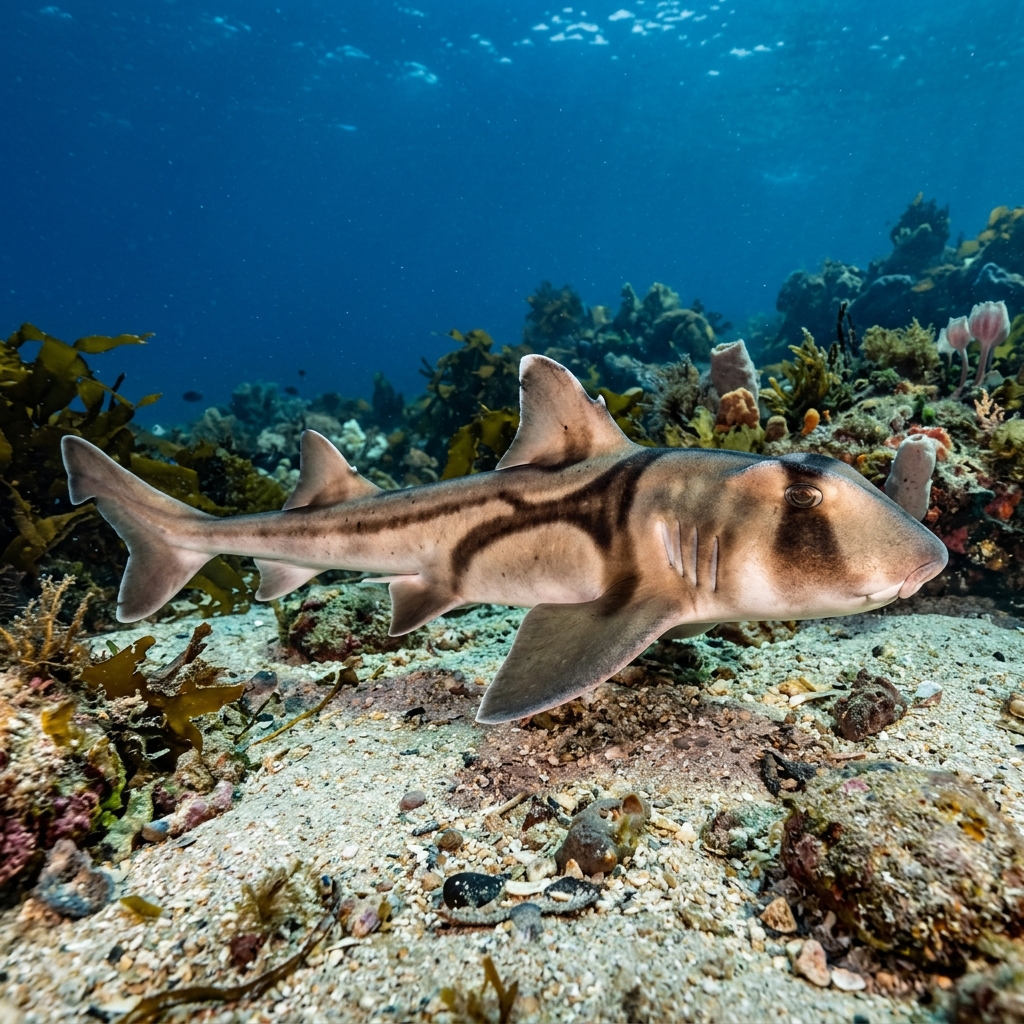
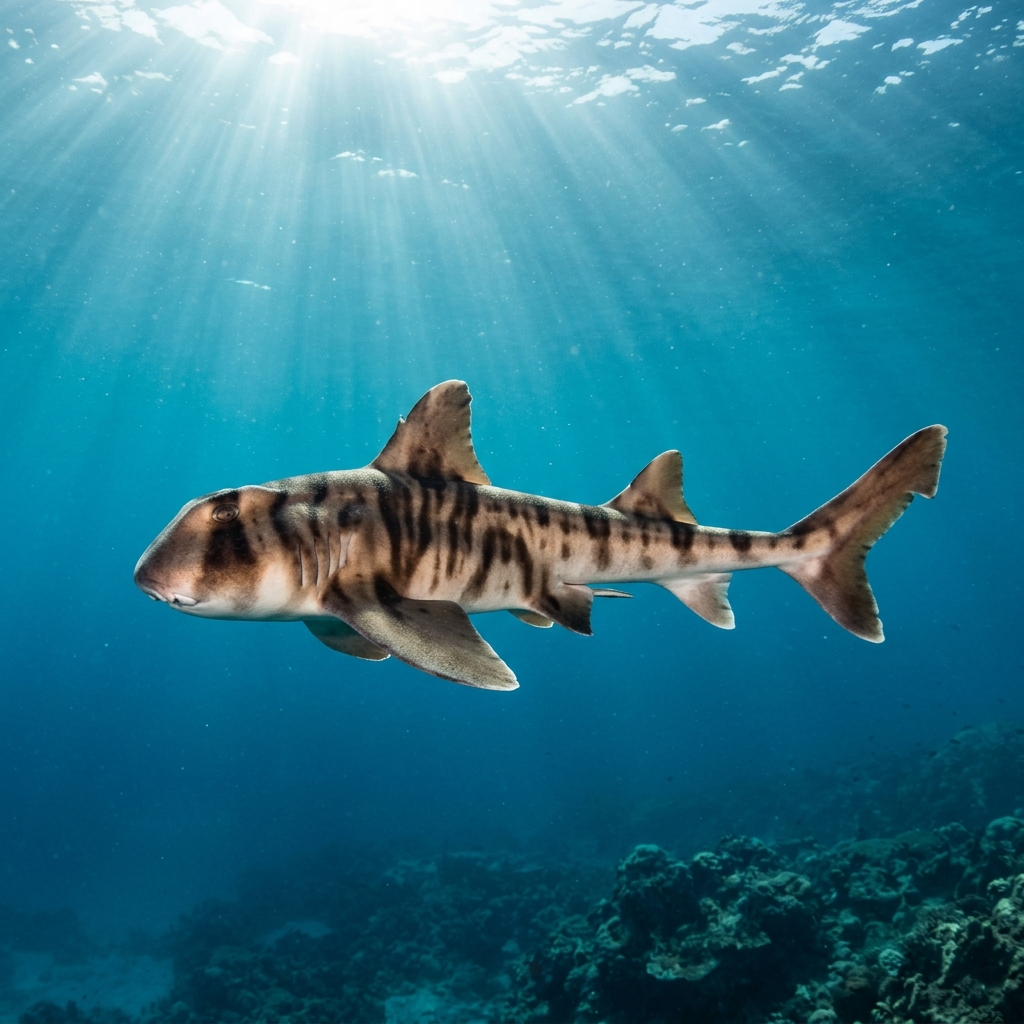
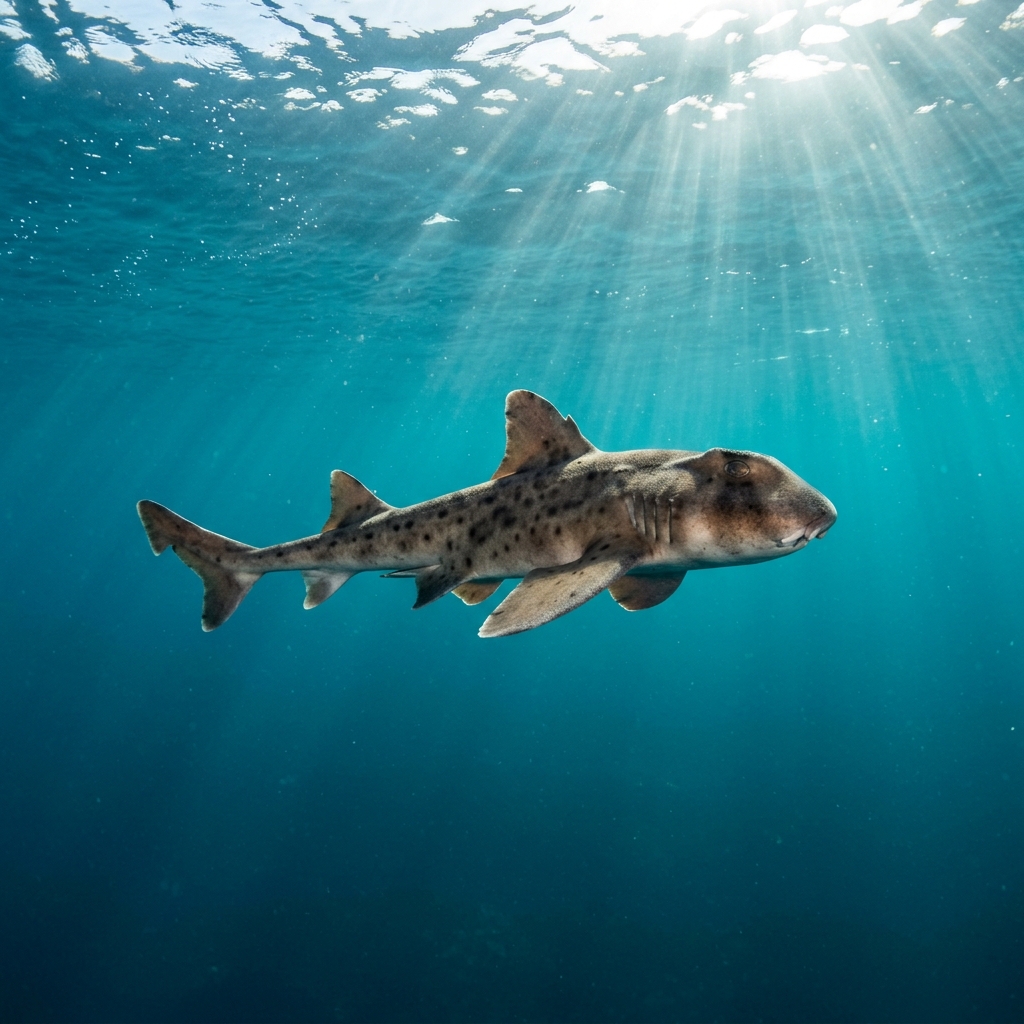
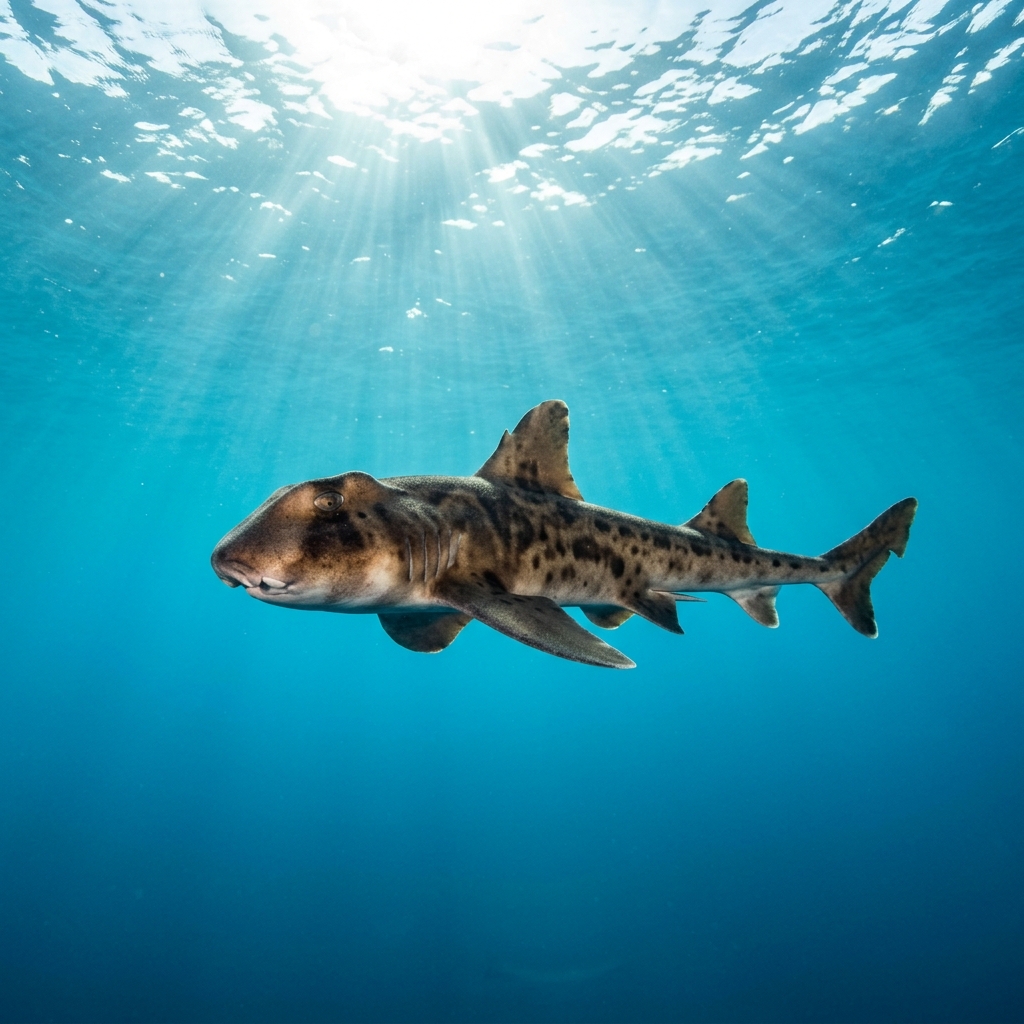
A stout, blunt-headed shark with dramatically raised ridges above each eye that give it a frowning, helmeted look unlike any other shark you'll meet on Australian reefs. Body colouration is brown to greyish with darker saddle-like blotches or banding along the flanks. It stays small enough to tuck under ledges comfortably, and its rounded pectoral fins and two dorsal fins each with a stout spine at the front are useful confirmation features. The crest above the eye is the single fastest field mark underwater.
Crested bullhead sharks are sluggish, bottom-oriented animals that spend daylight hours wedged under rocky ledges or resting motionless on rubble and reef. They are not bothered by calm divers and will typically hold their position, making them one of the easier sharks to photograph once found. Feeding activity picks up after dark, so night dives on rocky reefs give you the best chance of watching them actually move.
Like other bullhead sharks, they produce remarkable corkscrew-shaped egg cases that they physically wedge into rock crevices to anchor them against currents. Finding an empty egg case on a New South Wales reef is good evidence the species has been active nearby.
In the Southern Hemisphere, sightings concentrate from July through to January, covering the southern winter into early summer. Plan dives in New South Wales or Queensland during these months and expect water temperatures in the 20 to 24 °C range, so a wetsuit of at least 5 mm is advisable.
Reef neighbours a diver could mistake it for. Use the identification notes above to tell them apart.
Almost the entire known dive range falls within Australia, with New South Wales the clear hotspot followed by Queensland further north. Canada carries a single modelled site, almost certainly a range-edge outlier rather than a reliable dive destination. If you want a realistic chance of an encounter, eastern Australian reefs are where to plan your trip.
Mapping where Crested Bullhead Shark is logged…
New South Wales is the top destination by a wide margin, with Queensland a secondary option further north. Both sit on Australia's east coast where rocky reef habitat suits this bottom-dwelling species. No other country outside Australia offers a reliable diving encounter.
Southern Hemisphere sightings are concentrated between July and January. Divers targeting New South Wales or Queensland reefs during this window, particularly on night dives over rocky substrate, have the best odds of finding one.
The raised bony ridges above each eye, sometimes called supraorbital crests, are the fastest ID feature and appear on no other shark in Australian waters. Look for a compact, blunt-headed shark resting on the bottom with a brown blotched pattern and a dorsal spine visible at the front of each dorsal fin.
No. They are slow, docile sharks that rely on camouflage rather than flight or aggression. They will typically remain still when approached by a calm diver and pose no realistic threat.
The species lays corkscrew-shaped egg cases, a distinctive shape shared across the bullhead shark family. The female physically jams the case into a rock crevice using her mouth, wedging it in place so currents cannot dislodge it while the embryo develops over several months.
Site and sighting data is aggregated from diver logs, iNaturalist and GBIF. For taxonomy and conservation status: