Achoerodus viridis
New South Wales is the hotspot for Eastern Blue Groper. Learn how to ID this bold blue wrasse and when to find it, from Nov through Jul.
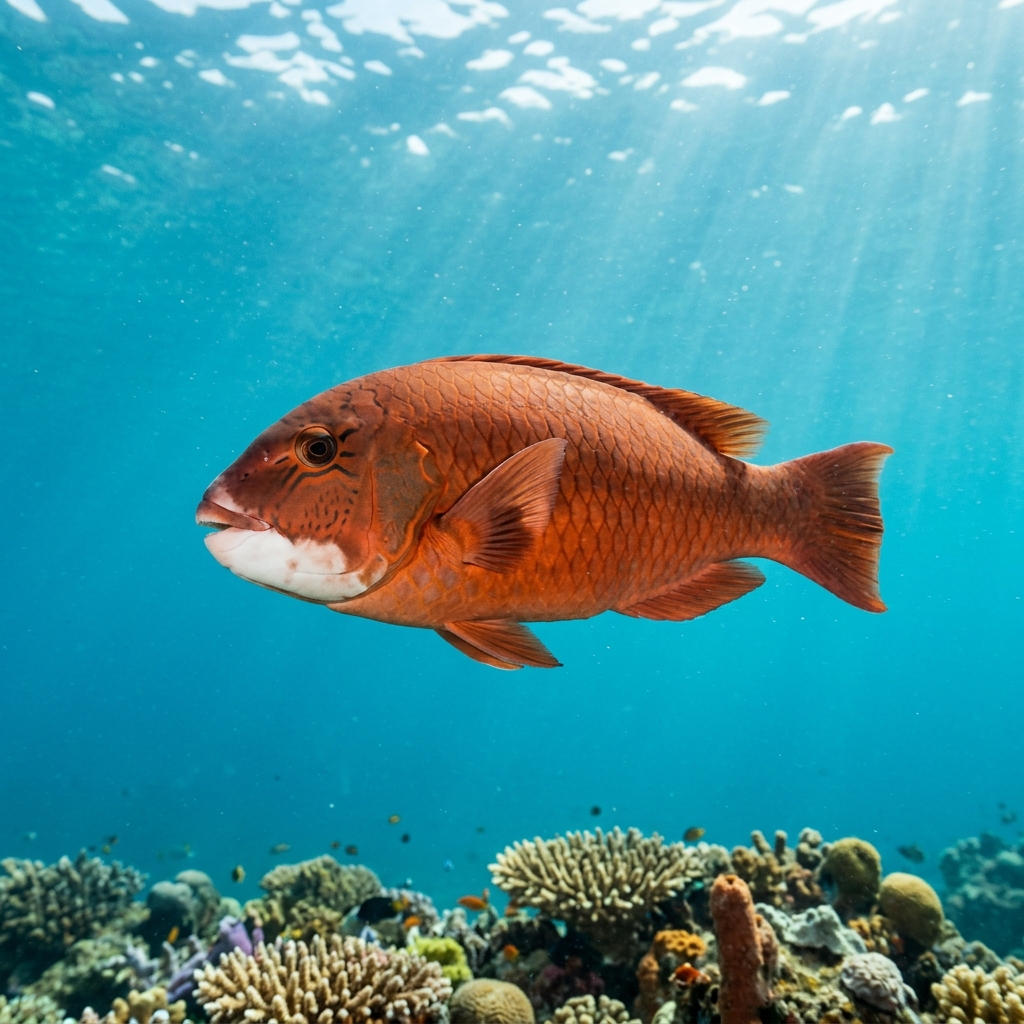
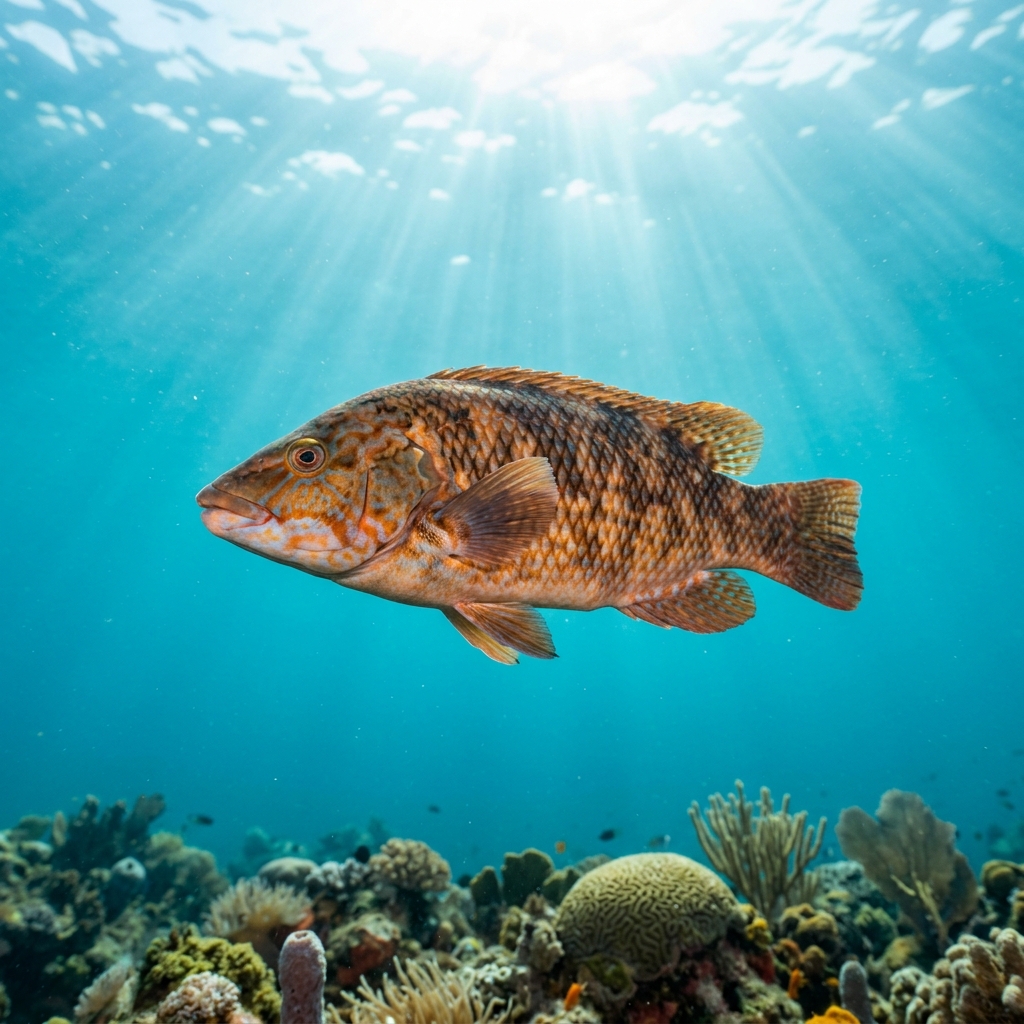
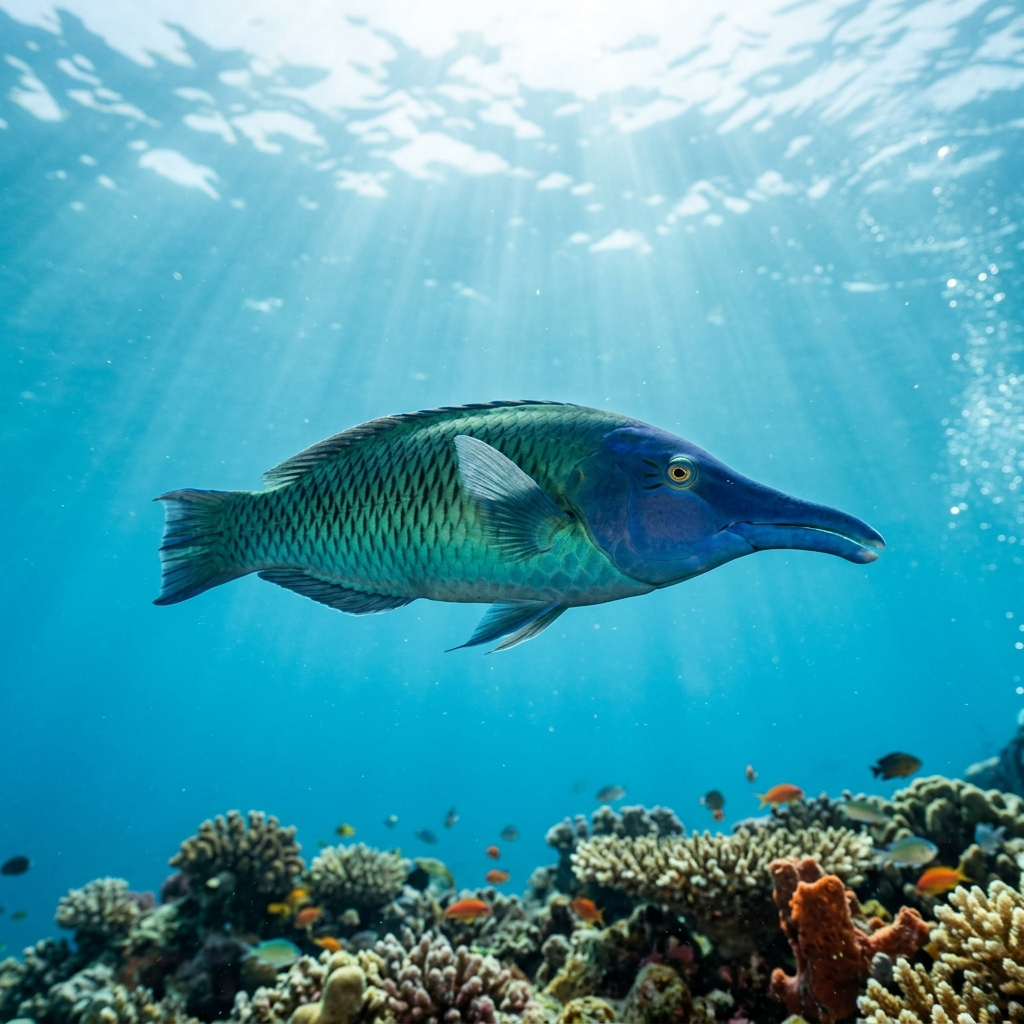
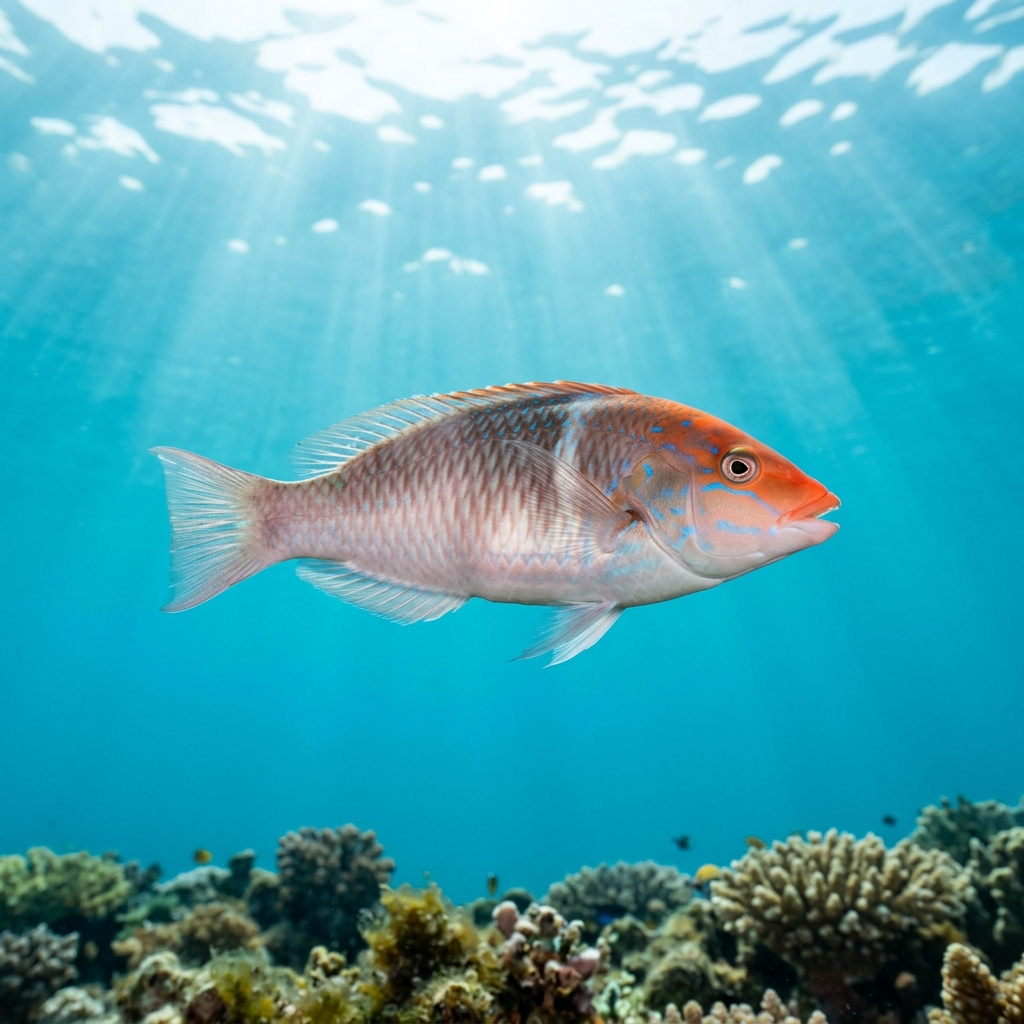
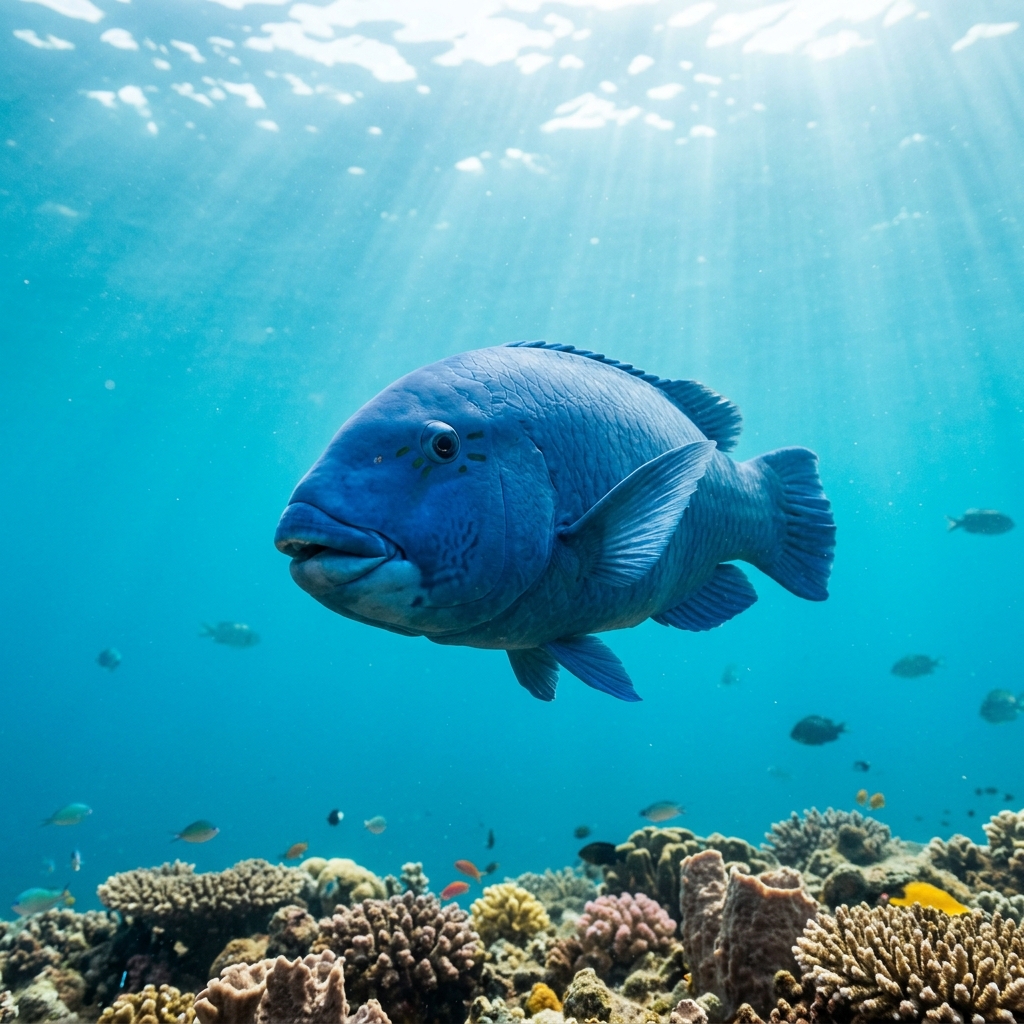
Adult males are hard to miss: a large, thickset wrasse draped in rich blue to blue-green, with a heavy, protruding forehead and thick lips built for crushing shellfish off rocks. Females and juveniles show a very different look, running reddish-brown to orange-brown with a paler belly. In temperate water around New South Wales the blue male is essentially unmistakable by colour alone, but the chunky body shape and slow, deliberate swimming style confirm the ID at a distance.
You will typically find them methodically working along rocky reef and kelp beds, using those powerful jaws to prise molluscs and crustaceans off hard surfaces. Males in particular are bold and curious, often approaching divers slowly rather than bolting, which makes for excellent close encounters. They tend to stay close to the benthos (the bottom and reef structure) rather than swimming in open water.
Like most wrasses, eastern blue gropers are protogynous hermaphrodites: individuals are born female and the dominant fish in a group can transition to male, with the colour shift from brown to brilliant blue marking the change.
Sightings concentrate from November through July in the Southern Hemisphere, peaking across the warmer end of the species' preferred range of roughly 16 to 23 °C.
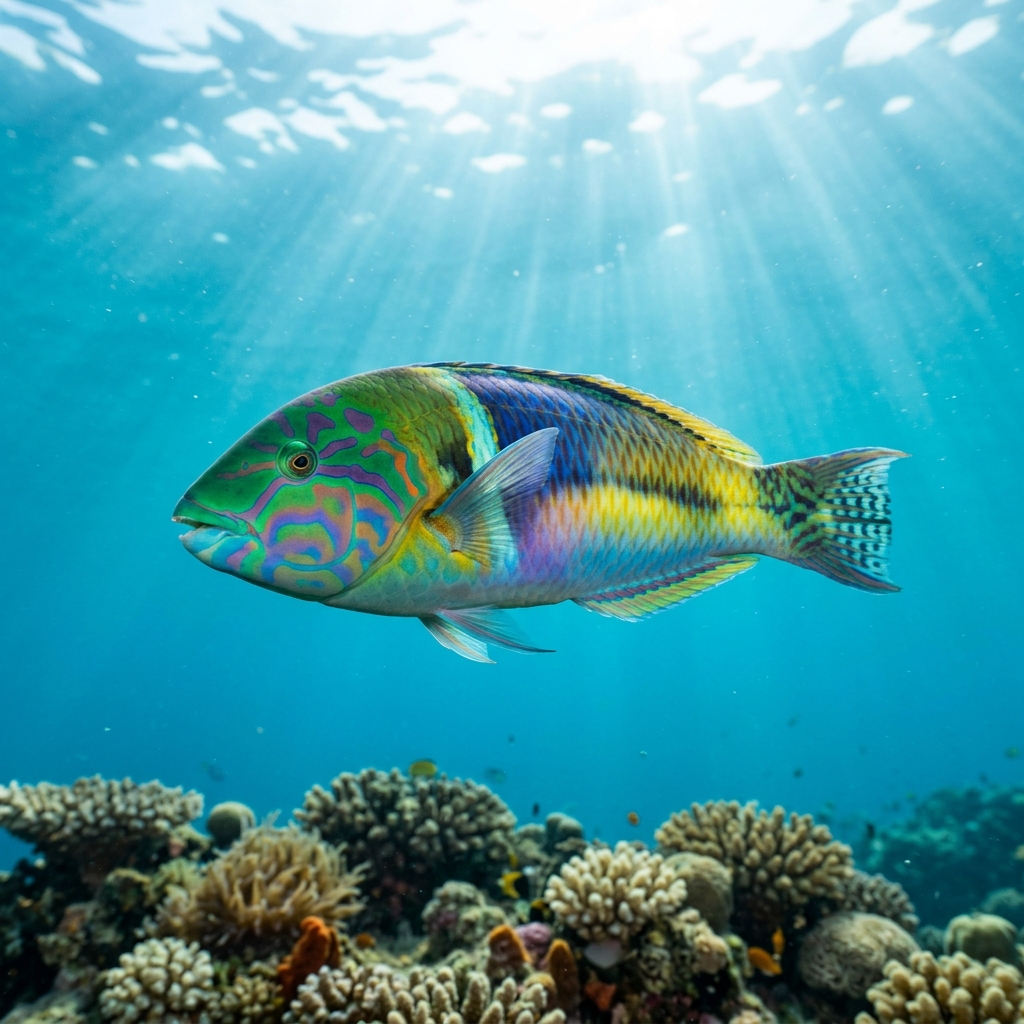
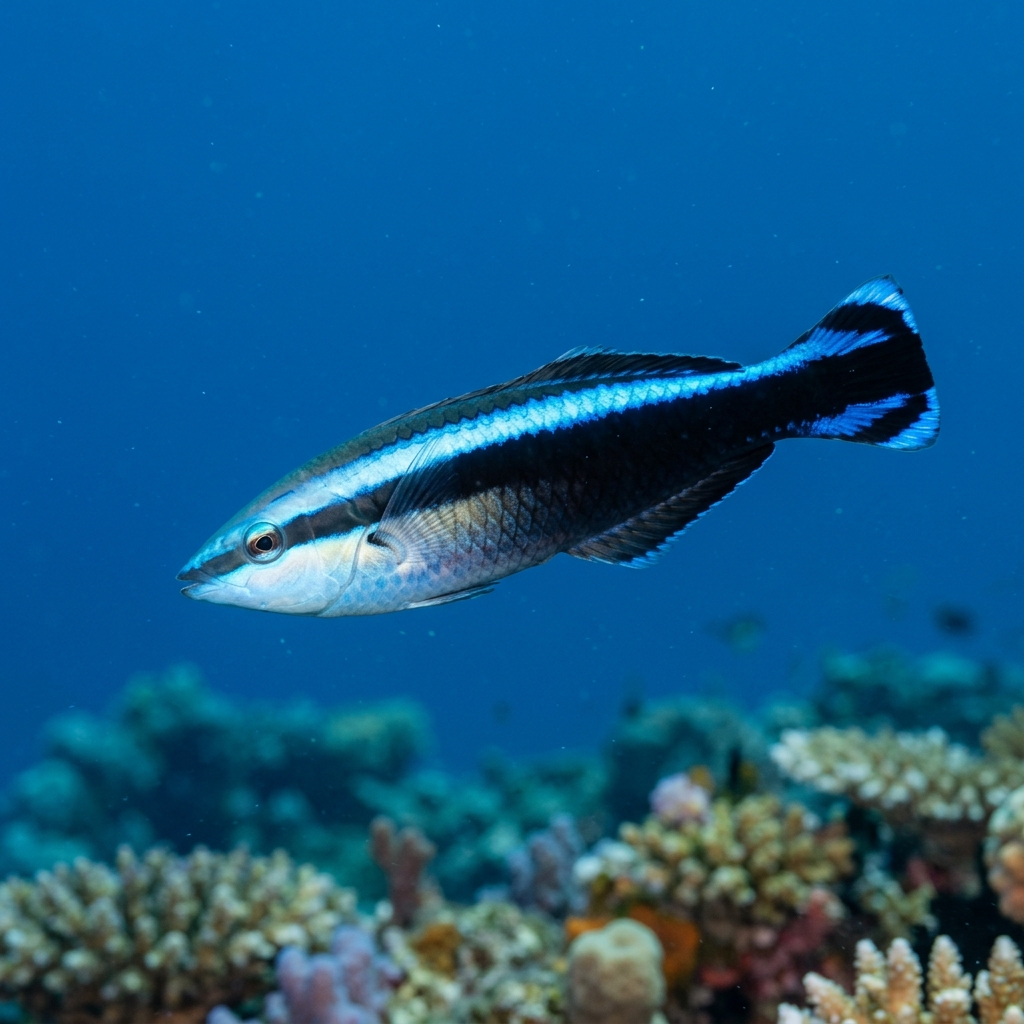
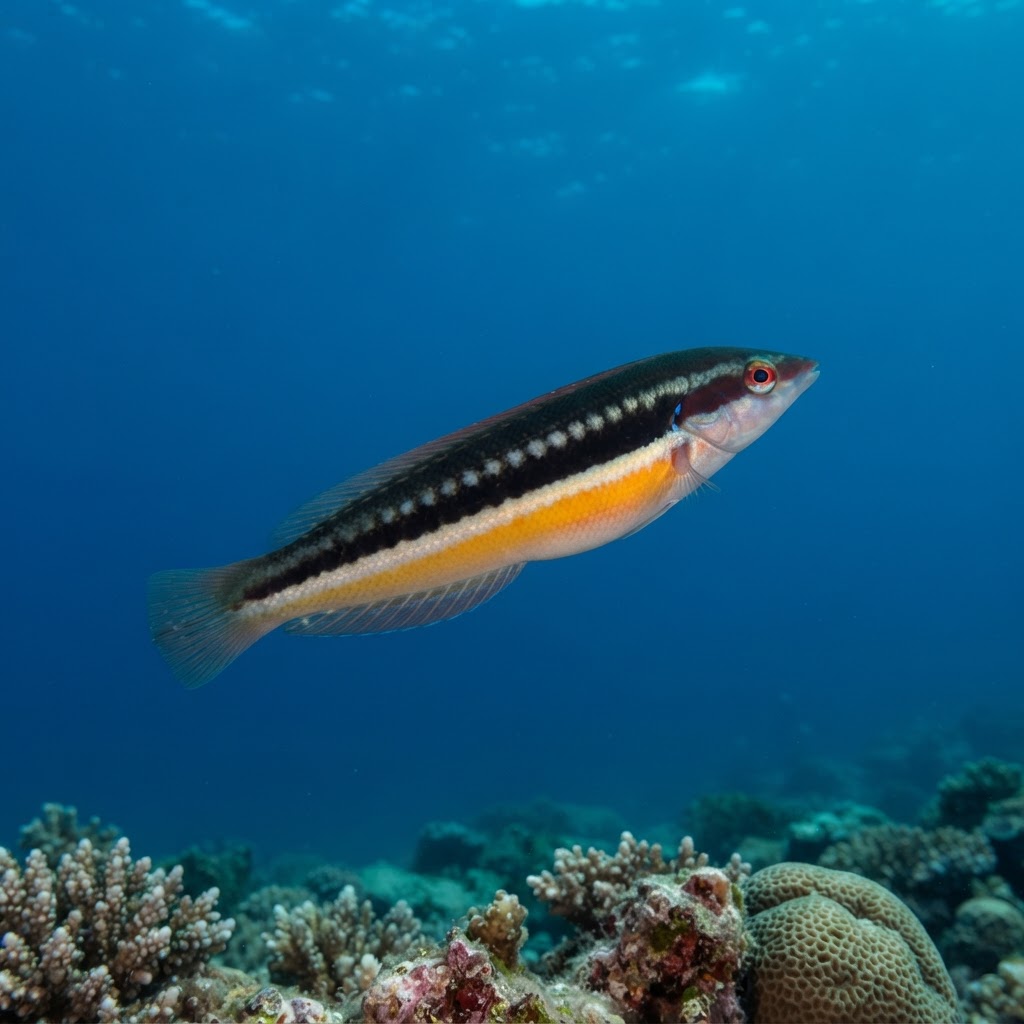
Reef neighbours a diver could mistake it for. Use the identification notes above to tell them apart.
Almost entirely an Australian species, with the strongest sightings concentrated along the New South Wales coast, where rocky reefs and kelp beds from Sydney Harbour southward are reliable spots. South Australia and Western Australia also hold populations worth seeking out, and a smaller number of records come from Queensland.
Mapping where Eastern Blue Groper is logged…
New South Wales is by far the most reliable place, with rocky and kelp-covered reefs around Sydney Harbour and along the NSW coast offering regular sightings. South Australia and Western Australia also have documented populations. It is almost exclusively an Australian species.
Sightings are most frequently logged between November and July in the Southern Hemisphere. The species favours cooler temperate water in the 16 to 23 °C range, so it remains present outside peak summer in New South Wales.
Adult males are large, thickset wrasses with vivid blue to blue-green colouration, thick lips and a slightly bulging forehead. Females and juveniles are reddish-brown. The combination of size, heavy build and slow deliberate movement on rocky temperate reefs makes a male essentially unmistakable in NSW waters.
No. Eastern blue gropers are not dangerous. They are often curious and will approach divers calmly, making them one of the more approachable large fish on temperate Australian reefs.
They are currently listed as Near Threatened. Historically targeted by spearfishing and slow to reproduce, local populations can take years to recover from pressure. They are now protected in some marine parks, and divers should avoid disturbing resting or feeding individuals.
Site and sighting data is aggregated from diver logs, iNaturalist and GBIF. For taxonomy and conservation status:
Bird Wrasses
3,632 sites