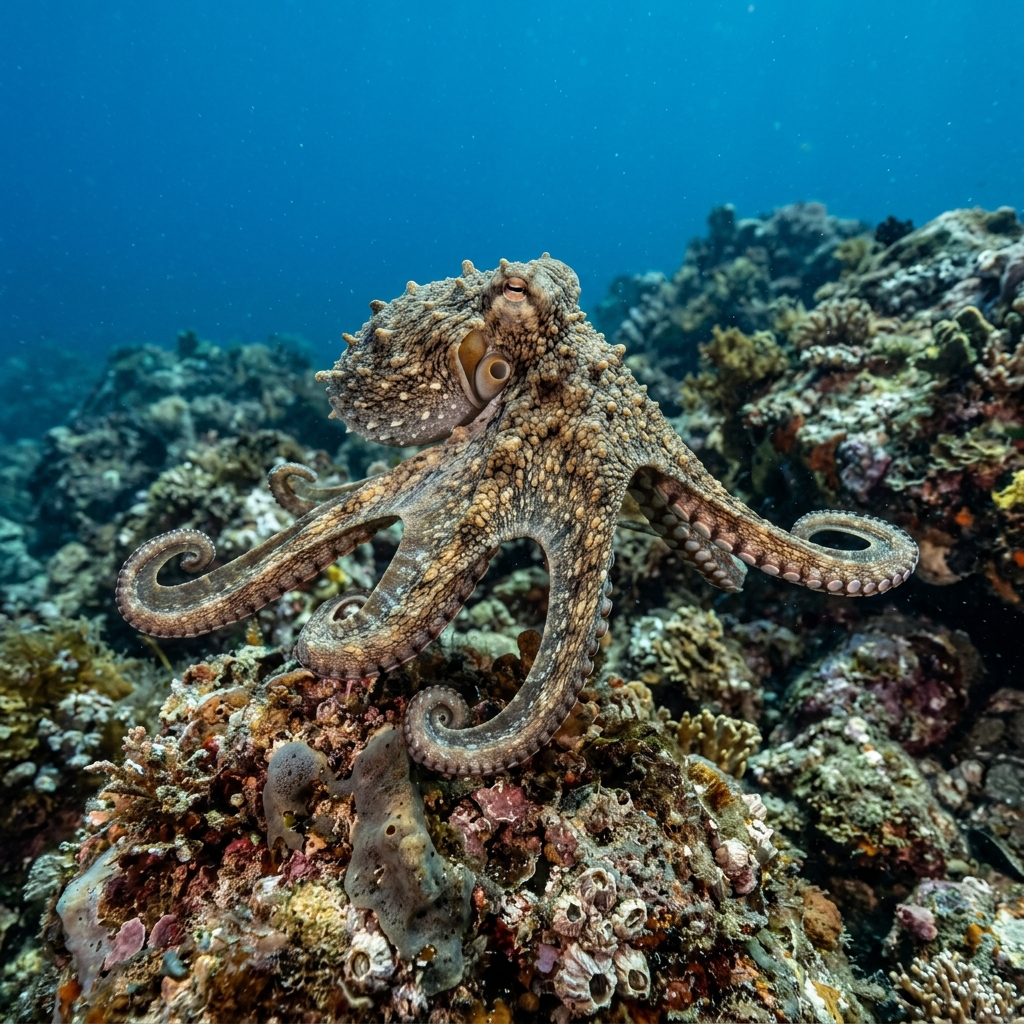
Octopus tetricus
Spot the Common Sydney Octopus across New South Wales and New Zealand's Coromandel coast in waters from 15 to 23°C. Here's where and when to find one.
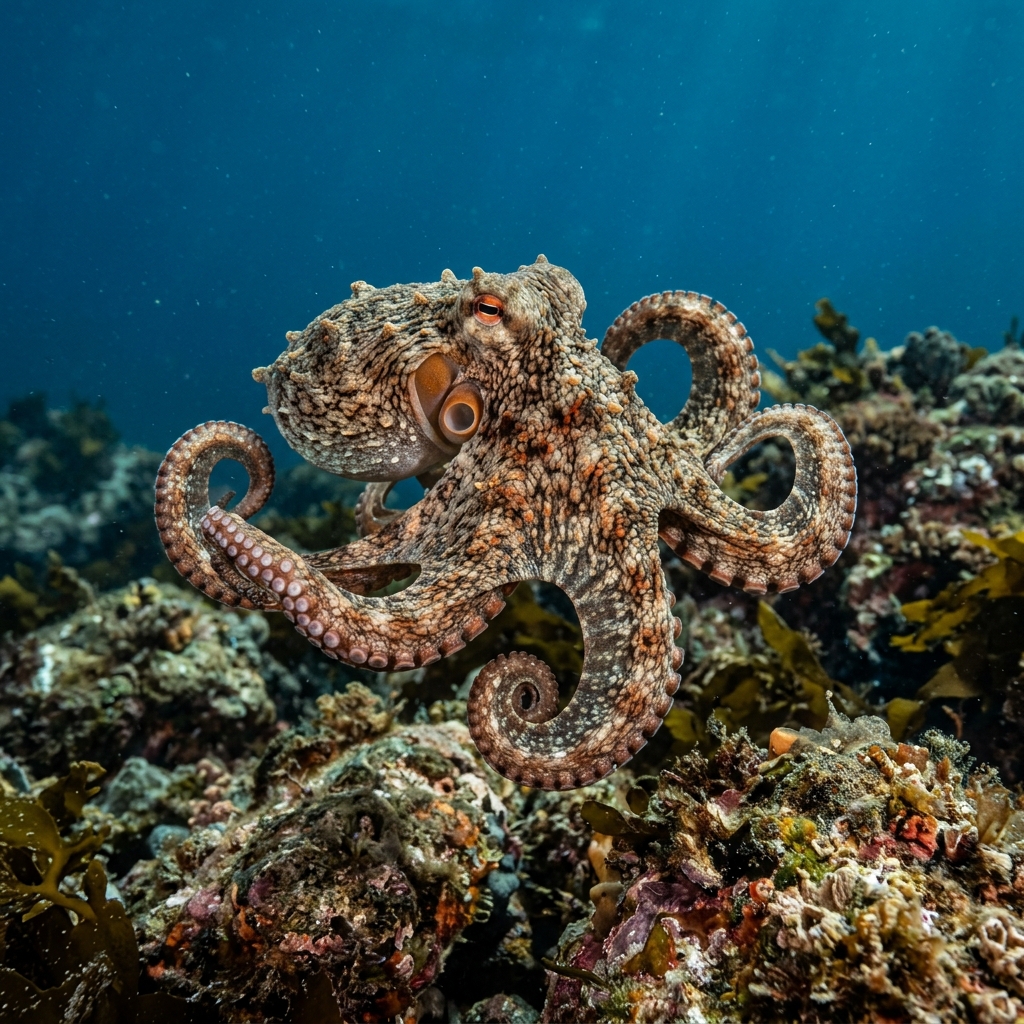
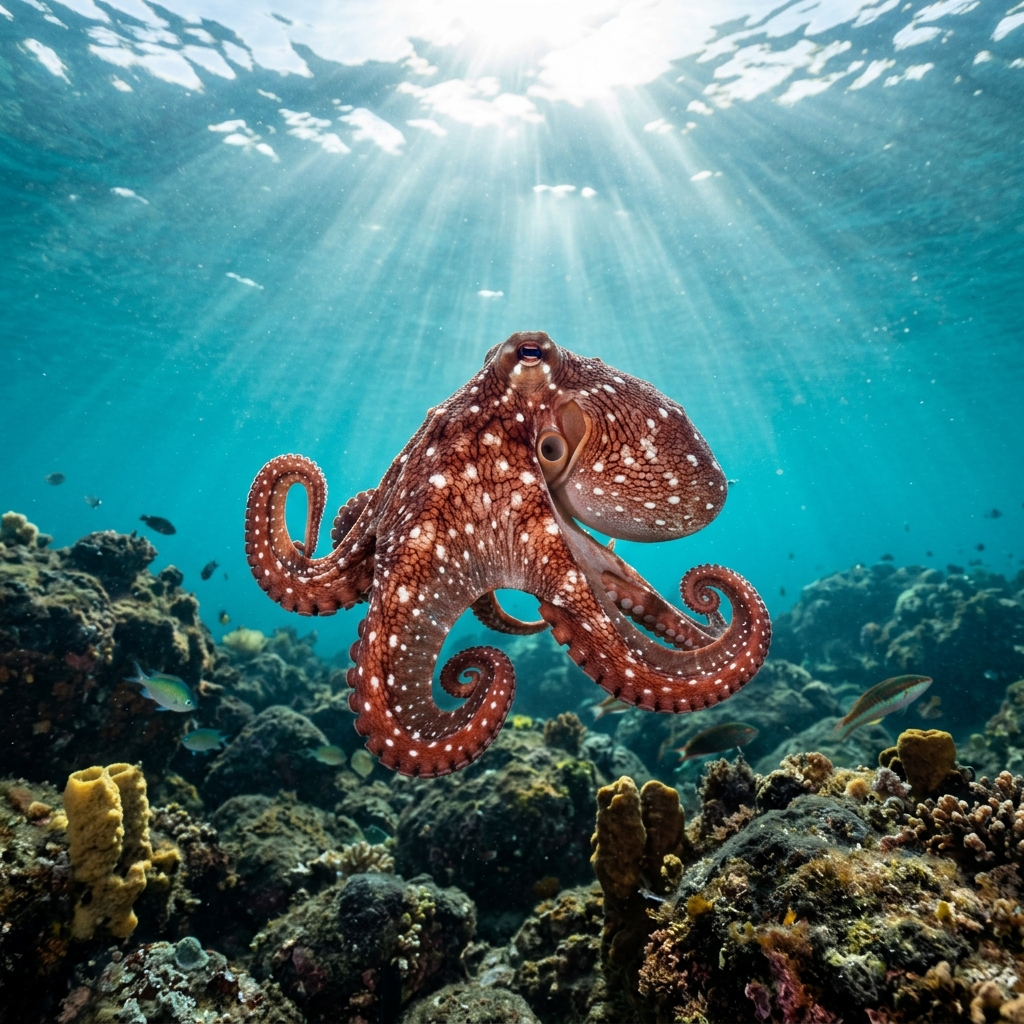
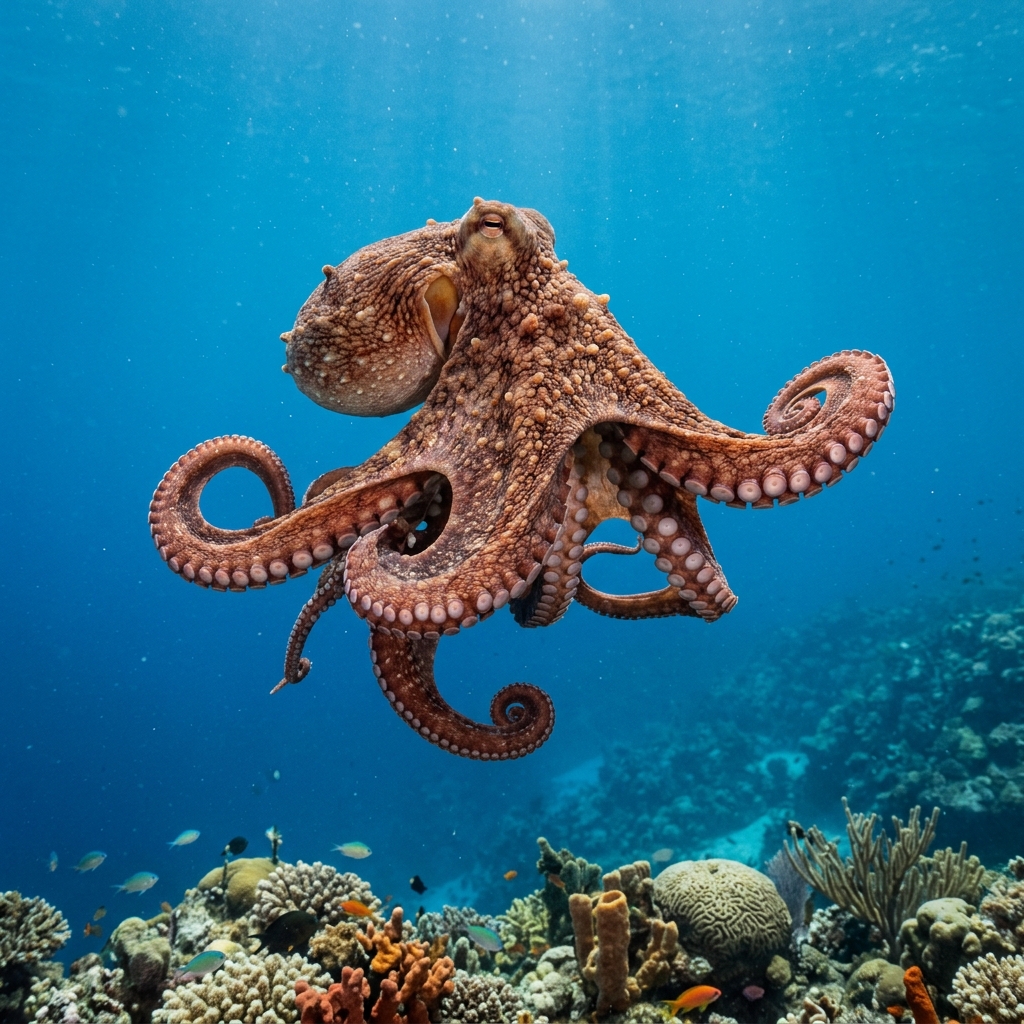
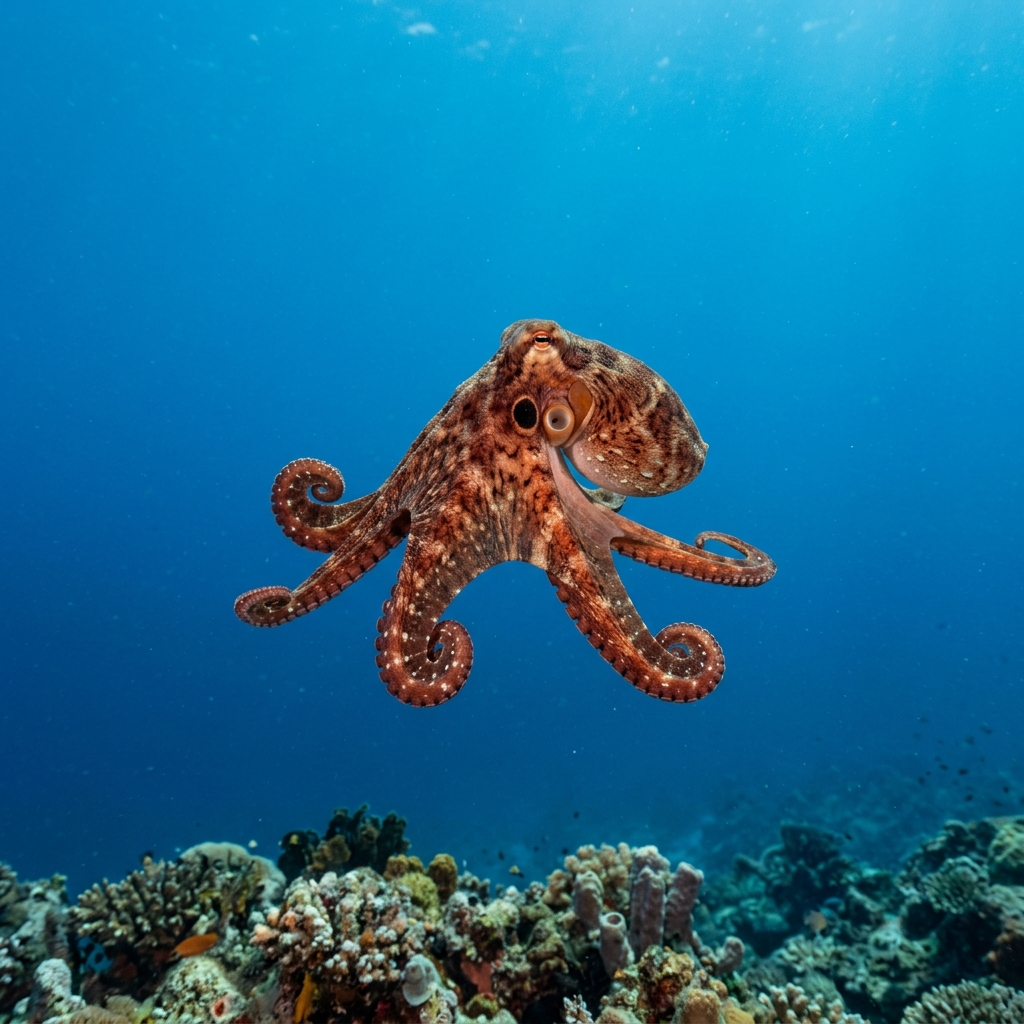
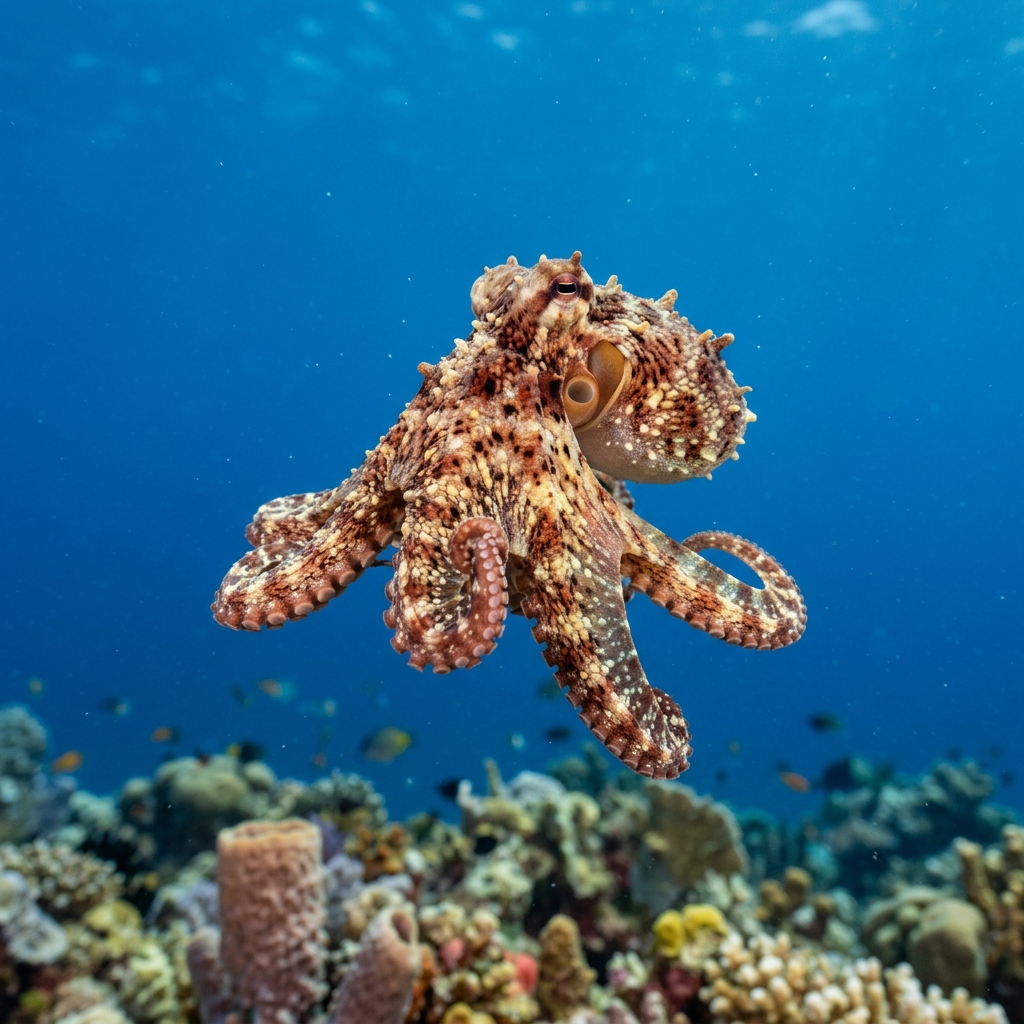
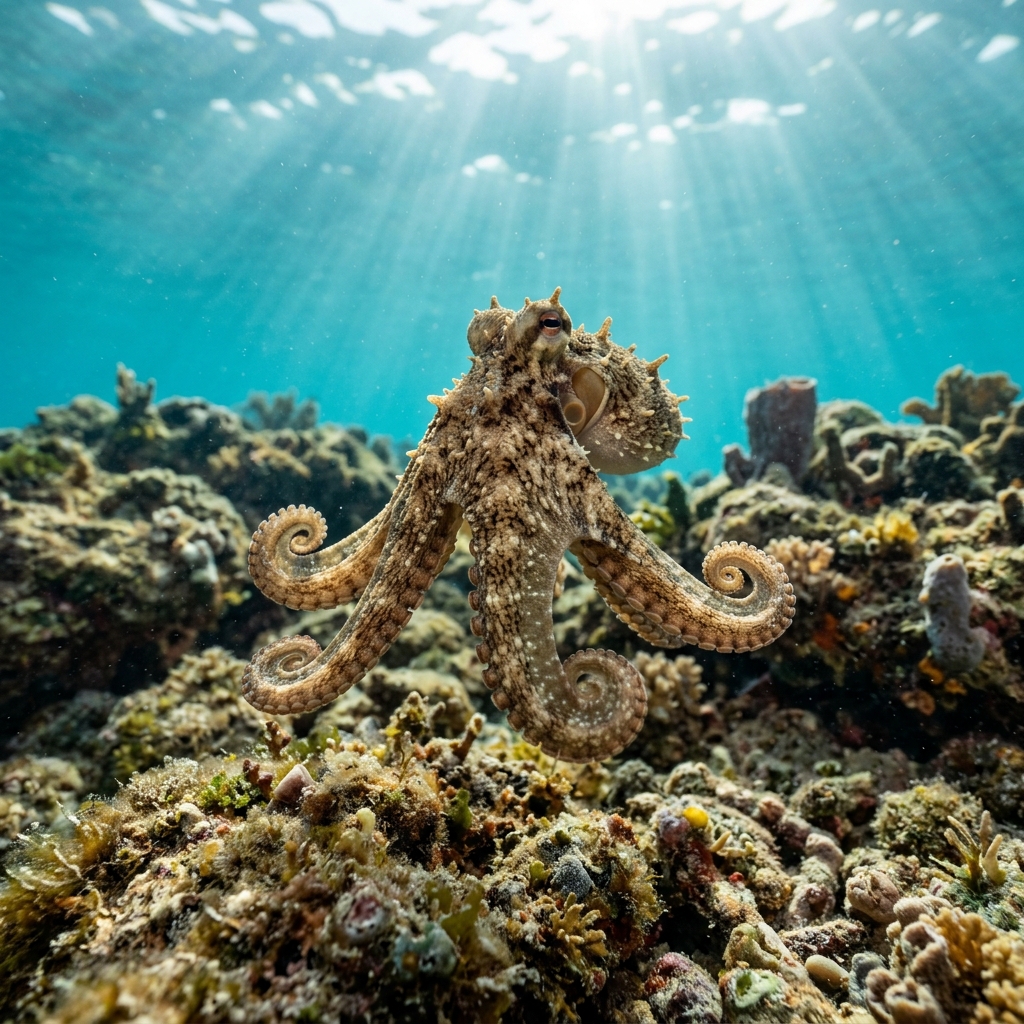
Reaching around 56 cm arm-span, this is a large, robustly built octopus with a warty, heavily textured skin that shifts rapidly between mottled reddish-brown, pale cream, and deep ochre depending on mood and background. The arms are thick at the base with prominent suckers, and the skin often shows a network of pale streaks or a characteristic 'white stripe' running along parts of the arms. Like all octopuses it can flatten itself dramatically, but its stocky proportions and cool-water colouring help separate it from tropical species in its range.
Most encounters happen when the octopus is peering out from the entrance of its den, often identifiable by a tidy pile of discarded shells and rubble at the doorstep. Approach slowly and from the side rather than head-on and it may hold its ground, turning a curious eye towards you rather than retreating; rush it and it will pull back instantly. Dawn and dusk are when it roams most actively, so those are the best times to watch it hunting across the reef rather than just sitting tight in a hole.
One of the clearest signs you have found an active den is the 'midden' outside: a heap of crab claws, bivalve shells, and other prey remains that the octopus discards after feeding, sometimes accumulated over many weeks.
Seasonality data from tracked sites points to sightings concentrating from June through April, suggesting the animal is largely absent or much harder to find in May. Given its cool-water preference of 15 to 23°C, the temperate southern Australian and New Zealand winters and springs tend to keep conditions within its comfort zone.
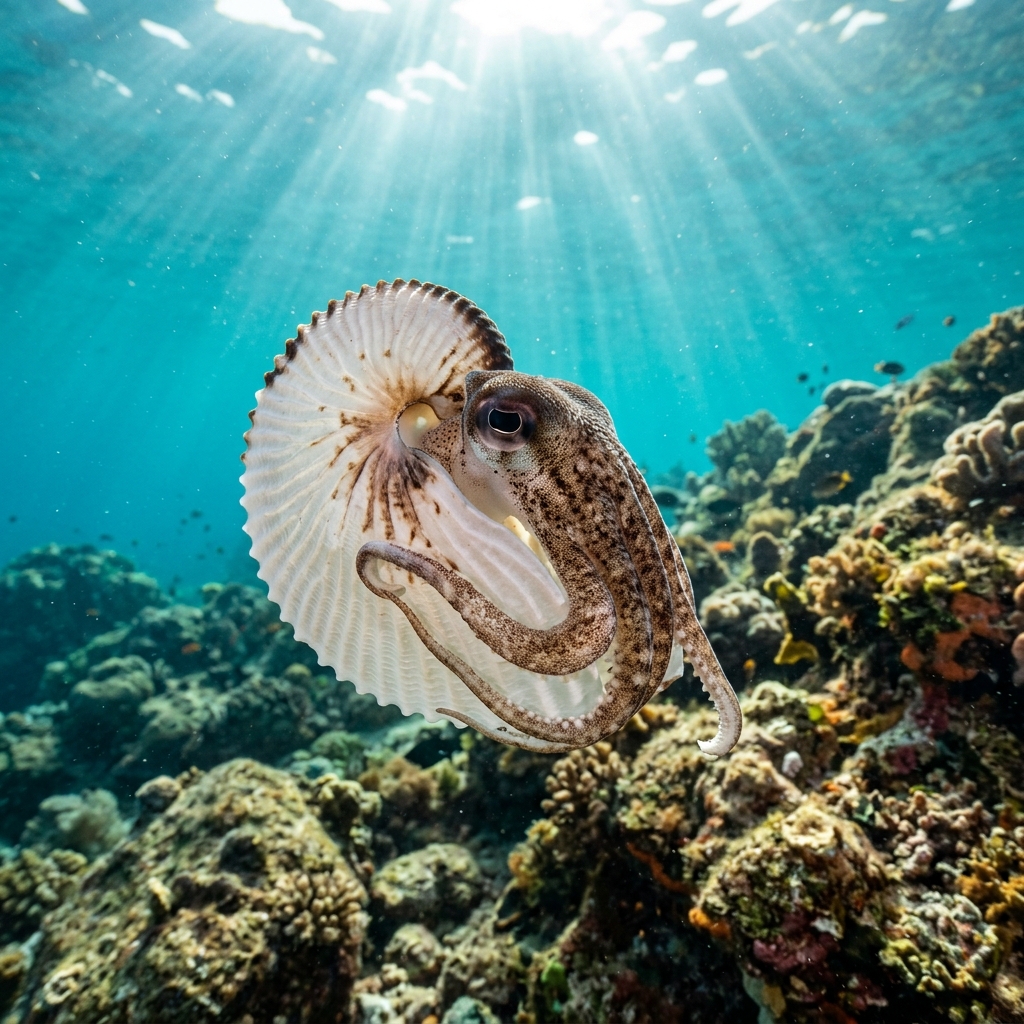
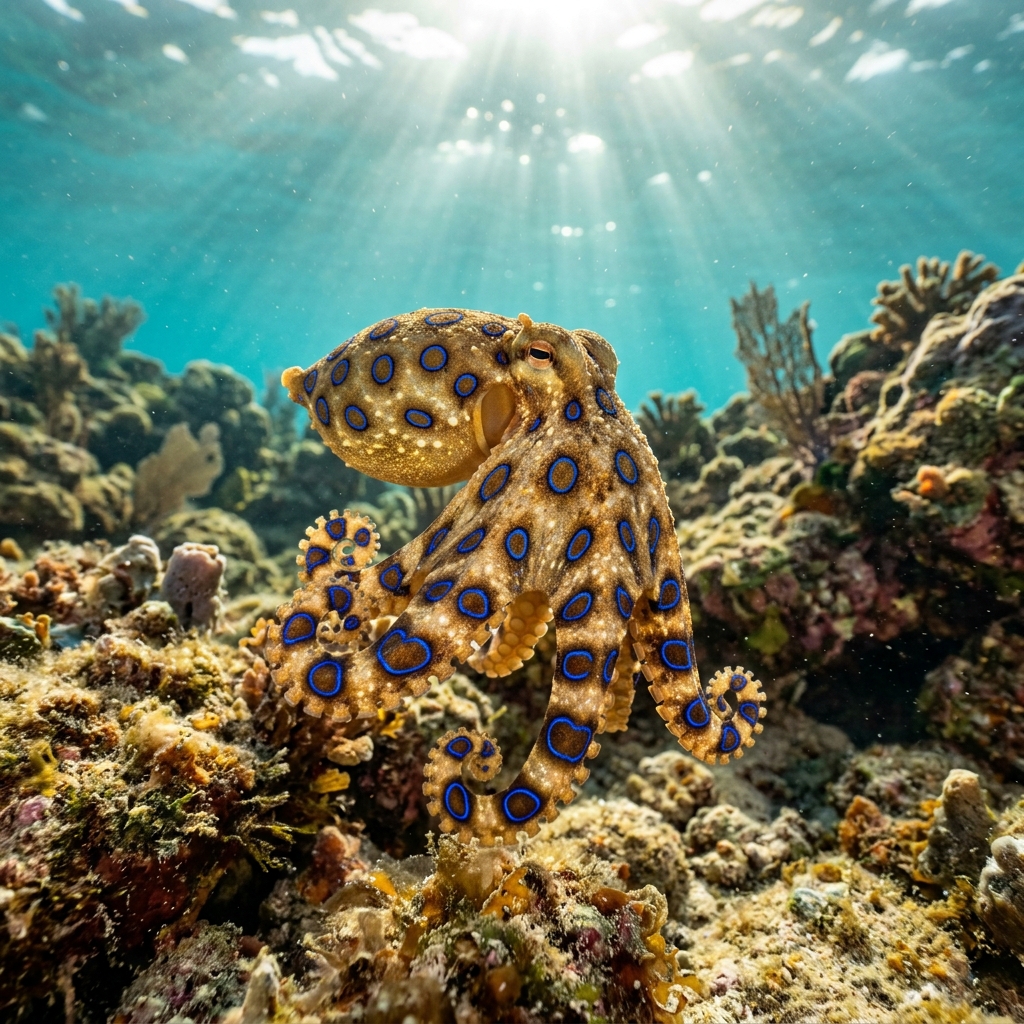
Reef neighbours a diver could mistake it for. Use the identification notes above to tell them apart.
The vast majority of logged sightings come from Australia, with New South Wales the overwhelmingly dominant region, covering everything from Sydney Harbour's weedy bommies (underwater rocky outcrops) to the open reefs south of Jervis Bay. Queensland sites add a smaller but consistent cluster. New Zealand is the only other country where it is recorded, with the Coromandel and Bay of Plenty and the Northland and Auckland regions producing the strongest showings.
Mapping where Common Sydney Octopus is logged…
New South Wales is by far the best place to look, from Sydney Harbour's urban reefs out to the rocky headlands further south. Queensland adds further Australian sites, while New Zealand's Coromandel, Bay of Plenty, and the Northland and Auckland regions are the only other confirmed locations.
Sighting records concentrate between June and April, making May the quietest month. Within that long window, diving at dawn or dusk gives you the best chance of catching one actively hunting rather than holed up in its den.
Look for a large, heavily warty octopus in cool temperate water with mottled reddish-brown to ochre colouring and thick, sucker-laden arms. The textured skin and stocky build set it apart from sleeker tropical species, and its location in southern Australian or New Zealand waters is itself a strong clue. A shell midden outside a rocky den is a reliable sign you have found one.
They typically reach around 56 cm in total arm spread, making them one of the larger octopus species in Australian waters. The mantle (body sac) alone can be the size of a fist, and the arms are noticeably thick and muscular.
No. They are not considered dangerous to divers. Like all octopuses they can bite if handled or cornered, so keep your hands to yourself, but an unprovoked attack is not a realistic concern. Males can be territorial with each other, so if you see two together, give them space.
Divers sometimes watch them manipulate bivalve shells, using their arms to pry them open or carry them back to the den as portable shelter. This kind of object use in the wild is relatively rare among invertebrates and makes watching one feed particularly rewarding.
Site and sighting data is aggregated from diver logs, iNaturalist and GBIF. For taxonomy and conservation status:
Brazilian Reef Octopus
1,142 sites