Trygonorrhina spp.
Sandy-bottomed and easy to approach: fiddler rays turn up on shallow dives across New South Wales, Western Australia and beyond in 16-23°C water.
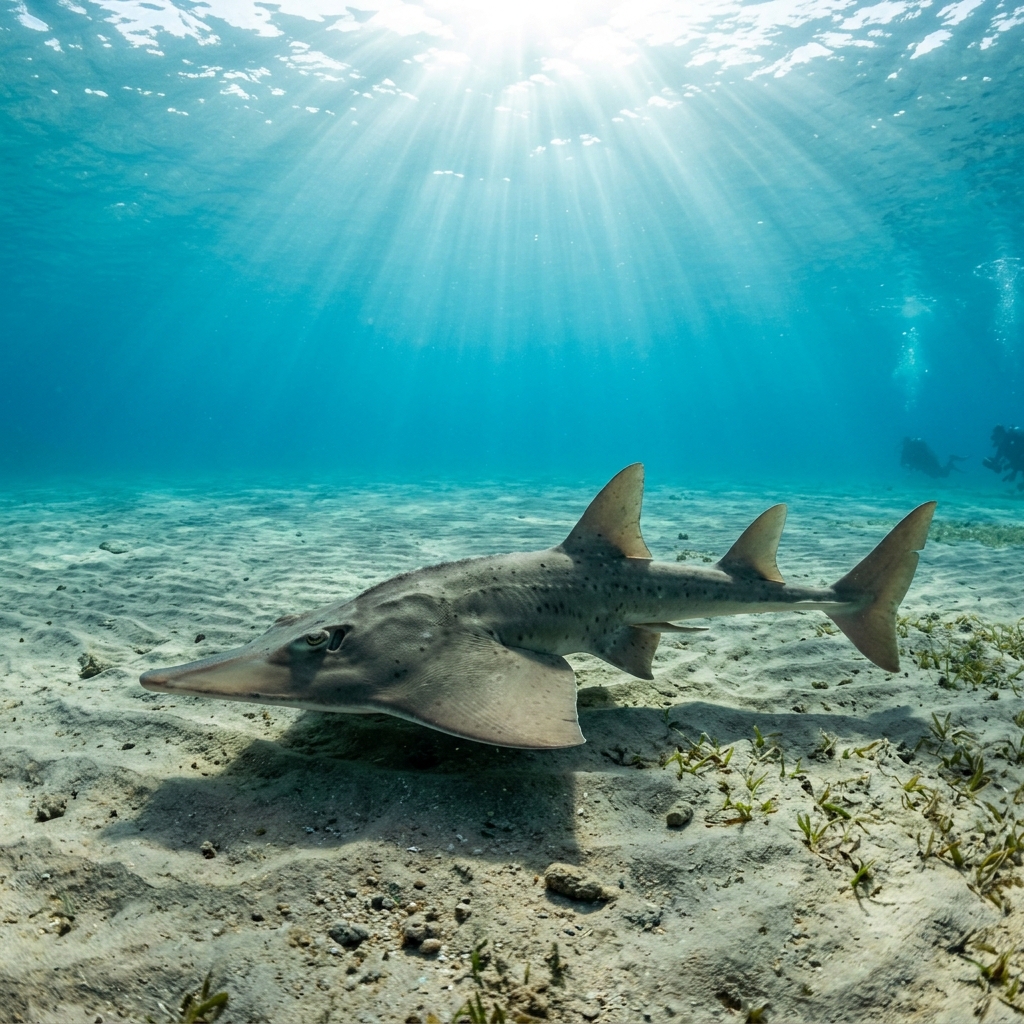
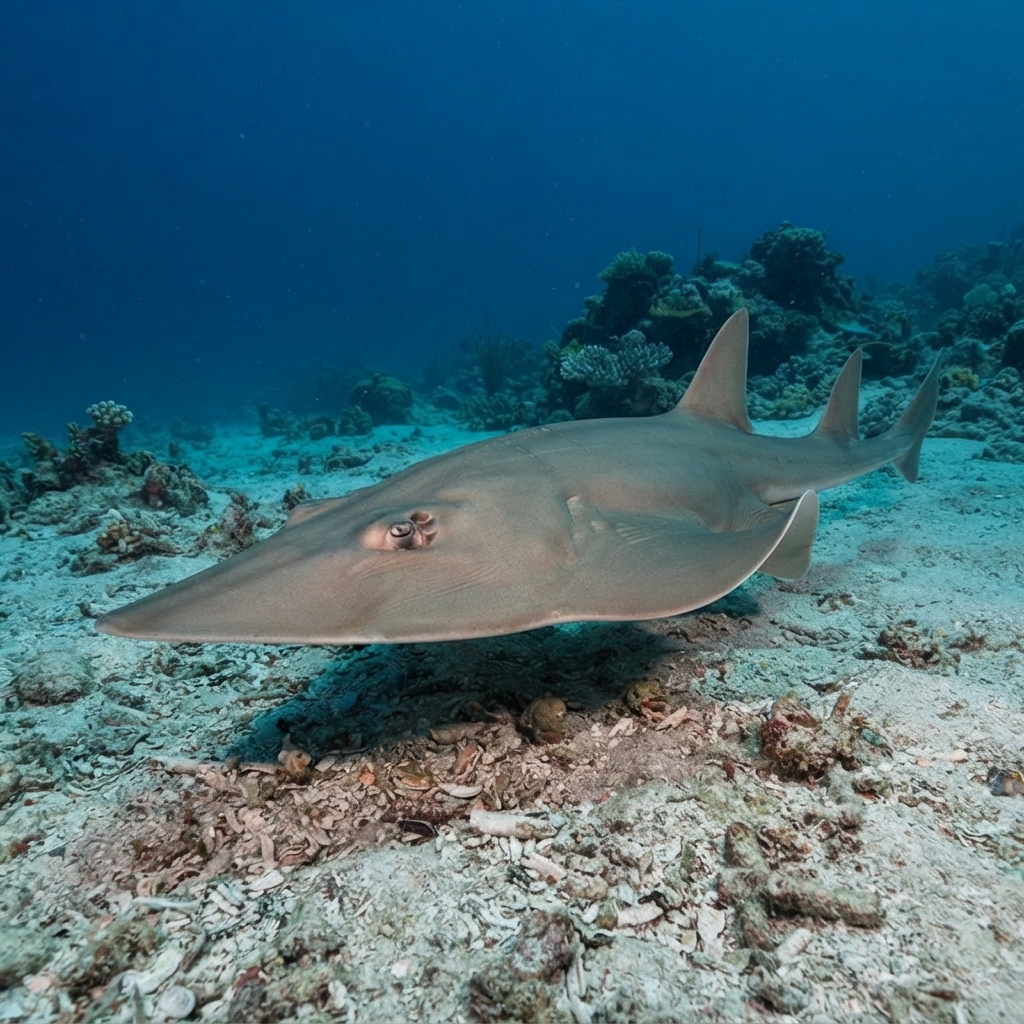
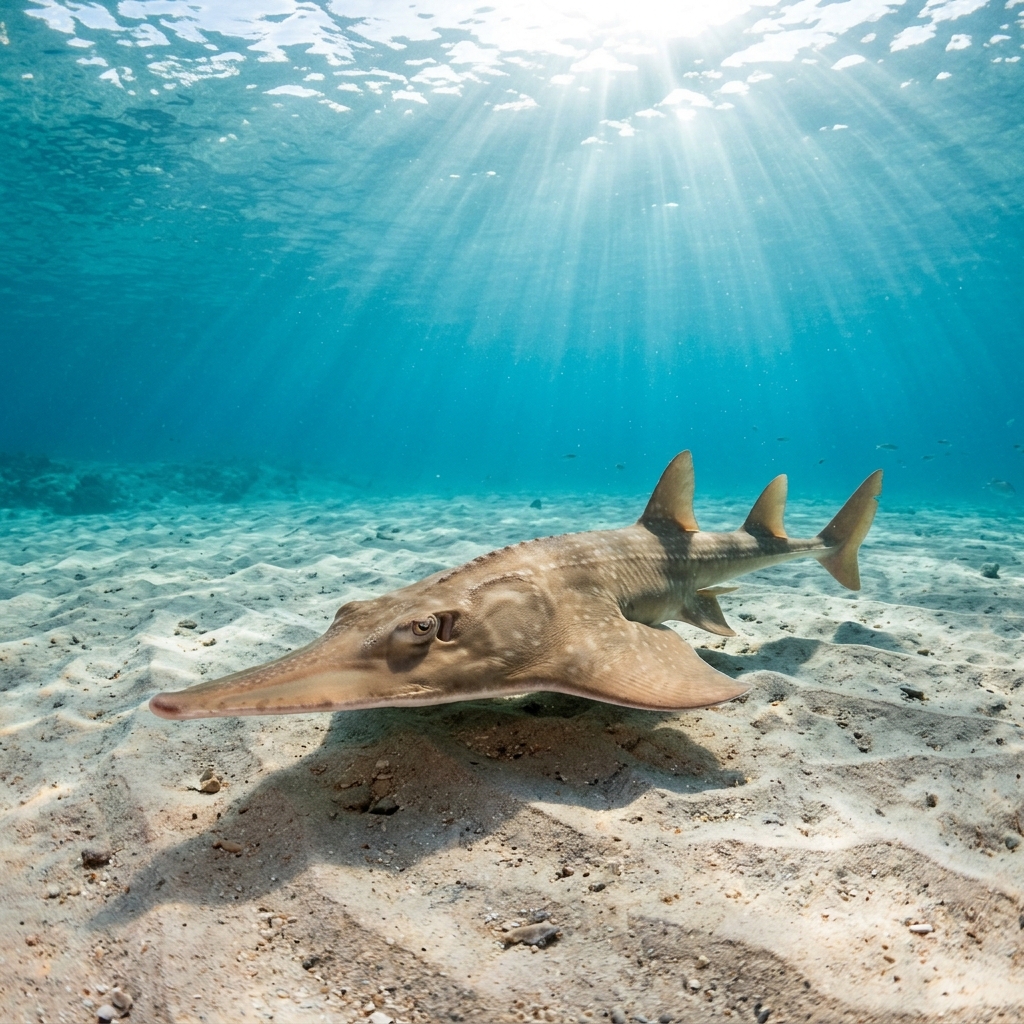
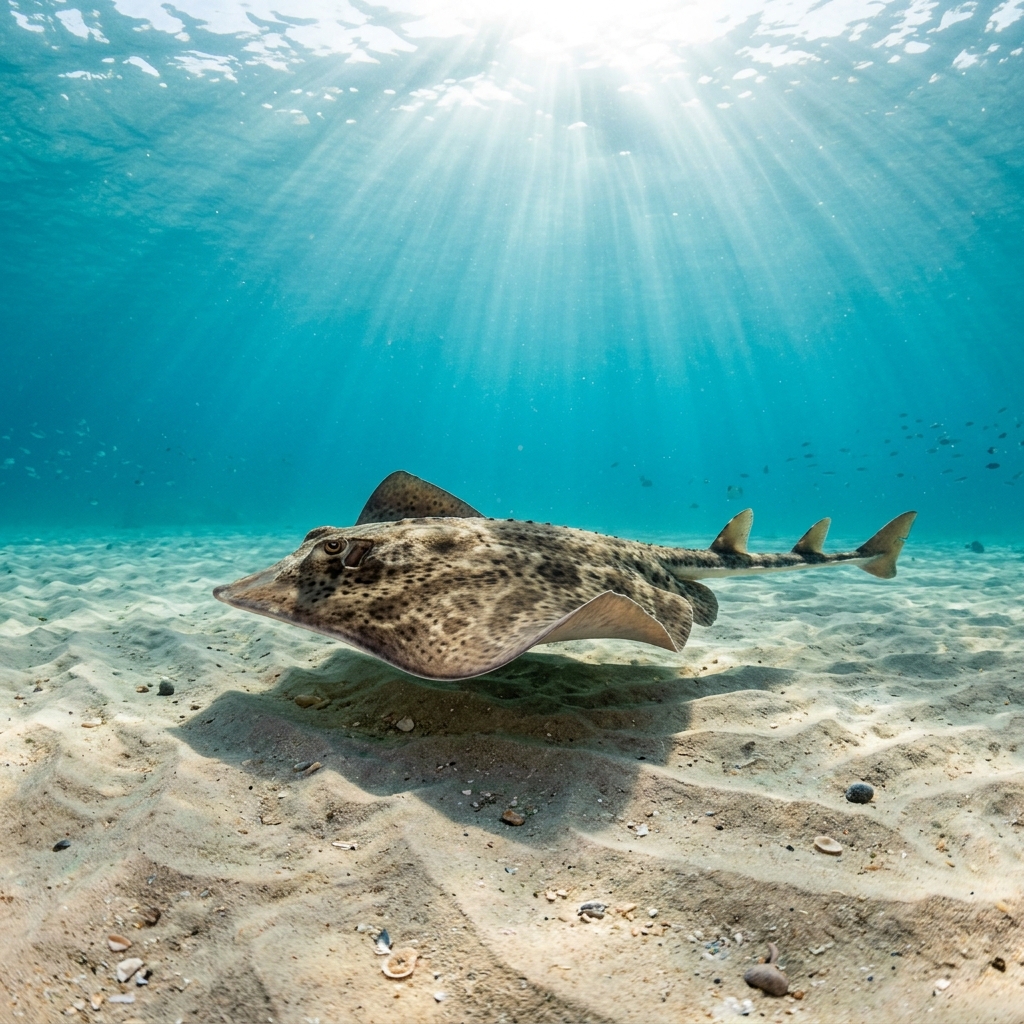
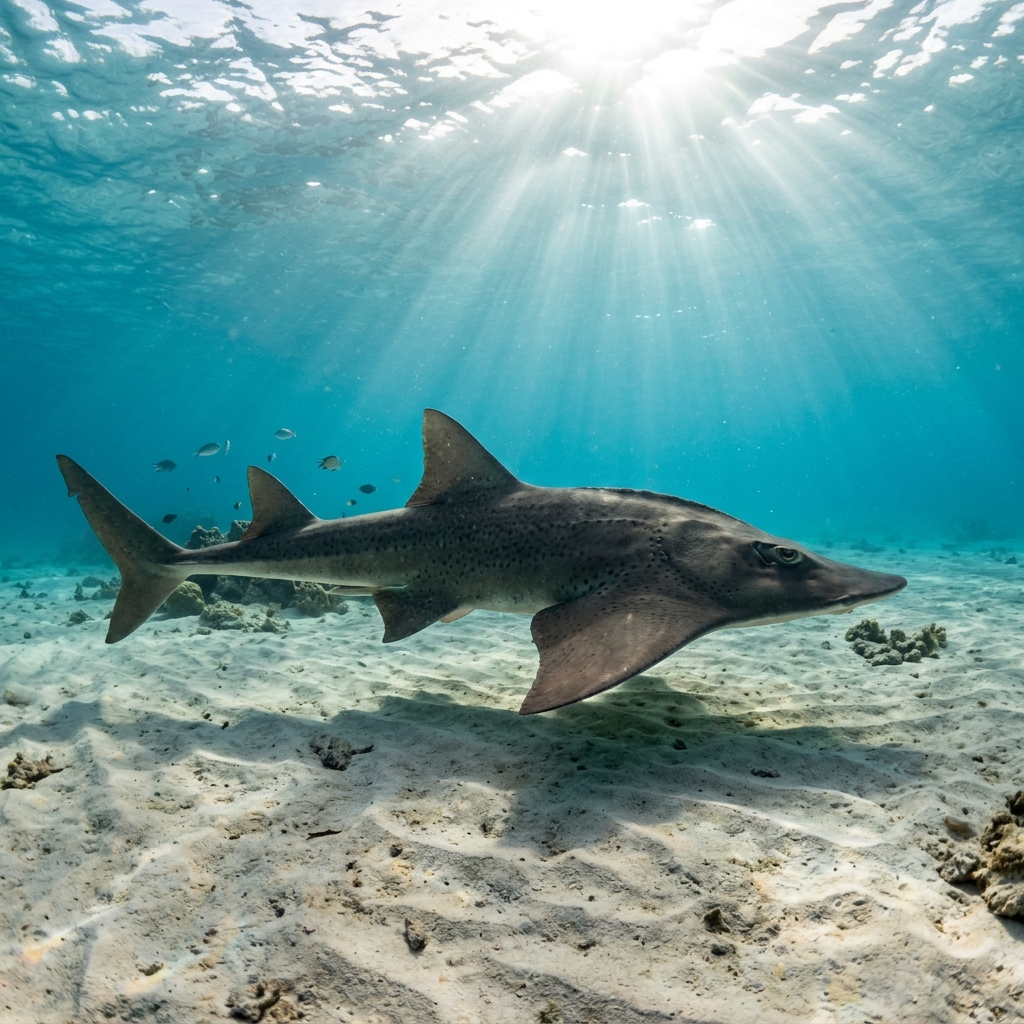
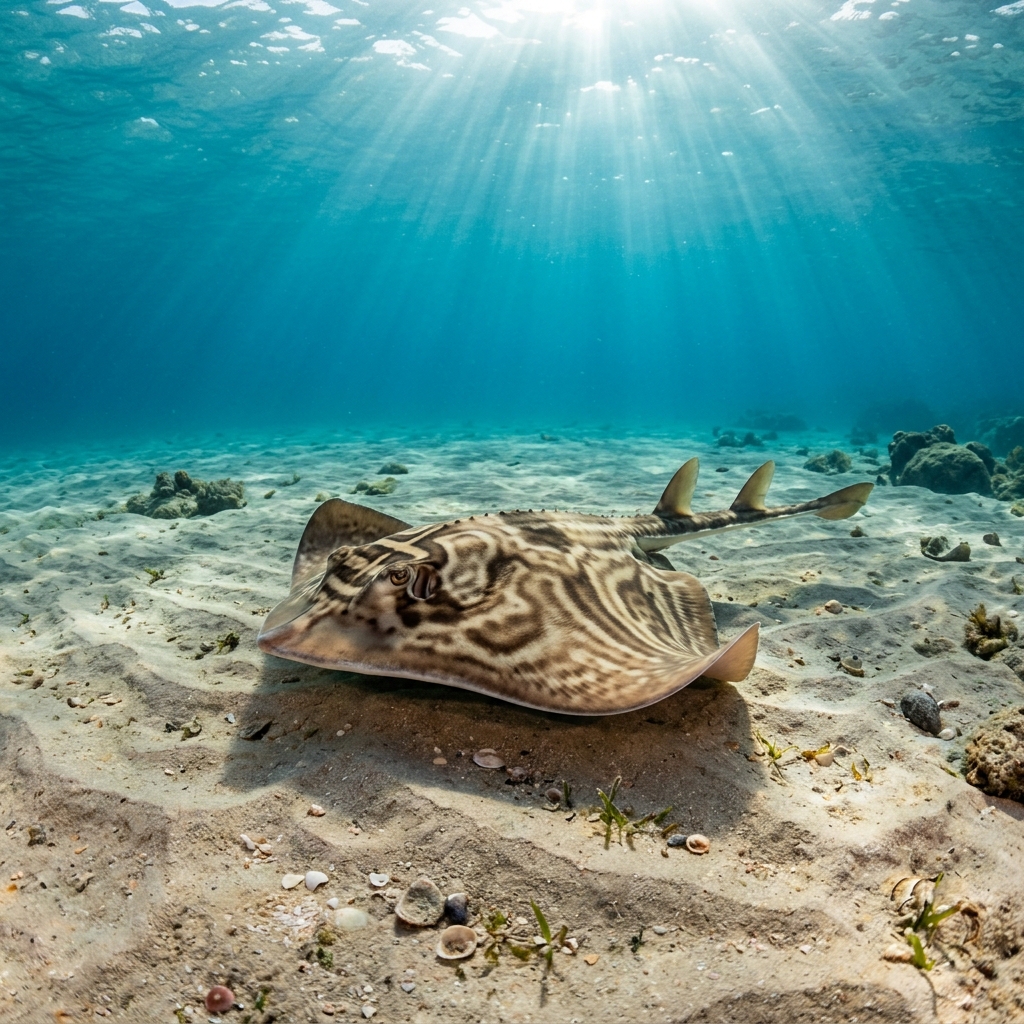
Diamond-shaped, flattened disc with a guitar-like outline, greyish to brown mottled skin patterned with darker blotches and pale spots that breaks up its outline against sand. Grows to around 84 cm, with a distinct pointed snout and two dorsal fins set well back near the tail, unlike true stingrays. Often seen lying still on the bottom with just the eyes and spiracles showing where it has settled into the sand.
Expect to find one resting motionless on sand, rubble, or in seagrass, sometimes half-buried with just an outline visible in the substrate. They tolerate a slow, unhurried approach reasonably well and will simply sit and watch, but a fast or clumsy fin kick sends them off in a cloud of sand. Almost always a solo sighting rather than in groups, and just as likely in very shallow water as on a deeper sandy patch.
That mottled, blotchy pattern is disruptive camouflage, not just decoration, letting a fiddler ray disappear against sand and rubble until it's almost underfoot.
Sightings concentrate December to April in the Southern Hemisphere summer and autumn, lining up with the 16-23°C water it seems to prefer. Outside those months it is still around but logged less often.
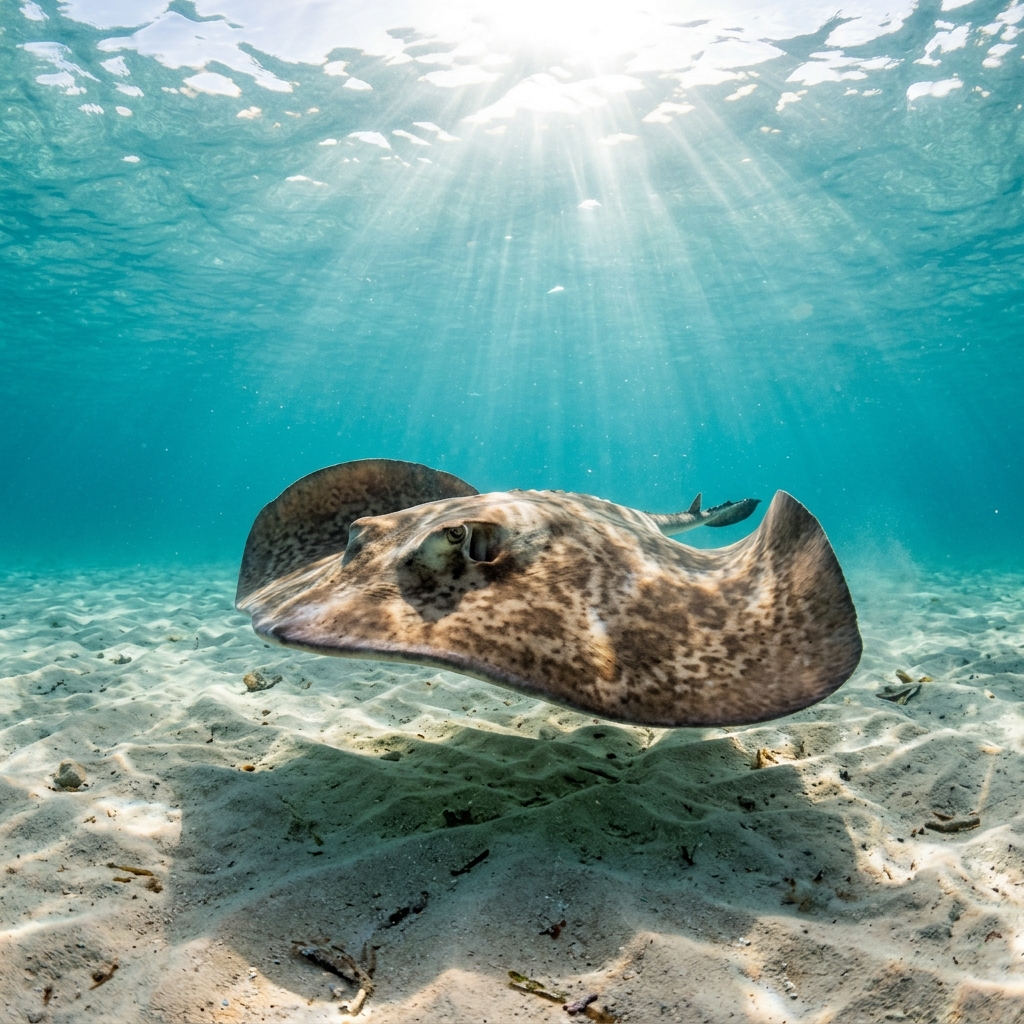
Reef neighbours a diver could mistake it for. Use the identification notes above to tell them apart.
This is an Australia-only encounter, most reliably logged in New South Wales, with strong numbers also out of Western Australia, South Australia and Victoria. Queensland and the Northern Territory turn up the odd sighting but the genus is really a temperate southern Australian regular rather than a tropical one.
Mapping where Fiddler Ray is logged…
Almost exclusively in Australian waters, with the strongest logs from New South Wales, Western Australia, South Australia and Victoria. Occasional sightings extend up into Queensland and the Northern Territory.
December through April is when sightings are most concentrated, matching the warmer end of their 16-23°C temperature range. They can still be found outside this window, just less predictably.
Look for a flattened, diamond-shaped body with a pointed snout and a mottled grey-brown pattern of blotches and pale spots. Two dorsal fins sit well back towards the tail, and it's usually seen lying still on sand or rubble rather than swimming.
They typically reach around 84 cm in length, making them a medium-sized bottom-dweller rather than anything imposing. Most divers encounter adults at or near this size resting on sand.
No, they're considered harmless to divers and will usually just sit still or move off slowly if approached calmly. There's no need for caution beyond the usual respect for not crowding a resting animal.
Site and sighting data is aggregated from diver logs, iNaturalist and GBIF. For taxonomy and conservation status:
Halavi Guitarfish
412 sites