Pastinachus spp.
Uncommon but reliable finds on sandy reef flats from Queensland to the Maldives, comfortable in 23-28C year-round.
If you're stung
Venomous tail barbGeneral first-aid guidance, not a substitute for professional medical care. In an emergency, call your local emergency number.
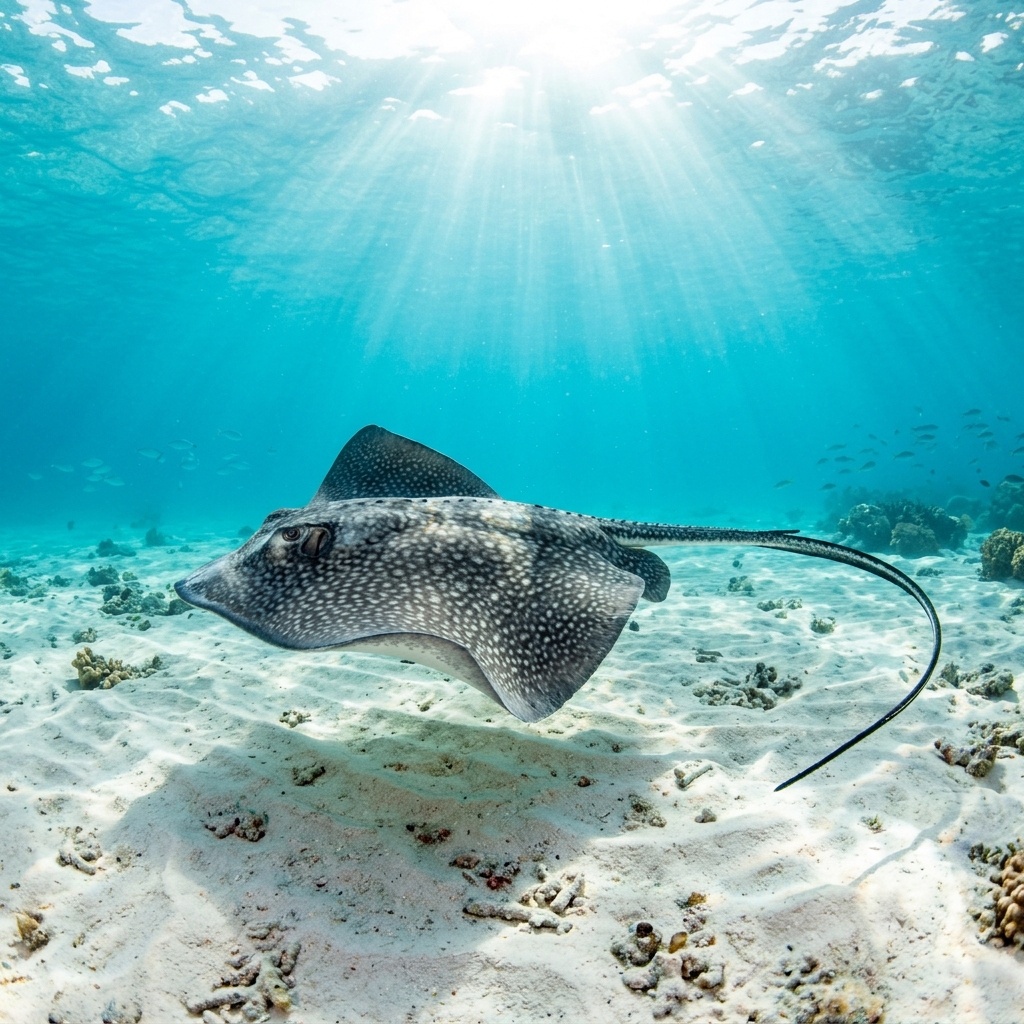
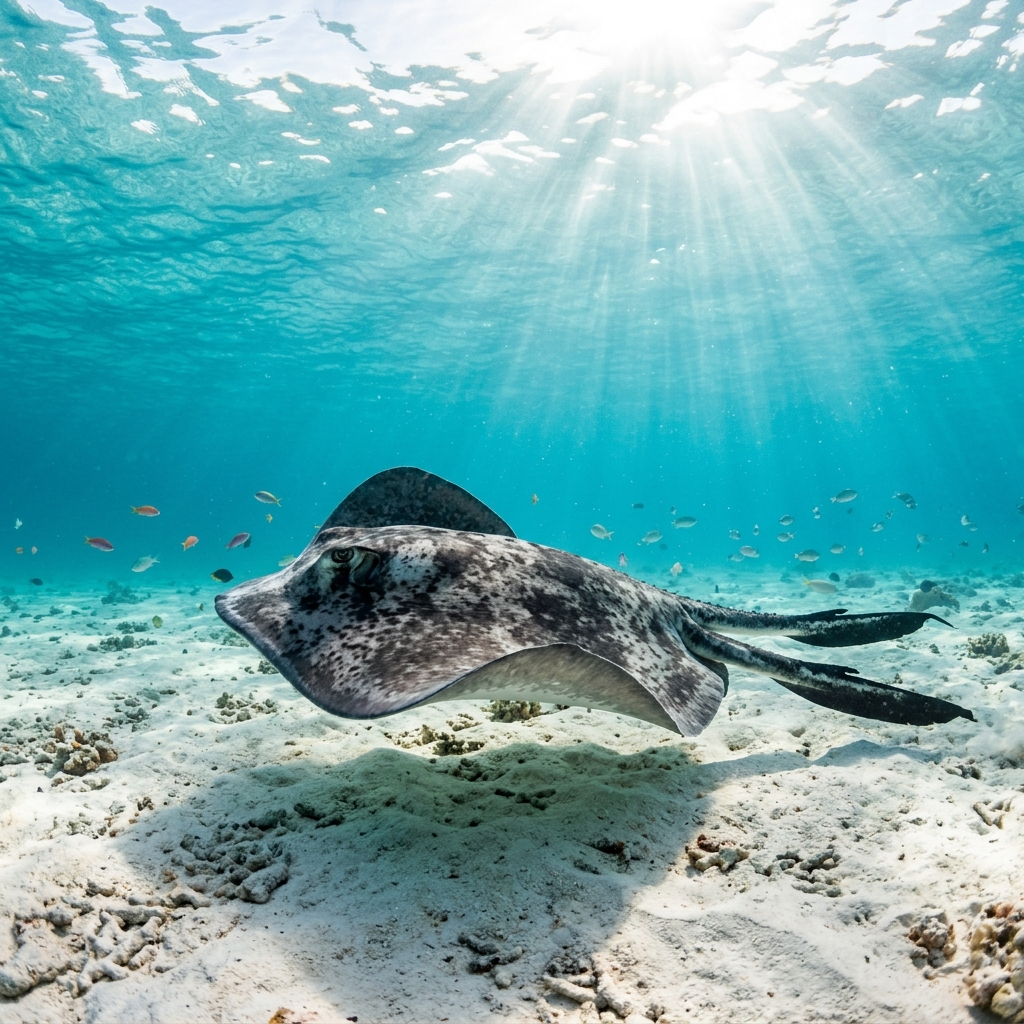
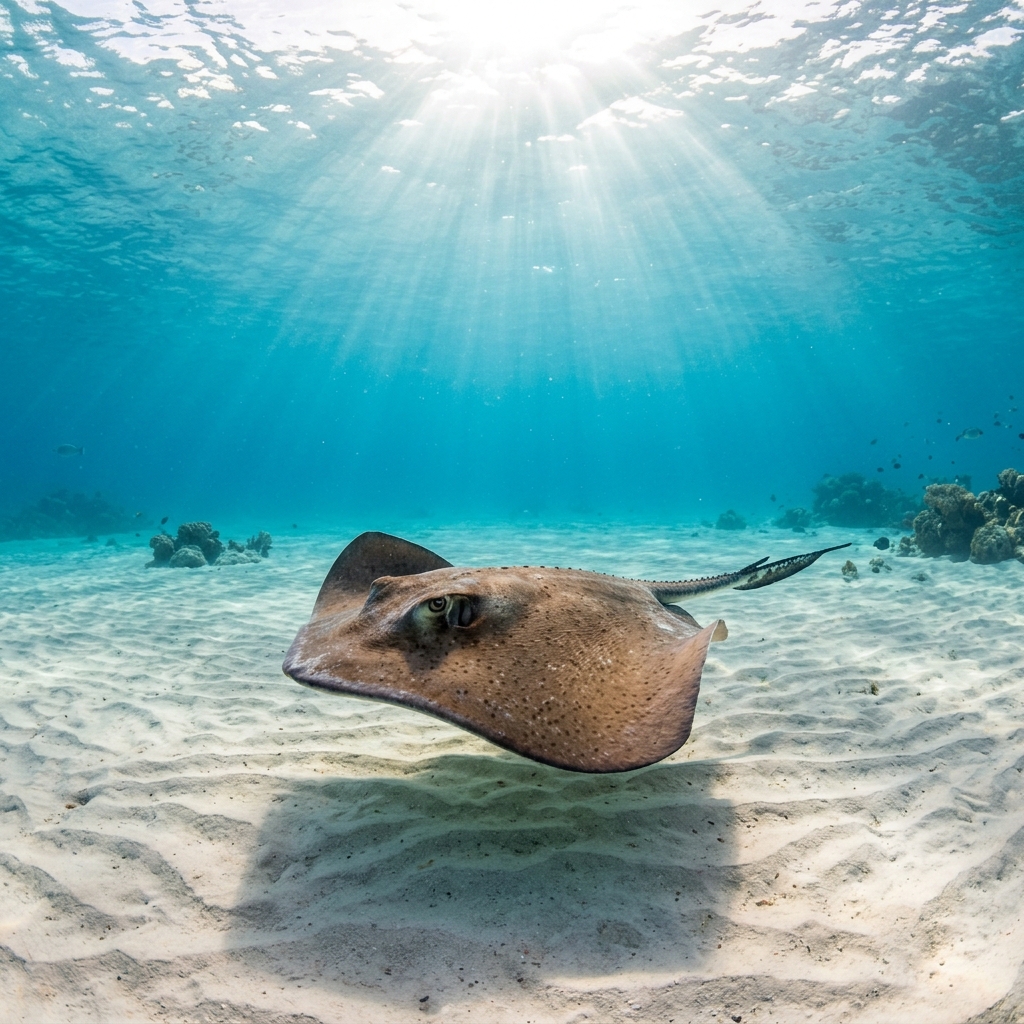
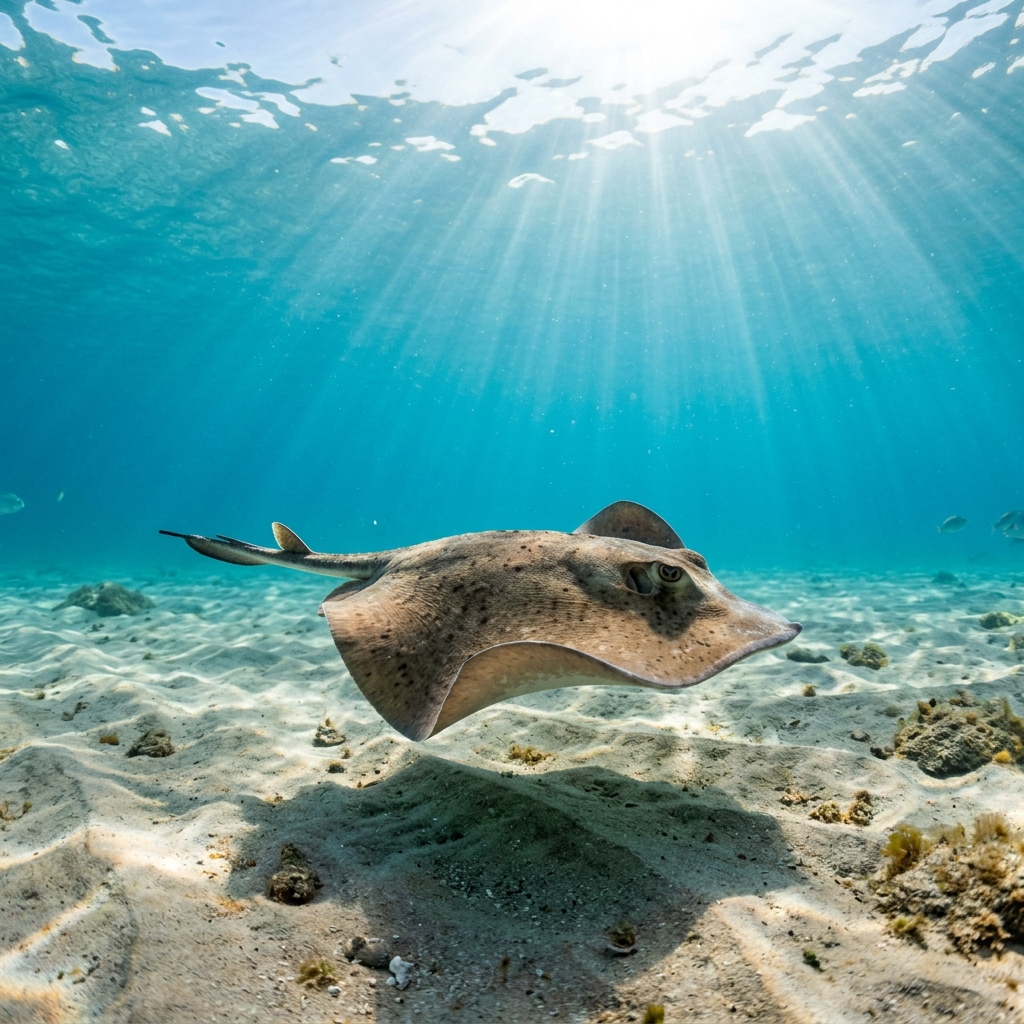
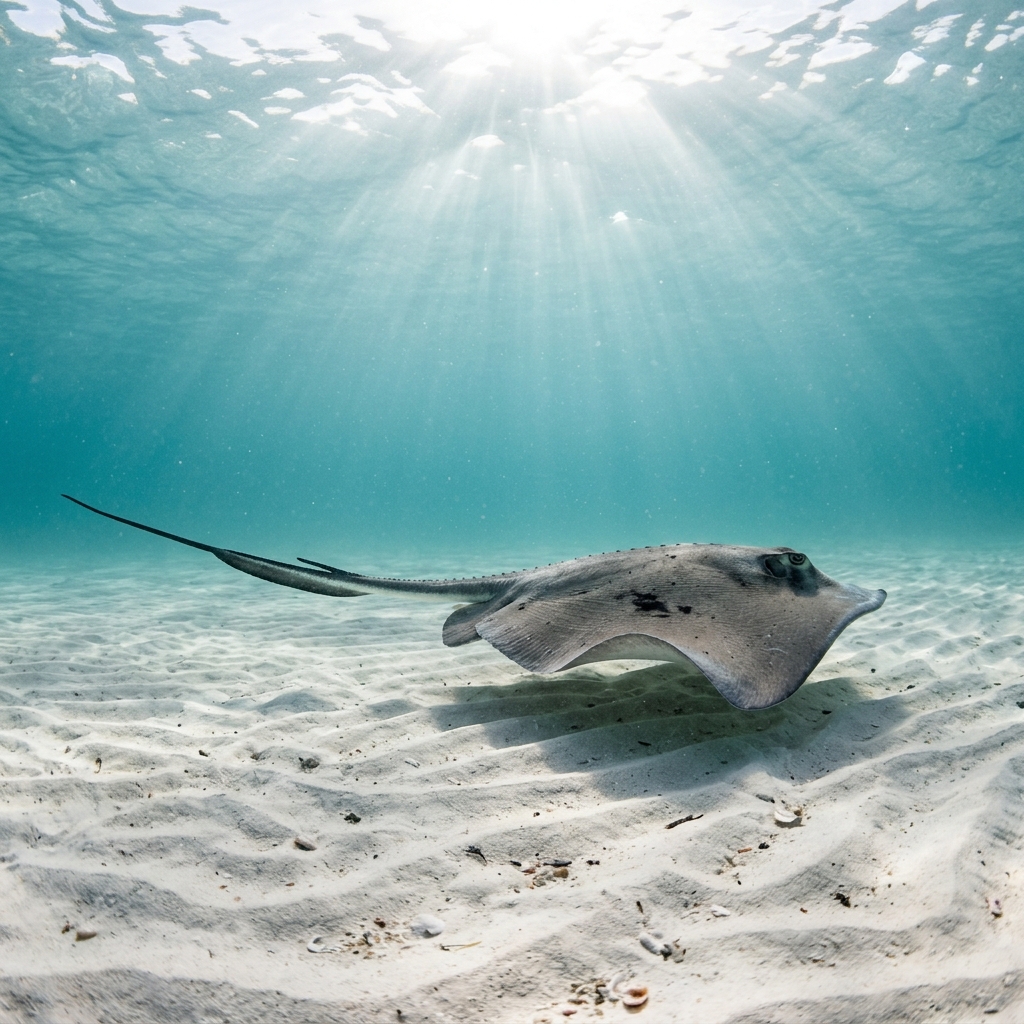
Look for a broad, rounded disc in muted grey, brown or olive with no bold spot pattern, sitting flush against sand or rubble. The tail is the giveaway: thick and fleshy at the base before tapering into a whip, unlike the thin whip-tail of many other rays, giving the group its common name. Size varies a lot between the species lumped into this genus, so judge by shape and tail rather than scale alone.
Usually found resting on sand, rubble or seagrass patches, often partially settled into the substrate, and easy to swim past without noticing. It tends to hold still until a diver gets close, then moves off with a slow glide low over the bottom rather than bolting. Most sightings are on shallow reef flats and lagoon-edge sand rather than open water or deep wall dives.
That thick-based tail carries a venomous spine, but it's used purely as a last-resort defence against being stepped on, not as a hunting tool; feeding is done by rooting through sand for buried invertebrates.
Comfortable across a 23 to 28.3C range, so there's no strong seasonal pattern in the data and it's logged year-round on tropical and subtropical reef flats.
Reef neighbours a diver could mistake it for. Use the identification notes above to tell them apart.
Most reliably logged in the Philippines and Australia, especially Queensland and Luzon, with strong showings in Palawan and the Visayas too. Also a solid find in Indonesia, the Maldives' Northern Atolls, and Egypt's Marsa Alam and the Deep South, with further sightings across Saudi Arabia's Red Sea coast, India and Oman.
Mapping where Cowtail Ray is logged…
Best logged in the Philippines (Luzon, Palawan, the Visayas) and Australia (Queensland, Western Australia), with further reliable sightings in Indonesia, the Maldives' Northern Atolls and Egypt's Marsa Alam and Deep South.
There's no clear season in the sighting data. They're comfortable in water from 23 to 28.3C, so they turn up on tropical reef flats throughout the year.
They're not considered dangerous to divers. They carry a venomous tail spine for defence but use it only if handled or stepped on, and they typically glide off calmly when approached.
Look for a plain grey-brown disc resting on sand with no strong spot pattern, paired with a distinctively thick, fleshy tail base that tapers into a whip. That heavy tail base is the main feature separating it from thinner-tailed rays nearby.
Size isn't well pinned down across this genus in the data, and it varies notably between the species grouped under Pastinachus, so it's best judged by shape and tail thickness rather than an exact size underwater.
Despite the defensive venomous spine at the base of that thick tail, feeding is a gentle, low-key affair: rooting through sand and rubble for buried invertebrates rather than any active hunting.
Site and sighting data is aggregated from diver logs, iNaturalist and GBIF. For taxonomy and conservation status:
Whiptail Stingray
1,747 sites