Acanthaster planci
Spot the Crown of Thorns Sea Star on Indo-Pacific reefs. Most commonly logged in the Maldives, Philippines & Thailand. Tips on ID, season and safe approach.
Safety warning
The spines are venomous: contact causes intense burning pain, swelling, and sometimes nausea that can last hours or days, and broken spine tips embedded in skin are difficult to remove. Keep a comfortable distance and never handle or rest against a surface where one may be hidden. Buoyancy control matters most here, as accidental contact while hovering is the most common way divers are stung.
If you're stung
Venomous spinesGeneral first-aid guidance, not a substitute for professional medical care. In an emergency, call your local emergency number.
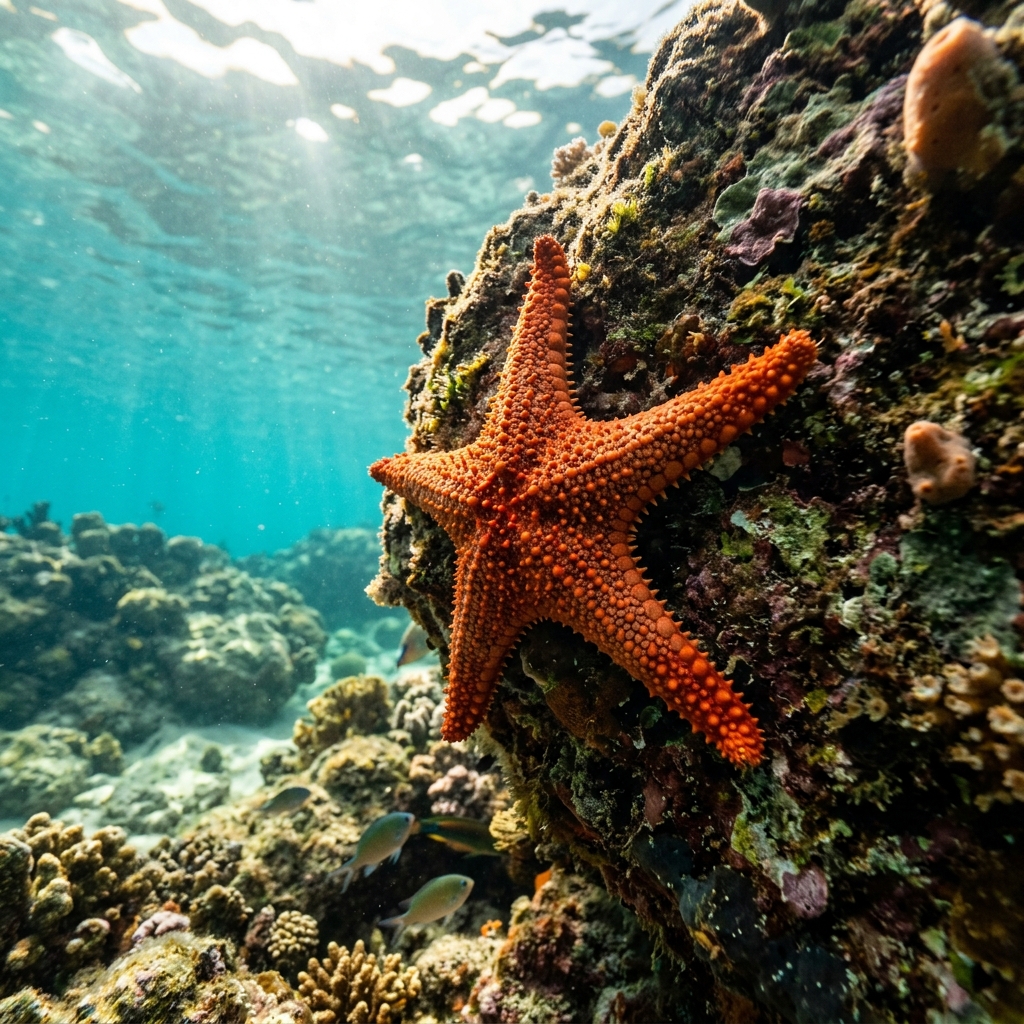
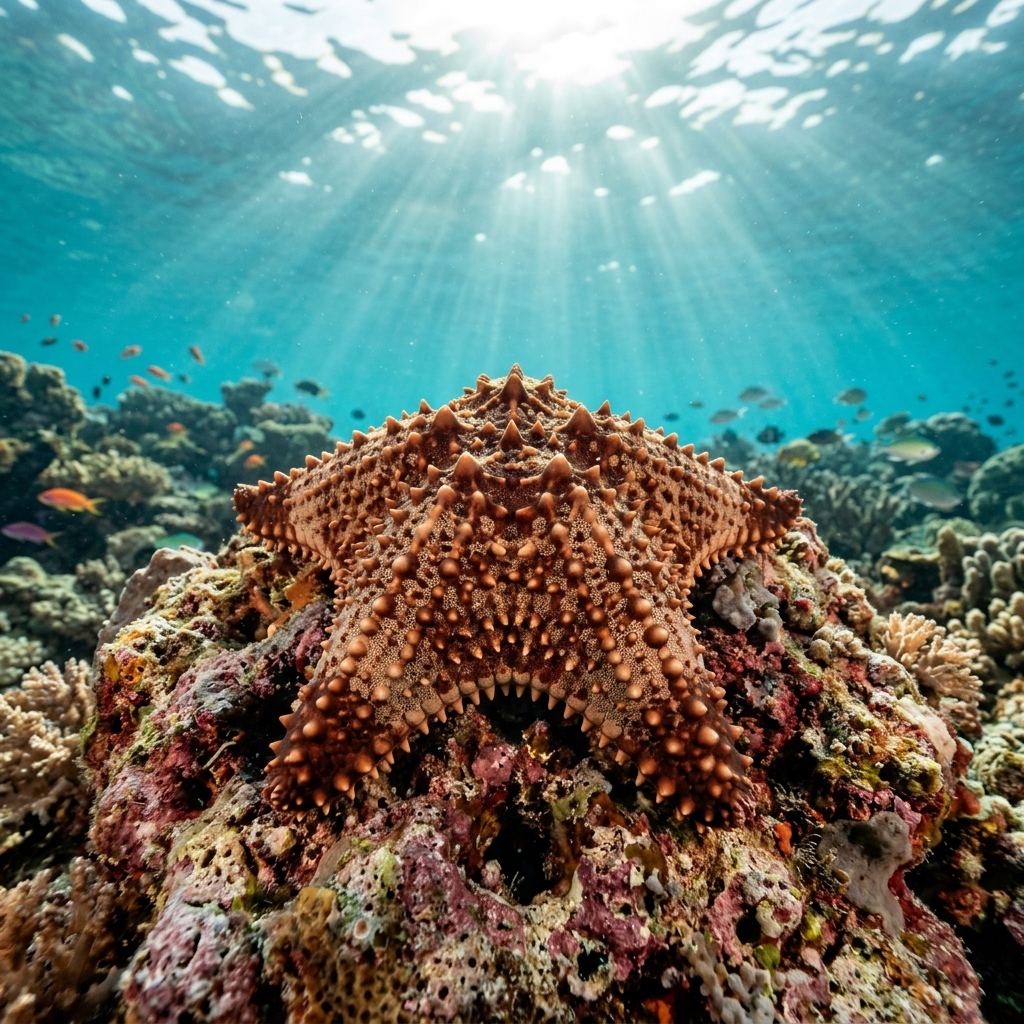
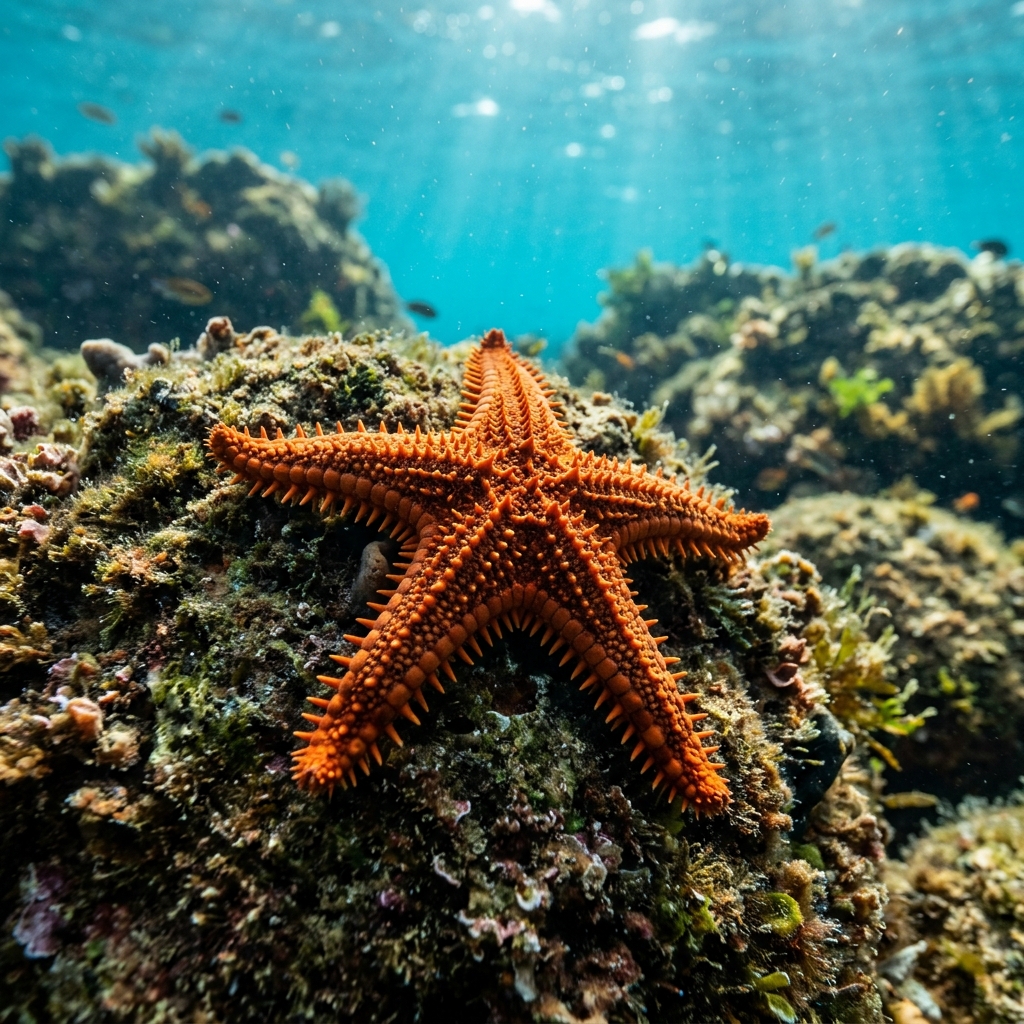
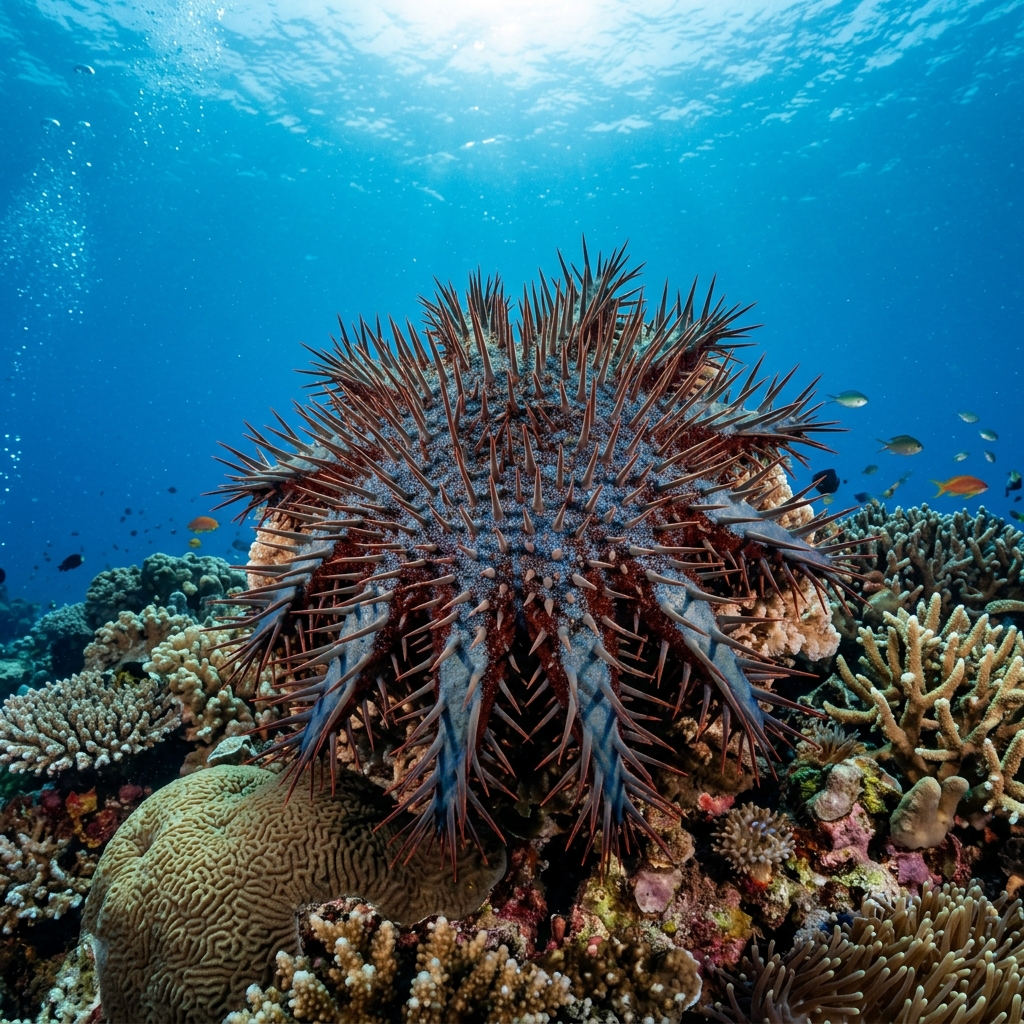
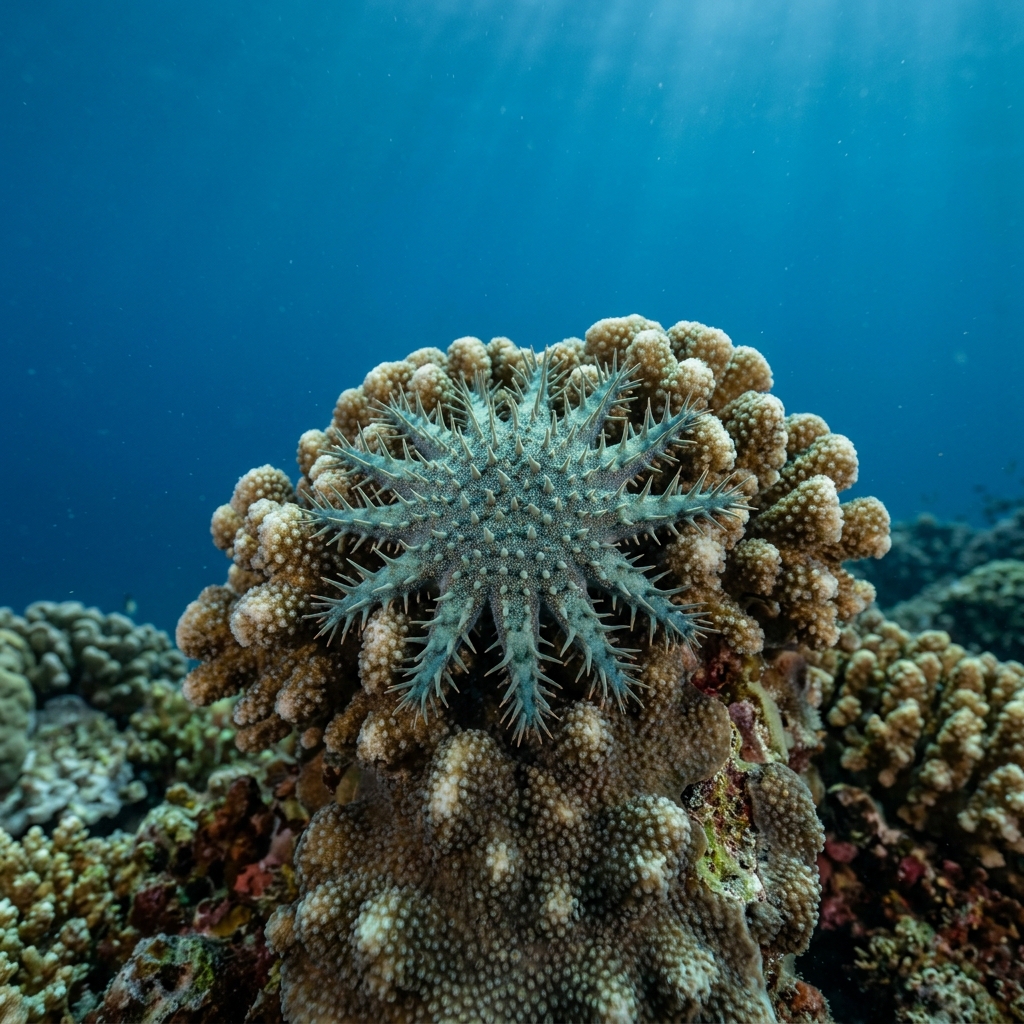
Few reef invertebrates are harder to mistake at adult size: a heavily built sea star up to about 56 cm across, covered in sharp spines up to 4-5 cm long, usually mottled grey, brown or reddish with a paler underside. It typically carries 12-19 arms, far more than most starfish you will encounter on tropical reefs. The spines are densely packed across the entire upper surface, giving the animal an almost furry, armoured look rather than the smooth or gently bumpy texture of other large sea stars. Colouration varies across its range, so rely on the spine count and arm number rather than colour alone.
During the day, expect to find them tucked under coral ledges or wedged into crevices rather than out in the open. After dark they emerge and move slowly across the reef, everting their stomachs to digest living coral tissue in place. They are solitary and pay divers very little attention, typically continuing to feed or moving unhurriedly away if you approach; getting close is the diver's choice, not theirs.
A single individual can consume several square metres of living coral per year, and when populations erupt in large outbreaks, as recorded repeatedly on the Great Barrier Reef, the collective damage to coral cover can rival major bleaching events. This makes it one of the most ecologically influential invertebrates on Indo-Pacific reefs.
Northern Hemisphere sightings concentrate between November and March, coinciding with the cooler edge of the species' preferred 23-29 °C range on northern Indo-Pacific reefs. On southern reefs such as Queensland, seasonality shifts accordingly, so check local dive reports for timing.
Most commonly logged across the Maldives, particularly around Malé and Ari Atolls, and across the Philippines and Indonesia, with strong records in the Visayas and Palawan. Thailand's Phuket and Phi Phi sites and Queensland's Great Barrier Reef are also reliable areas, and there are notable records from Saudi Arabia and Oman in the Red Sea and Arabian Gulf region.
Mapping where Crown of Thorns Sea Star is logged…
They are logged across a wide sweep of the Indo-Pacific. The Maldives (especially Malé and Ari Atolls), the Philippines (Visayas, Palawan), Indonesia, and Thailand (Phuket and Phi Phi) account for the most recorded sites. Queensland's reefs in Australia and Red Sea sites in Saudi Arabia and Oman also have confirmed sightings.
On northern Indo-Pacific reefs, sightings are most concentrated from November through March. The species favours water temperatures between roughly 23 and 29 °C, so tropical reef destinations carry them year-round in principle, but local outbreak cycles also influence how many you are likely to encounter.
Yes. The long spines deliver venom on contact, causing immediate burning pain, swelling, and sometimes nausea lasting many hours. The risk is almost always accidental: brushing against a hidden individual while manoeuvring close to the reef. Good buoyancy control and keeping your distance remove almost all risk; these animals will not pursue or react aggressively to divers.
Look for a large sea star, potentially up to 56 cm across, with 12-19 arms (far more than most reef starfish) and a dense covering of long, sharp spines across its entire upper surface. Colouration ranges from grey and brown to reddish depending on location, so spine density and arm count are more reliable ID features than colour.
Adults commonly reach around 40-50 cm across, and large individuals can approach 56 cm in diameter. That breadth, combined with up to 19 arms and dense spination, makes them one of the largest and most visually striking sea stars on Indo-Pacific reefs.
They feed exclusively on living coral, everting their stomach out of their body and laying it directly over the coral surface to digest tissue externally. A single adult can clear several square metres of living coral annually, and during population outbreaks, aggregations can cause reef-scale coral loss comparable to bleaching events.
Site and sighting data is aggregated from diver logs, iNaturalist and GBIF. For taxonomy and conservation status:
Common Sea Star
2,271 sites