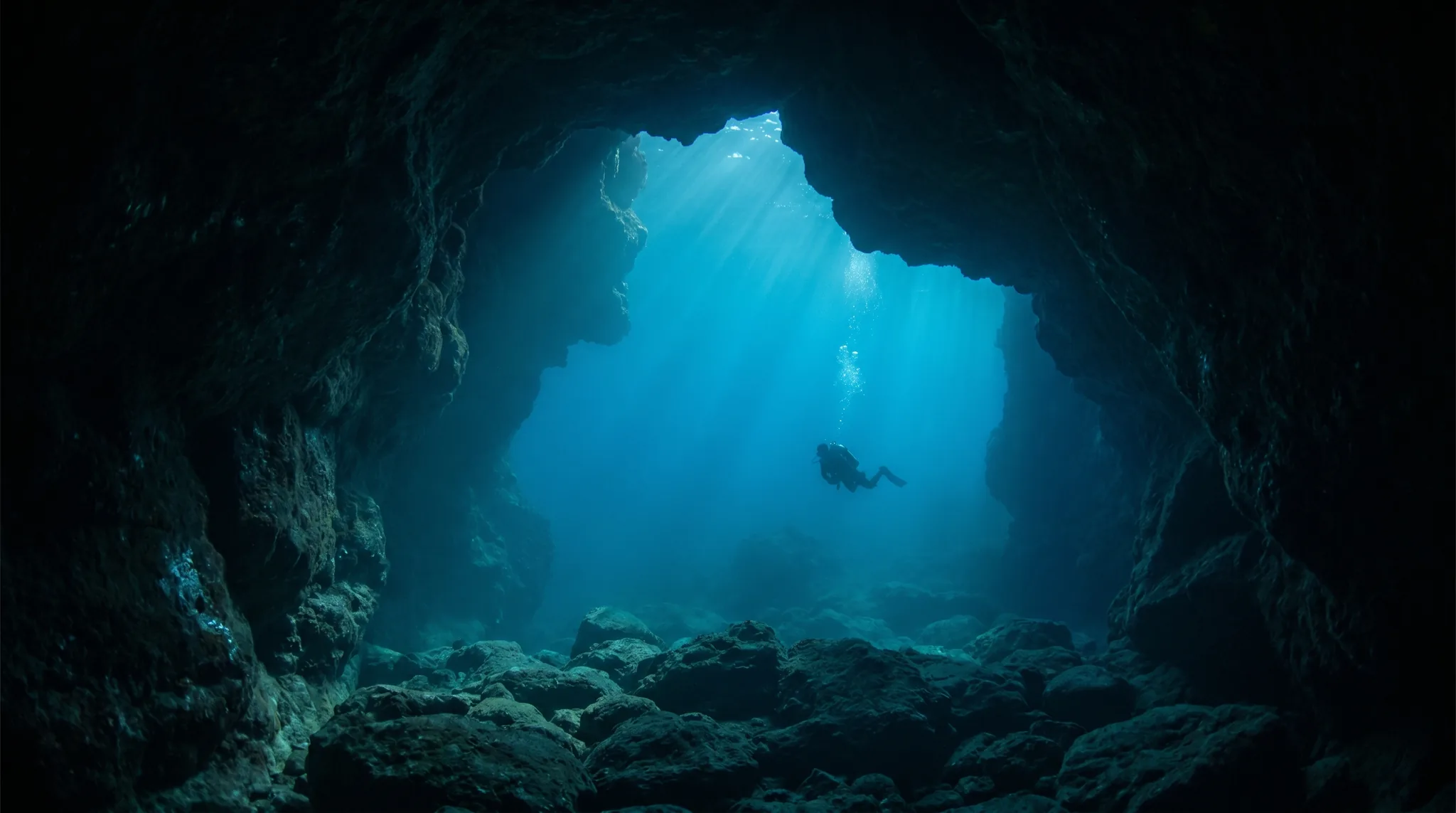
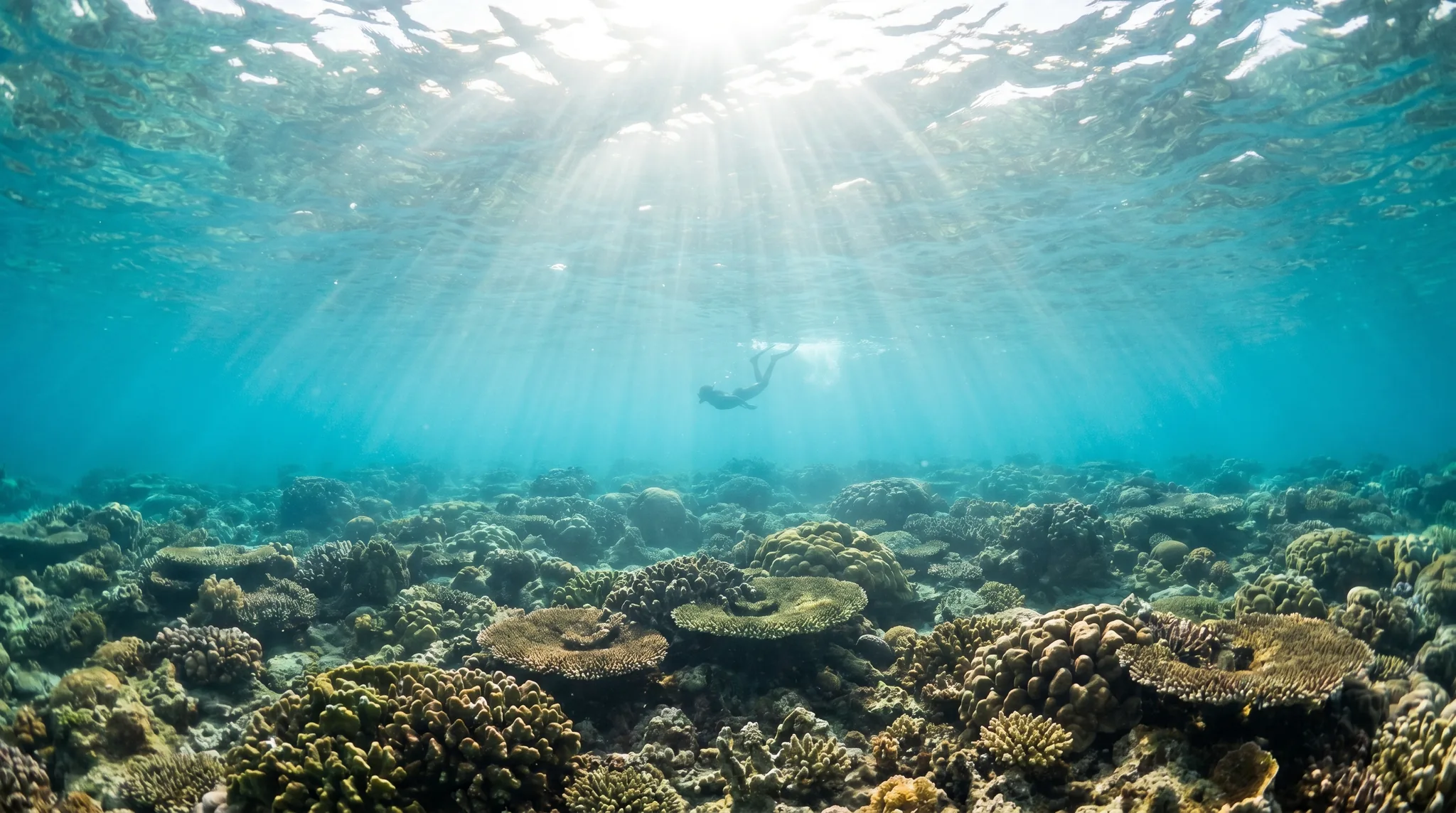
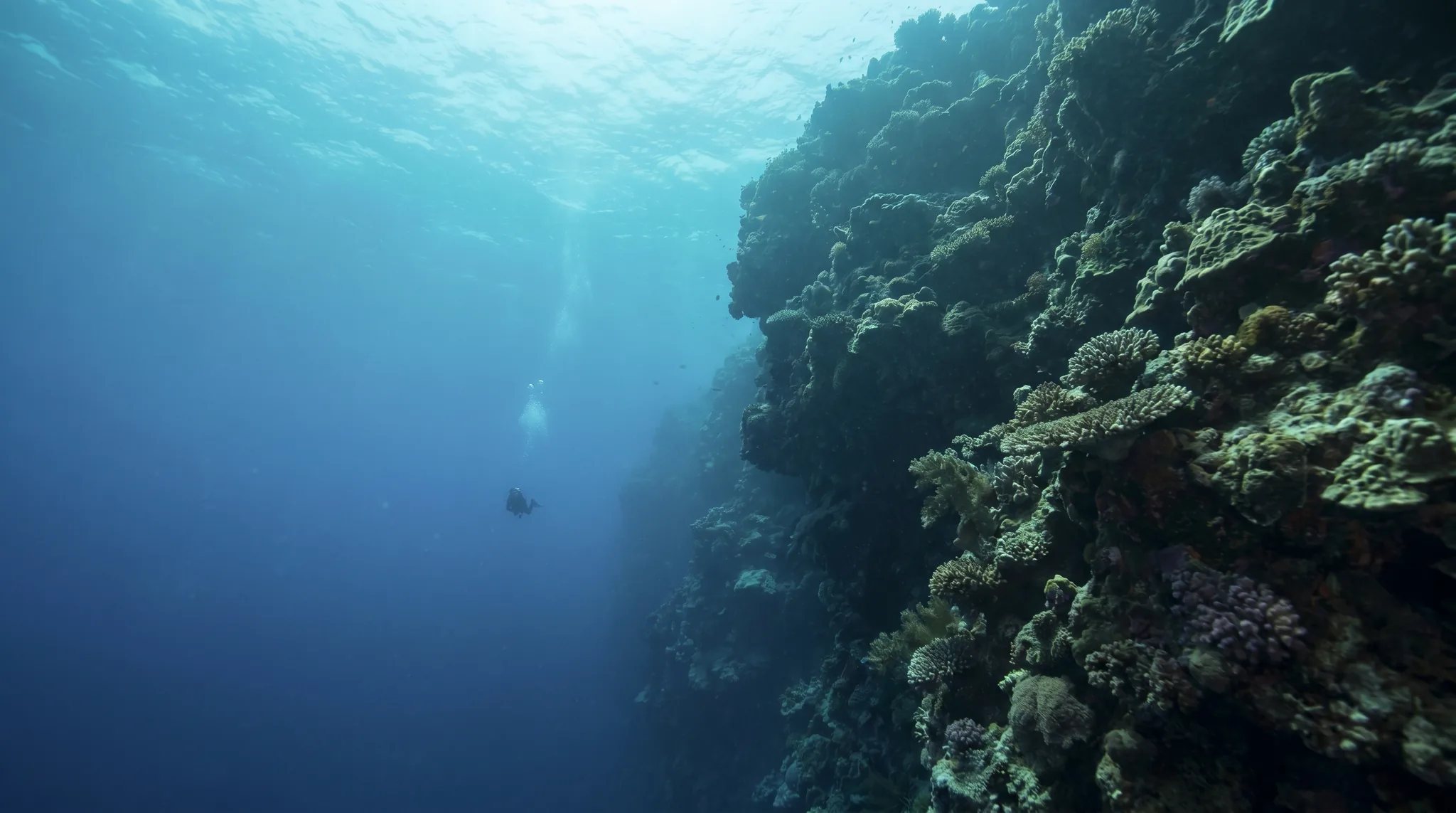
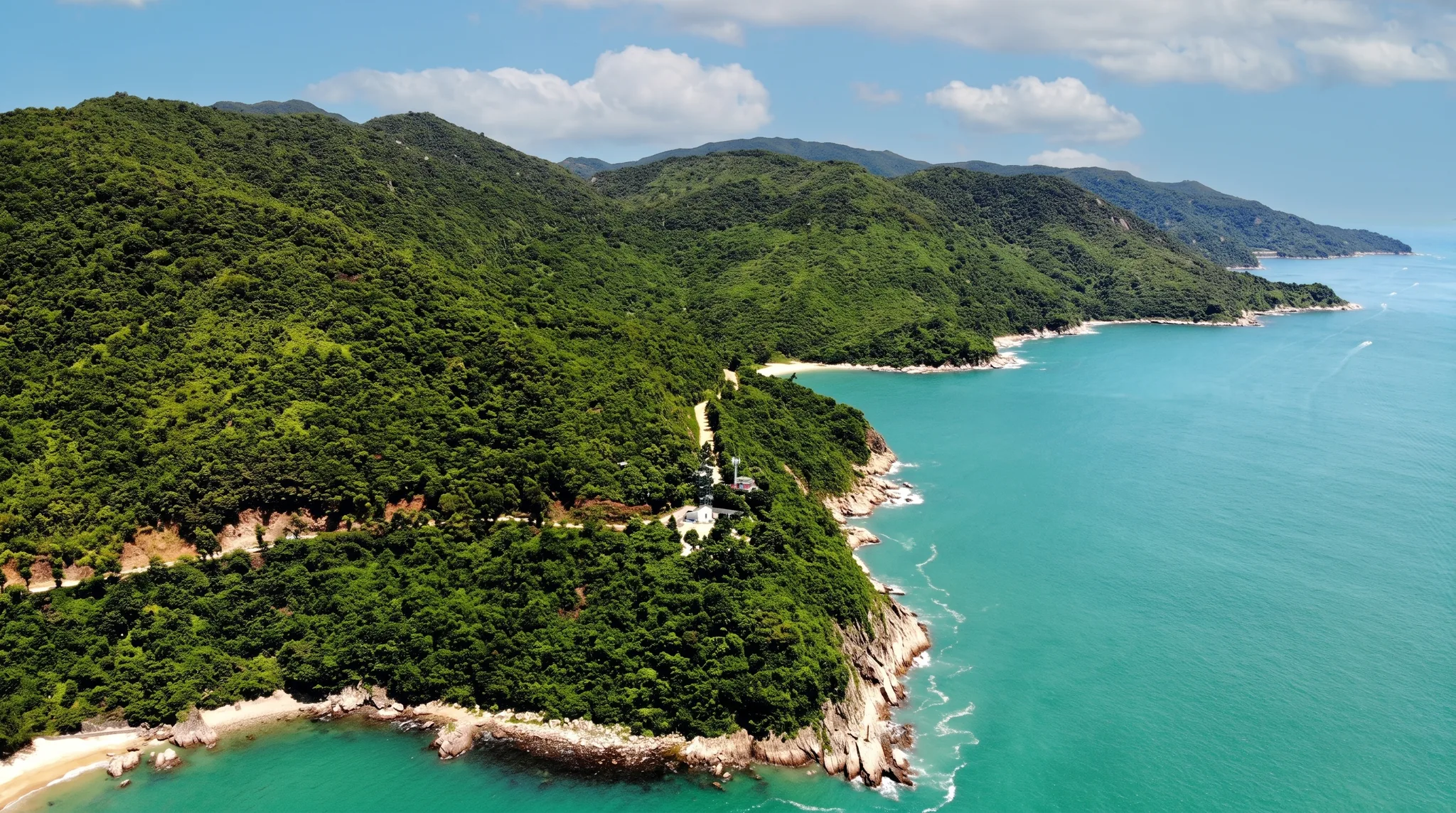
Jeju Island sits in the Korea Strait, where a mix of subtropical and temperate currents shapes a varied underwater landscape. Volcanic rock formations define the topography: divers find walls, caverns, pinnacles, and wreck sites spread across locations such as Munseom, Seopseom, and Lobster Crack. Depths across the six sites in our database run from shallow reef to sixty metres, suiting all experience levels from beginner to advanced. Water temperatures climb into the low-to-mid twenties in late summer and ease back to the mid-teens by late winter. September and October are widely regarded as peak months, combining warm water with the best visibility. The island is also home to the Haenyeo, the traditional women free-divers whose practice remains part of the local culture.
Monthly water temperature across Jeju Island's sites, from satellite sea-surface data corrected for depth. The band shows the site-to-site spread.
Water temperatures peak in late summer and autumn, reaching the low-to-mid twenties, before cooling to the mid-teens through winter and spring. A full wetsuit is comfortable for most of the year, with a thicker suit advisable from January through April. The warmest, most productive diving window runs from June through November, with September and October offering the best combination of temperature and conditions.
Water temperature around Jeju Island ranges from about 16°C in February to 23°C in August, based on satellite sea-temperature data for its dive sites.
In the warm season (about 23°C) a 3mm full suit is comfortable in Jeju Island; in the coldest months (about 16°C) step up to a 7mm or semi-dry suit.
Fin maps 6 sites in Jeju Island (6 scuba diving sites).
3 more sites to explore