Entacmaea quadricolor
Spot bubble tip sea anemones across the Maldives, Red Sea and Philippines. Warm-water reefs from 22-29 °C. Here's where divers log them most.
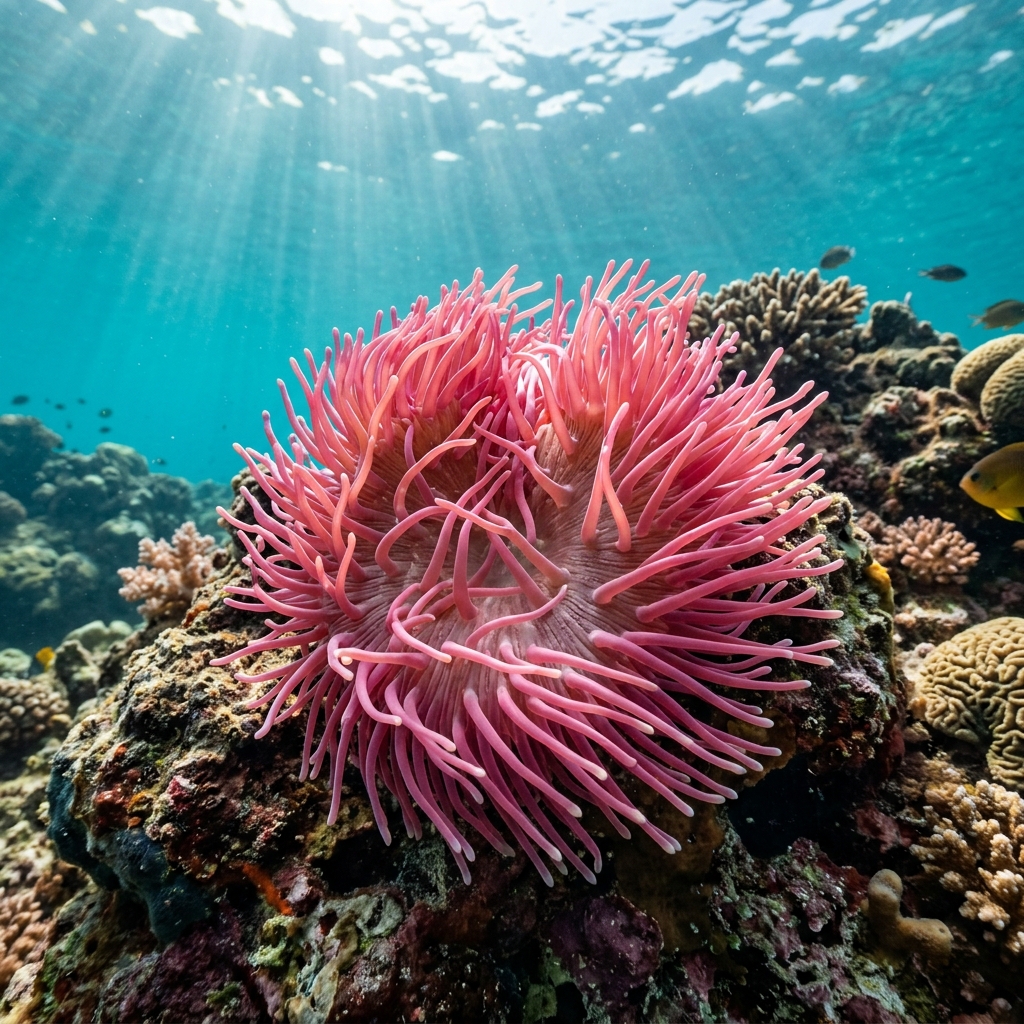
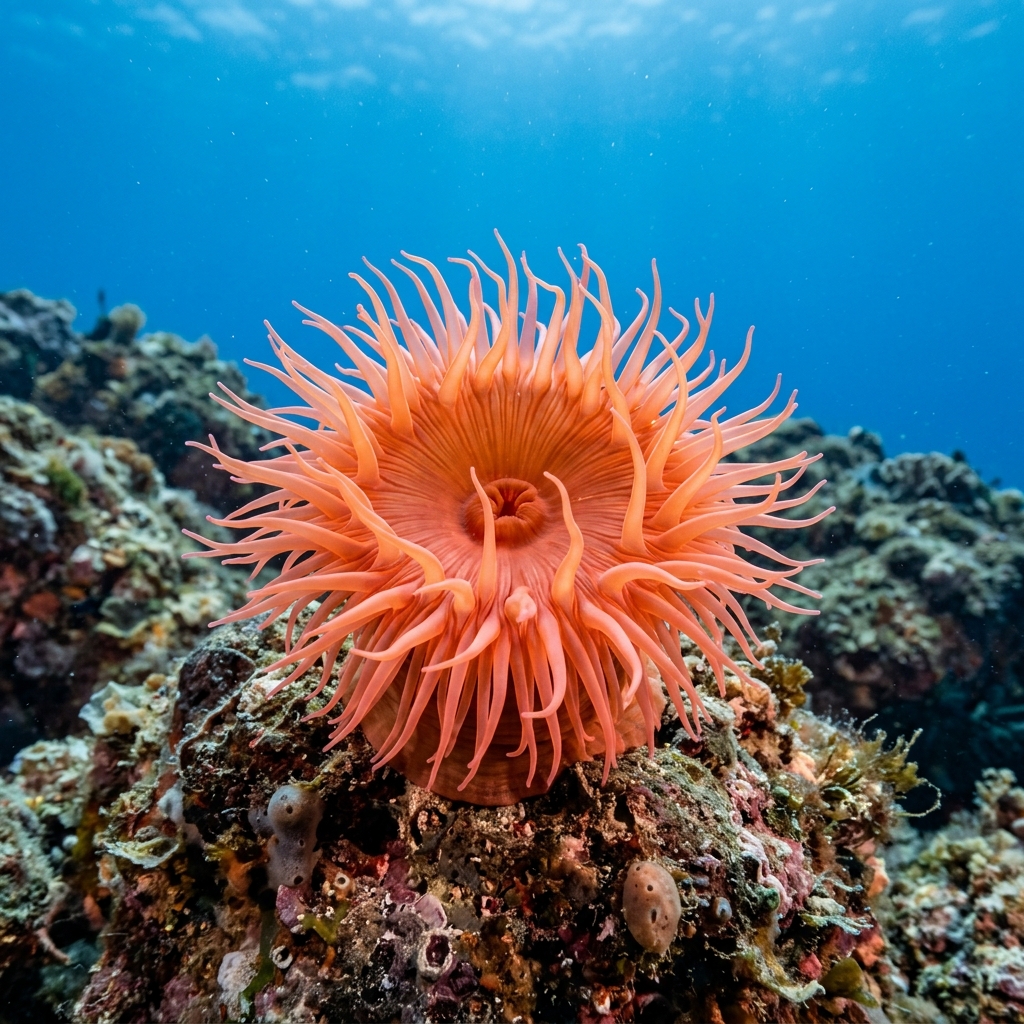
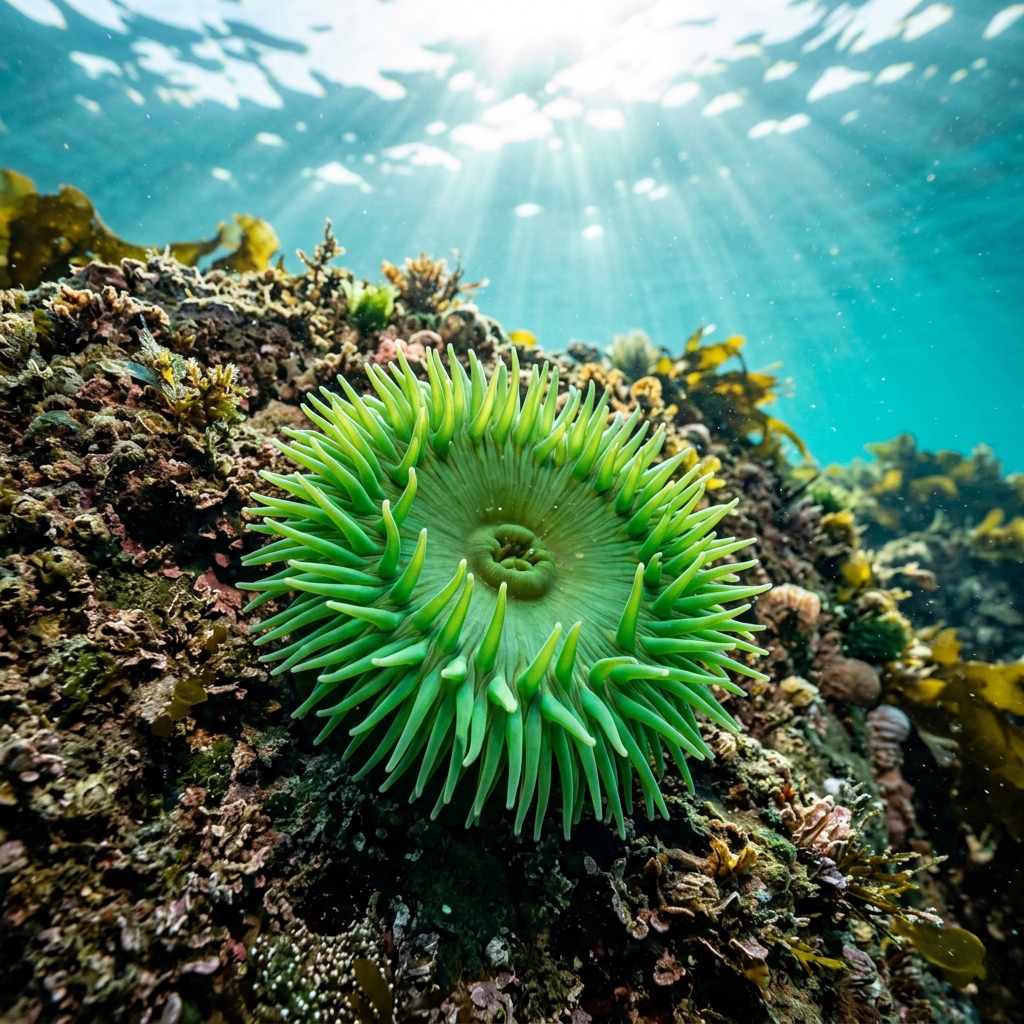
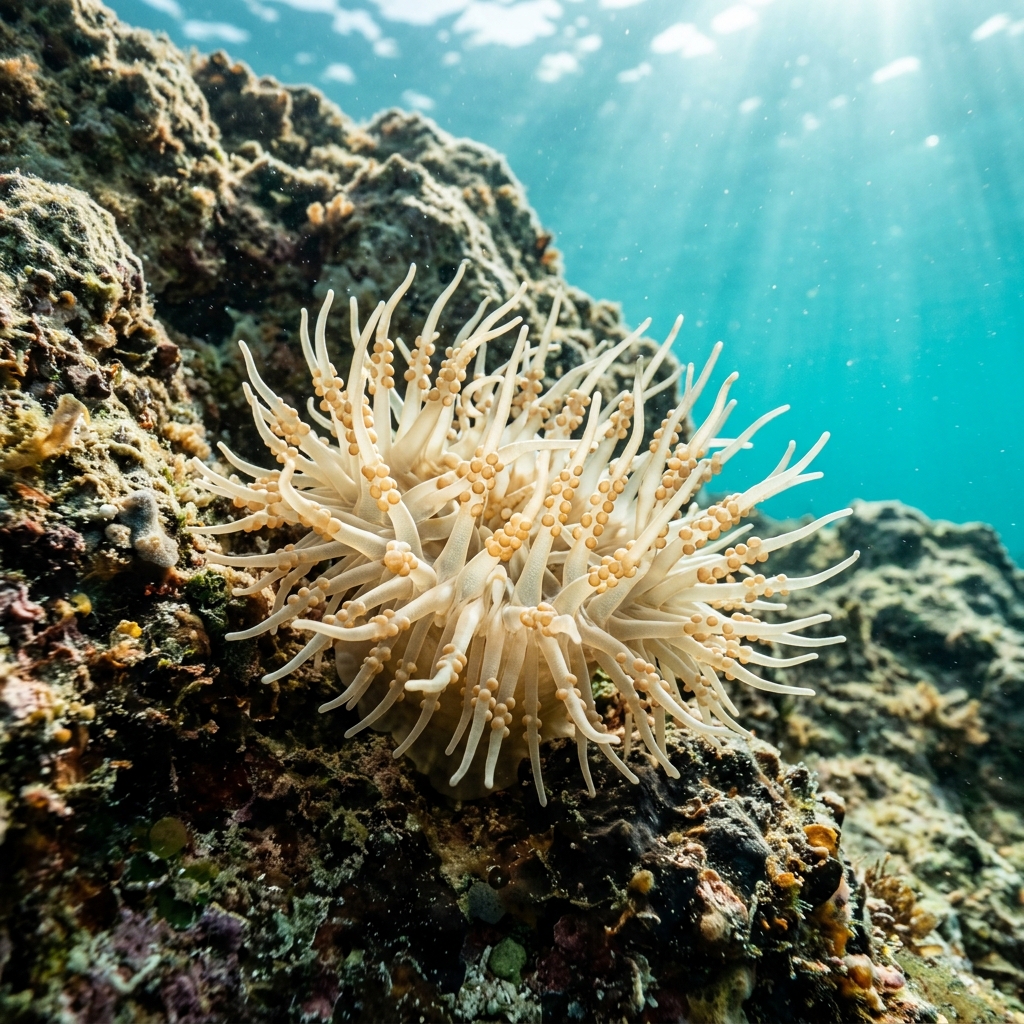
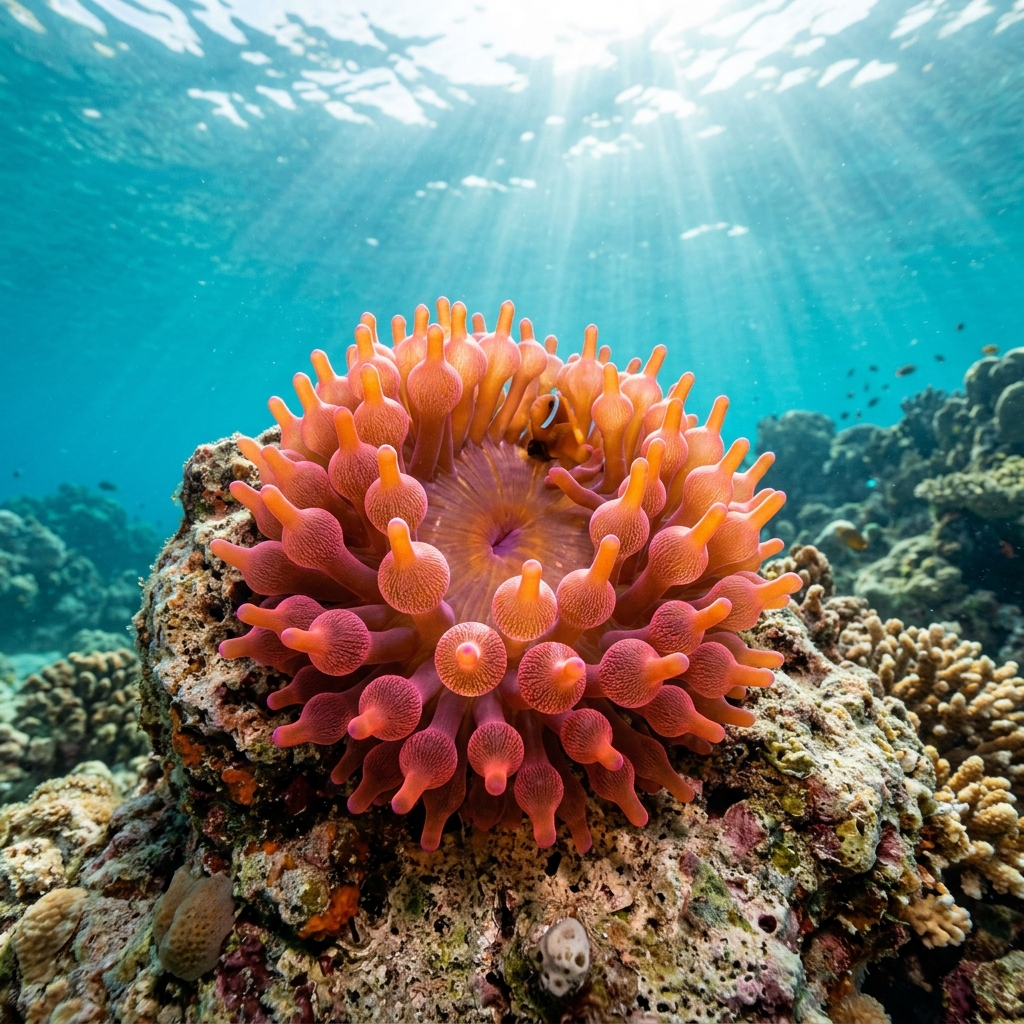
The name says it all: look for the distinctive swollen, bulb-like tips on the tentacles, which can range from translucent brown or green to vivid rose-pink or red. Colouration varies considerably depending on light and symbiotic algae, but that bubble tip is the giveaway no other common reef anemone shares. Column and oral disc can reach 30 cm or more across in larger specimens, and the whole animal sits low, hugging rock or coral rubble rather than towering above the substrate.
You will almost always find one anchored firmly to a crevice or hard substrate in shallow to mid-water reef zones, typically with a pair or small group of anemonefish (clownfish) weaving among its tentacles. The anemone itself is sessile (fixed in place) but can slowly creep or retract completely into a tight ball if disturbed, so a calm approach keeps it fully extended. Divers rarely notice any reaction to their presence directly, but surge, shadows, or physical contact can trigger rapid withdrawal.
The bubble tips on the tentacles are not permanent: in low light or when the anemone is stressed, the tentacles straighten out and the swellings disappear entirely, making it look like a completely different animal. The bulbs reappear once conditions settle.
In the northern hemisphere, sightings concentrate from September through July, suggesting a brief mid-summer lull in some areas. In the southern hemisphere, March to November covers the core season. Because it lives comfortably between 22 and 29 °C, tropical and subtropical reefs within that range hold it year-round and seasonality reflects diver access more than the animal's presence.
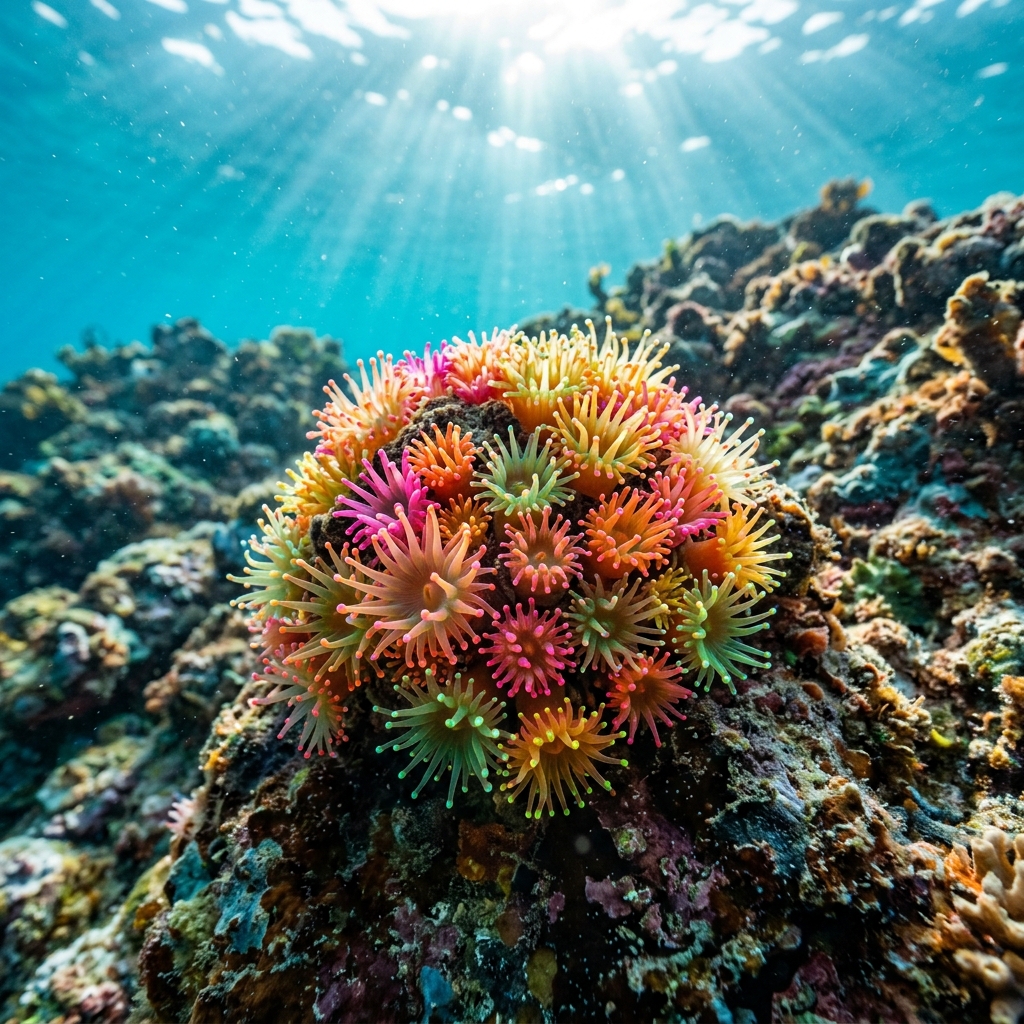
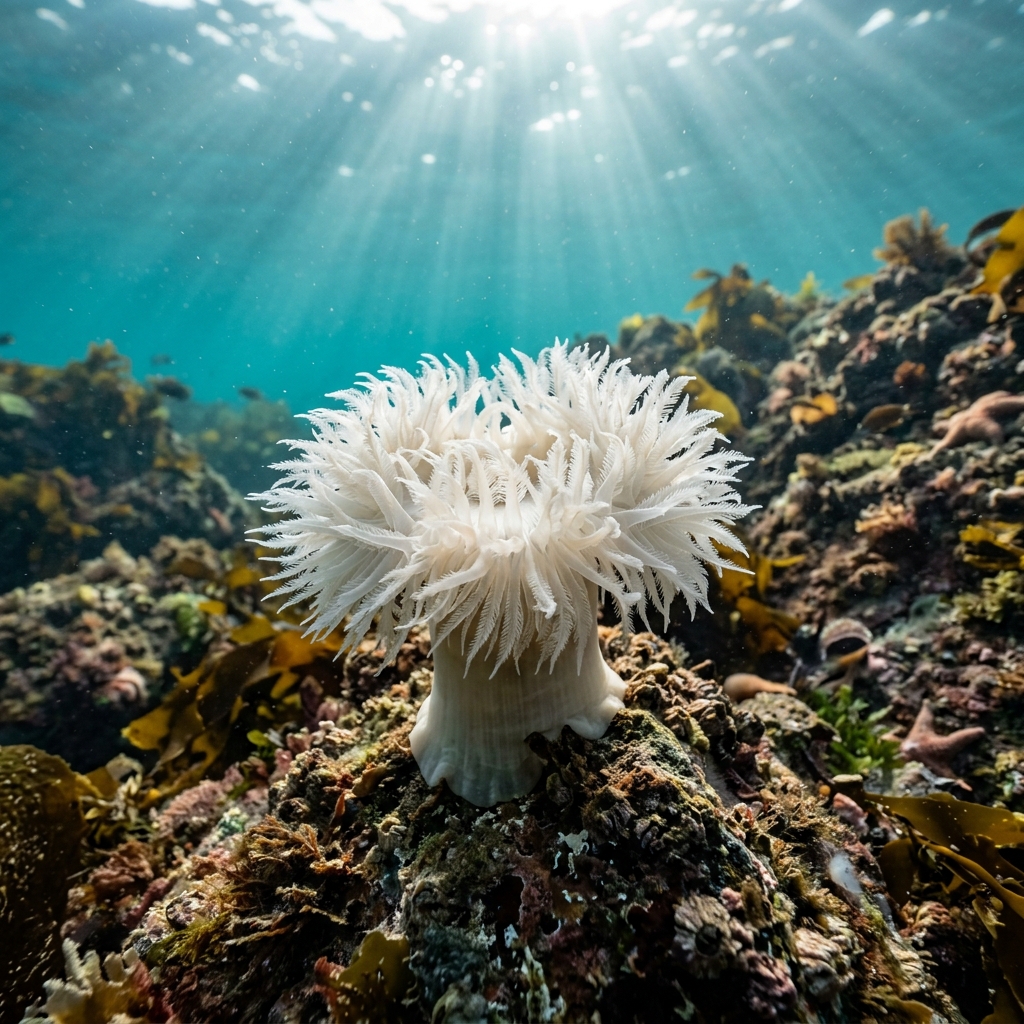
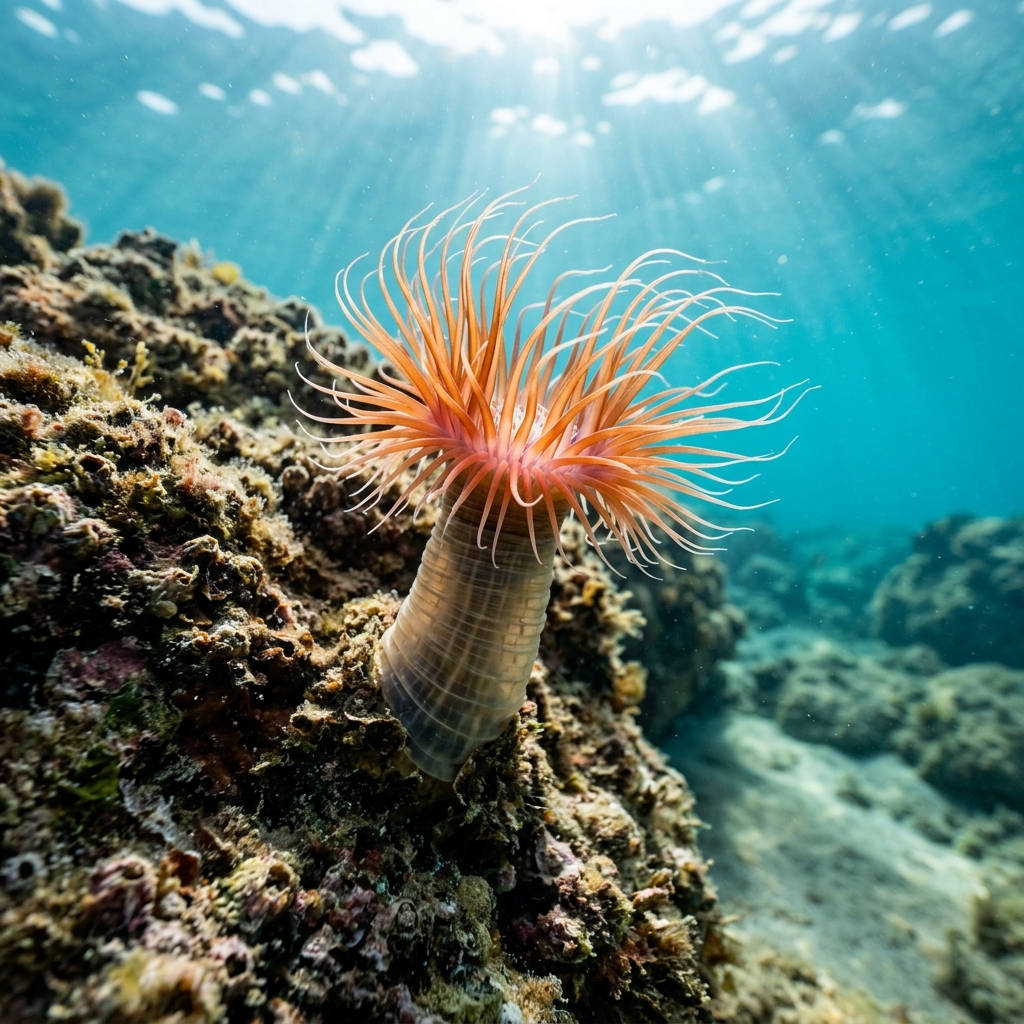
Reef neighbours a diver could mistake it for. Use the identification notes above to tell them apart.
Most commonly logged in Egypt (especially Sharm el Sheikh), the Maldives (Male and Ari Atolls), and the Philippines (Visayas Central), where divers report it regularly across a wide spread of sites. Strong sighting records also come from Okinawa, Malaysia's Perhentian and Redang islands, Tanzania's Zanzibar coast, and Mauritius. It is one of the more widely recorded anemone species in the Indo-Pacific and Red Sea.
Mapping where Bubble Tip Sea Anemone is logged…
They are most reliably logged across the Indo-Pacific and Red Sea, with particularly strong records from Sharm el Sheikh in Egypt, the Male and Ari Atolls of the Maldives, the Visayas in the Philippines, Okinawa in Japan, and the Perhentian and Redang islands in Malaysia. Zanzibar and Mauritius also see regular sightings.
On most tropical reefs they are present year-round thanks to consistently warm water between 22 and 29 °C. In northern hemisphere destinations, sightings concentrate from September through July. Southern hemisphere sites see the most records between March and November.
Look for the swollen, rounded tips on the tentacles, which no other commonly encountered reef anemone shares. Colour ranges from translucent brownish-green to bright rose-pink or red. If the anemone is stressed or in low light, the bulbs disappear and the tentacles appear tapered, so a relaxed, well-lit specimen is easiest to confirm.
Oral disc diameter commonly reaches 30 cm in healthy adults, though solitary individuals in good conditions can be larger. Clonal colonies, where one individual has split repeatedly, can create dense aggregations across a metre or more of reef.
Yes, and this is one of the most watched relationships on tropical reefs. Several clownfish species, including the popular ocellaris and percula clownfish, use this anemone as their host. The fish gains shelter and the anemone may benefit from the fish chasing away would-be predators and parasites. Spotting a pair of clownfish is often the quickest way to locate one.
Site and sighting data is aggregated from diver logs, iNaturalist and GBIF. For taxonomy and conservation status:
Plumose Anemone
2,032 sites