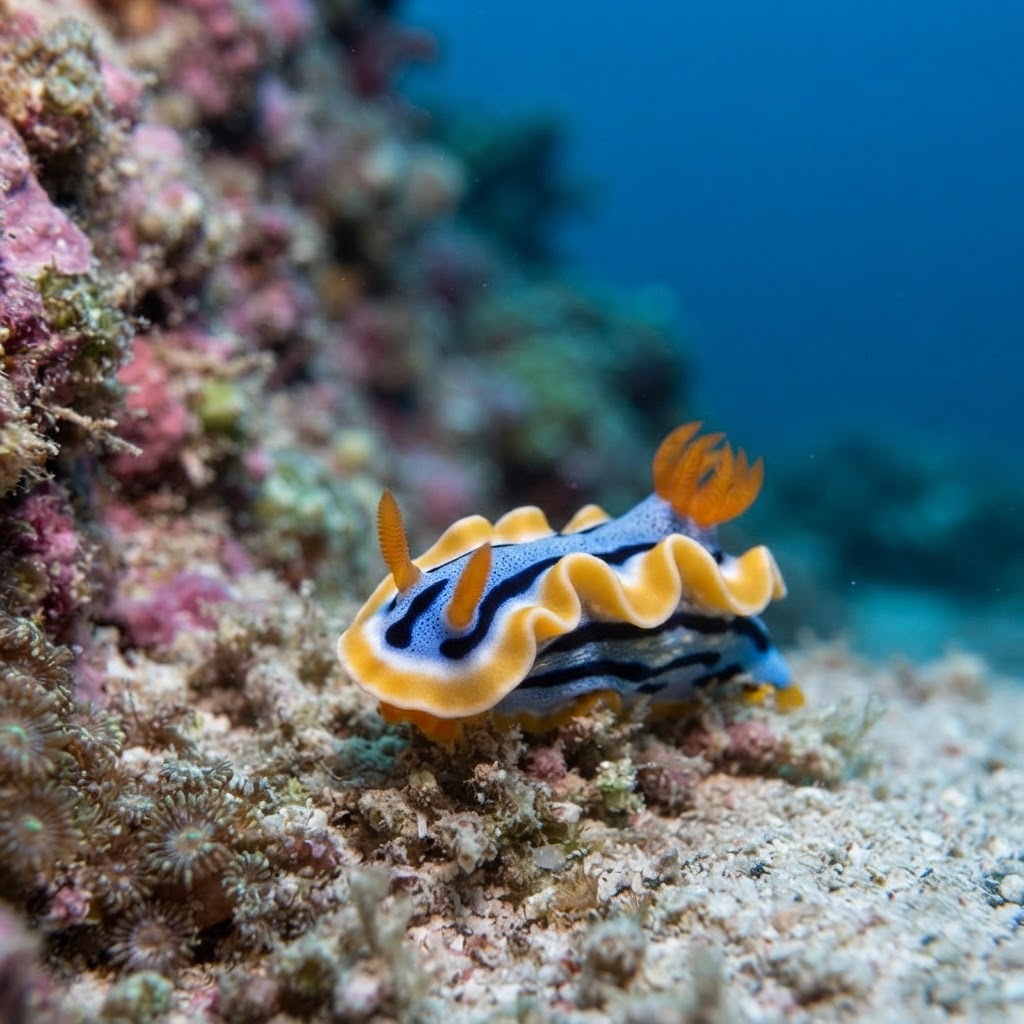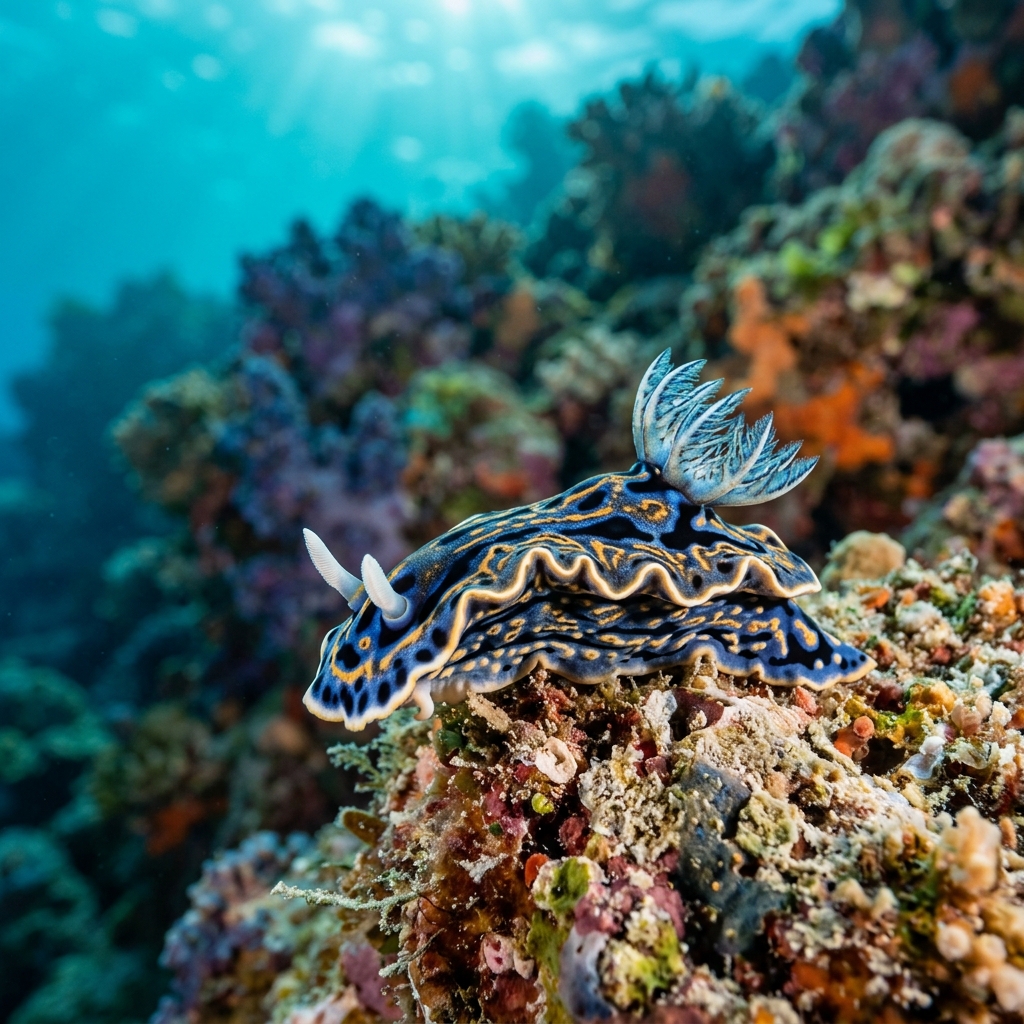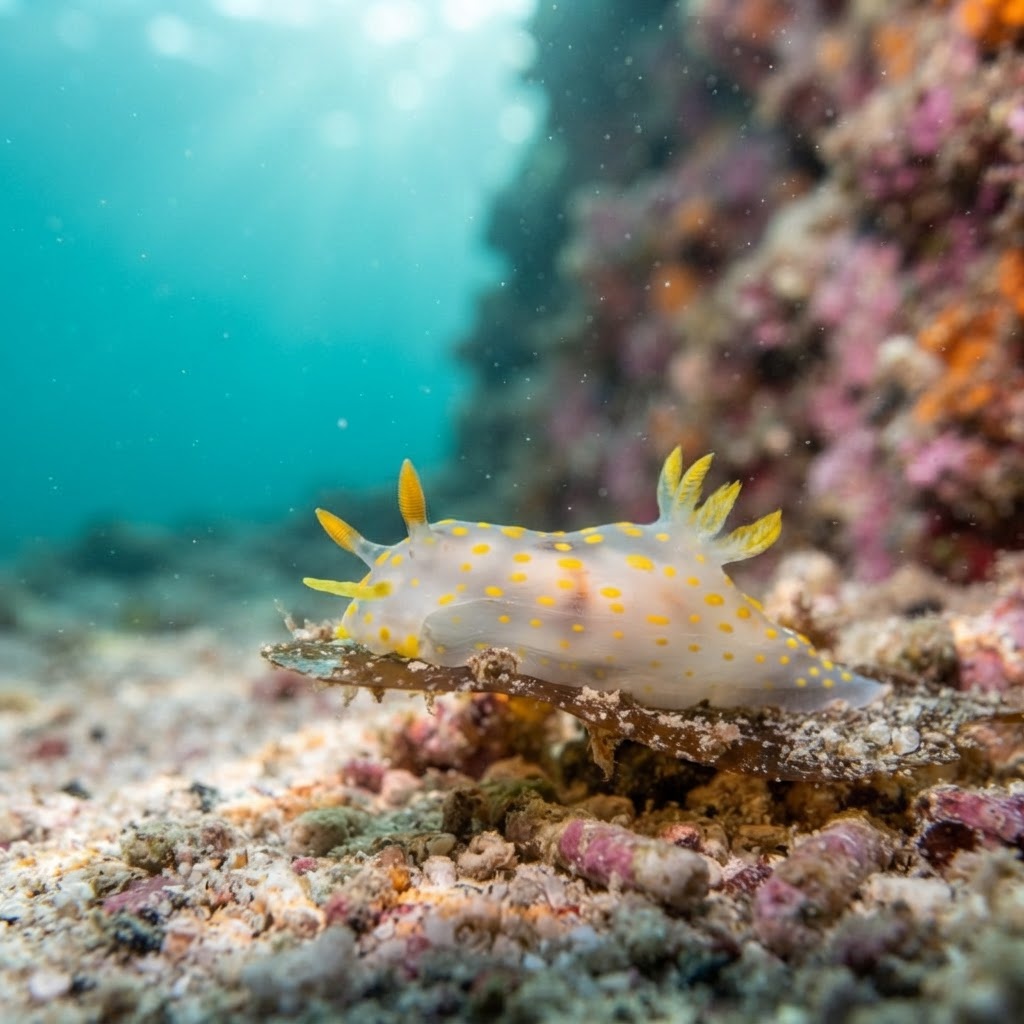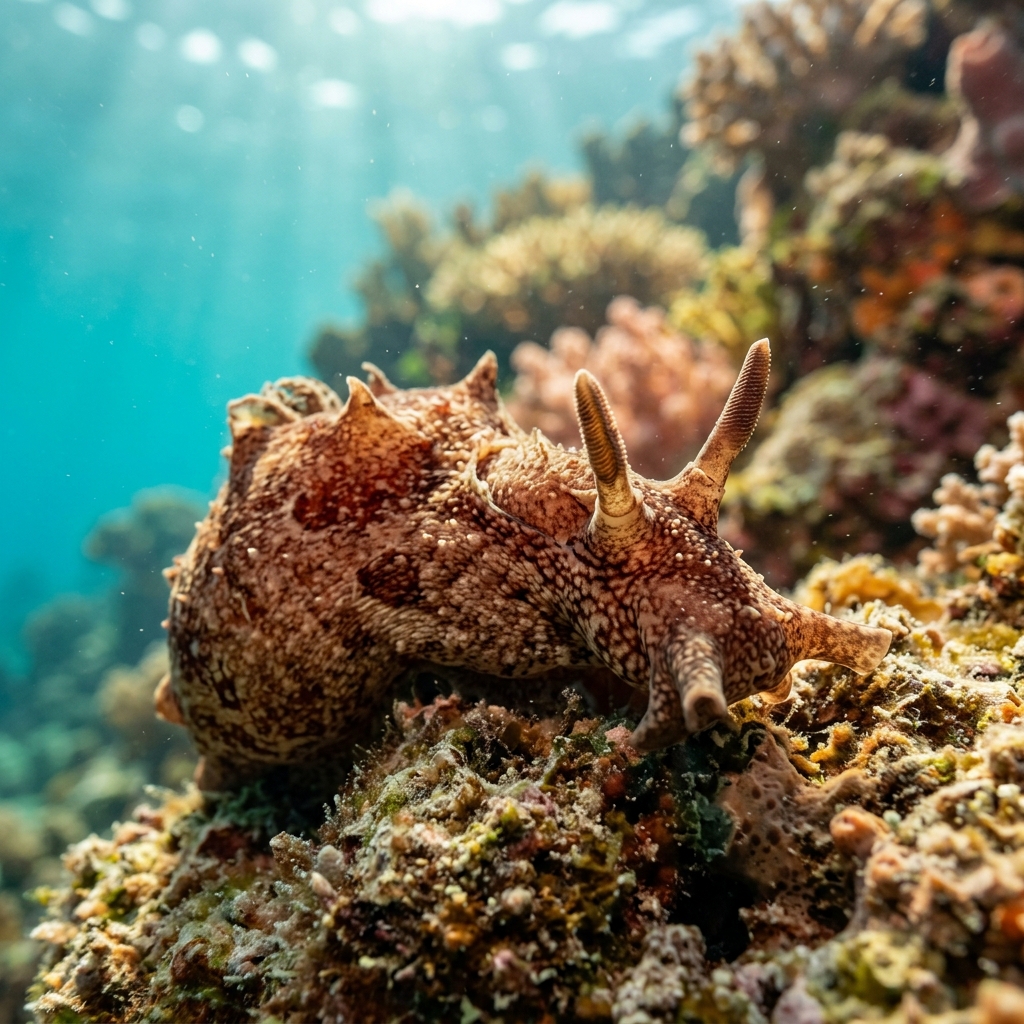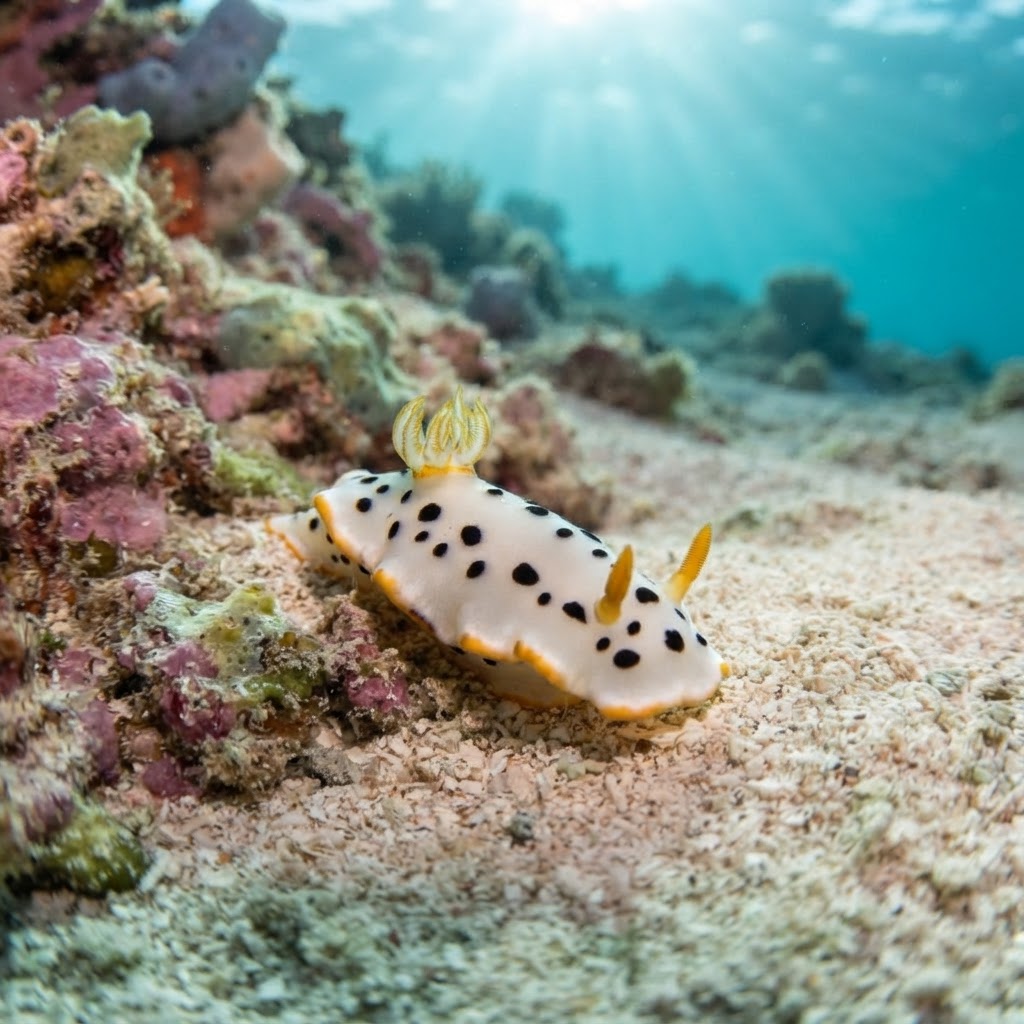
Chromodoris orientalis
A reliable find in Longdong, Taiwan and Sai Kung, Hong Kong, in water from 21 to 27C year-round.
A small sea slug with an elongated, soft-bodied form typical of chromodorid nudibranchs, usually pale with darker patterning across the mantle. Look for the frilly gills (feathery breathing tuft) near the rear and a pair of tentacle-like rhinophores on the head, the two features divers use to confirm a chromodorid at a glance. Size is modest, more likely spotted by scanning rubble and reef walls closely than at distance.
Divers typically find it slow-moving over rock, rubble and reef substrate rather than out in open water, doing what nudibranchs do best: grazing steadily and ignoring anything that isn't food. It shows no reaction to divers beyond continuing on its way, making it an easy subject for a close macro shot once spotted. Most logs come from the same muck and reef-wall habitats favoured by other chromodorids in these regions.
Like other chromodorid nudibranchs, its bright patterning likely signals distastefulness to predators, a defence it gets from toxins concentrated from the sponges it feeds on rather than from anything it produces itself.
Sightings show no clear seasonal pattern, so treat it as a year-round find. It's logged across a wide 21.4 to 27.4C range, meaning it tolerates the cooler shoulder-season temperatures typical of Taiwan, Hong Kong and Jeju as well as warmer summer water.
Reef neighbours a diver could mistake it for. Use the identification notes above to tell them apart.
Most consistently logged in Taiwan, particularly around Longdong, with strong numbers also coming out of Sai Kung in Hong Kong. Jeju Island in South Korea rounds out the sightings, making this a distinctly East Asian find rather than a tropical reef regular.
Mapping where Oriental Nudibranch is logged…
It's most often found around Longdong in Taiwan and Sai Kung in Hong Kong, with additional sightings from Jeju Island, South Korea. It's an East Asian species rather than one found on tropical reefs elsewhere.
There's no strong seasonal pattern in the sighting data, so it's considered a year-round find. Observed water temperatures range from about 21 to 27C, covering most of the diving season in Taiwan, Hong Kong and Jeju.
Look for a small, elongated sea slug with a pale, patterned mantle, a feathery gill tuft near the tail, and a pair of rhinophores on the head. It moves slowly over rubble and reef surfaces, so a close look at substrate is often how divers spot it.
No, it poses no danger to divers. It has no means of stinging or biting and simply carries on grazing when approached.
Exact size data isn't available for this species, but like most chromodorid nudibranchs it stays small, generally in the centimetre range rather than anything you'd spot from a distance.
It's logged as uncommon at most sites where divers find it, though a handful of sites in Taiwan and Hong Kong report it as a common sighting. It's the kind of species you look for deliberately rather than stumble across constantly.
Site and sighting data is aggregated from diver logs, iNaturalist and GBIF. For taxonomy and conservation status:
Light-spotted Aegires
3,168 sites