Ostracion immaculatum
Boxy, blue-spotted and slow-moving, this reef fish turns up around Longdong, Taiwan and Jeju Island in water from 21.6 to 27.6C.
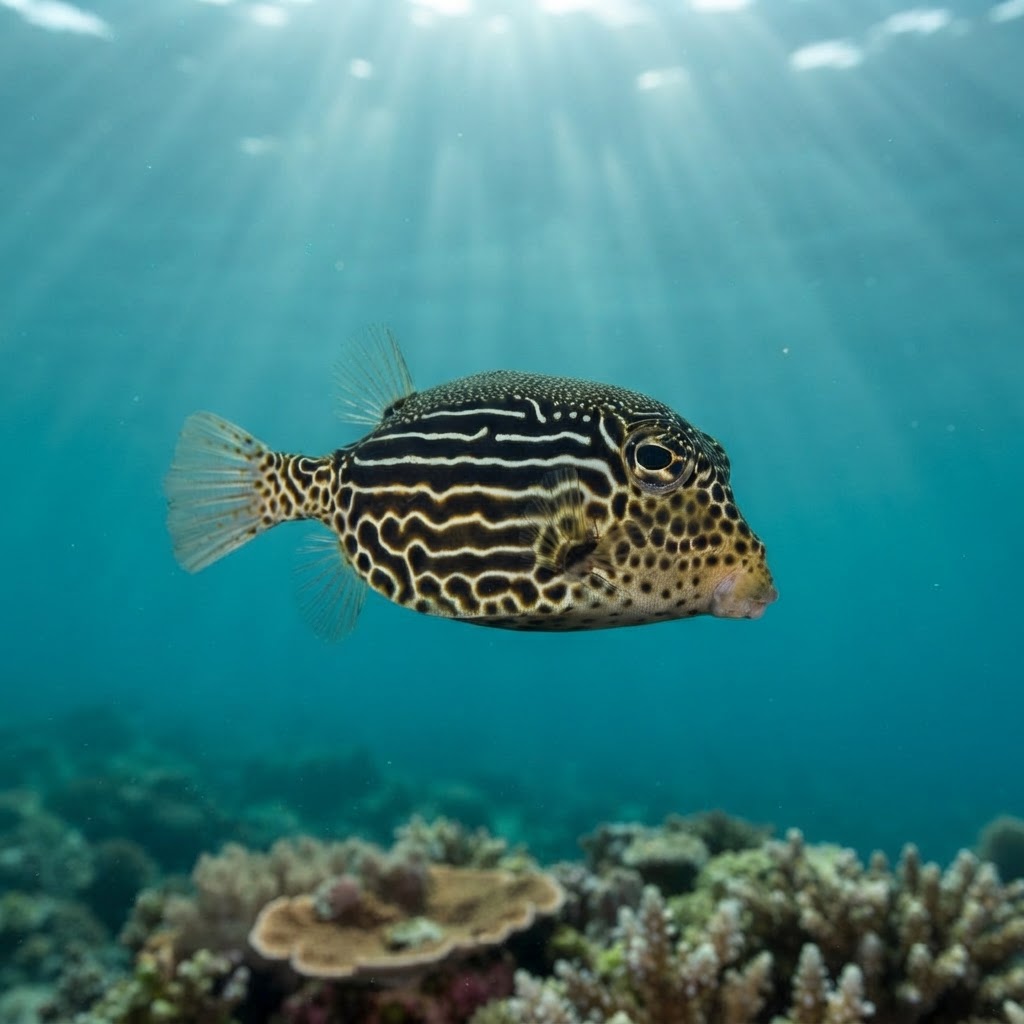
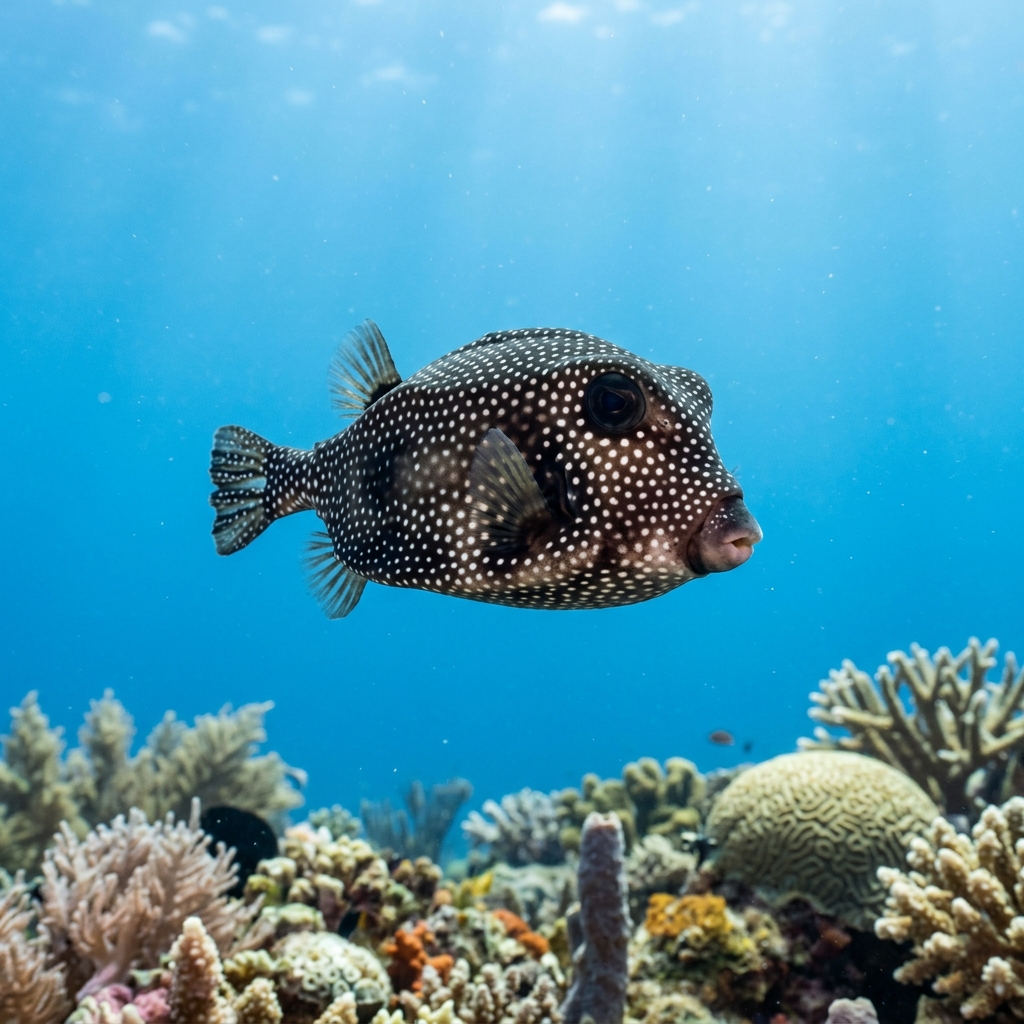
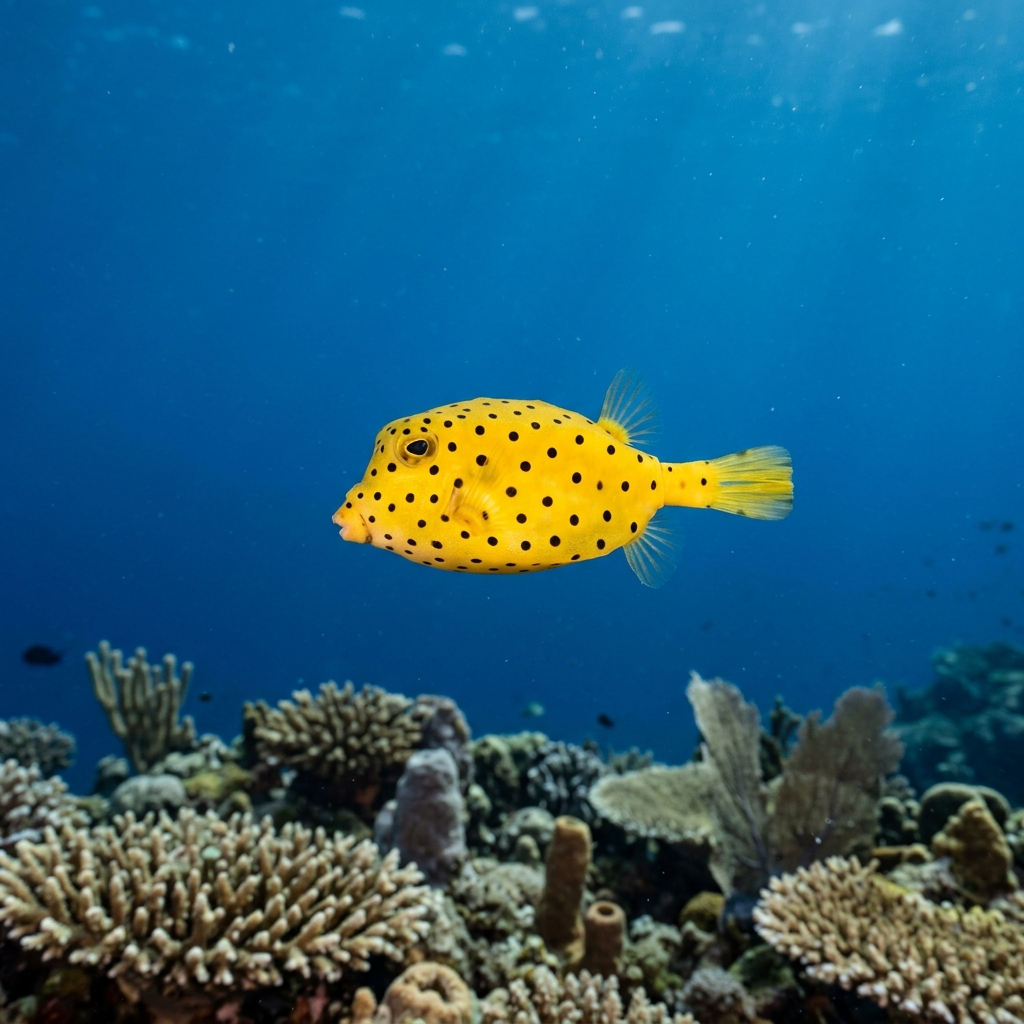
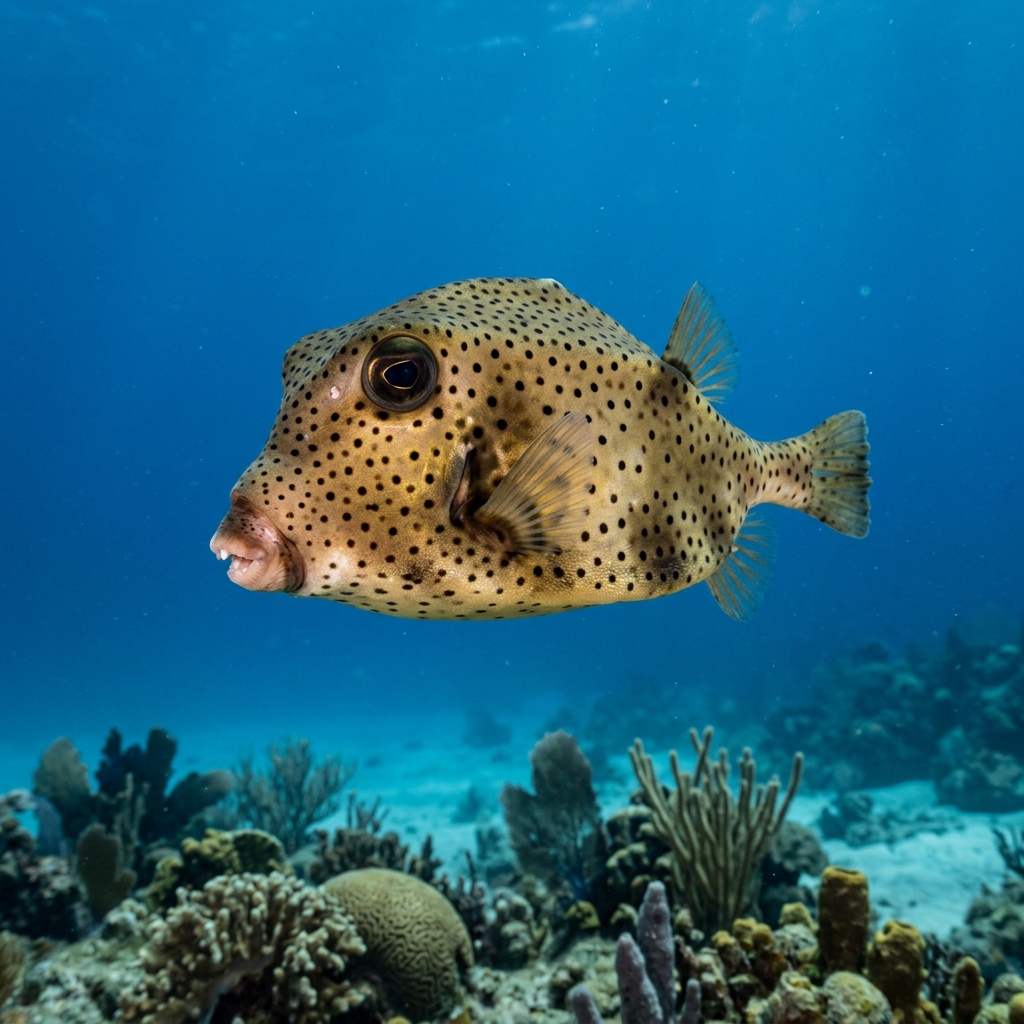
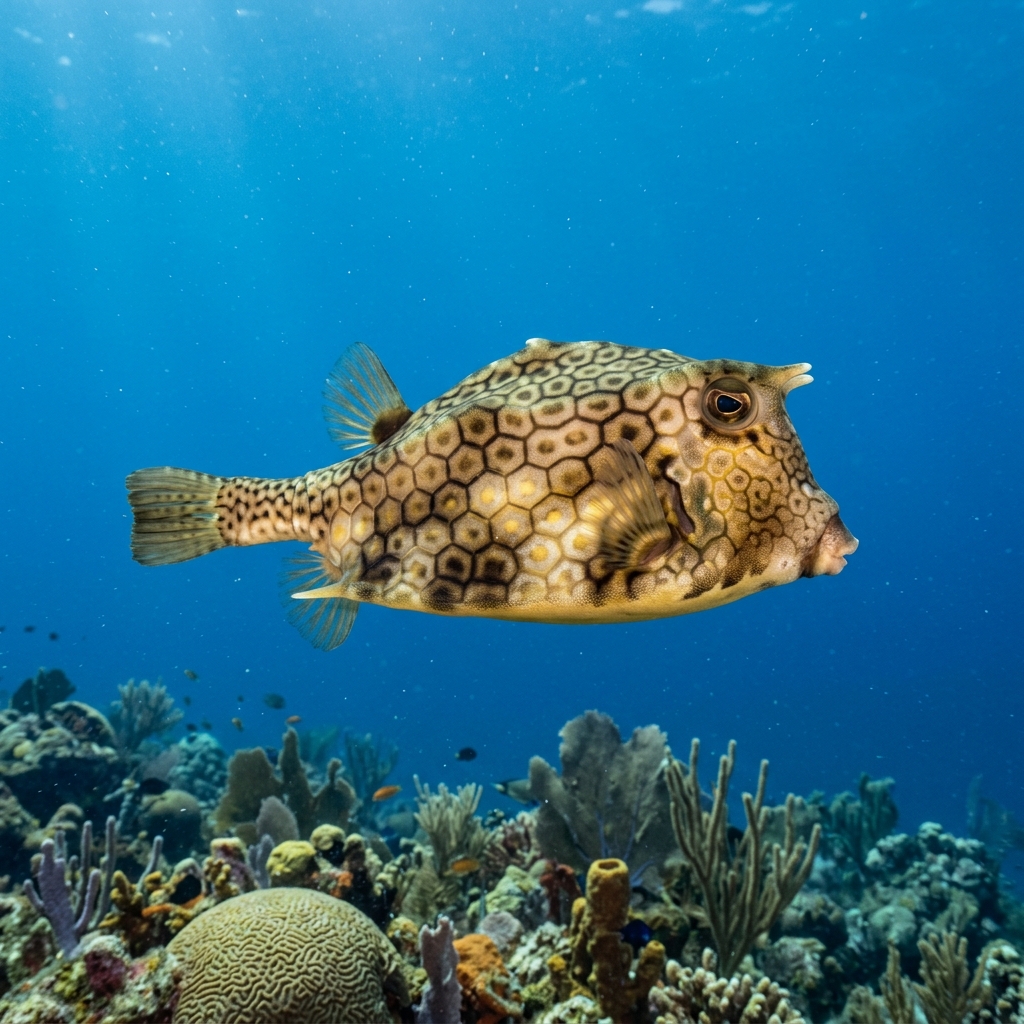
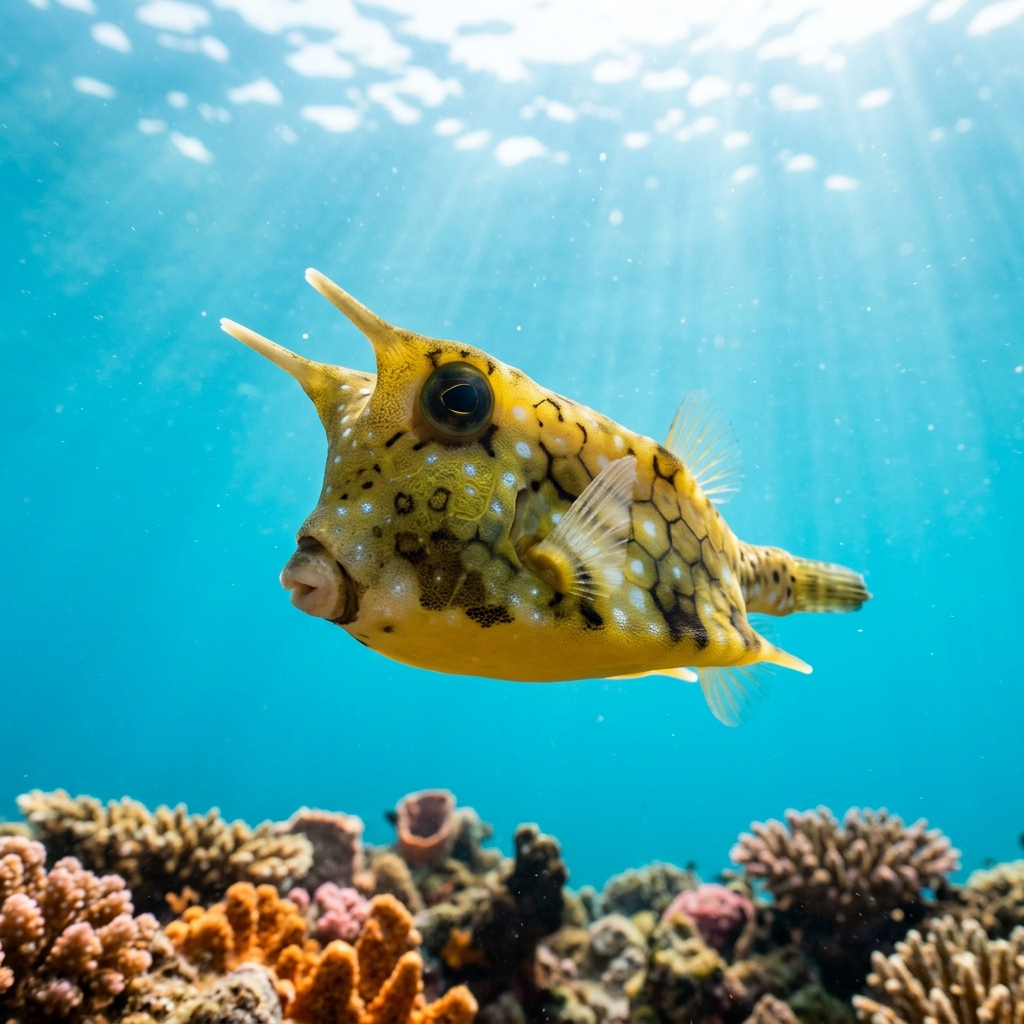
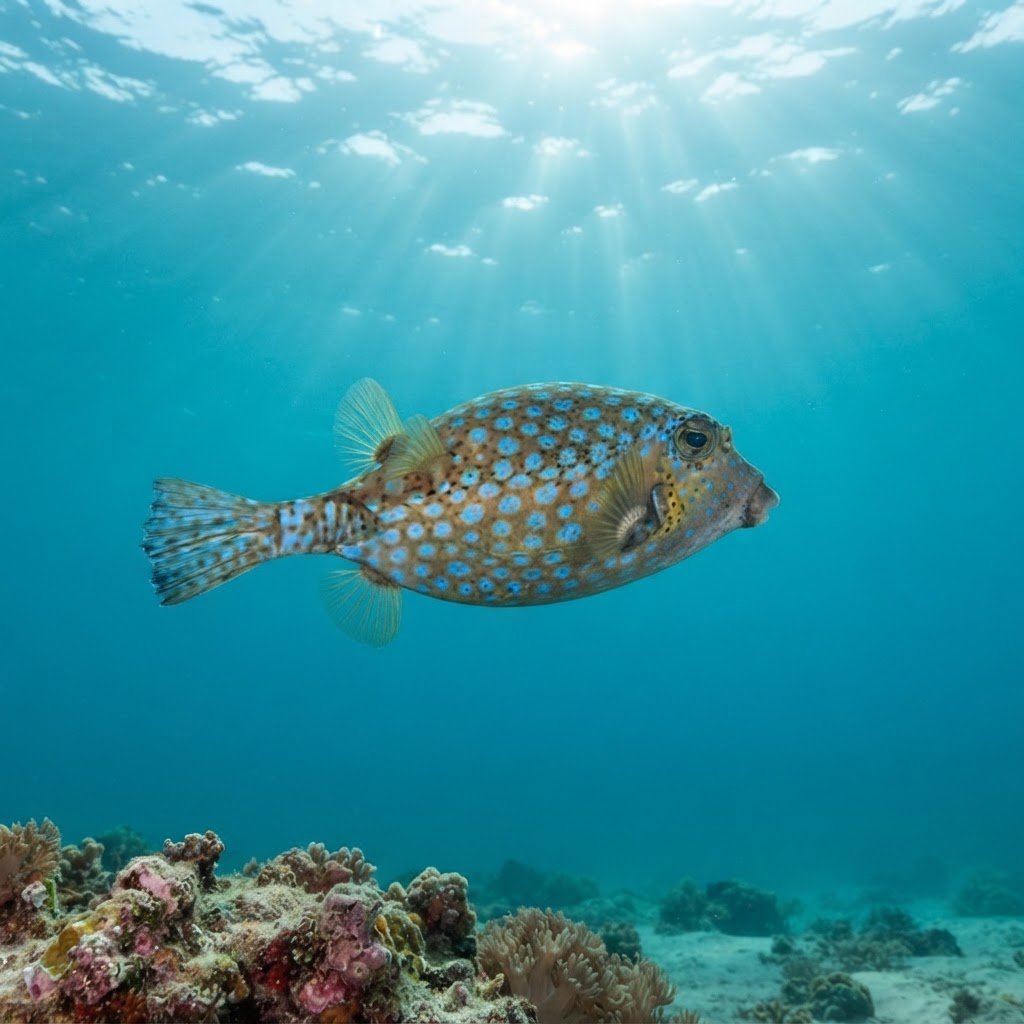
Boxy, almost rigid body with a pale blue-grey base colour scattered with small dark spots over the entire body and fins. Grows to around 18 cm, moving with slow, hovering wingbeats of its small fins rather than a typical fish swagger. The hard, angular carapace (bony outer shell) is the giveaway: no other fin movement looks quite like it.
Divers usually find it hovering low over rock and rubble, picking at the substrate rather than schooling or patrolling open water. It's an unhurried swimmer, using its small pectoral and dorsal fins to hang almost motionless before drifting off at its own pace when approached. Sightings tend to be solitary rather than in groups.
Like other boxfish, it can release a toxin from its skin when stressed, part of why it swims so unbothered: it isn't relying on speed to survive an encounter.
No clear seasonal pattern shows up in the data, so treat it as a year-round possibility. Its observed range of 21.6 to 27.6C spans the cooler and warmer months typical of Taiwan, Japan and Jeju Island's rocky reefs.
Reef neighbours a diver could mistake it for. Use the identification notes above to tell them apart.
Most consistently logged around Longdong in Taiwan, with further sightings across Central Japan and Jeju Island in South Korea. These temperate to subtropical rocky reef sites are currently the strongest bet for finding one, and sightings run uncommon even where it's known to occur.
Mapping where Bluespotted Boxfish is logged…
The most reliable sightings come from Longdong in Taiwan, plus sites across Central Japan and Jeju Island in South Korea. It's logged as uncommon even at these spots, so don't expect a guaranteed encounter.
There's no detected season in the sighting data, so it's considered a year-round find. It's been recorded in water from 21.6 to 27.6C, covering most of the diving calendar at its known sites.
Look for a boxy, almost cube-shaped body around 18 cm long, pale blue-grey with small dark spots covering the body and fins. It moves slowly and stiffly, using tiny fin flutters instead of a normal swimming motion.
They typically reach around 18 cm, a compact size that keeps them tucked close to rock and rubble rather than out in open water.
No, they pose no threat to divers. Their main defence is a skin toxin released when stressed, not aggression, so there's no need to keep distance beyond normal reef etiquette.
Their rigid, box-shaped shell limits how they swim, so instead of fleeing predators they rely on releasing a skin toxin when threatened. That trade-off explains why they always look so unhurried underwater.
Site and sighting data is aggregated from diver logs, iNaturalist and GBIF. For taxonomy and conservation status:
Honeycomb Cowfish
1,691 sites