Canthigaster rivulata
Uncommon reef puffer logged around Central Japan, Taiwan and Jeju Island in water from 15 to 28C, year-round sightings.
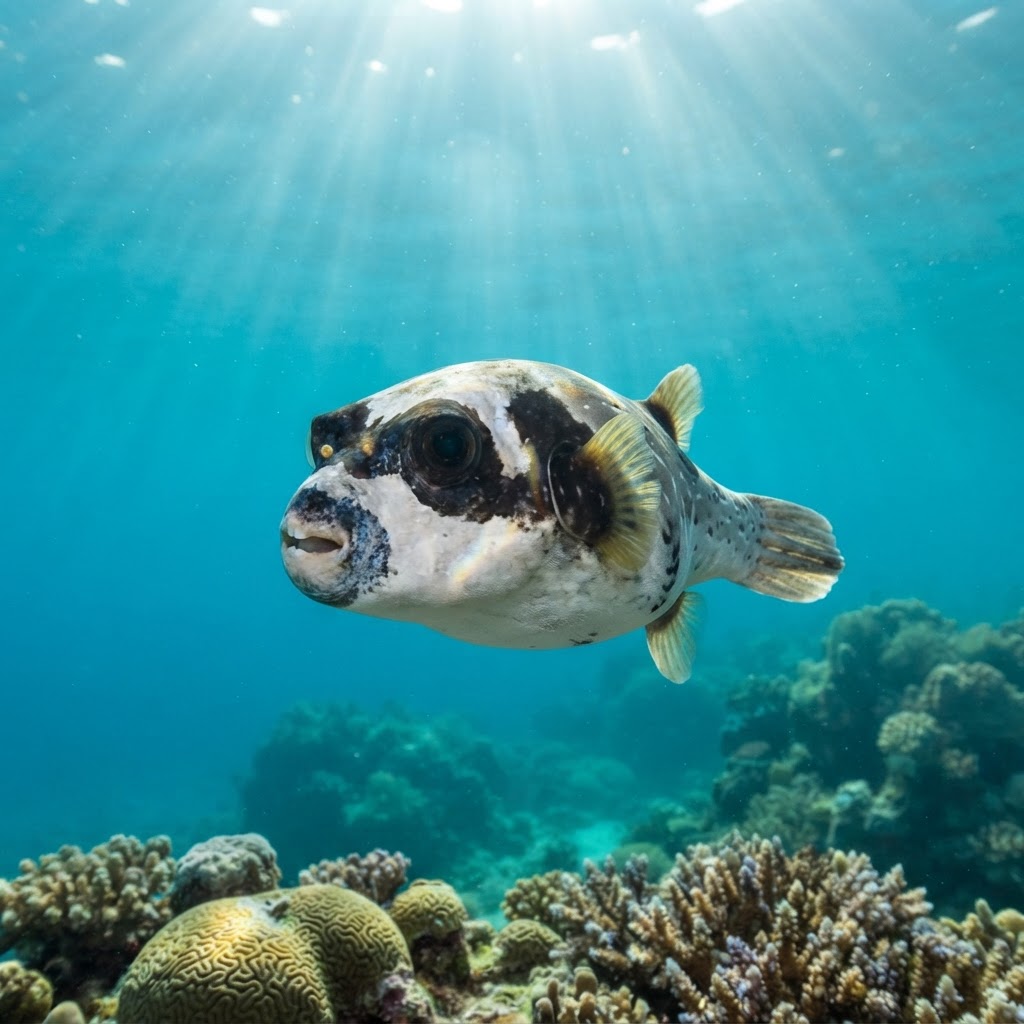
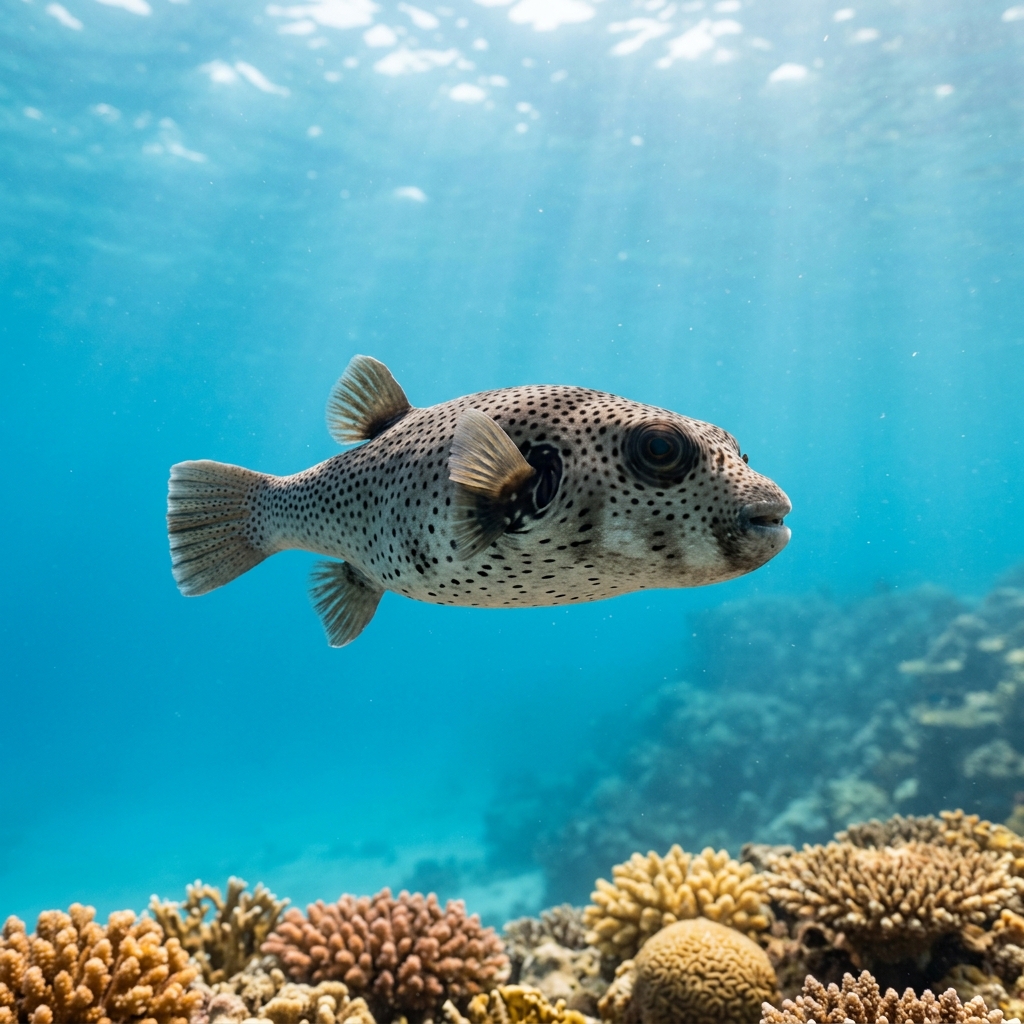
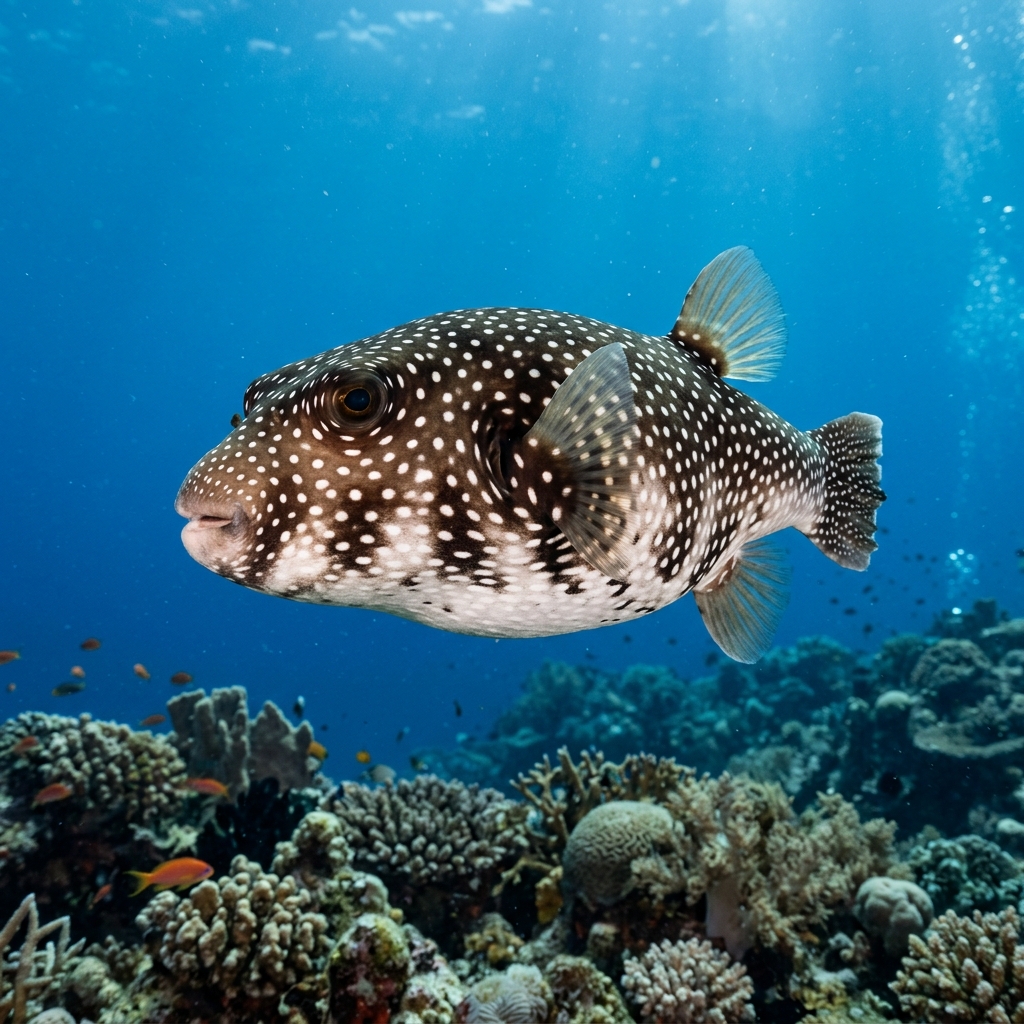
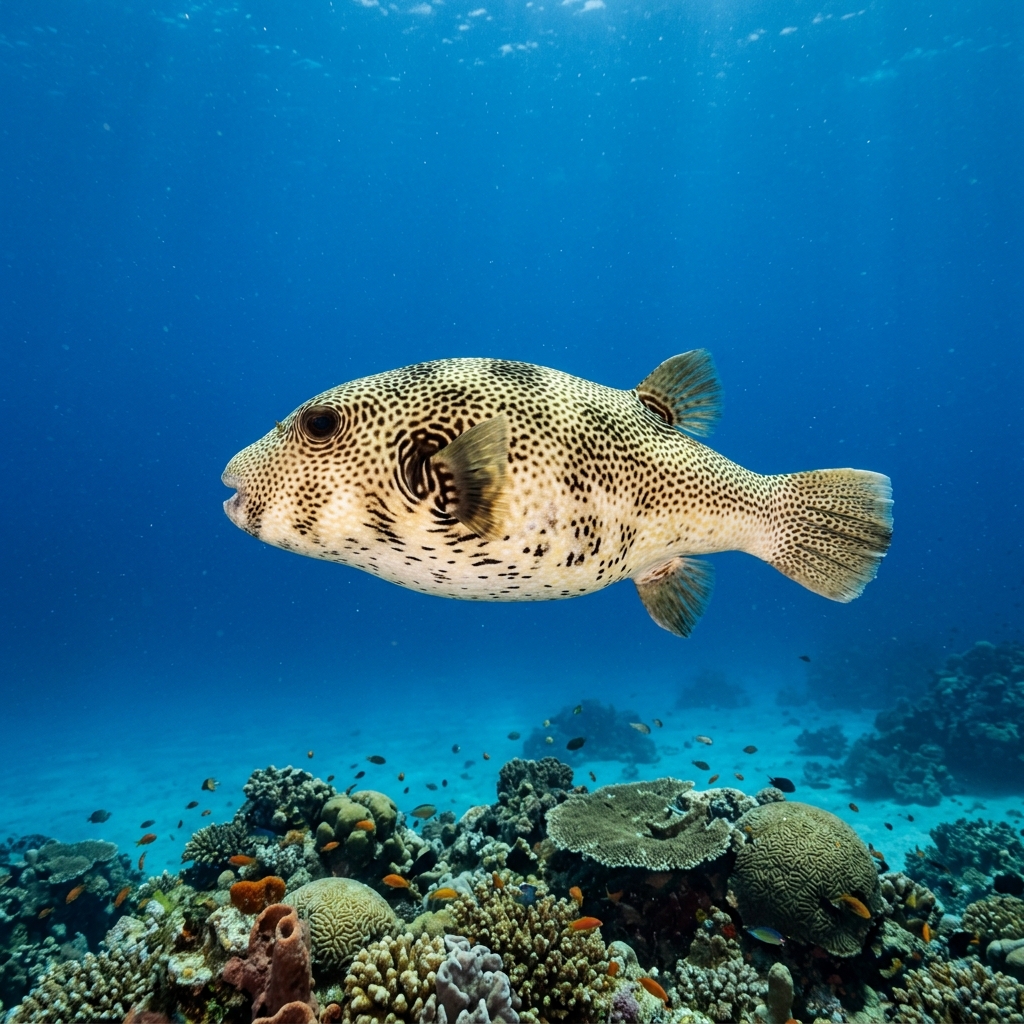
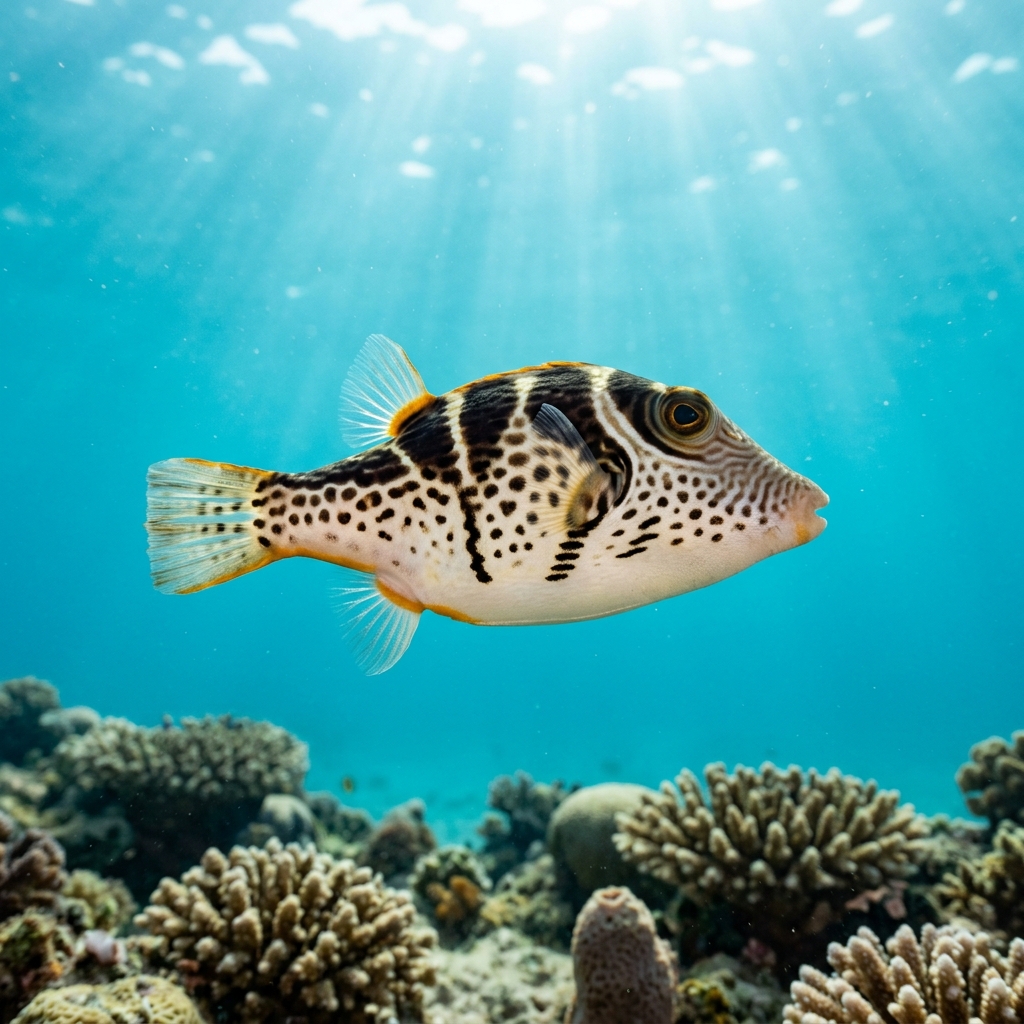
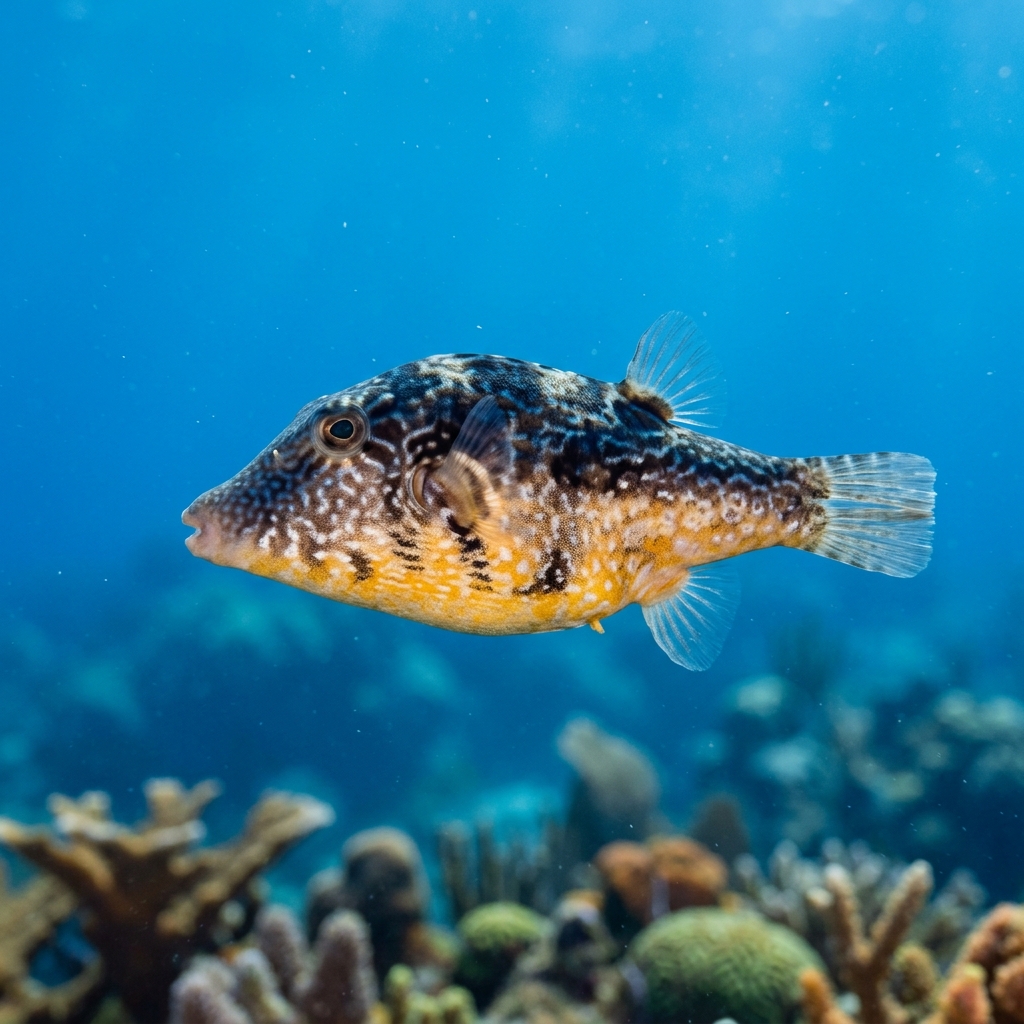
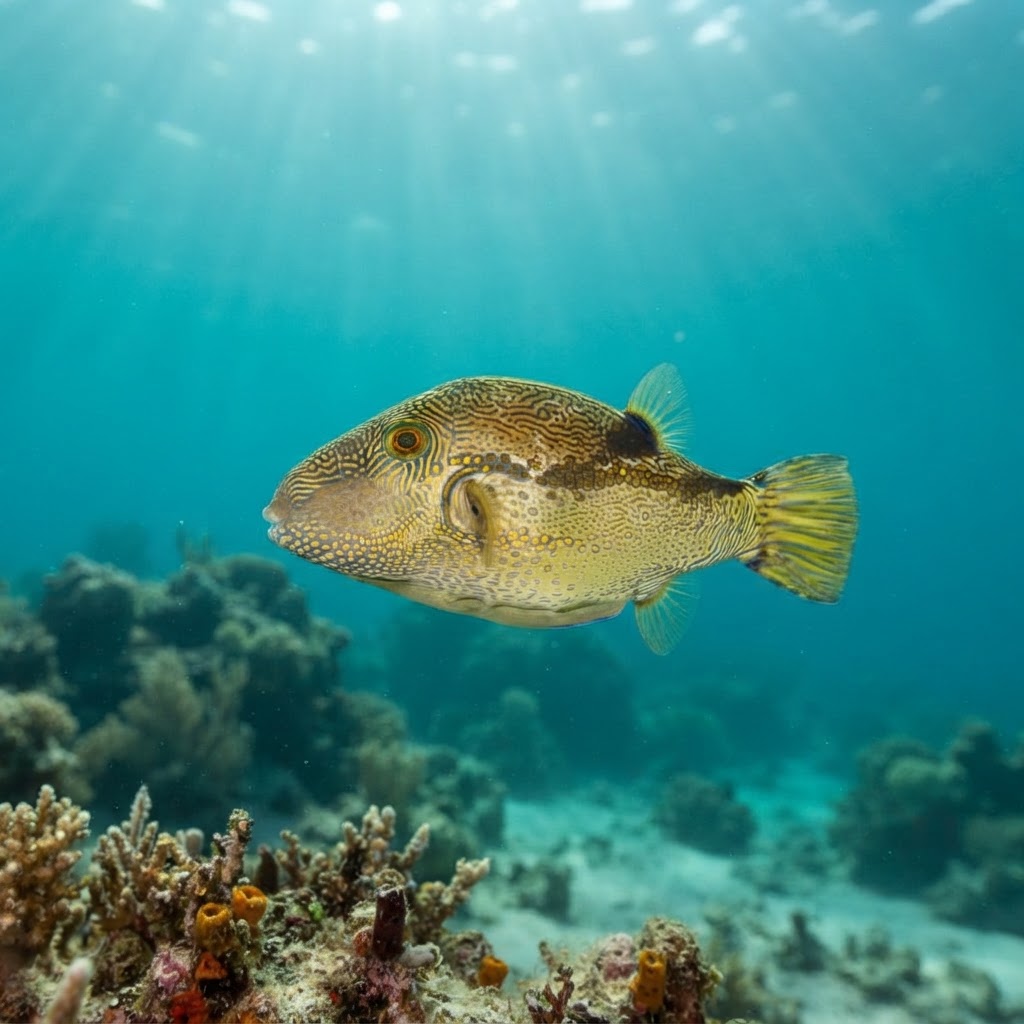
Small, stocky puffer that tops out around 13 cm, with a tan to olive-brown body covered in dark, wavy horizontal lines that give it its name. Look for a blunt, rounded snout, small fins set well back on the body, and a pale belly that contrasts with the patterned flanks. It swims with the slow, hovering paddle-stroke typical of pufferfish rather than a fast dart, which makes the line pattern easy to pick out at close range.
Divers typically find it cruising alone over rocky reef and mixed rubble, browsing along the bottom rather than schooling or holding station in one spot. It tends to keep a cautious distance rather than approach divers, drifting off at an unhurried pace if you get too close. Most logs describe it as an uncommon but not shy encounter, more a case of scanning the right rocky terrain than waiting at a cleaning station or den.
Like other pufferfish, it can inflate its body with water as a last-resort defence and carries tetrodotoxin in its tissues, which is why nothing in the reef bothers trying to eat it twice.
Sightings show no detected seasonal pattern, and the recorded temperature range of 15.3 to 27.8C spans both cooler and warmer months, so it's reasonable to treat this as a year-round sighting at its core Japanese, Taiwanese and Korean sites.
Reef neighbours a diver could mistake it for. Use the identification notes above to tell them apart.
Most reliably logged around Central Japan, where the bulk of sightings come from, with a solid secondary population at Longdong in Taiwan and further sightings around Jeju Island in South Korea. This is a temperate-to-subtropical rocky reef species rather than a tropical coral reef regular, so it's worth looking for on the rockier, current-swept sites in these regions rather than classic soft-coral reef.
Mapping where Brown-lined Puffer is logged…
It's most commonly logged around Central Japan, with further reliable sightings at Longdong in Taiwan and around Jeju Island in South Korea. These are rocky, temperate-leaning reef sites rather than tropical coral reefs.
There's no clear season in the sighting data, and it's been recorded across a wide temperature range from about 15 to 28C, so it's best treated as a year-round possibility at its known sites.
Look for a small, stocky puffer around 13 cm with a tan or olive body covered in dark wavy lines and a pale belly. It swims slowly with a hovering, paddle-like motion rather than darting, which makes the line pattern easy to spot.
They're a small puffer species, typically reaching around 13 cm in length, so they're easy to overlook against rocky, textured reef backgrounds.
No, they pose no threat to divers. Like most pufferfish they carry toxins in their tissues as a defence against predators, but this only matters if the fish is handled or eaten, not during a normal dive.
It carries tetrodotoxin, a potent natural toxin, in its skin and organs, and can also inflate its body with water when threatened. Together these make it an unappealing target for almost every reef predator.
Site and sighting data is aggregated from diver logs, iNaturalist and GBIF. For taxonomy and conservation status:
Valentini Pufferfish
2,830 sites