Diodontidae spp.
Spot porcupinefish across Florida, the Maldives, and the Red Sea. Here's where they're most commonly logged, when to go, and how to tell them apart.
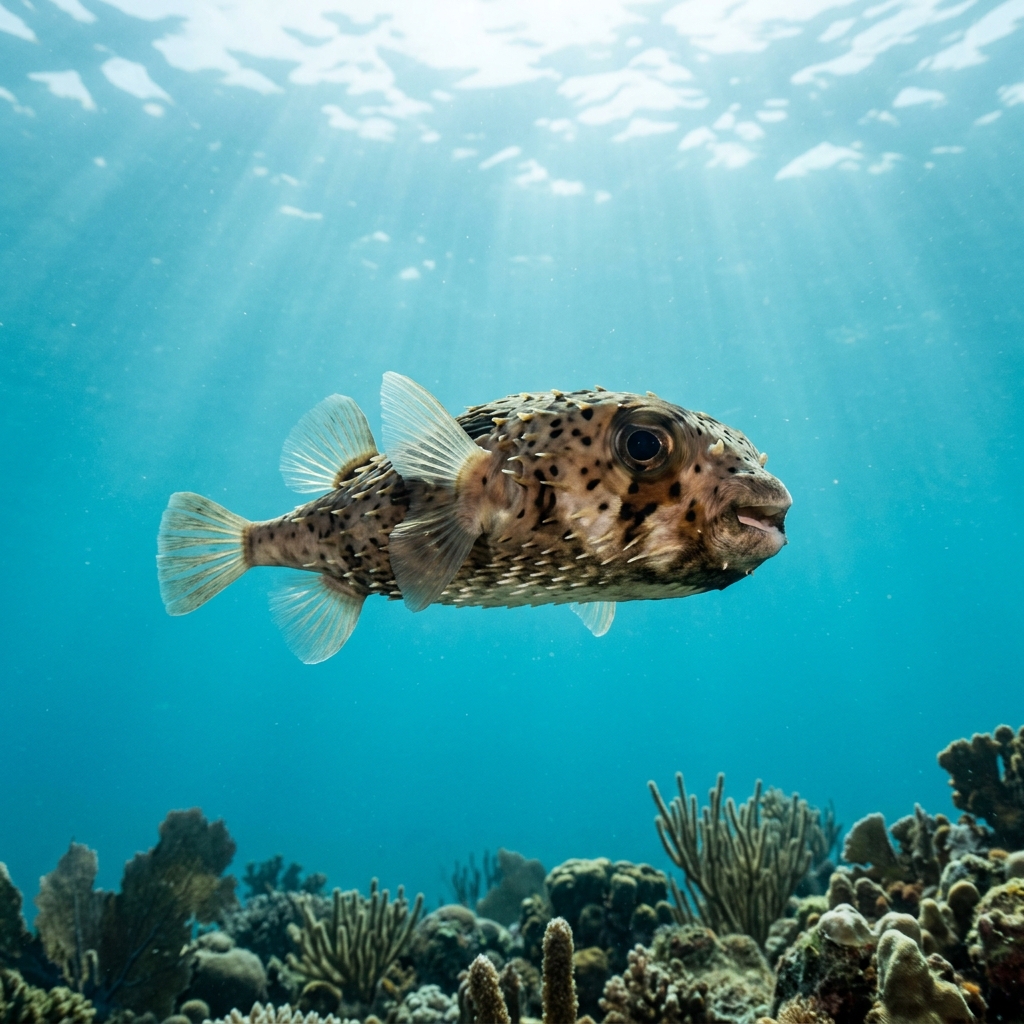
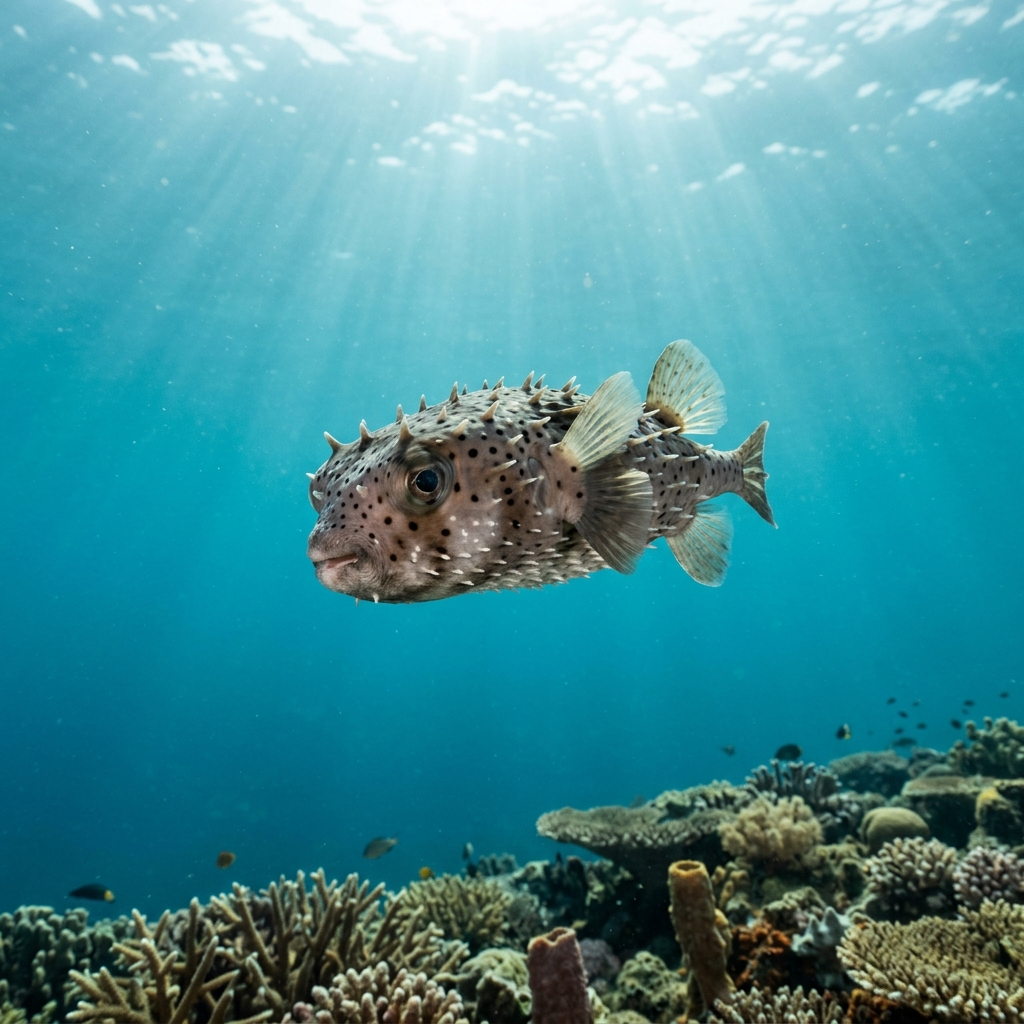
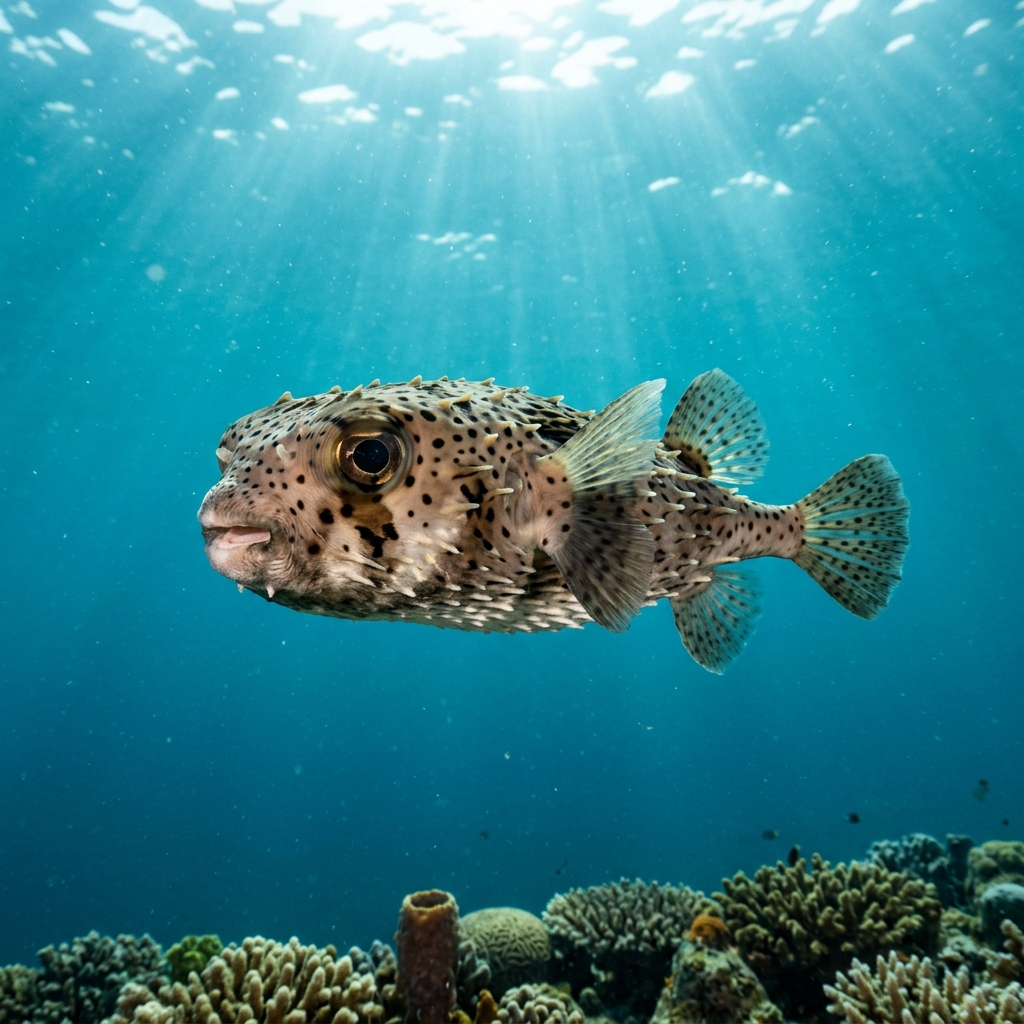
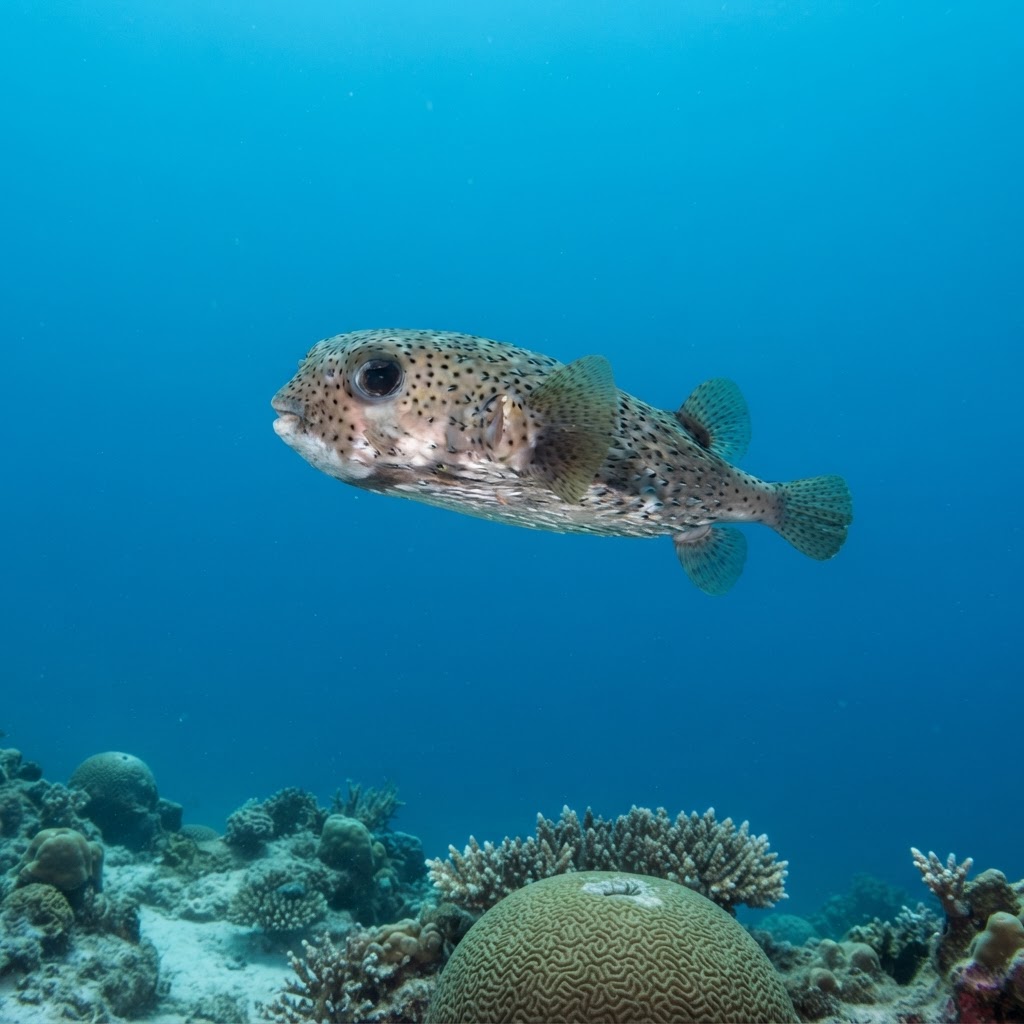
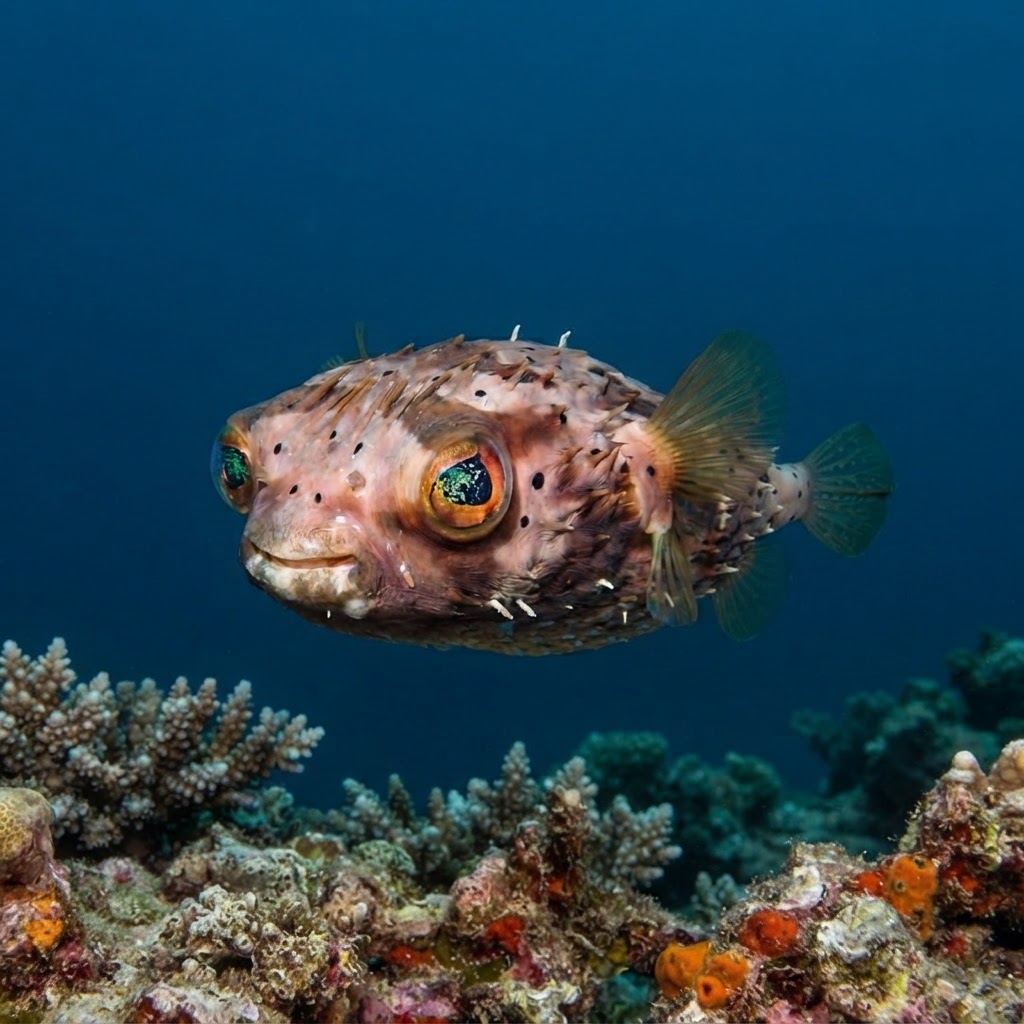
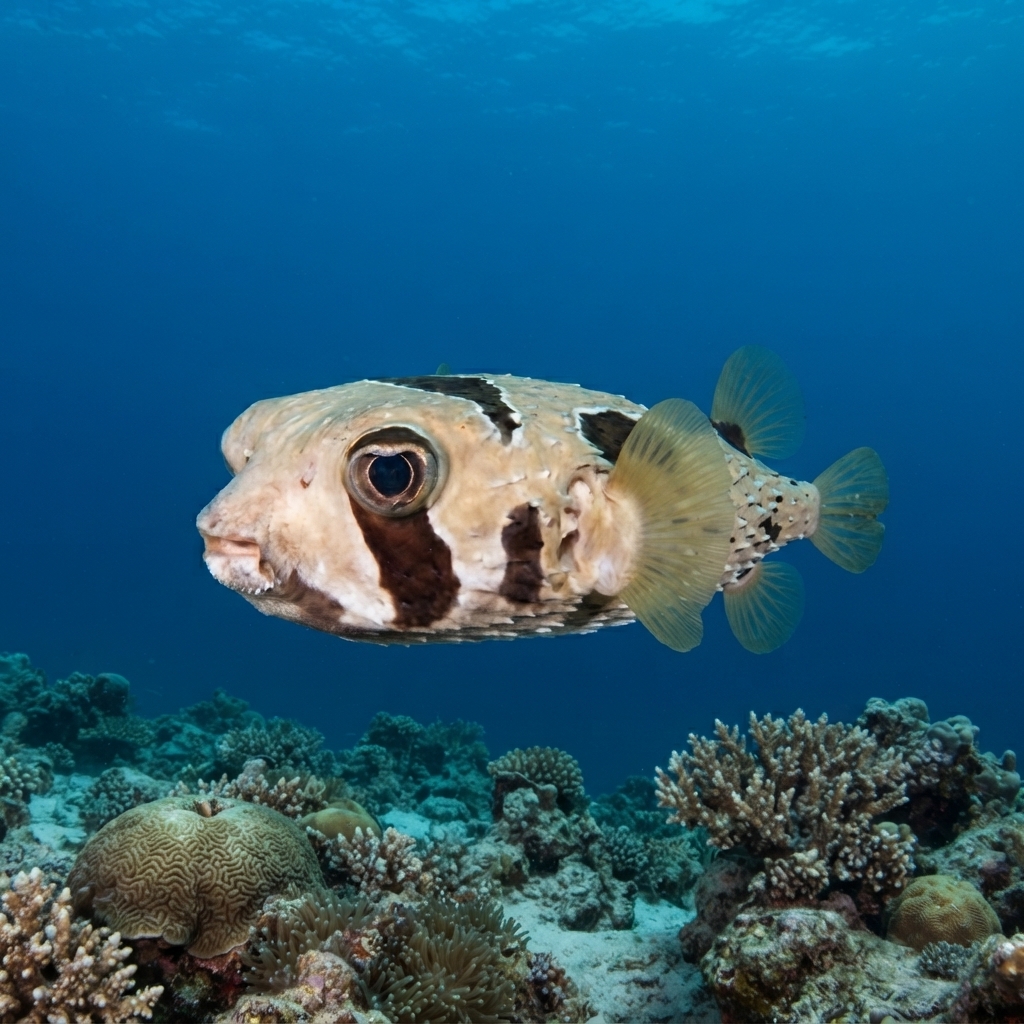
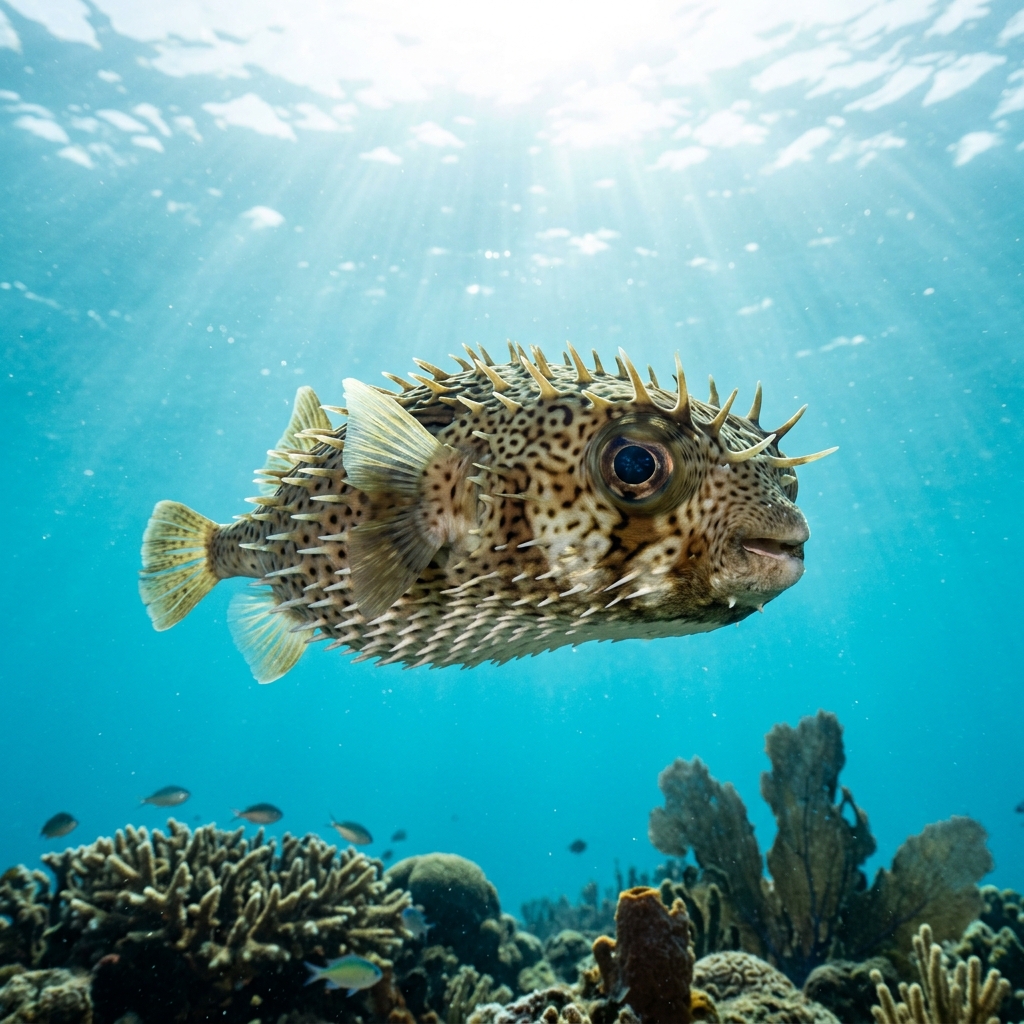
Round, blunt-snouted body covered in sharp spines is the giveaway, even when the fish is relaxed and the spines lie flat. Colouration runs from pale beige to olive-brown, typically with dark blotches or spots scattered across the back and sides. Large, forward-facing eyes give the face an almost cartoonish, wide-eyed look that divers instantly recognise. When threatened, the fish gulps water and inflates into a near-perfect ball, locking the spines upright.
You'll usually find them hovering close to the reef, tucked under ledges or nestled near coral heads during the day. They're slow, deliberate swimmers and tend to hold their ground when approached rather than fleeing, which makes for unhurried observation. If a diver gets too close or the fish feels cornered, it inflates as a warning, so give it space and it will usually deflate and carry on.
Porcupinefish have a fused beak-like mouth, formed from four teeth plates, powerful enough to crunch through sea urchins, crabs, and molluscs. That beak leaves distinctive bite marks on prey shells and is one of the easiest ways to tell the family from look-alikes underwater.
In the Northern Hemisphere, porcupinefish are present year-round with no concentrated season, which matches their tolerance for water temperatures from around 15 to 29 °C. Southern Hemisphere divers, particularly in Australia, tend to log them most often between October and May.
Reef neighbours a diver could mistake it for. Use the identification notes above to tell them apart.
Porcupinefish are most commonly logged across the United States (especially Florida and the Southeast), the Maldives, and Mexico's Yucatán Peninsula. Strong populations also show up across Indonesia, Malaysia, Thailand, the Philippines, and the Egyptian Red Sea around Sharm el Sheikh and Marsa Alam, making this a global group that turns up on tropical and subtropical reefs worldwide.
Mapping where Porcupinefish is logged…
They're logged across a wide range of destinations, with the highest concentration of sightings in Florida, the Maldives, Mexico's Yucatán Peninsula, Indonesia, Malaysia, and the Egyptian Red Sea. They're a truly global family, turning up on tropical and warm-temperate reefs across nearly every ocean basin.
In the Northern Hemisphere, they can be seen year-round. In the Southern Hemisphere, sightings are most concentrated between October and May. Their broad temperature tolerance, down to around 15 °C and up to nearly 29 °C, means they're not restricted to the warmest months.
Look for a chunky, rounded body covered in spines, large forward-facing eyes, and a blunt, beak-like mouth. The spines lie flat when the fish is calm, so size and shape are the primary cues. If inflated, there's no mistaking it. Burrfish, the most likely look-alikes, have shorter, non-erectile spines that stay erect at all times, which is the key difference to look for.
Species within the family vary, but most divers encounter individuals somewhere between 25 and 60 centimetres in length. The largest species can approach 90 centimetres, though these are far less commonly seen on reef dives.
No, porcupinefish pose no real threat to divers. Their spines and mild toxin (tetrodotoxin) are a defence against predators, not an active threat to humans. The main thing to avoid is provoking one into inflating, which stresses the fish, so keep your distance and don't chase or handle them.
When threatened, a porcupinefish rapidly gulps water to inflate its elastic stomach, expanding its body to two or three times its normal size and locking its spines outward. This makes it nearly impossible for most predators to swallow. The fish can also inflate with air if lifted out of water, though this is harmful to the animal and should never be induced by divers.
Site and sighting data is aggregated from diver logs, iNaturalist and GBIF. For taxonomy and conservation status:
Striped Burrfish
921 sites