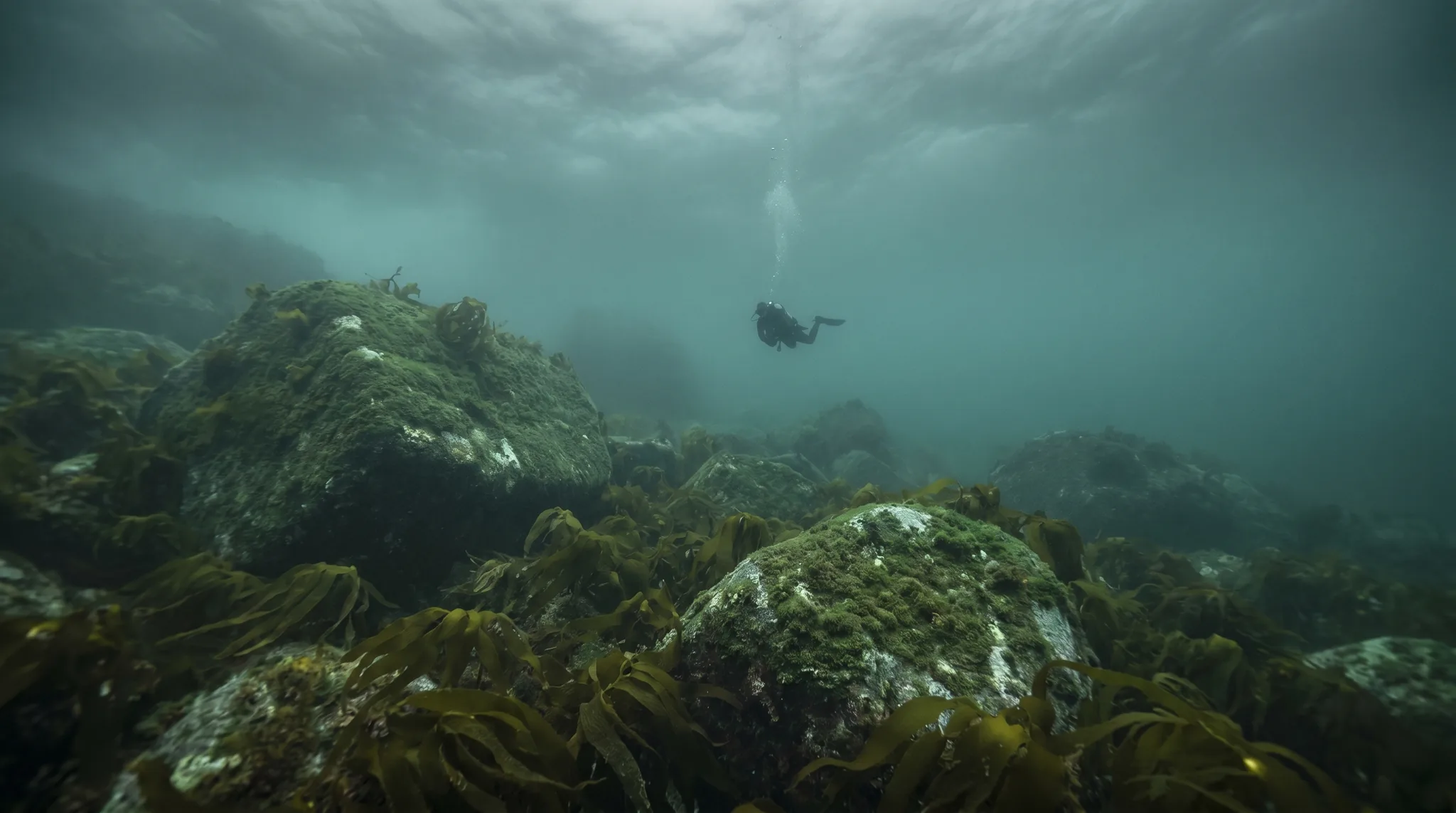
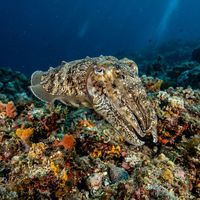
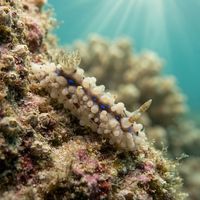
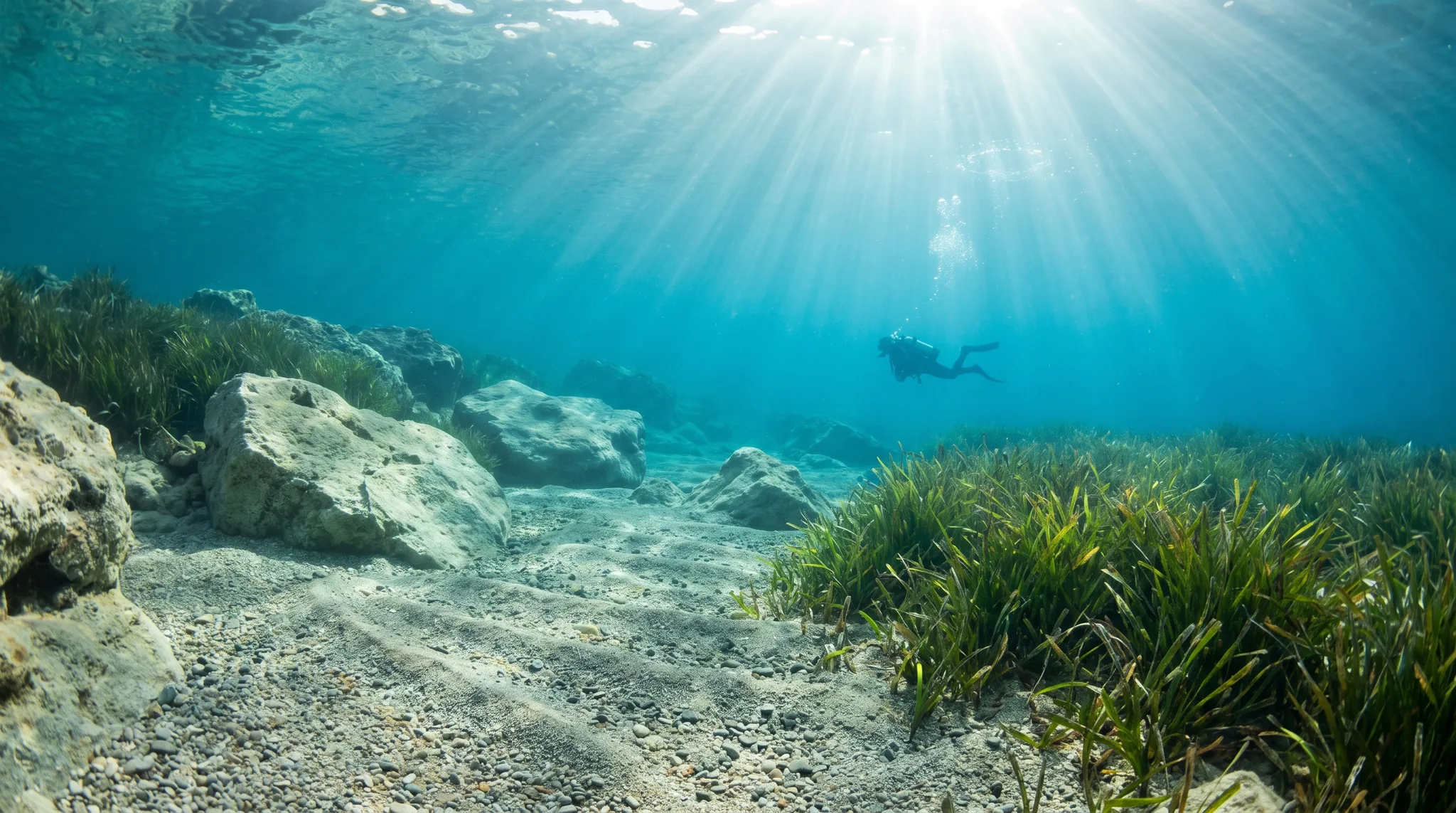
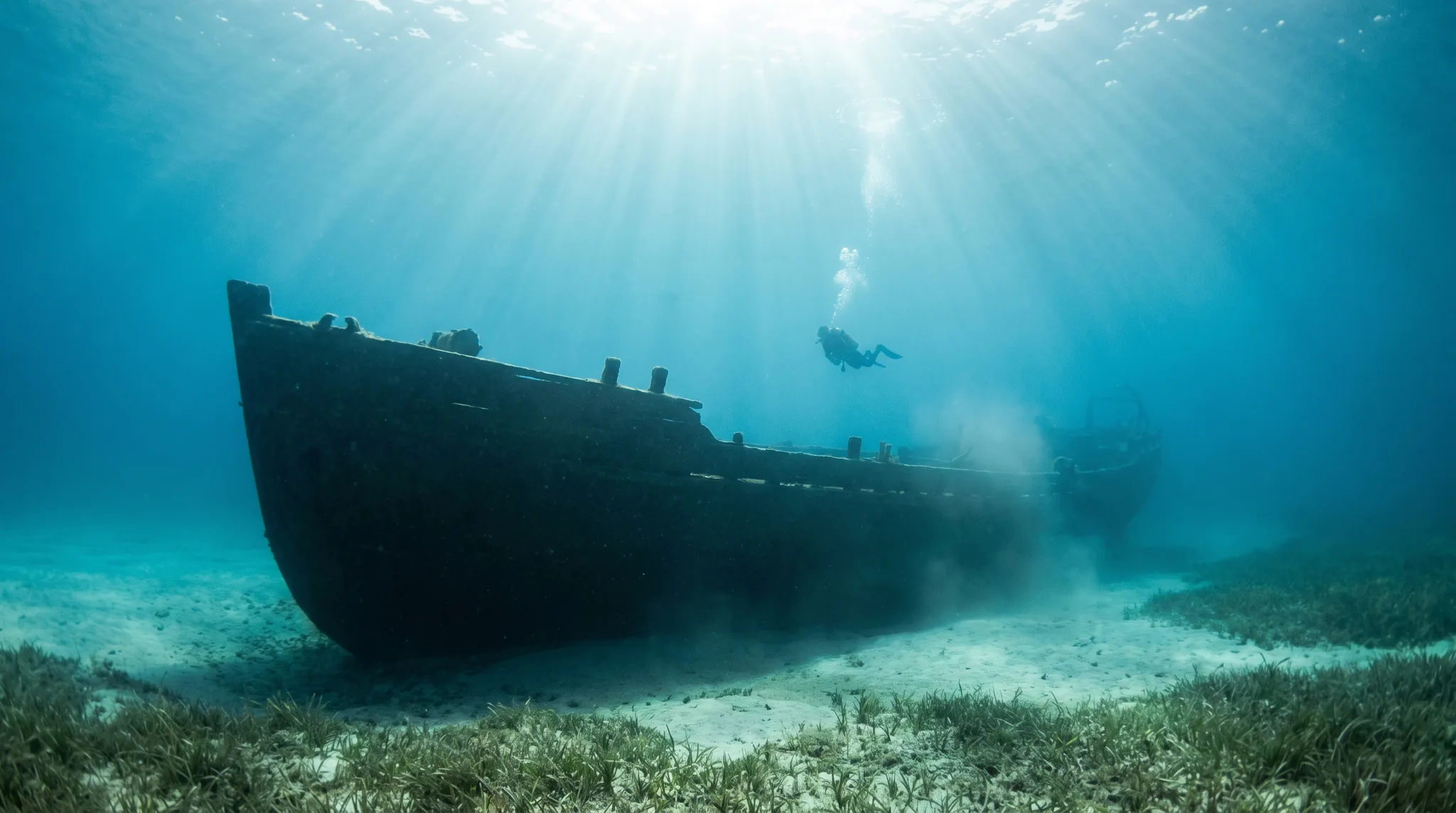
Scilla lies where the Tyrrhenian Sea meets the Strait of Messina in Calabria, and its three sites reflect the strong currents that define the strait. All sites here are deep, ranging from thirty to fifty-five metres, and the lineup spans a reef arch, a drop-off wall, and a mixed reef-and-seagrass slope, catering to beginners through to divers with technical training. The currents that run through the strait drive high biodiversity, and the species list includes gorgonians, nudibranchs, European spiny lobster, and common octopus. Water temperature stays relatively cool year-round, peaking around nineteen degrees in late summer and dropping to fourteen or fifteen degrees in late spring before the surface warms.
Monthly water temperature across Scilla's sites, from satellite sea-surface data corrected for depth. The band shows the site-to-site spread.
Temperatures at Scilla are notably cooler than much of southern Italy, rarely climbing above nineteen degrees even in summer, so a five-millimetre wetsuit is sensible for most of the year. Timing dives around the tidal cycle is important here, as the Strait of Messina is known for strong currents that also bring nutrient-rich water and the biodiversity that comes with it. The deeper sites in particular require experience in current management.
17 operators
Water temperature around Scilla ranges from about 14°C in May to 19°C in November, based on satellite sea-temperature data for its dive sites.
In the warm season (about 19°C) a 5mm suit is comfortable in Scilla; in the coldest months (about 14°C) step up to a 7mm or semi-dry suit.
Fin maps 3 sites in Scilla (3 scuba diving sites).