Percnon spp.
Flat crabs cling to shaded rock faces from Greece to the Maldives, uncommon but findable if you check the cracks and overhangs.
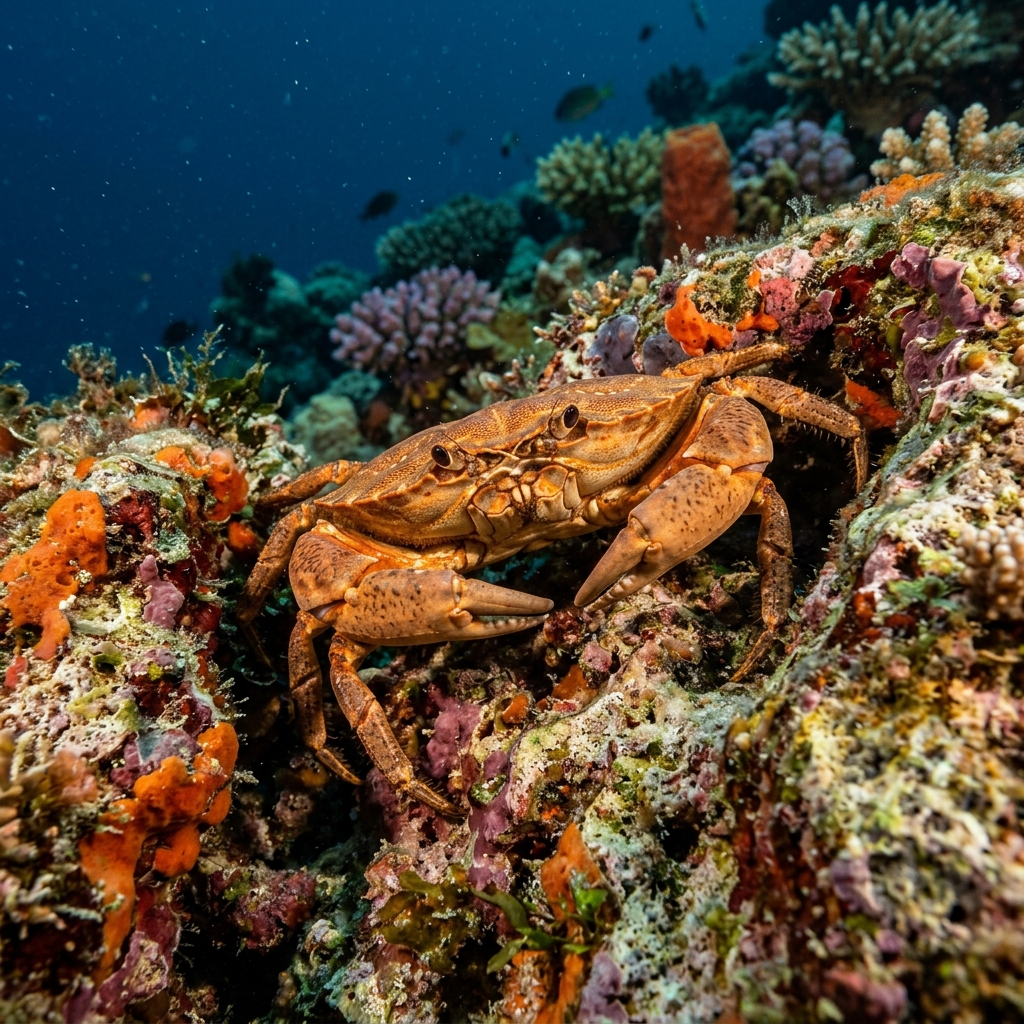
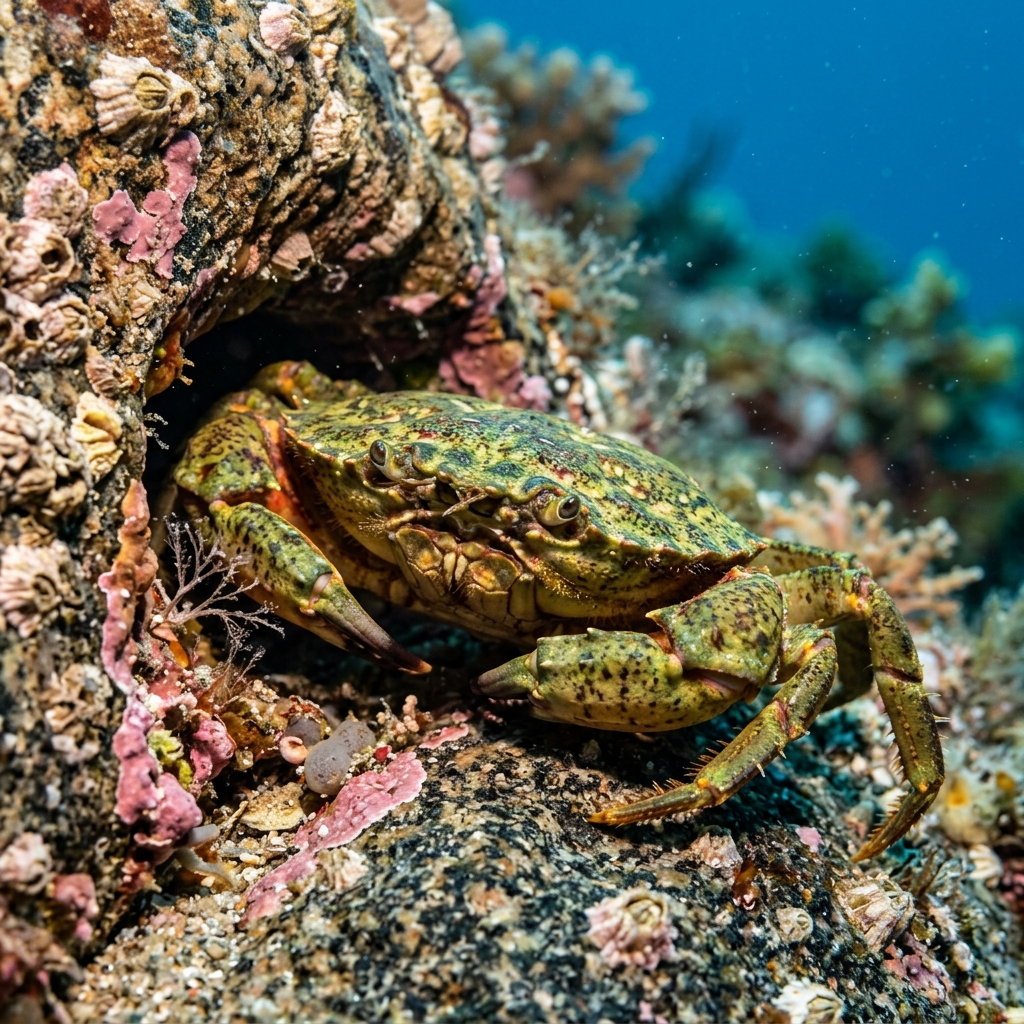
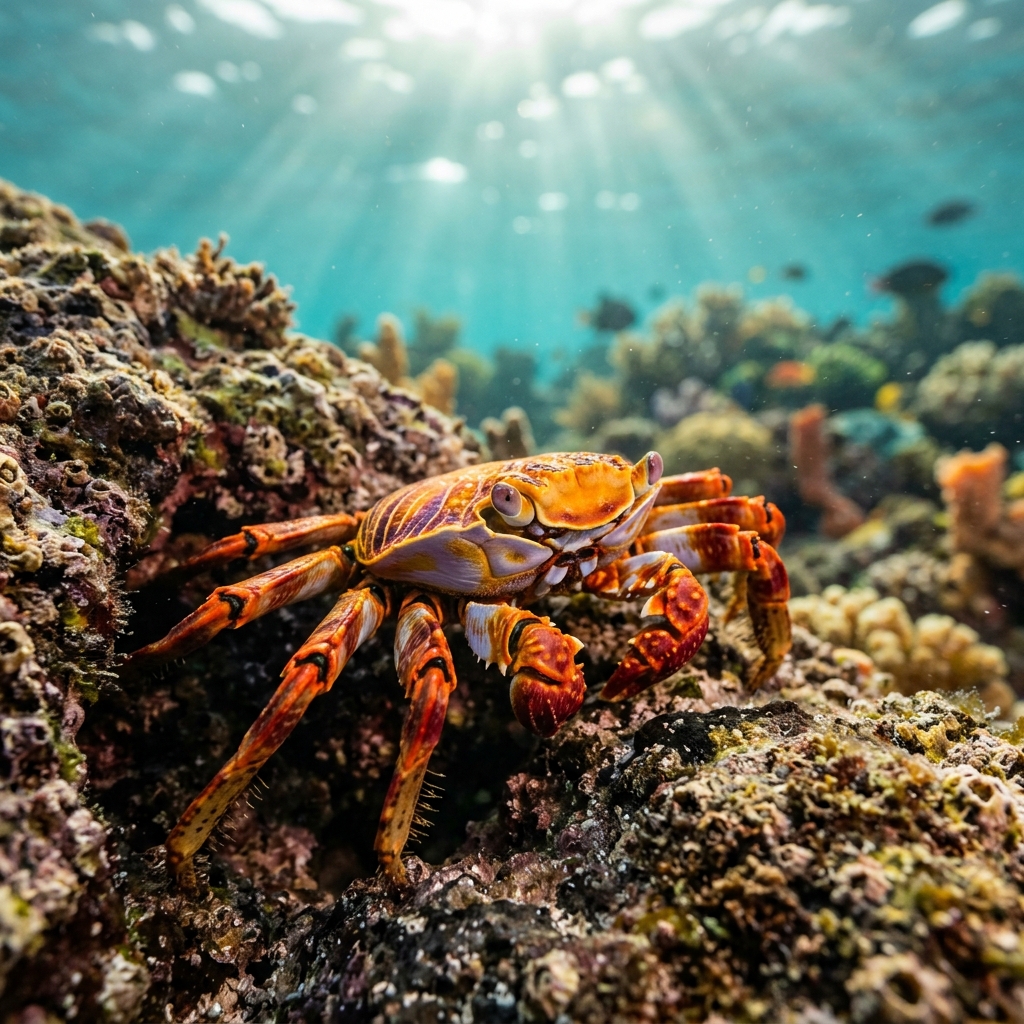
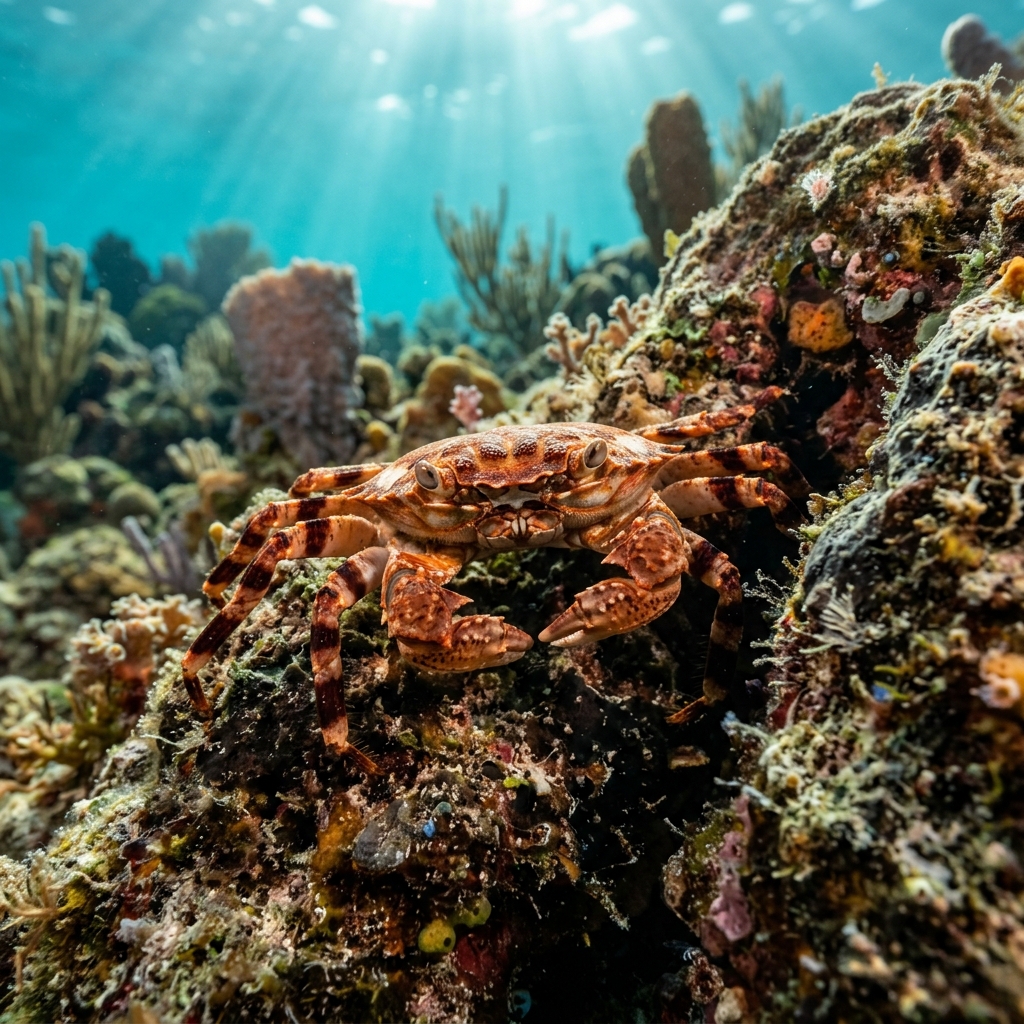
Look for a flattened, saucer-shaped body pressed so tightly against rock or rubble it almost looks glued there. Colouring runs through mottled browns, greys and dark reds that match the surrounding stone, with long, spiky-jointed legs splayed out sideways rather than tucked underneath like most crabs. The flattened profile is the giveaway: it lets them wedge into cracks and overhangs that would stop a bulkier crab dead.
Expect to find them flattened against shaded rock faces or rubble, almost never far from a crack or overhang they can bolt into. Get too close and they react fast: a sideways scuttle followed by dead stillness, trusting their flat, mottled shape to vanish against the rock. Dawn and dusk seem to bring out more activity, but shaded rock faces can turn one up at any hour.
That sideways burst-and-freeze routine is their main defence: rather than swimming or fully hiding, they rely on staying flat and colour-matched to the rock, only moving the instant a threat gets too close.
Sightings run year-round with no strong seasonal pattern in the data. Their observed comfort range of 16.2 to 28.6C spans everything from cool Mediterranean winters to warm tropical reefs, so there's no single month you need to target.
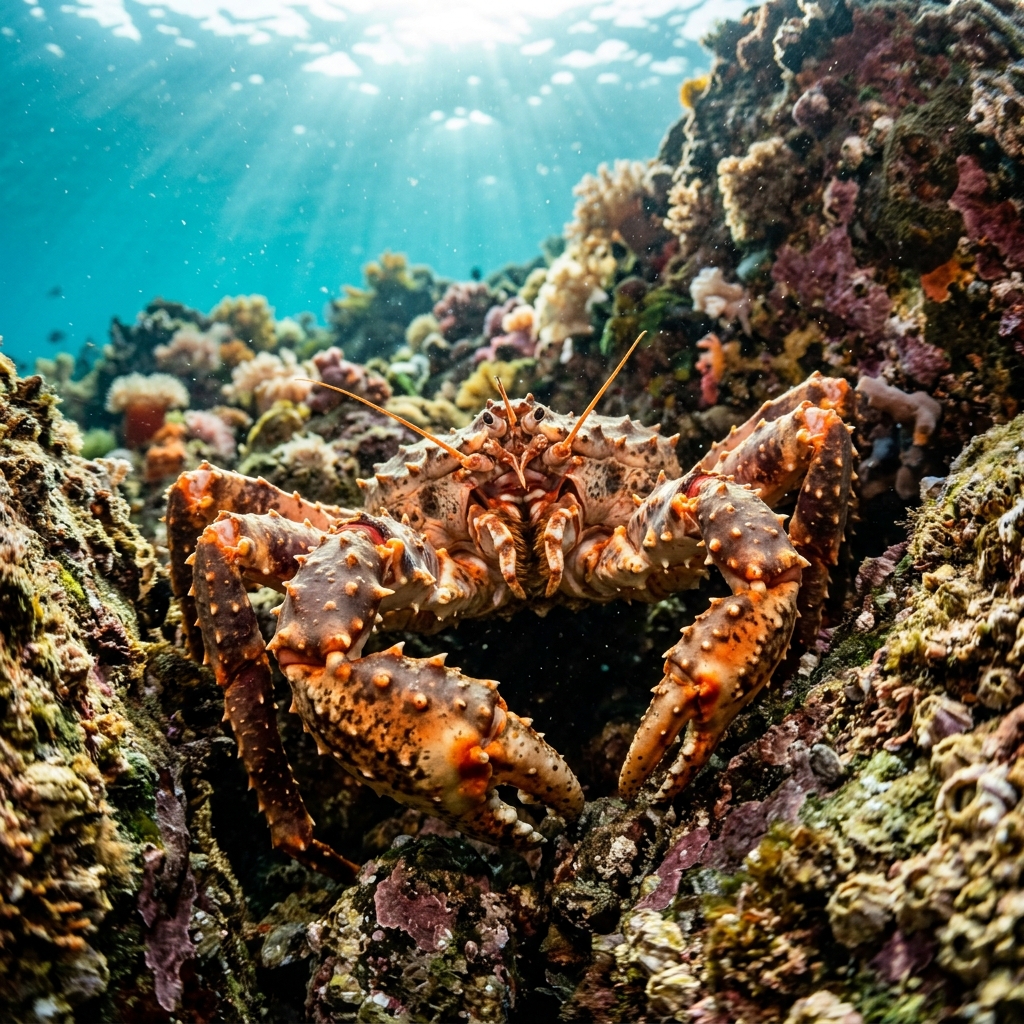
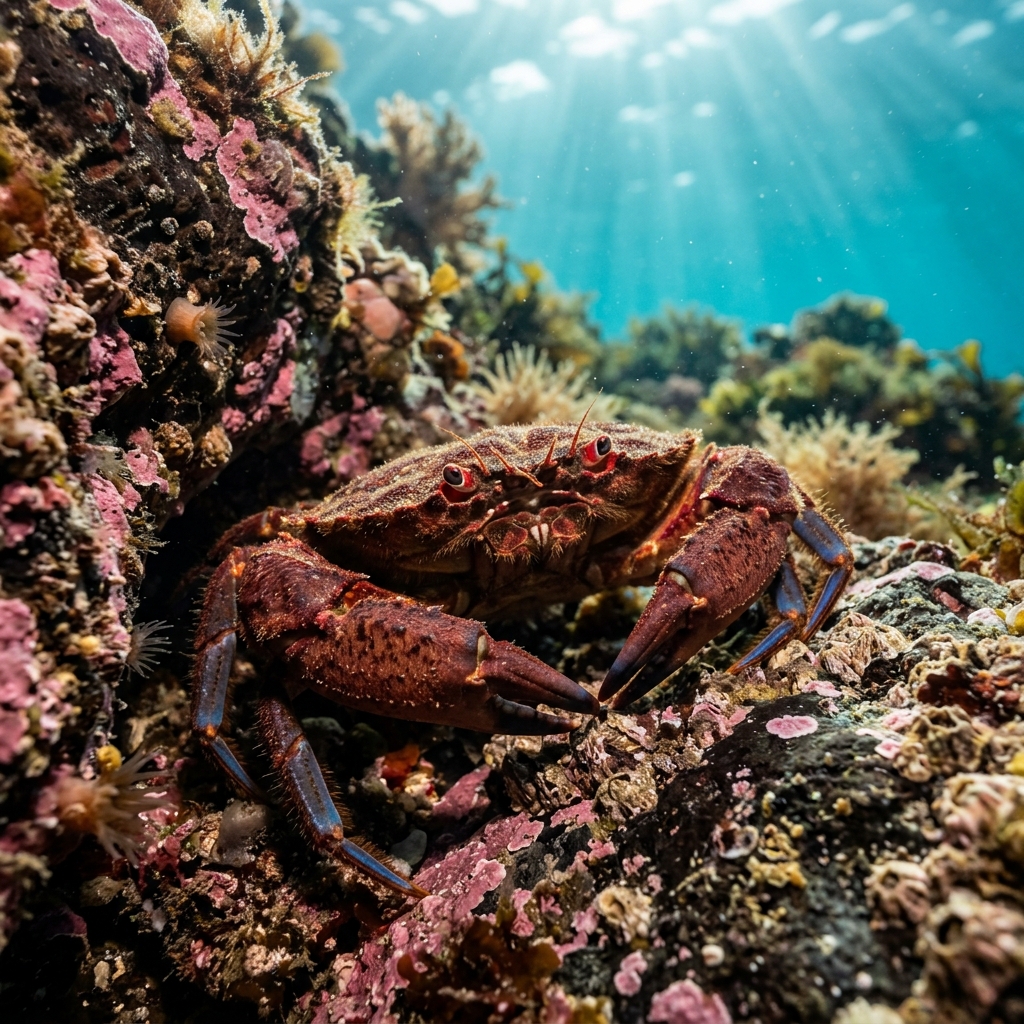
Reef neighbours a diver could mistake it for. Use the identification notes above to tell them apart.
Most reliably logged across the Mediterranean and Indo-Pacific, with strong showings in Greece, Italy, the Maldives, the Philippines, Japan, Turkey, Australia and Croatia. Within those countries, divers find them most often in the Northern Atolls of the Maldives, Queensland in Australia, Central Japan, and the Saronic Gulf and Cyclades around Greece.
Mapping where Flat Crab is logged…
They turn up widely across Greece, Italy, the Maldives, the Philippines, Japan, Turkey, Australia and Croatia. The Northern Atolls of the Maldives, Queensland in Australia and Central Japan are among the strongest regions for sightings.
There's no clear season in the data, so they're a year-round find. Their wide temperature tolerance, from 16.2 to 28.6C, means they hold on in both cooler Mediterranean sites and warm tropical reefs.
Check shaded rock faces and overhangs for a flattened, mottled brown-grey crab pressed almost flush against the surface with legs splayed sideways. If it darts sideways and freezes when you approach, that's a strong confirming sign.
No, they pose no danger to divers. They're small, shy and rely entirely on speed and camouflage rather than any kind of defensive attack.
Exact size data isn't confirmed for this group, but they're small, flattened crabs built to squeeze into narrow rock cracks rather than grow large. Their low profile is more distinctive underwater than their size.
Site and sighting data is aggregated from diver logs, iNaturalist and GBIF. For taxonomy and conservation status:
Sally Lightfoot Crab
2,422 sites