

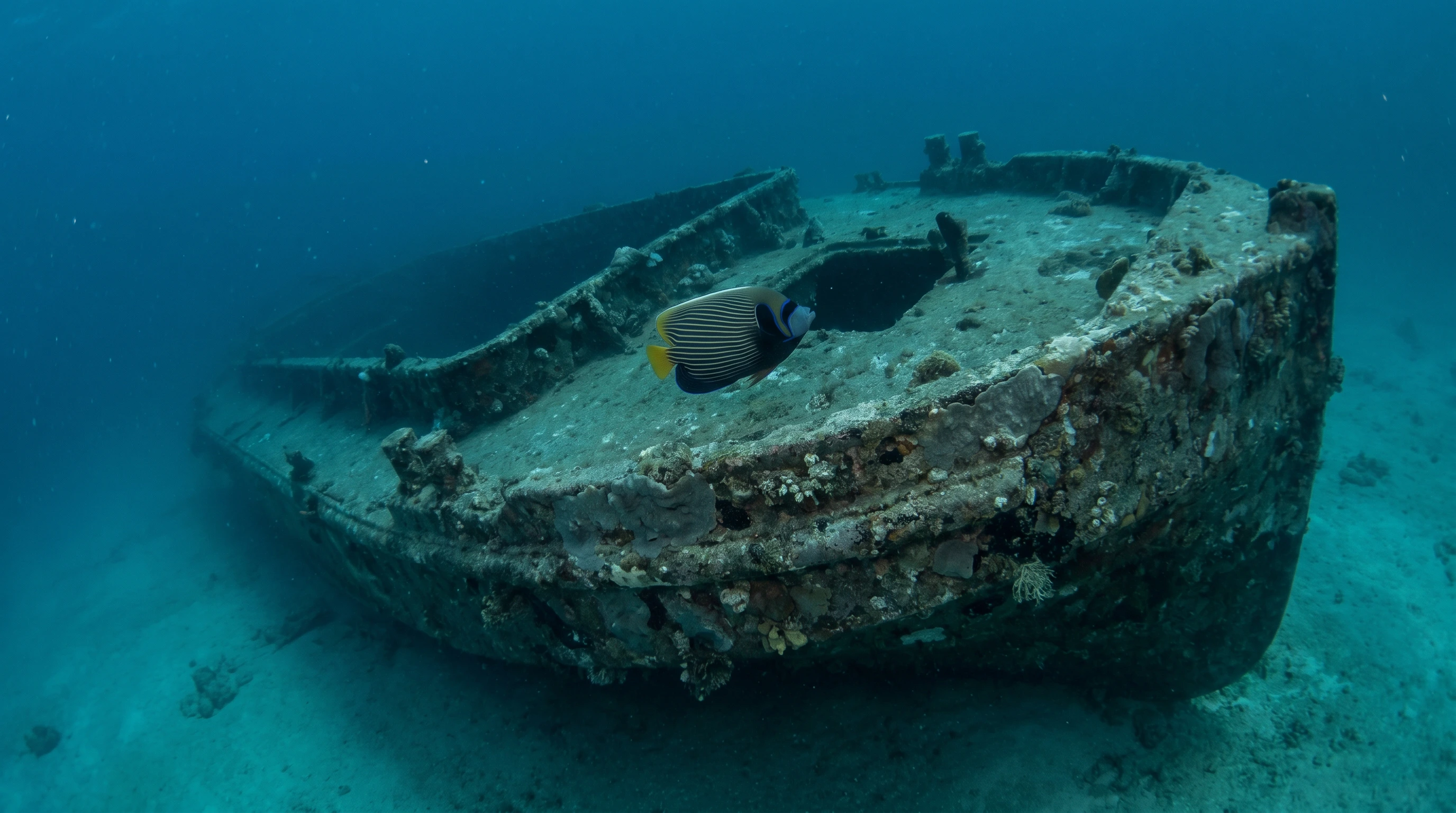
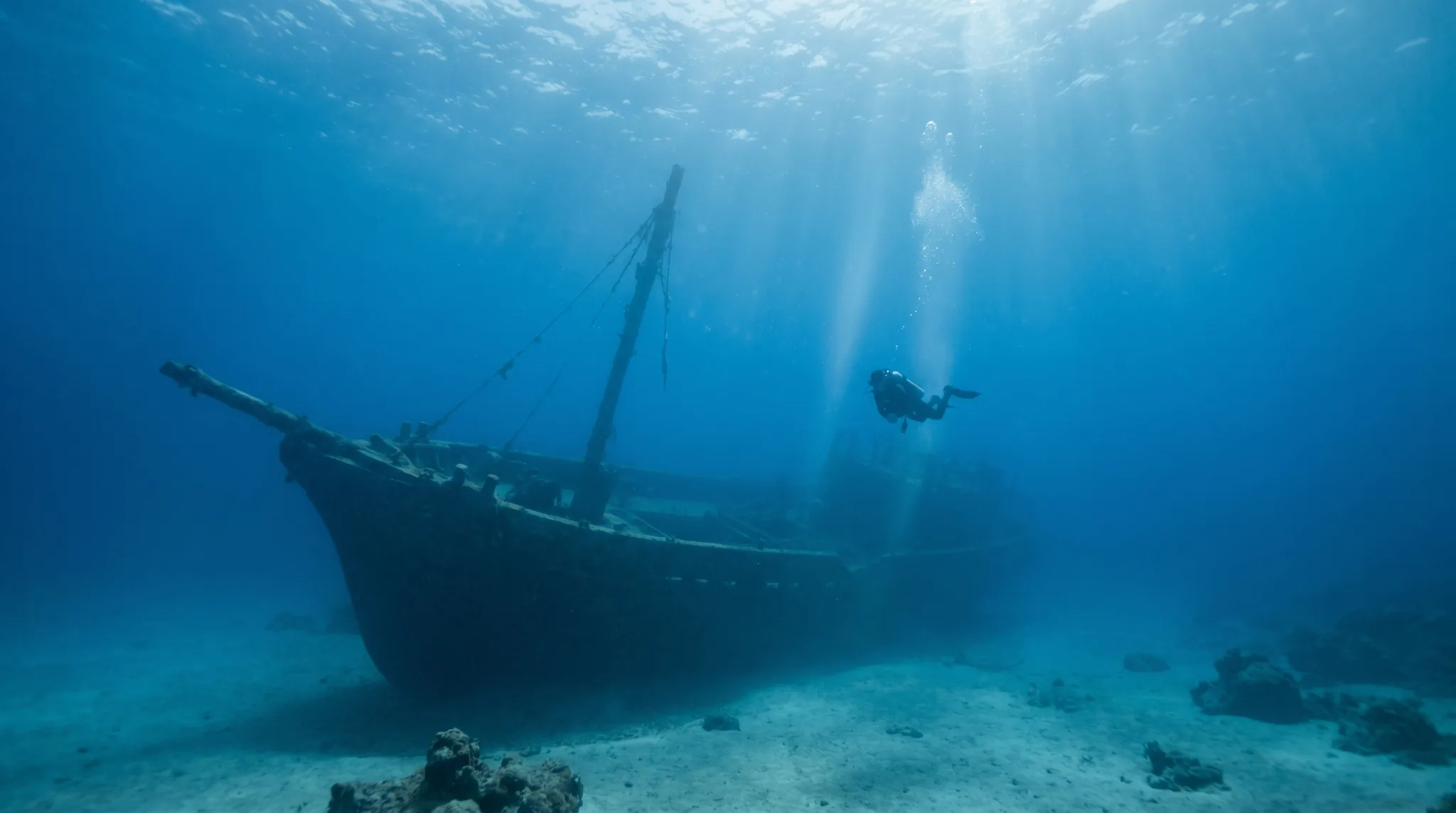
Apra Harbor is defined by its wrecks. From a German merchant raider scuttled in the early twentieth century to a Japanese freighter, a concrete wartime tanker, a submerged aircraft, and a collection of heavy construction equipment, the harbour floor holds an unusual density of layered history. Reef diving is well represented too, with sloping walls, shallow bomb holes in the Piti Bomb Holes sub-area, and the vertical shaft of Blue Hole drawing advanced divers deep. Conditions are warm year-round, visibility varies considerably by site, and the wreck-heavy roster skews toward intermediate and advanced skill levels, though several shore-entry reef sites suit beginners.
2 areas

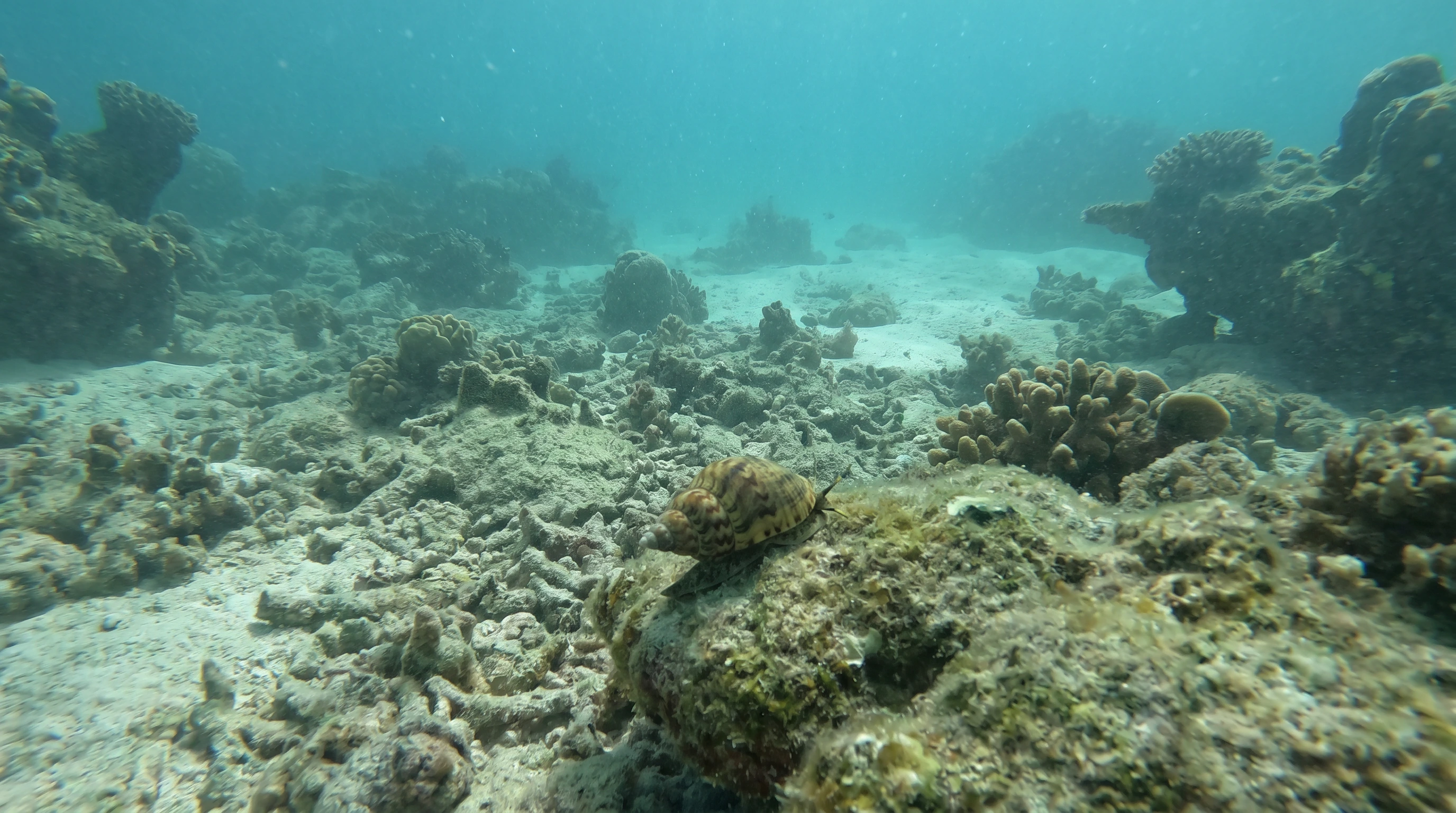
Monthly water temperature across Apra Harbor's sites, from satellite sea-surface data corrected for depth. The band shows the site-to-site spread.
Water temperature stays warm across every month, rising slightly through the warmer half of the year. The best-months data favours the cooler, drier months from October through to March and April, when conditions tend to be more settled and visibility more reliable. The summer months bring less favourable conditions, which can reduce clarity, particularly at shallower reef sites.
29 operators
12 more sites to explore
Water temperature around Apra Harbor ranges from about 28°C in January to 30°C in July, based on satellite sea-temperature data for its dive sites.
With water around 28–30°C, a rash guard or 3mm shorty works in Apra Harbor year-round.
Fin maps 25 sites in Apra Harbor (25 scuba diving sites and 5 snorkelling spots, with some suited to both), organised into 2 areas.
Several sites in Apra Harbor are rated for beginners. Shore-entry reef sites such as Piti Bomb Hole and Fish Eye offer shallow, accessible diving, while boat-access sites like Western Shoals and Finger Reef provide gently sloping reef at manageable depths. However, the harbour's most celebrated sites, including Blue Hole, SMS Cormoran, Tokai Maru, and the Kitsugawa Maru, are rated intermediate or advanced, so divers should plan their site selection according to their certification and experience.
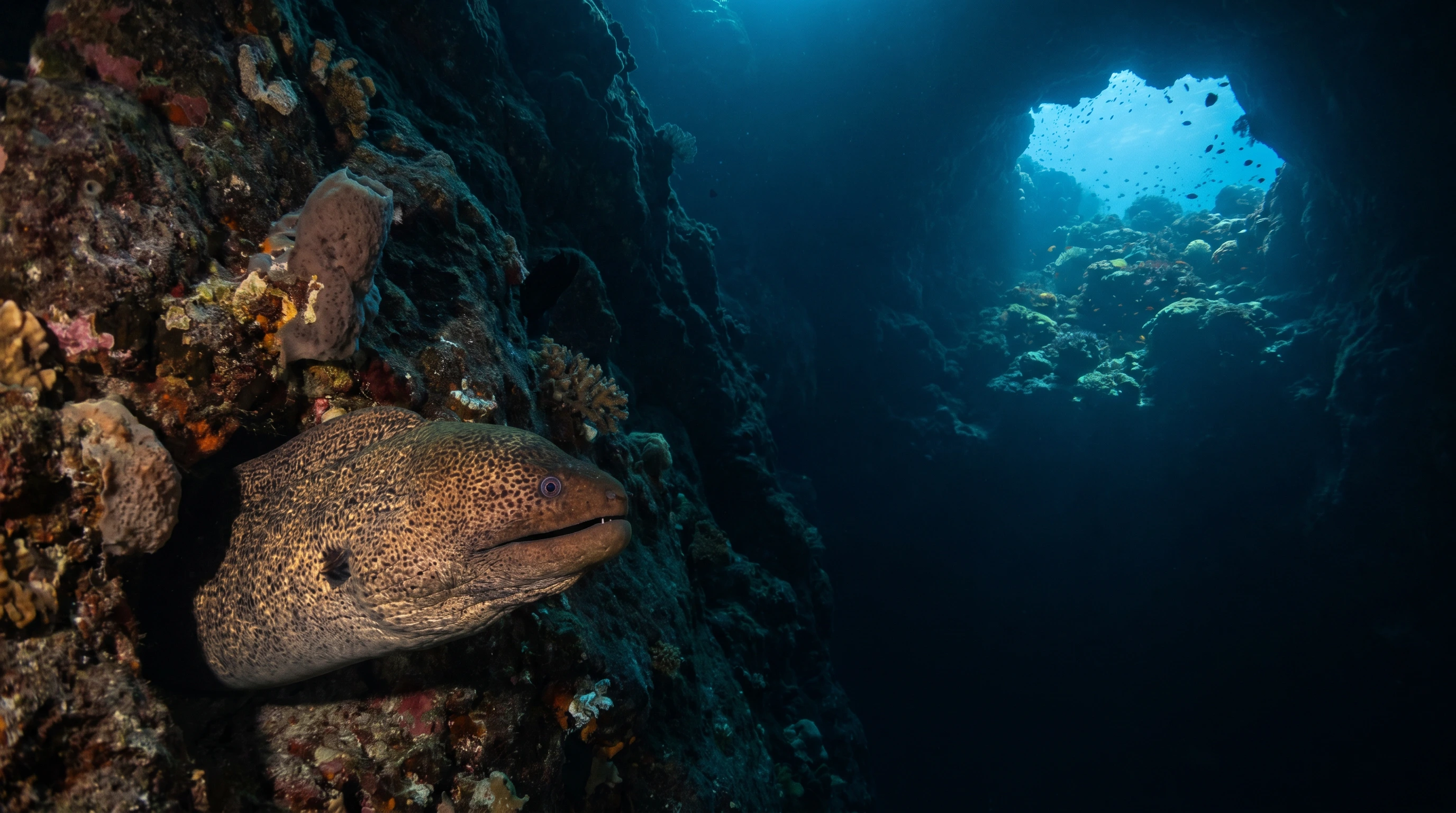
Piti Bomb Holes is a sub-area of shallow reef sites with shore entry, well suited to newer divers looking for accessible reef diving close to shore. Blue Hole, by contrast, is a single advanced site built around a natural limestone plateau and a vertical shaft that drops through a window in the reef wall, requiring boat access and experience with deeper, more technical environments. The two areas represent opposite ends of Apra Harbor's diving range.
Access in Apra Harbor is split between shore entry and boat access. Shore-entry sites include Piti Bomb Hole, Fish Eye, and OutHouse Beach, making them reachable without a charter. Most of the wreck sites and deeper reefs require boat access. A good number of operators are active in the harbour, among them Scuba Master, Guam Ocean Adventures, Scuba Guam, MDA Cabras Marina, Salty Seas Diving, and Blue Persuasion Diving Guam, offering a range of guided and chartered options.


