Chrysiptera traceyi
Tiny reef damsel logged across Apra Harbor, Guam and Pohnpei in 27.6-29C water, year-round on the reef.
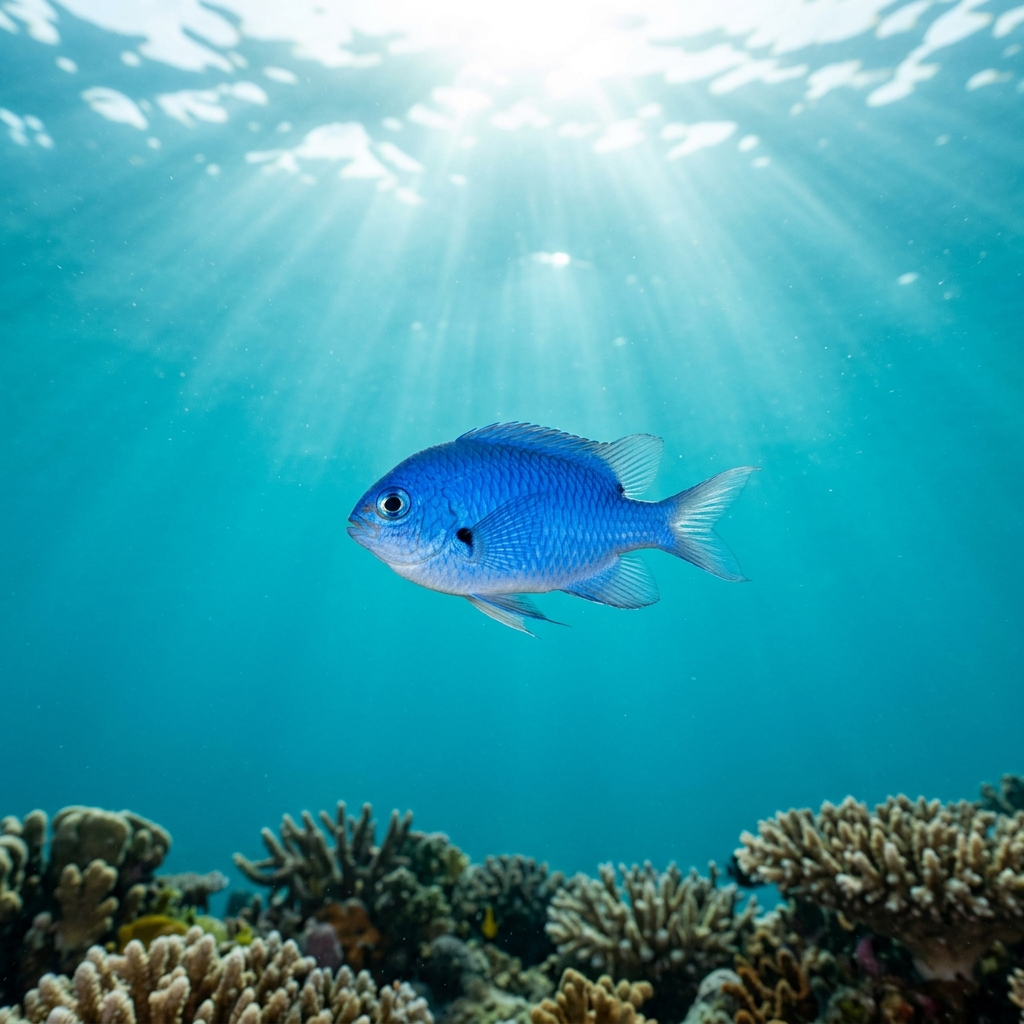
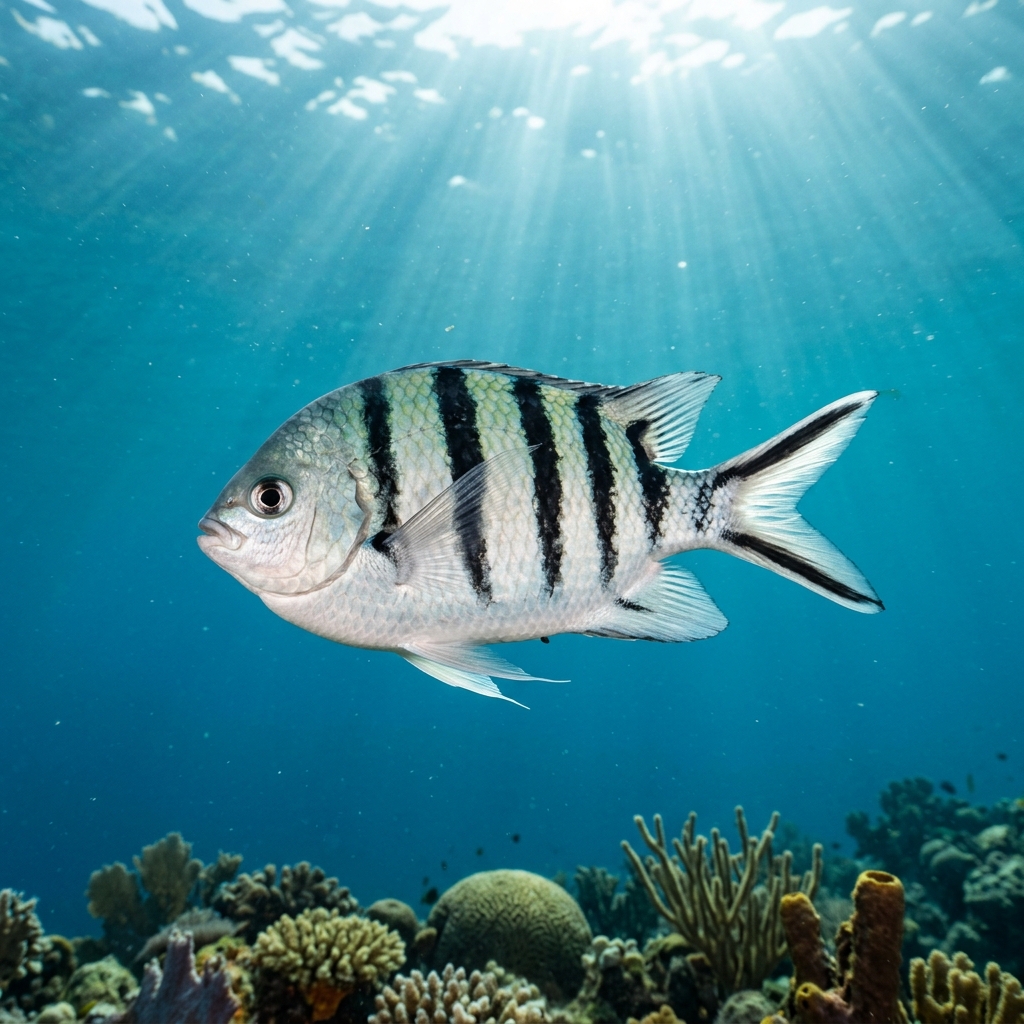
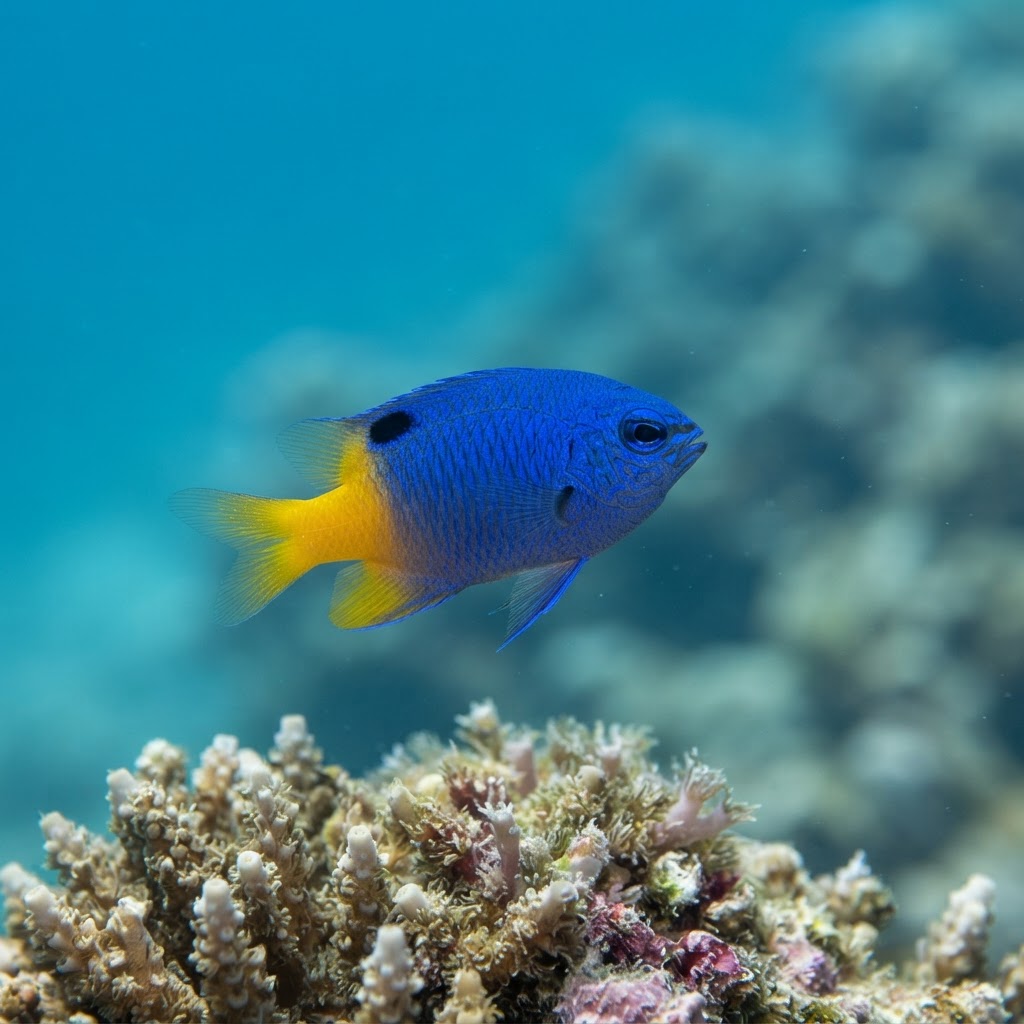
A tiny damselfish topping out around 2 cm, so you're often looking for a quick dark flicker near coral rubble rather than a big shape. Body is deep blue to blackish, compact and deep-bodied like other Chrysiptera damsels, with no bold bars or eye-spots to rely on. At this size and depth range, confirming it usually means getting close to a small patch of reef and watching one hold station over its patch.
Divers typically log it as an uncommon find, hovering low over reef structure or rubble rather than out in open water. It behaves like a typical small pomacentrid, staying close to a home patch and darting for cover rather than approaching divers. Most sightings come from reef sections in harbours and coastal reef flats rather than deep drop-offs, fitting its 5-40 m range.
It's one of a cluster of small, dark Chrysiptera damsels endemic to the western Pacific, and its patchy, uncommon-to-common logging pattern across Guam and Pohnpei suggests a localised range rather than a rare species that's simply hard to see.
No clear seasonal pattern shows up in the sighting data, and warm, stable water in the 27.6-29C range year-round means there's no obvious reason to time a trip around it. Plan around Guam or Pohnpei conditions generally rather than a demoiselle season.
Most reliably found in Guam, especially around Apra Harbor, which accounts for the bulk of logged sightings, with further records along Guam's Southern Coast, Tumon Bay and North Coast. Outside Guam, Pohnpei in Micronesia is the other solid spot to look for it.
Mapping where Tracey's Demoiselle is logged…
Guam is the strongest location, particularly Apra Harbor, with more sightings along the Southern Coast, Tumon Bay and North Coast. Pohnpei in Micronesia is the other reliable region.
There's no detected seasonal pattern, so it's considered a year-round sighting on the reefs where it occurs, in consistently warm water around 27.6 to 29C.
Look for a very small, dark blue to blackish damselfish, only about 2 cm long, holding position low over coral rubble or reef structure. It lacks bold stripes or bright markings, so size and habitat are your best clues.
They're small even by damselfish standards, reaching only around 2 cm, so spotting one usually means scanning close to the reef rather than the water column.
No. It poses no threat to divers and is too small to be anything more than a fun spotting challenge on the reef.
Site and sighting data is aggregated from diver logs, iNaturalist and GBIF. For taxonomy and conservation status:
Dascyllus
3,697 sites